Inspiration Gallery
Blog
Tile Calculator
08065423741



.svg)


Placing Ganesha At Home Entrance
ByAditi Bardhan

Thu , May 21 , 2026

Read Time: 5 Min


 Copied!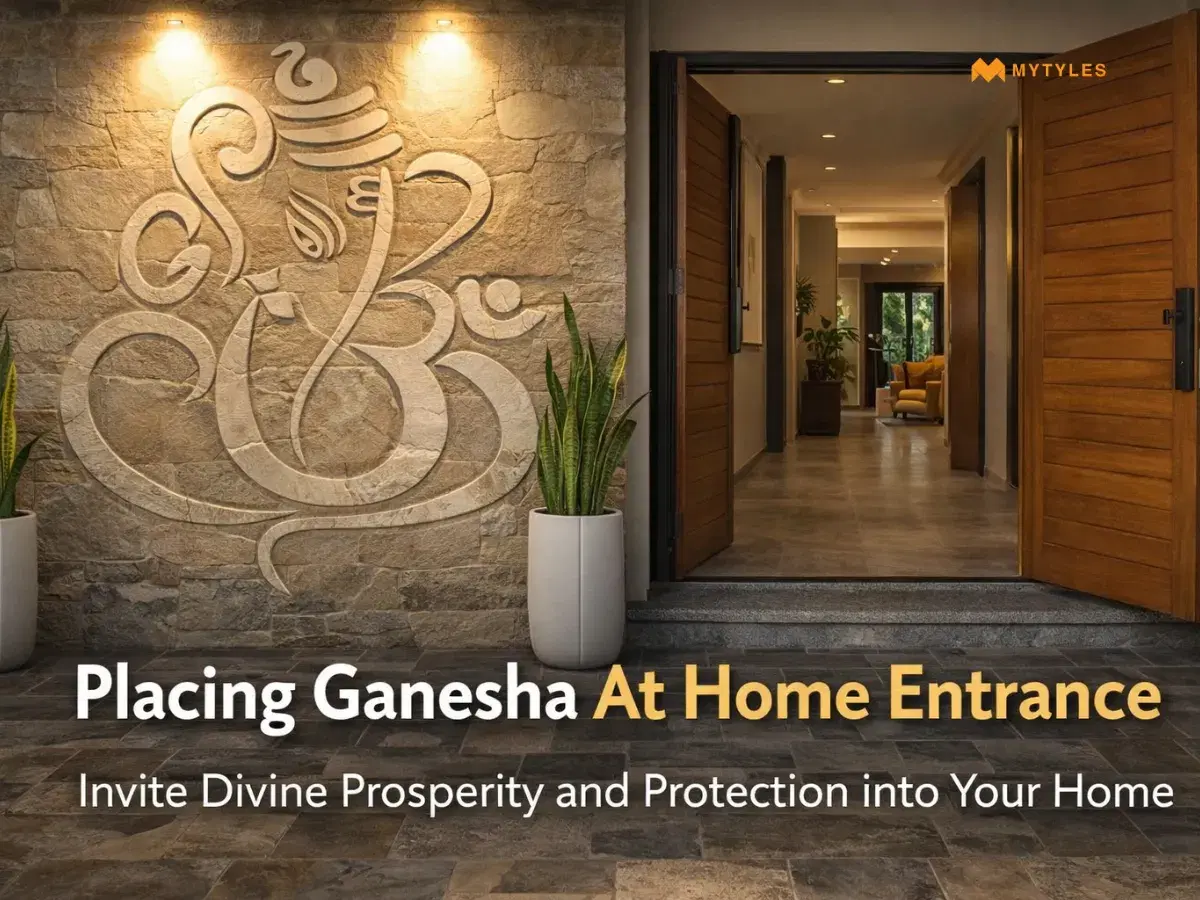
The entrance of a home sets the tone for everything that follows. It’s the first thing people notice and more importantly, it’s where energy flows in. But placing Ganesha at the home entrance isn’t just about setting up an idol; it’s about aligning with Vaastu Shastra, choosing the right direction, and using materials that last. This blog will tell you everything you need to know, from how to place idols so that they are in line with Vastu to how to make beautiful Ganesha stone murals that are both spiritual and beautiful.
Vastu and Spiritual Significance
In Indian homes, the practice of placing Ganesha at the home entrance goes beyond tradition. It’s a deep-rooted spiritual belief that connects the sacred with the everyday. According to Vaastu Shastra, the entrance is one of the most energy-sensitive zones of the house. This is where external energies, whether positive or negative, first interact with your living space.
Following the principles of Vastu Shastra, Ganesh idols for home entrance placement help verify that your entryway becomes a true center of positivity and protection.
- Always place the idol facing into the home: If it is mounted above or beside the main door. This proves that Lord Ganesha welcomes prosperity inward, not outward.
- Avoid corners and cluttered walls: The idol should have space around it for energy to circulate freely.
- Do not place Ganesha on the floor: Always elevate the idol on a platform or shelf or mount it on a tile at eye level to show reverence.
- Keep the surroundings clean and well-lit: Dirt or darkness near the entrance is said to diminish the positive effects of even the most correctly placed idol.
- Don’t use broken or chipped idols: If damage occurs, it’s recommended to replace the idol respectfully.
Pairing these vastu tips with elegant designs in Ganesha god tiles can further add to your space. With the right care, your entrance transforms into a daily invitation to abundance, joy, and inner peace.
The Right Direction of Ganesha Sthapana
.webp)
Getting the ganpati sthapana direction right is key to ensuring that Lord Ganesha’s presence at your home entrance brings harmony and prosperity. According to Vaastu Shastra, the placement of Ganesha determines the type of energy that enters your home.
The most favorable direction for placing a Ganesha idol or motif is the northeast, or Ishan, corner of the entrance. This is considered the zone of divine energy, governed by Jupiter, and it is ideal for spiritual elements. If northeast isn’t feasible, the east or north directions are also suitable, as they invite wisdom, growth, and prosperity into your space.
For modern homes, using Ganesha-themed tiles makes the sthapana process even more seamless. It can be carved, printed, or digitally illustrated. The placement of these tiles in the right direction sets the spiritual tone for the entire home. Getting the ganpati sthapana direction right is about starting your journey with grace and devotion.
Best Direction for Ganesha to Face?
 (1).webp)
Once you have chosen the ideal placement for your Ganpati, the next crucial question is, which direction is best for Ganesh to face? Vaastu Shastra offers precise guidance on this. The direction the idol or image faces influences the kind of energy it brings into the home.
- West-facing idol (looking east): Considered one of the most auspicious choices. Lord Ganesha faces the rising sun, symbolising light, new beginnings, and wisdom.
- North-facing idol (looking south): Brings prosperity and wealth. The north is ruled by Kuber, the god of riches, making it ideal for abundance.
- East-facing idol (looking west): Also accepted in many households, especially for blessings and protection during new ventures.
Direction which brings Positive Energy
According to Vaastu, Ganesha should preferably face the east or north, both associated with wisdom, growth, and positivity. An idol facing east welcomes new beginnings, while one facing north aligns with Kuber’s blessings, bringing prosperity and abundance into the household.
Another vastu-friendly option is to have Ganesha facing outward from inside the home, toward the entrance. This position symbolizes Lord Ganesha guarding the threshold, keeping away negative forces and ushering in peace for everyone who steps in.
Directions to Avoid
- Vaastu generally discourages south-facing idols, as this direction is associated with Yama, the god of death, and could potentially cause instability.
- Avoid placing the idol directly against a wall with no breathing space or facing areas like bathrooms or shoe racks. Such placements can block energy flow and contradict Vaastu recommendations.
So the answer to ganesh facing which direction is best would be to face him towards the inside of your home, looking outward at the entrance. Paired with an aesthetically pleasing tile, the right orientation makes your Ganesha installation both vastu-compliant and visually serene.
Vastu-Compatible Ganpati Murti for Entrance
 (1).webp)
Choosing the right Ganpati murti for the entrance involves a balance of spiritual intent and aesthetic sensibility. In Vaastu Shastra, every material and form carries energy, and your selection should reflect peace, prosperity, and positivity. The few types are
- White marble Ganesha: Symbolises purity, peace, and spiritual growth. Ideal for homes seeking calm energy.
- Terracotta or clay idols: Earthy and natural, they are considered grounding and vastu-approved.
- Brass or bronze idols: Known to attract wealth and ward off negative forces, especially when paired with warm lighting.
- Stone-carved Ganesha: Long-lasting and timeless, perfect for a traditional or rustic entrance setting.
Perfect Ganesha Tiles for Your Entrance
In today’s homes, design is just as important as devotion and that is why Ganesha tiles beautifully bridge the gap. They offer a meaningful and modern way to welcome Lord Ganesha into your space, especially at the entrance, where first impressions and energy both begin.
When integrating tiles instead of idols, opt for materials that mimic these finishes. For example, ceramic or vitrified tiles featuring a seated white Ganesha can create the same serene energy while offering easier maintenance. Unlike traditional idols, these tiles are easy to install, low-maintenance, and durable. You can opt for digitally printed ceramic tiles, poster wall tiles, stone-finish murals, or even 3D relief tiles that appear like a carved idol without the need for a separate shelf or platform.
Tiles with Ganesha come in various poses and styles. Some show Lord Ganesha seated peacefully in blessing, while others feature abstract or minimalist line art for a contemporary feel. They can be the focal point on an entrance wall or part of a larger design that includes rangoli-style floor tiles, Radha Krishna tiles, nameplates, or lighting features.
A Peaceful Beginning Starts at the Door
Placing Lord Ganesha at your home entrance is more than a cultural ritual, as it is a thoughtful way to invite peace, protection, and positivity into your life. When aligned with Vaastu principles, this sacred tradition becomes even more powerful, creating a balanced energy flow that adds to your home’s atmosphere from the very first step. Your choice of a peaceful marble statue, a terracotta piece, or a Ganesha tile with many small designs shows both your devotion and your personal style. And that’s where MyTyles makes your journey easier. With a curated selection of Ganesha tiles ranging from traditional murals to modern designs, you can transform your entrance into a space that is spiritually grounded and visually stunning.
Expert Reviewed by Biren Agrawalla
Biren Agrawalla, the Founder of MyTyles with over 10 years of experience across tile, retail, and home decor. Driven by a passion for tiles and a deep understanding of customer behaviour, he has spent his career transforming how people discover and buy tiles online. Biren combines practical retail insight with modern digital solutions to make tile shopping smarter, more intuitive, and design focused. At MyTyles, he champions a customer first approach, ensuring every experience from browsing to buying is reliable, seamless, and inspiring.

What is the significance of placing Ganesha at the home entrance?

Placing Lord Ganesha at the entrance is believed to invite prosperity, remove obstacles, and guard the home from negative energies. It aligns with Vaastu Shastra principles that emphasize divine protection at the threshold.
Which direction is best for placing Ganesha at the main door?
According to Vaastu, the northeast, east, or north directions are ideal for placing Ganesha at the entrance. These directions promote wisdom, peace, and financial well-being.
Which direction should Ganesha face for positive energy?
The idol should face east or north and ideally look into the home. A west-facing idol that is looking east is also considered highly auspicious.
Can Ganesha be placed on the floor near the door?
No, Ganesha should never be placed directly on the floor. Always elevate the idol on a platform or shelf, or install a tile at eye level.
Where can I buy vastu-compatible Ganesha tiles for my entrance?
You can explore MyTyles.com for a curated selection of Ganesha tiles in various styles, finishes, and sizes, perfect for creating a beautiful and spiritually aligned entrance.

ABOUT THE AUTHOR
Aditi Bardhan
I'm Aditi Bardhan, a professional content writer with over five years of experience creating SEO-driven, research-backed content across multiple industries. I specialise deeply in the tile and surface materials industry, crafting high-converting content for homeowners, architects, interior designers, and trade professionals. My work is grounded in technical research, design understanding, and consumer behaviour insights, enabling me to simplify complex concepts, highlight material benefits, and help brands build authority in the tile and construction space.
Latest Blogs By MyTyles