.svg)







All About Porcelain Tiles: Types, Benefits, and Uses
ByAditi Bardhan


Fri , Mar 14 , 2025

Read Time: 5 Min


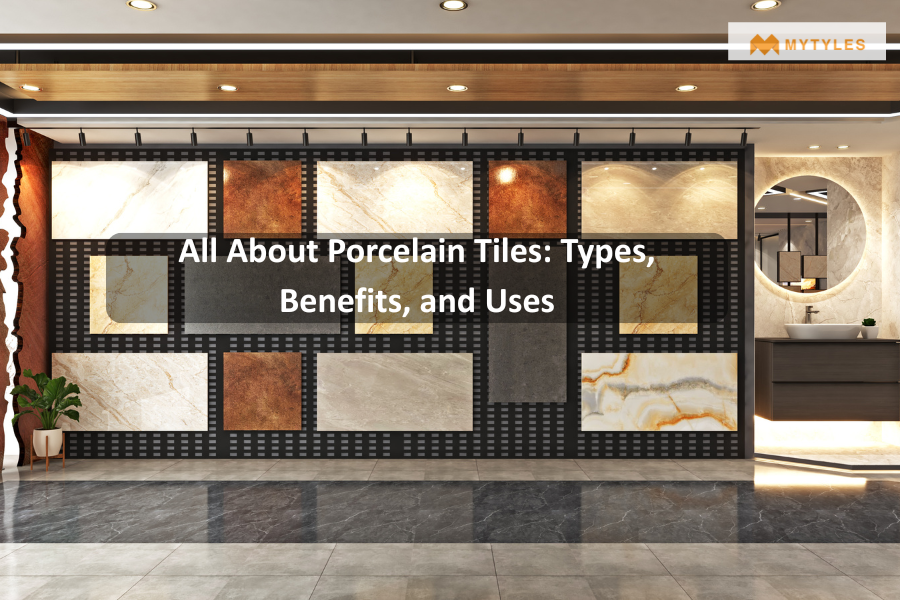
Porcelain tiles are often regarded as a top choice for both residential and commercial spaces thanks to their exceptional durability, aesthetic appeal, and versatility. Every tile has its own unique set of advantages. Some are highly sought after for their durability, while others are more valued for their aesthetic value or practicality. Porcelain can combine all these qualities. Their refined finishes and ability to mimic natural materials such as stone and wood make them a preferred solution for floors, walls, and outdoor applications, offering endless design possibilities. This blog will explain these tiles, how they are made, and where they would work best. Whether you are renovating your bathroom, upgrading your kitchen, or seeking a durable flooring solution, understanding the specifics of porcelain tiles can be beneficial.
What is Porcelain Tile?
Porcelain tiles are considered a newer version of ceramic tiles with a few key differences. They are made from refined clay and fired at high temperatures. They have a dense, durable surface that makes them highly resistant to moisture and wear. This durability, combined with an ability to mimic various textures and finishes, has made them a widely used option for both homes and commercial spaces. Porcelain is denser, more water-resistant, and more durable. This makes them suitable for high-traffic, moisture-prone areas like kitchens and bathrooms.
What Is Porcelain Tile Made Of?
This tile is made out of a mixture of natural materials, mainly refined clay, along with feldspar, quartz, and silica. These elements are combined through a manufacturing process that results in a dense, durable, and low-porosity material. Further, they are laid off at much higher temperatures, making them stronger and more resistant to moisture.
Manufacturing Process
The manufacturing process of this tile involves a few steps listed below:
- Raw Material: To achieve the desired strength and durability, high-quality clay, feldspar, and mineral components are selected.
- Milling & Mixing: The raw materials are then finely grinded into a powder and mixed with water to form a consistent slurry.
- Shaping & Molding: The mixture is then shaped into tiles using a high-pressure press, resulting in uniform thickness and density.
- Drying: Before entering the kiln, the shaped tiles undergo drying to eliminate excess moisture.
- High-Temperature Firing: The tiles are then fired at temperatures exceeding 1200°C, which amplifies their strength, hardness, and low water absorption properties.
- Glazing & Finishing: Lastly, depending on the type, some tiles receive a glazed coating for added design and protection. Others remain unglazed for a more natural look.
Types of Porcelain Tiles
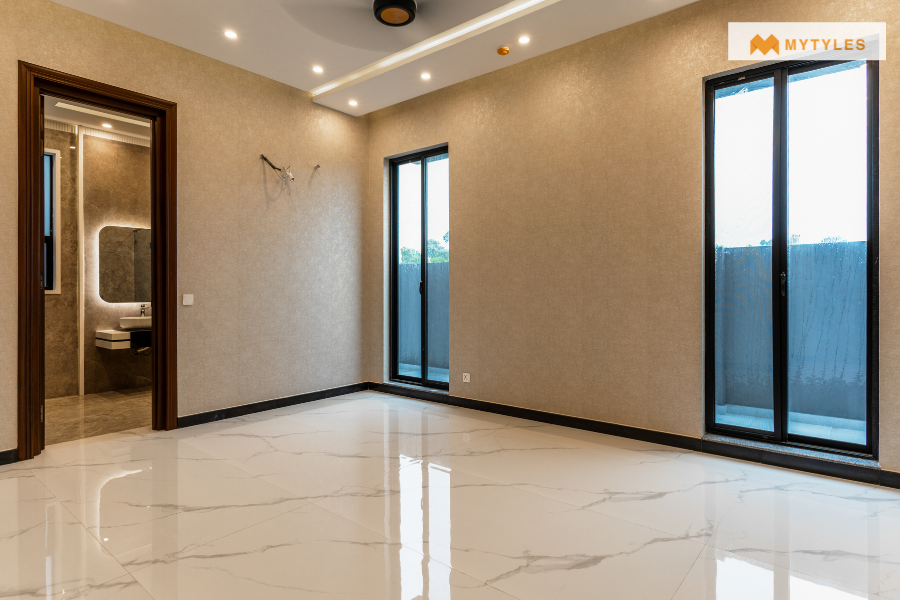
These tiles come in different types, and each has its features that improve it for different rooms and styles. Hence, types of porcelain tiles can range from high-gloss finishes to textured surfaces that mimic natural materials.
- Glazed Porcelain Tiles: Coated with a glossy, matte, or textured glaze that resists stains and adds color variety. Ideal for walls, decorative floors, and residential interiors.
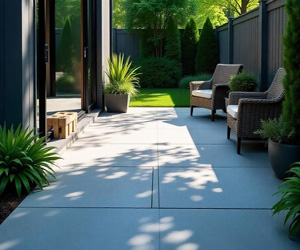
- Unglazed Porcelain Tiles: Natural, textured surface without glaze, making them slip-resistant and durable. Perfect for outdoor spaces, industrial zones, and high-traffic floors.
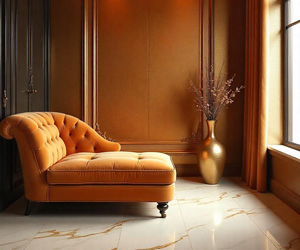
- Polished Porcelain Tiles: Mechanically polished for a shiny, reflective finish that adds elegance. Great for living rooms and offices but may need sealing to prevent stains.
- Textured Porcelain Tiles: Designed to replicate natural stone, wood, or concrete with extra grip. Best suited for bathrooms, patios, and poolside areas.
Advantages of Porcelain Tiles
These tiles are a popular choice for flooring and wall applications. The advantages of porcelain tiles can be their durability, versatility, and resistance to moisture. They are also designed to withstand daily wear and tear.
- Durability: Porcelain tiles are tough, scratch-resistant, and long-lasting, making them ideal for high-traffic areas in homes and commercial spaces.
- Water & Stain Resistance: Their low absorption rate keeps moisture and stains at bay, perfect for kitchens, bathrooms, and outdoor areas.
- Design Variety: Available in endless colors and textures, porcelain tiles can mimic wood, marble, or stone with matte, polished, or textured finishes.
- Low Maintenance: Easy to clean and resistant to mold or bacteria, they stay fresh with minimal effort.
- Fire & Heat Resistance: Porcelain tiles don’t burn or warp, making them safe and durable for kitchens, fireplaces, and sunny outdoor spaces.
What Does Porcelain Tile Look Like?
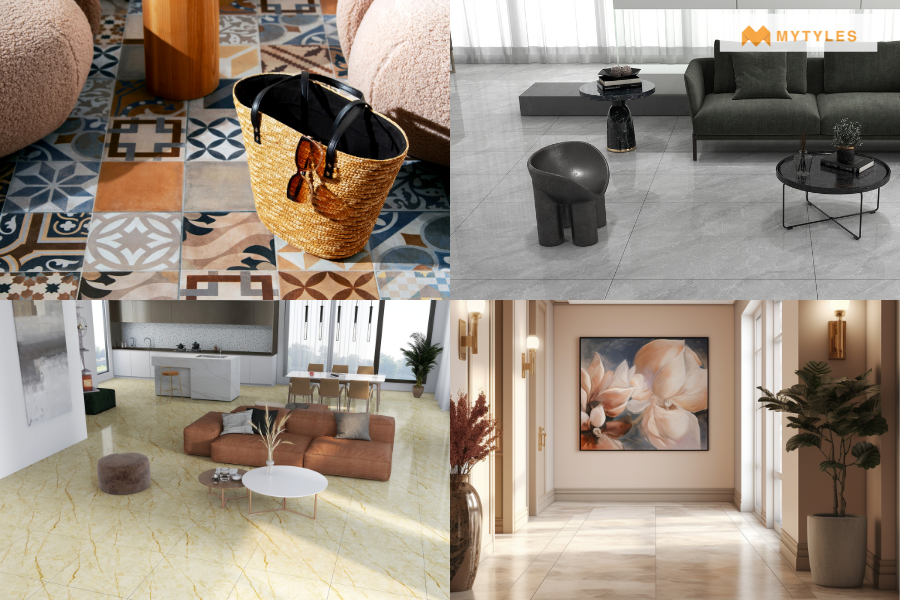
Porcelain tiles can offer incredible versatility, making them a favorite for both modern and classic interiors. They are available in a wide range of finishes, textures, patterns, and colors. Let’s explore some of them below:
By Finishes
The finish of a tile influences its overall look, feel, and functionality, from glossy and reflective to matte and subdued.
- Glossy Finish: This finish is reflective and polished, perfect for creating an elegant look in living rooms and hallways.
- Matte Finish: This finish is subtle and non-reflective, providing a sophisticated appearance with better slip resistance and can be ideal for wet areas.
- Satin Finish: This finish gives a balance between matte and glossy, providing a soft sheen without being overly reflective.
By Textures
These tiles come in various textures, adding depth and character to surfaces while also improving grip and usability.
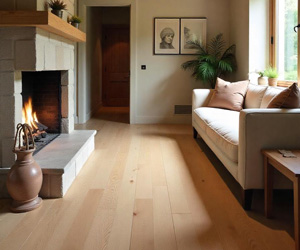
- Wood-Look: This texture can mimic natural wood grains while offering better durability and water resistance.
- Stone-Look: This texture can replicate the rugged texture of kota, limestone, or travertine and add a rustic or earthy appeal.
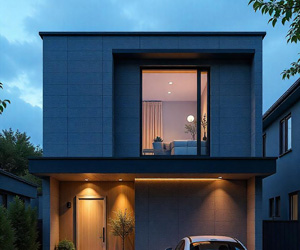
- Concrete-Look: This texture can be perfect for industrial and minimalist designs, offering an urban feel.
By Patterns & Layout
Beyond solid colors and textures, porcelain tiles come in various patterns and layouts that add personality to any space.
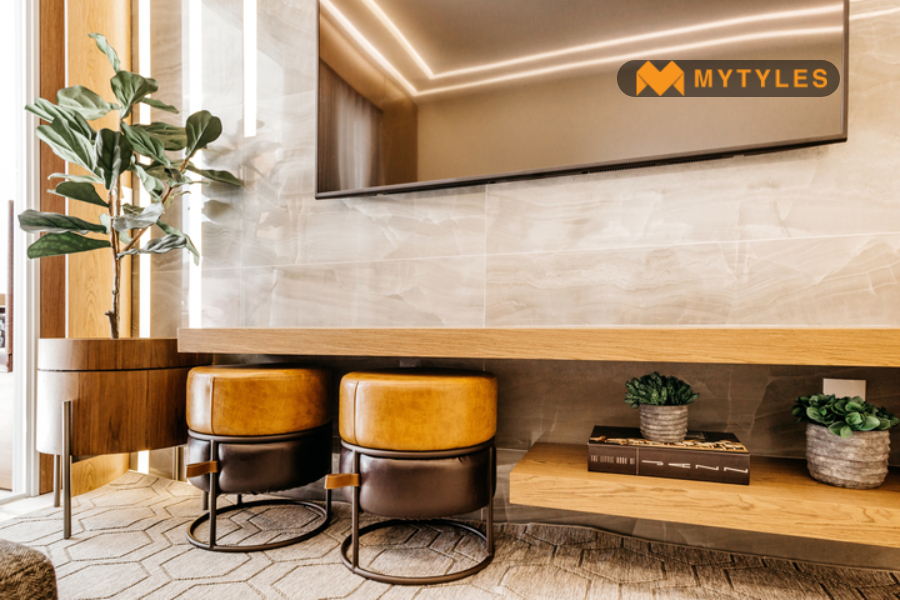
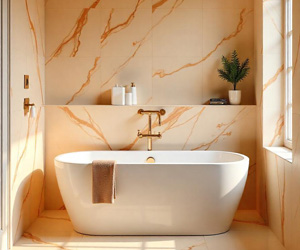
- Marble-Like: Porcelain tiles with a marble-like finish recreate the elegant veining of real marble, giving your space a luxurious and timeless look without high maintenance.
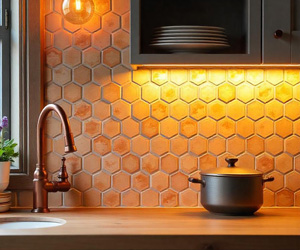
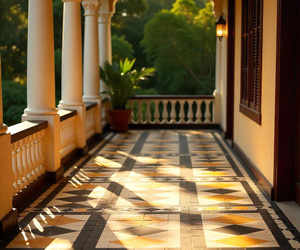
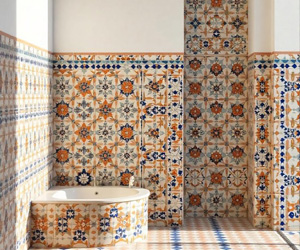
- Geometric Pattern: Geometric porcelain tiles feature shapes like hexagons and squares that add creativity and visual depth, making them ideal for accent walls and statement floors.
- Terrazzo Effect: Terrazzo-look porcelain tiles have a speckled design that blends vintage charm with a modern, stylish feel, perfect for bathrooms and living areas.
- Large-Format Tiles: These tiles offer a seamless, expansive appearance with minimal grout lines, creating a clean and open look for large or modern spaces.
- Herringbone Pattern: The classic zigzag layout of herringbone porcelain tiles adds texture, movement, and sophistication to kitchens, bathrooms, and feature walls.
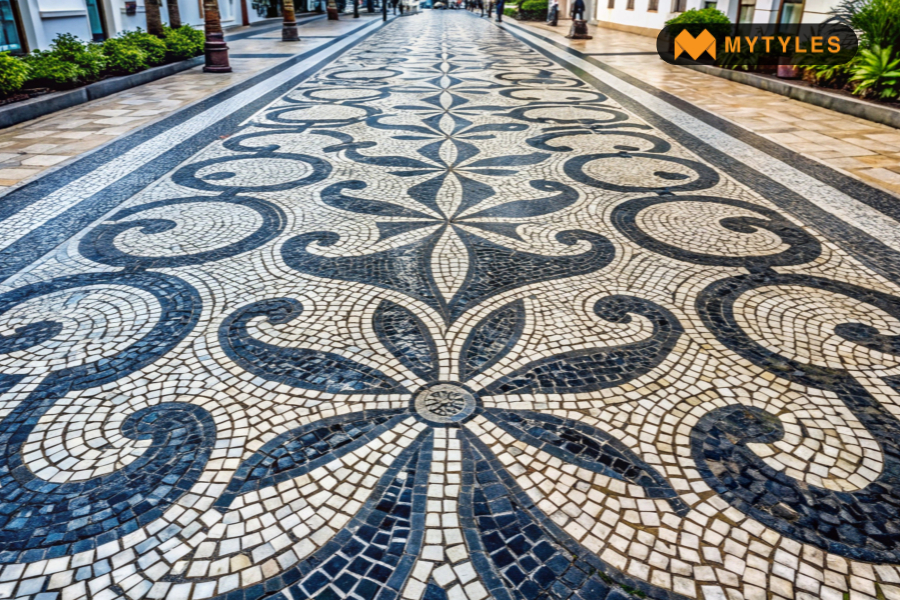
- Mosaic Pattern: Mosaic porcelain tiles use small, detailed pieces to create artistic designs, perfect for kitchen backsplashes, decorative walls, or outdoor spaces.
By Colors
Porcelain tiles are available in an extensive range of colors, allowing homeowners and designers to choose hues that complement their space.
- Neutral Tones: Shades like beige, grey, and white are timeless and versatile, blending beautifully with any decor style and creating a clean, elegant look.
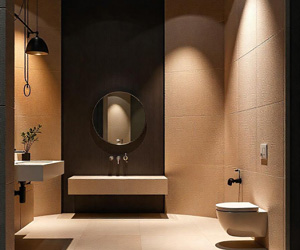
- Dark Shades: Colors such as black, charcoal, and deep brown bring depth and sophistication, perfect for modern or industrial spaces.
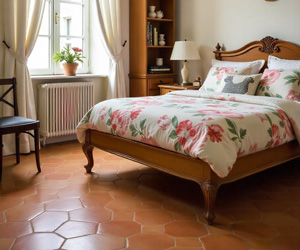
- Warm Hues: Terracotta, sand, and gold tones add warmth and charm, ideal for rustic, Mediterranean, or cozy home interiors.
- Bold Colors: Vibrant shades like blue, green, and burgundy make a statement, adding character and personality to walls and floors.
Best Uses of Porcelain Tiles
These tiles can be used in various spaces, be they indoors or outdoors. They can offer a balance of functionality and aesthetics.
- Kitchen: Ideal for floors, backsplashes, and countertops. Porcelain kitchen tiles are waterproof, stain-resistant, and heatproof, perfect for busy cooking areas.
- Bathroom: Porcelain bathroom tiles are non-porous, mold-resistant, and easy to clean. Great for floors, walls, and shower spaces with slip-resistant finishes for safety.
- Living Room: Available in wood, marble, and stone looks. Durable and stylish, porcelain tile for living room work beautifully on floors, walls, and fireplace surrounds.
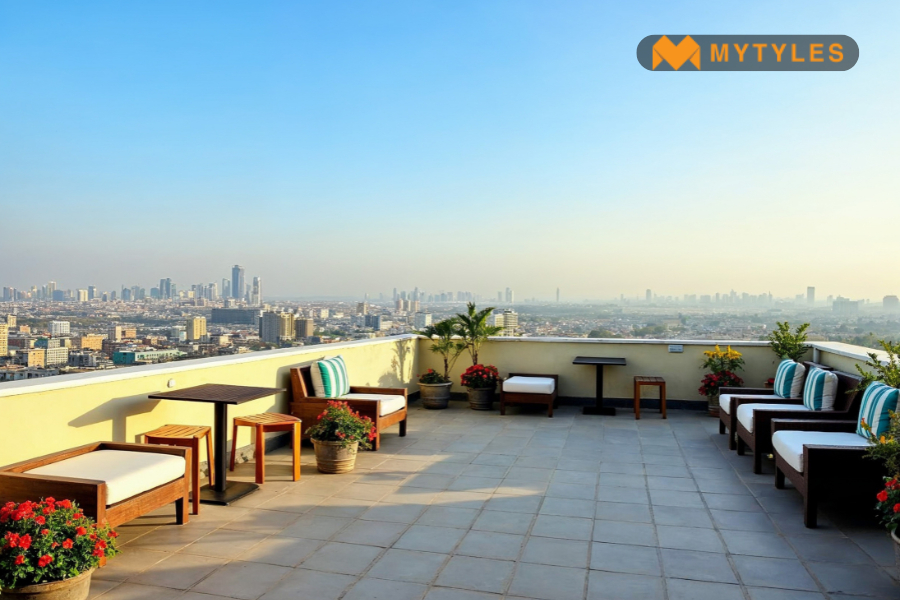
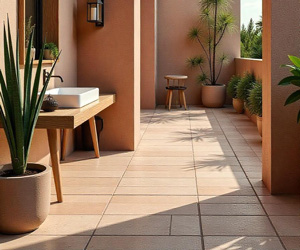
- Outdoor Areas: Perfect for patios, balconies, and pool decks. Porcelain outdoor tiles are weatherproof, non-slip, and durable, making them ideal for walkways and driveways.
A Final Look at Porcelain Tiles
Porcelain can offer unmatched durability, water resistance, and design for any space. While they require professional installation and a higher initial investment, their longevity and minimal maintenance can provide excellent long-term value. Whether for indoor or outdoor spaces, porcelain can deliver reliable performance without sacrificing style. You can consider your specific needs for moisture exposure and aesthetics when selecting the perfect porcelain tiles. For more information on transforming your space with various porcelain tile collections, visit the MyTyles website or our experience center.
FAQs On Porcelain Tiles
Question: What is porcelain tile made of? |
| Answer: Porcelain tiles are made from a dense ceramic material composed of clay, feldspar, and quartz, fired at high temperatures to achieve durability and water resistance. |
Question: What is the difference between porcelain and ceramic tiles? |
| Answer: Porcelain tiles are denser and less porous than ceramic tiles, offering greater durability and water resistance, making them suitable for high-traffic areas and wet environments. |
Question: Is Porcelain Waterproof? |
| Answer: Porcelain tiles are highly water-resistant due to their low porosity, but they are not completely waterproof. Grout lines can still absorb water. |
Question: Can porcelain tiles be used outdoors? |
| Answer: If specifically designed for outdoor use, porcelain tiles can withstand weather conditions and UV exposure. |
Question: Are porcelain tiles pricier than ceramic tiles? |
| Answer: Yes, porcelain tiles are generally pricier than ceramic tiles due to their higher quality and durability. However, they offer long-term benefits in terms of maintenance and lifespan. |
Latest Blogs By MyTyles