Inspiration Gallery
Blog
Tile Calculator
08065423741



.svg)


What Size Kitchen Sink Do You Need? Measurement & Fitment Guide
ByAditi Bardhan

Wed , May 20 , 2026

Read Time: 5 Min


 Copied!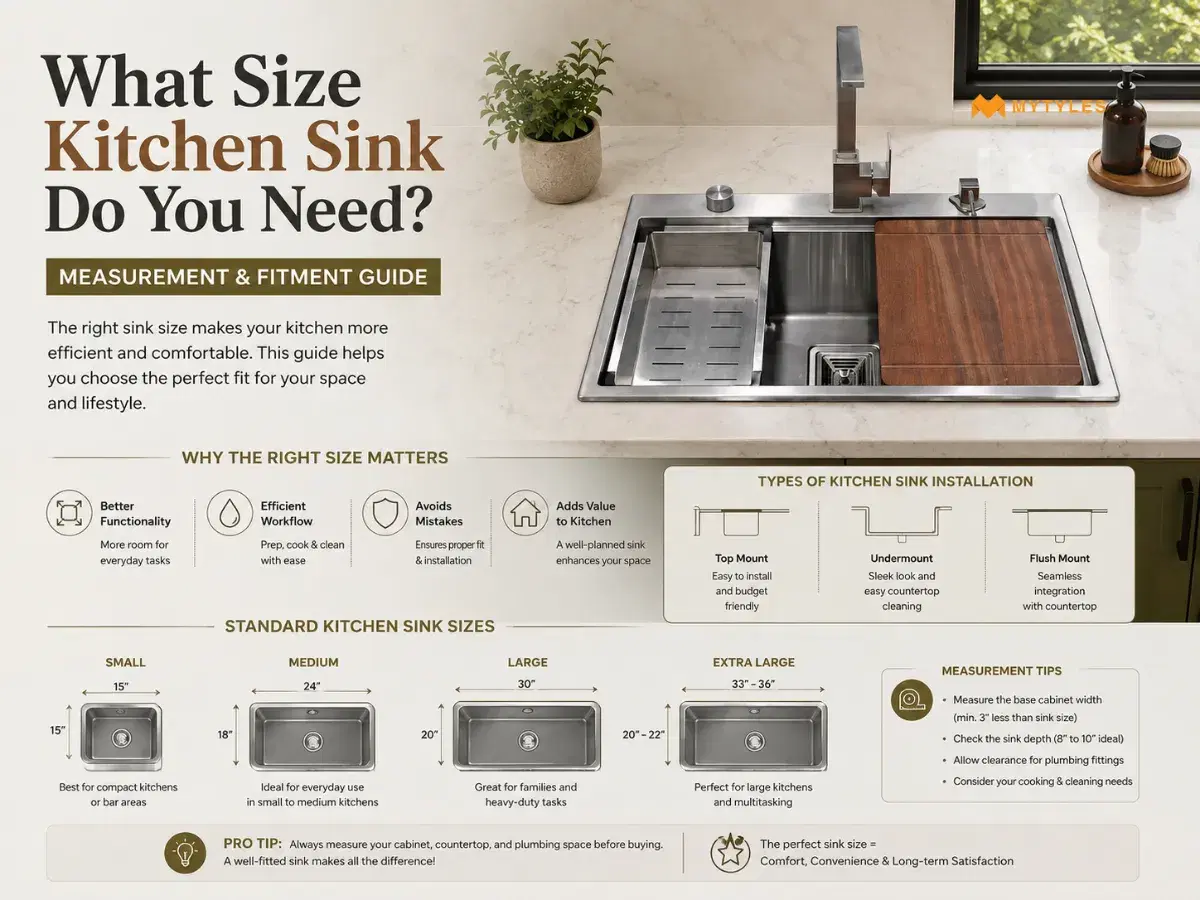
A sink that looks perfect on display can feel completely wrong once installed at home. Many kitchens struggle with splashes, limited washing space, or awkward placement simply because the bowl size wasn’t planned around cabinet width and counter depth. Understanding how to measure a kitchen sink makes a surprising difference in daily comfort. The goal is to match design with function so the sink supports heavy cooking days just as smoothly as light meal prep. This guide explains measurements, layouts, and common mistakes to help homeowners choose thoughtfully. From checking bowl proportions to aligning with your workflow, every detail plays a part in selecting the right kitchen sink design for your layout.
How to Measure Your Kitchen Sink Space?
Most buyers start searching for kitchen sink sizes without checking their cabinet and counter first. A quick round of measurement can save a lot of rework.
- Measure Cabinet Size: Open the base cabinet and measure the width, depth, and height. This gives you the minimum cabinet size for kitchen sink selection. Many people skip the height, but it matters if you plan to add filters, disposers, or water purifiers below the sink.
- Measure Countertop Cutout: Next, check the kitchen countertop cutout size if you already have a counter in place. For new counters, plan your cutout based on the sink you choose. Leave some tolerance around the edges so installers can seat the sink firmly.
- Measure Sink Depth & Clearance: People often forget vertical rooms. The depth of the kitchen sink should allow comfortable washing without splashing or bending too much. Deeper bowls need extra clearance for plumbing and accessories inside the cabinet.
- Plumbing & Undersink Obstructions: Before you buy anything, inspect the pipes, RO filters, valves, or waste adapters that take up space. Many homeowners buy a large bowl first and later realise their kitchen sink installation space is blocked by plumbing.
Kitchen Sink Type
 (1).webp)
Understanding how different sink types perform makes choosing the right bowl much easier. Each style supports a different workflow, counter layout, and washing habit, so knowing these differences helps match the sink to your kitchen’s routine.
Single Bowl Sink
Single bowls work well in compact kitchens that prefer a simple layout. The open space supports larger utensils without dividing the basin. Many households that enjoy a clean and organised counter layout choose this format because it keeps washing straightforward and reduces clutter across the prep zone.
Double Bowl Sink
A double bowl kitchen sink supports multitasking by separating washing and rinsing. The partition helps organise vegetable cleaning, utensil soaking, and dishwashing without mixing tasks. Families with frequent cooking routines appreciate the structure it brings, especially during busy mornings and evenings when cleaning activities overlap.
Farmhouse / Apron Sink
Farmhouse sinks feature a deep exposed front and often hold heavier cookware comfortably. The design requires a reinforced cabinet and precise fitting so the apron aligns neatly with the counter. Many homeowners admire the generous bowl space that supports frequent cooking and large utensil washing.
Undermount Sink
Under-mounted bowls sit beneath the counter for smoother wiping and cleaner edges. The under-mount sink size depends on counter thickness and how much overhang suits your workflow. This style is popular among families who prefer uninterrupted counter lines during food prep.
Top-Mount / Drop-In Sink
A top-mount sink suits kitchens planning quick remodels or replacements. The rim rests on the counter, making installation simple and stable. This option works well in older homes where the existing countertop remains unchanged, but the top-mount sink size needs an upgrade.
Corner Sink
An L-shaped layout often benefits from a corner kitchen sink, which frees straight counter space for prep work. The diagonal shape requires accurate measurement because it doesn’t follow standard rectangular sizing. This format maximises back-corner areas that typically stay unused.
Depth & Bowl Capacity Guide
Choosing the right depth shapes your comfort, washing efficiency, and under-sink clearance. Here’s a breakdown of what each depth typically supports:
- 6–7 inches: Light cooking, easy reach, ideal for small families; struggles with large pans.
- 8 inches: Good everyday depth, balanced comfort, may feel shallow during heavy washing.
- 9 inches: Great for medium-to-heavy cooking; supports larger cookware; requires smart plumbing layout.
- 10 inches: Excellent capacity for busy households; reduces clutter; needs more cabinet depth.
- 11 inches: Suits high-volume washing or commercial-style kitchens; great for oversized utensils; demands careful under-sink planning.
Countertop Material for Kitchen Sink
.webp)
Choosing the right Kitchen countertop surface supports long-term durability, smooth installation, and proper bowl alignment. Each material behaves differently during cutting, mounting, and sealing, so understanding how it pairs with your sink style helps avoid common fitment issues.
Granite Sink
Granite counters stay firm during heavy washing and support larger bowls without stress cracks. Homeowners who prefer consistent styling across the counter often choose a granite kitchen sink to match the surface tone.
Quartz Sink
Quartz offers a smooth finish, reliable strength, and predictable cutout edges. Many families pick quartz kitchen sinks for a coordinated look that blends with the slab. The quartz kitchen sink with drainboard surface resists stains, making it practical for homes that cook often.
Stainless Steel Sink
Metal counters suit compact kitchens, utility areas, and rental properties. A stainless steel kitchen sink aligns naturally with these surfaces. Many households also prefer an ss kitchen sink for easy cleaning.
Top Kitchen Sink Size Tips for Buyers
.webp)
Even experienced homeowners make small errors that lead to inconvenience later.
- Sink Position: The sink position in kitchen setups should align with prep zones. A good alignment saves steps, reduces mess, and improves your daily routine.
- Vastu-Based Placement: Some households check vastu for kitchen sink and stove while planning layouts. Placing water and fire elements with adequate distance keeps the setup balanced for many traditional homes.
- Cutout Measurements: Improper measurements can misalign the tap hole, bowl edges, or drainboard. When selecting designs with boards, check the drainboard size requirements beforehand.
- Understanding Sink Types: People often compare a large single bowl against a multi-bowl option. The single vs double bowl sink question depends entirely on your cooking habits and how many utensils you wash daily.
- Fitment Clarity: A detailed kitchen sink fitment guide gives clarity on bowl width, alignment, drainer placement, and plumbing routes. Your installer should always double-check this before fixing the sink.
- Double Drainboard: Homes that prefer extended drying space often explore a double bowl kitchen sink with a double drainboard to streamline washing and draining.
- Drainboard Size: If you prefer a side drying zone, knowing kitchen sink with drainboard sizes helps in planning the workflow accurately.
- Dimensions Matter: Understanding all aspects of kitchen sink dimensions helps in selecting the right appliance for your daily lifestyle. For homes with modern interiors, a modern kitchen sink design adds both function and clarity to the setup.
- Color Options: Some homeowners love bolder shades. For instance, a black kitchen sink brings a striking contrast in contemporary kitchens without looking flashy.
Picking a Sink That Fits Your Home
Choosing the right sink becomes far easier once cabinet space, cutout size, and daily washing habits are clear. A bowl that matches your routine keeps the kitchen running smoothly and supports comfortable cooking. Understanding kitchen sink installation space, depth, and proportions helps avoid guesswork and brings more confidence to the selection process. Many homeowners gain clarity by seeing sinks in real settings, so the MyTyles experience centre in Bengaluru becomes a helpful stop during planning. Those who prefer browsing quietly at home can explore the full collection online and compare sizes at their own pace.
Expert Reviewed by Biren Agrawalla
Biren Agrawalla, the Founder of MyTyles with over 10 years of experience across tile, retail, and home decor. Driven by a passion for tiles and a deep understanding of customer behaviour, he has spent his career transforming how people discover and buy tiles online. Biren combines practical retail insight with modern digital solutions to make tile shopping smarter, more intuitive, and design focused. At MyTyles, he champions a customer first approach, ensuring every experience from browsing to buying is reliable, seamless, and inspiring.

What Is The Standard Size Of A Kitchen Sink?

Standard kitchen sink sizes range between 22–30 inches in length, though the ideal size depends on cabinet width, counter space, and the amount of daily washing your kitchen typically handles.
Is a Single Or Double Bowl Sink Better?
Single bowls suit compact spaces and large utensils, while double bowls help separate washing tasks. Choosing between them depends on cooking habits, family size, and preferred cleaning routine each day.
What is the Ideal Depth For a Kitchen Sink?
Depths between 8–10 inches balance comfort and capacity by holding utensils easily while preventing frequent splashes. Cabinet height and plumbing layout also influence which depth feels most practical.
How do I Choose the Right Sink Size for My Kitchen?
Check cabinet width, cutout dimensions, and daily washing needs. Many homeowners compare real sink sizes at the MyTyles experience centre in Bengaluru for a clearer understanding before finalising a model.
How Long Does a Kitchen Sink Typically Last?
A well-installed sink usually lasts many years, depending on the material, usage, and care. Regular cleaning, proper sealing, and avoiding harsh impact help maintain appearance and structural strength over time.

ABOUT THE AUTHOR
Aditi Bardhan
I'm Aditi Bardhan, a professional content writer with over five years of experience creating research-backed content across multiple industries. I specialise deeply in the tile and surface materials industry, crafting high-converting content for homeowners, architects, interior designers, and trade professionals. My work is grounded in technical research, design understanding, and consumer behaviour insights, enabling me to simplify complex concepts, highlight material benefits, and help brands build authority in the tile and construction space.
Latest Blogs By MyTyles