Inspiration Gallery
Blog
Tile Calculator
08065423741



.svg)


Beyond Beauty: Choosing Kitchen Tiles for Durability and Functionality
ByBiren Agrawalla

Tue , Aug 18 , 2026

Read Time: 5 Min


 Copied!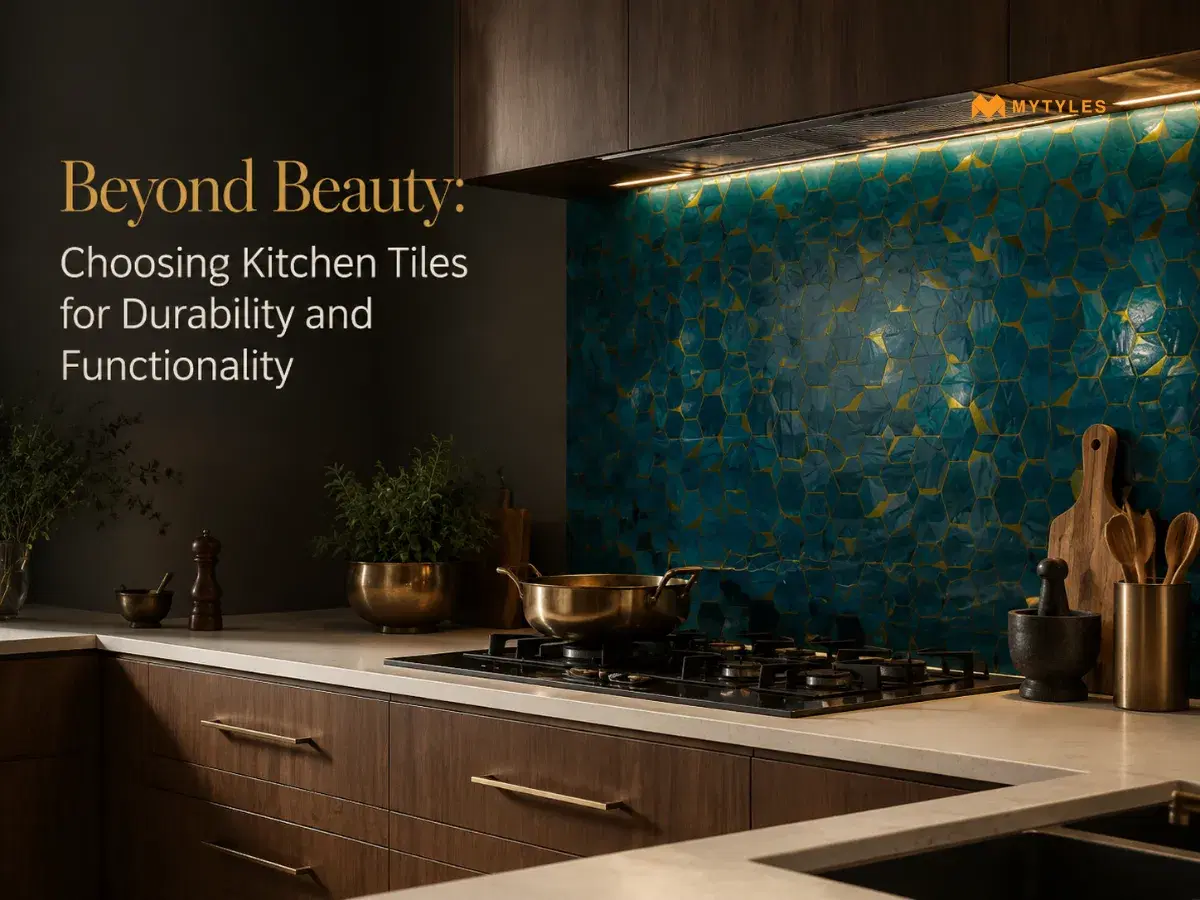
Step inside any modern kitchen, and you’ll notice how tiles quietly tie everything together. They sit beneath your feet, line your walls, protect your counters, and yet remain one of the most underrated design choices in the entire home. It’s easy to get carried away by aesthetics, patterns, shades, finishes, but great kitchen design isn’t only about looks. It’s about how surfaces behave every single day: when oil splatters near the stove, when you accidentally drop a spoon, or when kids rush in with wet feet after watering plants.
Choosing the right kitchen tiles means thinking beyond color palettes and Pinterest inspiration. It’s about how they’ll age with time, how easily you can clean them, and how they handle constant action. Tiles aren’t just a finishing touch, they’re the foundation of how your kitchen feels and functions.
Understanding Kitchen Tile Materials
Every kitchen has its own rhythm, some handle daily cooking marathons, while others are more about style and occasional hosting. Choosing the right kitchen tile material ensures your kitchen stays beautiful and functional for years. Each material comes with distinct strengths in durability, maintenance, and aesthetics.
Let’s explore the most reliable options for your space:
Ceramic Kitchen Tiles
Ceramic tiles remain a timeless kitchen choice, offering both style and practicality. They’re affordable, easy to maintain, and come in endless patterns and colors. Glazed ceramics are stain- and moisture-resistant, perfect for walls and backsplashes. Though slightly softer than porcelain, they’re ideal for kitchens with moderate activity and add a refined touch effortlessly.
Porcelain Kitchen Tiles
Porcelain tiles excel in durability and design flexibility. Made under extreme heat, they’re dense, non-porous, and suitable for areas with heavy use. Their ability to mimic stone, marble, or even wood makes them a stylish yet practical pick. With low maintenance needs, porcelain tiles bring long-lasting beauty and resilience to any modern kitchen layout.
Vitrified Kitchen Tiles
Vitrified tiles combine strength and shine, ideal for kitchens that see constant use. Their glossy surface, dense structure, and minimal porosity ensure resistance to scratches, stains, and spills. These tiles maintain their color and finish for years, making them a durable, low-maintenance choice for high-performance cooking spaces with an elegant, polished appeal.
Natural Stone Kitchen Tiles
Natural stone tiles, like marble, granite, or slate, introduce organic charm and luxury to kitchens. Each piece features unique veining and texture, ensuring no two tiles are the same. They’re durable but need periodic sealing to resist stains and moisture. Perfect for homeowners seeking authenticity and timeless appeal, they elevate kitchen aesthetics beautifully.
Terracotta and Cement Kitchen Tiles
Terracotta and cement tiles infuse warmth and artistry into kitchen spaces. Terracotta’s earthy tones create a cosy ambiance, while cement tiles bring vibrant, handcrafted patterns. Though both need regular sealing to stay water-resistant, they’re perfect for accent walls, low-moisture zones, or rustic-style kitchens where texture and character matter most.
Choosing Tiles Based on Kitchen Zones
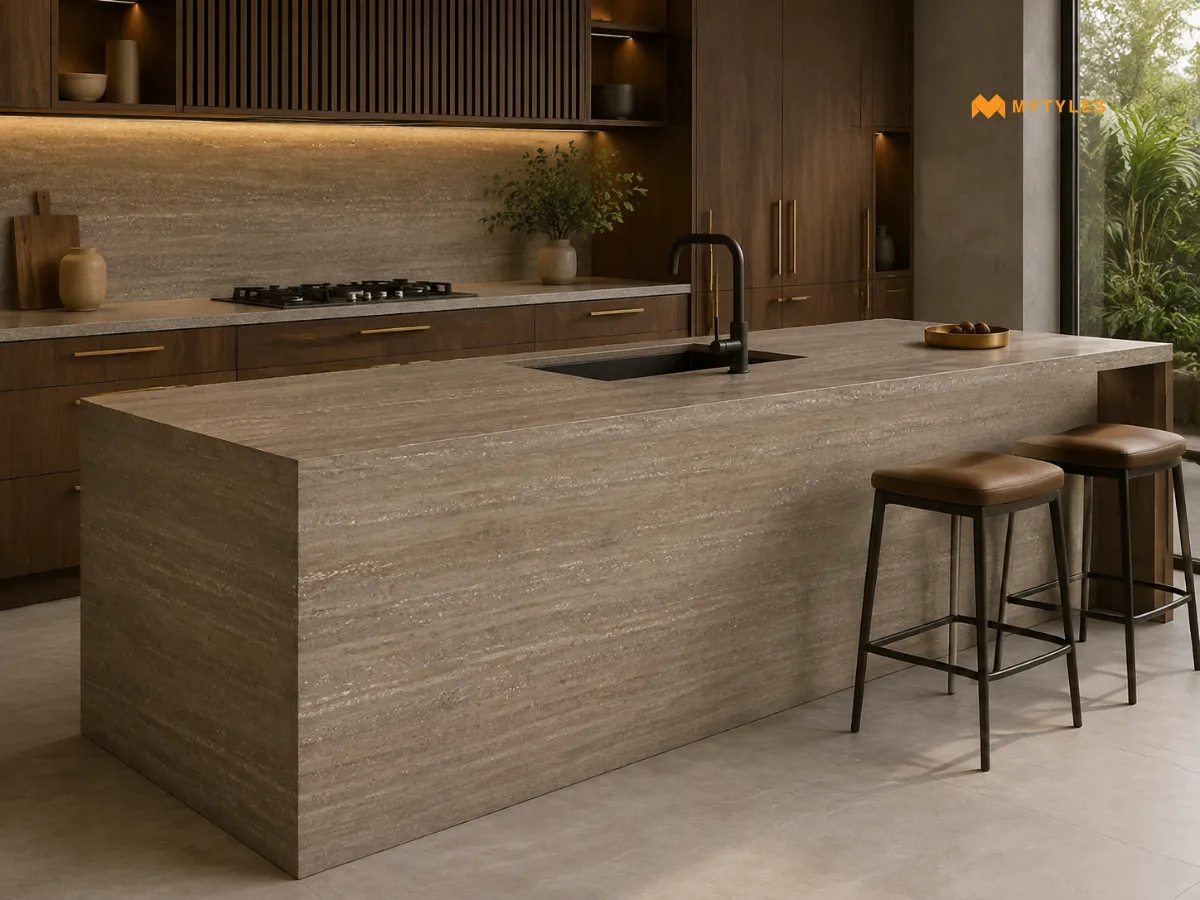
Different kitchen areas experience different types of stress, spills, foot traffic, grease splatter, or heat exposure. The key to long-term performance lies in choosing tiles tailored for each zone instead of a one-size-fits-all approach.
Kitchen Floor Tiles
Kitchen floors tiles bear the brunt of daily activity. They must handle spills, foot traffic, and dropped utensils while staying easy to clean. Porcelain and vitrified tiles top the list for flooring durability. Their strength and low porosity make them resistant to stains and water absorption. If you prefer a textured surface, choose matte or slip-resistant finishes to reduce accidents. Avoid overly glossy tiles on floors, as they can become slippery when wet. Large-format tiles create fewer grout lines, giving a clean and spacious feel, while patterned tiles can add a bold visual touch. For underfoot comfort, consider anti-fatigue mats near work areas. With the right combination of design and practicality, your kitchen floor can stay beautiful for decades without showing signs of wear.
Kitchen Wall Tiles and Backsplash
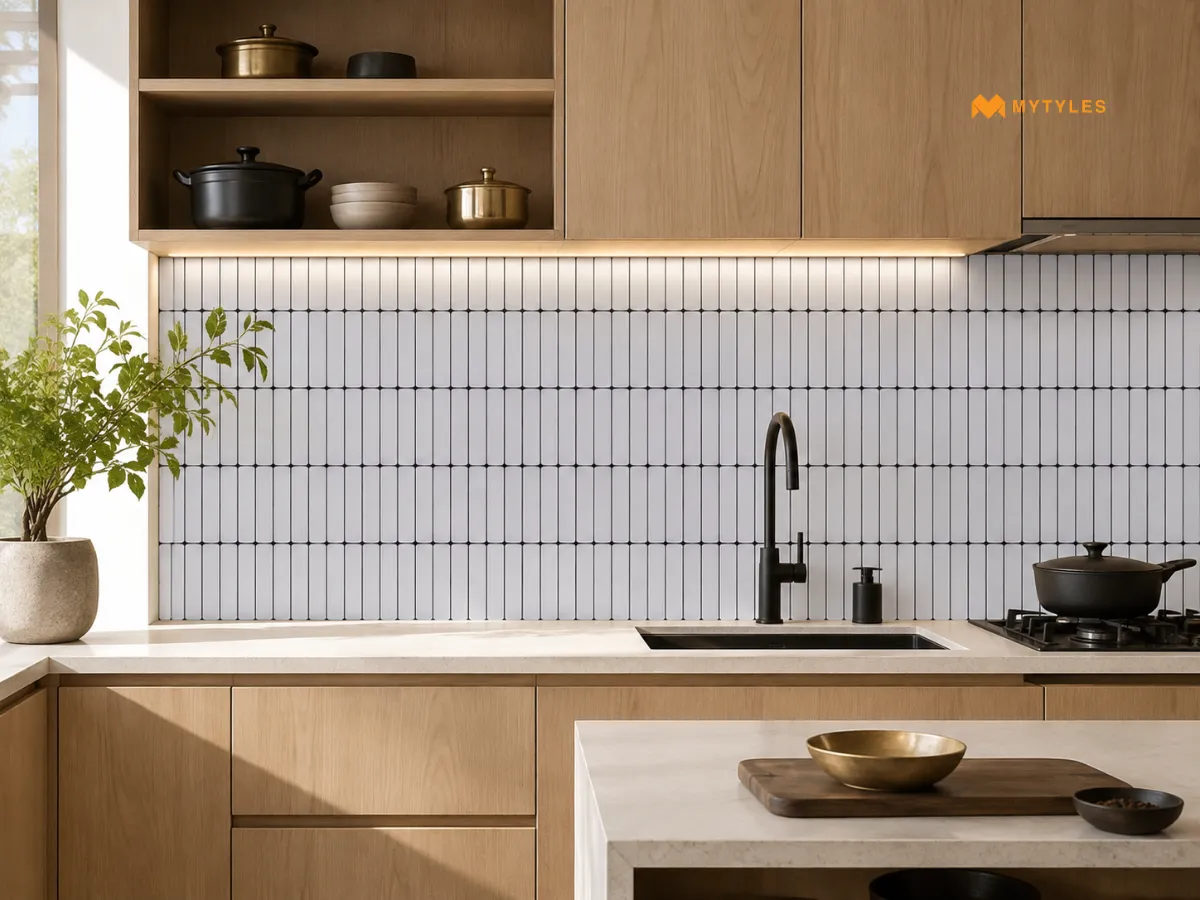
Walls and backsplashes give your kitchen personality, and protection. Ceramic, porcelain, and glass tiles are ideal for vertical surfaces because they’re light, easy to install, and resistant to moisture and heat. Your backsplash, in particular, deserves attention since it faces splatters, oil, and steam daily. Glossy finishes work best here because they wipe clean easily.
Subway tiles, mosaics, or Moroccan-inspired patterns can make your backsplash the design centerpiece of the kitchen. Try experimenting with color contrast, pair neutral cabinetry with vibrant backsplash tiles for a modern, lively effect. If your style leans subtle, opt for textured or matte tiles that blend effortlessly into the background while still adding dimension.
Kitchen Countertops and Work Areas
Kitchen countertops demand durability above all. Porcelain slabs are gaining popularity as an alternative to natural stone because they offer excellent heat, stain, and scratch resistance. They’re also non-porous, which means no sealing or special maintenance is needed. For a more classic feel, granite remains a top choice due to its resilience.
If you prefer a contemporary look, large-format vitrified tiles can give your countertops a seamless, sleek appearance at a more affordable cost. Avoid softer materials like limestone or unsealed stone on countertops, as they’re more prone to staining and etching. Choose finishes that resist knife marks and heat for daily cooking convenience.
Key Features to Look for in Kitchen Tiles
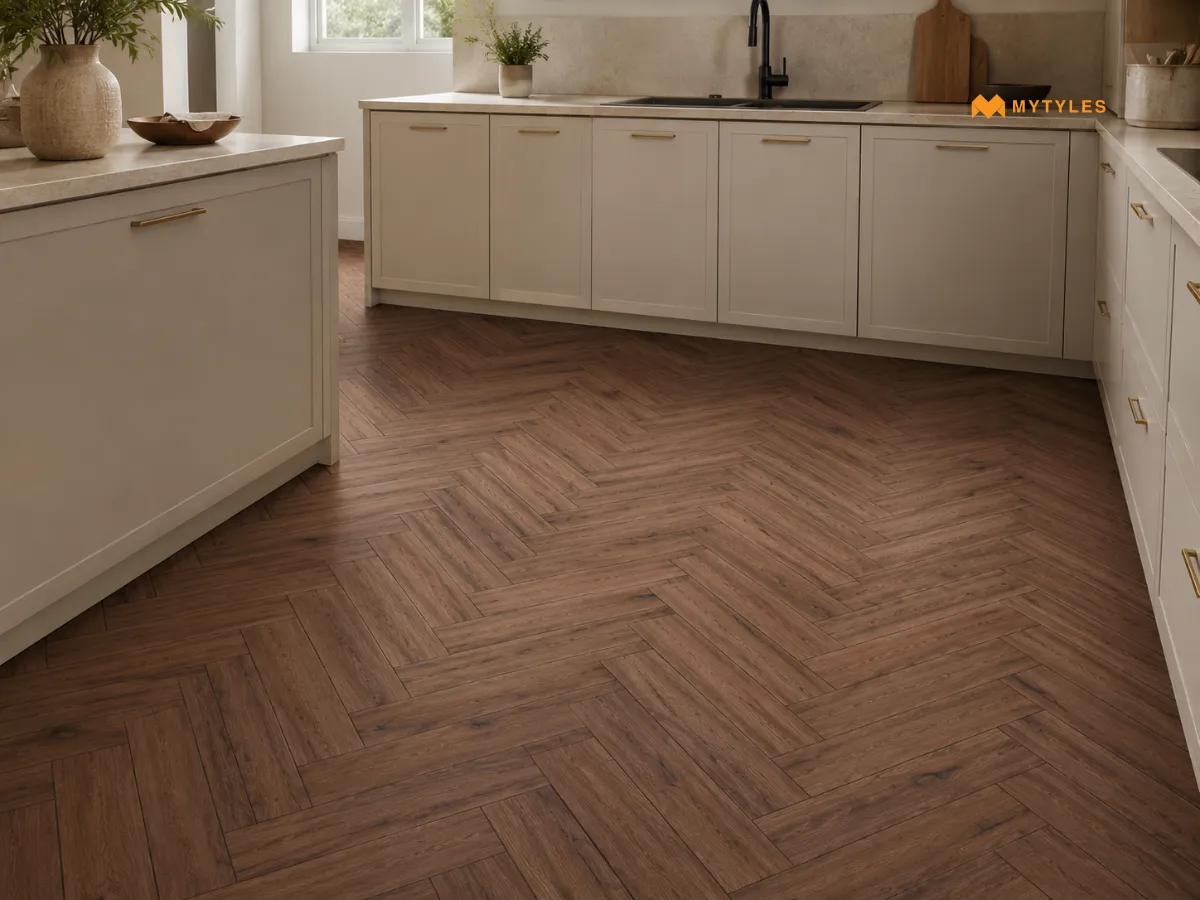
Beyond material choice, small details determine how well your tiles perform over time. Before finalising your purchase, assess these crucial factors that define real-world functionality.
- Slip Resistance: Kitchen spills are inevitable. Choose matte or textured tiles for the floor to prevent slips, especially around sinks and cooking areas.
- Water Resistance: Opt for non-porous materials like porcelain or vitrified tiles that prevent moisture absorption, reducing the risk of mold and stains.
- Heat Resistance: Tiles near stoves should withstand high temperatures without discoloring or cracking.
- Stain Protection: Smooth, sealed surfaces resist grease and spills, keeping the kitchen easier to clean.
- Easy Maintenance: Select tiles that can handle frequent cleaning without losing sheen, especially crucial in busy kitchens.

What Makes Kitchen Tiles Durable and Functional?

Kitchen tiles should resist stains, moisture, heat, scratches, and regular cleaning while matching their intended location. Porcelain and vitrified tiles are strong choices for floors, whereas glazed ceramic or porcelain tiles work well on walls and backsplashes. Always check product specifications, because a beautiful wall tile may not offer the strength or slip resistance needed for flooring.
How Does Slip Resistance Improve Kitchen Floor Safety?
For kitchen floors, choose tiles with tested slip resistance and a matt or lightly textured finish that provides secure footing without trapping too much dirt. Water, oil, and food spills can make smooth surfaces hazardous. Anti-skid tiles improve safety, but prompt spill removal, level installation, suitable grout joints, and clear movement paths remain equally important.
Why Do Water Absorption and Stain Resistance Matter?
Low-porosity tiles absorb less moisture and are generally easier to clean, making them practical near sinks, cooking counters, and utility areas. Stain-resistant surfaces help manage oil, turmeric, tea, and masala splashes. Homeowners should examine the water-absorption and stain-resistance ratings rather than relying only on finish or appearance, particularly in kitchens with frequent cooking and heavy daily use.
How Can Kitchen Tiles Handle Heat and Heavy Use?
Quality porcelain or vitrified floor tiles can withstand regular foot traffic, furniture loads, dropped utensils, and changing temperatures when correctly specified and installed. For walls behind cooking zones, select heat-tolerant, easy-clean tiles and use compatible adhesive. Durability also depends on a stable substrate, full adhesive coverage, proper joints, and avoiding concentrated impacts from very heavy objects.
How Do Tile Size and Grout Affect Functionality?
Tile size affects both appearance and everyday performance. Large-format tiles create fewer grout lines, simplifying cleaning, but require a flat base and skilled installation. Medium formats may reduce cutting around cabinets, corners, and appliances. Choose stain-resistant grout in a practical color, maintain consistent joints, and ensure the layout allows neat transitions without narrow, fragile tile pieces.
Which Kitchen Tile Finish Is Easiest to Maintain?
Choose a finish that balances stain resistance with cleaning ease. Very rough tiles may hold grease and dirt, while highly glossy floor tiles can become slippery after spills. Sweep regularly, mop with warm water and a mild tile-safe cleaner, and wipe oil or food immediately. Avoid harsh acids and abrasive scrubbers that may damage tile surfaces or grout.
What Should Homeowners Check Before Buying Kitchen Tiles?
Before buying, check the tile’s intended application, material, thickness, breaking strength, abrasion resistance, water absorption, slip rating, stain resistance, finish, shade variation, and cleaning instructions. View samples beside cabinets and countertops under actual lighting. Measure accurately, verify the batch number, purchase extra pieces for cuts and repairs, and appoint an experienced installer for lasting performance.

ABOUT THE AUTHOR
Biren Agrawalla
Biren Agrawalla is the Founder of MyTyles, driven by a passion for making tile buying simpler, smarter, and more customer-friendly. With a background in technology and a strong interest in how homes are designed, he built MyTyles to bridge the gap between traditional tile retail and modern customer needs. Biren focuses on understanding what people truly look for when creating their spaces, from practical choices to design inspiration. His work is centred on building thoughtful online solutions that help homeowners discover the right tiles with more confidence, convenience, and clarity.
Latest Blogs By MyTyles