Inspiration Gallery
Blog
Tile Calculator
08065423741



.svg)


Moroccan Tiles: Design Ideas for Kitchen, Bathroom & Floors
ByNandana Priya

Wed , May 20 , 2026

Read Time: 5 Min


 Copied!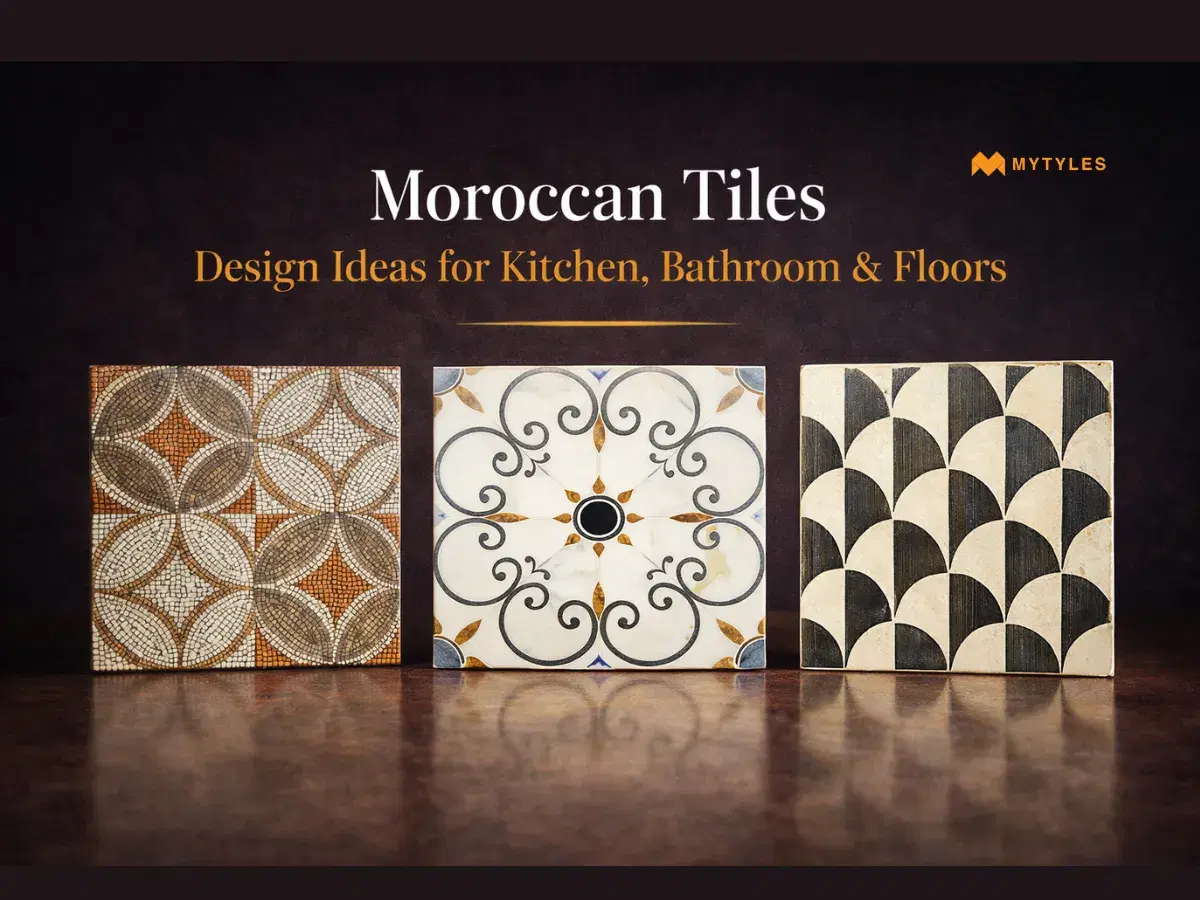
.webp)
Minimal interiors can be spotted everywhere; what if a single design element could completely transform the look of your space? This is exactly what Moroccan tiles do. Their geometric shapes and artistry hold deeper meanings that instantly steal a glance from the viewers. They have become one of the most popular choices among homeowners and designers. The Moroccan design tiles steal the spotlight by turning the world of clean lines and neutral color palettes into vibrant colors, intricate patterns, and craftsmanship.
Diving Into The Roots Of Moroccan Tile History
The journey of Moroccan tiles dates back several centuries. They are also known as 'Zellige' and were first made with clay and other natural materials. Traditional Moroccan tiles were meticulously handcrafted by skilled artisans using traditional methods. Even today, people admire the Zellige tiles for their historical significance, as the artisans meticulously preserve their rich craftsmanship, thereby preserving the tradition.
What Is So Special about Moroccan Tiles?
The question of why Moroccan tiles are special to use is easy to answer. They are defined by the styles, color scheme, and traditions of centuries-old artisanship. Even a small section with Moroccan-style tiles lifts the entire space. Their traditional beauty has also made them a popular option in both classic and modern interiors.
- Handcrafted Heritage: The Moroccan pattern tiles are all shaped, glazed, and cut by hand through centuries-old techniques that are passed down to the new generations. As the time alters, they are altered as per the requirements of the current needs without losing their charm.
- Intricate Geometric Pattern: The Moroccan design tiles can be characterised by close details and patterns that bring the surface to life. These intricate geometrical designs normally bear culturally established symbolism and traditional artistic elements.
- Bright Colors: Moroccan tiles are popular due to the color palettes and color balance that they add to the space. Deep blues, smoky terracotta, emerald greens, and sharp whites are colors that are usually combined to create a wonderful picture harmony.
- Materials And Textures: The modern Moroccan tiles are produced in the form of ceramic, vitrified, and porcelain tiles to satisfy the current functional needs of tile. The materials can also be used in residential and commercial premises, as they are easy to maintain.
Moroccan Tile Patterns
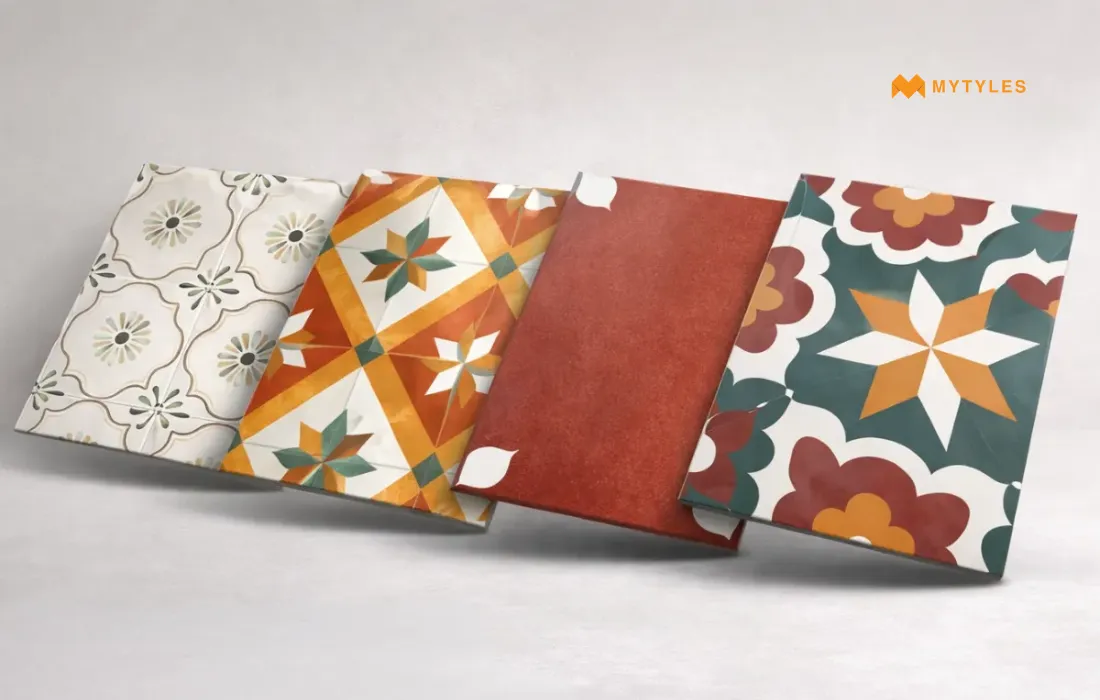
Patterns of Moroccan tiles are one of the significant reasons why the tiles are popular all over the world. Their use of geometrical shapes, flower patterns, and bright colors gives them a Moroccan impression at home. The patterns immediately make the spaces more beautiful and charming, incorporating craftsmanship into modern houses.
Honeycomb Design
Honeycomb design is inspired by the hexagonal shape of beehives. A popular option for this six-sided shape is the black-and-white Moroccan tile. This design is also a good fit in the backsplash, floor, and accent walls due to its clean but aesthetically appealing design.
Fleur-De-Lis Pattern
The Fleur-De-Lis Pattern resembles the shape of a lily flower. The pattern looks striking in Blue Moroccan tiles, where the shades highlight the blend of floral and symmetrical layouts. It adds grace and the touch of classic Europe to the Moroccan-inspired design in the rooms.
Floral Elements With Graceful Arcs
Floral Elements with Graceful Arcs reflect natural elements, especially Green Moroccan tiles, which enhance the fresh feel of the pattern. The curved lines also produce a clean, flowing, and smooth look that gives a pleasantness to the interiors.
Tastir Design
The Tastir design is a classic Moroccan geometrical design. The Moroccan tile texture is stacked like the star-like structures that are textured. They work well on feature walls, stair risers, and others spaces.
Jaali Designs
Jaali designs are inspired by the lattice screen, which is found in Moroccan and Islamic architecture. This design in Moroccan tiles allows light and shadows to highlight them. It brings out a three-dimensional effect and architectural artistry to walls.
Mix And Match Patterns
The strong contrast of colors like Moroccan tiles, black, and white creates a vibrant feature of design. They give the surface a dynamic feel. This combination provides an artistic effect by combining colors.
Moroccan Floral Grid
In the Moroccan Floral Grid, floral forms are arranged within a grid layout, bringing together a combination of geometric and floral motifs in one space. The design provides a well-balanced look to the surface.
Spaces That Truly Highlight The Moroccan Tiles
The nature of Moroccan tiles makes them applicable to all kinds of spaces. It can be placed on floors and walls, as well as small pieces, and immediately creates spaces that feel artistic and handmade. The designs and the colors make the boring surfaces become walls and floors that hold history and meaning.
Moroccan Tiles For The Kitchen
The kitchen needs tile that can handle everyday use, cooking, heat, stains, and spills. Moroccan tiles in kitchens stay practical by making cleaning and maintenance easy. Not only are they functional, but they also remain striking in backsplashes, counters, and islands.
Moroccan Tiles For Bathroom
Moroccan bathroom tiles are most suitable for shower walls, vanity backsplashes, and floors. By selecting finishes such as matt and textured, they stay skid-resistant, ensuring safety. Moroccan tiles for bathrooms also ensure moisture resistance and create a relaxing space.
Moroccan Tiles For Living Room & Balcony
Moroccan floor tiles are a better choice for the living room, as they make sure that the first impression of your home is welcoming and artistic. Moroccan tiles for balconies; they can also be used in feature walls to bring a Mediterranean charm to the outdoors.
Tips To Choose The Right Moroccan Tiles
There are some key factors you may need to consider for selecting the most suitable Moroccan tiles that will instantly enhance your room. With knowledge of these factors, identification of the right tile, which matches your taste, will become very easy.
- Review Finish, Size And Materials: By considering factors such as finish, size, and materials, you will make sure that your tile is durable and beautiful at the same time.
- Check Practical Functions: Checking the functions of a Moroccan tile, namely, slip resistance, maintenance, performance, and moisture resistance are important.
- Find The Right Placement: Kitchen, bathroom, floor, wall, or outdoors. Choose the place in which you plan to install the tiles, and also, you should take into consideration the purposes of the space.
- Balance Color Palette: Choose the appropriate color scheme and color combo for your space to make it look better overall by defining the tone.
- Look At Patterns: Patterns do have a significant role in the visual appearance. Choose the ones that suit your space among geometrical shapes, motifs, and others.
The Moroccan tiles are not the simple tiles; they are centuries-old crafts. They bring artistry to the space through patterns, colors, and textures. Each style and design reflects the beauty of the Zellige tile. The rich heritage and skilled craftsmanship lie behind every piece of Moroccan tile for floors and walls. Are you ready to take the art and the eternal beauty of the Zellige tile to your spaces? Select the Moroccan tiles that suit your taste and align with the functions of your space from the MyTyles collection.
Expert Reviewed by Biren Agrawalla
Biren Agrawalla, the Founder of MyTyles with over 10 years of experience across tile, retail, and home decor. Driven by a passion for tiles and a deep understanding of customer behaviour, he has spent his career transforming how people discover and buy tiles online. Biren combines practical retail insight with modern digital solutions to make tile shopping smarter, more intuitive, and design focused. At MyTyles, he champions a customer first approach, ensuring every experience from browsing to buying is reliable, seamless, and inspiring.

What Makes Moroccan Mosaic Tiles Unique For Home Interiors?

Moroccan mosaic tiles are known for their intricate patterns, handcrafted appearance, and vibrant color combinations. These tiles often feature geometric and floral motifs inspired by traditional Moroccan artistry. Whether used on walls or floors, Moroccan mosaic tiles add texture, depth, and cultural charm, making them a popular choice for homeowners seeking distinctive interiors.
Are Moroccan Vitrified Tiles A Good Choice For Modern Homes?
Moroccan vitrified tiles combine traditional patterns with the strength and durability of vitrified materials. They are resistant to stains, moisture, and scratches, making them suitable for busy areas. Many homeowners choose Moroccan vitrified tiles for floors and walls because they offer long-lasting performance while preserving the elegant look of Moroccan designs.
Are Moroccan Tiles For Kitchen Spaces A Good Choice?
Moroccan tiles for kitchen spaces are a popular option because of their vibrant patterns and durability. Moroccan kitchen tiles can be used on floors, backsplashes, and walls to add personality to the space. Their decorative motifs help create a visually appealing Moroccan tiles kitchen design while remaining practical for everyday cooking areas.
How Can Moroccan Kitchen Splashback Tiles Enhance Kitchen Design?
A Moroccan tile kitchen splashback can instantly become the focal point of your kitchen. The detailed patterns and textures of Moroccan tiles for the kitchen walls add artistic charm while protecting surfaces from spills and stains. Many homeowners use Moroccan kitchen wall tiles to create a stylish backsplash that blends tradition with kitchen design.
Are Moroccan Bathroom Tile Designs Suitable For Modern Homes?
Moroccan bathroom tile designs are perfect for creating visually striking and relaxing spaces. With detailed patterns and rich textures, Moroccan bathroom tiles bring warmth and character to the room. Many homeowners now prefer modern Moroccan bathroom tile styles to combine traditional artistry with contemporary bathroom layouts. These tiles can be used on walls, shower areas, or floors to create an elegant bathroom design.
Can Moroccan Floor Tiles Be Used For Flooring Throughout The Home?
Moroccan floor tiles are widely used for flooring because they combine durability with artistic design. Moroccan tile flooring works well in living rooms, kitchens, and even outdoor areas. Many homeowners choose Moroccan tiles for floor installations to introduce decorative patterns while maintaining strong and long-lasting surfaces. They also help create a distinctive visual statement that enhances the overall interior style of the home.
What Factors Affect The Moroccan Tiles' Price?
The Moroccan tile price can vary depending on the material, design complexity, and tile size. Handmade Moroccan mosaic tiles may be priced higher because of their craftsmanship, while Moroccan vitrified tiles are often more affordable. The cost may also change depending on whether the tiles are used for kitchens, bathrooms, or flooring.

ABOUT THE AUTHOR
Nandana Priya
I have a strong interest in design and creativity, and I enjoy translating the world of tiles and their trends into engaging reads. Focusing on creating well-researched content that feels meaningful to readers has always been my first priority. I bring a growing understanding of research, design, and digital marketing into my writing, with a focus on clarity, relevance, and thoughtful storytelling.
Latest Blogs By MyTyles