Inspiration Gallery
Blog
Tile Calculator
08065423741



.svg)


How Athangudi Tiles Are Made: Step-by-Step Guide
ByBiren Agrawalla

Tue , Jul 28 , 2026

Read Time: 5 Min


 Copied!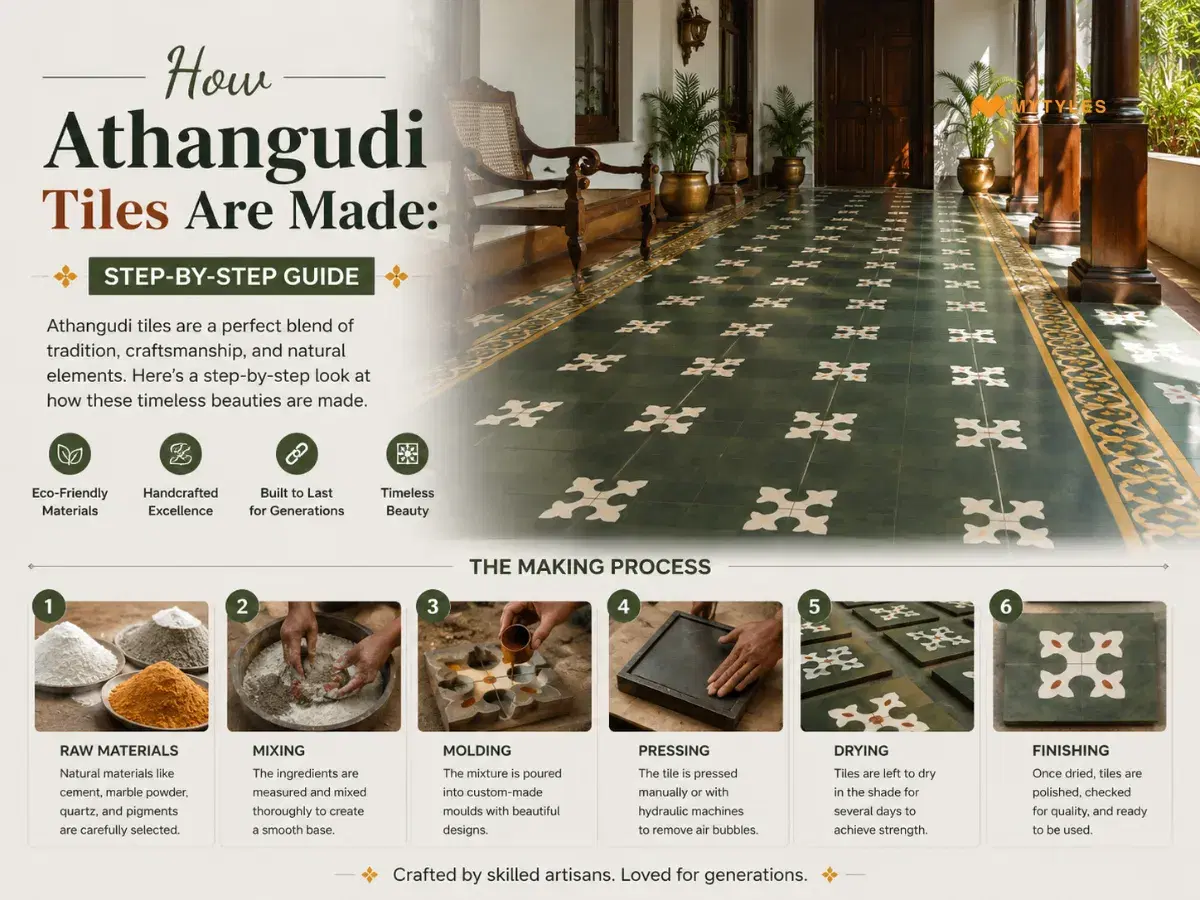
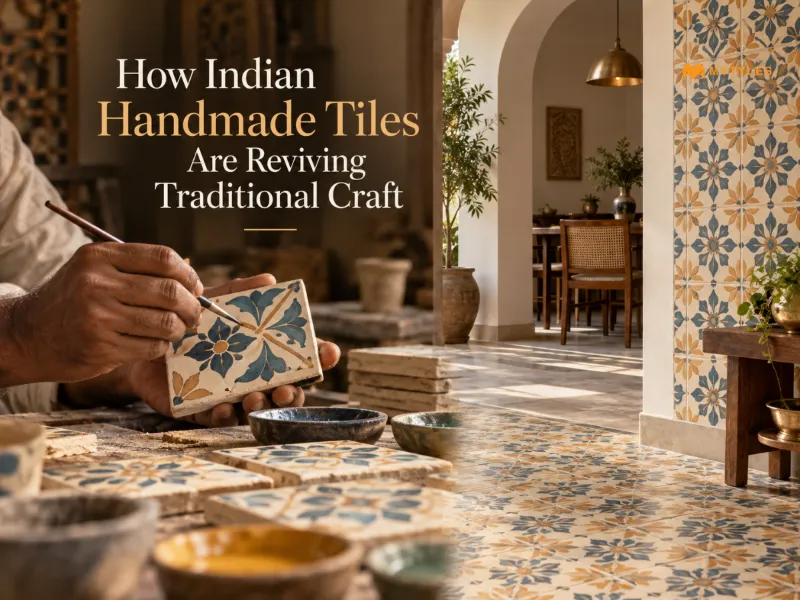
Imagine a floor so cool you can walk on it comfortably even when it is 40 °C outside. In the Sivaganga district of Tamil Nadu, the village of Athangudi produces most Athangudi tiles. The craft supports around 50 units and close to 500 artisans. Their bold patterns, cooling nature, and shine make them different from modern factory-made tiles. They are still made in the same way as before without machines, just by using hands and a lot of patience. Many people choose Chettinad tiles for their cooling feel and natural look. Even modern interiors appreciate how these traditional tiles combine style and simplicity, blending heritage and modern design.
History of Athangudi Tiles
Athangudi tiles originated from the village of Athangudi in the Sivaganga region of Tamil Nadu. The skill became popular with the upper class over 500 years ago because they desired attractive flooring that looked like European ceramic tiles. When importing European tiles became expensive and impractical, local artisans found a new solution. They began using local materials such as soil, cement, and natural pigments to replicate and enhance those designs. When you walk into any old Chettinad palace, your eyes go straight to the traditional Indian flooring, because nothing beats the beauty of the blue Athangudi tiles with snowy white edges. Not only in Tamil Nadu, but also in international architecture and design projects, people now value these heritage tiles.
How Are Athangudi Tiles Made: Step-by-Step Process?
.webp)
Athangudi tiles are made through a hands-on process that brings out rich colors and detailed patterns. Each tile is formed with natural pigments, cement, and the skill of local artisans. The craft relies on traditional techniques that artisans in Tamil Nadu have followed for many years. Every stage, from base preparation to final polishing, is important to producing strong, beautiful, and long-lasting tiles for any space. The artisans have steady hand movements and tools that allows the colors and patterns to form naturally, without any machines. Each batch is unique, adding to the tiles' charm and making every home feel more personalised.
Preparing the Glass Base
The artisans begin by cleaning a thick glass sheet, which forms the smooth surface of these tiles. The sheet is supported by raised stands to keep it level and dust-free. A clean base ensures sharp edges and patterns. It supports the shine found in these tiles, prevents smudges, and keeps the design stable. A perfectly clean glass is the secret behind that mirror-like shine you only see in old Chettinad homes laid with traditional tiles.
Setting Metal Design Frame
A metal frame is placed on the glass to shape Chettinad tiles. The brass moulds inside the frame divide the design into neat sections. This arrangement ensures balanced patterns commonly seen in tiles in Tamil Nadu. Artisans align everything with care because a slight shift can affect the final layout. The frame supports traditional motifs and contemporary ideas used in modern Athangudi tiles.
Mixing Natural Pigments
Pigments are mixed with cement and water to create bright shades for the Athangudi Tiles design. These mixtures keep tones consistent across each batch. Natural pigments help maintain the earthy look valued in vintage tiles. Because they are mixed with cement, the colors last for years. This stage protects the craft's originality and maintains the appeal of soil tile flooring.
Adding Colors and Securing the Pattern
.webp)
Artists pour colors slowly into each mould section to bring out the look of modern Athangudi tiles. The smooth pouring ensures lines stay clean and patterns look clear. This precision helps maintain the clarity expected from these vintage tiles. Then a mix of dry sand and cement is sprinkled over the colored base to protect the Chettinad tiles design. This layer prevents color smudging and strengthens the tile before the backing is added.
Strengthening the Tile Base
A thick mixture is poured and levelled by hand to form the base that gives the tile its strength and supports the Athangudi tile texture. After smoothing it, the tile is placed under a heavy hydraulic press. This removes trapped air and binds the layers together. This step gives the tile a solid build and keeps the thickness even, making it ready to sit flat on any floor.
Sun-Drying and Water-Curing
After pressing, the tiles are placed in the sun to dry slowly. Artisans turn them by hand so that each side dries evenly. This gives heritage tiles their strength and soft shine. After drying in the sun, the tiles are soaked in water for several days. This slow curing prevents cracks, allows the cement to fully set, and adds the long-lasting durability found in the Karaikudi tiles, keeping each tile cool and ready for the final finish.
Final Polishing
Once the tiles are cured, they are set out to dry again until the glass loosens on its own. Artisans then polish the surface to bring out the true look of the finished Athangudi tiles. They smooth the edges, inspect every corner, and make sure each tile is clean and even. The colors stand out beautifully, especially the sunny yellow Athangudi tiles texture, which brightens any space when paired with soft greens or earthy tones.
Benefits of Choosing Athangudi Tiles for Your Home
.webp)
Chettinad tiles are handcrafted that offer durability, easy maintenance, and lasting strength. They provide comfort, enhance the appeal of any space, and add a bit of traditional craftsmanship into your home, making them a smart and reliable choice for every area.
- Eco-Friendly: These traditional tiles are made by using local soil, cement, and natural pigments. They do not require kilns or electricity, making them low-carbon and environmentally friendly.
- Durable and Long-Lasting: These Chettinad tiles get stronger with time. They do not crack or stain easily, and they can take daily use, so your floors stay good for a long time.
- Easy to Repair: If a tile chips, it can be replaced individually. This saves money compared to mass-produced tiles and keeps the Athangudi tiles design intact.
- Cool and Comfortable: Handmade tiles stay cool even in strong sunlight, making them comfortable to walk on throughout the day. Their cool feel helps your floor stay pleasant, especially in warm weather.
Bring the Timeless Choice to Your Home
Athangudi tiles are more than home decor; they are living pieces of Tamil Nadu’s craft history. Their handmade textures, patterns, and warm earthy feel to any space. A beautiful home starts with the right tiles and MyTyles brings all the best options together just for you. Find the handcrafted Karaikudi tiles and patterns with premium finishes that instantly brighten your space. Confused about what to pick? Our experts help you plan colors, choose patterns, and find the perfect fit for each room. MyTyles makes home styling feel effortless with its safe delivery, trusted quality, and fresh designs.

Do Athangudi tiles fade in sunlight over time?

Athangudi tiles keep their color well because the pigments mix with cement, but placing them in harsh, direct sunlight for long hours may soften their shine slightly over the years.
Are Athangudi tiles suitable for everyday use?
Yes, Athangudi tiles handle daily use well and stay strong with simple cleaning, making them a practical choice for busy homes.
Can Athangudi tiles be used in modern homes?
Yes, modern Athangudi tiles come in simple or abstract patterns that blend well with contemporary interiors while keeping traditional charm.
What is the texture of Athangudi tiles?
Athangudi tiles have a smooth, polished finish that is both soft to touch and visually appealing, making them suitable for living spaces and terraces.
How do I clean and maintain Athangudi tiles?
Use a soft broom or mop with mild soap and water. Avoid harsh chemicals. For long-lasting shine, polish once in a while with coconut oil or cover the grout lines.

ABOUT THE AUTHOR
Biren Agrawalla
Biren Agrawalla is the Founder of MyTyles, driven by a passion for making tile buying simpler, smarter, and more customer-friendly. With a background in technology and a strong interest in how homes are designed, he built MyTyles to bridge the gap between traditional tile retail and modern customer needs. Biren focuses on understanding what people truly look for when creating their spaces, from practical choices to design inspiration. His work is centred on building thoughtful online solutions that help homeowners discover the right tiles with more confidence, convenience, and clarity.
Latest Blogs By MyTyles