Inspiration Gallery
Blog
Tile Calculator
08065423741



.svg)


Tile Designs That Interior Designers Use To Create Premium Homes
ByNabiya Naqvi

Thu , Oct 29 , 2026

Read Time: 5 Min


 Copied!

Tile selection is often an early design decision by the interior designers, as it influences the furniture and colour palette throughout the home.
The finish, format, grout colour, and light hitting the surface are what actually decide how a space reads. Matt, satin, and textured finishes are showing up more consistently in Indian interiors right now as compared to high-gloss or heavily decorated tile choices. Premium homes today lean toward lived-in spaces with time-worn aesthetics, and the tile choice is where that shift starts. Below in this blog, we will cover the top tile designs that are consistently showing up in premium Indian homes.
10 Tile Designs Interior Designers Use in Premium Homes
Though there are several tile designs available, only a few have a long-lasting impact. Interior designers make them look more premium by carefully choosing patterns, colours, textures, and finishes. Here are a few tile designs that interior designers are using to make premium Indian homes:
Bookmatch Tiles For A Clean And Seamless Look
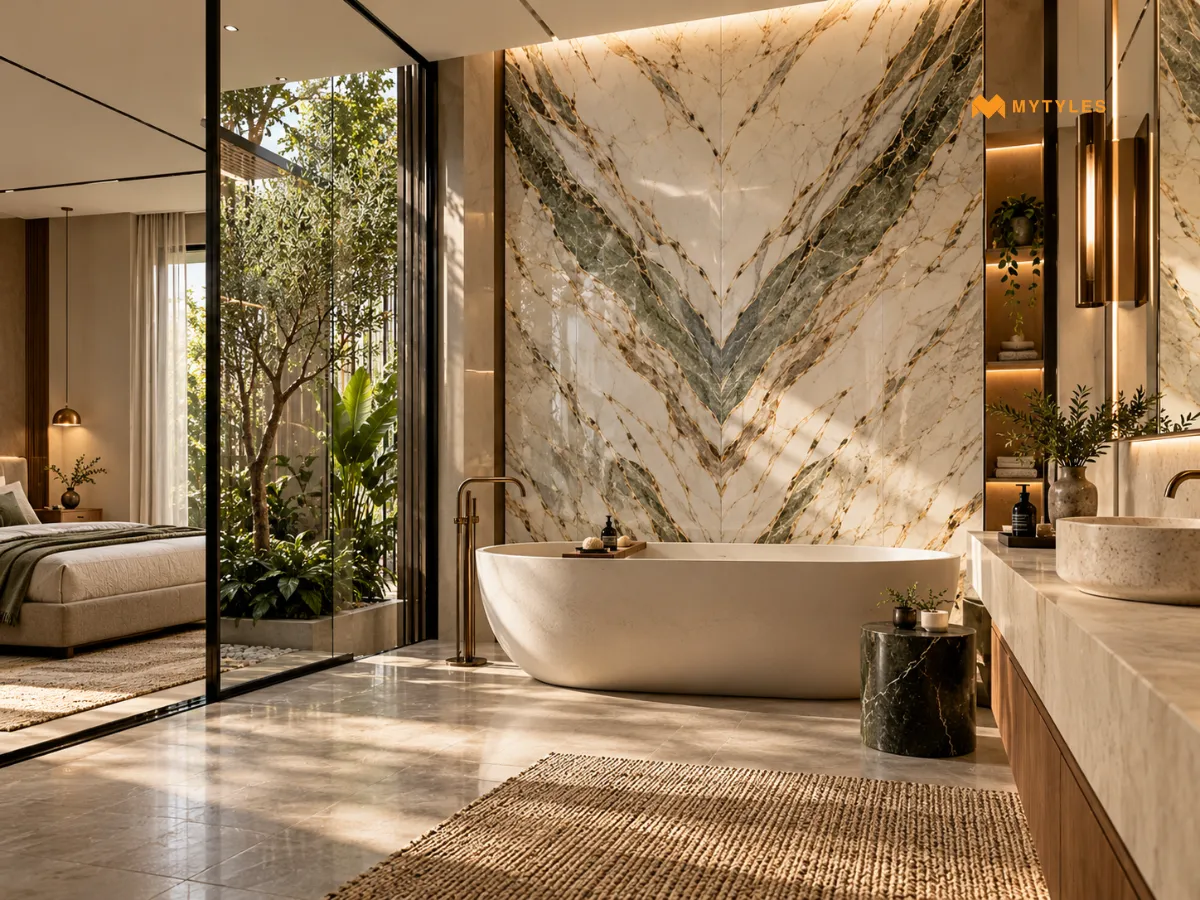
Indian designers are now more focused on how to use the large-format tiles rather than just using them for size. Bookmatched tiles are a type of large format that is taking a step further. Two adjacent tiles are mirror images of each other; the veining flows across both like an open book. On a bathroom accent wall or a premium living room feature panel, the result looks like a continuous stone surface rather than a tiled one. That effect only holds when the installation is planned carefully before the first tile goes down. Best for master bathroom walls, entrance lobbies, and TV unit wall tiles.
Onyx-Look Tiles For Rich Visual Depth
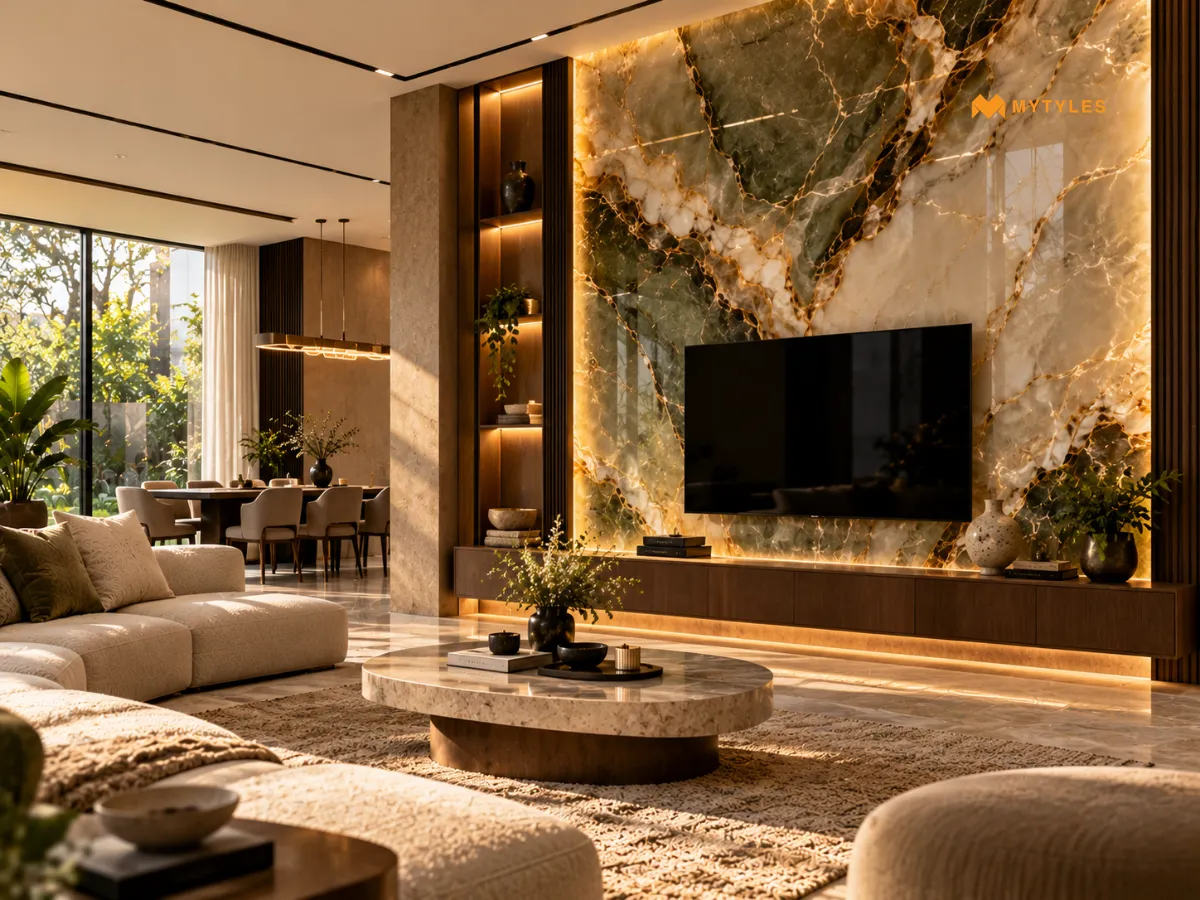
Onyx is one of those materials that looks expensive before anyone asks the price. Dark base, dramatic veining, and the way light moves across the surface differently depending on the angle. Onyx-look tiles carry that same visual character in a ceramic or vitrified body, with veining patterns and colour depth that reference the natural stone without replicating it exactly. The finish options range from matt and satin to high gloss, each of which changes how the veining reads on the surface under different lighting conditions.
Interior designers use onyx-look tiles in spaces where one surface is meant to be the focal point. You can use these tiles as a full-height bathroom wall, an entrance lobby feature panel, and a TV wall in a formal living room. The key is keeping everything surrounding it plain.
Onyx-look tiles paired with busy cabinetry or competing patterns lose their depth.
Fluted Tiles for Strong Surface Dimension
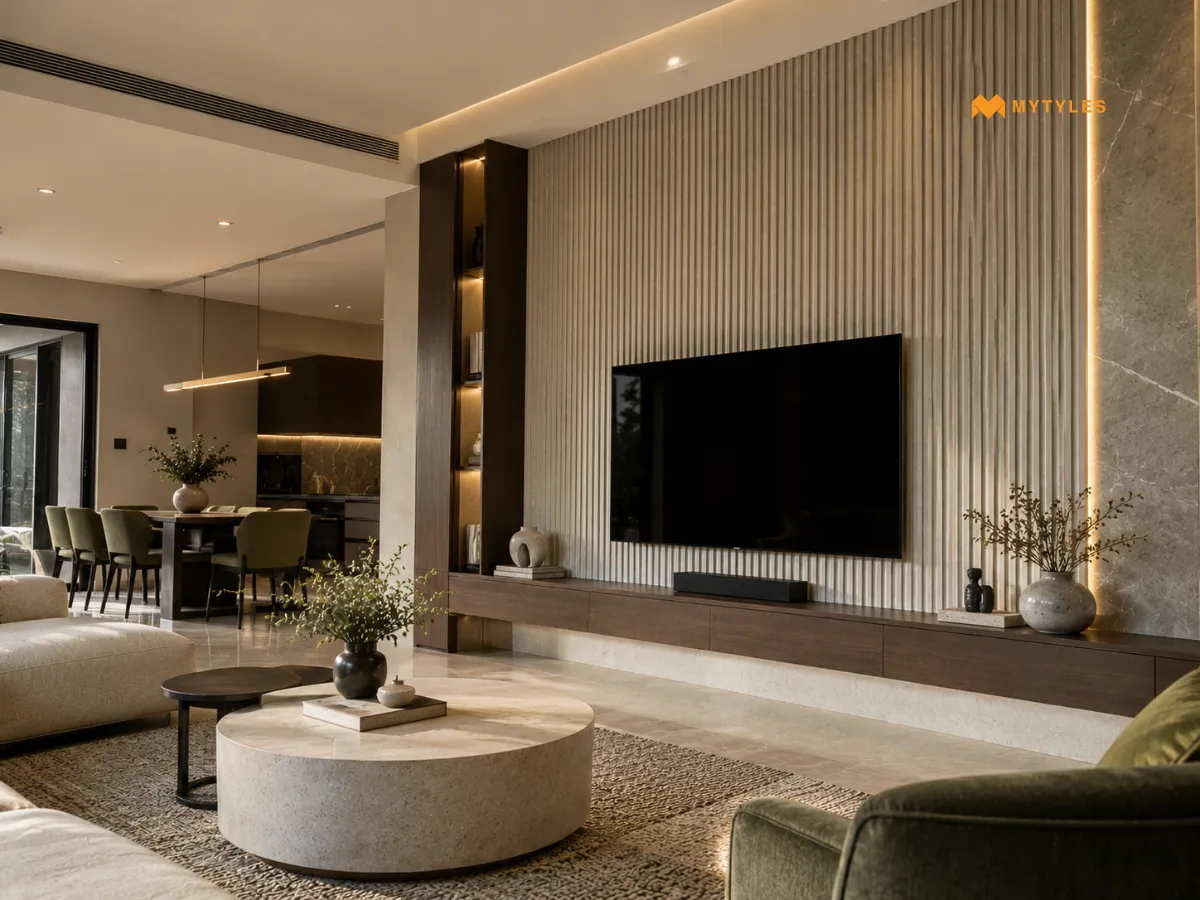
TV feature walls in living rooms are the popular placement for fluted 3D wall tiles in modern Indian homes. Fluted designer wall tiles in light grey, cream, or sage green behind a floating TV unit create a strong architectural statement without needing additional wall decoration.
The surface relief varies across products, from subtle profiles to more pronounced architectural depths depending on the specific tile. For vanity backdrops in bathrooms, the textured surface needs more attention during cleaning since grooves and ridges collect soap residue and moisture over time. The light moves across the ridges differently through the day, which means the wall never looks static. Best for TV walls, bedroom headboard walls, and bathroom vanity backdrops.
Stone-Look Tiles For A Natural Premium Finish
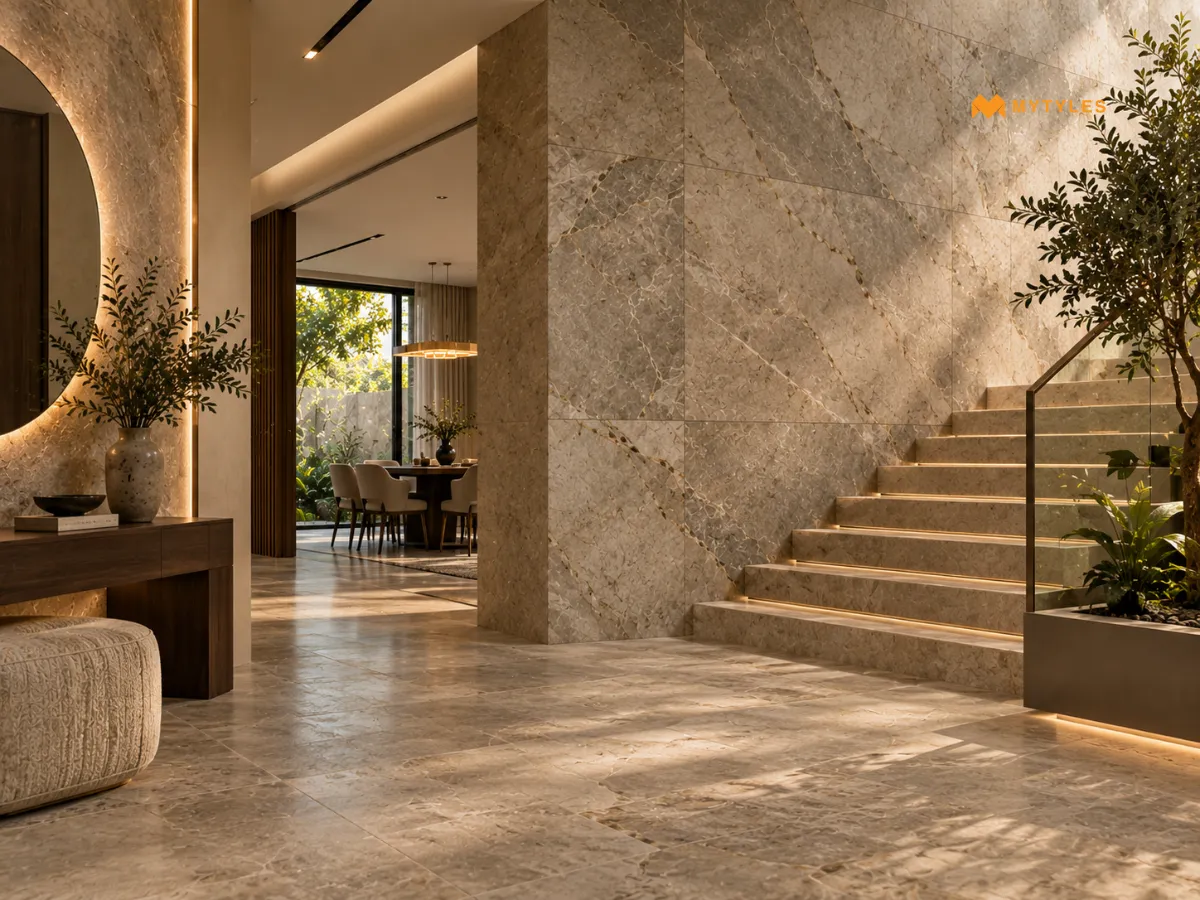
Natural stone gives an organic feel to the interiors. They offer variation, texture, and a sense of history. Stone-look tiles get closer to that quality than most people expect, particularly in matt and rustic finishes, where the surface texture adds to the illusion rather than working against it.
Designers use stone-look tiles across floors and walls in living rooms, master bathrooms, and entrance lobbies where the material sets the tone for the rest of the space. Warm sandstone tones and cool slate greys are both showing up in premium Indian homes right now. The choice between them comes down to whether the rest of the interior leans warm or cool, since stone-look tiles read differently based on what surrounds them.
Moroccan Tiles For Bold Pattern And Character
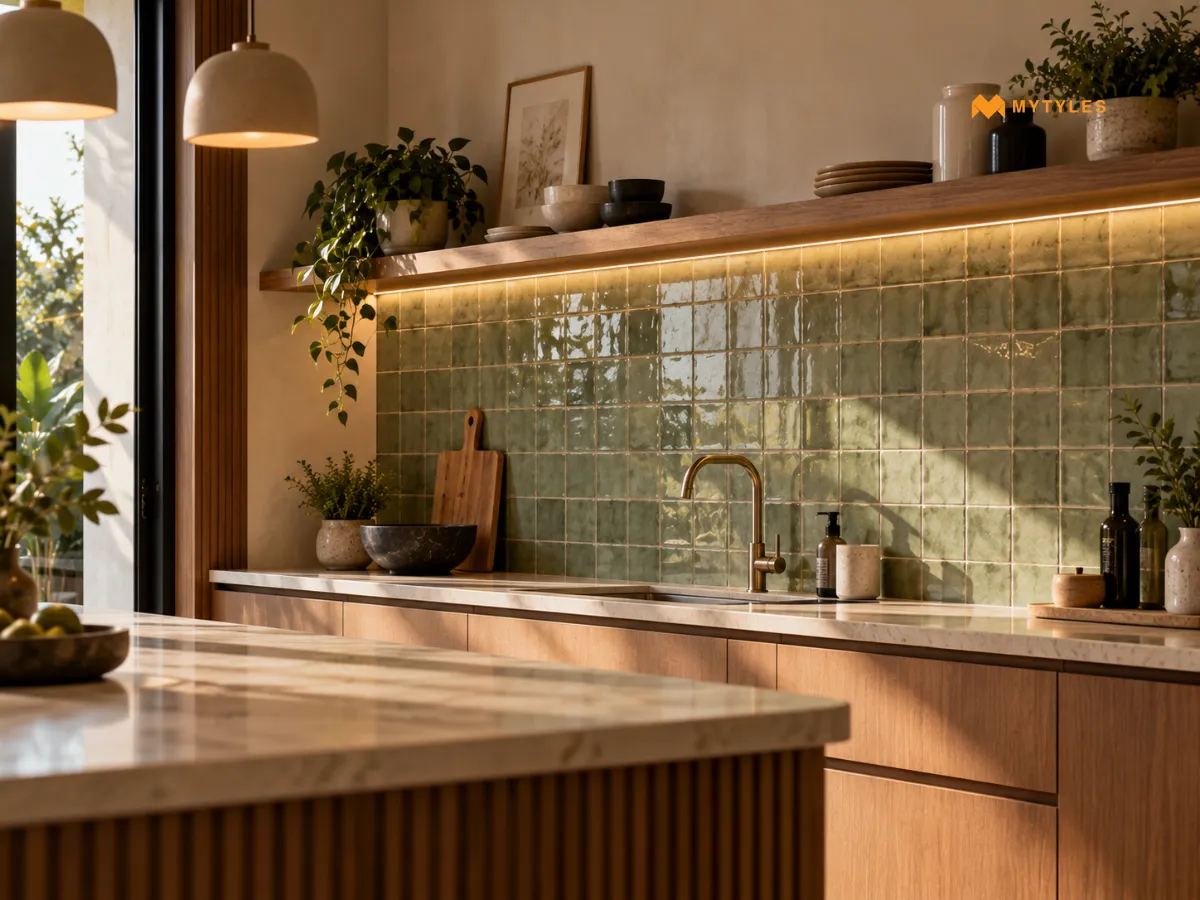
The artisanal charm of Zellige-inspired Moroccan tiles in gentle neutrals is creating a tranquil, airy oasis in modern home interiors. The appeal is the variation. No two tiles look identical. The glaze shifts slightly, the surface is not perfectly flat, and the colour catches light differently across each piece.
Indian designers are using these to amp up stylish kitchen interiors as backsplash tiles and bathroom feature walls rather than full rooms. One surface in zellige, everything else plain. The contrast between the Zellige tile surface and a clean, minimal background is what makes it work. These tiles are best for kitchen backsplashes, bathroom accent walls, and entrance niches.
Mosaic Tiles For Fine Detail And Contrast
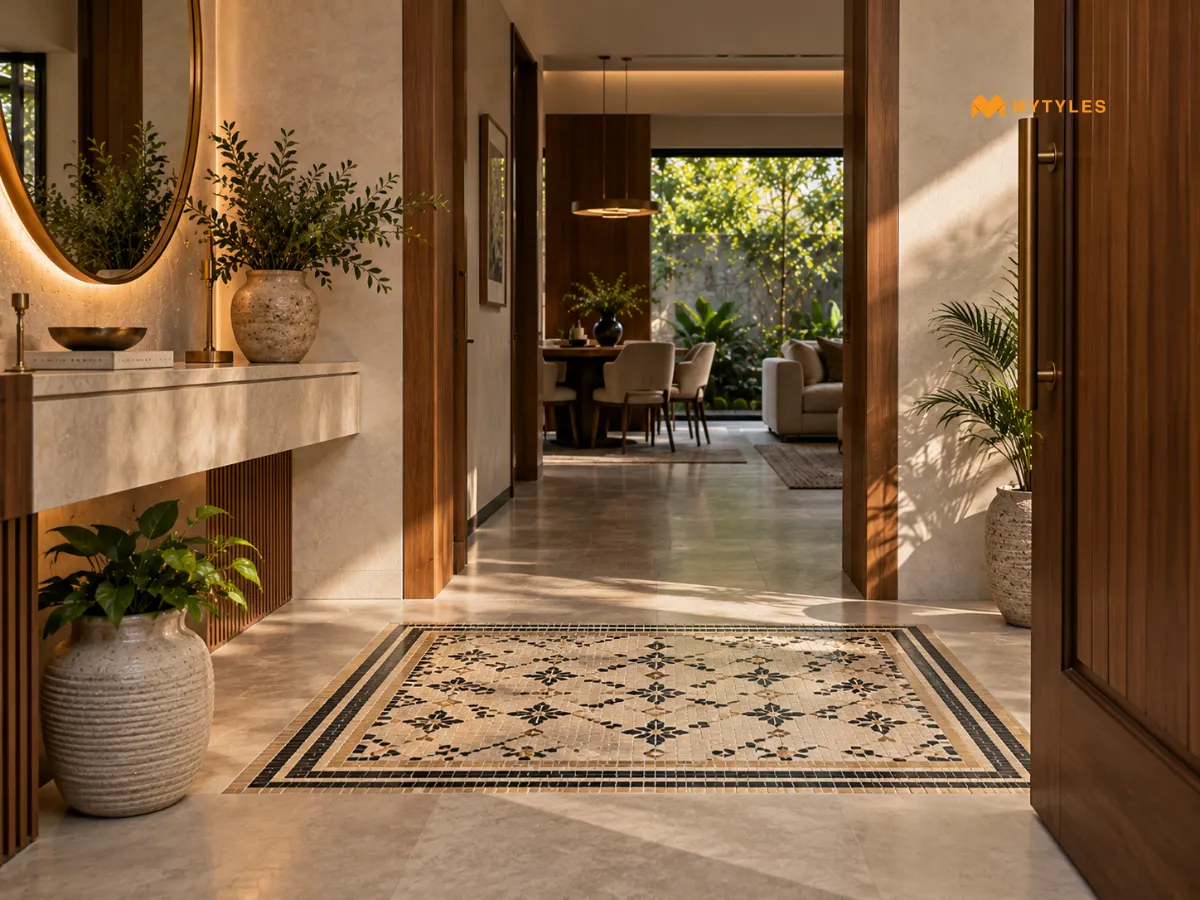
Mosaic tiles as entry mats and permanent tile rugs are getting used in high-end projects. These are an alternative to traditional entryway mats and rugs, with matt-finish tile options that have a textured surface.
This approach is one of the most underused ideas in Indian home interiors. A framed mosaic pattern set into the entry floor, surrounded by a plain field tile, creates a design moment that sets the tone for the entire home the moment someone steps inside. Best for entrance lobbies, pooja room entries, and open dining areas.
Marble-Look Tiles For Classic Luxury
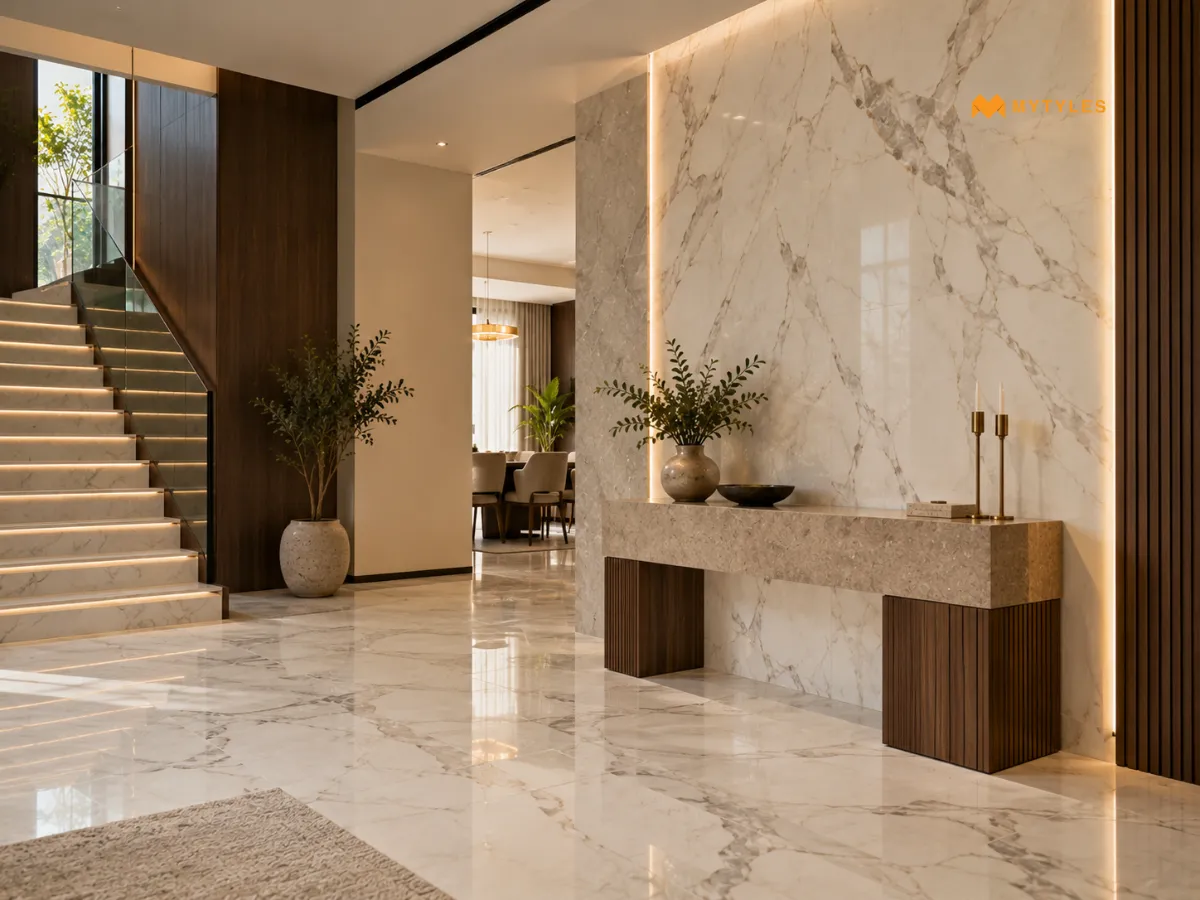
Marble-look tiles carry veining patterns and tonal variation that reference natural marble in a ceramic or vitrified tile body. The designs range from soft grey veining on a warm white base to deeper, more dramatic vein structures across darker backgrounds. Each finish changes how the pattern reads on the wall or floor, and the choice between them depends on the lighting in the space and the overall interior direction.
Satin-finish marble-look tiles suit master bathrooms and entrance lobbies, where a quieter, more grounded surface is preferred. High-gloss versions carry the same veining but with a reflective surface that amplifies the pattern under artificial lighting. Soft grey veining on a warm white base is one of the combinations showing up consistently in premium Indian home projects right now across both finishes.
Textured Wall Tiles For Subtle Depth
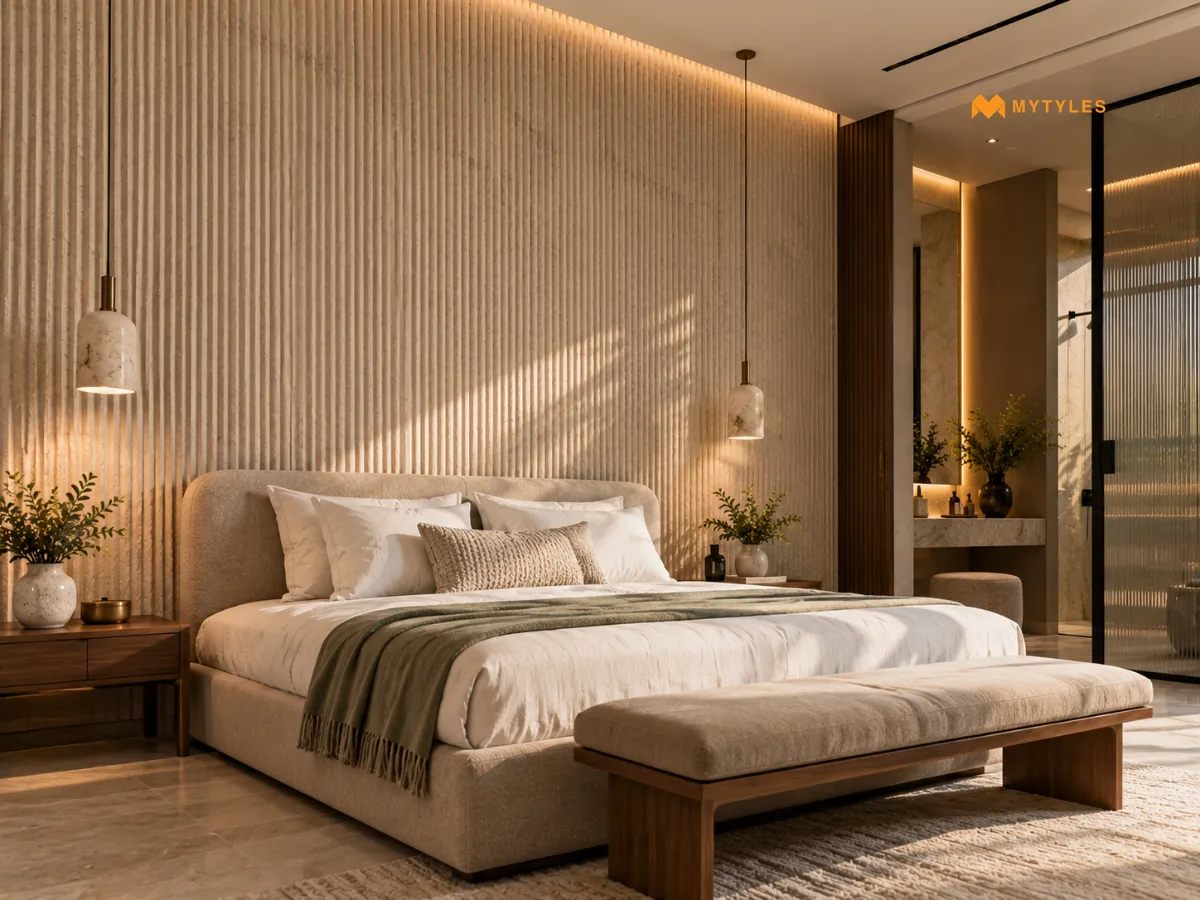
Flat walls are the easiest option in most home renovations. They are easy to install and ignored once the furniture goes in. Textured wall tiles solve that last part. A ribbed or wave surface on a single wall changes how light moves across the room throughout the day.
The restraint principle applies here more than anywhere else. One textured wall, plain on every other surface. A full room of textured tiles looks heavy and collects dust in every groove. A single textured feature wall behind a sofa, a bed, or a bathroom vanity does what it needs to do without overwhelming the space around it.
Wooden-Look Tiles For Warmth And Texture
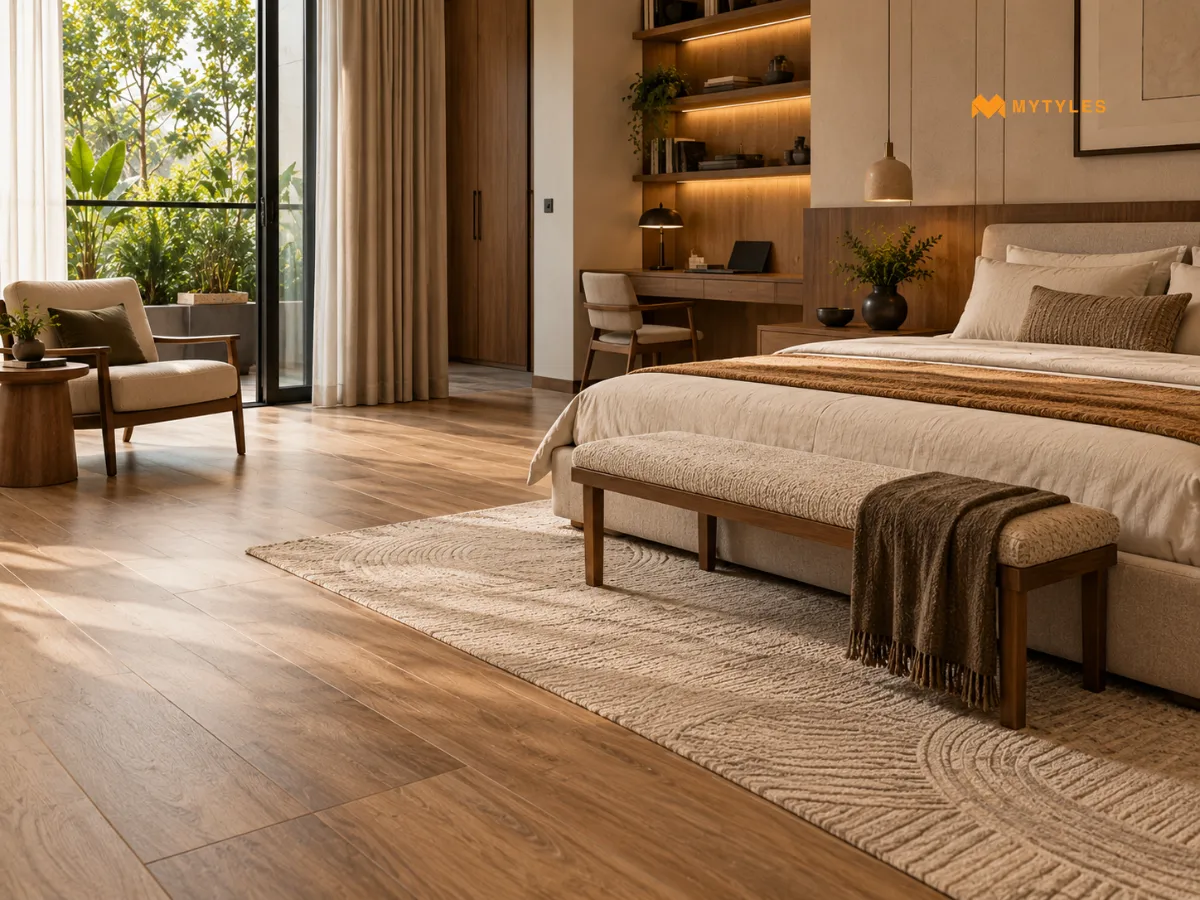
Real wood flooring in Indian climates faces humidity, hard water, and seasonal shifts that work against it over time. Warm oak and walnut shades suit traditional and contemporary Indian interiors. Wood-look tiles cover all of those shades without much maintenance.
These premium tiles for Indian homes have a surface texture that actually mimics grain rather than just printing a pattern. For instance, in a 2x4-feet plank format, a floor that mimics wood in a living room looks impressive from any distance. Pair with warm wall tones, and the floor carries the entire room. Best for living rooms, bedrooms, and study spaces.
Geometric Tiles For Structured Modern Interiors
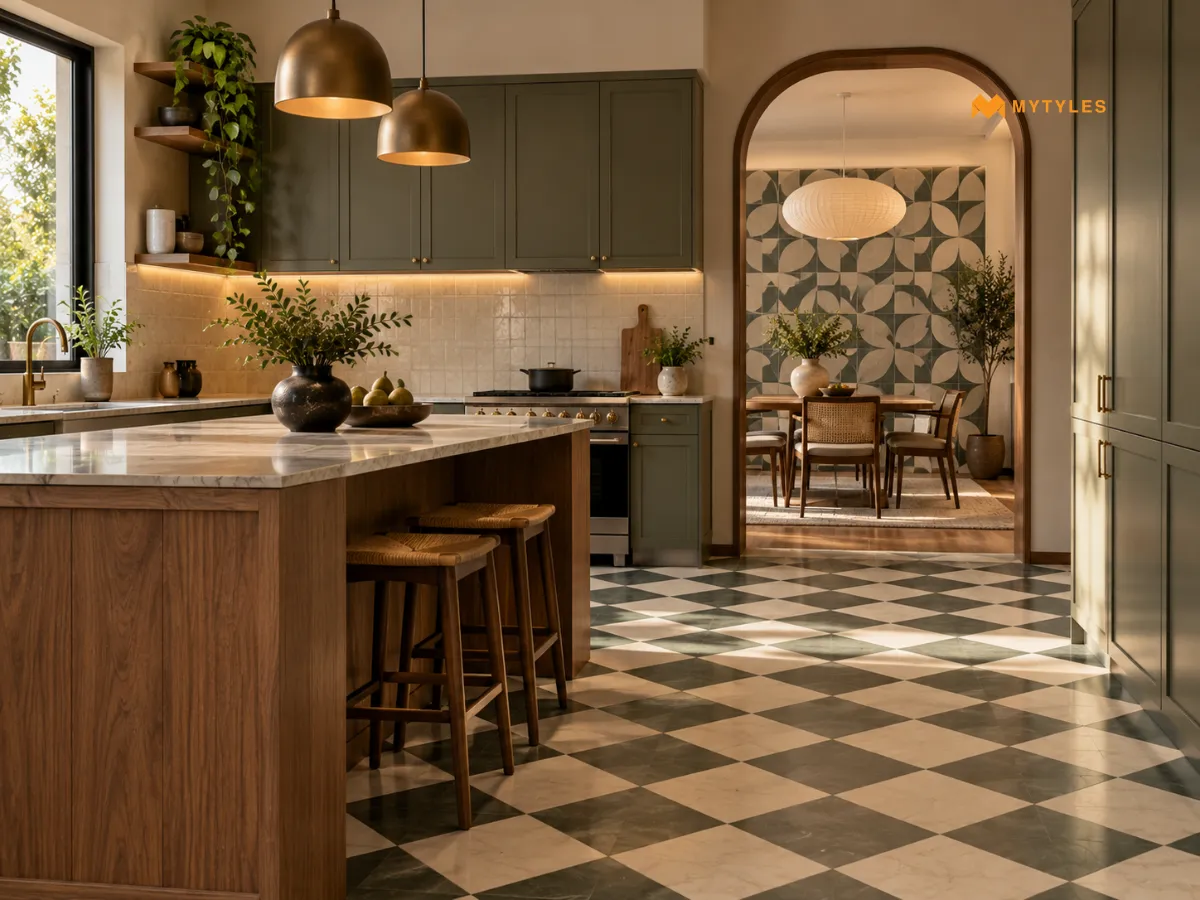
Floors are a natural home for bolder patterns like chequerboard or plaid because they ground the room and reference a long design history. A shower floor, backsplash, or niche permits you to play without overwhelming the space.
The design principle is one hero zone per room. The geometric patterned floor in the bathroom, a chequerboard kitchen floor, and a Moroccan accent wall behind the dining table play a role. Each of these works because everything surrounding it is kept deliberately plain. Best for kitchen floors, entrance walls, and dining feature walls.
Build A Premium Home With The Right Tile Design
A well-designed home has a thoughtful selection of elements, including tile designs, paints, and other decor that resonate with the style idea. Interior designers start with the floor and wall surfaces because everything else responds to them. Therefore, they choose the tile designs first. Once they are down, the rest of the room works around them.
MyTyles has a vivid tile design collection, including the trendy tile designs covered in this blog. From bookmatched slab formats and zellige-inspired handmade glaze tiles to wood-look planks, terrazzo, and geometric patterned options. Browse by room, material, or finish and compare what works for the layout and the light.

What Tile Designs Do Interior Designers Commonly Use in Premium Indian Homes?

Interior designers may use marble-look, stone-look, terrazzo, patterned, fluted, or bookmatched tiles depending on the project's style and requirements. Tile selection usually considers room function, lighting, furniture, colour palette, and surface finish to create a coordinated interior rather than relying on a single design trend or material preference.
Which Tile Finish Is Suitable for a Living Room in a Premium Home?
The suitable tile finish depends on the room's lighting, maintenance preferences, intended use, and overall interior style. Matt, satin, lappato, and glossy finishes are all available for living rooms. The final selection should match the desired appearance while meeting the practical needs of the household and space.
Are Large-Format Tiles a Good Choice For Indian Homes?
Large-format tiles can be suitable for Indian homes where fewer grout joints and a continuous surface appearance are preferred. They are available for floors and walls across different rooms. Proper substrate preparation, handling, and installation according to manufacturer recommendations help achieve the intended finish and long-term performance.
Which Floor And Wall Tile Designs Are Commonly Used In Premium Homes?
Premium homes may feature marble-look, stone-look, terrazzo, wood-look, patterned, or large-format tiles on floors and walls. The final choice depends on the room, interior style, colour palette, finish, and practical requirements. Different materials and designs can be combined to create a coordinated appearance throughout the home.
Why Do Some Interior Designers Choose Matt Or Satin Tiles Instead of Glossy Tiles?
Some interior designers choose matt or satin finishes for their surface appearance, while others prefer glossy tiles to reflect more light. The selection depends on the room, maintenance preferences, lighting conditions, and overall design objectives. Different finishes may suit different spaces depending on the intended application and style.
How Can Patterned Tiles Be Used Without Overwhelming A Space?
Patterned tiles are often used on selected areas such as feature walls, backsplashes, or accent floors instead of covering every surface. Balancing patterned tiles with plain surrounding finishes can create visual contrast. The final layout depends on room size, colour palette, and the overall interior design approach chosen.
What Is Bookmatching In Tiles And Where Is It Commonly Used?
Bookmatching is a tile layout where adjacent tiles are arranged to create a mirrored veining pattern. It is commonly considered for feature walls, bathroom walls, TV unit panels, and entrance areas. The final appearance depends on tile design, layout planning, and the specific collection selected for installation.

ABOUT THE AUTHOR
Nabiya Naqvi
Nabiya Naqvi is a content writer with a postgraduate background in chemical sciences and a strong passion for creative expression. Her journey into writing began with a love for storytelling and gradually grew into a professional path focused on interiors, home decor, and design-led content. With a keen interest in beautiful living spaces, Nabiya enjoys simplifying design ideas and making them relatable for everyday readers. Through her writing, she blends creativity, research, and an eye for detail to help homeowners understand how tiles, textures, and thoughtful material choices can transform a space.
Latest Blogs By MyTyles