Inspiration Gallery
Blog
Tile Calculator
08065423741



.svg)


Pooja Room Tile Ideas Incorporating Spiritual Motifs
ByBiren Agrawalla

Thu , Aug 06 , 2026

Read Time: 5 Min


 Copied!
A pooja room often becomes the place where families turn for stillness, prayer, and grounding. It holds meaningful routines, like lighting lamps, offering flowers, and reciting mantras, that bring a sense of direction to everyday life. When planning this space, the materials you choose determine how peaceful and organised it feels. Tiles play a strong role here because they shape light, support ritual activities, and add visual definition without demanding constant upkeep. They stay steady under heat, resist soot from incense, and retain clarity even in compact homes. Adding spiritual motifs to the tile design deepens the emotional presence of the room. The right tile choices help the pooja corner feel sincere, balanced, and easy to maintain.
Popular Spiritual Motifs for Pooja Room Tiles
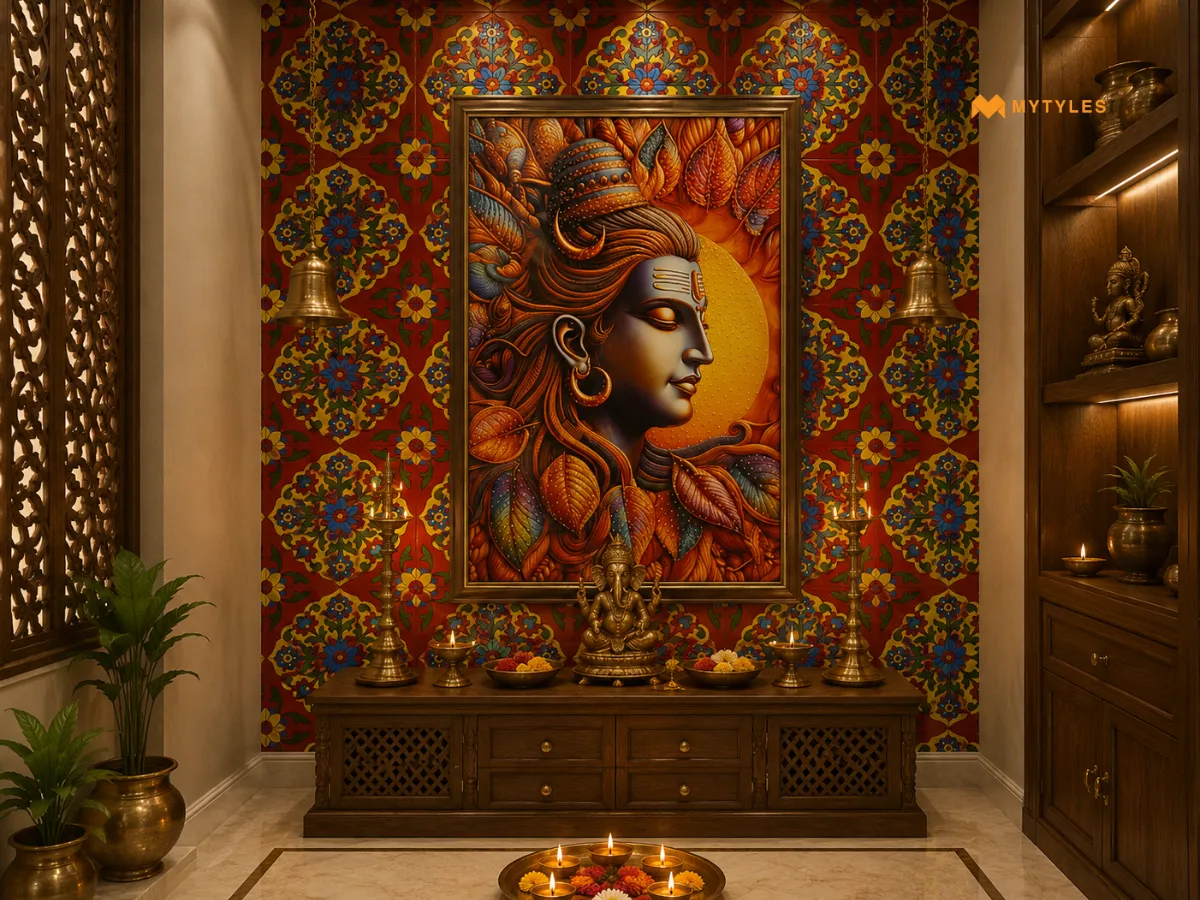
Spiritual motifs help the pooja room hold emotional depth. These patterns guide energy, define focus points, and strengthen the room’s sense of purpose. Each motif carries its own symbolism and works differently with lighting, colors, and tile textures, making the space feel intentional and grounded.
Om Symbol Tile Concepts
The Om symbol signifies balance and inner stillness. Tiles with this motif suit families who want a grounded focal point behind their idols. A single large Om tile often works better than repeated patterns. Porcelain and marble-look surfaces with soft embossing keep the area composed. The motif sits best behind the deity platform or on the front panel of a wall-mounted mandir.
Lotus Motif Tile Concepts
The lotus represents purity and steady spiritual growth. It brings a gentle presence that suits pooja corners. Soft ivory, pastel, or muted gold outlines work especially well. Marble-look tiles with carved or printed lotus patterns offer a calm visual rhythm. These motifs pair naturally with brass lamps and warm lights, making them ideal for highlighting walls or base platforms.
Mandala Pattern Tile Concepts
Mandala patterns provide visual depth and a steady rhythm. They support meditative routines and work well on both floors and walls. A single circular mandala tile helps define a sacred zone on the floor. On walls, mandala panels act as quiet, balanced backdrops. Soft grey, beige, or ivory tones help maintain a peaceful atmosphere.
Kalash and Shankha Designs
Kalash and shankha motifs carry strong cultural meaning. They suit traditional setups without overpowering the room. Clean outlines fit modern homes, while detailed designs suit carved mandirs or larger pooja spaces. These motifs work well as borders, upper-wall detailing, or subtle framing elements around the main panel.
Temple-Style Carved Tile Ideas
Temple-style carved tiles recreate the feel of heritage architecture. Stone-look or CNC-style grooves add texture while staying easy to maintain. Backlit carved tiles produce a soft glow behind idols. They work well in both compact pooja corners and dedicated rooms, giving the area depth and stillness without visual heaviness.
Tile Types That Work Well in a Pooja Room
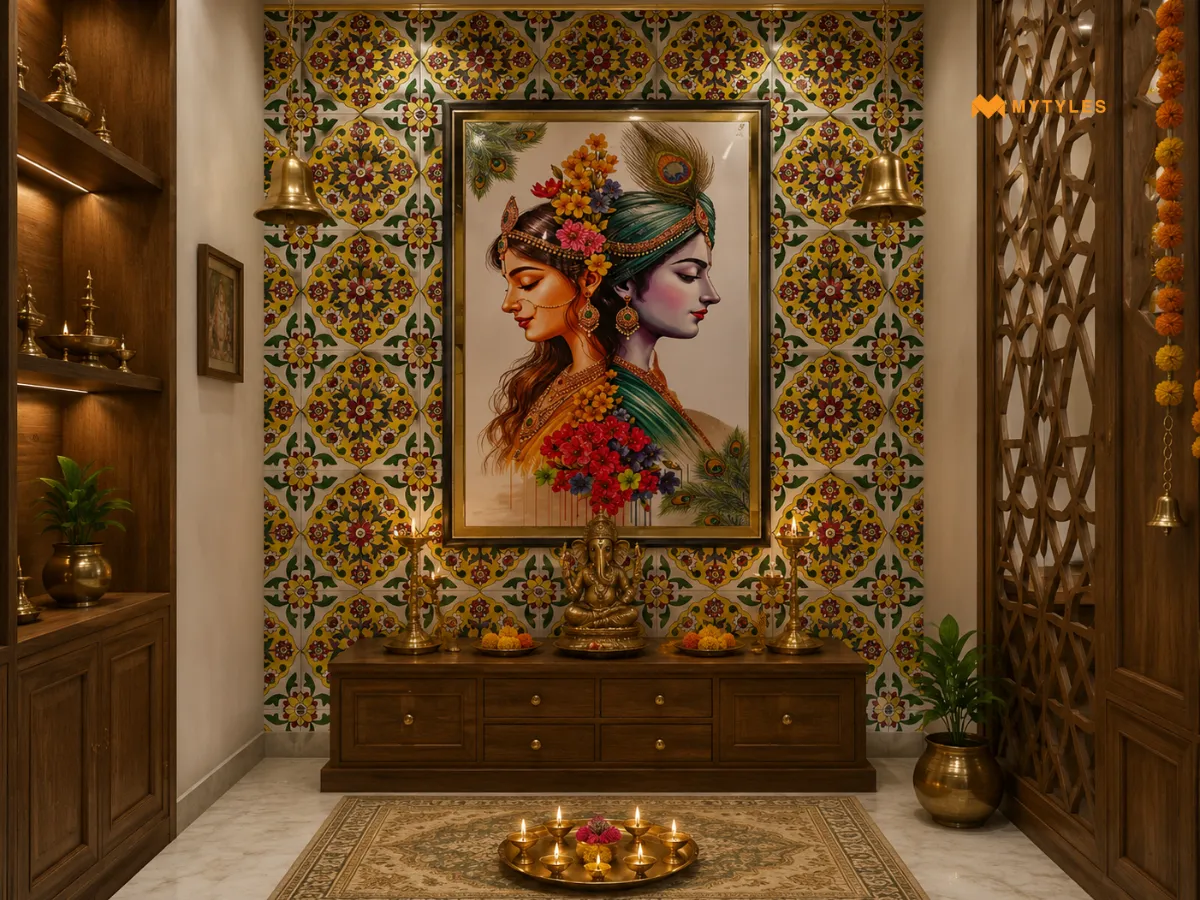
Different tile materials support the pooja room tile in unique ways. Some stay strong under heat, others offer design flexibility, and some create a grounded, textured setting. Understanding how each tile behaves helps you create a sacred space that stays organised and welcoming.
Porcelain Tiles
Porcelain tiles handle heat well, making them suitable for lamp-lit rituals. Their low porosity prevents moisture absorption, which keeps them crack-free and easy to clean. They support motifs like mandalas, lotus forms, and Om symbols without losing clarity. Their smooth surface helps the room stay visually composed.
Ceramic Tiles
Ceramic tiles remain a practical and budget-friendly choice. Their easy-clean surface suits households that use incense and lamps regularly. They support printed motifs and subtle patterns, giving you flexibility in design. Many homeowners prefer ceramic tiles for side walls or for building a soft-tone base platform.
Vitrified Tiles
Vitrified tiles offer matte and glossy finishes that help shape a balanced atmosphere. Matte surfaces reduce glare from lamps, while glossy tiles reflect warm lighting gently. They withstand long-term use and suit both contemporary and traditional pooja setups.
Textured Stone-Look Tiles
Stone-look tiles bring a natural, grounded presence. Their texture adds depth without drawing too much attention. They pair beautifully with brass accessories, wooden mandir units, and carved panels. These tiles are especially useful when you want to define a clear focal wall or create a calm base under the idol.
Color Palettes that Complement Spiritual Motifs
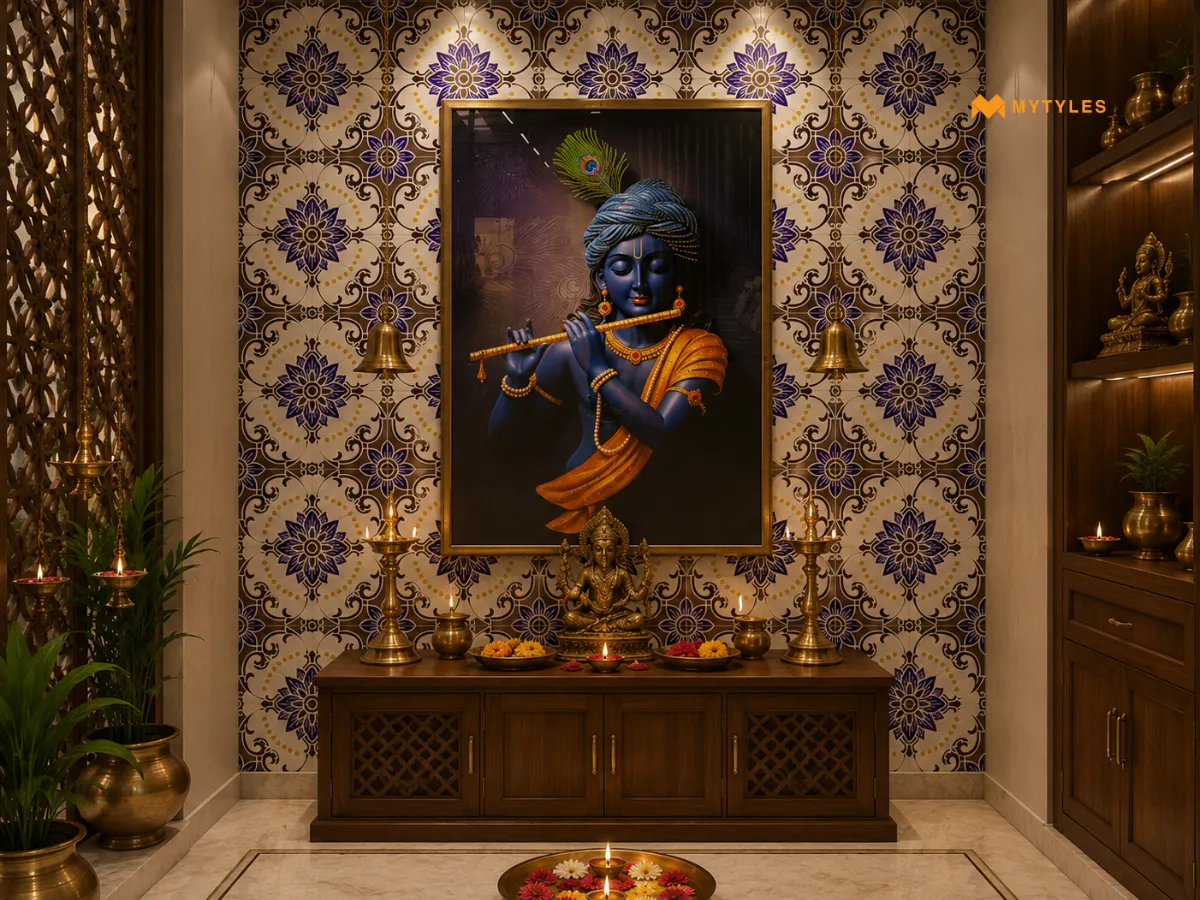
Colors influence how the pooja room feels at every hour of the day. Soft tones help motifs remain visible, richer tones provide warmth, and metallic accents add subtle brightness. Choosing the right palette ensures the room feels composed, intentional, and welcoming.
- White and Ivory Tiles: White and ivory bring clarity and brightness to the pooja room. These shades reflect warm light well and allow motifs to remain visible without strong contrast. Many families choose these colors for highlight walls and compact corners.
- Beige and Sand Tones: Beige and sand tones create a mild, steady warmth. They pair well with lotus or kalash motifs, keeping the focus on idols rather than the background. These colors stay ideal for homeowners who prefer soft, grounded settings.
- Light Grey and Stone Neutrals: Light grey shades support mandala panels and stone-look tiles. They work especially well in homes where the pooja corner blends into a living room or hallway. These tones help the space stay modern and calm.
- Gold Accents: Gold detailing adds a mild festive glow. Soft gold lines around lotus or shankha motifs create a balanced visual highlight. When used in thin borders or outlines, gold remains subtle and refined.
- Saffron and Deep Red Notes: Saffron and deep red shades hold strong cultural roots. They work best in small doses, either in motif detailing, circular backdrops, or narrow borders. These tones bring warmth without overwhelming the space.
Design Ideas for Pooja Room Layouts
Every home has a different space for devotion, some have full rooms, some have a niche, and some rely on a wall-mounted mandir. The right tile placement helps each layout feel organised, calm, and spiritually expressive, no matter the size.
Wall-Mounted Mandir with Motif Tiles
Wall-mounted mandirs work well in compact homes. A motif tile panel behind the mandir adds definition and focus. Soft mandala, lotus, or Om designs keep the wall visually steady without requiring heavy construction.
Niche Pooja Corner with Highlight Wall Tiles
Niche corners often benefit from a decorative panel that outlines the sacred area. A textured or carved tile helps mark the boundary of the pooja spot. Adding a slim shelf, platform, and small lamp completes the look.
Full-Wall Spiritual Mural Tile Setup
Full-wall murals suit dedicated pooja rooms. A large mandala, lotus cluster, or carved stone-look panel creates depth and presence. This setup supports family rituals and festival days with a visually rich backdrop.
Floor Tile Ideas for Sacred Zones
Floor tiles with mandala or rangoli-style patterns help define a sacred seating area. Soft borders around the zone keep the space structured. Many families use these designs to add gentle direction and focus during prayer sessions.
Bringing Spiritual Tile Ideas Together for a Meaningful Pooja Room
A pooja room becomes more meaningful when the design supports both daily routines and emotional comfort. Tiles help build this balance by offering structure, clarity, and visual depth. Spiritual motifs add identity and purpose, guiding the room’s energy. Soft colors, warm lighting, and thoughtful placement of motif tiles help the area stay composed and deeply rooted. For families who want a sacred space that feels sincere and easy to maintain, tile choices define how calm the room feels each day. You can explore curated pooja room tile options at MyTyles, where every selection supports intentional and well-planned spiritual spaces.

Which Spiritual Motifs Work Best on Pooja Room Tiles?

Lotus flowers, Om symbols, diyas, bells, kalash designs, peacock feathers, mandalas, and traditional geometric patterns are popular choices for pooja room tiles. Select one or two meaningful motifs rather than combining too many. A balanced design keeps the space peaceful and ensures the sacred symbols remain visually clear without making the prayer area feel crowded.
Where Should Spiritual Motif Tiles Be Placed?
Spiritual motif tiles can be placed behind the idol platform, around a central niche, along a decorative border, or on the entrance wall. The main backdrop usually creates the strongest focal point. Keep sacred symbols above floor level and away from areas where footwear, cleaning tools, or everyday storage may touch them, respecting household traditions and practical maintenance.
Which Tile Colors Create a Peaceful Pooja Room?
White, ivory, cream, beige, pale yellow, soft pink, and light marble tones can make a pooja room feel calm and bright. Saffron, red, green, or gold-colored accents may highlight borders and motifs. Consider the room’s lighting, idol colors, woodwork, and metal finishes before choosing a palette, ensuring the overall design remains harmonious rather than overly decorative.
Which Tile Materials Suit Pooja Room Walls?
Glazed ceramic, porcelain, and vitrified tiles are practical choices because they are durable, stain-resistant, and easy to clean. Marble-look tiles can provide a traditional, elegant appearance without requiring natural stone maintenance. For engraved, embossed, or printed motifs, inspect the finish closely and confirm that regular wiping will not damage the design or reduce its clarity.
How Can Motif Tiles Enhance a Small Pooja Room?
Use light-colored tiles, a simple central motif, and minimal borders to prevent a compact pooja room from feeling busy. Large tiles with fewer grout lines can make the backdrop appear cleaner, while glossy or satin finishes may reflect light. Avoid oversized patterns that overpower the idols, shelves, lamps, or other essential elements within the limited prayer space.
How Should Pooja Room Tiles Be Cleaned and Maintained?
Remove dust regularly with a soft cloth and clean the tiles using water with a mild, tile-safe cleaner. Wipe oil splashes, incense residue, and soot promptly to prevent staining around lamps or holders. Avoid harsh acids and abrasive scrubbers, especially on printed or metallic motifs. Sealed grout can also reduce discoloration and simplify routine maintenance.
What Should Homeowners Check Before Buying Motif Tiles?
Before ordering, check the tile dimensions, motif scale, color consistency, finish, cleaning needs, and suitability for wall installation. View a full layout or digital preview to understand how repeated designs will align. Purchase extra tiles for cuts and future repairs, and brief the installer carefully so sacred motifs remain centered, upright, and free from awkward joints.

ABOUT THE AUTHOR
Biren Agrawalla
Biren Agrawalla is the Founder of MyTyles, driven by a passion for making tile buying simpler, smarter, and more customer-friendly. With a background in technology and a strong interest in how homes are designed, he built MyTyles to bridge the gap between traditional tile retail and modern customer needs. Biren focuses on understanding what people truly look for when creating their spaces, from practical choices to design inspiration. His work is centred on building thoughtful online solutions that help homeowners discover the right tiles with more confidence, convenience, and clarity.
Latest Blogs By MyTyles