Inspiration Gallery
Blog
Tile Calculator
08065423741



.svg)


6 Wooden Floor Tile Ideas Beyond Basic Brown for Indian Homes
ByAditi Bardhan

Wed , Sep 30 , 2026

Read Time: 5 Min


 Copied!
Wood-effect flooring comes in much more than the usual brown tones. Wooden floor tile ideas can also include oak, grey, whitewashed, charcoal, greige and mixed-tone looks, giving you more ways to work with the colours already used in the room.
Wooden floor tiles are tiles with a wood-inspired grain or pattern; they are not natural timber flooring. They come in different materials, sizes, plank formats and finishes, so it helps to check the tile body, floor application and care needs before choosing. Lighting can also change how a shade looks once installed, especially across a larger floor area.
Why Look Beyond Traditional Brown Wooden Floor Tiles?
Brown is one of the most familiar colour families in wood-look flooring, with many designs based on honey, walnut, teak and deeper brown tones. It can still look warm, but it is not the only route for a wooden floor. Some homes have brown doors, wooden sofas, walnut wardrobes, beige walls or teak-toned cabinets. Adding another brown floor may make the room feel heavy if all these shades sit too close.
Brown wood floor tiles can still work when the room has enough contrast. Walnut look floor tiles may suit spaces with lighter walls and furniture. Compare brown with other colour families before deciding.
Looking beyond brown gives more control over contrast. Light wood floor tiles can soften a room with dark furniture. Grey wood floor tiles can sit better with black, white or cool-toned interiors. Whitewashed floors reduce visual weight in compact rooms without removing the grain look. Charcoal and black wood effects create a stronger base when the rest of the room stays lighter.
Wooden Floor Tile Colours to Explore Beyond Basic Brown
Wooden floor tiles are not limited to standard brown shades. Different colour families can change how the grain, furniture and surrounding finishes come together. Below are six wooden floor tile colour ideas that move beyond basic brown while keeping the natural wood-look character visible.
Light Oak Wooden Floor Tiles for a Softer Look
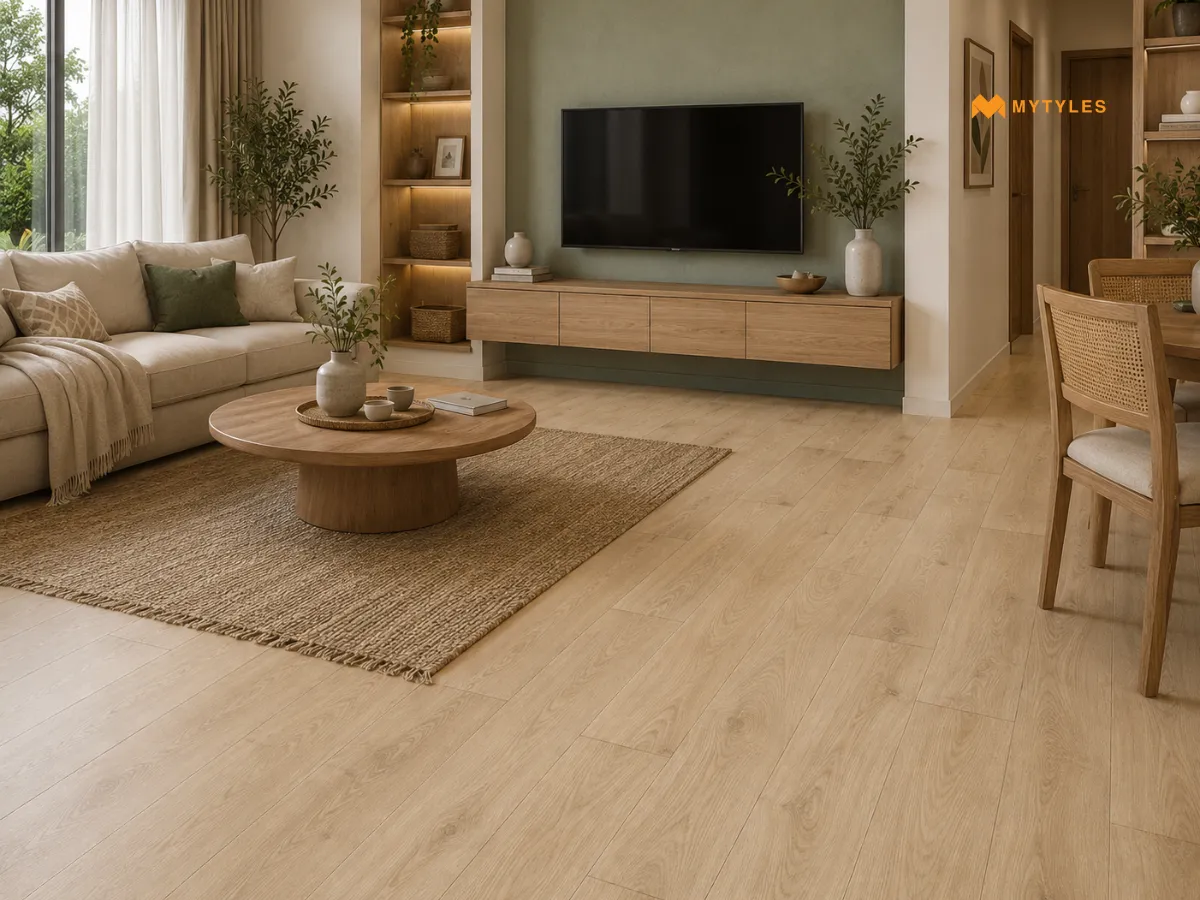
Light oak is useful when you want a wood-like floor without the heaviness of deep brown. Pale oak, beige wood tones, blonde wood shades and light honey tones sit close to warm neutrals. They can pair with white, cream, muted green, grey, rattan, light curtains and simple wooden furniture.
Oak look floor tiles usually have a gentle grain pattern. The shade may lean creamy, yellowish or beige, so check it beside wall paint before ordering. In warm lighting, some light oak tiles can appear slightly golden. In cooler light, the same tile may look more muted.
Living room wooden floor tiles in pale oak shades can keep the floor easy to match with sofas, rugs and cabinets. Wooden tiles for bedroom spaces in this colour family can also work when the room uses soft fabrics or plain wardrobes.
Grey Wooden Floor Tiles for a Cooler Colour Palette
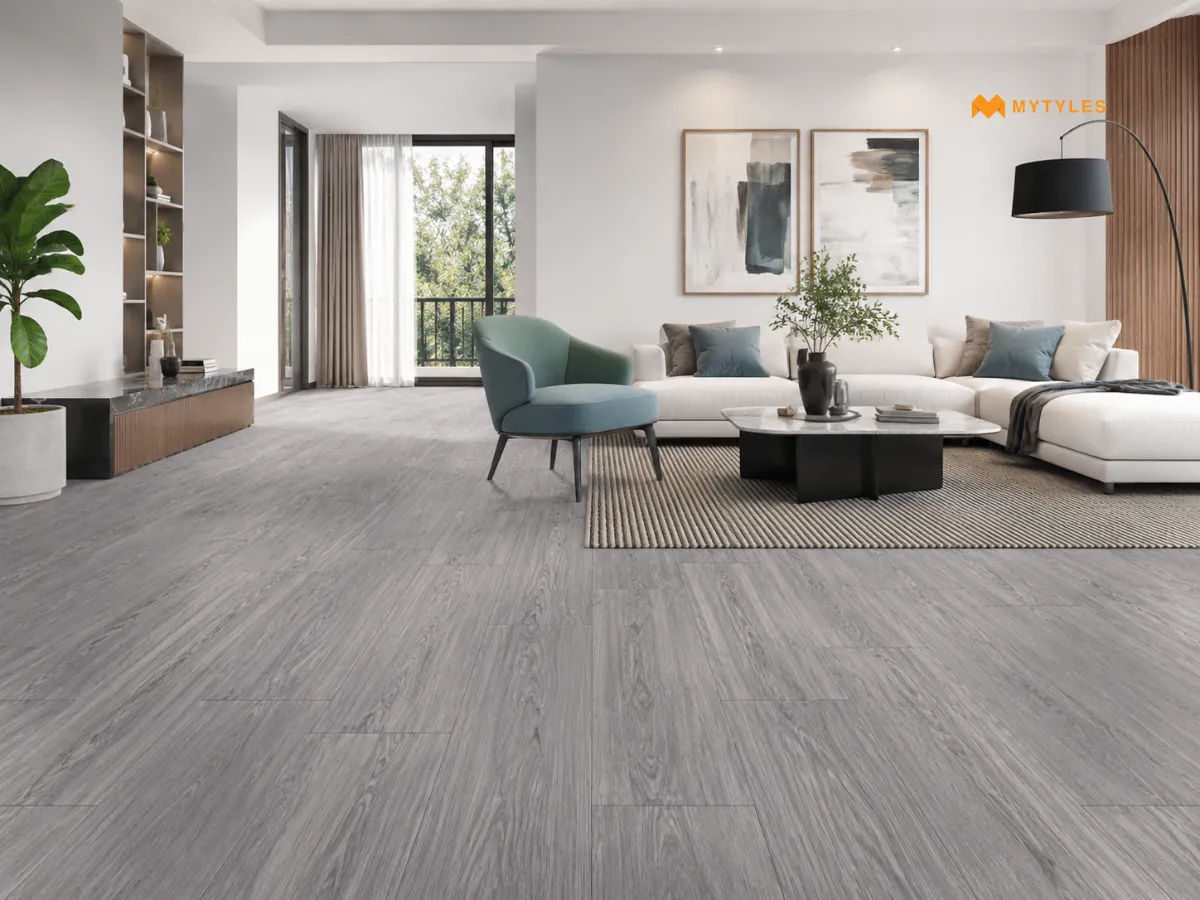
Grey wood is not one shade. It can be light ash grey, smoky grey, greige, charcoal grey or a washed timber effect with grey grain. Grey wood tile flooring often suits homes where walls, cabinets or furniture use white, black, steel, blue, sage, taupe or concrete-like finishes.
The undertone matters. A warm grey floor can sit near beige and cream shades, while a cool grey floor may look sharper with white or black furniture. Charcoal-grey wooden tiles create a deeper base, so the room needs enough light and balanced furniture colours.
Grey is also useful when regular brown feels too warm for the space. Place a sample near the wall and furniture. A grey tile that looks neat online may appear blue, green or flat under certain lights. Grey wood floor tiles should be judged in the actual room if possible.
Whitewashed Wooden Floor Tiles Instead of Dark Wood
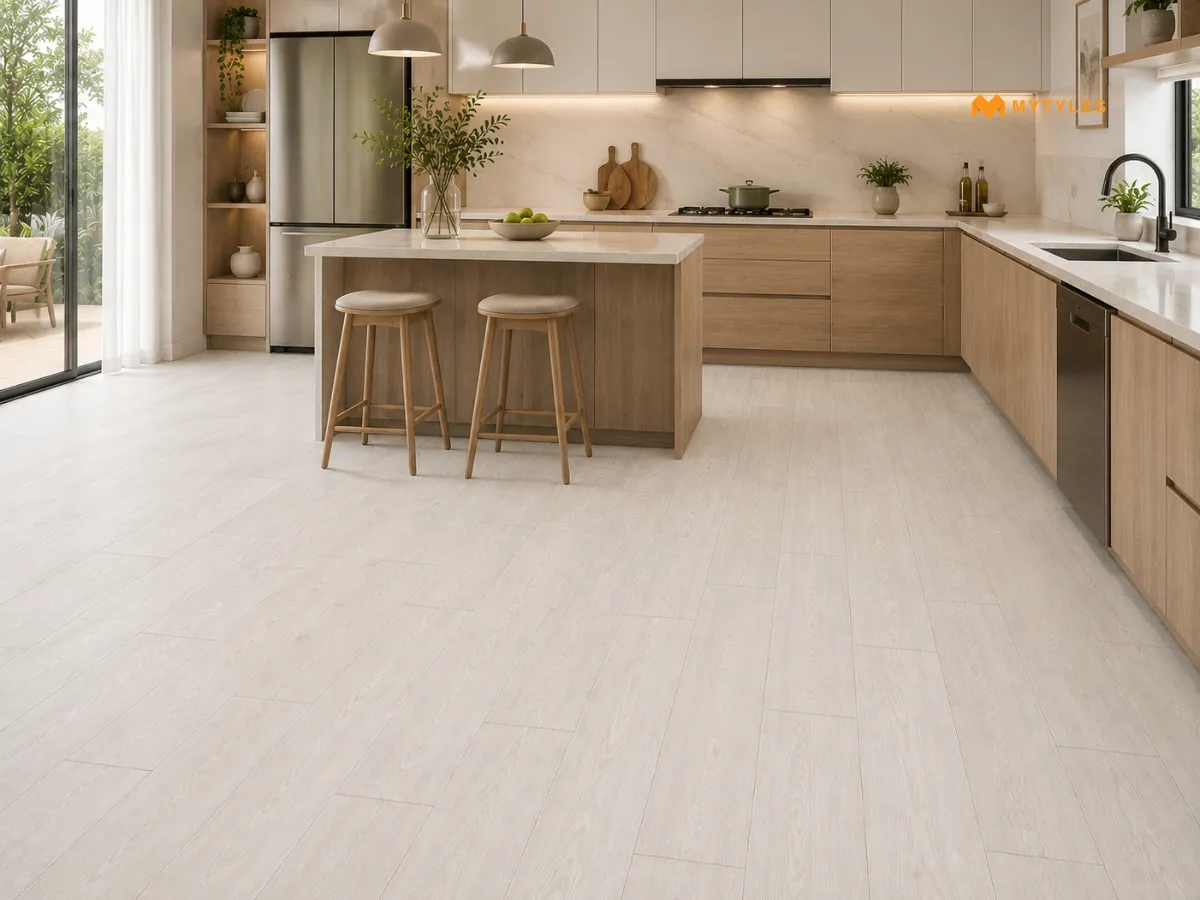
Whitewashed wood effects have a pale surface with grain still showing through. They are different from plain beige tiles because the wood lines remain visible across the tile. Some designs have faded cream wood tones, while others have soft washed-grey surfaces.
White wooden tiles can make the floor look lighter without removing the grain completely. This is useful when a room already has dark furniture, black metal frames, bold curtains or heavy cabinetry. The lighter base creates contrast, while the visible grain keeps the wooden
feel.
On some pale wood-look surfaces, dust, scuffs and the contrast between the tile and grout may be more noticeable, depending on the finish and use. Wooden floor tiles for kitchen areas should also be checked for finish, cleaning guidance and floor use before buying. Compare one full tile against the wall colour, as some washed shades may look too chalky or too creamy under indoor lights.
Black and Charcoal Wooden Floor Tiles for Strong Contrast
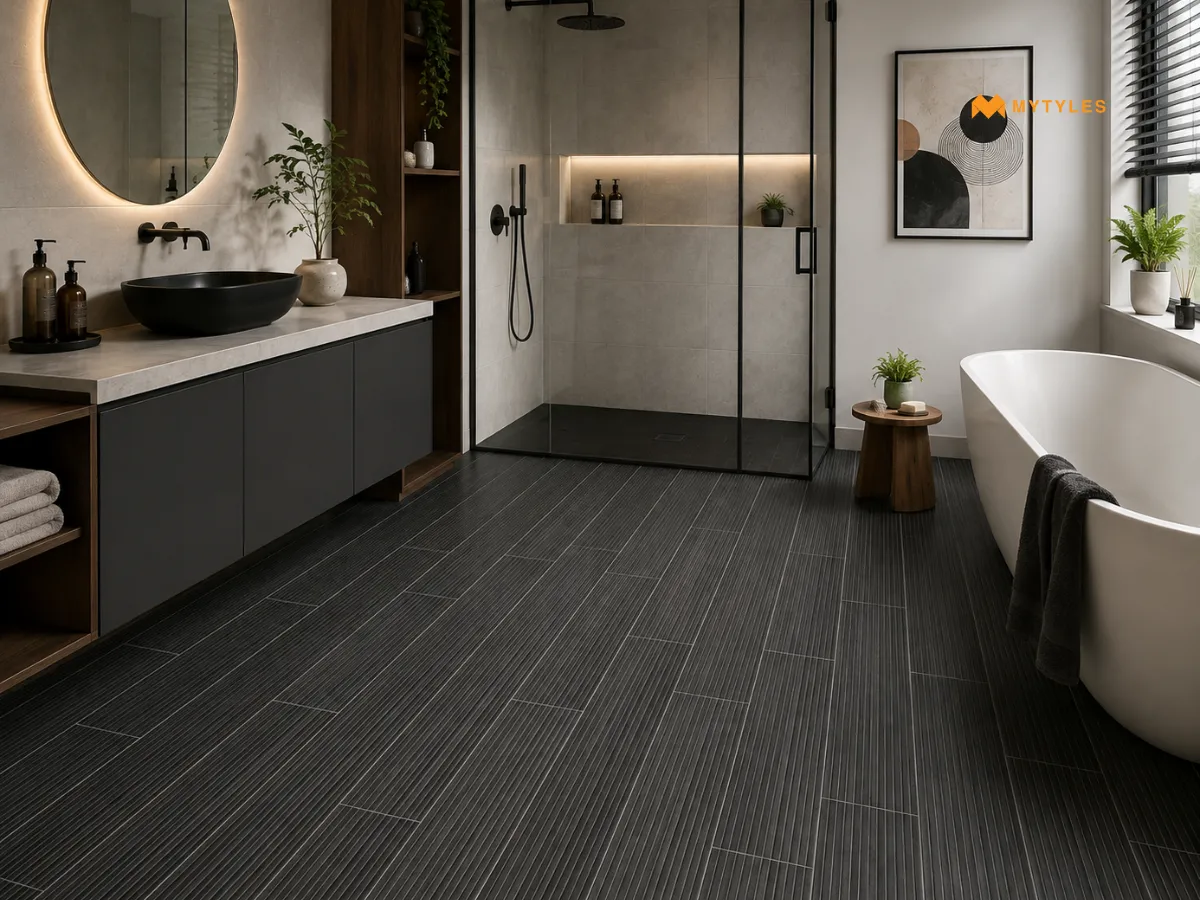
Blackened wood looks, deep charcoal shades and near-black timber patterns create a strong floor base. They are different from dark brown wood tiles because the warmth is reduced and the contrast is higher. These colours can work with light walls, cream sofas, white cabinets, beige rugs or pale curtains.
Dark wood tiles need more checking before selection. In a room with low natural light, the floor may look heavier than expected. Dust, lint and water marks may also be more visible on very dark surfaces, depending on the finish. That does not make them unsuitable, but it does mean the room and usage should be considered properly.
If the home already has walnut furniture, black fixtures or deep wall colours, compare both warm and cool dark floors. Very dark wooden-look tiles for floor areas should be tested with actual lighting, not only product photos.
Greige Wooden Floor Tiles for Homes Mixing Warm and Cool Colours
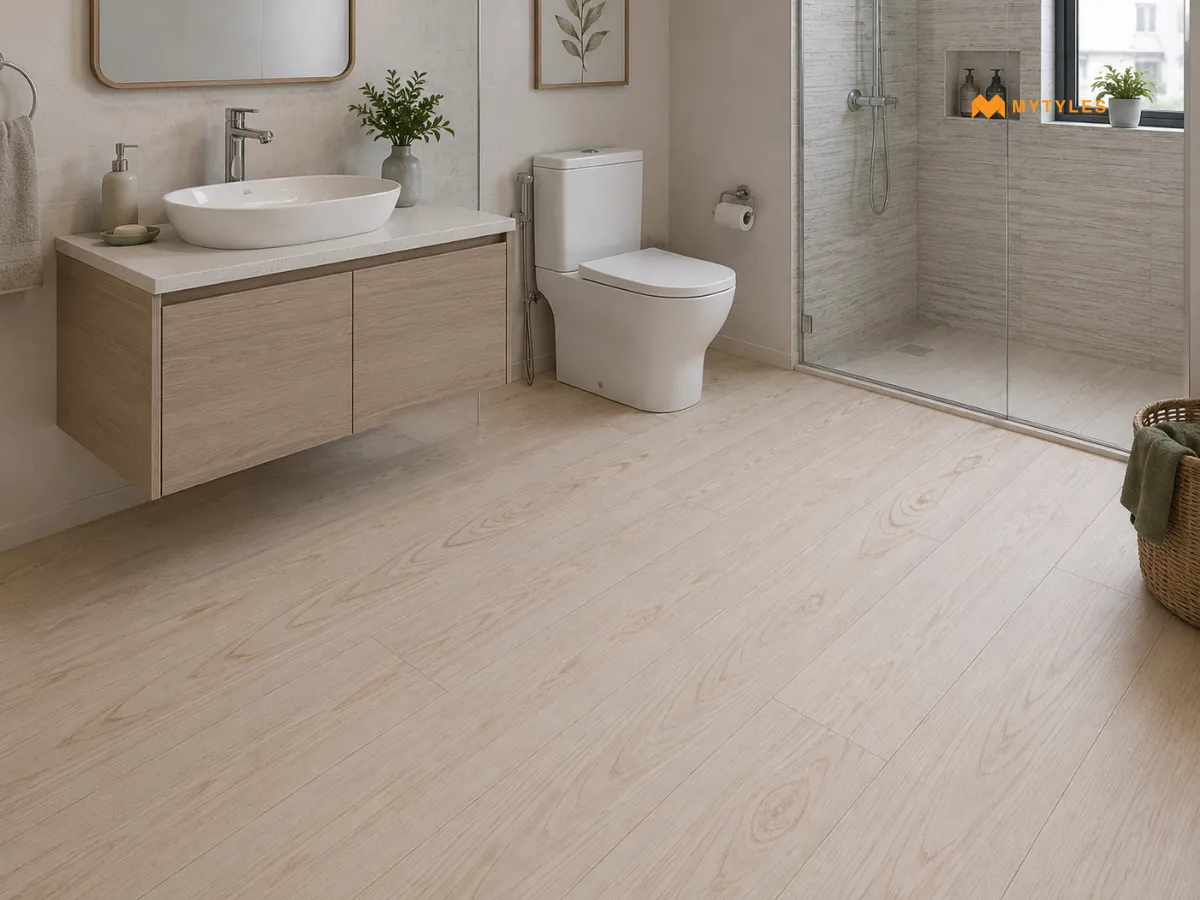
Greige is a blend of grey and beige. It sits between cool grey wood and warmer beige wood, so it can be easier to pair with mixed interior colours. A greige floor may work with cream walls, taupe upholstery, white cabinets, black handles and muted green or dusty blue accents.
This colour family is helpful in homes where one room has warm furniture, and another has cooler finishes. It can sit between the yellow warmth of some oak-inspired shades and the cooler appearance of some greys. The result is usually more neutral, but the exact look depends on the tile grain and undertone.
Wood effect floor tiles in greige shades should still be checked under room light. Some lean closer to beige, while others look more grey. If the tile continues across connected spaces, compare it with door frames, wardrobes, skirting and wall paint.
Mixed-Shade Wooden Floor Tiles for More Colour Variation
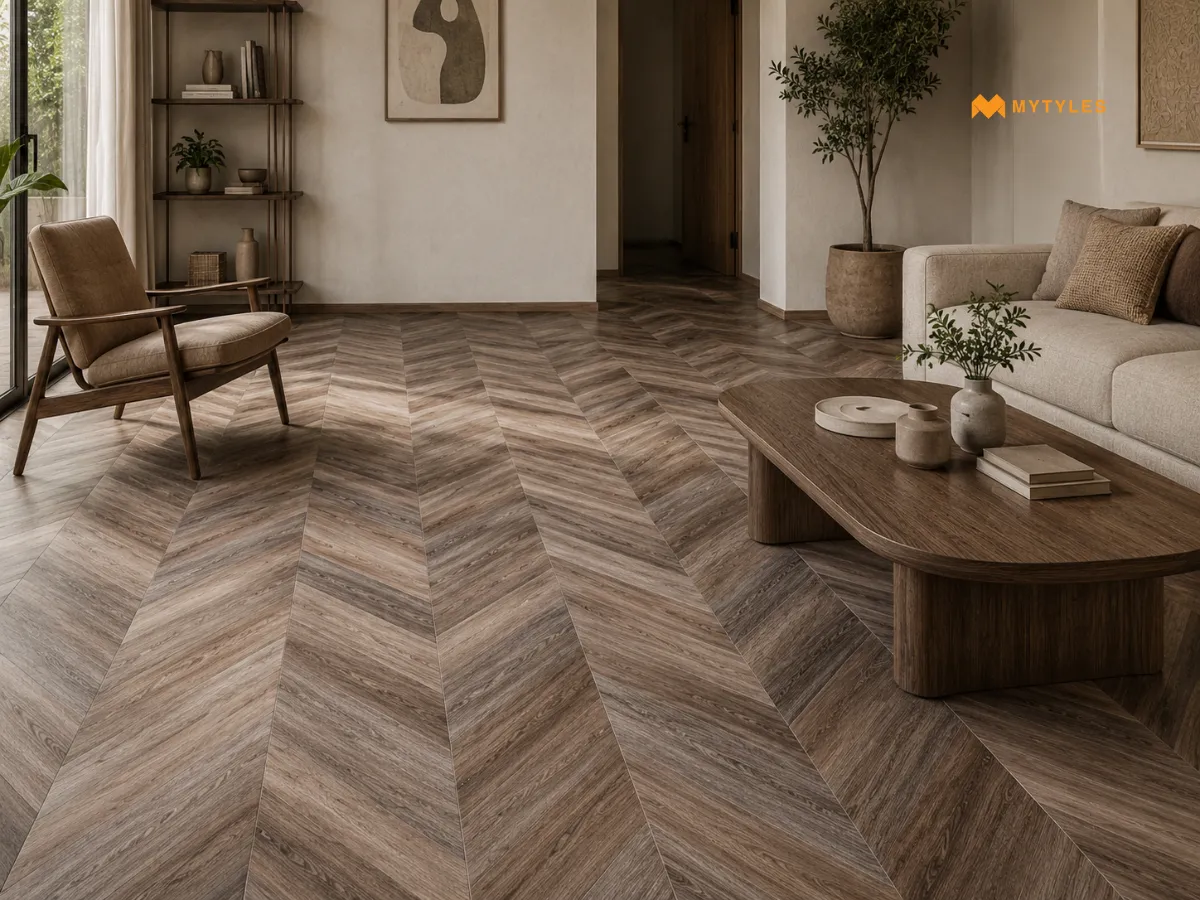
Mixed-shade designs use more than one wood tone in the same tile or layout. They may include light-to-dark movement, mixed beige and grey grain, weathered colours or reclaimed-wood-inspired surfaces. This gives the floor more variation than a single-tone plank.
Wooden plank tiles with colour shifts require careful planning. One piece may not show the complete effect. The full floor can look different after several tiles are placed. Always check a larger layout image or dry-lay a few pieces before finalising.
Herringbone wood floor tiles can show variation strongly because the plank direction changes. Chevron wooden floor tiles can do the same with a sharper angled layout. Wood grain tiles with too much contrast may look busy in small rooms, while softer mixed shades can feel calmer.
Choosing Wooden Floor Tile Colours Beyond Brown
Wooden tiles do not have to stay in one brown family. Pale oak, grey, whitewashed, charcoal, greige and mixed-tone designs can all change how the floor works with the rest of the room. Check shade, grain, finish, size, lighting and layout together.
Check the wooden tiles price only after shortlisting the colour and material you need. Compare wooden flooring tile prices with size, finish and floor suitability, not only the lowest rate. Vitrified tiles with a wooden finish, ceramic options and porcelain choices can all look different once installed, so review product details properly at MyTyles before ordering.

What Colours Are Available in Wooden Floor Tiles Apart From Brown?

Wood-look floor tiles are available in many shades apart from brown, including pale oak, beige wood, honey, grey, whitewashed, charcoal, black and greige. Some designs also mix more than one shade in the same tile. Always check the base colour and grain colour before choosing.
Are Grey Wooden Floor Tiles a Good Alternative to Brown?
Yes, grey wooden tiles can be a suitable alternative when brown feels too warm for the room. Light grey gives a softer look, while charcoal grey creates stronger contrast. Check the undertone carefully because some grey tiles may look blue, green or flat under certain lights.
What is the Difference Between Beige, Greige and Grey Wooden Floor Tiles?
Beige wooden tiles have a warmer tone and usually sit closer to cream or light brown. Greige blends grey and beige, so it feels more balanced. Grey wooden tiles are cooler and may suit white, black, steel, blue or concrete-like finishes better than warm furniture tones.
Which Wooden Floor Tile Colours Go Well With White Walls?
White walls can work with many wooden tile colours. Pale oak, beige wood and light honey shades keep the room soft. Grey and greige can give a cleaner contrast. Charcoal or black wood looks stronger, so check lighting, furniture and curtain colours before choosing a dark floor.
Do Light Wooden Floor Tiles Suit Small Rooms?
Light wooden tiles can suit small rooms when the shade, grain and tile size are chosen carefully. Pale oak, whitewashed, and beige wood tones may reduce visual heaviness. Avoid judging from one product photo. Check a sample in the room with existing wall paint and furniture.
Can Two Different Wooden Floor Tile Colours Be Used in the Same Home?
Yes, two wooden tile colours can be used in the same home, but the change should feel planned. Use one main shade for larger connected areas and another for a separate room, balcony or feature zone. Compare undertones so both colours do not clash near doorways.
What Should I Check Before Choosing a Dark Wood-Look Floor Tile Colour?
Before choosing a dark wood-look tile, check natural light, artificial light, dust visibility, furniture colour and wall shade. Very dark floors can look heavier in rooms with less light. Also check the finish and cleaning guidance, especially for areas where marks may show faster.

ABOUT THE AUTHOR
Aditi Bardhan
Aditi Bardhan is a professional content writer with over five years of experience creating SEO-focused, research-backed content across diverse industries. She specialises in the tile and surface materials space, writing for homeowners, architects, interior designers, and trade professionals. Her work combines technical research, design awareness, and a strong understanding of customer needs, helping readers make clearer and more confident choices. Through her content, Aditi simplifies complex material concepts, highlights practical design benefits, and helps brands build trust and authority in the tile and construction industry.
Latest Blogs By MyTyles