Inspiration Gallery
Blog
Tile Calculator
08065423741



.svg)


Pooja Room Vastu Shastra: Ideal Directions, Colors, and Design Tips
ByAditi Bardhan

Sun , May 24 , 2026

Read Time: 5 Min


 Copied!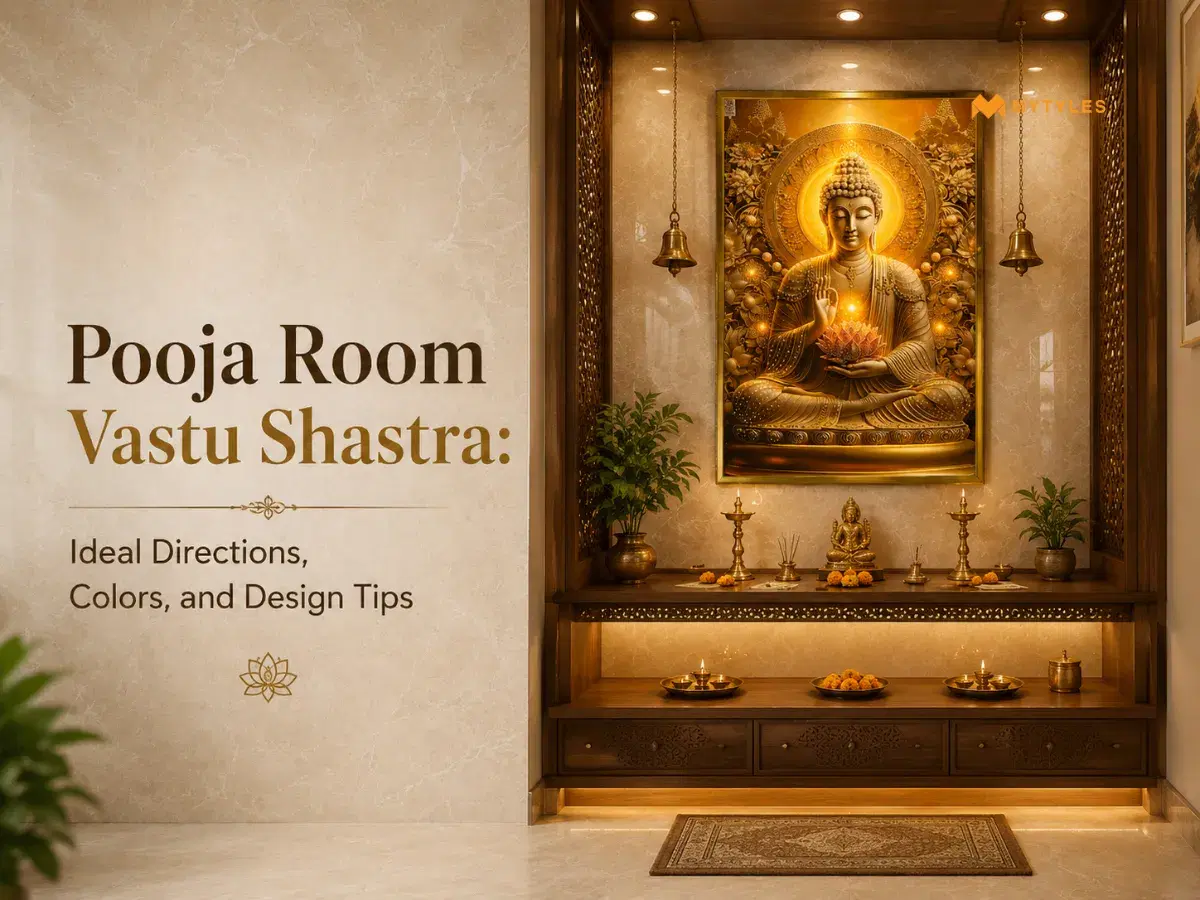
A pooja room is more than just a part of the house, it’s a space that brings peace, clarity, and stillness to daily life. Many people wonder according to the pooja room vastu shastra which direction it should face, what colours feel right, or how to make it blend with a modern home. Even in small apartments, a calm corner can hold deep meaning when designed with care.
Understanding Vastu Shastra for Pooja Rooms
Vastu Shastra, the ancient Indian science of design, helps us create spaces that feel calm, balanced, and full of positive energy. It’s based on the five natural elements: earth, water, fire, air, and space, and focuses on harmony between people and their surroundings.
A pooja room holds a special place in this philosophy. It’s where silence feels sacred and prayers carry intention. According to tradition, the direction of the mandir in home as per vastu is usually the northeast corner, while facing east during prayer is believed to invite clarity and peace.
Even in smaller or modern homes, the spirit of Vastu can be kept alive. It’s less about following strict rules and more about how the space feels. Soft light, natural materials, and gentle finishes, like calm-toned pooja room wall tiles, can create an environment that naturally feels soothing and grounded.
Ideal Direction of a Pooja Room
.webp)
Vastu offers gentle guidance to help design a space that supports focus and devotion. Here are a few simple ideas to keep in mind:
- Northeast Corner: As per pooja room direction as per vastu, the northeast (Ishan Kon) is considered most sacred and filled with positive energy.
- East or North Facing: Placing idols in these directions welcomes sunlight and calm vibrations during prayers.
- Quiet, Clean Spot: A peaceful corner away from bathrooms or staircases keeps the space pure and undisturbed.
- Ground Floor: The pooja room position as per vastu is best on the ground level for better grounding and stability.
- Focus on Intention: More than direction, it’s the sincerity of prayer that gives the room its true energy.
Orientation of Idols and Worshippers
The setup of a pooja room goes beyond design, it’s about creating a space that feels calm and spiritually aligned. The way idols and devotees are positioned can influence that sense of peace.
Direction and Position of the Idol
The northeast corner of the home is considered most sacred for placing the temple. According to Vastu, idols usually face east or west, answering the common question: face of God should be in which direction? Idols should always rest on a raised base made of marble, stone, or wood, not directly on the floor.
Worshipper’s Direction and Flow
As per God’s face direction as per Vastu, the person praying should ideally sit facing east. Even if your layout doesn’t perfectly align, small adjustments, like softer lighting or natural materials, can make the space feel centered, personal, and peaceful.
Vastu-Recommended Color Palette
.webp)
Colours set the tone for a peaceful pooja room tiles. Soft, soothing shades bring calmness and positivity. Vastu encourages colours that feel gentle on the eyes and comforting to the soul.
- Ideal Wall Colors: Whites, light yellows, creams, and pale blues keep the pooja room peaceful and bright. According to puja room color as per vastu, these tones help the mind stay calm and focused.
- Floor Colour & Materials: Light floors in ivory, beige, or stone grey feel grounded and pure. As per pooja room tiles color as per vastu, gentle shades with matte or stone textures work beautifully.
- Colours to Avoid: Very dark colours like black, charcoal, or deep red can make the space feel heavy. Lighter tones keep the pooja room open, positive, and full of quiet energy.
Tips for Design and Layout
.webp)
The beauty of a pooja room lies in its simplicity. Hence, keeping in mind the direction of the mandir in the home, as per Vastu, these layout and decor tips can help you create a space that feels just right for you.
- Ceiling Shape and Height: A flat, medium-height ceiling makes the pooja room feel open. Add soft cove lighting for warmth and peace. Keep ceiling tiles simple to maintain a calm, uncluttered look.
- Flooring and Sitting Area: Light shades like cream or beige create a serene base. Choose matte or stone-look tiles. Define a snook prayer area with a bordered design or subtle deity wall mosaic.
- Doors and Partitions: Smooth, outward-opening doors invite positivity. Two-panel designs are ideal but not necessary. In small homes, decorative screens or tiled partitions mark the space without closing it off.
- Storage and Cabinet Placement: Keep storage hidden and minimal. Cabinets below the altar or floating shelves maintain a clean look. Use wood- or stone-finish tiles to match flooring for a unified feel.
- Placement of Lamps and Diyas: The southeast corner is ideal for lighting diyas. Use a raised stand or tiled platform. Always ensure proper ventilation for safe and peaceful fire-based rituals.
- Lighting and Ventilation: Natural light from the east or north keeps the room fresh. Add warm LED lights for evenings. Avoid heavy chandeliers; choose indirect lighting and ensure good airflow.
Take the Best from Pooja Room Vastu Principles
Designing a pooja room is as much about personal resonance as it is about aligning with age-old wisdom. While Vastu Shastra can offer helpful insights into directions, colors, and layouts, the most important element is the sense of peace and presence the space brings to your home. Whether you are working with a quiet corner or a dedicated room, thoughtful choices in materials, placement, and care can help create a sacred space that feels both grounded and meaningful. Mytyles is here to help you find the perfect vastu-friendly tiles for your pooja room that will complement your home's design and reflect your own tranquility.
Expert Reviewed by Biren Agrawalla
Biren Agrawalla, the Founder of MyTyles with over 10 years of experience across tile, retail, and home decor. Driven by a passion for tiles and a deep understanding of customer behaviour, he has spent his career transforming how people discover and buy tiles online. Biren combines practical retail insight with modern digital solutions to make tile shopping smarter, more intuitive, and design focused. At MyTyles, he champions a customer first approach, ensuring every experience from browsing to buying is reliable, seamless, and inspiring.

What is the best direction of mandir in home as per vastu?

Many traditions suggest that the northeast corner is ideal for a pooja room because it is associated with purity and light. However, if that is not feasible, the east or north can also work well.
Which tile colors are considered auspicious for a pooja room as per Vastu?
Soft, muted colors like white, light yellow, pastel blue, or cream are widely preferred, as they create a calm, harmonious environment that complements the sacred energy of the space.
How should the pooja room be positioned in a home for optimal energy flow?
Ideally, the pooja room should be located away from high-traffic areas such as bathrooms or stairs, and on the ground floor is generally considered best for stability and connection with the earth.
How should the idols be positioned in a pooja room?
Many traditions advise that idols should face east or west, which in turn allows the worshipper to sit facing the opposite direction. The idols should be placed on a raised platform to honor their significance and maintain balance.
What type of tiles are recommended for the pooja room floor?
Light-toned, matte-finished tiles such as natural stone, ceramic, or porcelain are common choices. These options are not only visually soothing but are also practical for simple cleaning and maintenance.

ABOUT THE AUTHOR
Aditi Bardhan
I'm Aditi Bardhan, a professional content writer with over five years of experience creating SEO-driven, research-backed content across multiple industries. I specialise deeply in the tile and surface materials industry, crafting high-converting content for homeowners, architects, interior designers, and trade professionals. My work is grounded in technical research, design understanding, and consumer behaviour insights, enabling me to simplify complex concepts, highlight material benefits, and help brands build authority in the tile and construction space.