Inspiration Gallery
Blog
Tile Calculator
08065423741



.svg)


Are Vitrified Tiles Slippery? Safety Tips You Should Know
ByAditi Bardhan

Wed , May 20 , 2026

Read Time: 5 Min


 Copied!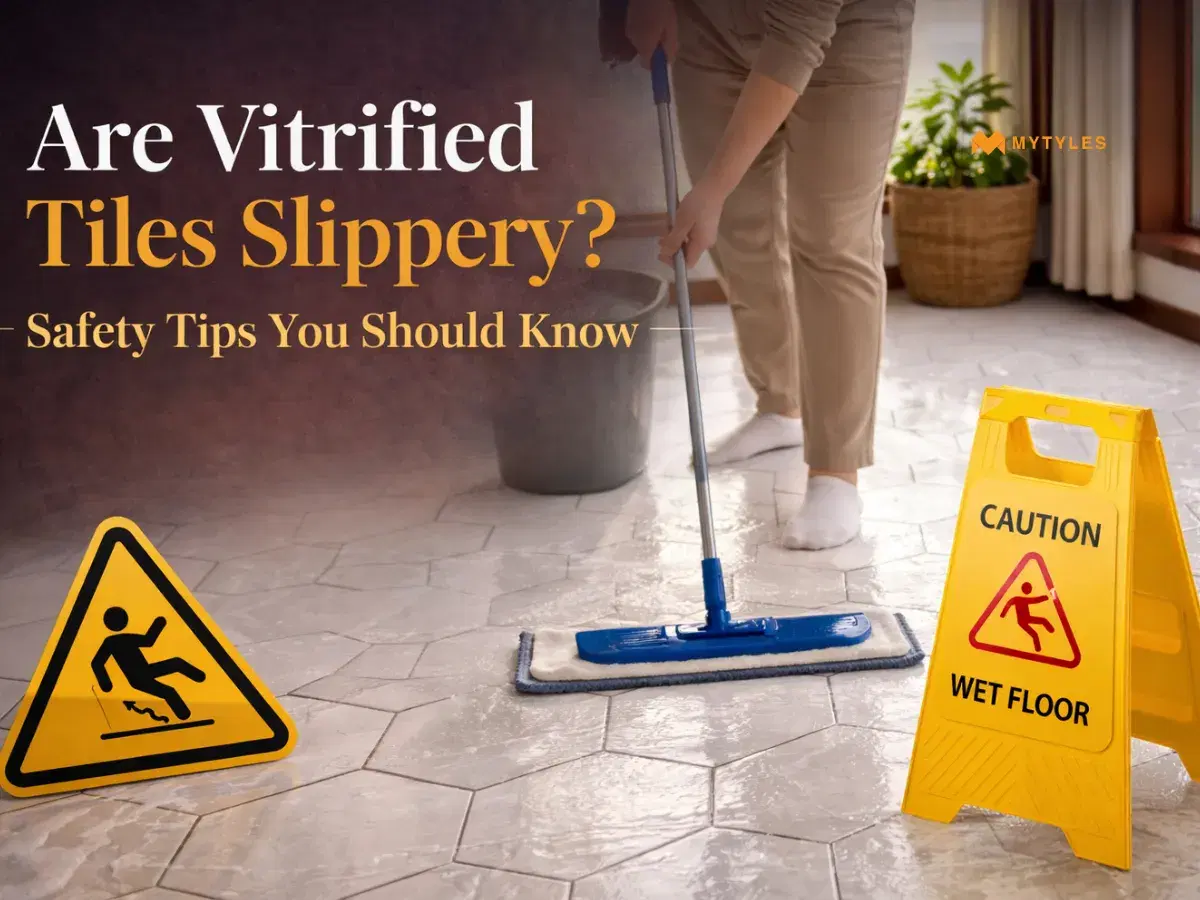
Vitrified tiles do not necessarily pose a slippery surface; the safety of such tiles is controlled by several parameters of slip-resistance, including Dynamic Coefficient of Friction (DCOF) and the Pendulum Test Value (PTV). The industry standards suggest that a minimum wet DCOF of ≥ 0.42 is required in indoor settings, with a PTV of 36, which will provide nearly a 1-in-1-million chance of slipping when controlled. Nonetheless, smooth vitrified surfaces have smaller micro-roughness, which elevates the risk of slips in wet conditions. Research indicates that surfaces with low slip ratings (R9 and below) pose a significant risk of falls particularly when moisture or contaminants are found. Therefore, the choice of finishes, the work of textures, and adherence to the slip-resistance norms play a key role in the safety of the flooring.
Factors That Affect Slipperiness
When people mention that tiles are slippery, they are not necessarily referring to the tiles but to the circumstance. Things like finish, water, size, and cleaning habits all change how much grip your vitrified floor tile actually has.
- Surface Finish: The tile surface is the one that determines the level of safety. Glossy tiles may be beautiful, but they are extremely smooth and provide little grip and may become slippery when wet. As an alternative, you can use matt or slightly textured non-slippery vitrified tile so that your feet have something to hold on to. They tend to be rated higher like R10-R11 and thus are a safer choice in the normal spaces.
- Water & Moisture: Water is a major cause of floors being slippery. Bathrooms, kitchens, and balconies all have moisture on the surface and can be likened to a thin layer that makes the surface less grippy. That is why a vitrified tile that is absolutely fine when dry may become a dangerous thing when wet.
- Tile Size and Installation: Tile size is also a factor. The bigger the vitrified tile, the fewer the grout lines, and this gives a smooth surface in general. Smaller tiles, however, contain more grout lines which provide additional grip and water drainage. That is why small tiles are frequently used in showers, as they have a natural effect of enhancing traction.
- Cleaning & Maintenance: Soap residues, oil, dust or accumulation of cleaning products may form a thin layer on the surface which will decrease friction and increase the chance of slipping. Frequent cleaning and the use of products that do not leave residue can help a lot.
Floor Safety Tips You Should Know
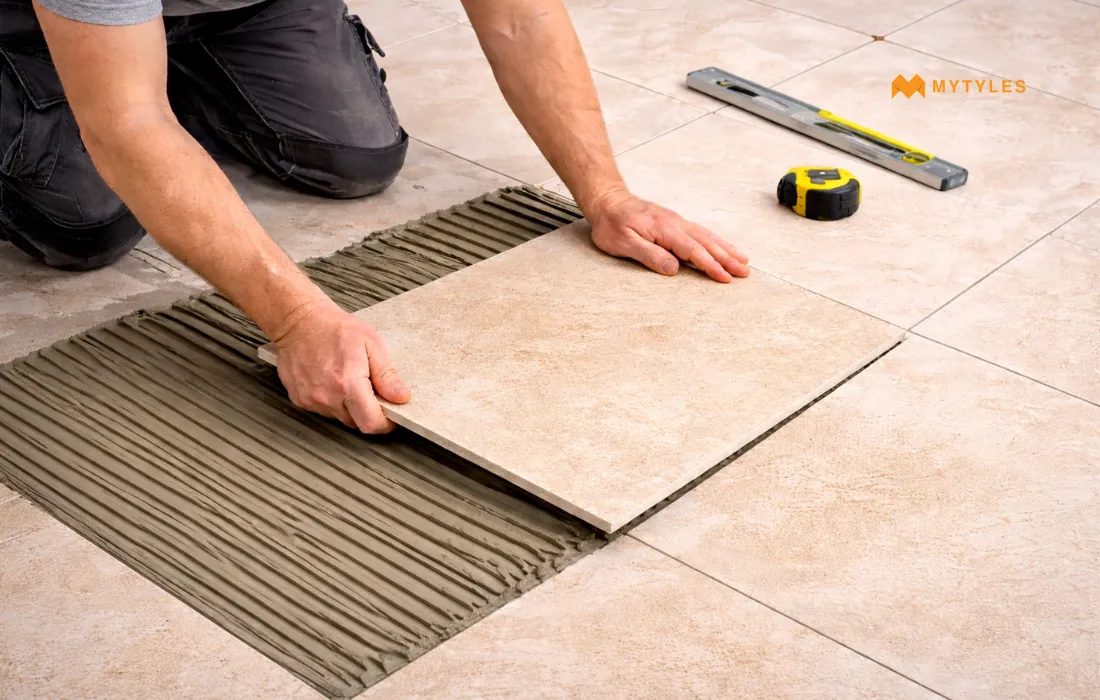
The selection of the appropriate tile is one thing, but the usage is equally important. The following are some of the easy and practical methods of making your vitrified tile floors safer.
- Choose the Right Finish: It is always better to use the matt or anti-skid vitrified tiles in wet places such as the bathroom and the balcony. They are somewhat rough, and this provides them with good grip as opposed to smooth tiles.
- Look for Anti-Slip Ratings: Non-slippery vitrified tiles are available with R ratings (R9-R13), which indicate the amount of grip they provide.
- R9: Low grip, primarily dry areas.
- R10-11: Good in homes (kitchens, bathrooms).
- R12-R13: Very high grip, heavy wet areas.
- Regular Cleaning: A dirty floor is usually more slippery than a clean floor. A thin coating of either soap, oil or dust can make walking unsafe even on non-slippery vitrified tile. In fact, approximately 90% of slip accidents occur on wet or contaminated floors. The positive side is that good cleaning really matters; good cleaning and maintenance can reduce slip incidents by 50% or more.
- Proper Installation: Installation is more than what people believe. A small inclination in the bathrooms will aid in the drainage of water rather than it lying on the floor. Moreover, correct fitting makes tiles less uneven or dangerous in the long run.
Expert Buying Checklist
The selection of the non-slippery vitrified tile is not only about color or finish but also about ensuring that it performs well in real-life conditions. Some technical inspections can help in preventing the most frequent errors and guarantee long-term safety and durability
Area of Installation
Always select vitrified tiles depending on the place of use. A tile that is good in a dry living room might not fit well in the kitchen or bathroom. Matching the tile with the environment will provide superior performance, particularly in choosing safe flooring for bathrooms or tiles for wet areas.
DCOF Rating
The DCOF value is one of the initial technical things to be checked when buying non-slippery vitrified tile. This value is an indication of the grip the tile provides during walking. The industry standards suggest 0.42 in indoor wet areas. In high-moisture areas, the values can be increased to minimise the risk of slips.
Thickness & Strength
In the case of flooring, thickness is important. Tiles of 8-10 mm or more thickness will be capable of supporting daily loads and will be less prone to cracking. This plays a crucial role in preserving the structure as well as the durability of the vitrified tiles in the long run.
Material Performance
Vitrified tiles are characterised as water-resistant tiles whose absorption is very low, usually less than 0.5, which prevents damage with time. They are also considered to be scratchproof and therefore can be used in high-traffic places where wear and tear are prevalent.
Brand Reliability
Stick to trusted brands that provide clear technical data like slip ratings, water absorption, strength and certifications. The trustworthy manufacturers have more chances to provide real slip-resistant tiles instead of only visual finishes which seem to be safe but are not tested.
Warranty & Certifications
Look at certifications like ANSI or ISO standards. These show that the tile is tested in terms of safety and performance. This is particularly useful when making comparisons of such alternatives as anti-skid floor tiles between brands.
After-Sales Service
The good after-sales service assists in installation problems, replacement, or complaints. It ensures that you will not be faced with any problem once you have made a purchase. Approximately 93% of the customers tend to remain loyal to a brand that has good service and almost 73% tend to switch after having had multiple bad experiences with the same brand.
Making the Right Flooring Choice
Vitrified tiles work well if you pick them right. They’re dense, strong, and have water absorption levels as low as 0.05%, which is why they handle moisture so well and last beyond 25–30 years without much trouble. The real difference comes down to where you use vitrified tile and what finish you choose. Get that right, and you won’t have to worry about slipping or constant maintenance. If you’re thinking of upgrading your space, MyTyles just makes the whole process simpler. You get plenty of non-slippery vitrified tile options, clear details, and the right guidance. You can rest assured that you’re not just guessing, but you’re choosing vitrified tile that actually fits your day-to-day use.

What Determines If Vitrified Tiles Provide Slip Resistance?

Slip resistance in vitrified tiles depends on surface finish, porosity, and coefficient of friction. Many homeowners ask, ‘are vitrified tiles anti-skid?’ but glossy finishes tend to lower traction, especially under wet conditions. Matte and textured variants enhance grip by increasing surface resistance, making them more suitable for areas where safety and stability are critical.
What Makes Vitrified Tiles Safer for Wet and High-Traffic Areas?
Non-slippery vitrified tiles are engineered with micro-textured or matte surfaces that improve traction underfoot. These tiles reduce the risk of slipping by increasing friction and dispersing moisture effectively. They are particularly suitable for bathrooms, kitchens, and commercial spaces where maintaining consistent grip and stability is essential for everyday safety.
What Is the Technical Difference Between Vitrified Tiles and Anti-Skid Tiles?
In vitrified tiles vs anti-skid tiles, the difference lies in surface engineering and intended use. Standard vitrified tiles prioritise density and finish quality, while anti-skid tiles are specifically designed with textured surfaces to enhance friction. This makes anti-skid options more effective in moisture-prone environments requiring higher slip resistance performance.
How Do Glazed Surfaces Affect the Slipperiness of Vitrified Tiles?
A key concern is, are glazed vitrified tiles slippery? as their smooth, glass-like coating reduces surface friction. When exposed to water or dust, this finish can increase slip risk. While suitable for dry indoor spaces, glazed tiles may require anti-slip treatments or additional safety measures in wet or high-risk areas.
How Do GVT Tiles Compare in Terms of Slip Resistance Performance?
When evaluating whether GVT tiles are slippery, the answer depends on the finish type and surface structure. Glossy glazed vitrified tiles tend to offer lower traction, whereas matte or structured GVT variants provide better grip. Proper selection based on usage conditions ensures improved safety and performance across residential and commercial applications.
What Impact Does Polishing Have on Vitrified Tile Safety?
The question: can vitrified tiles be polished? Relates to both aesthetics and functionality. Polishing enhances shine and smoothness but reduces surface roughness, which can decrease friction and increase slip potential. For safety-critical areas, polished finishes should be used cautiously or combined with anti-slip treatments to maintain adequate traction.
What Role Does Surface Finish Play in Reducing Slipperiness?
Understanding glossy vs matte vitrified tiles is essential for safety planning. Glossy finishes improve light reflection but reduce grip, while matte finishes provide higher friction and better stability. Selecting the appropriate finish based on environmental conditions, combined with methods like how to make tiles less slippery, ensures improved flooring safety and long-term usability.

ABOUT THE AUTHOR
Aditi Bardhan
I'm Aditi Bardhan, a professional content writer with over five years of experience creating SEO-driven, research-backed content across multiple industries. I specialise deeply in the tile and surface materials industry, crafting high-converting content for homeowners, architects, interior designers, and trade professionals. My work is grounded in technical research, design understanding, and consumer behaviour insights, enabling me to simplify complex concepts, highlight material benefits, and help brands build authority in the tile and construction space.
Latest Blogs By MyTyles