Inspiration Gallery
Blog
Tile Calculator
08065423741



.svg)


Top 10 Prints For Moroccan Tiles
ByKanchan Agarwal

Sun , Jul 05 , 2026

Read Time: 5 Min


 Copied!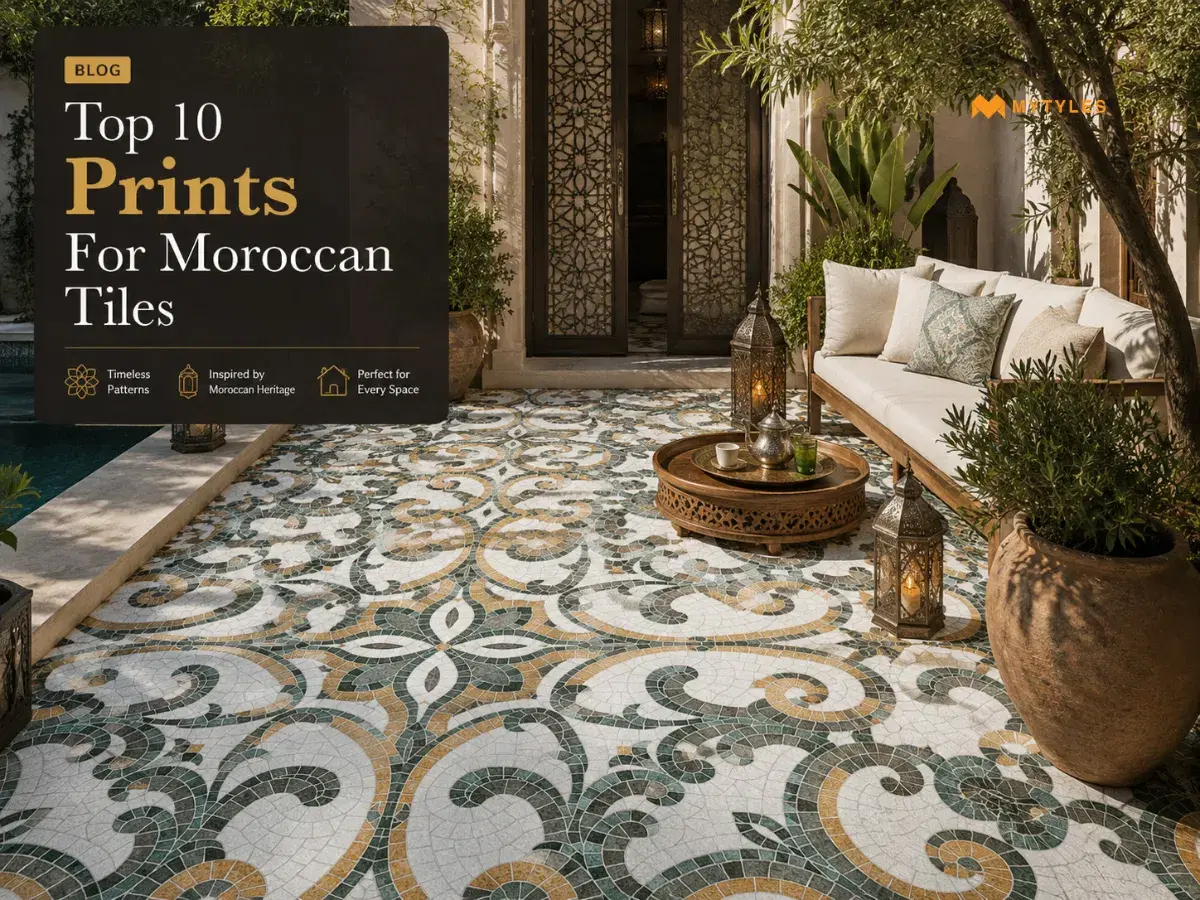
Moroccan tiles have gained immense popularity amongst the masses. Primarily known for the variety and design possibilities that it brings to your decor, the myriad of colors, tones and textures have received their own fan following. The type of prints, textures and the different nuances still hasn't garnered enough awareness. From European and Mediterranean influences to their modern counterparts, wondering what are your choices in terms of prince and design? Look no further.
Moroccan tiles have gained immense popularity amongst the masses. Primarily known for the variety and design possibilities that it brings to your decor, the myriad of colors, tones and textures have received their own fan following. The type of prints, textures and the different nuances still hasn’t garnered enough awareness. From European and Mediterranean influences to their modern counterparts, wondering what are your choices in terms of price and design? Look no further.
10 Moroccan Tile Patterns That Blend Tradition with Trend
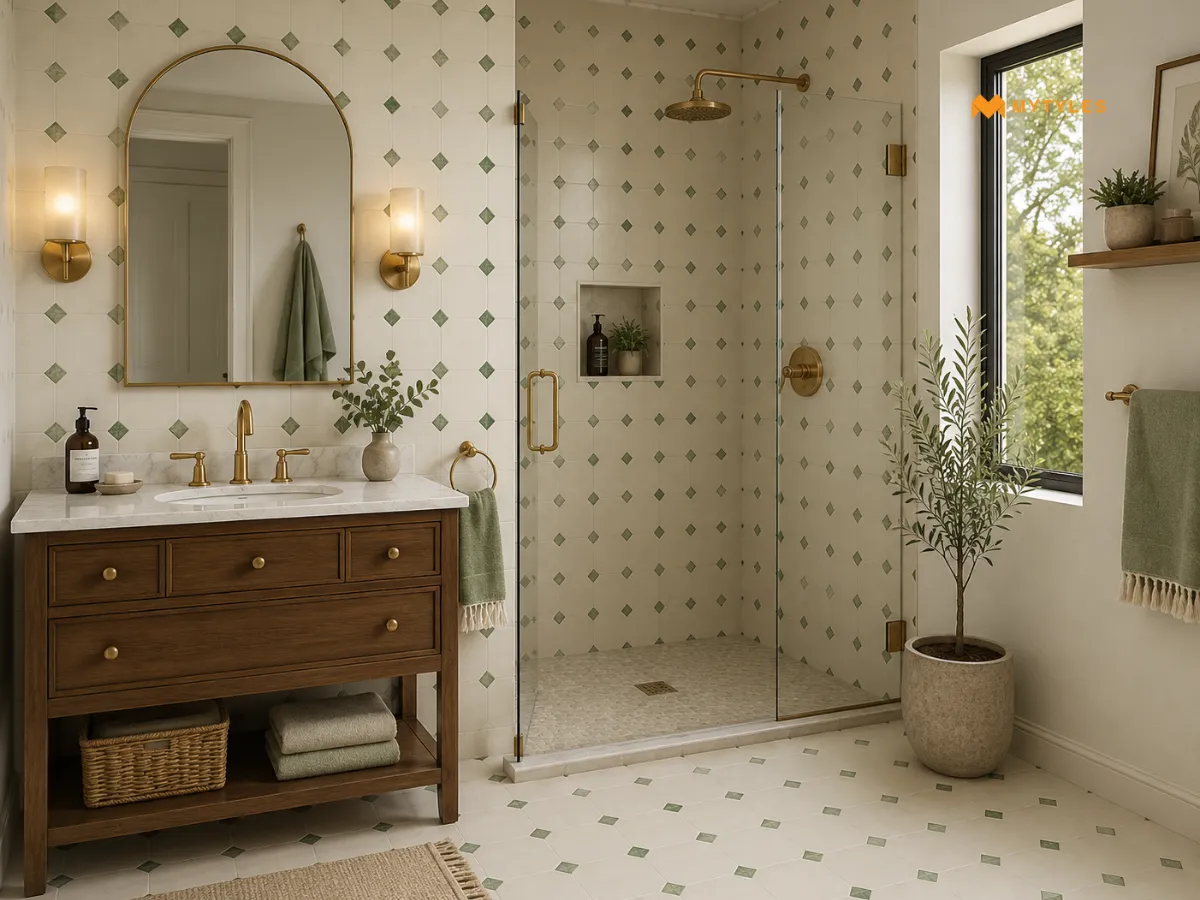
The right Moroccan print can completely transform a room’s energy. Bold geometric motifs create structure and rhythm, while floral and patchwork designs add warmth and vibrancy. Choosing prints thoughtfully helps define mood, texture, and the overall visual balance of your interiors.
Fleur-de-lis
A symbol of novelty, royalty and purity, fleur-de-lis motifs have a French origin story. Some other texts resonate with the symbolism of a lily and therefore, have huge simplistic, intricate and woven variations of the symbol. From black and white motif designs to elaborate, finer, and detailed designs, the use of fleur-de-lis can have a profound impact on the design of your spaces. It is a popular motif that is currently used in listellos, decorative tiles, or as a full-bodied contemporary motif.
Quatrefoil
Native to Gothic architecture, quatrefoil patterns are seen as the symbol of luck and luxury. Referred to as the four-leaf ornament where each leaf symbolizes hope, luck, faith, and love. Going through numerous iterations since its inception, the motif has evolved to incorporate both simplistic and ornate full-bodied geometric prints and rustic and satin matte glazed pastel tiles. Admired for their minimal influence, quatrefoil flooring is an alluring choice in residential and commercial properties.
Mosaic Grid
Do you love the characteristic clandescence of a detailed, nuanced design? Mosaic grid tiles are the perfect choice for you. Specializing in intricacy and rendering a sense of tranquility purely through the use of details, the range and flexibility of the prints are mesmerizing. From faux printed groutlines to delicate, well-crafted and arranged designs, they are particularly practical for large surfaces including wall to floor cascades, charming sink backsplashes and chequered layouts.
Talavera
Originating in Spain and Mexico, Talavera tiles are a mix of detailed imagery and a crackled look for a truly handcrafted appeal. Alongside the use of primary colors, the use of ethnic patterns against a typical snow white or chantilly backdrop, the contrast becomes all the way more impressive. Depending on the type of glaze work, they can be used for elaborate floor or wall facades.
Geometric
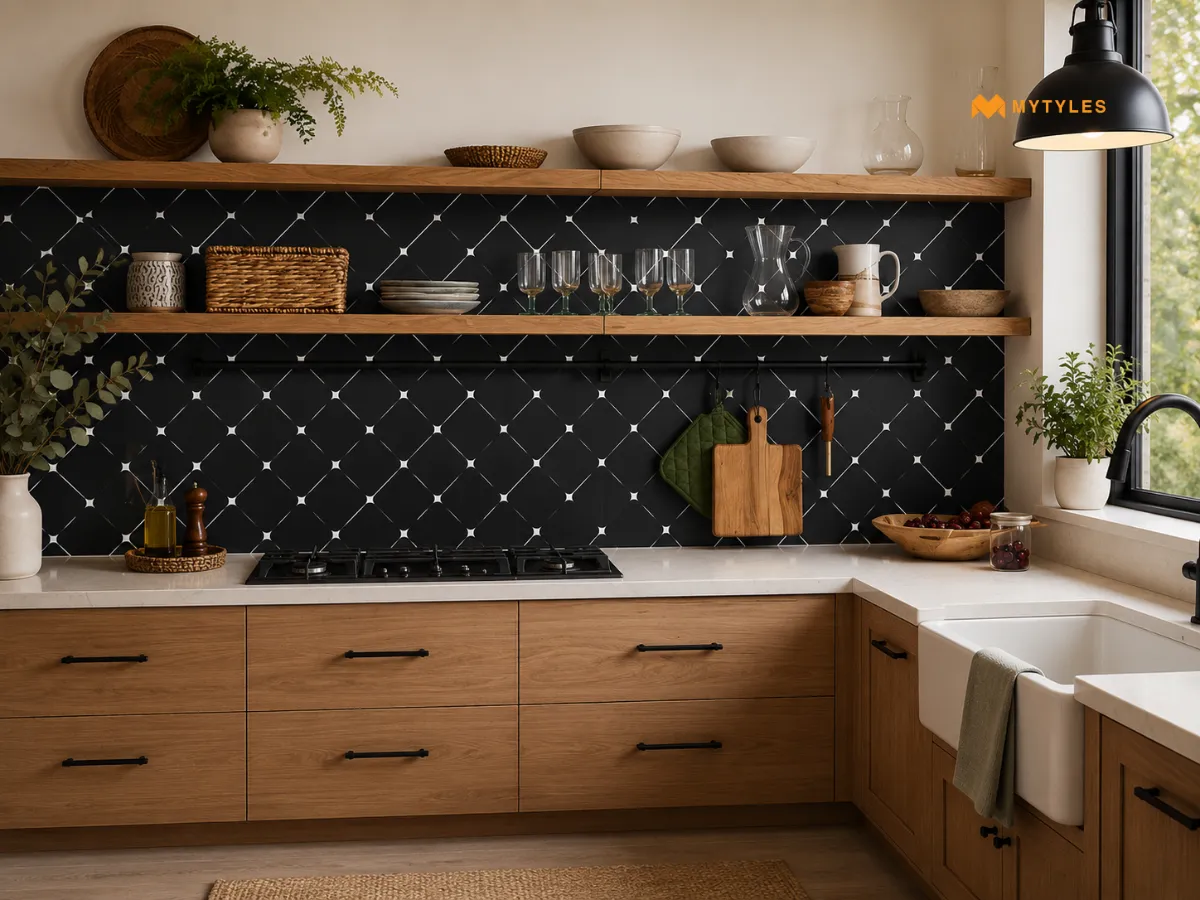
Geometric prints on Moroccan tiles include a vast range of designs. From traditional medallions to a hybrid, modern interpretation of traditional intricate arcs and loops make appearances frequently in geometric design. Perfect for both wall facades and flooring, use printed geometric tiles when decorating cross-functional open spaces or utilitarian spaces.
Jaali or Girih
Jaali designs or Girih prints are inspired by the traditional Maghribi script. The use of a simple but stylistic blend of loops and lines makes them a source of instant joy. Textures are often finer with jaali designs that make them a curious blend of geometry and ethnicity. Irrespective of the choice in decor style, they blend in rather seamlessly.
Zellige
.webp)
Handcrafted and delicate, Zellige is timeless. With an uneven surface and edges, Zellige is famous amidst design aficionados for its striking appearance. With the right glossy exterior and the right tint, the finesse can have a rather spellbinding effect on your decor. Whether used for sink backsplashes or a delectable accent wall, Zellige screams offbeat vivaciousness.
Bejmat
Bejmat, unlike Zellige can be used for flooring as well as wall facades. Although they are considered to be specific Zellige tiles, the fundamental look and feel is radically different. Their raw, rustic imperfections make them a glorious fit for exclusive low-traffic areas. Furthermore, both the elongated subway and the square variations of Bejmat can be incredibly soothing.
Tastir
Tastir, like jaali, is fairly geometric in nature. Unlike the other exclusively 2D designs, Tastir is all the way more intricate. Relying on vivid colours to fill out the space, the result is often maze-like and makes your installations delectable with its level of detailing. Often, rustic finishes including speckles and bleeding edges make the resulting surfaces hard to ignore.
Hydraulic Cement Patterns
Athangudi’s Moroccan counterpart, hydraulic cement tiles are highly exclusive and versatile. Relying on rather large screens and hand poured cement on molds, they made quite an addition to several historical spaces. With time, similar designs have been replicated with ceramic and vitrified bodies to achieve the same look with ease.
Bring Home the Magic of Moroccan Prints
There’s something truly special about Moroccan tiles, they carry a soul, a rhythm, and a story in every pattern. Each print, whether it’s a bold star, a graceful floral, or a handcrafted patchwork, captures the essence of Moroccan artistry, a blend of geometry, color, and timeless charm. These tiles don’t just decorate a home; they give it character. Imagine walking up a staircase wrapped in intricate blue-and-white motifs or sipping coffee in a kitchen that glows with soft terracotta prints. Every glance becomes a journey, every corner, a story.
At MyTyles, we believe great design should be both beautiful and personal. That’s why our Moroccan Tile Collection brings you the best of traditional craftsmanship with modern finishes, all carefully curated to suit today’s homes. Whether you’re redesigning your living room, refreshing your balcony, or styling your staircase, you’ll find tiles that inspire creativity and warmth.

What Makes Moroccan Tile Prints Popular For Homes?

Moroccan tile prints are popular because they bring color, pattern, and handcrafted charm into any space. Their geometric shapes, floral motifs, and bold borders create a rich decorative look without needing extra décor. These prints work beautifully on floors, backsplashes, balconies, bathrooms, and feature walls, making homes feel artistic, warm, and full of personality.
Which Moroccan Tile Print Is Best For A Kitchen Backsplash?
Geometric and floral Moroccan prints are great choices for kitchen backsplashes because they add instant character behind countertops and stoves. Blue, white, grey, and earthy combinations create a clean yet stylish look. For busy kitchens, choose prints with balanced patterns that hide minor stains while still keeping the backsplash bright, fresh, and visually attractive.
Are Blue Moroccan Tile Prints A Good Choice?
Yes, blue Moroccan tile prints are one of the most loved options because they feel fresh, coastal, and timeless. Shades like navy, aqua, cobalt, and sky blue can brighten walls and floors beautifully. They work well in bathrooms, kitchens, balconies, and outdoor corners, especially when paired with white, beige, or wooden elements.
Can Moroccan Tile Prints Be Used On Floors?
Moroccan tile prints can be used on floors if the tile material and finish are suitable for foot traffic. They look beautiful in entryways, balconies, kitchens, bathrooms, and small accent zones. For flooring, choose durable, anti-skid, or matte-finish options. Avoid overly busy prints in large areas if you want a calmer look.
Which Moroccan Prints Work Best For Bathrooms?
For bathrooms, floral, star, lattice, and blue-white Moroccan prints work especially well. These designs create a refreshing and decorative mood without making the space feel plain. Use them on shower walls, dado areas, niches, or floors. Pair patterned tiles with simple neutral tiles to maintain balance and avoid a cluttered bathroom appearance.
Do Moroccan Tile Prints Suit Modern Interiors?
Yes, Moroccan tile prints can suit modern interiors when used thoughtfully. Instead of covering every surface, apply them as a feature wall, backsplash, floor border, or accent panel. Choose softer colors like grey, beige, white, or muted blue for a contemporary look. This keeps the design stylish, balanced, and easy to pair with modern furniture.
How Do I Choose The Best Moroccan Tile Print?
Choose the best Moroccan tile print by considering room size, color theme, lighting, and where the tile will be installed. Bold prints work well as accents, while softer patterns suit larger areas. Match the print with plain tiles, simple furniture, and suitable grout color. The right design should feel decorative without overwhelming the space.

ABOUT THE AUTHOR
Kanchan Agarwal
Kanchan Agarwal is the Director at MyTyles, where she brings together her love for design, colours, and beautiful homes. Having helped build MyTyles from the ground up, she has developed a deep understanding of what homeowners look for when creating spaces that feel personal, practical, and inspiring. With an engineering background and a natural interest in interiors, Kanchan enjoys turning simple ideas into thoughtful tile choices that suit real homes and real lifestyles. Her approach is warm, creative, and people-focused, helping customers feel more confident while choosing designs that reflect their taste and make their spaces truly their own.