Inspiration Gallery
Blog
Tile Calculator
08065423741



.svg)


What Are Bookmatch and Endmatch Tiles? A Complete Guide
ByAditi Bardhan

Wed , Nov 11 , 2026

Read Time: 5 Min


 Copied!
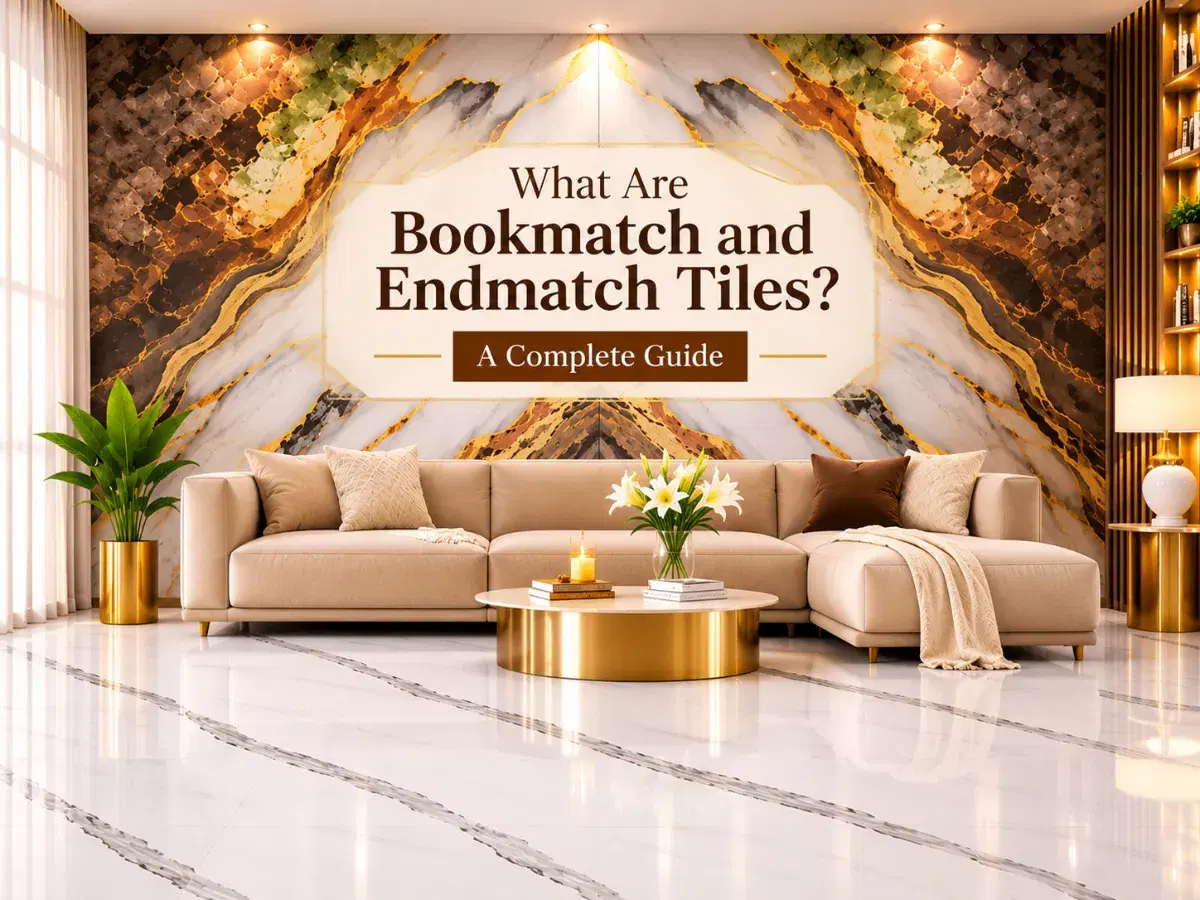
Large-format tiles can do more than repeat a marble or stone pattern from one piece to the next. Some collections are made so the veins mirror or continue across adjoining tiles. That is where these two pattern styles come in.
Bookmatch tiles create a reflected design across a shared joint. Endmatch tiles carry the vein or pattern forward into the next piece. If the tiles are mixed up, rotated incorrectly, or cut without checking the layout, the intended pattern can be lost. This guide explains how both styles work and what to check before installation.
What Are Bookmatch Tiles?

Bookmatching places two related tile faces side by side so the pattern reflects across their shared joint, similar to opening two pages of a book. On marble-look porcelain, one face is designed as the mirror of the other rather than as a random print.
These bookmatched tiles often use visible marble-style veins because the reflected lines are easier to read across a larger surface. Depending on the graphic, the pair may create a symmetrical composition. With natural stone, traditional bookmatching comes from adjacent slabs cut from the same block and opened in opposite directions.
With manufactured bookmatch porcelain tiles, the marble or stone pattern is printed on the tile surface. The tile remains porcelain or another tile body, not real marble. That distinction matters with book match marble-look tiles. Check the material specification instead of assuming “marble” means natural stone.
What Are Endmatch Tiles?
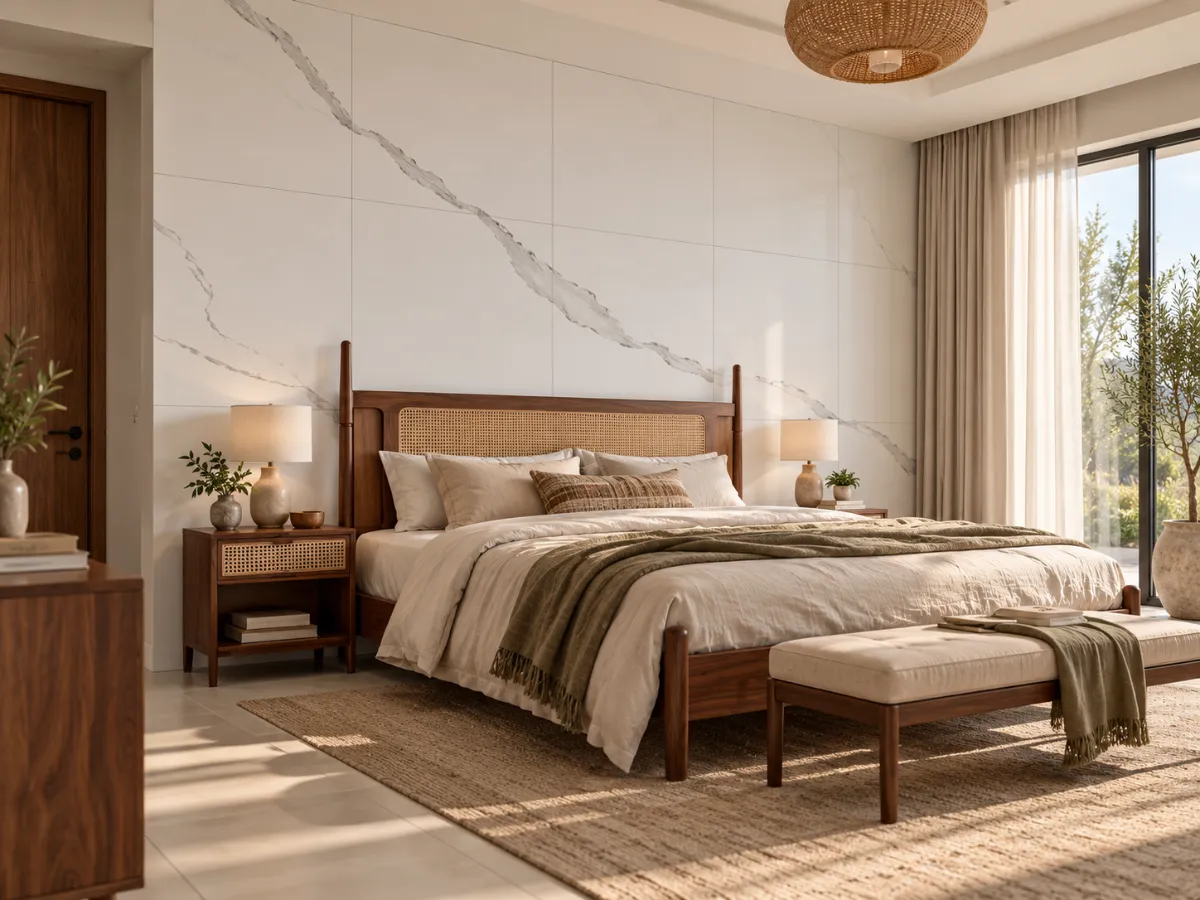
Endmatching does not mirror the design. The pattern continues from the end of one tile into the next, so the vein or printed movement appears to travel in one direction across several pieces.
This is why some collections are described as continuous vein tiles. You may also see the term 'continuous pattern tiles', where the surface graphic is planned to carry across adjoining pieces.
If a vein leaves one edge of a slab, the next piece begins where that line finishes. The sequence varies by collection, so follow the supplier information for that product.
Bookmatch vs Endmatch Tiles
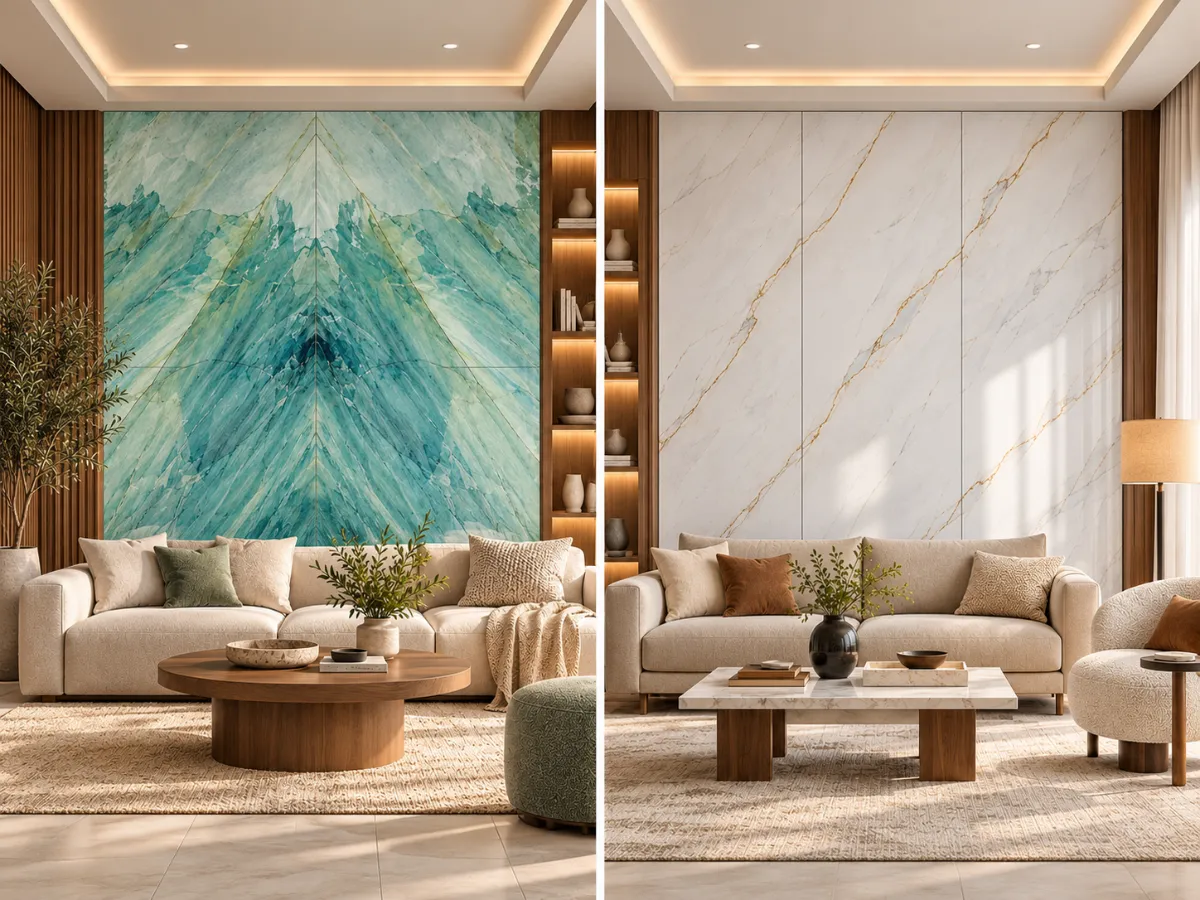
The easiest way to understand the difference between bookmatch tiles and endmatch tiles is to look at how their patterns connect. Bookmatching creates a mirrored composition, while endmatching extends the pattern across adjoining pieces. Here’s a closer look at what sets the two apart:
Key Difference | Bookmatch Tiles | Endmatch Tiles |
| Pattern relationship | Two adjoining bookmatch tile designs or slabs create a mirror image of each other. | The pattern continues in the same direction from one tile or slab to the next. |
| Visual result | Produces a symmetrical, open-book effect that makes the surface a focal point. | Produces a continuous pattern that makes multiple pieces read as one flowing surface. |
| Best suited for | Feature walls, statement walls, bathroom backdrops and other areas where the pattern is meant to stand out. | Large walls, floors and extended surfaces where uninterrupted pattern flow is preferred. |
| Tile selection | Requires matching complementary pieces, often supplied as A and B bookmatch tiles. | Requires pieces whose pattern aligns naturally with the adjoining tile or slab. |
| Installation priority | The main challenge is getting the mirrored pieces correctly positioned and aligned. | The main focus is maintaining the correct sequence and direction of the continuing pattern. |
What Are A and B Bookmatch Tiles?
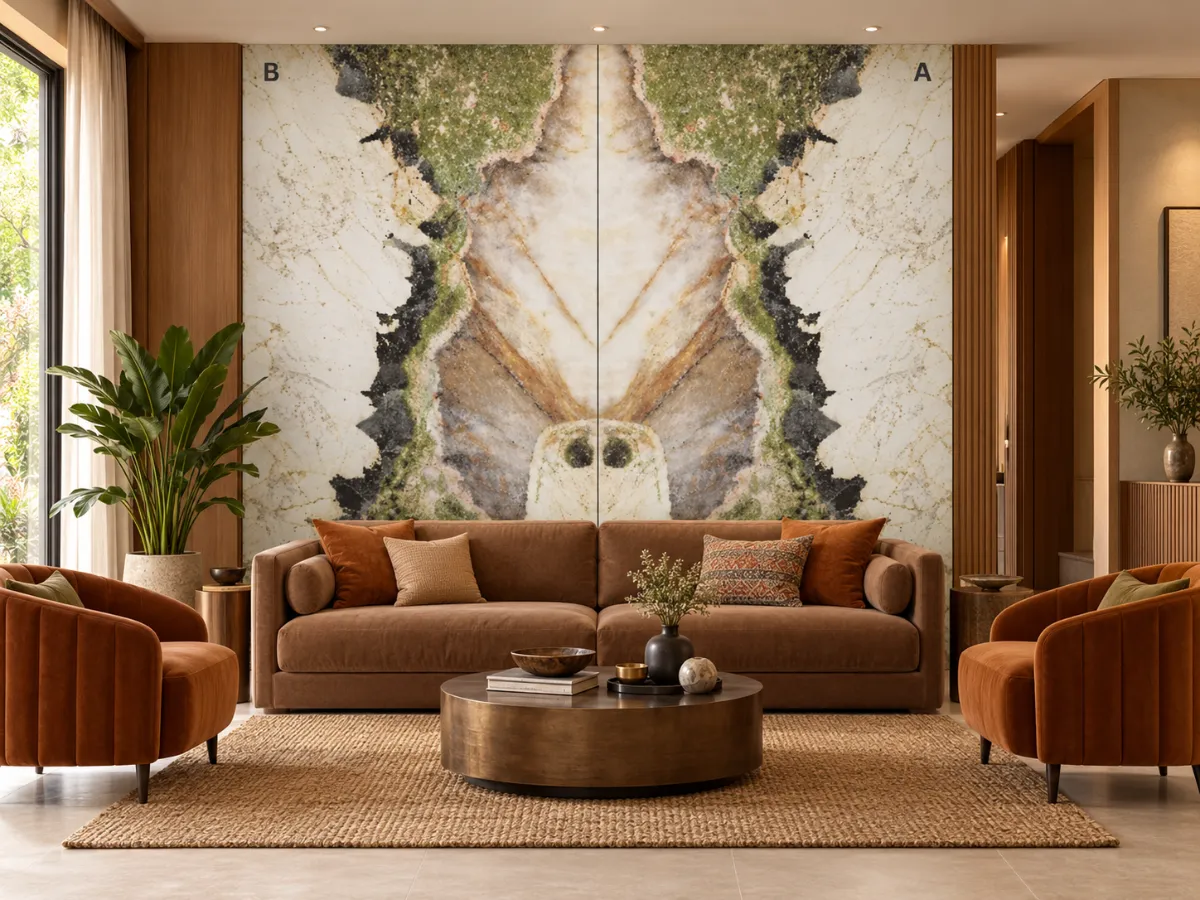
Many collections label the paired surfaces A and B. A and B bookmatch tiles are made to sit together in a specific orientation so their veins meet and reflect across the centre joint.
Do not treat A and B as random colour variations. They are two parts of one composition. Before ordering, view both faces together and check:
- Where the main veins meet
- Which edge forms the centre line
- Whether the pair is planned vertically or horizontally
- How much of the design will remain after cutting
- What furniture or fittings may cover the pattern
Keep the sequence information with the tiles until installation is complete.
Where Can Bookmatch Tiles Be Used?
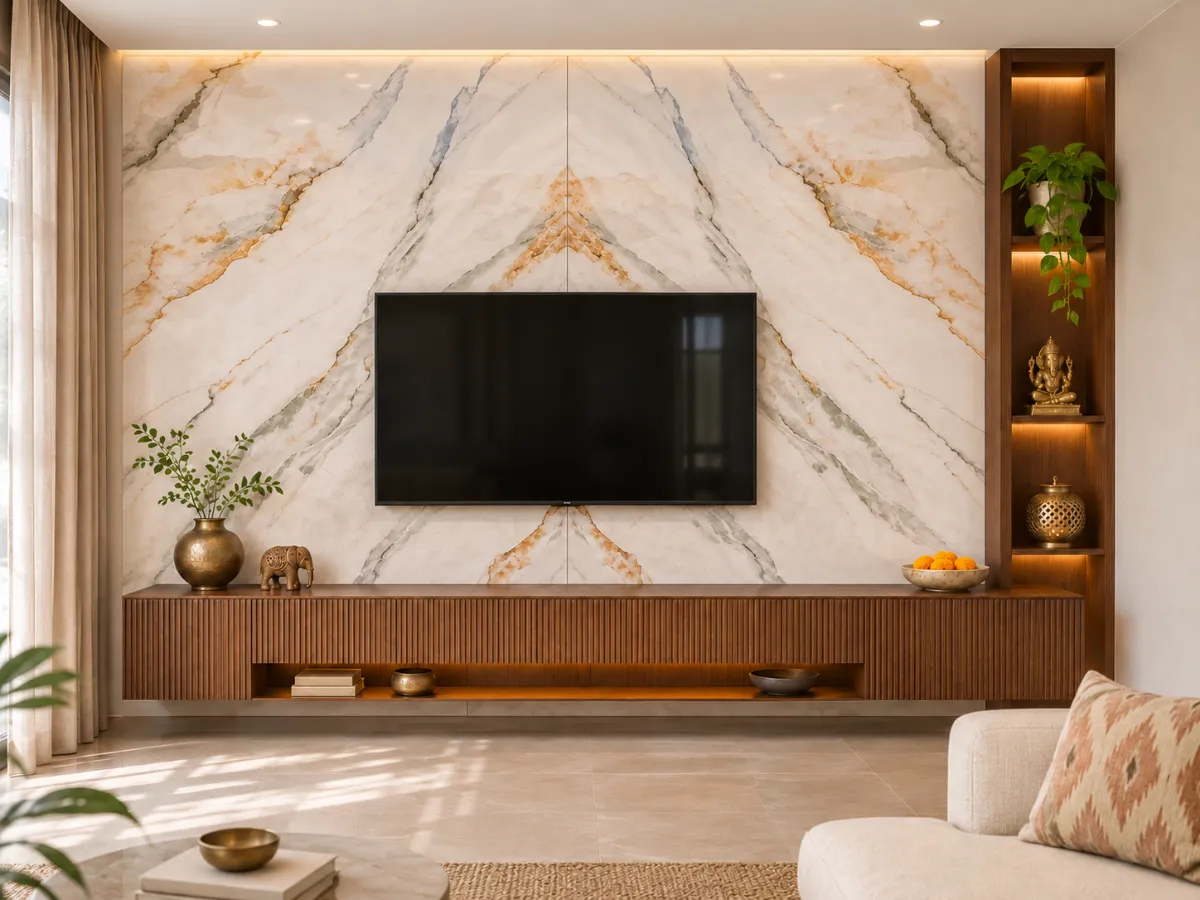
Bookmatch works best on surfaces where the mirrored pattern can be seen as one complete composition. Bookmatch wall tiles are often used on TV walls, feature walls, vanity backdrops and other areas with a clear centre. The main vein or pattern can be aligned around a television, mirror, console or other fixed element so the design does not get hidden after installation.
Some bookmatched porcelain tiles may also be suitable for bathroom walls or floors, depending on the product specification. For book match floor tiles, check floor suitability and slip-resistance information where relevant. Open areas usually show the mirrored layout more clearly than spaces where large furniture covers most of the surface.
Where Can Endmatch Tiles Be Used?
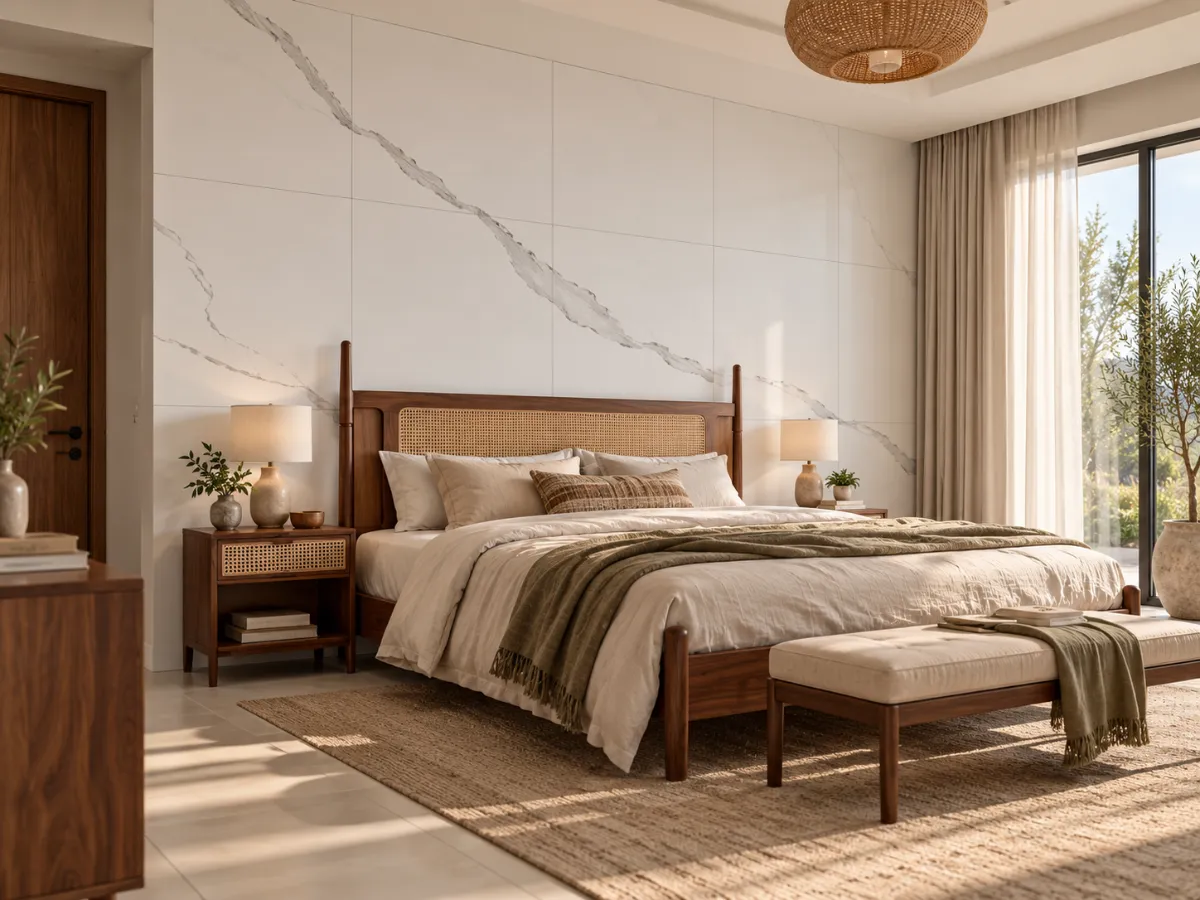
Endmatch tiles suit surfaces where the pattern needs to continue in one direction rather than meet at a central point. It can work across long passage walls, dining walls, kitchen wall sections or other wider surfaces where several tiles or slabs are installed in sequence. The effect depends on keeping the vein or graphic moving from one piece into the next.
Endmatch can also be used across larger floor runs when the selected product is approved for flooring. Plan the starting point, tile order and
direction before installation so the pattern does not break unexpectedly at doorways, corners or fixed cabinetry. Cuts should also be reviewed in advance because removing too much from one edge can interrupt the intended flow.
What to Check Before Installation
Lay Out the Pattern First
Place the required pieces in order. With book matched porcelain slabs, confirm that the mirrored veins meet where expected. With endmatch, follow the main lines from one piece into the next.
Mark the Orientation
If the factory markings are not clear, label the back of each piece with its top, bottom, left, right, and sequence. This is especially useful when several bookmatch slabs are being installed.
Plan Cuts Around the Design
Do not decide the centre first and deal with cutting later. Work from the finished wall or floor dimensions and check which parts of the graphic matter most before trimming any slab.
Prepare the Base
Large slabs need a suitably prepared substrate. Flatness, adhesive, coverage, handling, joint planning, and lippage control should be discussed with an installer familiar with the selected format.
Inspect Before Fixing
Check paired pieces before adhesive is applied. Printed faces may need small adjustments to line up as intended. Any trimming or repositioning should be identified before the slabs are fixed.
Common Bookmatch and Endmatch Mistakes
Bookmatch and endmatch layouts depend heavily on sequence, orientation and planning. Small mistakes made before installation can interrupt the pattern, hide important veins or make paired tiles look unrelated once they are fixed. Common mistakes to watch for include:
- Ordering only one side of an A/B pair
- Mixing the intended sequence
- Rotating pieces without checking the graphic
- Cutting before viewing the whole composition
- Assuming every marble-look tile can be bookmatched
- Hiding the strongest part of the pattern behind furniture
- Leaving slab handling decisions until installation day
Bookmatch or Endmatch: Which One Should You Choose?
Bookmatch suits a clear mirrored composition. Endmatch suits a vein that needs to continue in one direction across a longer wall or floor. Neither pattern is automatically better. Wall dimensions, visible area, tile size, cuts, furniture, and the specific graphic can all change how the finished surface reads.
When comparing bookmatch or endmatch tile options, ask to see the complete matching set instead of one product image. At MyTyles, compare marble-look, stone-look, and large-format designs by size, finish, and application, then plan the layout around the actual surface where the pattern will be installed.

What is the difference between bookmatch tiles and endmatch tiles?

Bookmatch tiles mirror the vein or pattern across a shared joint. Endmatch tiles continue the design into the next piece. Bookmatch creates a symmetrical composition, while endmatch creates directional flow. The right mirror pattern tile choice depends on the wall or floor dimensions, the graphic, visible cuts, and how the surface will be viewed after installation is complete.
Are bookmatched marble tiles always made from real marble?
Not always. Some bookmatched marble tiles use natural stone, while others are marble-look porcelain or ceramic products. A book match marble-look tile can copy marble veining without being real marble. Always check the product material, body type, finish, application details, and specifications carefully so you know what the surface is made from before you order.
What are A and B bookmatch tiles?
A and B bookmatch tiles are two related faces designed to sit beside each other so their veins meet and reflect across the joint. They should not be treated as random variations. View both pieces together before ordering, and keep their orientation clear during cutting and installation so the intended mirrored composition is not lost.
Can book match floor tiles be used on floors?
Some book match floor tiles can be used on floors when the specific product is approved for that application. Check floor suitability, finish, slip information where relevant, tile size, and installation requirements. Also consider furniture placement because a mirrored design may look different once tables, sofas, beds, or other pieces cover part of the floor.
What are 8x4 bookmatch tiles?
The term '8x4 bookmatch tiles' usually refers to large slabs around 8 x 4 ft, often listed as 1200 x 2400 mm. The size gives the graphic more uninterrupted space, but the slab is only bookmatched when it is supplied with a related A and B face or another stated matching sequence for installation planning.
How should a bookmatch porcelain tile be aligned?
A book matched porcelain tile needs careful alignment because the mirrored effect depends on how the veins meet at the joint. Before fixing any bookmatch porcelain tile, check its orientation and cuts. If the printed design does not line up as expected, identify the required adjustment before adhesive is applied to the slab on site.
Can bookmatch tiles be cut without affecting the pattern?
Bookmatch tiles can be cut, but each cut may change where the veins meet or reduce the symmetry of the final composition. Plan cuts around corners, doors, windows, fittings, and surface edges before installation. For large slabs, review the full layout first so essential parts of the mirrored design are not removed or hidden unintentionally.

ABOUT THE AUTHOR
Aditi Bardhan
Aditi Bardhan is a professional content writer with over five years of experience creating SEO-focused, research-backed content across diverse industries. She specialises in the tile and surface materials space, writing for homeowners, architects, interior designers, and trade professionals. Her work combines technical research, design awareness, and a strong understanding of customer needs, helping readers make clearer and more confident choices. Through her content, Aditi simplifies complex material concepts, highlights practical design benefits, and helps brands build trust and authority in the tile and construction industry.
Latest Blogs By MyTyles