Inspiration Gallery
Blog
Tile Calculator
08065423741



.svg)


What Should You Do With Leftover Tiles After Renovation?
ByHeena Dhiman

Thu , Oct 22 , 2026

Read Time: 5 Min


 Copied!

The tiling is finished, the room finally looks complete, and then you notice the last part of the renovation: two unopened boxes in one corner, a few full pieces behind them, and a bucket of cut-offs nobody knows what to do with. Throwing everything away feels wasteful. Keeping all of it forever is not much better.
The useful answer is not to turn every piece into a craft. Some leftover tiles are worth saving because they may help with a future repair. Others can become small home projects, be passed on to someone who needs them, or go into the correct local waste stream. Here is how to decide what deserves space in your storeroom and what can get a second use.
6 Practical Ways to Use Leftover Tiles After Renovation

Before choosing a project, look at how many pieces you have and what condition they are in. One or two full tiles suit a different purpose from a box of matching pieces or a collection of broken offcuts. It also helps to set aside any tiles you may need for repairs before trying other leftover tile ideas.
Keep a Few Tiles for Future Repairs
The most practical answer to what to do with leftover tiles is to keep a small matching set from each tiled area as tile repair spares. If one tile is damaged later, a piece from the same purchase may be easier to match than stock bought years afterwards. Production batches can vary slightly in shade, size, or surface appearance.
Keep spare floor tiles for their original room and spare wall tiles for their original wall area. Similar size does not mean the intended use can be swapped. Product suitability still matters.
Keep One Offcut as a Colour-Matching Sample
A clean tile offcut is worth keeping when you still have other finishes to choose for the room. Take it with you when looking at paint or cabinet samples and place the options beside the actual tile. This can be especially useful with colours such as grey, where the shade may look different once another material is placed next to it.
This is one of the simplest tile reuse ideas because nothing has to be glued or drilled. Use a non-repair offcut with enough of the surface design visible.
Turn One or Two Tiles Into Small Home Accessories
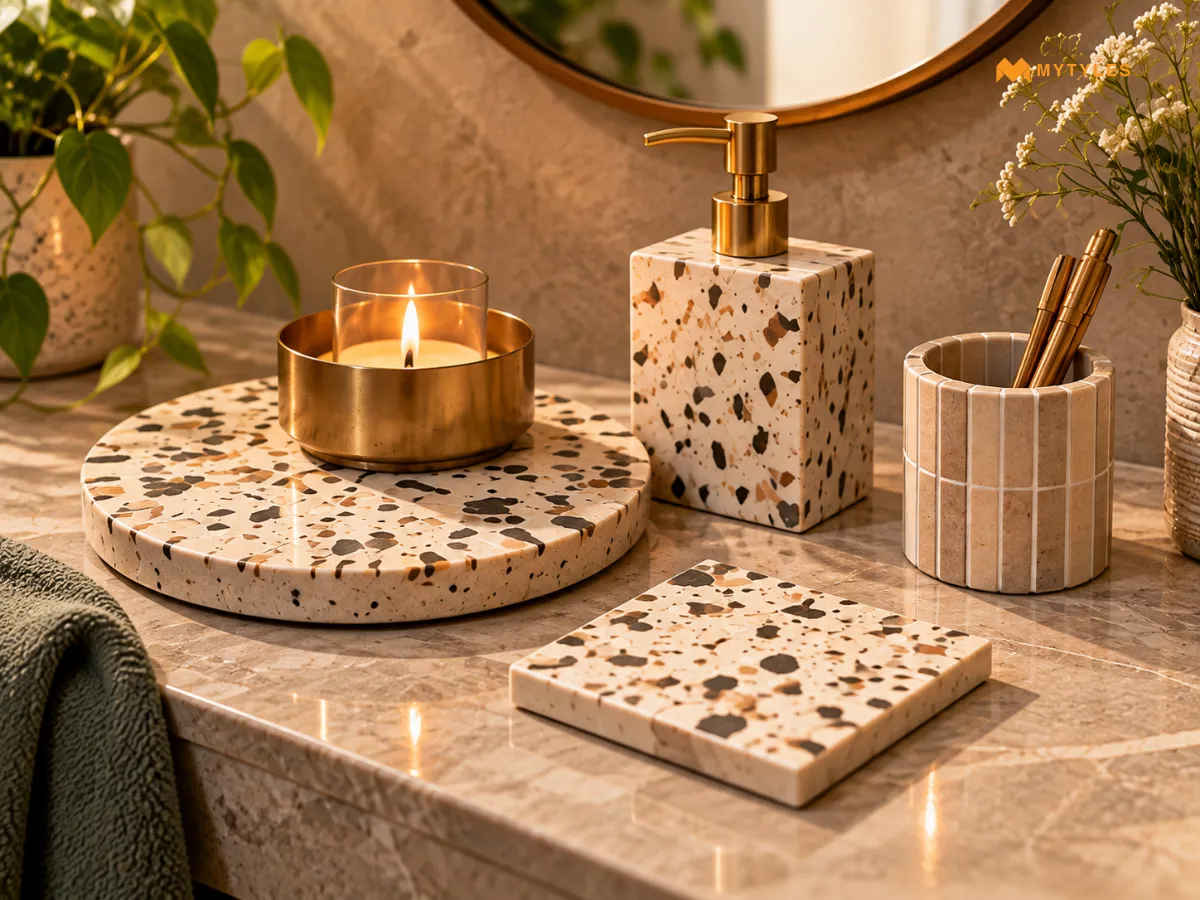
A few full pieces can become simple DIY tile projects without much cutting. Small square or hexagonal pieces may work as coasters once a cork, felt, or similar protective backing is fixed underneath to help prevent scratches. These tile coaster ideas use very little material and do not need a whole matching set.
A larger decorative tile can sit beneath a small plant pot or become a tray insert. If you reuse leftover tiles this way, check that the tile is suitable for the intended use rather than assuming every wall or floor tile can be used in the same way.
Use Matching Tiles on a Small Piece of Furniture
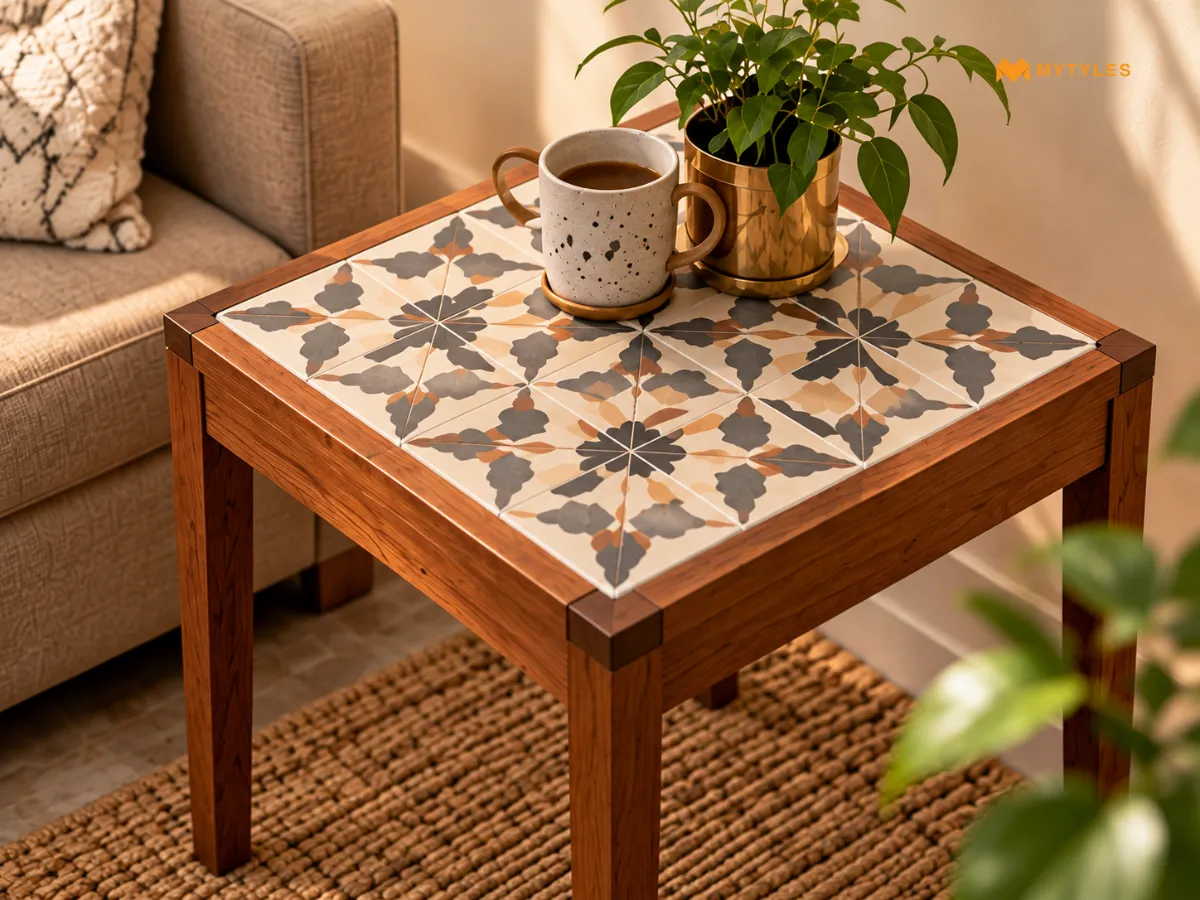
If you have four, six, or eight matching pieces, an old side table can be a better canvas than another wall. Tile tabletop ideas work especially well when the furniture top is flat and the layout can be planned with limited cutting. Dry lay the pieces first so you can see where joints and edge cuts will fall.
The same thinking applies to tiled planter ideas. A straight-sided planter cover is easier to work with than a curved one. For an outdoor planter, make sure the tile and the materials used to fix it are suitable for outdoor use.
Turn Broken Tile Pieces Into a Mosaic
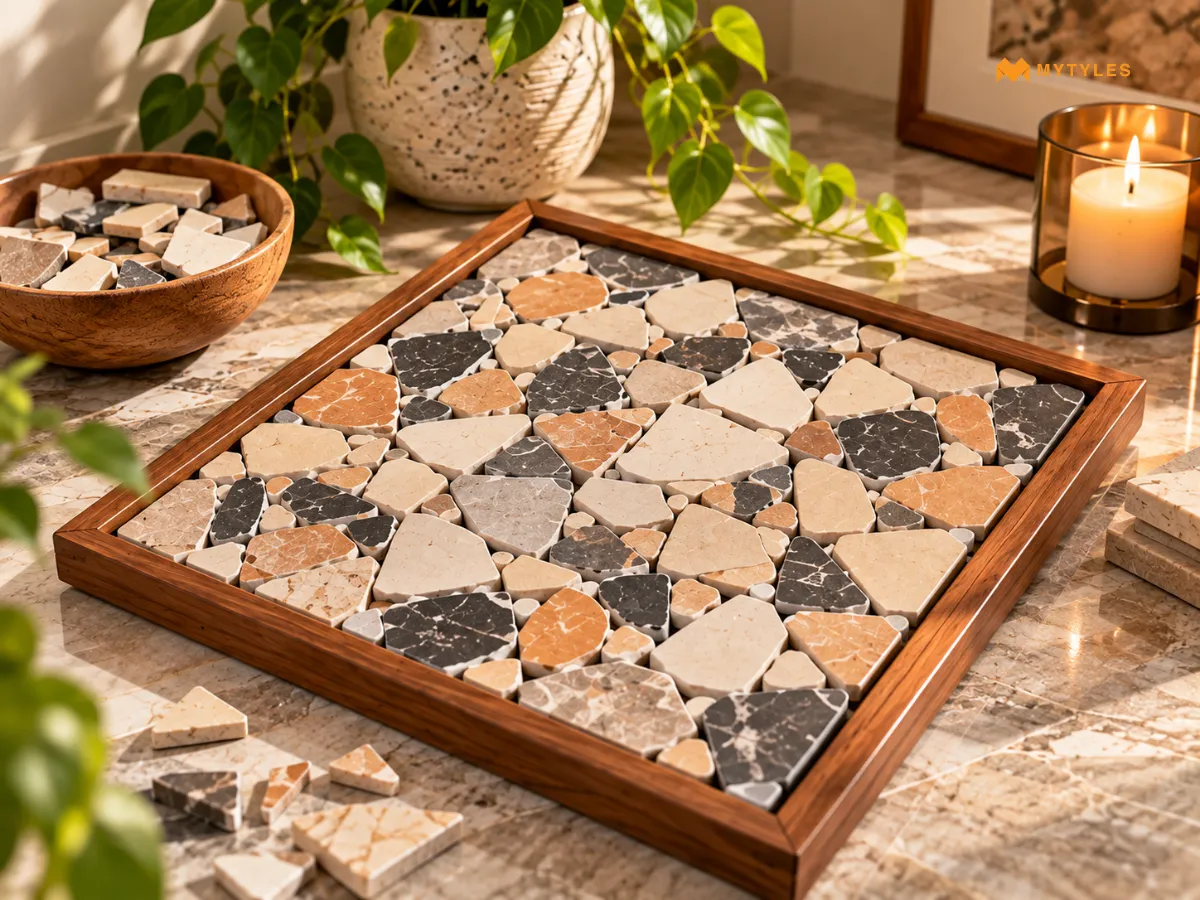
Broken pieces can still be useful when their uneven shapes become part of the pattern. For a broken tile mosaic, try arranging the fragments on a small wooden panel, mirror frame, or planter surround before working directly on a wall. You can move the pieces around at this stage and see how much space you want to leave between them.
The same approach can help when trying out mosaic wall ideas. A smaller framed section gives you a defined area to work within, especially if you are using pieces left from different tiles. You can also use these fragments for other small mosaic tile projects around the home.
Pass Usable Extra Tiles On to Someone Else
After setting aside enough tiles for future repairs, you may still have a few full pieces left. Rather than keeping boxes you are unlikely to use, you could donate leftover tiles to a local reuse group or community project. Check whether they accept tiles before taking them over, as this can vary from place to place.
If the tiles are still in their original box, leave them there. The product code and size on the packaging can help the next person understand exactly what they are getting. You could also list the remaining tiles in a local resale or neighbourhood group.
How to Store and Handle Leftover Tiles
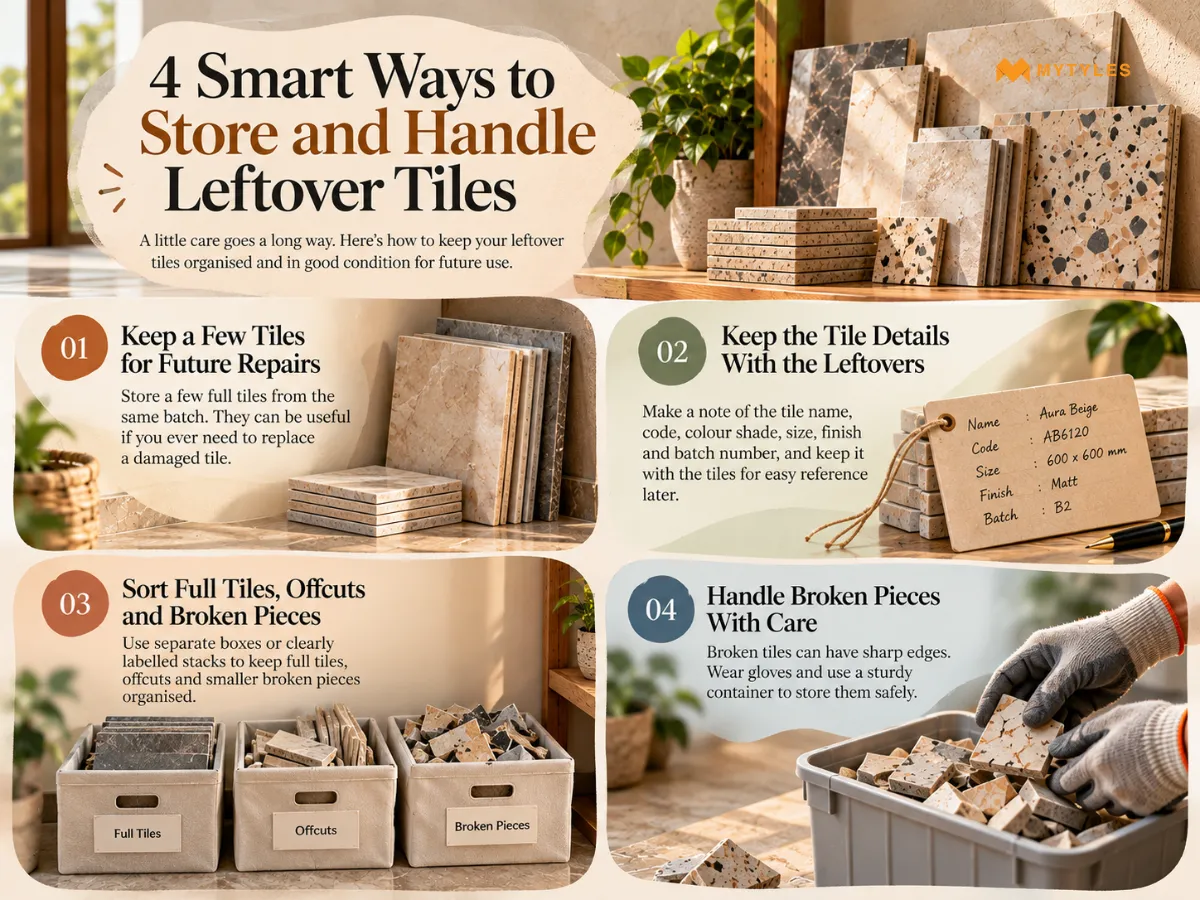
Once you know which leftover tiles you want to keep, organise them so they remain easy to identify and use later. If you have several materials, keep leftover ceramic tiles apart from leftover vitrified tiles rather than relying on memory later.
Store Spare Tiles for Future Repairs
A few matching tiles kept after the work is finished may come in handy if one gets damaged later. When deciding how to store leftover tiles, choose a dry spot where the pieces will not be easily knocked or chipped. If the original carton is still in good condition, it can be used to keep the matching tiles together.
Keep the Tile Details With Them
Label your spare tiles with the room, tile name or product code, size, purchase date, and batch or shade details from the carton if available. Photographing the box label can also help if the printed packaging becomes damaged over time.
Separate Full Tiles, Offcuts, and Broken Pieces
Before putting extra tiles after renovation into storage, check what is actually worth keeping. Full matching tiles belong with your repair stock. Smaller offcuts may still be useful for tile craft ideas or as samples for future colour matching. Pieces that are badly damaged do not need to take up storage space unless you already have a suitable use for them.
Handle Broken Pieces Carefully
A chipped tile can leave an edge that is sharper than it looks. If you plan to reuse broken tiles for a mosaic or craft project, wear gloves while handling the pieces and eye protection if you need to cut them. Any fragments you are not using should be wrapped or kept somewhere they cannot be picked up accidentally.
What If the Leftover Tiles Cannot Be Reused?
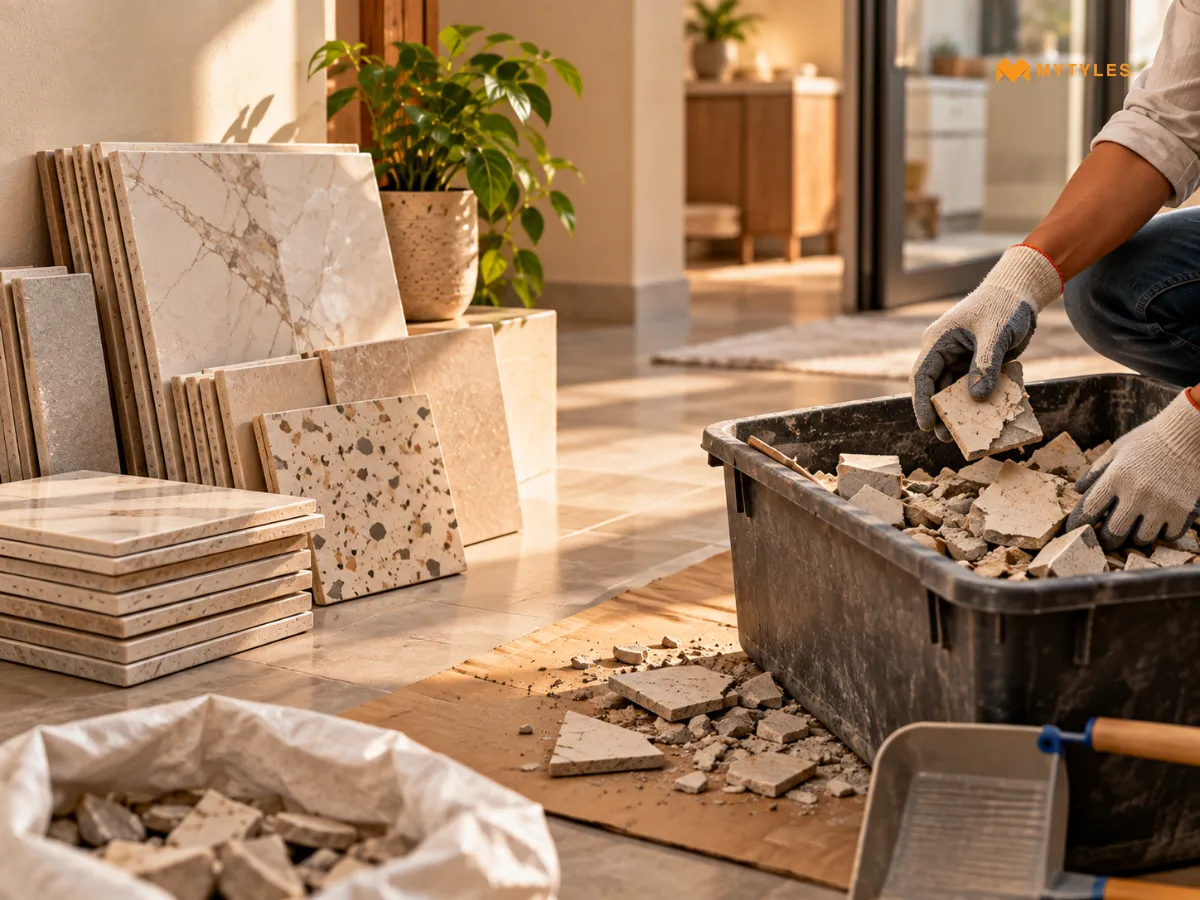
Not every leftover tile will be worth keeping. Some may be badly chipped, broken, or unsuitable for another use. If you need to dispose of old tiles responsibly, first check how renovation waste is collected in your area. The available options can differ by location, so it is worth checking before putting the pieces out with regular household waste.
Broken pieces can be awkward to move once they are loose. Put them in a suitable container before taking them to the collection point. If a tile is too damaged to serve another purpose, disposal may simply be the appropriate next step.
Before You Clear the Renovation Pile, Give It One Last Sort
Once the renovation is over, take another look at the tiles that are left. A few matching pieces are worth putting aside in case a tile needs replacing later. Other leftover tiles may suit one of the smaller projects covered above. And if you still have good tiles with no planned use, see whether someone else can take them before you clear them out.
If you are planning another tiled area, you can also bring a leftover tile to the MyTyles Experience Centre. Seeing the old piece alongside a new option can help when you are trying to find something that works with the surfaces already in your home.

How Many Spare Tiles Should I Keep After Renovation?

There is no single number that suits every room. Keep enough matching pieces to cover a few possible future repairs, especially for tiles with a distinct shade, size, or pattern. Your installer or supplier can help you decide a sensible quantity for the tiled area.
Can I Use Leftover Wall Tiles on the Floor?
Do not assume so. A tile listed for wall use may not have the performance needed for flooring. Check the individual product specifications before changing its application, particularly where footfall, wet conditions, or slip performance matter.
Can Broken Tiles Be Reused Safely?
Yes, in suitable craft or mosaic projects, but sharp edges need careful handling. Use appropriate eye and hand protection when cutting pieces, keep fragments away from children and pets, and make sure exposed edges are smoothed, covered, or positioned where they cannot cause injury.
Can Leftover Tiles Be Stored Outside?
Indoor dry storage is usually the safer choice unless the product and packaging are suitable for the conditions. Outdoor storage can expose cartons, labels, and tiles to moisture, impact, or temperature changes. Keep repair pieces protected, stable, labelled, and away from places where they may be knocked.
What Can I Make With Only One or Two Leftover Tiles?
A small number of tiles can still be useful. Depending on size and suitability, consider a backed coaster, plant pot base, tray insert, small display panel, or a portable colour sample for choosing paint, cabinetry, curtains, or grout later.
Where Can I Donate Unused Tiles?
Try local building material reuse groups, community organisations, craft studios, schools, contractors, or neighbourhood resale groups. Contact them first and explain the quantity, tile size, condition, and whether boxes or product details are available, because acceptance policies vary.
Should I Throw Away Tiles That I Cannot Reuse?
Disposal should come after repair storage, reuse, and donation have been considered. Check your local municipal or construction and demolition waste options, since tile disposal and recycling routes differ by location. Keep broken pieces contained during transport because sharp edges can cause injury.

ABOUT THE AUTHOR
Heena Dhiman
With a background in fashion design and over 5 years of writing experience, I bring a creative and detail-oriented eye to home and design content. My journey began with aesthetics, colours, and visual storytelling, which gradually led me to writing across lifestyle, finance, home improvement, and resource management. Over time, I discovered a strong interest in tiles and interiors, where my design background helps me understand how small choices can shape the feeling of a home. Through my content, I aim to make home design decisions easier, clearer, and more enjoyable for readers, helping them feel confident while creating spaces that reflect their style and everyday needs.