Inspiration Gallery
Blog
Tile Calculator
08065423741



.svg)


7 Living Room Styling Tips to Maximise Space and Comfort with Wooden Tiles
ByBiren Agrawalla

Thu , Jul 16 , 2026

Read Time: 5 Min


 Copied!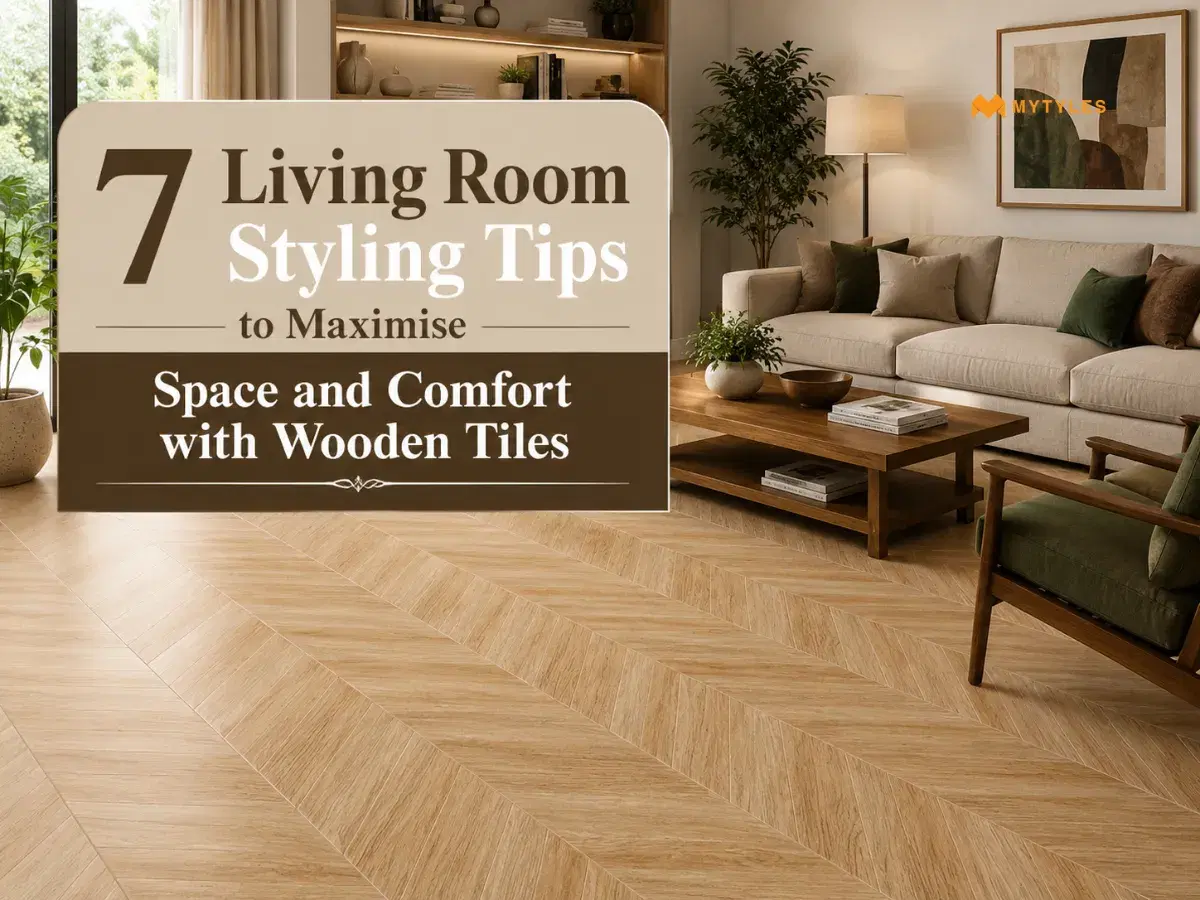
Wooden tiles have become a leading choice for homeowners who want a stylish living room without the upkeep that real timber demands. These tiles bring in the timeless visual appeal of wood while offering the durability of porcelain or ceramic. The result is a living room that looks polished, feels comfortable, and functions effortlessly throughout daily use.
One of the biggest advantages of wooden tiles is how easily they adapt to different interior styles. You can build a modern, rustic, classic, or Scandinavian-inspired living room without worrying about dents, scratches, or wear. Their resistance to moisture also means they stay looking fresh for years, even in high-use homes.
If you plan to redesign your living room with a focus on space optimisation and comfort, wooden tiles are one of the most versatile flooring choices you can pick. Below are seven effective styling strategies that help you make the most of them.
1. Choose the Right Shade to Create Visual Space
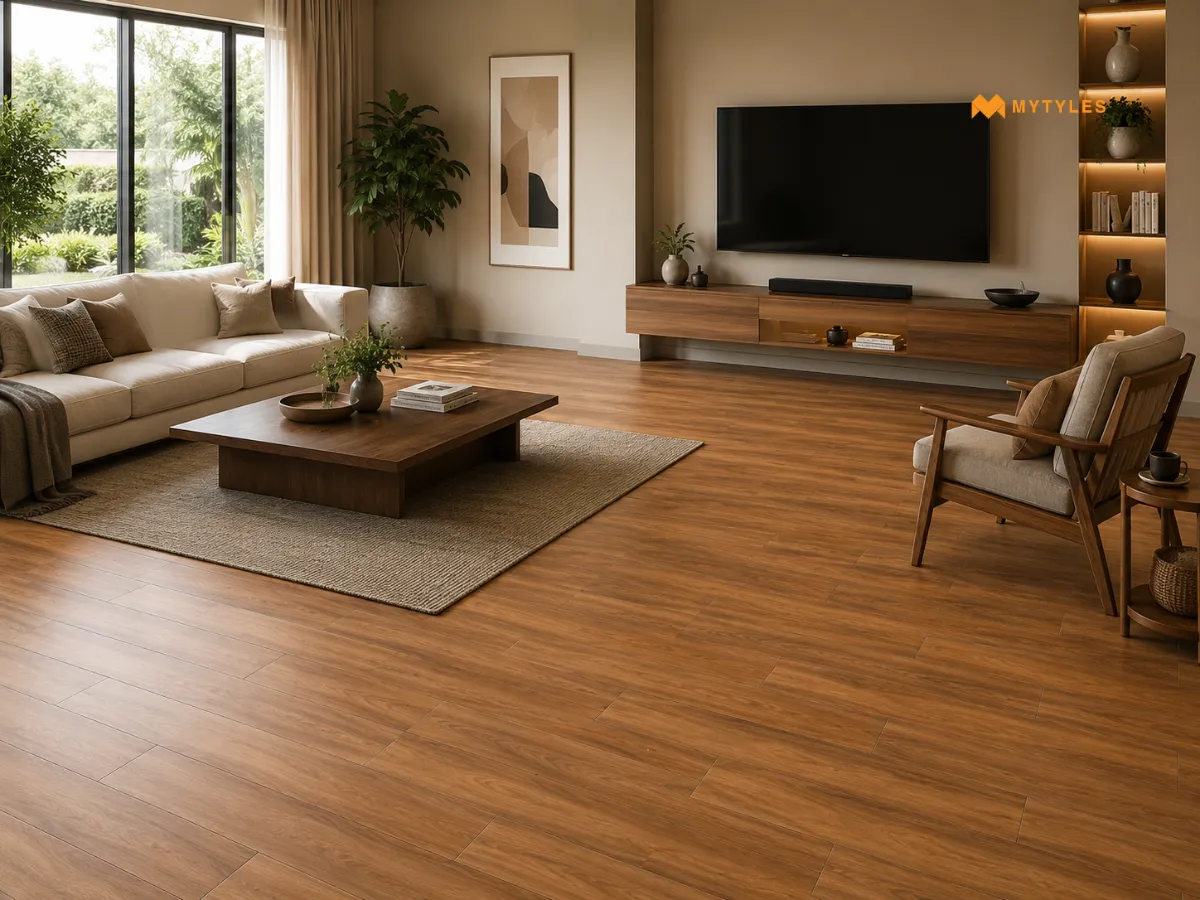
The color of your wooden tiles has an enormous impact on how open or compact your living room feels. Light shades such as pale oak, sand beige, light maple, and ash help reflect light across the room, making the living area appear larger than it actually is. This is very useful for flats or small living rooms.
Darker shades like walnut or coffee brown look sophisticated but can make a compact room feel enclosed. If you prefer richer tones, use them in rooms with plenty of natural light. Pairing dark wooden tiles with lighter furniture or rugs can also prevent the room from feeling visually heavy.
The key is balance, your tile shade should support a layout that feels open, calm, and easy to navigate.
2. Lay Tiles in a Direction That Enhances Flow
Tile direction plays a significant role in how your living room floor guides the eye. Long wooden planks laid parallel to the longest wall draw attention outward, giving the illusion of extra width. This technique works brilliantly in rectangular living rooms. If your living room is narrow, laying the tiles across the room can make the layout appear wider.
Herringbone patterns add stylish movement without overwhelming the room, especially in medium-sized spaces. Diagonal tile placement can also bring in a sense of movement and create a visually striking base. The idea is to allow the floor pattern to stretch the room in a subtle, natural way that enhances comfort and flow.
3. Use Large-Format Wooden Tiles for a Clean, Open Look
Large-format wooden tiles are a smart way to keep your living room looking open and uncluttered. Smaller tile sizes create more grout lines, and these lines can visually break the room into sections. Larger planks reduce joints, resulting in a smooth, continuous surface that instantly makes your living room appear tidier.
Tiles sized 1200×200 mm or bigger mimic real wooden planks and give your floor a sleek look. A seamless floor helps the rest of the room feel organised, modern, and free of distractions. For homes with minimal decor, large-format tiles provide the perfect base to let your interior items stand out.
4. Balance Hard Surfaces with Soft Textures
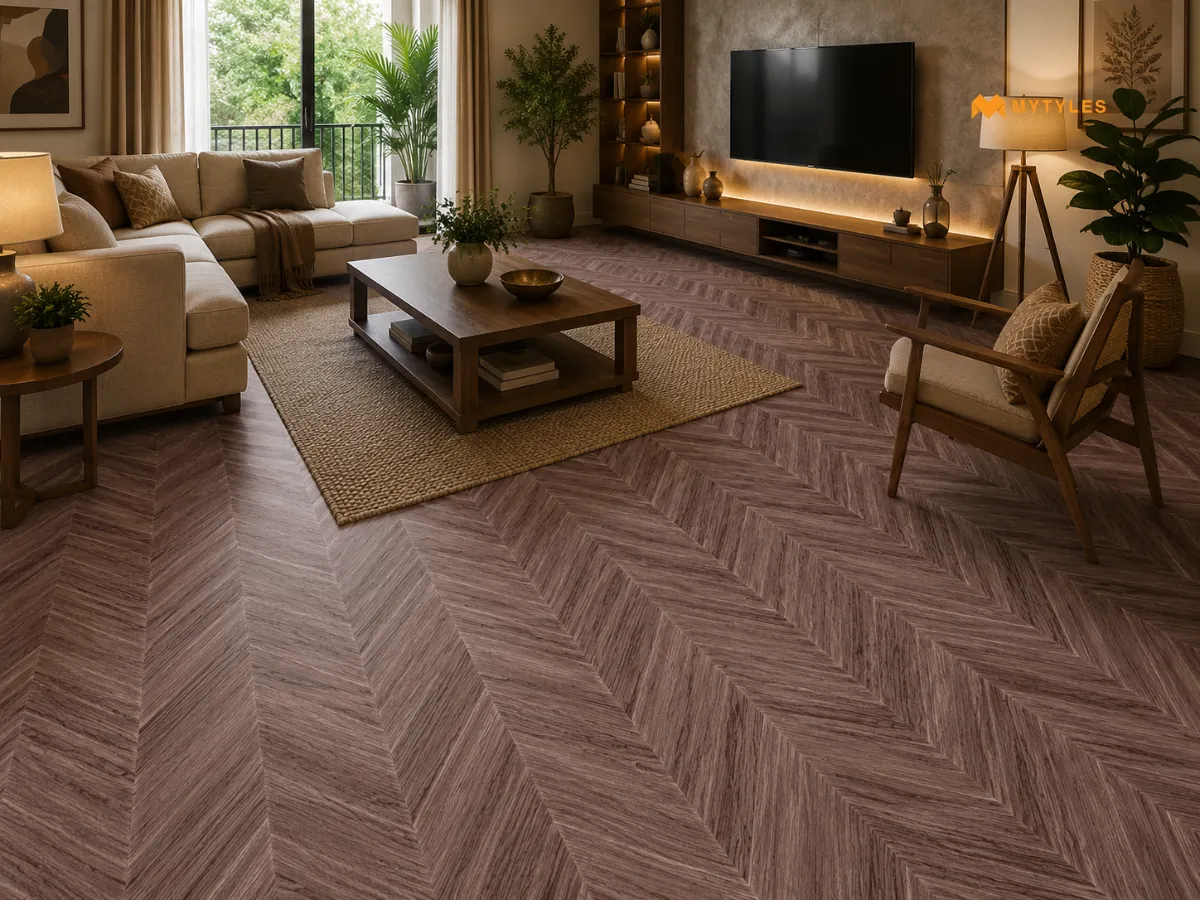
Wooden tiles naturally add texture to your living room, and pairing them with soft furnishings ensures the room feels welcoming rather than cold. Rugs, throw blankets, fabric sofas, soft curtains, and cushions all add comfort and contrast to the sturdy finish of wooden tiles. A neutral wooden tile floor pairs beautifully with linen or cotton upholstery, while leather furniture creates a more refined look.
Adding a plush rug can soften the centre of the living room and highlight the seating zone.
Instead of overcrowding the room with decor, focus on a few well-chosen items that complement the tiles. This achieves a harmonious balance between hard and soft textures, helping your living room feel inviting without visual clutter.
5. Pick Slim, Raised Furniture to Keep the Room Airy
The type of furniture you choose can make or break the sense of space. Heavy, bulky furniture blocks visual flow and can make your living room feel compressed. Raised furniture, such as sofas, chairs, and TV units with legs, allows the floor to remain visible, making the room feel bigger.
Floating shelves, minimal TV consoles, slim coffee tables, and open-legged sofas keep the room light and spacious. This approach also allows the wooden tiles to remain visible as part of your decor theme. Open-legged furniture is especially effective in smaller living rooms, as it instantly adds breathing space without sacrificing functionality.
6. Create a Cohesive color Palette That Complements Wooden Tiles
Wooden tiles pair beautifully with a wide range of colors. For a clean and calming living room, use shades like white, cream, light grey, or muted sage. These tones sit well against pale wooden tiles and create a visually light environment. If you prefer deeper tones, navy blue, charcoal, or forest green can create a rich contrast with lighter floors.
The aim is not to match every element exactly but to allow your colors to complement your floor while keeping the room cohesive. Smart color pairing also allows your wooden tile pattern to stand out naturally without competing with bright or overly bold decor.
7. Use Zoning Techniques to Define Spaces Without Walls
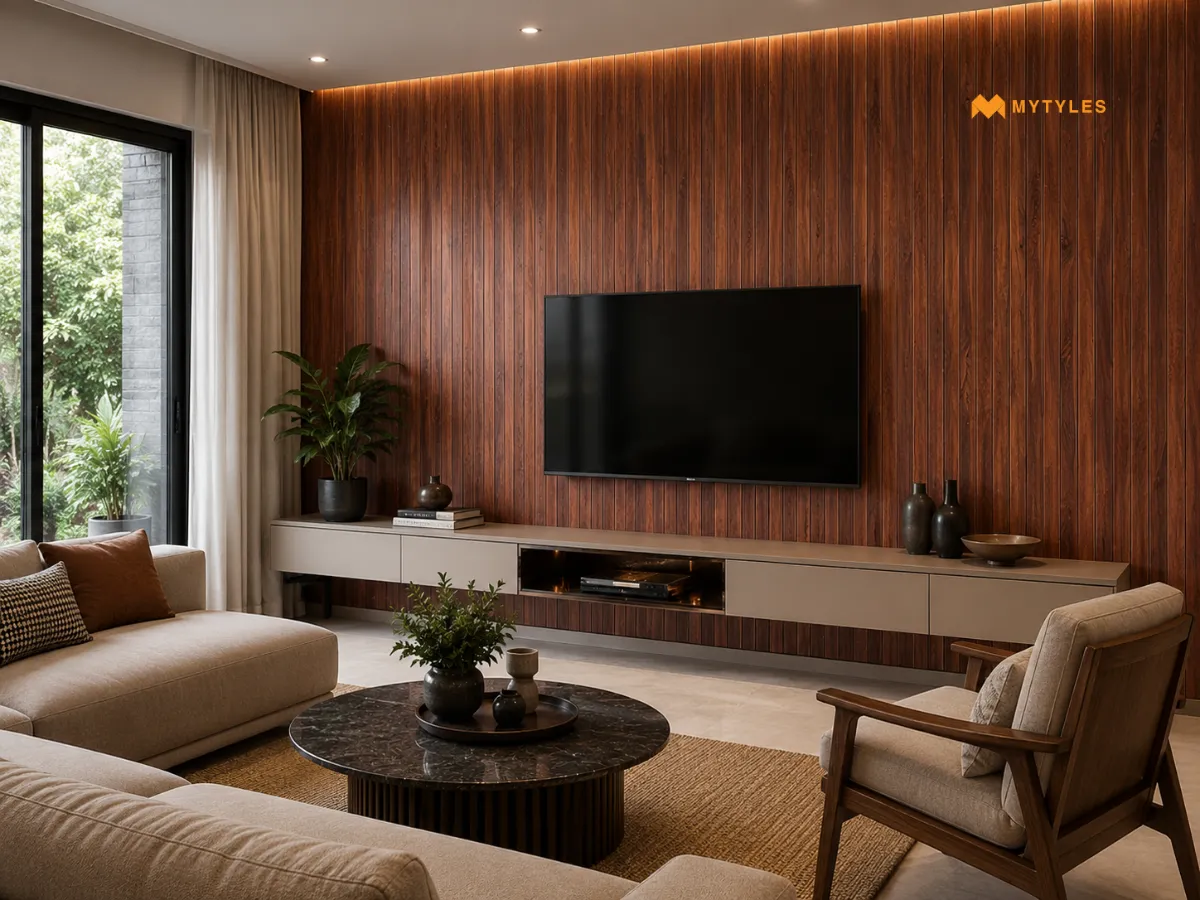
Open-plan homes often merge the living room with dining or entryway spaces. Wooden tiles help you zone these areas effortlessly without breaking the design continuity. A rug placed under the sofa set can define the living area clearly while keeping the floor layout consistent. You can also change tile direction slightly at the transition between the living room and dining area to mark separation subtly.
Another option is to use lighting, floor lamps, pendant lights, or wall lamps to highlight zones within the same open layout. This keeps your home feeling unified while still giving each zone its identity. Wooden tiles make zoning look seamless and elegant.
Create a Spacious, Stylish Living Room with Wooden Tiles
Designing a living room that feels spacious and comfortable often comes down to choosing the right materials, and wooden tiles offer one of the most reliable foundations for that transformation. Their natural look, long-lasting strength, and ability to blend with almost any style make them a practical choice for busy homes. With the right shade, layout direction, furniture style, and décor balance, wooden tiles can help you create a living room that looks organised, calm, and easy to use every day. By paying attention to color flow, texture pairing, and clever zoning, you can shape a layout that feels open without compromising comfort. If you're planning a living room upgrade, explore high-quality wooden tiles at MyTyles, designed to match modern aesthetics and long-lasting durability.

Why Are Wooden Tiles A Good Choice For Living Rooms?

Wooden tiles are a good choice for living rooms because they bring the warmth of wood with the durability and easy maintenance of tiles. They create a cozy, natural, and stylish atmosphere without the concerns of real wooden flooring. Their textures, tones, and plank designs can make the space feel inviting, comfortable, and visually balanced.
How Can Wooden Tiles Make A Living Room Look Spacious?
Wooden tiles can make a living room look spacious when installed in longer plank formats or continuous layouts. Laying them in one direction helps guide the eye and creates a smoother visual flow. Light oak, beige, or soft brown shades can also brighten the room, reduce heaviness, and make compact living areas feel more open.
Which Wooden Tile Colors Work Best For Small Living Rooms?
Light wooden tile shades like oak, maple, ash, beige wood, and soft honey tones work best for small living rooms. These colors reflect more light and create an airy feeling. Dark wooden tiles can look premium but may make compact spaces feel smaller. Pair lighter floors with simple furniture and neutral walls for balance.
How Should I Match Furniture With Wooden Tiles?
Match furniture with wooden tiles by balancing tones instead of choosing everything in the same shade. Light wooden tiles pair well with beige, white, grey, and pastel furniture, while darker tiles suit cream, tan, black, or rich earthy tones. Use rugs, cushions, and curtains to soften the space and make the living room feel more comfortable.
Can Wooden Tiles Improve Living Room Comfort?
Yes, wooden tiles can improve living room comfort by adding visual warmth and a natural look to the space. Their wood-like finish makes the room feel softer and more welcoming than plain flooring. To increase comfort, pair them with textured rugs, warm lighting, soft seating, indoor plants, and layered décor elements.
Which Wooden Tile Layout Is Best For Living Rooms?
Straight plank layouts are best for a clean, spacious, and modern living room look. Herringbone or chevron layouts add a more decorative and premium style, but they may increase installation cost and visual detail. For smaller rooms, simple linear layouts usually work better because they reduce clutter and create a longer, more open appearance.
How Do I Maintain Wooden Tiles In The Living Room?
Maintain wooden tiles by sweeping regularly and mopping with a mild cleaner to remove dust and stains. Avoid harsh chemicals or rough scrubbing that may damage the finish. Use felt pads under furniture to prevent scratches and clean spills quickly. With simple care, wooden tiles can keep their natural charm and stylish appearance for years.

ABOUT THE AUTHOR
Biren Agrawalla
Biren Agrawalla is the Founder of MyTyles, driven by a passion for making tile buying simpler, smarter, and more customer-friendly. With a background in technology and a strong interest in how homes are designed, he built MyTyles to bridge the gap between traditional tile retail and modern customer needs. Biren focuses on understanding what people truly look for when creating their spaces, from practical choices to design inspiration. His work is centred on building thoughtful online solutions that help homeowners discover the right tiles with more confidence, convenience, and clarity.