Inspiration Gallery
Blog
Tile Calculator
08065423741



.svg)


How Does Terracotta Jali Help Reduce Heat in the Indian Climate?
ByAditi Bardhan

Thu , May 21 , 2026

Read Time: 5 Min


 Copied!
Summer heat in India doesn’t arrive quietly. It settles into walls, rooms, and daily routines. Fans run all day, windows stay open, yet homes still feel heavy. When summers grow harsher, this gap becomes impossible to ignore. Heat stops being uncomfortable and starts affecting daily life and safety. The solution, however, isn’t new or complicated. It has quietly existed in Indian homes for generations.
Terracotta jali has shaped Indian buildings for thousands of years. Today, it is returning through breathable tiles and jali designs. Long before electricity, this fired clay helped homes stay cooler naturally. Nothing fancy, just smart use of material and airflow. Terracotta jali works by letting air pass through walls and surfaces. As air moves, heat escapes instead of getting trapped indoors. The clay also reacts naturally to temperature changes. Together, this keeps spaces calmer during extreme summers.
In this blog, we’ll show you how the terracotta jali pattern works. You’ll see why it fits Indian weather so well. And how it makes everyday living more comfortable during peak summer months.
What Is Terracotta Jali?
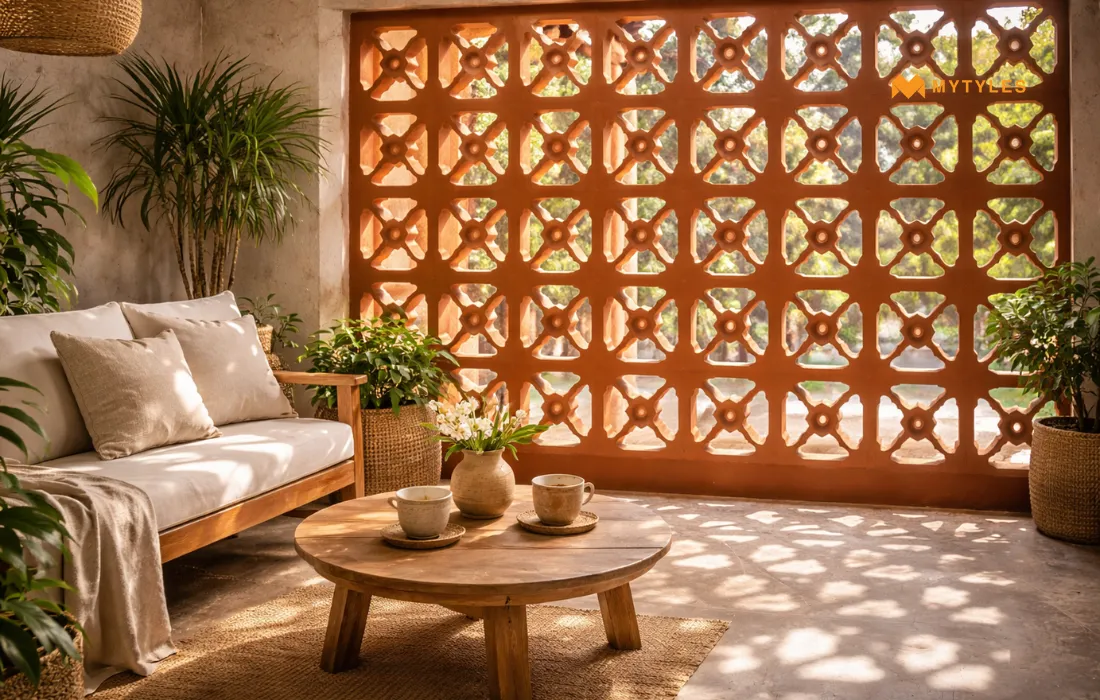
Terracotta jali refers to perforated screens made of baked clay that have holes in them. In traditional Indian architecture, latticed screens were often used in palaces, homes, temples, and stepwells. The word "jali" comes from this style of architecture. Most people often ask: ‘Terracotta jali is made of which material?' before choosing it for their home. Terracotta is made from clay, which is why it is used in many places. It is also good at holding heat.
Most of the time, these jalis are made with moulds that make patterns that repeat. The openings can be small and tight or wider and more open, depending on what they are meant to do. When fired, the material hardens, can withstand the weather, and can handle Indian outdoor conditions. Terracotta doesn't hold heat as metal or glass screens do. Instead, it reacts slowly to changes in temperature.
How Does Terracotta Jali Work as a Cooling Element?
This is where the terracotta jali cad block begins to show its real value. Its cooling effect is not based on machines or electricity but on how air, heat, and material behave naturally. The structure allows constant movement, releases trapped warmth, and softens harsh sunlight without shutting spaces off.
Air Circulation Mechanism
Warm air inside a building rises and looks for an exit. A jali provides multiple paths for this heat to escape. At the same time, cooler outside air moves in to replace it. This cycle continues quietly through the day, especially in homes using modern terracotta jali in open-facing areas.
Heat Dissipation Through a Porous Structure
Terracotta absorbs heat slowly compared to cement. Instead of transferring heat indoors immediately, it holds it and releases it gradually. This delay keeps interiors calmer during peak afternoon hours. A terracotta jali wall often feels noticeably cooler when touched, even after long sun exposure.
Thermal Benefits in Hot Indian Weather
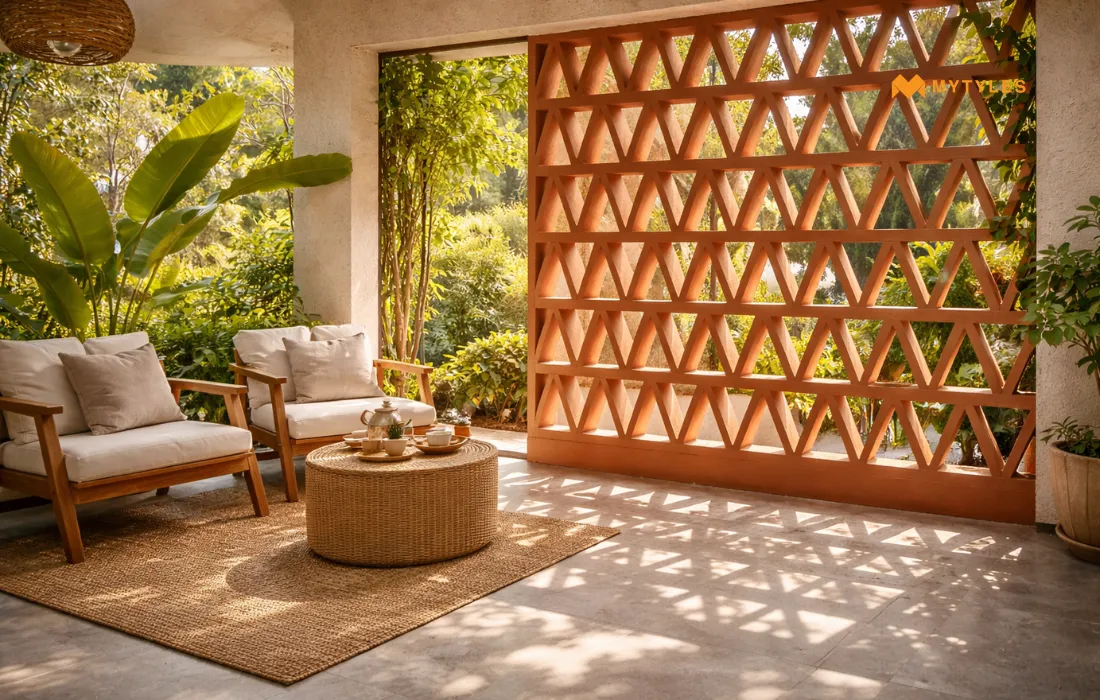
In Indian conditions, heat does not just come from the sun, it builds up inside walls, floors, and corridors. The terracotta jali texture helps manage this stored heat. The benefit is not dramatic cooling but steady comfort that lasts through the day without sudden temperature spikes.
Reduction in Indoor Temperature
Homes using jali features often feel calmer by late afternoon. By reducing direct heat gain and encouraging airflow, interior temperatures remain more stable. When integrated into a modern terracotta jali elevation, outer walls are protected from constant solar exposure.
Improved Ventilation and Airflow
Poor ventilation traps heat and humidity. On the other hand, research shows natural airflow inside buildings can lower electricity use for cooling by as much as 20%. Terracotta Jali openings keep air moving without forcing windows to stay fully open. Designers carefully plan the terracotta jali size so airflow remains effective without letting in excessive dust or glare.
Lower Dependence on Artificial Cooling
When air moves naturally, fans and air conditioners do not need to work as hard. Over time, this reduces power consumption. Many homeowners consider the terracotta jali price reasonable when they see lower energy use across the summer months.
Role of Terracotta Jali in Passive Cooling Design
Passive cooling relies on design choices rather than devices. Terracotta brick jali fits naturally into this thinking. It works with wind direction, sunlight angles, and daily temperature shifts instead of fighting them, making it a practical option for long-term comfort.
Interaction With Wind and Shade
Placed along wind-facing walls, terracotta jali compound walls guide airflow indoors without strong draughts. The openings also cast soft shadows that reduce surface heating. In shaded areas, the terracotta jali texture helps prevent heat buildup on surrounding walls.
Day vs Night Temperature Balance
During the daytime, terracotta slows heat entry. After sunset, cooler air flows through the same openings and releases stored warmth. This balance keeps interiors comfortable across changing temperatures, especially when layouts follow thoughtful terracotta jali pattern planning.
Applications of Terracotta Jali in Indian Homes
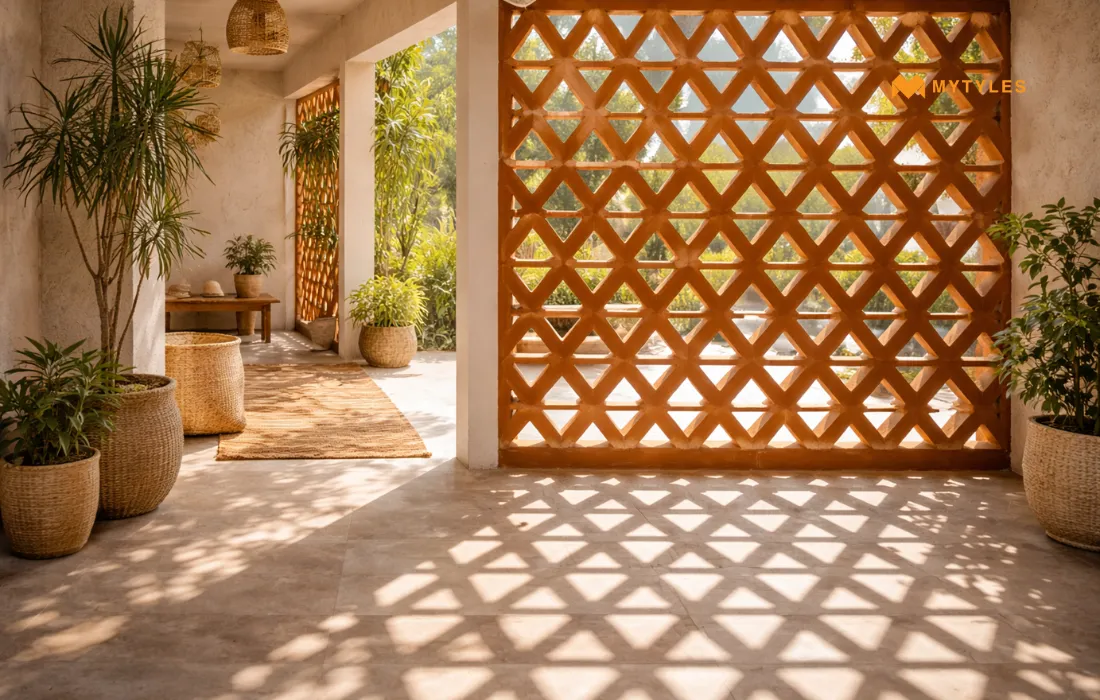
Terracotta jali adapts easily to different parts of a home. It does not demand large structural changes, which is why it appears in both old houses and newer projects. Its role changes slightly depending on where it is used.
Exterior Facades
Jalis are a breathable layer on the outside walls that cuts down on direct sunlight. Terracotta jali elevation treatments are now used in many homes to keep the air flowing on upper floors while keeping the heat out. The terracotta jali facade acts like a filter, letting air pass through while softening harsh sun exposure.
Verandas and Balconies
The sun shines the most directly on balconies. A terracotta jali balcony lets air flow freely while blocking direct sunlight. Modern terracotta jali balcony designs also help keep privacy in apartments without closing off the space.
Stairs and Hallways
Staircases and narrow hallways often trap heat. Putting terracotta jali wall designs in these places lets warm air rise, which keeps the areas where people move cooler all day.
Courtyards and Partition Walls
For courtyards to stay usable, air has to flow through them. Jalis act as dividers that let air flow in these areas. Some homes prefer architectural terracotta jali fronts near their courtyards, while others like to use brick jali walls inside.
Key Considerations Before Installing Terracotta Jali
Terracotta jali work best when planned carefully. Random placement can reduce airflow or increase maintenance. Understanding site conditions and construction methods ensures long-term performance without cracks or structural issues.
Placement and Orientation
Walls facing strong afternoon sun gain the most from jali installation. Orientation also affects airflow quality, so openings should align with prevailing wind directions rather than being purely decorative.
Design Density and Pattern
Spacing between openings affects both ventilation and shade. Overly dense patterns restrict airflow, while wide gaps may allow too much heat. Pattern selection plays a major role in overall comfort.
Local Climate Factors
Dust levels, humidity, and rainfall differ across regions. Builders often consider the composition of whether these jali suits the local environment before finalising designs for the terracotta jali front elevation.
Installation Process
Correct fixing ensures durability and safety. Understanding how to fix terracotta jali includes proper support and joint treatment. Skilled teams follow tested methods on how to install terracotta jali to prevent long-term damage and ensure smooth jali work.
Let Your Home Breathe Through the Summer
Indian summers push homes to their limits, and not every solution needs a switch or a remote. These jali works quietly, using air movement and material behaviour to keep spaces comfortable through long, hot days. It allows rooms to breathe, reduces heat build-up, and brings back a climate-responsive way of building that already suits our weather. When planned well, it supports daily comfort without adding to energy bills or maintenance stress. At MyTyles, we help you choose terracotta jali designs that fit your home layout, climate needs, and personal style. If you’re planning a new build or reworking an existing space, explore MyTyles’ curated terracotta jali options and build a home that stays naturally comfortable, season after season.
Expert Reviewed by Biren Agrawalla
Biren Agrawalla, the Founder of MyTyles with over 10 years of experience across tile, retail, and home decor. Driven by a passion for tiles and a deep understanding of customer behaviour, he has spent his career transforming how people discover and buy tiles online. Biren combines practical retail insight with modern digital solutions to make tile shopping smarter, more intuitive, and design focused. At MyTyles, he champions a customer first approach, ensuring every experience from browsing to buying is reliable, seamless, and inspiring.

Is Terracotta Jali Suitable For All Indian Climates?

Yes, it works well across most regions. In hot and dry areas, it improves airflow, while in humid zones, it reduces heat buildup without sealing off spaces. Design and placement usually change based on local weather conditions.
Can Terracotta Jali Be Used In Modern Home Designs?
Many contemporary homes use terracotta jali design for balconies, staircases, and external walls. At MyTyles, homeowners often explore designs that fit clean layouts while still allowing natural ventilation.
Where Is The Best Place To Install Terracotta Jali In A House?
These jali work best on walls that receive strong sunlight, especially west- and south-facing sides. Terracotta jali roofs are also effective in balconies, courtyards, staircases, and passages where air movement is needed.
Is Terracotta Jali Hard To Maintain?
Not at all. You don’t need to do much beyond occasional cleaning. If it’s installed properly, you can pretty much leave it alone, and it continues to perform well.
Does A Terracotta Jali Block Too Much Sunlight Inside The House?
No, terracotta jali filters sunlight rather than blocking it completely. It softens harsh glare while still allowing enough natural light to enter, which keeps spaces bright without increasing heat.
Is Terracotta Jali Safe During Heavy Rain Or Strong Winds?
When installed correctly, terracotta jali holds up well in outdoor conditions. The openings allow wind and rainwater to pass through, which actually reduces pressure on the structure.
Where Can I Explore Terracotta Jali In Bengaluru?
You can explore terracotta jali in Bengaluru at MyTyles. You can view different patterns and designs in person and understand airflow, sizing, and suitability for your home.

ABOUT THE AUTHOR
Aditi Bardhan
I'm Aditi Bardhan, a professional content writer with over five years of experience creating SEO-driven, research-backed content across multiple industries. I specialise deeply in the tile and surface materials industry, crafting high-converting content for homeowners, architects, interior designers, and trade professionals. My work is grounded in technical research, design understanding, and consumer behaviour insights, enabling me to simplify complex concepts, highlight material benefits, and help brands build authority in the tile and construction space.