.svg)


Granite Tile Price List in India 2026: Colors, Types & Costs
ByAditi Bardhan

Sun , May 31 , 2026

Read Time: 5 Min


 Copied!
Granite is often chosen early in a project, but pricing questions usually come much later, and that’s where confusion starts. A tile that fits the design may not always fit the budget once finishes and applications are considered. In 2026, granite tile designs are used across homes, offices, and commercial spaces, yet many buyers still struggle to understand what drives the cost. This blog explains granite tile prices through real factors like color availability, finish type, and installation use. It helps connect the dots between selection and spending before final layouts are locked in.
Factors Causing Granite Tile Price Variation
.webp)
Granite tiles do not follow a single pricing pattern. Multiple physical and logistical factors influence costs. Understanding these aspects helps buyers assess why similar-looking tiles may be priced differently and where it makes sense to invest more based on usage.
- Color: Granite color availability depends on quarry output. Common shades are easier to source and remain budget-friendly, while rare colors cost more due to limited supply. Color consistency also affects sorting and wastage, influencing the overall granite tiles price.
- Finish: The surface finish plays a key role in cost variation. Polished finishes require extended processing, while textured finishes involve specialised treatments. Each finish type impacts labour time, machinery usage, and surface durability, all contributing to pricing differences.
- Thickness: Granite tiles meant for flooring are thicker and stronger, increasing material consumption. Thinner granite wall tiles reduce weight and cost. Thickness directly affects durability, installation method, and long-term performance of granite floor tiles.
- Origin (Indian vs Imported): Indian granite is widely available and easier to transport locally. Imported granite involves shipping, customs handling, and currency factors, which are reflected in higher pricing across granite type tiles.
- Application (Floor, Wall, Outdoor): Granite tiles for floor use are designed to withstand pressure and movement. Wall applications allow lighter formats. Outdoor installations require textured finishes for grip and weather resistance, increasing processing requirements and cost.
- Transportation & Logistics: Granite is heavy and requires careful packaging. Transport distance, fuel rates, and loading processes directly impact cost, especially for large flooring projects.
- Finishing & Processing: Advanced cutting, polishing, and edge treatments require specialised equipment. Processing quality affects surface uniformity, thickness accuracy, and long-term performance of durable granite tiles.
Granite Tile Prices by Type
Granite tiles are broadly categorised based on sourcing and format. Each type serves different usage needs, budgets, and design preferences. Understanding these distinctions helps buyers choose suitable granite tiles design options without overspending.
Indian Granite Tiles
Indian granite tiles are widely used due to their steady availability and variety. They suit residential and commercial flooring, kitchen areas, and staircases. These granite type tiles balance durability and affordability, making them a preferred choice for large-scale projects.
Imported Granite Tiles
Imported granite tiles feature distinct veining and color depth. They are often selected for feature areas or premium interiors. Higher logistics and limited availability influence cost, making them more suitable for selective use rather than full-floor coverage.
Granite Slabs vs Granite Tiles
Granite slabs require skilled handling and result in more wastage during cutting. Tiles offer better size control, easier installation, and predictable budgeting. For flooring and wall use, tiles granite options are generally more practical and cost-efficient.
Granite Tile Prices by Finish
Granite finishes influence both appearance and functional performance. Each finish suits specific areas depending on foot traffic, moisture exposure, and maintenance expectations. Choosing the right finish helps balance safety and upkeep when comparing granite vs tiles in high-use spaces.
Polished Granite Tiles
Polished granite tiles have a smooth reflective surface preferred for indoor flooring. They highlight natural stone granite tile patterns and are easy to clean. This finish is commonly used in living areas, offices, and showrooms where surface uniformity is important.
Honed Granite Tiles
Honed granite tiles offer a matte surface with reduced glare. This finish provides better grip and hides minor scratches. It works well in kitchens, corridors, and areas requiring controlled shine without compromising the natural stone look.
Flamed Granite Tiles
Flamed granite tiles have a rough texture achieved through heat treatment. This finish improves slip resistance, making it suitable for outdoor pathways and wet zones when comparing tiles vs marble vs granite.
Granite Tile Colors & Their Prices
Color selection impacts availability, maintenance, and overall flooring mood. Granite colors are generally grouped into light, dark, and natural tones. Each category offers different practical advantages depending on lighting conditions and usage.
Light Color Granite Tiles
Light shades create a spacious visual feel and are commonly used indoors. They reflect light well and suit smaller rooms, but may require regular cleaning in high-traffic areas due to visible dust and stains.
- Ivory: Ivory granite tiles are popular for bedrooms and halls. They provide a clean base and pair well with multiple design styles. Availability across Indian quarries keeps sourcing consistent and suitable for large flooring areas.
- Cream: Cream color granite tile flooring work well in residential spaces due to their soft tone. They reduce visual clutter and blend easily with wooden furniture. These tiles are often chosen for granite tiles for floor installations in calm interiors.
- Beige: Beige granite tiles offer neutrality without appearing plain. They work well in mixed-material layouts and are commonly used in commercial spaces. Their balanced tone helps hide minor marks and daily wear.
- White: White granite tiles are chosen for kitchens and premium interiors. They require careful maintenance but provide brightness. Kitchen granite tiles design often uses white shades for clean-looking countertops and floors.
Dark Color Granite Tiles
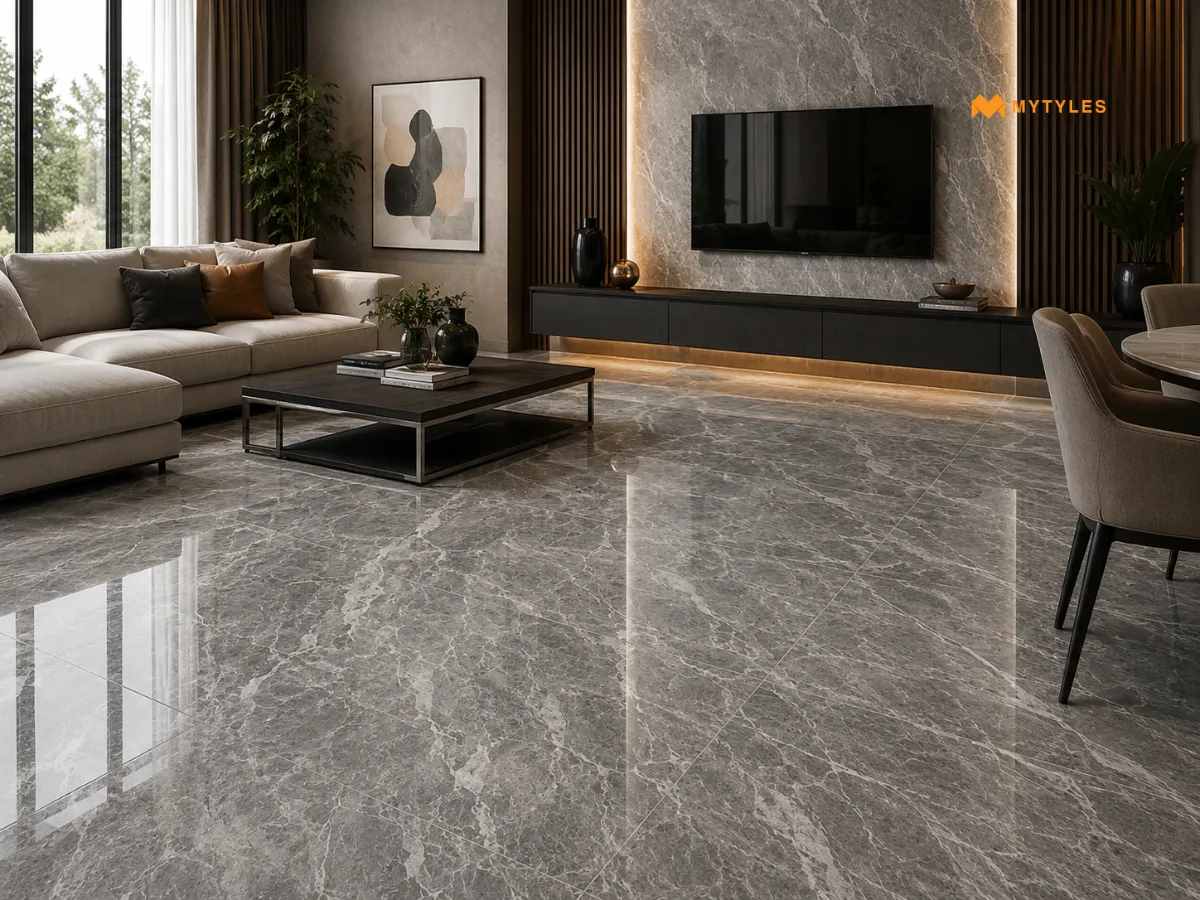
Dark tiles and granite colors are known for their strength and stain resistance. These shades suit high-traffic areas and commercial spaces where durability and low maintenance are priorities.
- Black: Black granite tiles are widely used for flooring and staircases. They handle heavy use and hide stains effectively. Black granite flooring tiles are also preferred in kitchens and office lobbies.
- Brown: Brown granite offers warmth without being overpowering. It suits traditional and modern spaces alike. These tiles are often used in granite tiles design for floor areas with moderate foot traffic.
- Blue: Blue granite is less common and visually distinctive. It is typically used as an accent material rather than full-floor coverage. Limited quarry output influences availability and selection.
Neutral & Natural Tones
Natural granite shades balance color and texture, making them versatile for long-term use. These tones suit both indoor and outdoor applications without dominating surrounding materials.
- Grey: Grey granite tiles suit contemporary interiors and commercial floors. They pair well with metal and wood finishes. Granite tiles for floor and wall applications often use grey for uniformity.
- Pink: Pink granite is largely sourced locally and suits exterior and staircase use, including tiles square granite pillar design applications. Its grain pattern hides dust well and works in traditional architectural settings.
- Green: Green granite is visually bold and limited in availability. It is often used for feature flooring or statement walls rather than continuous flooring layouts.
Is Granite Worth the Cost in 2026?
 (1).webp)
Granite continues to be evaluated for its value beyond appearance. Buyers now consider lifespan, maintenance effort, and property impact before choosing flooring materials.
- It Stays Put for Years: Once granite and tiles are installed, they usually don’t ask for attention. It handles daily movement, furniture weight, and regular use without cracking or wearing out easily.
- Maintenance Doesn’t Become a Chore: Granite doesn’t need special care routines. Normal cleaning keeps it fine, which is a relief for homes and spaces where constant upkeep isn’t realistic.
- Works in More Than One Area: The same granite can be used for floors, kitchen areas, and even outdoor spaces. That makes planning easier and avoids mixing too many different materials.
- Fits Indian Living Conditions Well: From heavy foot traffic to moisture and heat, granite copes well with everyday Indian conditions without showing stress too quickly.
- Still Feels Like a Solid Choice Later: Even years after installation, granite tends to look dependable rather than dated. That sense of durability often matters when a property changes hands.
Understanding Granite Made Simple
Granite tile prices often feel complicated until the pieces are seen together. Color availability, finish choice, sourcing, and usage all play a quiet role in shaping cost. Looking at these factors side by side makes it easier to judge value rather than react to labels or assumptions. As preferences continue to shift in 2026, granite remains a dependable option for floors, walls, and kitchens because it balances strength with long-term usability. At MyTyles we make granite tile design selection easier by offering verified options, honest guidance, and trusted sourcing. From everyday flooring to kitchen applications, every granite choice is backed by clarity and consistency. With MyTyles, buyers move ahead knowing the material fits both usage and expectation.
Expert Reviewed by Biren Agrawalla
Biren Agrawalla, the Founder of MyTyles with over 10 years of experience across tile, retail, and home decor. Driven by a passion for tiles and a deep understanding of customer behaviour, he has spent his career transforming how people discover and buy tiles online. Biren combines practical retail insight with modern digital solutions to make tile shopping smarter, more intuitive, and design focused. At MyTyles, he champions a customer first approach, ensuring every experience from browsing to buying is reliable, seamless, and inspiring.

What Is the Average Granite Tile Price in India in 2026?

In 2026, granite tile prices in India usually range between ₹50 per sq. ft. and ₹270 per sq. ft., depending on color availability, finish type, thickness, and whether the granite is Indian or imported.
Which Granite Color Is the Most Affordable?
Lighter and commonly available shades like ivory, cream, and certain pink granites are generally more affordable, as they are widely quarried in India and easier to source in consistent batches.
Is Granite Expensive to Maintain?
Granite is not expensive to maintain. Regular sweeping and mild cleaning keep it in good condition, and it does not require frequent polishing or specialised treatments for everyday residential use.
Can Granite Tiles Be Used Outdoors?
Yes, granite tiles can be used outdoors. Textured or flamed finishes are preferred, as they provide better grip and handle weather exposure, moisture, and temperature changes more reliably than smooth surfaces.
Is Professional Support Available When Choosing Granite Tiles?
Yes, support is available through MyTyles, where guidance helps narrow down suitable granite based on usage, finish, and placement, making the selection process feel less overwhelming and more structured.

ABOUT THE AUTHOR
Aditi Bardhan
I'm Aditi Bardhan, a professional content writer with over five years of experience creating research-backed content across multiple industries. I specialise deeply in the tile and surface materials industry, crafting high-converting content for homeowners, architects, interior designers, and trade professionals. My work is grounded in technical research, design understanding, and consumer behaviour insights, enabling me to simplify complex concepts, highlight material benefits, and help brands build authority in the tile and construction space.