.svg)


Romantic 3D Tiles for Bedroom Walls: Texture, Mood & Design Guide
ByAditi Bardhan

Tue , Jun 02 , 2026

Read Time: 5 Min


 Copied!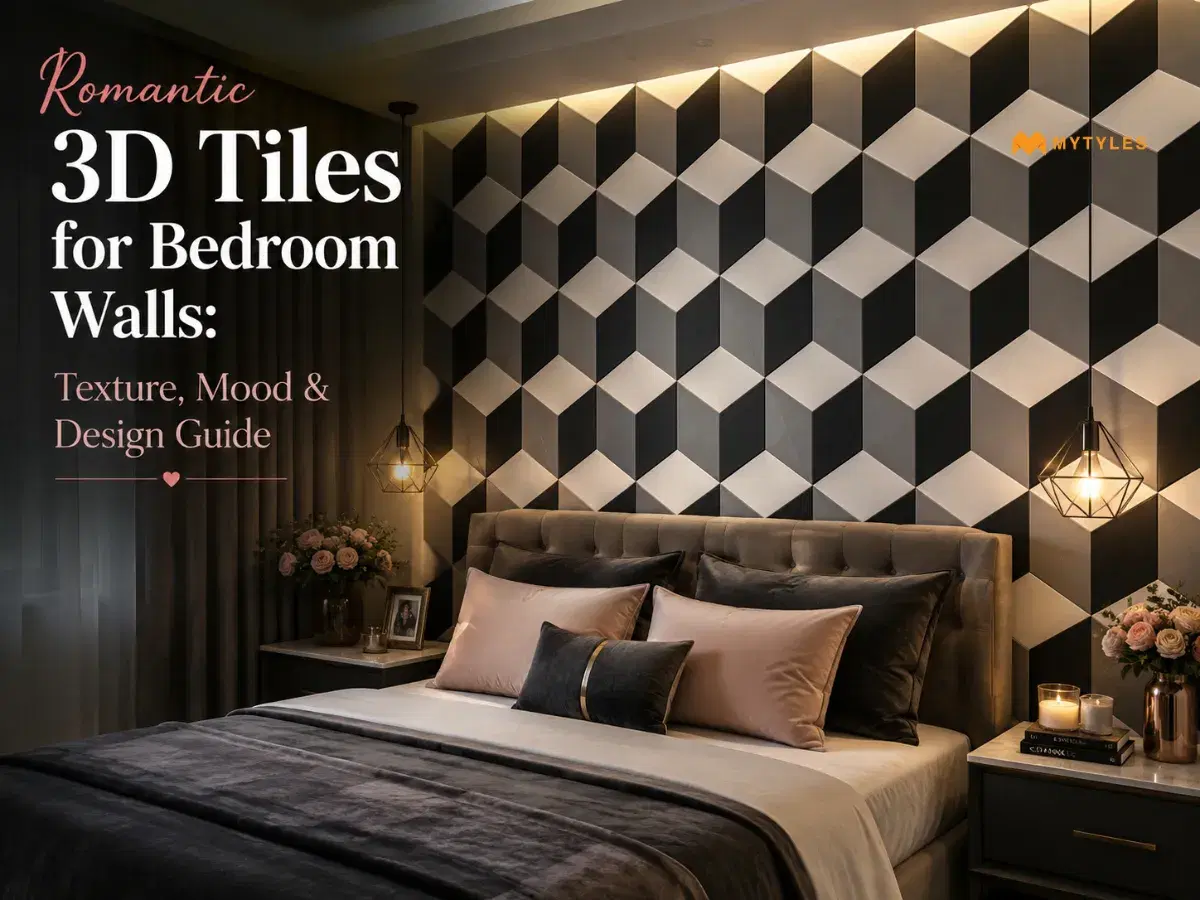
Your bedroom is more than just a place to sleep. Your personal space reveals your personality and style. When it comes to creating the perfect ambiance, the right design elements make all the difference. Romantic 3D tiles for bedroom walls offer a unique way to enhance your space, adding texture, depth, and a timeless appeal. If you are looking for something with a calm, serene vibe or something more bold and dramatic, these tiles can set the mood and create a romantic atmosphere.
Why Choose Romantic 3D Tiles for Your Bedroom?
.webp)
Your bedroom is the core heart of your home, a space for relaxation and comfort. Romantic 3D tiles for bedroom walls are the best way to make a romantic, cozy space. These tiles not only make your walls seem better, but they also make the whole house feel better. This is why 3D wall tiles should be your first choice for making a beautiful bedroom.
- Unique Aesthetic Appeal: Romantic 3D tiles instantly add a beautiful look and feel to your bedroom. If you are leaning towards flooring 3D tiles for a soft and gentle vibe or geometric 3D wall tiles for a more classic look, these tiles can do wonders by adding unmatched texture and depth to your room.
- Uplift Ambiance: The textured surface of 3D wall tiles for the bedroom helps to create a calm, intimate atmosphere. They boost the overall mood, turning your bedroom into a romantic sanctuary where you can relax and enjoy your peaceful moments with your loved ones.
- Versatile Design: If you are someone who prefers a minimalist, modern, or vintage vibe, the romantic 3D tiles are the right choice for you. They offer versatile design options to choose from, like abstract 3D tiles for bold, eye-catching designs, or geometric tiles for modern designs.
- Durable and Long-lasting Options: The 3D wall tiles are made from high-quality materials like porcelain and ceramic to ensure you get durability and long-term beauty. These 3D tiles are more durable and can withstand wear and tear, making them a fantastic investment for your home.
- Easy to Maintain: Even though they have an intricate appearance, these 3D pieces are easy to clean and maintain. Therefore, a quick wipe-down with a mild cleanser to make sure that your tiles stay fresh and vibrant for many years to come.
Popular 3D Tile Designs for Bedroom Walls
.webp)
Choosing the right 3D tile design for the walls can set the vibe for your entire bedroom. In case you want a romantic, calming vibe or a modern, classy look, our 3D bedroom tile designs offer endless chances to beautify your space. Here are some of the most popular 3D tile designs to consider for your bedroom.
Floral 3D Tiles for Bedroom Walls
Floral 3D tiles are the ideal choice for adding a soft, romantic feel to your bedroom. These tiles give you a twisted pattern of flowers, petals, and vines that create an organic and unmatched elegant look. These designs are perfect for vintage, boho, or traditional bedroom styles; floral 3D wall tiles bring warmth and peace to your space.
Textured 3D Wall Tiles for Bedroom Walls
For a more subtle yet powerful effect, textured 3D wall tiles for bedroom are an excellent choice. These textured tiles create a wave-like or ripple effect, adding dimension and visual appeal without overwhelming the room. It can complement minimalist or modern bedrooms; textured 3D wall tiles provide a sense of uniqueness and refinement.
Geometric 3D Wall Tiles for Bedroom Walls
If you are someone who loves a bold, classic look, then geometric 3D wall tiles for bedroom are a fantastic option to go for. These tiles feature sharp lines, clean shapes, and balanced patterns, which create a striking visual appeal. These geometric wall tiles add energy and modernity to your room, which makes them perfect for industrial or contemporary spaces.
Abstract 3D Wall Tiles for Bedroom Walls
For those who want to add fantastic artistic flair, abstract 3D tiles are a great option. With free-flowing, unique patterns that provoke traditional design, these tiles allow you to express creativity in bold and unique ways. These abstract 3D tiles are perfect for modern and contemporary spaces. Moreover, these tiles add personality and visual appeal to your bedroom.
Mosaic 3D Wall Tiles
Mosaic 3D tiles give you intricate patterns and textures for your bedroom walls. These tiles combine the beauty of traditional mosaic with three-dimensional depth, creating a bold focal point. Even if you prefer geometric designs or abstract patterns, the Mosaic 3D bedroom tile design idea adds visual interest and sophistication. These tiles are perfect for accent walls or behind the bed; they give a luxurious touch to the space.
3D Wooden Wall Tiles
3D wooden wall tiles bring a natural rustic charm to your bedroom. These tiles combine the warm, natural look of wood with the depth and texture of 3D design. The intricate patterns created by these tiles offer a cozy and welcoming environment. These tiles are perfect for modern or bohemian bedrooms to create striking and minimal decor while adding visual interest.
Incorporating 3D Floor Tiles in Your Bedroom Design
.webp)
Using 3D floor tiles for the bedroom is a smart way to add character and beauty while creating a balanced look. When paired with 3D wall tiles, they bring visual continuity, which makes the room feel practical and seamless. If you choose bold geometric patterns or subtle textures, these 3D floor tiles can work beautifully with your walls, elevating the overall look of your room.
Design Your Perfect Bedroom With 3D Wall Tiles
Incorporating 3D wall tiles for bedroom is the perfect choice to elevate your space and create a unique ambience that shows your personality. Be it the delicate charm of floral 3D tiles, the bold geometric pattern, or the natural wooden look, there is something for every taste. These tiles have the power to turn your ordinary walls into stunning focal points. Choosing the right 3D wall tiles allows you to add texture and visual interest that makes your space more personalized and welcoming. At MyTyles, we offer an extensive selection of 3D wall tiles designed to suit any style. With over 8000+ varieties and pan-India shipping options, we make it easy to create the bedroom of your dreams. Explore our collection!
Expert Reviewed by Biren Agrawalla
Biren Agrawalla, the Founder of MyTyles with over 10 years of experience across tile, retail, and home decor. Driven by a passion for tiles and a deep understanding of customer behaviour, he has spent his career transforming how people discover and buy tiles online. Biren combines practical retail insight with modern digital solutions to make tile shopping smarter, more intuitive, and design focused. At MyTyles, he champions a customer first approach, ensuring every experience from browsing to buying is reliable, seamless, and inspiring.

What are the benefits of using 3D wall tiles?

3D wall tiles add dimension, style, and charm to your bedroom. They’re easy to maintain, long-lasting, and create a personalized, romantic atmosphere.
Are 3D tiles for bedroom walls difficult to maintain?
No, 3D tiles are easy to clean. A quick wipe-down with a mild cleanser keeps them looking fresh and vibrant.
How do I choose the right 3D tiles for my bedroom?
Choose tiles based on the atmosphere you want. For a romantic vibe, try floral or textured tiles, while geometric designs fit modern themes. MyTyles offers a wide selection for every style.
Can 3D wall tiles be used in small bedrooms?
Absolutely! 3D wall tiles can make small bedrooms feel larger by adding dimension and creating a focal point. opt for lighter tones or subtle textures to keep the space feeling open.
Can I use 3D tiles for accent walls in my bedroom?
Yes, 3D tiles make excellent accent walls, adding a bold focal point and enhancing the bedroom’s overall look.

ABOUT THE AUTHOR
Aditi Bardhan
I'm Aditi Bardhan, a professional content writer with over five years of experience creating SEO-driven, research-backed content across multiple industries. I specialise deeply in the tile and surface materials industry, crafting high-converting content for homeowners, architects, interior designers, and trade professionals. My work is grounded in technical research, design understanding, and consumer behaviour insights, enabling me to simplify complex concepts, highlight material benefits, and help brands build authority in the tile and construction space.
Latest Blogs By MyTyles