Inspiration Gallery
Blog
Tile Calculator
08065423741



.svg)


6 Modern Subway Tile Ideas for Compact Indian Kitchens
ByNandana Priya

Thu , Jul 30 , 2026

Read Time: 5 Min


 Copied!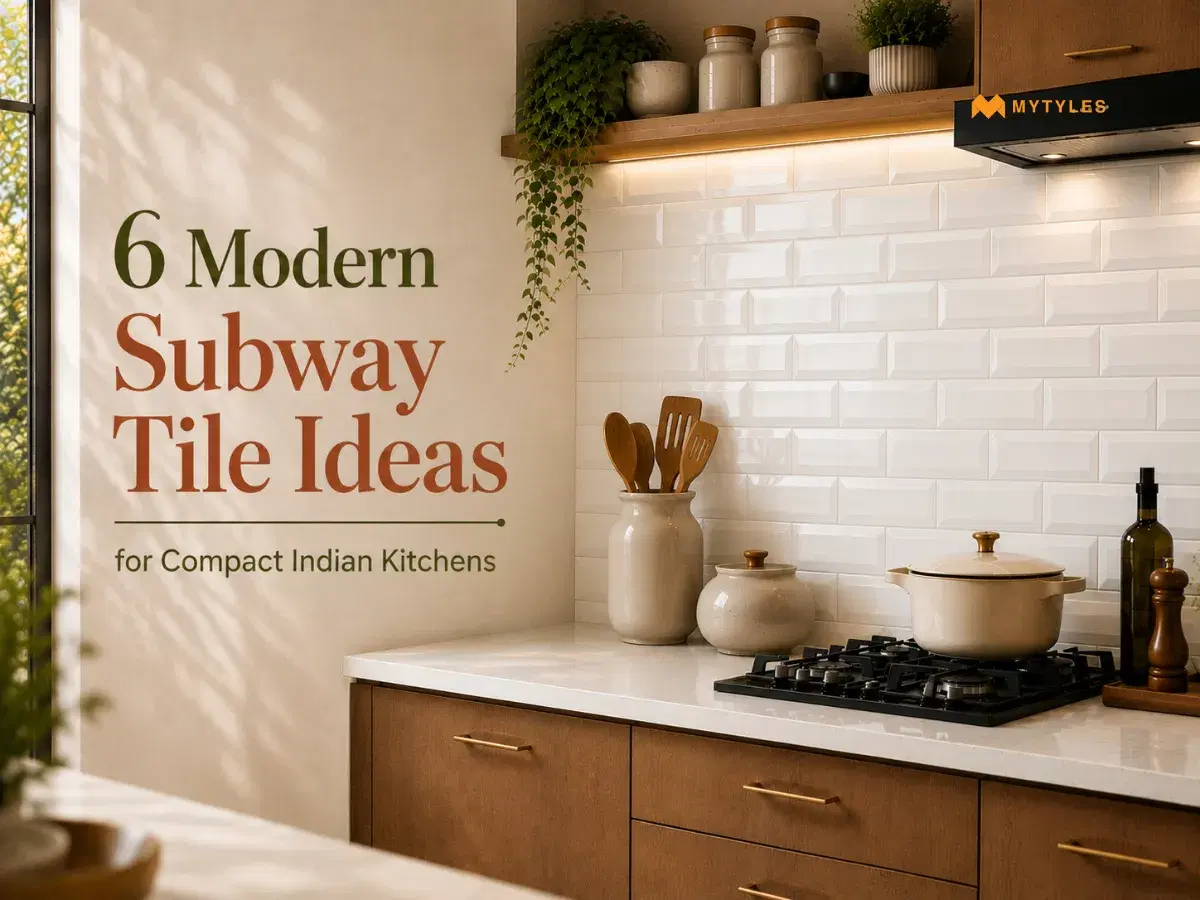
Compact kitchens come with a familiar layout challenge like a narrow space or a small modular setup. In a space like that, the walls end up carrying a lot of the visual weight. The way tiles are arranged can make the kitchen feel more open and easier to move around, and subway tiles for compact kitchens offer a way to do exactly that.
The same rectangular tile that looks familiar in a straight row can be turned vertically, angled into a herringbone, or paired with contrast grout to change how the whole kitchen reads. Here are 6 subway tile ideas for compact kitchens, along with where each one tends to work best.
Classic Horizontal Subway Tile Layout
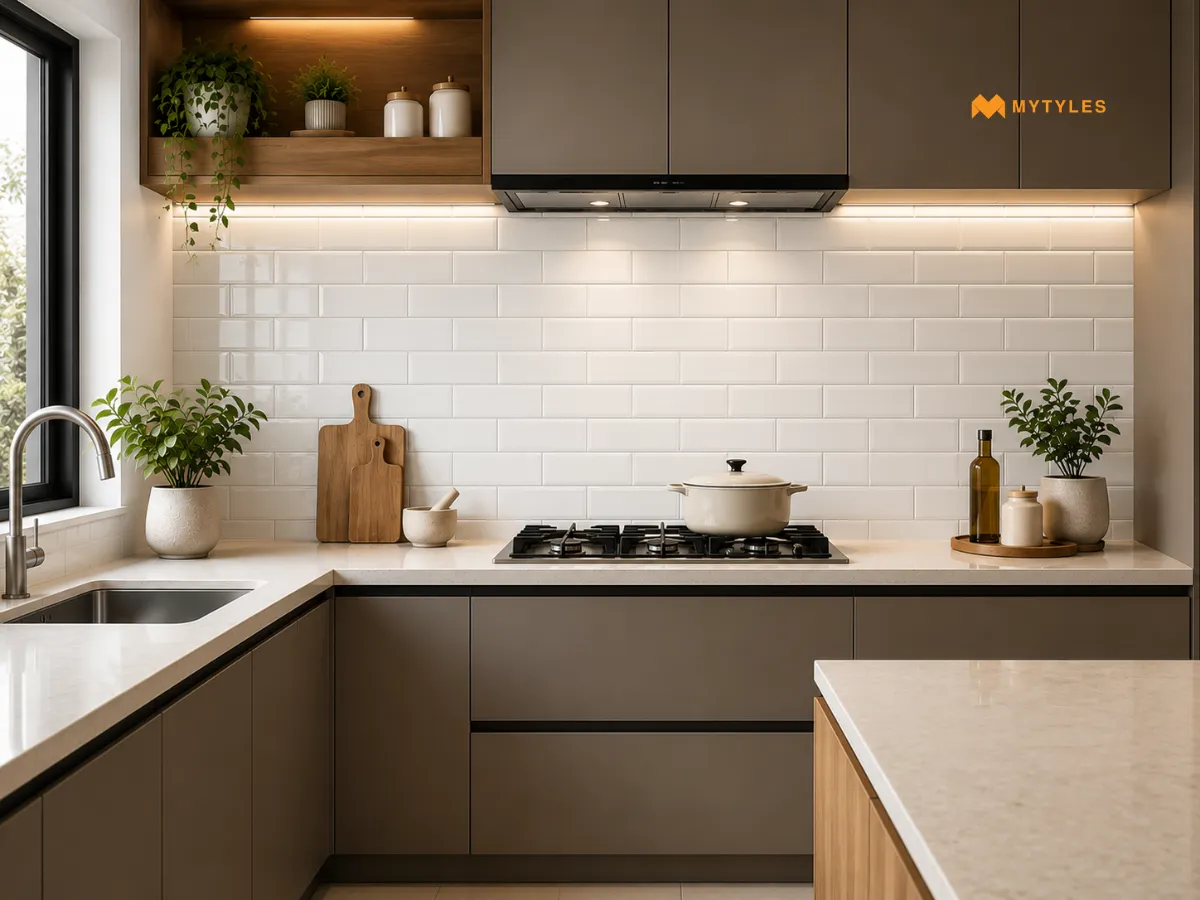
If you're not sure where to start, classic horizontal subway kitchen wall tiles are usually it. In this layout, tiles are laid in straight horizontal rows with a slight offset from the one below. In a compact kitchen, the horizontal layout draws attention across the wall.
The joints in the subway tile run in one direction and don't complicate cleaning or upkeep when the suitable tile is used. The layout keeps the wall visually calm instead of adding to the clutter. A single tile color, such as grey, beige, or white subway tiles, can help keep this layout visually calm.
Vertical Subway Tile Layout
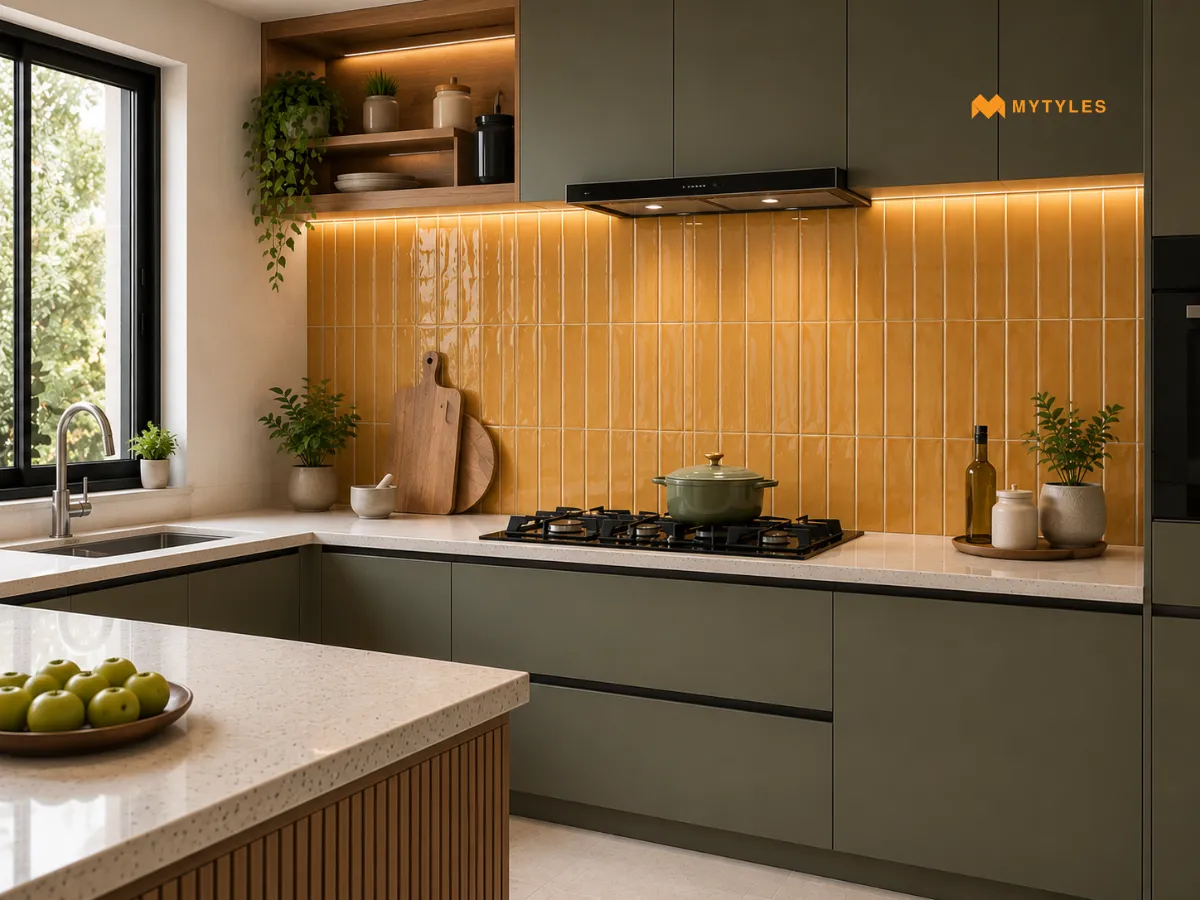
Turning the same subway tiles for Indian kitchens on their side changes the whole appearance of a wall. Laying subway tile vertically draws attention upward, which can be useful in a compact kitchen where ceiling height appears more limiting than counter length.
This layout tends to suit a narrow gap between the counter and overhead cabinets, where a vertical run can make better use of the space. It also works well as a feature strip beside a window or along a slim wall section.
Herringbone Subway Tile Pattern
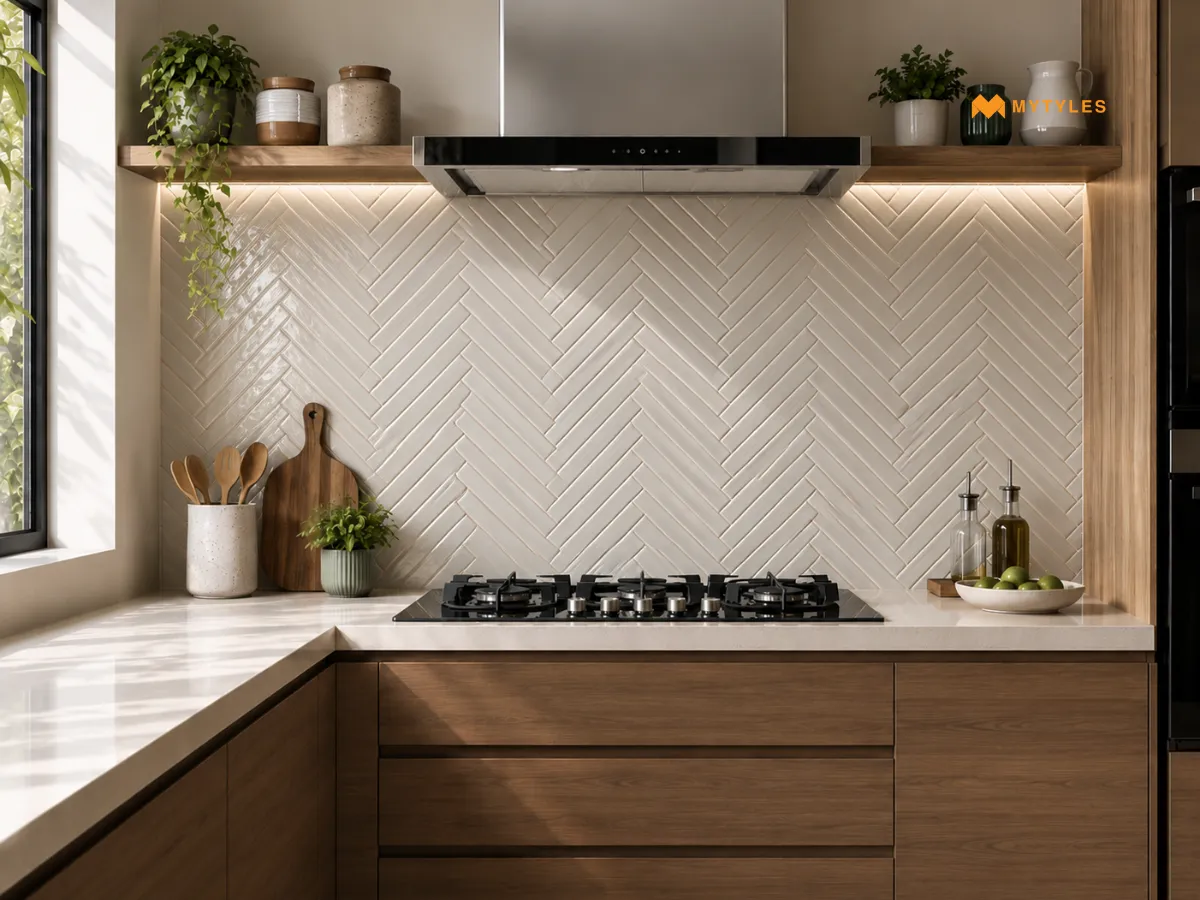
Herringbone takes the same rectangular tile and angles it into a zigzag, and it's one of the few patterns that can make a compact kitchen feel well-planned. The diagonal lines create movement on the wall, which tends to work best as an accent. It can be used behind a hob or as a small feature strip, rather than covering an entire wall in a small kitchen.
Grout choice matters more in Herringbone subway tiles than in straighter layouts, since the diagonal joints are more visible. Using a grout that blends with the tile keeps the pattern from feeling too cluttered.
Basketweave Subway Pattern
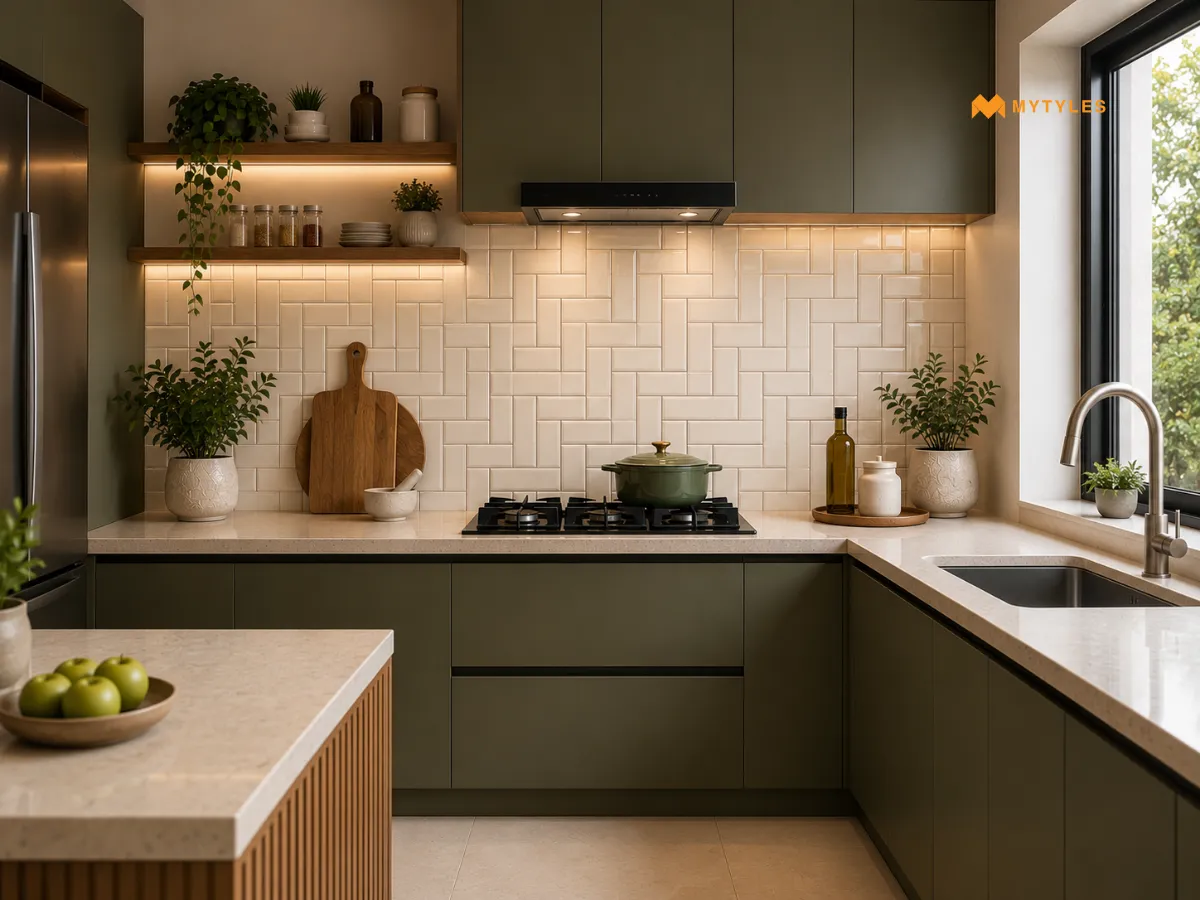
If you don't prefer too much movement on walls, basketweave subway tiles for small kitchens are worth considering instead. It's a step up from a plain, straight layout while not looking too busy. The pattern pairs horizontal and vertical tiles in a repeating block, giving the wall a woven look.
As this basketweave pattern involves more tile orientation changes than a straight layout, planning the cuts around outlets and edges in advance helps keep the finished wall looking even. A single grout tone throughout keeps the woven effect from looking too broken up in a smaller space.
Two-Tone Subway Tile Combination
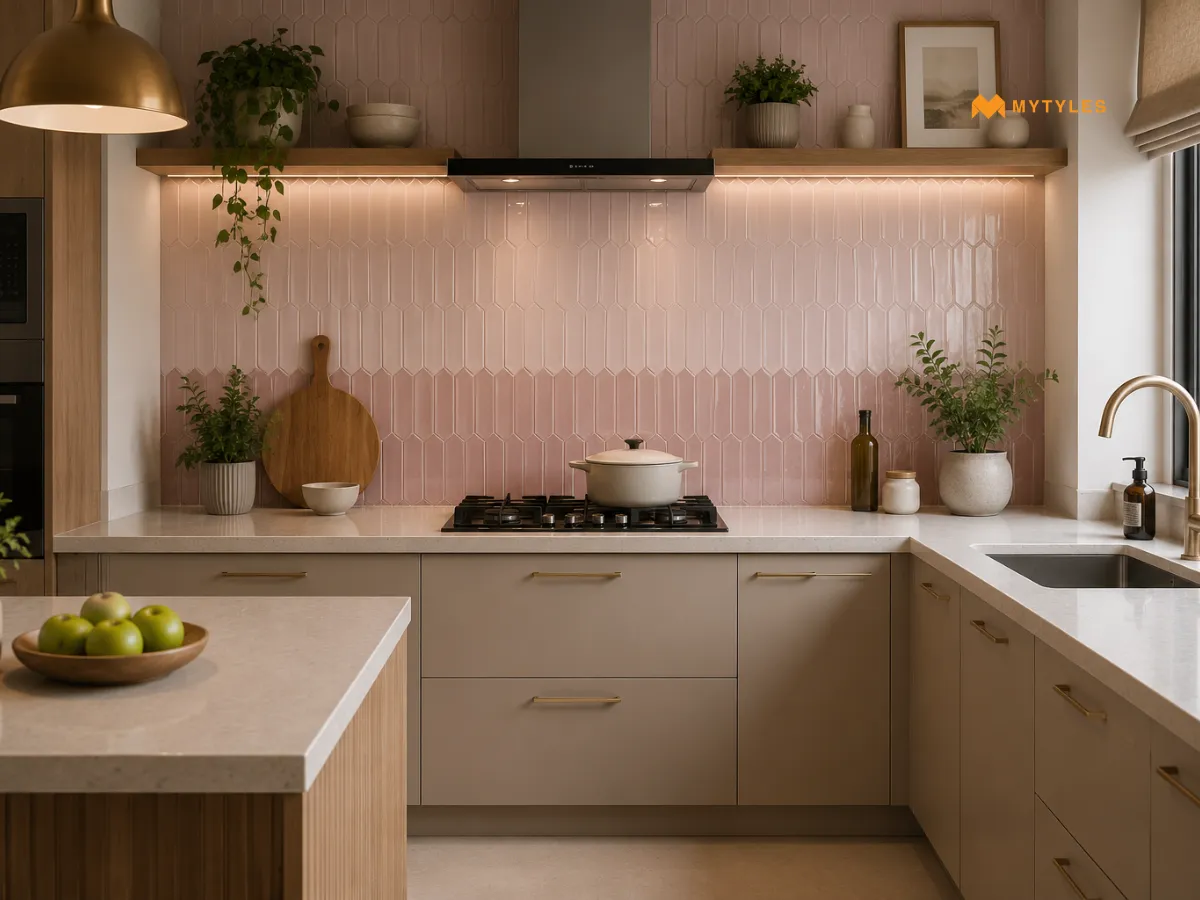
Do not limit subway tiles to one color. Pairing two shades, say a lighter tone on top and a deeper one closer to the counter, adds a bit of layering to the wall without needing a bold pattern to do it.
Two-tone small kitchen tile is a subtle way to bring in personality, particularly for a modular kitchen where the tile can echo or contrast with the cabinet color depending on the look you're going for. Keeping the two tones close in family, like light sage and deep green or soft pink and dusty rose, tends to look more put together.
Subway Tile with Contrast Grout
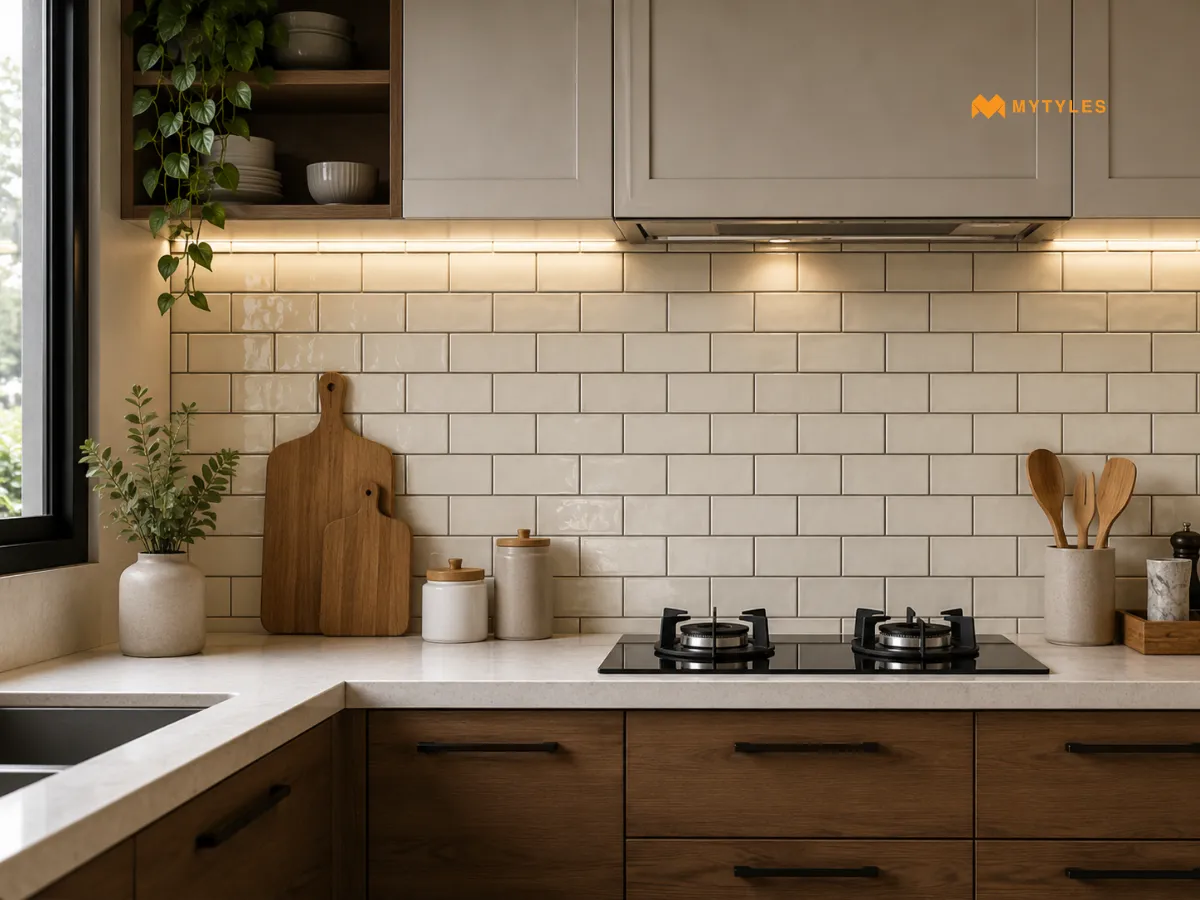
Sometimes the easiest update isn't the tile at all; it's the grout. Swapping a plain white grout for a darker or colored one outlines every tile on the wall, turning even a classic horizontal layout into something with a bit more character. This is a decision worth locking in before installation begins.
In a compact kitchen, this is a low-effort way to add definition, since the grout line itself becomes part of the design instead of just filling gaps. It works particularly well with plain white or beige subway tile, where the contrast has room to stand out.
How to Choose the Right Subway Tile Layout for a Compact Kitchen
Picking a subway tile layout usually comes down to more than which pattern looks best. The table below is a quick way to match your kitchen with a layout that's likely to suit it.
Kitchen condition | Tile options worth considering | Why it may work |
|---|---|---|
| Narrow kitchen | Horizontal layout | The straight rows lead the eye across the backsplash, which tends to make the wall feel a bit wider and more continuous. |
| Low ceiling | Vertical layout | The upright rows pull attention upward, which can make the wall appear taller. |
| Plain or single-color cabinets | Herringbone or basketweave | These subway tiles for compact kitchens add pattern and texture to the wall, creating a balanced look. |
| Patterned countertop | Horizontal or vertical layout | A simpler tile arrangement tends to balance a countertop that already has noticeable veining or patterns. |
| Limited backsplash area | A small feature panel | Using a patterned layout behind the hob or sink can create a focal point without needing to cover the whole wall. |
| Kitchen with limited natural light | Glossy finish | Glossy kitchen tiles reflect more of the available light, which can help the backsplash look brighter. Please check the specifications of the products before you buy. |
| Softer and grounded look | Matt finish | For less shine and a more understated look, matt kitchen tile can work. It's worth checking the product's cleaning guidance. |
| Day-to-day maintenance | Horizontal or vertical layout | Straighter layouts have fewer intersecting grout lines, which can make them a bit simpler to clean, though product suitability must be checked prior to buying subway tiles. |
Choosing the Right Subway Tile Color for a Small Kitchen
Once the layout is settled, color is the next decision, and it works best considered alongside the rest of the kitchen.
- Cream and white subway tiles tend to suit kitchens that already have darker cabinets, letting the cabinetry stand out
- Light grey and beige subway tiles create a softer, more neutral background for a wall that blends in rather than draws attention
- Sage, blue, or a muted green can bring in a bit of character without it feeling overpowering, especially against plain cabinets
- Darker tiles tend to work better on a limited section, like a feature panel, rather than an entire wall in a smaller kitchen
Tip: Cabinet, countertop, wall and floor colors are worth looking at together when selecting subway tiles. The overall palette is important for achieving a balanced look in the kitchen.
Giving a Small Kitchen Wall More Purpose
A compact kitchen doesn't leave much room for a lot of design decisions, but the wall is where a small change goes a long way. Whether it's a classic horizontal layout, a vertical run, or a bit of texture through herringbone or basketweave, subway tiles for compact kitchens adapt more easily. Pairing the right layout with a color that suits the rest of the kitchen and keeping day-to-day upkeep in mind is usually enough to get a wall that looks considered and well planned.

Are Subway Tiles Suitable For Compact Kitchens?

Yes, subway tiles for compact kitchens can work well because their simple rectangular shape supports several layouts without making the wall look overly detailed. Horizontal rows may make a narrow backsplash look wider, while vertical arrangements can draw attention upward. The final result also depends on tile color, grout, lighting, and how much wall area is covered.
Which Subway Tile Layout Is Better For A Small Kitchen?
The right layout depends on the shape of the kitchen. A horizontal arrangement often suits narrow spaces, while vertical subway tiles may help a low wall appear taller. Herringbone and basketweave patterns add more detail, so they are usually better kept to a smaller section, such as the area behind the hob or sink.
Which Color Subway Tiles Make A Small Kitchen Feel Lighter?
White, cream, beige, and light grey are commonly considered for subway tiles for small kitchens because they create a less visually heavy background. Glossy finishes can reflect more available light, while matt tiles give the wall a softer appearance. The cabinet, countertop, floor, and grout colors should also be considered before choosing the final shade.
Are Glossy Or Matt Subway Tiles Better For A Kitchen Backsplash?
Both finishes can work for backsplashes, but they create different effects. Glossy kitchen backsplash tiles reflect more light and make the tile color appear brighter, while matt kitchen tiles have a lower sheen and a more understated look. For backsplash use, also check the product’s cleaning guidance and suitability for areas exposed to cooking splashes.
Does Herringbone Subway Tile Make A Small Kitchen Look Busy?
A herringbone subway tile layout has more visible diagonal lines than a straight arrangement, so it can feel busy when used across every wall in a compact kitchen. Keeping it to a small feature panel can make the pattern easier to balance. Matching grout also helps soften the joints, while contrast grout makes the design more noticeable.
What Grout Color Works Best With Subway Kitchen Wall Tiles?
The grout color changes how clearly the tile layout stands out. A close match creates a calmer and more continuous surface, while darker grout outlines each tile and makes the pattern more prominent. For subway kitchen wall tiles in a small space, matching or softly contrasting grout is often easier to balance than a very strong contrast.
Can Subway Tiles Be Used In Modular Indian Kitchens?
Yes, subway tiles for Indian kitchens can be used behind countertops, sinks, cooking areas, and open wall sections in modular layouts. Their compact rectangular format can fit around cabinets, sockets, and shelves more easily than some larger tiles. The chosen material, finish, adhesive, and grout should be suitable for the intended kitchen wall application.

ABOUT THE AUTHOR
Nandana Priya
With a strong interest in design, creativity, and emerging tile trends, I enjoy turning ideas from the world of tiles and interiors into engaging, meaningful reads. My writing focuses on creating well-researched content that helps readers understand design choices with more clarity and confidence. I bring together research, design awareness, and digital marketing insights to craft content that is relevant, easy to follow, and thoughtfully written for todays homeowners and design-conscious readers.
Latest Blogs By MyTyles