Inspiration Gallery
Blog
Tile Calculator
08065423741



.svg)


Best Pooja Room Tile Designs for Indian Homes in 2026
ByAditi Bardhan

Wed , May 20 , 2026

Read Time: 5 Min


 Copied!
You don’t really notice your pooja room until something feels off. Maybe it looks cluttered, too dark, or just harder to maintain than it should be. That’s often where tiles come in. They sit there quietly, but they shape the entire mood of the space. The right pooja room tile makes the room feel lighter, calmer, and easier to be in. In 2026, pooja room tile design choices are becoming more thoughtful. Less decoration, more intention. Designs that respect tradition, work with modern homes, and still feel deeply personal to you. In this blog we will explore the best pooja room tile designs that are set to define Indian homes in 2026.
What Makes a Perfect Pooja Room Tile?
The selection of tiles for a pooja room is not just about looks. Since this is a space used daily for rituals involving diya, incense, flowers and oils, the tiles must be both practical and calming. Some key factors to consider would be:
- Ease of Cleaning: Pooja room tiles should clean easily, handling oil stains, kumkum marks, and ash without demanding constant scrubbing or special care.
- Slip Resistance: Pooja room anti-slip tiles make you feel safe when you are daily performing prayers because sometimes water, oil or flowers fall on the floor.
- Finish Selection: Matte finishes work best for floors, while satin or soft-gloss walls gently reflect light and keep the space visually calm.
- Heat Resistance: Tiles near diyas and lamps must tolerate heat well, staying clear of burn marks, fading, or surface damage.
- Vastu Alignment: Pooja room tile texture and colors must be conducive to peace, balance and positivity, giving a spiritual uplifting environment to the pooja room on a daily basis.
Top Pooja Room Tile Design Trends for Indian Homes in 2026
.webp)
Design trends are something that changes every year but pooja rooms are something that is in a very gentle pace. The trends of pooja room tile ideas in 2026 is inclined towards low-key luxury with natural textures and designs that do not shout to be seen. Each of the styles below evokes that quiet confidence.
Mural Tiles for Sacred Storytelling
Mural wall tiles for the pooja room bring a sense of storytelling into the pooja room. With imagery inspired by deities, temples, or sacred symbols, these modern pooja room wall tiles create emotional depth. Instead of adding multiple decor pieces, one mural wall quietly anchors the space and draws your focus inward during prayer.
Minimal Poster Tiles with Spiritual Art
Poster wall tiles are so modern and not too smooth. These pooja room wall tiles designs show religious paintings in a framed and spotless trend, which is befitting the modern house. These God tiles for the pooja room are in harmony with the bare minimalistic design and spacious environments.
Marble-Inspired Tiles for a Timeless Spiritual Look
Marble is always connected with temples and holy places. Pooja room tiles with a marble appearance will remain the pooja room designs in 2026 because of their beauty and cleanliness. Marble-inspired soft grey and beige or off-white tiles with soft color with veins and textures are easy to maintain.
Textured Stone & Sandstone Finish Tiles
.webp)
Pooja room tile texture with a stone and sandstone finish is becoming popular among the homeowners who want to have a temple-like look or a natural look. These traditional pooja room tiles are very warm and ground. They make the room ideal in the traditional Indian architecture.
Subtle Patterned & Motif Tiles
The use of motif tiles with modern pooja room tiles design like lotuses, mandalas or small floral patterns is being more considerate in 2026. These pooja room tiles are not attached to the whole wall but instead are used as a character wall behind the idol, without dominating the sacred area.
Wooden-Finish Tiles for Warm, Modern Mandirs
In the apartments and the modern houses, wooden-finish tiles are redefining modern pooja rooms. They are very warm and easy to use yet as durable as tiles. The wooden-finish pooja room floor tile design will provide a restorative atmosphere when combined with the soft lighting and the minimal decorations.
Metallic & Gold-Accented Feature Tiles
Many homeowners are choosing pooja room tile with gold or metallic accents in order to give their home a hint of grandeur. They are not normally used extensively on the back wall or in a border but to emphasise the mandir region without making the whole appearance.
Best Tile Colors for Pooja Rooms in 2026
.webp)
Color creates emotion, especially within a sacred space. That's why pooja room tiles adhere to shades that are comforting to the mind and settle the senses. In 2026 homeowners are looking for things that make their home friendly, cosy, and timeless rather than just trendy.
- White and Off-White: White and off-white tiles keep the pooja room pure, open and peaceful and reflect light beautifully. At the same time, they create a calm backdrop for the daily prayers so they feel focused and undisturbed.
- Cream, Beige, and Ivory: Cream, beige and ivory 3d tiles for pooja room introduce a serene cosiness that is easy on the eyes and mind. They maintain the pooja room to be natural and welcoming, making the room calm and serene.
- Soft Yellow and Sandalwood Tones: Soft Yellow and Sandalwood tones are very soothing and bring a warm and positive aura to the pooja room. They elevate the mood in a natural and grounded way and yet maintain the atmosphere that is perfect for spiritual connection.
Floor Tiles vs Wall Tiles for Pooja Rooms
Although the pooja room is small, every surface is used. Floors and walls do not always serve the same purpose and treating them the same way often results in design mistakes. Understanding how floor and wall tiles for pooja rooms differ is useful to you to make better decisions.
Floor Tiles
Matte or anti-skid pooja room floor tiles simply feel safer underfoot, especially during early morning rituals when floors can turn slightly wet or oily. Soft, neutral shades stay quietly in the background, allowing your attention to rest on prayer rather than worrying about where you step.
Wall Tiles
Pooja room wall tiles offer more freedom to express design. Glossy or satin finishes bounce light around and make the room feel brighter. Feature walls behind idols are popular because they frame the space without demanding constant attention.
Common Mistakes to Avoid While Selecting Pooja Room Tiles
Even the most beautiful of pooja room tiles can be out of place if they are chosen wrong. Some of the common mistakes are as follows:
- Using very shiny tiles on floors and making them slippery.
- Using busy patterns in small pooja rooms.
- Not taking practicality into account and just focusing on the aesthetics.
- Choosing tiles that are challenging to clean or maintain.
Designing a Sacred Space with the Right Tiles
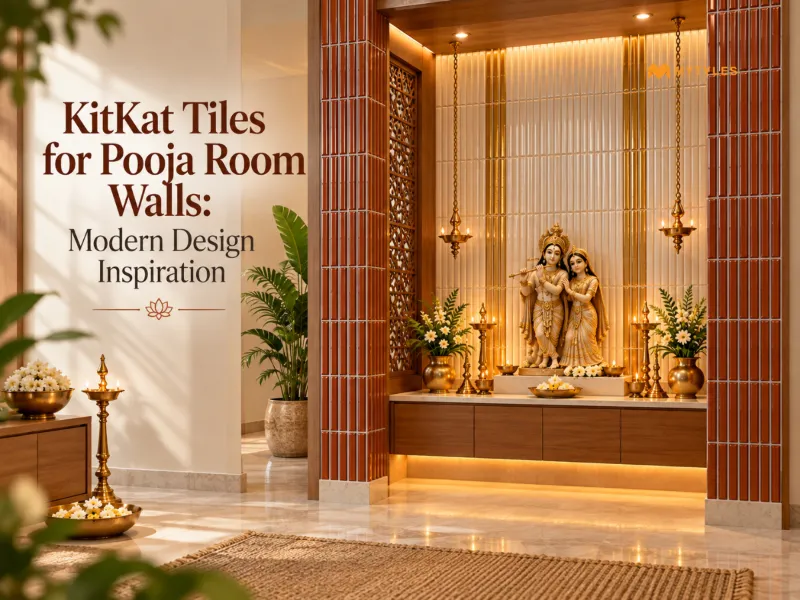
In 2026, pooja room tile designs are becoming more based on how the space makes you feel. People are leaning towards simplicity, tiles that are calm, grounded and quietly beautiful. Some are fond of the soft endless look of marble, others the warmth of wood-like finishes, and a bit of gold detailing adds that hint of divinity without over-dominating the room. At the end of the day, your pooja room should be personal in nature. With MyTyles’ carefully chosen pooja room tile collections, you can create a space that simply feels right. It carries the comfort of tradition, fits effortlessly into modern life, and brings a quiet sense of calm. It’s the kind of space you enjoy today and still feel connected to, even years later.
Expert Reviewed by Biren Agrawalla
Biren Agrawalla, the Founder of MyTyles with over 10 years of experience across tile, retail, and home decor. Driven by a passion for tiles and a deep understanding of customer behaviour, he has spent his career transforming how people discover and buy tiles online. Biren combines practical retail insight with modern digital solutions to make tile shopping smarter, more intuitive, and design focused. At MyTyles, he champions a customer first approach, ensuring every experience from browsing to buying is reliable, seamless, and inspiring.

Which Tiles Work Best For Pooja Rooms In Indian Homes?

Tiles that suit pooja rooms usually stay quiet rather than decorative. Light-toned vitrified tiles, marble-look finishes, and soft stone textures work well because they don’t compete with the sacred elements. These tiles handle oil, flowers, incense ash, and daily cleaning without fuss. More importantly, they help the space feel calm and settled. A pooja room should never feel.
Which Tile Colors Are Considered Auspicious For Pooja Rooms?
Most homeowners lean toward lighter shades for pooja rooms, and there’s a reason for that. Whites, off-whites, creams, and gentle yellows reflect light and keep the space feeling open. These colors feel emotionally lighter too, which matters when you’re trying to slow down and focus. Dark or aggressive colors tend to absorb light and pull attention away from prayer. A pooja room works best when the colors stay soft and reassuring.
Should Floor Tiles And Wall Tiles Be Different In A Pooja Room?
Yes, using different tiles for floors and walls usually works better. Floors deal with oil, water, and movement, so they need grip and durability. Walls don’t face that wear, which gives you more freedom. Many people choose simple, matte tiles for the floor and slightly refined finishes for the walls. This separation keeps the space safe and functional while still allowing a gentle sense of design around the idols.
Are Glossy Tiles Suitable For Pooja Room Floors?
Glossy tiles may look attractive in showrooms, but they rarely behave well in pooja rooms. Once oil or water touches them, they can turn slippery very quickly. That’s not something you want in a space where you often stand barefoot. Matte or anti-skid tiles are far more forgiving. They may look quieter, but they keep you safe and comfortable, which matters much more in daily use.
How Should Tiles Be Chosen For Small Pooja Rooms?
Small pooja rooms benefit from simplicity. Light-colored tiles help reflect light and prevent the space from feeling boxed in. Large patterns or heavy contrasts usually make small areas feel cluttered. Many homeowners use the same tile on walls and floors to create continuity. When the surfaces flow into each other visually, the room feels calmer and more spacious, even if it’s only a small corner of the house.

ABOUT THE AUTHOR
Aditi Bardhan
I'm Aditi Bardhan, a professional content writer with over five years of experience creating SEO-driven, research-backed content across multiple industries. I specialise deeply in the tile and surface materials industry, crafting high-converting content for homeowners, architects, interior designers, and trade professionals. My work is grounded in technical research, design understanding, and consumer behaviour insights, enabling me to simplify complex concepts, highlight material benefits, and help brands build authority in the tile and construction space.