Inspiration Gallery
Blog
Tile Calculator
08065423741



.svg)


9 Kitchen Dado Tile Ideas That Make Plain Cabinets Look More Premium
ByNabiya Naqvi

Sun , Sep 06 , 2026

Read Time: 5 Min


 Copied!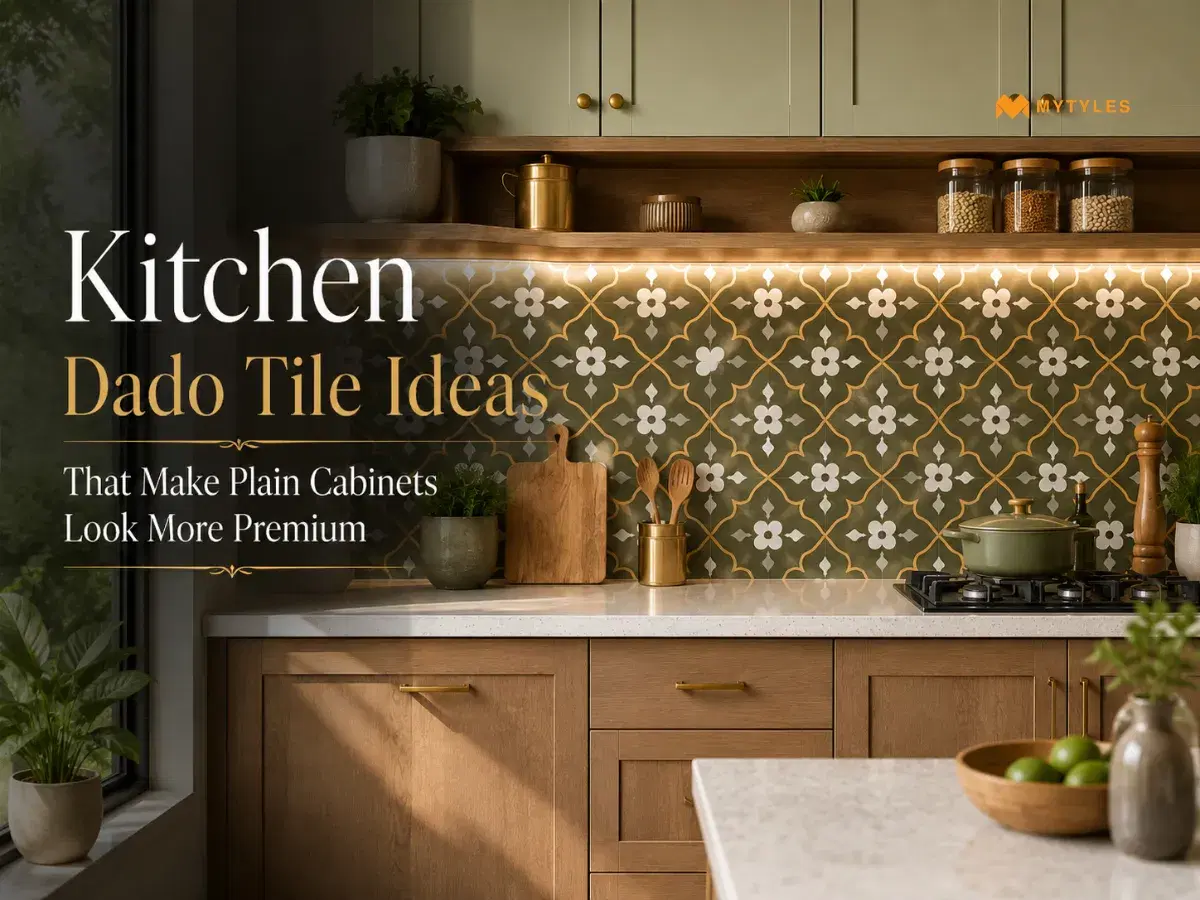
A narrow strip of wall between the counter and upper cabinet is the dado. That zone is where the kitchen either comes together or falls slightly short. It is visible at eye level when someone stands at the counter. It takes daily splashes and steam. Kitchen dado tiles are one of the most cost-effective ways to add genuine character to plain kitchen cabinets without touching anything else.
What Is a Kitchen Dado Tile?
A dado is the section of kitchen wall that sits between the countertop and the bottom of upper cabinets. In most Indian kitchens, the dado height varies depending on where the counter sits and how high the upper cabinets are positioned. Kitchen wall dado tiles in this zone are the most exposed wall surface in the kitchen. It is closest to the cooking and washing activity, which is why the tile choice here matters practically as much as it does visually.
9 Kitchen Dado Tile Ideas That Make Plain Cabinets Look More Premium
Different kitchen wall tile ideas give a new look to the space, especially when placed in the dado zone. The design catches attention and gives a clean surface finish to the dado zone. Let’s explore some high-quality ideas for dado tiles in detail.
Use A Contrasting Color Dado Against White Cabinets
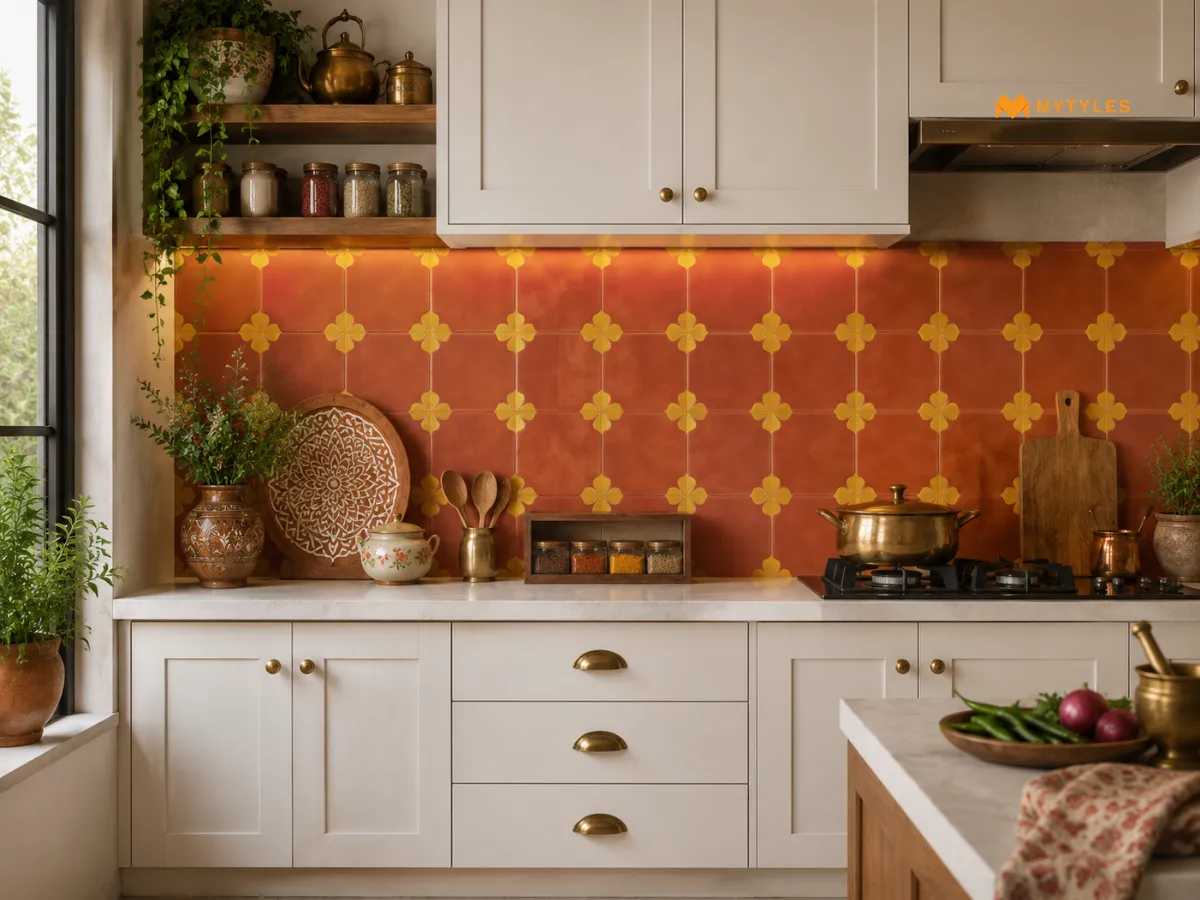
White cabinets in an Indian modular kitchen setup with a white or off-white dado tile read as flat. One contrasting color in the dado zone, such as deep grey, soft sage, or warm terracotta, gives the kitchen a visual break between the counter and the cabinet that the eye actually registers. For example: Neutral kitchen tiles in the surrounding wall sections keep the contrast from feeling too heavy.
The contrast does not need to be dramatic. Even a mid-tone beige dado against white cabinets creates enough definition to make the kitchen feel more considered than an all-white layout. This is one of the simplest cabinet and tile combinations that works consistently in Indian modular kitchen tile setups.
Try Subway Tiles In A Vertical Stack Layout
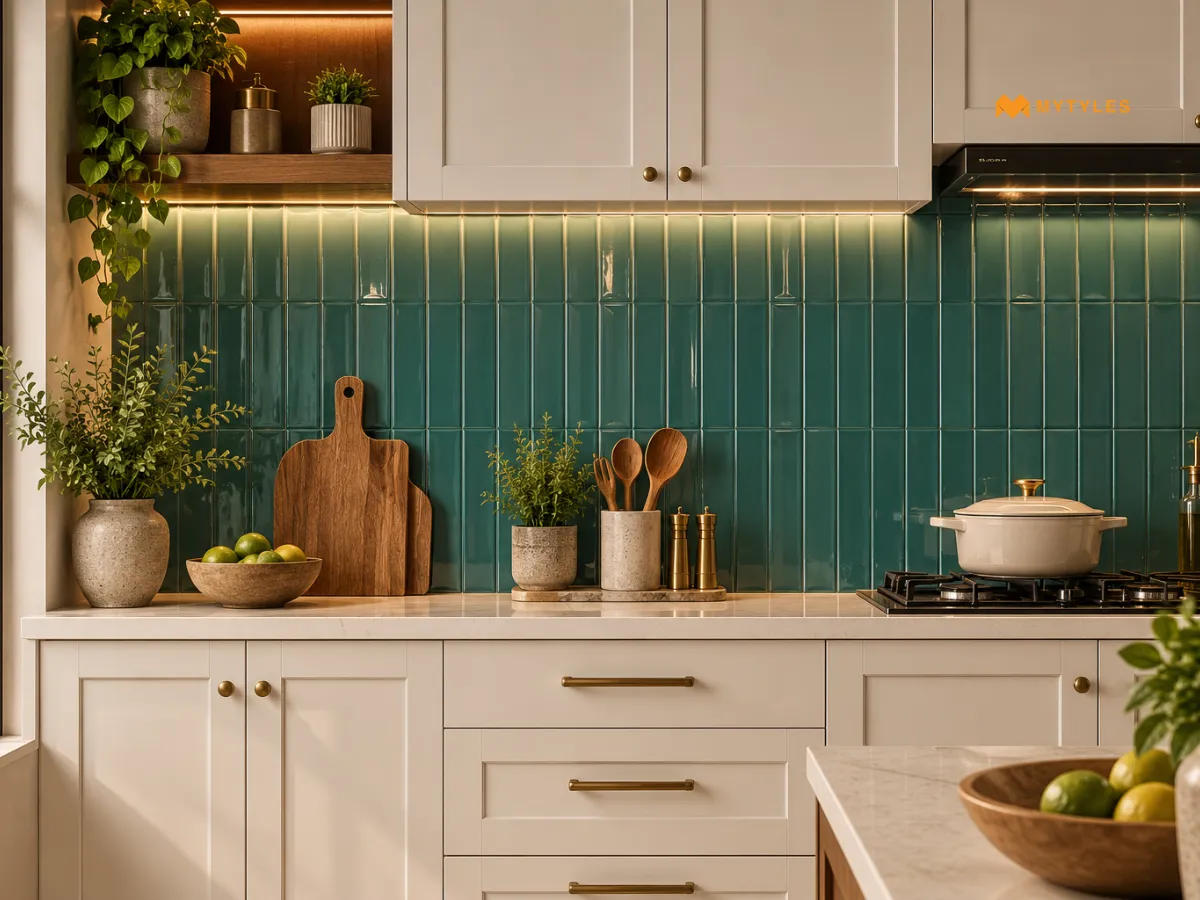
Subway tiles in a horizontal brick layout are the common dado choice. Switching to a vertical stack changes the character of the same tile completely. Vertical lines can draw the eye upward, which makes the dado zone feel a bit taller. In a kitchen where the ceiling feels low or the cabinets sit close to the counter, this kitchen backsplash tile idea does more than a tile change would. Before installation, plan the vertical layout around electrical sockets, internal and external corners, and cabinet edges to avoid awkward cuts and maintain consistent alignment. Modern kitchen dado tiles in a vertical stack layout can be considered for premium modular kitchen designs.
Go For A Textured Or Fluted Dado Tile
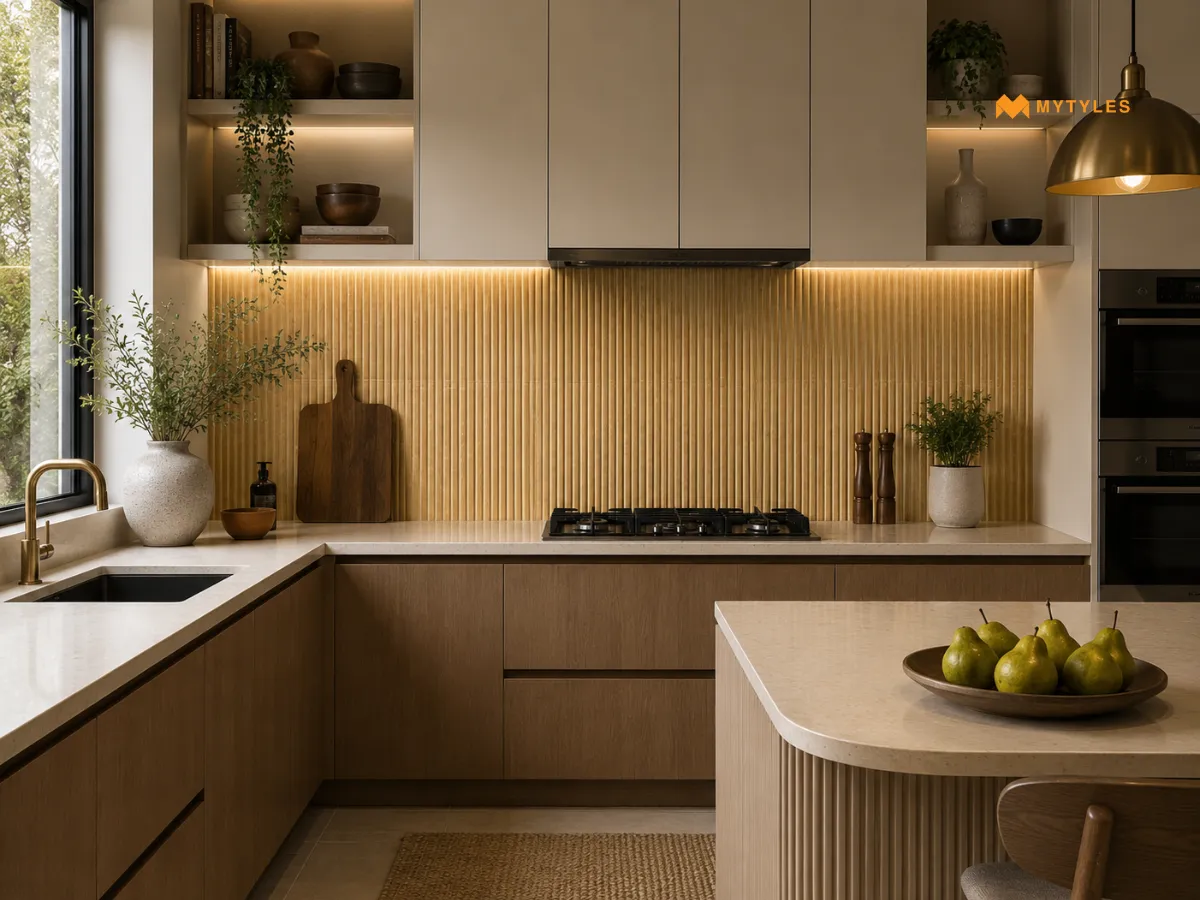
A ribbed or fluted tile in the dado zone adds physical depth to what is otherwise a flat surface. Light moves across the ridges differently through the day, which keeps the wall from looking static. One narrow strip of fluted designer kitchen wall tile between a plain counter and plain cabinets reads as a deliberate design detail rather than just a tiled wall.
Keep the grout color close to the tile. A contrasting grout on a fluted surface draws attention to the joints rather than the texture, which works against the finish. Grout color matters as much as the tile itself in a narrow dado zone. Fluted tiles need a bit more attention in terms of cleaning, especially when placed in the dado area, as it is an active cooking area.
Use Zellige-Inspired Glaze Tiles
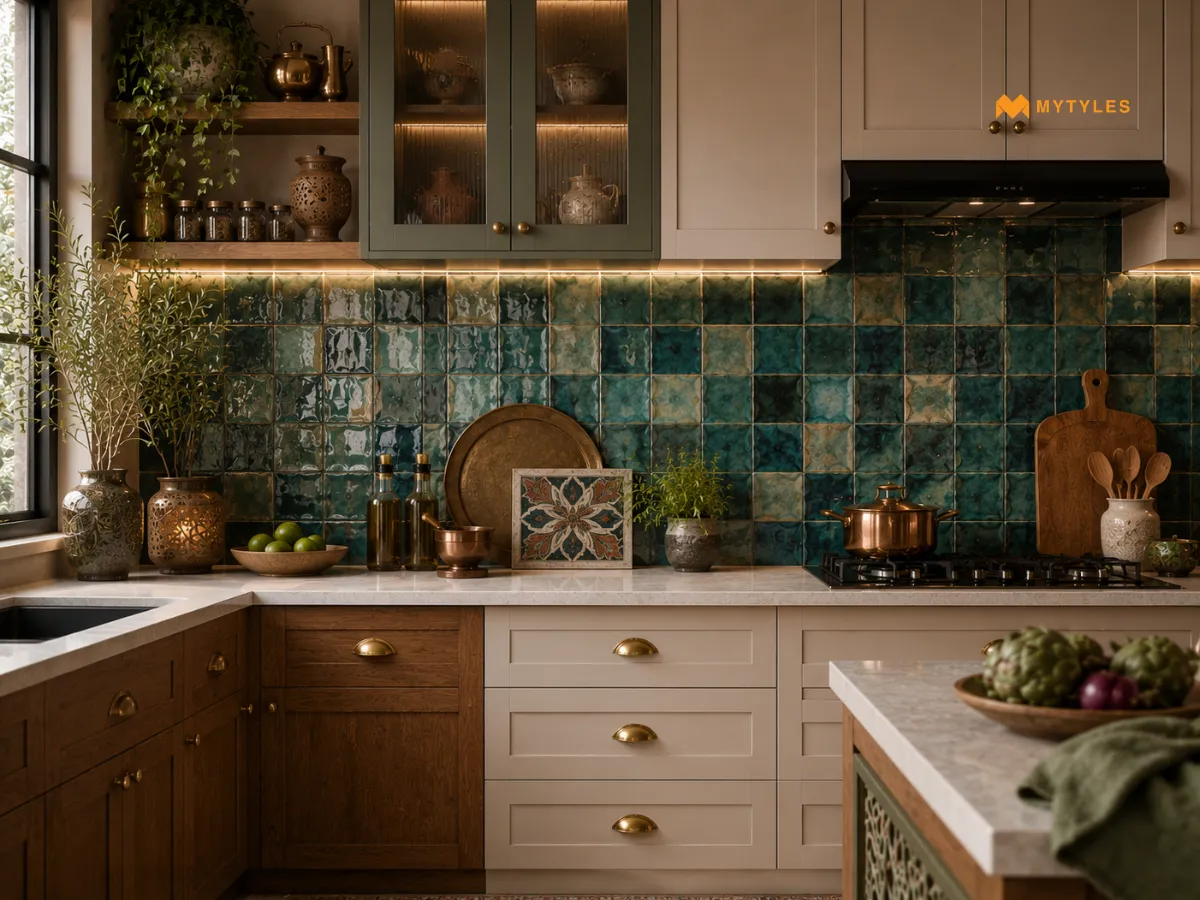
In the zellige-inspired look tiles, the glaze shifts slightly across each piece, the surface is not perfectly flat, and color catches light differently depending on the angle. The subtle texture variation on zellige tiles stands out in a dado zone, creating a distinction that printed or plain kitchen tiles cannot replicate.
One surface in zellige, plain tiles everywhere else. The contrast between the handmade kitchen backsplash tiles and a clean, minimal cabinet finish is what makes this combination work.
Try A Dark Dado Against Warm Wood Cabinets
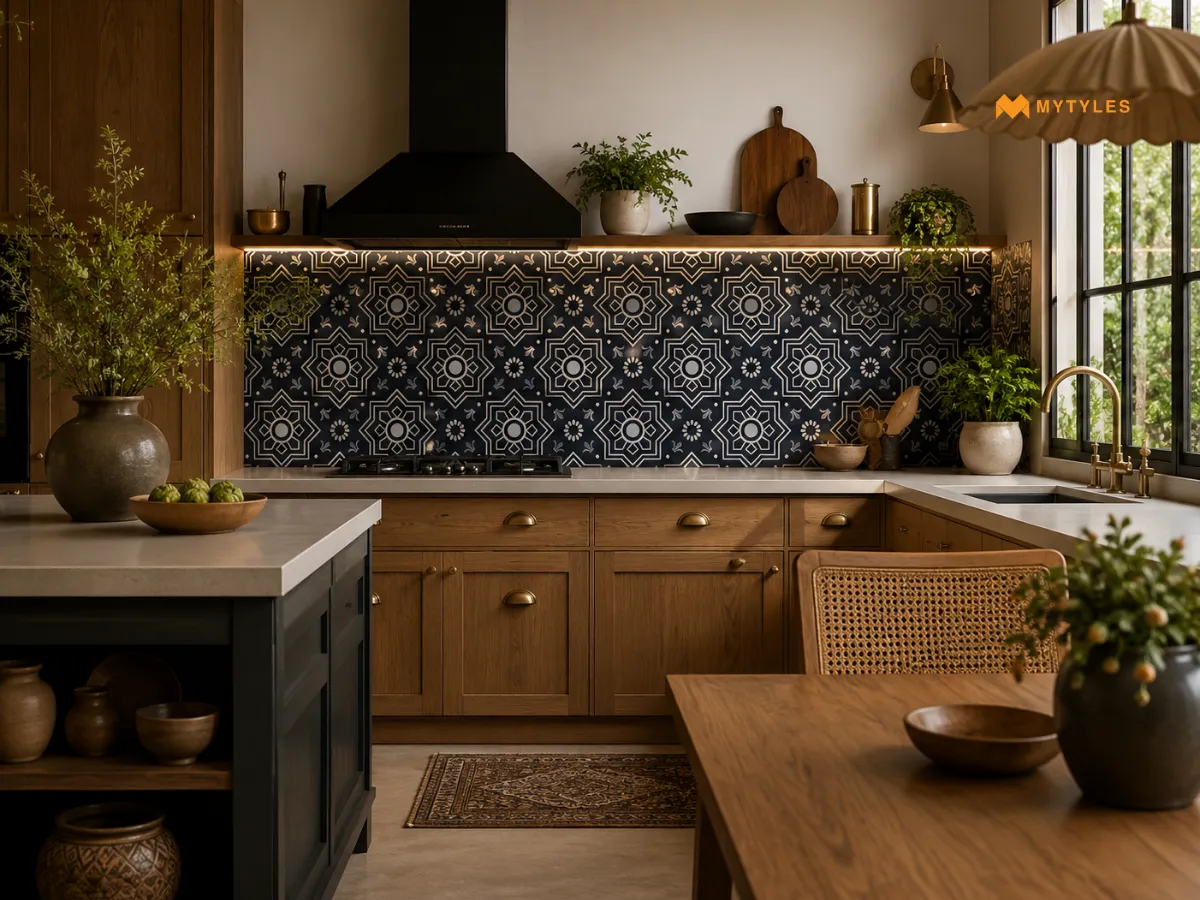
Deep charcoal, black, or navy in the dado zone creates a grounded contrast against warm wood cabinet finishes. Dark designer kitchen wall tiles in the dado anchor the lower half of the kitchen and give the wood above a clear visual contrast to sit against.
This combination works particularly well in kitchens with good natural light where the darker dado does not make the kitchen feel enclosed.
Use Large Format Tiles In The Dado Zone
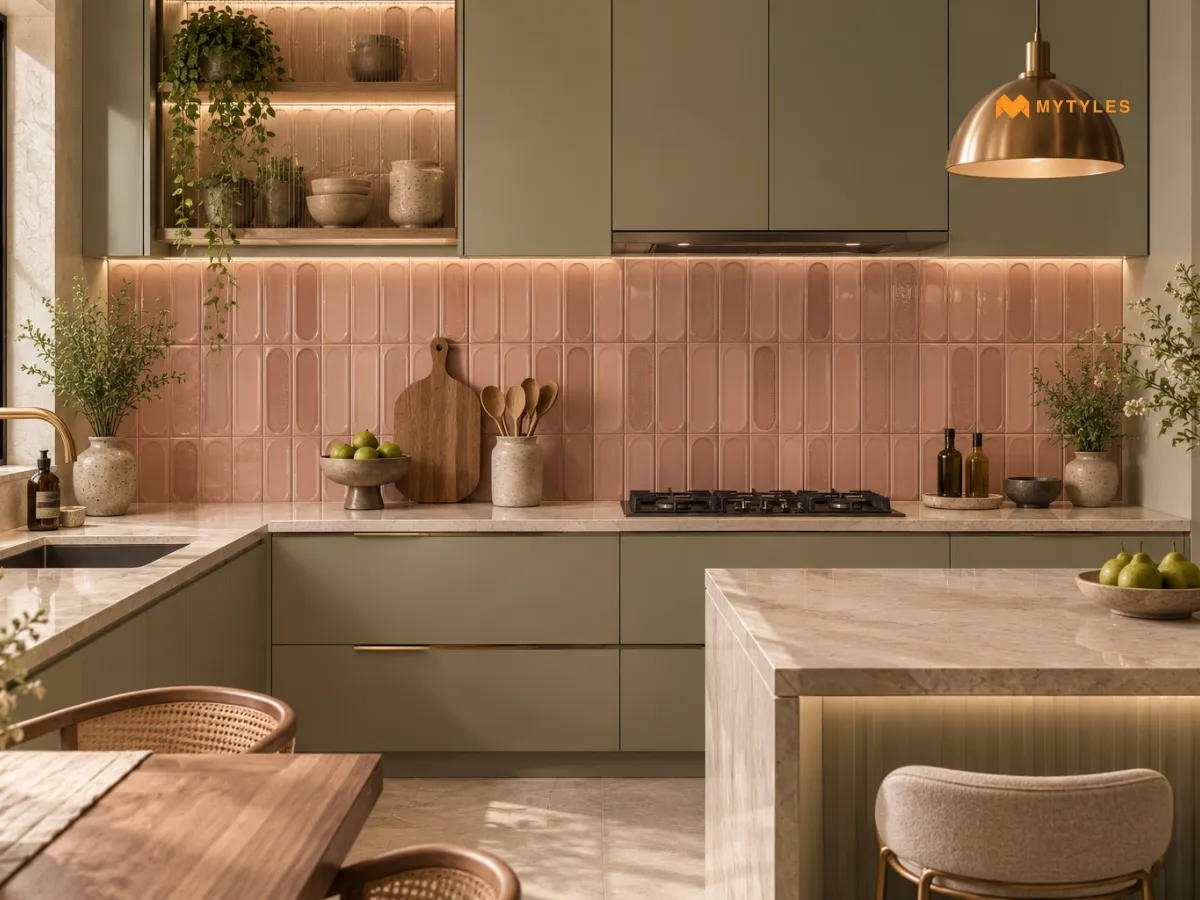
The large format tile sizes, such as 300x600 mm or 300x1200 mm kitchen wall tile laid horizontally in the dado zone, reduce the number of grout lines. Fewer joints mean the surface reads more continuously, which gives a cleaner and premium appearance than a smaller tile with more grout lines.
The tile height needs to work with the dado zone height. For example, a 600 mm tall tile in a 500 mm dado zone requires a cut, which is worth factoring into the installation plan before ordering. Tile adhesive choice also matters here since larger format tiles need a stronger bond to hold securely on a vertical surface.
Match The Dado Tile To The Countertop Tone
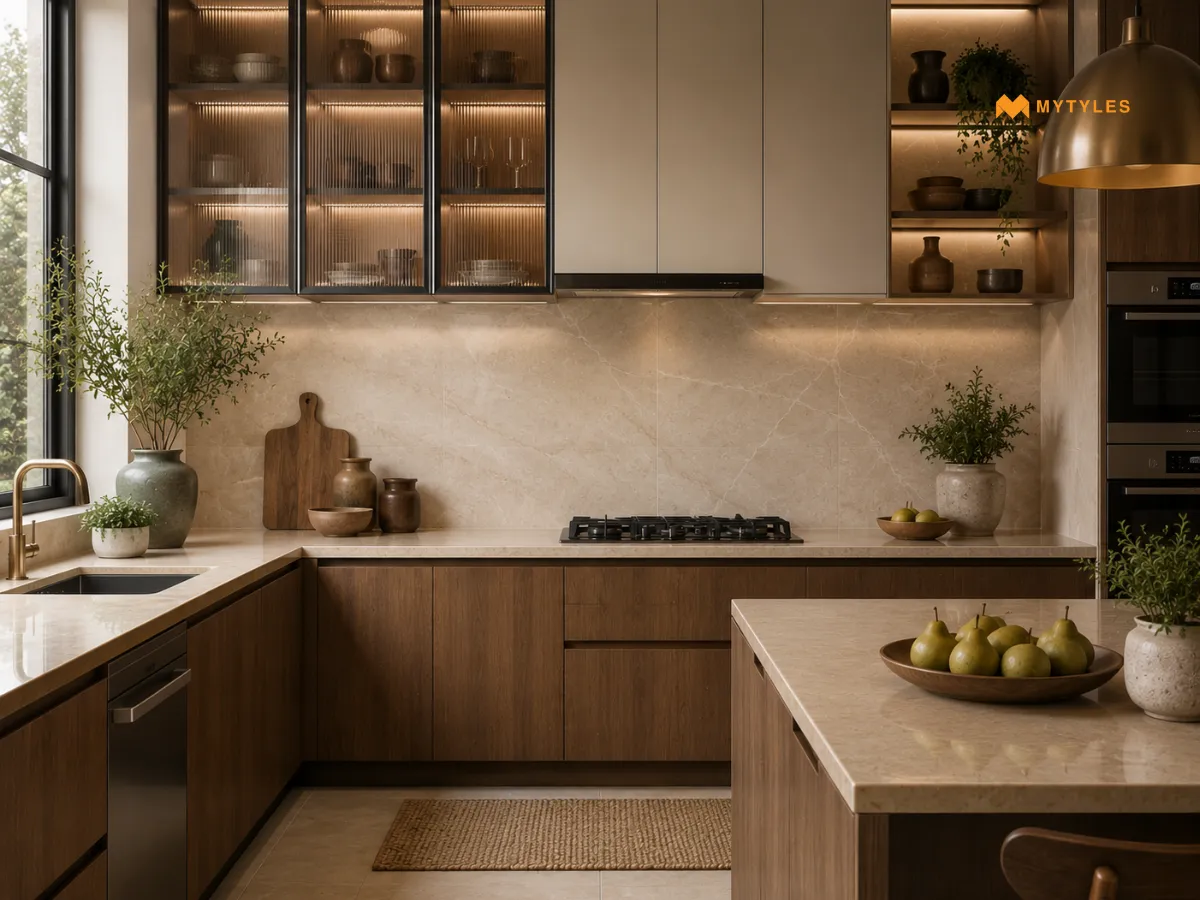
Most people match the dado tile to the cabinet color. Tying the dado to the countertop tone instead creates a different effect. The counter and dado read as one continuous surface. This makes the lower half of the kitchen feel more intentional and gives the cabinets above a clear visual separation.
A warm beige countertop with a warm beige marble-look tile in the dado zone is one of the premium kitchen tile ideas in some of the well-designed Indian kitchens.
Use A Geometric Or Patterned Dado As The Single Statement
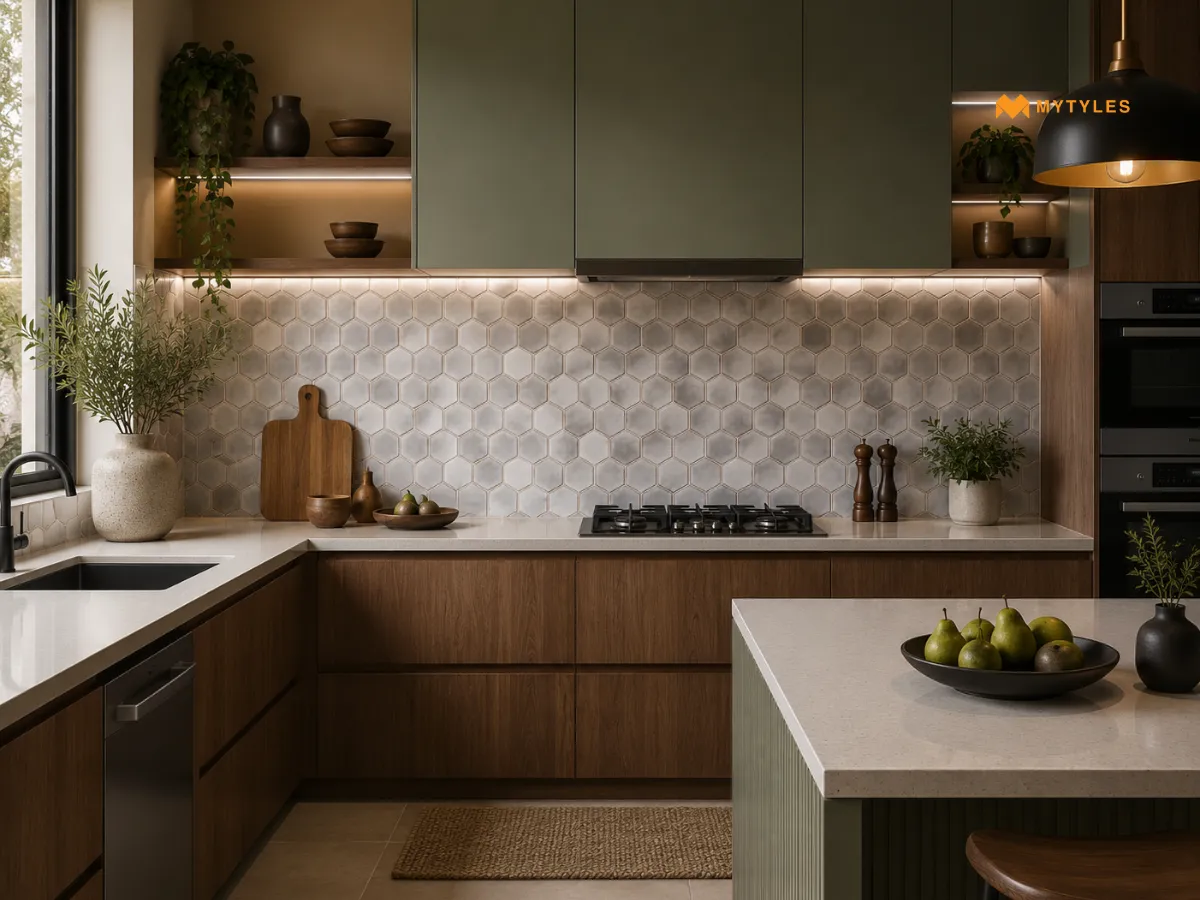
One patterned tile in the dado zone and plain tiles on every other surface. That is the principle that keeps geometric tiles or Moroccan tiles in the dado from looking busy rather than considered. The pattern has enough space to read clearly when it is the only decorative element in the kitchen. The moment it competes with a patterned countertop or detailed cabinet finish, the effect collapses.
Open-plan kitchens where the kitchen backsplash tiles are visible from the dining area benefit the most from this approach.
Try A Metallic Or Satin-Finish Dado
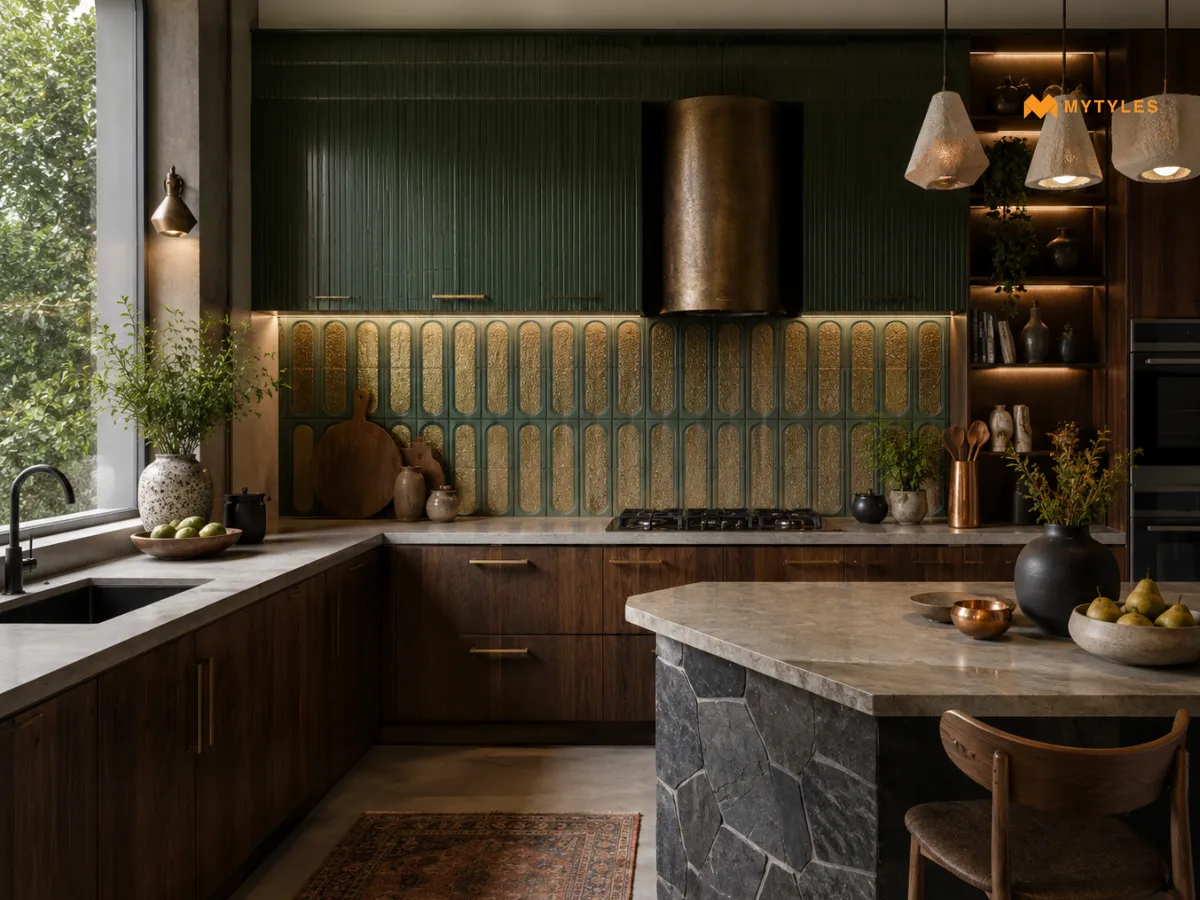
A subtle sheen in the dado zone catches kitchen light differently from the flat cabinet surface above it. Metallic and satin-finish kitchen tiles in the dado add a quiet premium quality without a dramatic change in color or pattern. The effect is more noticeable in kitchens with under-cabinet lighting where the light hits the dado directly.
Things to Know Before Tiling the Kitchen Dado
The dado zone is narrow, visible at eye level, and one of the harder areas to fix once the tiles are up. A few checks before installation starts save time, materials, and the frustration of getting it wrong in a space that gets used every day.
- Measure the Dado Height First: The gap between the countertop and the upper cabinet varies across kitchens. Get that measurement before shortlisting any kitchen dado tile design. A tile that needs cuts across every row adds time and wastage to the installation.
- Choose The Right Tile Finish: Heavy daily cooking calls for satin or matt kitchen tiles, as they need less frequent wiping. Glossy kitchen tiles work better in sections away from direct steam and oil. The finish decision should follow the cooking habits, not just the aesthetic preference.
- Color Against the Cabinet: Check the shortlisted color against the actual cabinet finish before ordering. Neutral kitchen tiles on the surrounding walls help balance a bolder dado choice without the zone feeling too heavy.
- Size Against the Dado Height: A 300x600 mm kitchen wall tile laid vertically in a 600 mm dado zone covers the height in one tile with no cuts needed. That alone keeps the installation cleaner and reduces wastage.
- Material and Waterproofing Near the Sink: Ceramic suits most kitchen dado wall applications. Near the sink, waterproofing behind the kitchen backsplash tiles and an epoxy grout can be considered instead of standard cement grout that picks up oil and staining over time. But the product compatibility and project conditions matter. Use the right tile adhesive for the tile weight and wall surface before the installation starts.
Make A Bigger Impact With Kitchen Dado Tile Design
The dado zone is one of the most overlooked surfaces in an Indian kitchen renovation. It is also one of the most cost-effective places to add character to the kitchen without changing anything else. A well-thought-out kitchen dado tile design in the narrow strip between the counter and the cabinet transforms the entire kitchen's appearance without a significant spend.
MyTyles has many options in kitchen dado tiles across ceramic, porcelain, and vitrified materials in multiple finishes, colors, and sizes. Browse the collection, use the tile calculator to confirm quantities, and find the dado tile that fits the kitchen before renovation moves forward. Visit the MyTyles Experience Centre to see how the tiles look in a real kitchen setting before placing the order.

What Is a Kitchen Dado Tile?

A kitchen dado tile covers the wall section between the countertop and the bottom of the upper cabinets. This zone often ranges from around 450 mm to 600 mm in height, although dimensions vary by kitchen layout. It is an area that can be regularly exposed to splashes, steam, and cooking residue.
What Is the Standard Height for a Kitchen Dado?
A kitchen dado commonly falls within the 450 mm to 600 mm range, but there is no single standard height for every Indian kitchen. The final dimension depends on the counter height, upper-cabinet placement, appliances, and overall kitchen design. Measuring the actual gap before shortlisting tile sizes can help reduce unnecessary cuts during installation.
What Is the Best Material for Kitchen Dado Tiles?
Ceramic, porcelain, and vitrified tiles are all options for kitchen dado applications, depending on the product specifications. Porcelain and vitrified tiles generally have lower water absorption than many ceramic tile types, but suitability near a sink or hob should be determined by the specific tile’s technical specifications and manufacturer recommendations. The right material also depends on the location, desired finish, maintenance requirements, and installation conditions.
How Do I Choose the Right Dado Tile Color?
Check the shortlisted color against the cabinet finish, countertop material, and flooring before finalising. Neutral dado colors can provide flexibility when coordinating different kitchen finishes. Bolder colors can be considered when you want the dado to provide stronger contrast against the surrounding cabinets and countertop.
Do Kitchen Dado Tiles Need Sealing?
Whether a dado tile needs sealing depends on the material, surface finish, grout, and product specification. Many glazed ceramic and porcelain tiles may not require surface sealing, although grout or other installation materials may have separate requirements. Check the specific product and installation recommendations before applying a sealer.
How Much Does Kitchen Dado Tiling Cost?
The cost depends on the tile material, finish, size, brand, total dado area, and installation requirements. Ceramic tiles can include relatively economical options, while porcelain and vitrified tile prices vary considerably according to the product, finish, and format. Labour costs also vary by location and installation complexity.
Do Dado Tiles Work in Small Kitchens?
Yes. A kitchen dado tile can introduce color, pattern, or texture in a compact kitchen without using additional floor or counter space. Lighter tones, subtle patterns, or smaller formats are among the options that can be considered, but they are not inherently better for every small kitchen. The appropriate choice depends on the cabinet colors, lighting, tile layout, and desired visual effect.

ABOUT THE AUTHOR
Nabiya Naqvi
Nabiya Naqvi is a content writer with a postgraduate background in chemical sciences and a strong passion for creative expression. Her journey into writing began with a love for storytelling and gradually grew into a professional path focused on interiors, home decor, and design-led content. With a keen interest in beautiful living spaces, Nabiya enjoys simplifying design ideas and making them relatable for everyday readers. Through her writing, she blends creativity, research, and an eye for detail to help homeowners understand how tiles, textures, and thoughtful material choices can transform a space.
Latest Blogs By MyTyles