Inspiration Gallery
Blog
Tile Calculator
08065423741



.svg)


Tips to Choosing the Right Wash Basin
ByBiren Agrawalla

Thu , Aug 20 , 2026

Read Time: 5 Min


 Copied!
Who can avoid adorable mirror selfies while sneaking to the bathroom under the excuse of washing their hands? Washbasins draw attention and act as a centrepiece of the entire bathroom, pulling together the perfect backdrop for your Instagram story. A functional and aesthetic washbasin will altogether improve the overall outlook and design.
Every modern house, restaurant, hotel and cafe has its own style of bathroom washbasin. Because washbasins are not only crucial in maintaining proper hygiene and sanitation, but also a part of overall aesthetics. We use washbasins from brushing teeth in the morning to personal grooming at night, which are essential parts of our daily routine. As they play a significant role in setting your morning and night mood, it is vital to choose the right washbasin for your bathroom.
There are wide varieties of washbasins in the tile industry, which may often create a dilemma to choose the right basin for the bathroom. In this blog, we will help you learn about various factors to consider while choosing the washbasins and customisation and design recommendations.
The Popular Types of Washbasins
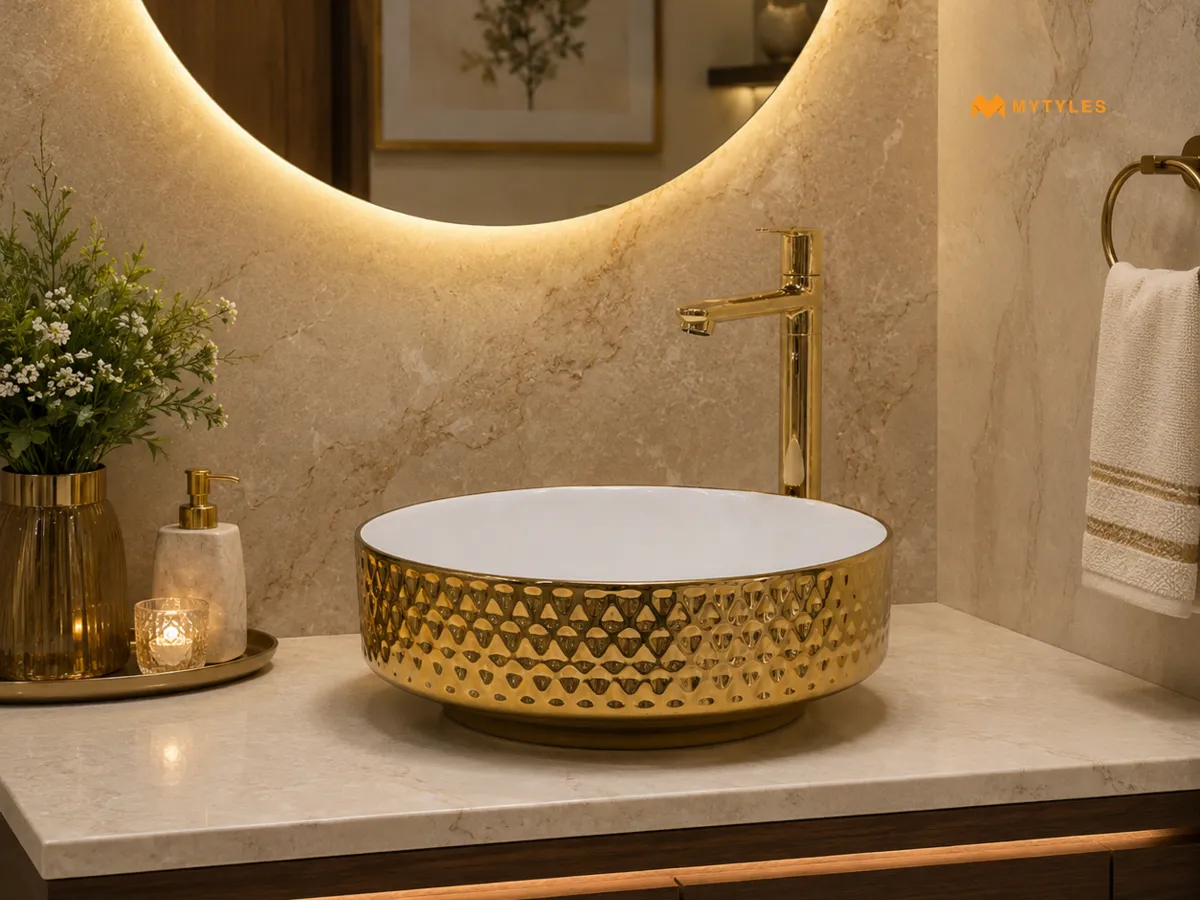
Before considering the size, color or design, we need to know the versatile types of washbasins available in the market. Among the numerous types of washbasins, below are the popular types of washbasins available in the market.
- Pedestal Basins: Pedestal basins with stands or columns are ideal for small bathrooms to create a compact and minimalist look. They are a budget-friendly choice and easy to clean.
- Wall-Mounted Basins: These basins are fixed directly on the wall, leaving the floor space clear. They are easy to clean and great for modern spaces. More floor space makes the bathroom appear larger and creates ventilation.
- Countertop Basins: These basins are placed on top of a vanity or countertop, creating a stylish and luxurious look. They offer more space for storage below the counter and are easy to clean.
- Vessel Basins: These are similar to countertop basins but typically larger and deeper, creating a bold and sophisticated look. They are easy to clean and install and ideal for contemporary or luxurious spaces.
- Undermount Basins: These are installed beneath the countertop, offering a premium and streamlined look. Undermount basins are best for functional bathrooms, which prioritise space storage, functionality and aesthetics.
- Half pedestal basins: These are the fusion of pedestal and wall-mounted basins. They don’t take much floor space, like pedestal basins, allowing them to suit smaller bathrooms. They are easy to clean and complement styles from tradition to modern.
- Corner basins: As the name suggests, corner basins are ideally created to fit into the corner of bathrooms. They are the innovative solution to space-related issues. They are compact and functional, well-suited for powder rooms. Their unique shape and look create an intriguing outlook for your bathroom.
Choose the Right Size
The right washbasin for your bathroom largely relies on the size you choose. Bathroom basin size can typically vary from small to large. You can choose the right size based on the size of your bathroom. Remember the following sizes to pick the perfect basin.
Washbasin size | Size range | Ideal for |
Small | 16 to 20 inches | Smaller bathrooms |
Standard | 20 to 24 inches | Medium-sized bathrooms |
Large | 24 inches and above | Luxurious bathrooms |
- The small washbasin ranges from 16 to 20 inches in diameter, which is ideal for smaller bathrooms.
- The standard size ranges from 20 to 24 inches in diameter, which is recommended for medium-sized bathrooms.
- The large washbasins range from 24 inches and above, which suit considerably larger bathrooms.
Position Washbasins in the Right Dimension
After choosing the right size, we need to determine the wash basin dimensions to fix the basin appropriately. So, proper positioning of the washbasin helps you to create the functional flow without disrupting the aesthetics. Here are some tips to fix your washbasin in the right position.
- Fix washbasins from 30 to 36 inches from the floor and 18 to 24 inches from adjacent fixtures like the toilet or shower.
- When you have a vanity or countertops, make sure that the basin doesn’t overcrowd the surface.
- Consider the height of the people who use the basin. A standard height ranges from 30 to 36 inches, but you can adjust this height according to your comfort and needs.
- Do not fix the washbasins too close to a shower or bathtub to avoid water splashes. Maintain a considerable space, like 18 to 24 inches, to maintain the functional flow.
- Make sure you have enough counter space around the wash basin to hold essentials like face washes or toothpaste. Consider having at least 18 inches of counter space on either side.
- Leave some space in front of the basin to stand comfortably without feeling congested. Aim for at least 30 inches of space in front of the washbasin.
Leverage the Facets of Color and Style
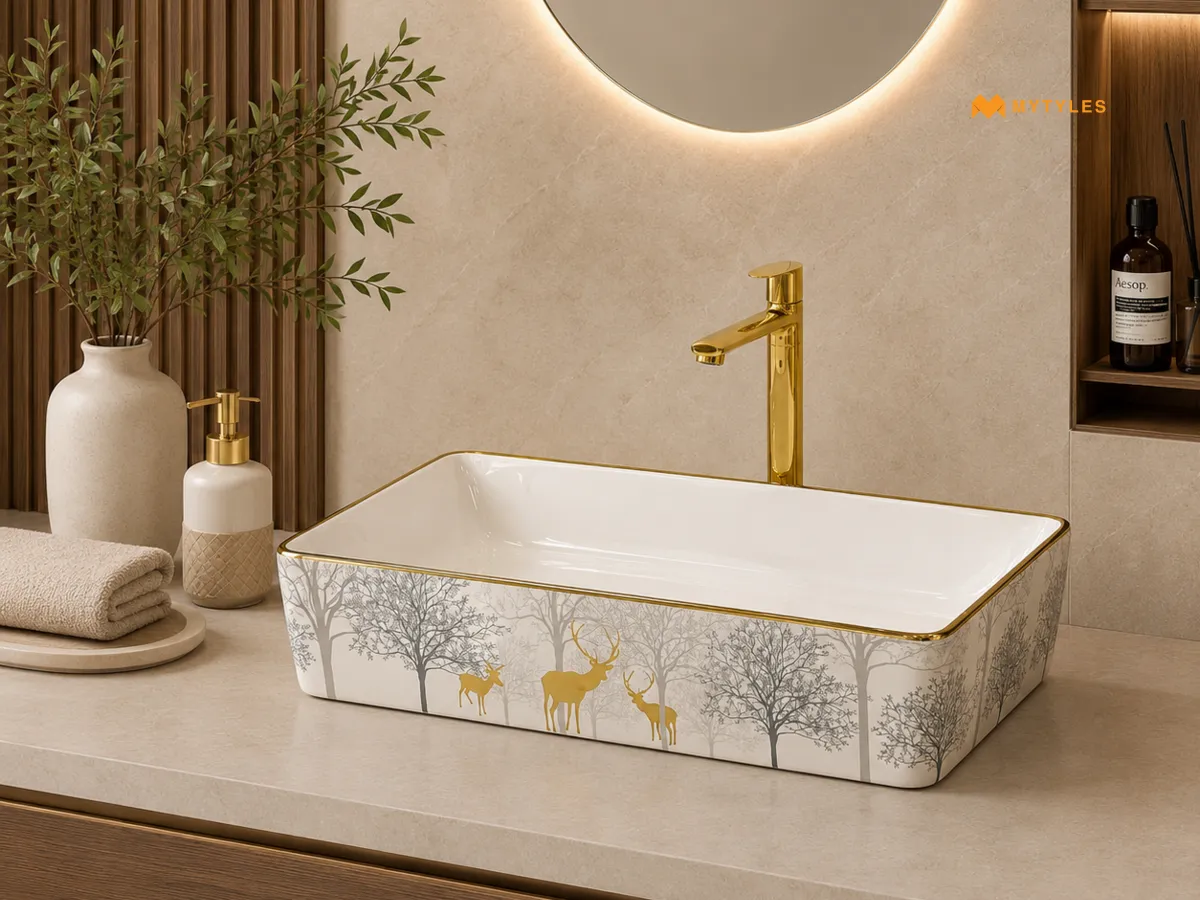
The two main important aspects that determine aesthetics are color and style. They aid you in creating a stylish and dynamic look for your bathroom. To choose the best washbasin for your space, you must know how these aspects can level up the entire outlook.
Choose appropriate colors
- Choose either complementary or contrasting colours that match your bathroom's tiles, walls, and fixtures. For example, neutral colors for bathrooms with a minimalist theme and bold colours for bathrooms with vibrant fixtures.
- Neutral shades like white, beige, brown and more always create a unique touch to the space. If you would love to add a subtle and trendy palette, neutral or earthy tones will be your ultimate choice.
- Choose lighter shades for smaller bathrooms to create an illusion of space, while darker colours for larger bathrooms to add visual depth.
Style recommendations
- When you prefer a traditional, contemporary, or transitional look, ceramic basins would elevate the aesthetics.
- If luxurious, artistic or eclectic spaces are your zone, glass and stone basins will help you to create a magnificent outlook.
- The modern, contemporary and minimalist look will be complemented by the quartz basins, which are widely available in the market.
Prioritise Functionality
A functional basin doesn’t have to compromise on aesthetics. There are various functions your washbasin should have, from space optimisation to property value, without compromising on visual appeal. You can choose a basin for the bathroom that meets your practical needs by considering the following tips.
- Consider all the users: Choose basins with splash resistance and sufficient depth for families. Choose basins with comfortable heights and easy accessibility for families with elders and children.
- Easy Cleaning: Choose basins with smooth and non-porous surfaces to prevent grime buildup. Select materials that resist stains, scratches, and water damage for long-term functions.
- Storage : Choose a basin type that provides an ample amount of space to store other essential things if you need.
- Plumbing Access: Choosing hand wash basin designs that align with existing plumbing accessibility would save costs and simplify the installation process.
- Property value: Washbasins that are highly functional and have high quality can enhance the overall property value.
Choose the Perfect Material
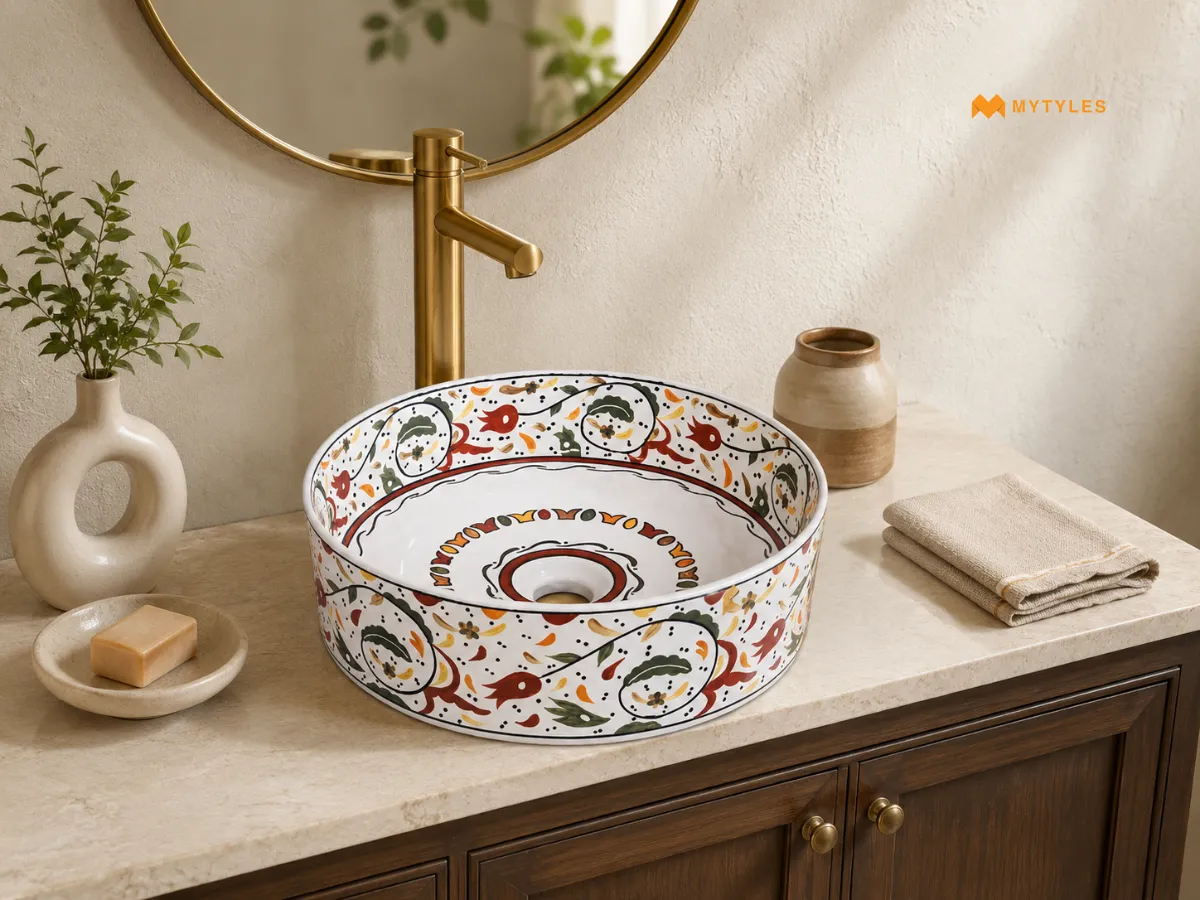
The predominant question you might ask is, "How do I choose the right material for washbasins?" Here the answer is, the perfect material should have a balance between durability, functionality, and aesthetics. You can select your ideal wash basin material from the following options depending on your specific needs and preferences.
- Ceramic basins: Ceramic basins, being one of the most common choices, suit both modern and traditional themes. They are durable, stain-resistant, and easy to clean. Ceramic basins are great for budget-friendly choices without compromising the quality and aesthetics.
- Stone basins: Stone basins are quite expensive but offer durability and heat resistance. Cleaning and maintaining stone basins can be challenging and require more dedication. Stone tiles create a bold and natural look in the space.
- Quartz basins: Quartz basins are made up of natural quartz crystals combined with resin and pigments. They are highly durable and resistant to scratches and stains. Quartz basins are ideal for everyday use and easy maintenance.
Key Takeaways
Leverage all the tips that are detailed above to choose your perfect washbasin that elegantly adapts to your bathroom theme or style. Choose an aesthetic and functional washbasin that suits your needs, space, theme and budget. Apply unique design ideas that resonate with your personality or the family. Creating a space where your vision speaks is a special win for every owner. Consider creating your own theme with a specific vision. Walk through the extensive collections of washbasins at MyTyles available from both domestic and international brands. MyTyles has been assisting its numerous customers in bringing life to their personalised spaces.

Which Type of Wash Basin Should Homeowners Choose?

Wash basins are available as countertop, wall-mounted, pedestal, semi-pedestal, under-counter, inset, and integrated vanity models. Countertop basins create a visible design feature, wall-mounted options save floor space, and pedestal styles conceal some plumbing. The right type depends on bathroom size, available counter area, storage needs, plumbing position, cleaning access, and the overall interior style required.
How Should the Right Wash Basin Size Be Selected?
Measure the available wall or countertop width, depth, and clearance before selecting a basin. Leave enough room for taps, soap dispensers, mirrors, doors, and comfortable movement. A large basin may overwhelm a compact bathroom, while a very small bowl can cause splashing. Check the manufacturer’s exact dimensions rather than relying only on showroom proportions or product photographs.
Which Wash Basin Material Is Most Practical?
Ceramic is a common wash basin material because it offers a smooth glazed surface, broad design availability, and straightforward cleaning. Other choices include natural stone, solid surface, glass, metal, and engineered materials. Each differs in weight, stain resistance, scratch sensitivity, sealing needs, and maintenance. Confirm material compatibility with the intended bathroom, countertop, and supporting structure.
How Should a Wash Basin Be Matched With the Tap?
Check whether the basin has a tap hole, multiple holes, or no tap hole before choosing the faucet. Counter-mounted, basin-mounted, and wall-mounted taps require different plumbing positions and spout reaches. Water should fall comfortably near the bowl centre without hitting the edge. Match the waste outlet, bottle trap, overflow, and drain components with the selected basin.
What Is the Correct Installation Height for a Wash Basin?
Basin height should support comfortable handwashing for regular users without causing excessive bending or raised shoulders. Countertop models need the counter height adjusted for the bowl’s depth, while wall-mounted basins allow more flexibility. Consider children, older adults, and wheelchair access where relevant. Finalise mounting height, mirror position, plumbing, and electrical points together before installation begins.
How Should the Basin Color and Shape Be Chosen?
White basins remain versatile, but black, beige, grey, blue, and patterned designs can create stronger visual impact. Coordinate the basin with wall tiles, countertop, vanity, mirror, faucets, and bathroom lighting. Rounded forms soften angular interiors, while rectangular or cylindrical designs create cleaner lines. Choose a style that remains practical to clean around edges, corners, and fittings.
What Should Homeowners Check Before Buying a Wash Basin?
Before buying a wash basin, check dimensions, material, mounting type, bowl depth, tap-hole arrangement, overflow provision, waste compatibility, weight, finish, warranty, and cleaning instructions. Inspect the glaze or surface for uneven areas and defects. Confirm installation accessories, plumbing changes, counter cutting, and support requirements with an experienced plumber or installer before placing the final order.

ABOUT THE AUTHOR
Biren Agrawalla
Biren Agrawalla is the Founder of MyTyles, driven by a passion for making tile buying simpler, smarter, and more customer-friendly. With a background in technology and a strong interest in how homes are designed, he built MyTyles to bridge the gap between traditional tile retail and modern customer needs. Biren focuses on understanding what people truly look for when creating their spaces, from practical choices to design inspiration. His work is centred on building thoughtful online solutions that help homeowners discover the right tiles with more confidence, convenience, and clarity.
Latest Blogs By MyTyles