Inspiration Gallery
Blog
Tile Calculator
08065423741



.svg)


6 Athangudi Tile Ideas for the Modern Chettinad Revival
By Sragvi Senthil Kumar

Thu , Sep 03 , 2026

Read Time: 5 Min


 Copied!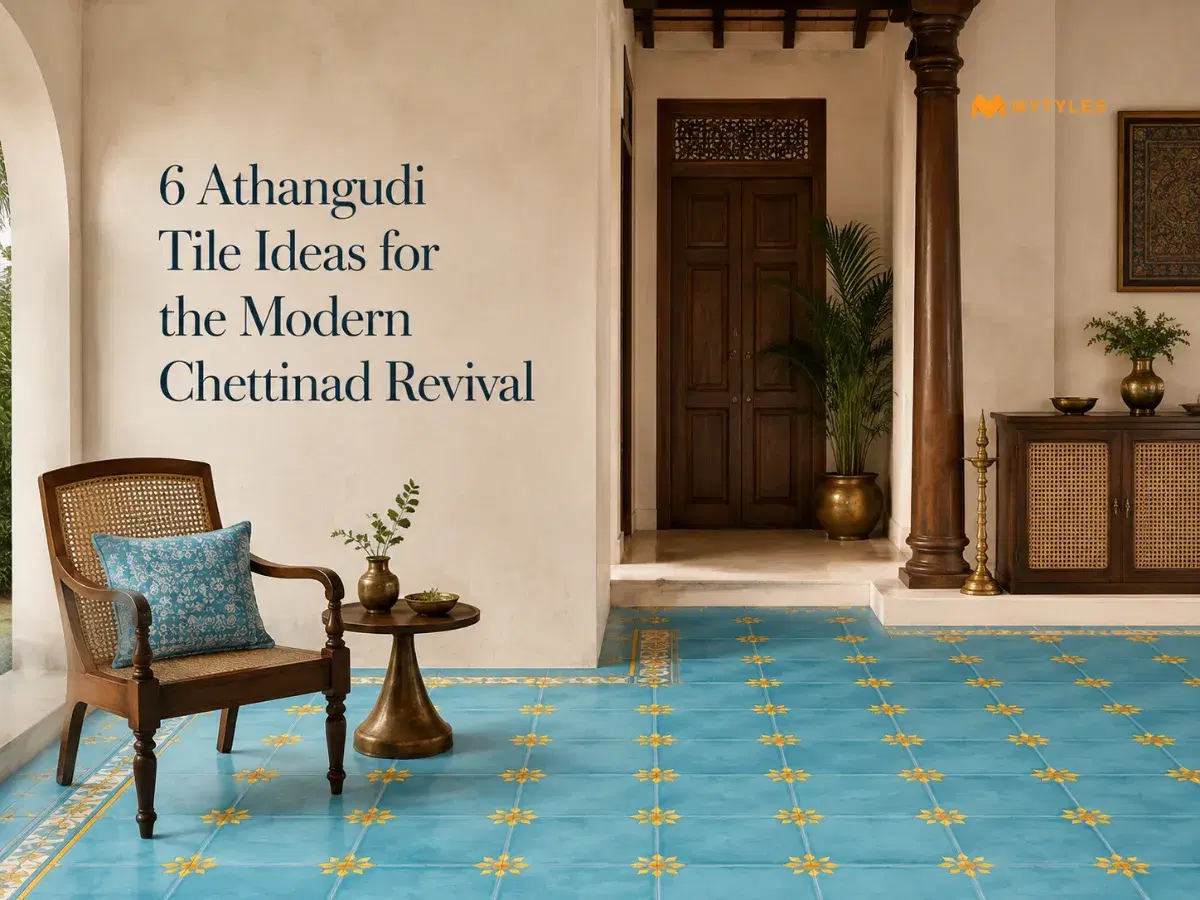
Chettinad houses have always carried a charm that feels distinctly Indian and hard to find anywhere else. Walk through one of the old mansions in Karaikudi or Athangudi, and the aesthetic hits you immediately: patterned Athangudi flooring running through rooms, aged teak pillars, brass fittings catching the light, courtyards open to the sky. Some rooms leaned into bold Chettinad tile designs, with colour and pattern, while others kept to plain single-tone layouts. Either way, these choices helped give each space its own character.
A modern Chettinad revival isn't about recreating that scale; it's about recreating that feeling. Few homes today have a courtyard or a hall to spare. But the sense of walking into something crafted and deliberate doesn't need any of that. It can come through in the details you choose, and Athangudi tiles are one way to bring that character into a modern space.
Here are 6 ways how Athangudi tiles can be used to bring that feeling in, just the way the old houses once did.
Raised Athangudi Step for the Entryway
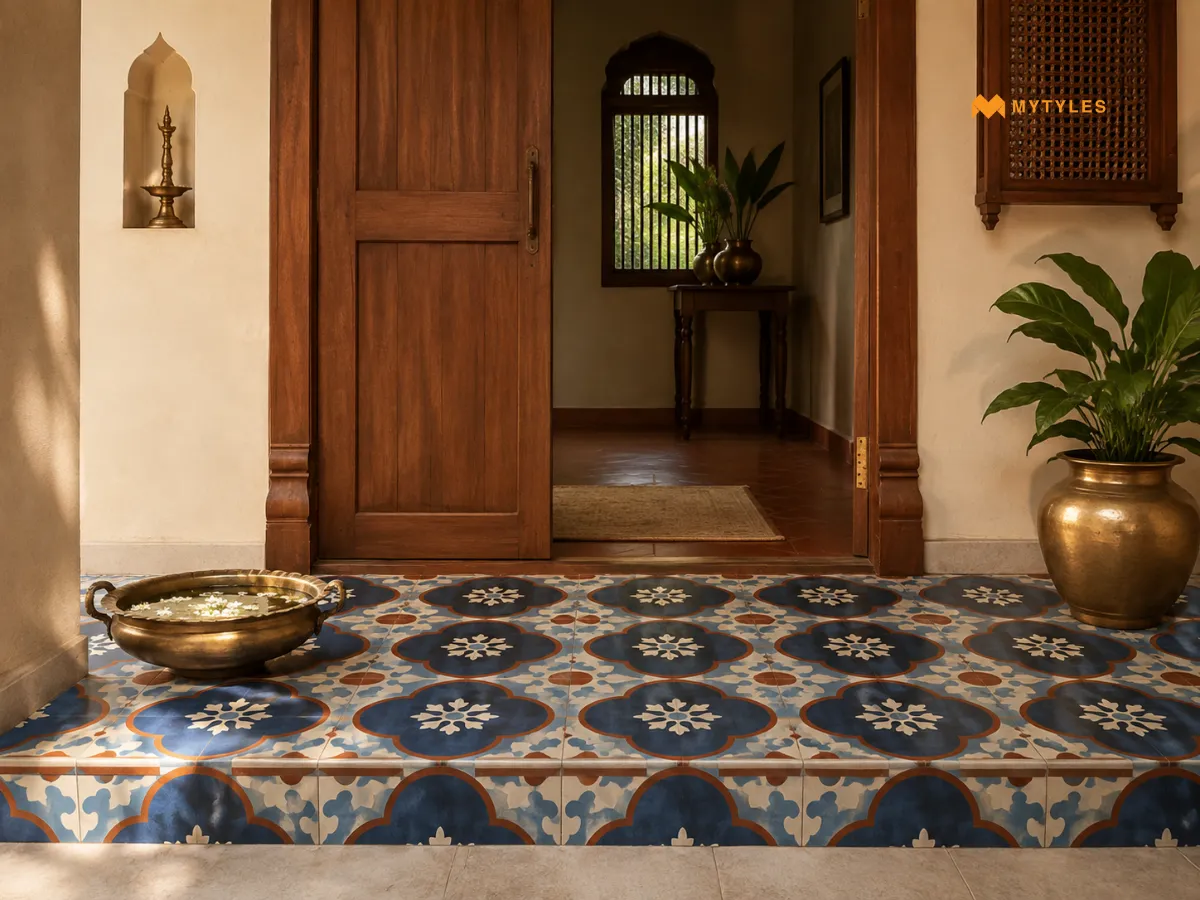
Every old Chettinad house had a thinnai, a raised, tiled platform at the entrance, where guests were welcomed before they stepped inside. It was the first impression of the entire home.
A modern entryway can borrow that same idea. A small raised step or a tiled landing in the foyer gives the front door that same sense of arrival, a pause before you're fully inside.
Even a small foyer works well for this, since it's the first surface a visitor actually sees. Traditional Athangudi tiles in a bold central motif work here, and so does a single-colour design if the rest of the home stays plain. Either way, the entryway sets the tone for what follows.
Design tip: Keep the surrounding walls and door frame simple, so the tile is the first thing anyone notices.
Timeless Athangudi Centre for the Living Room
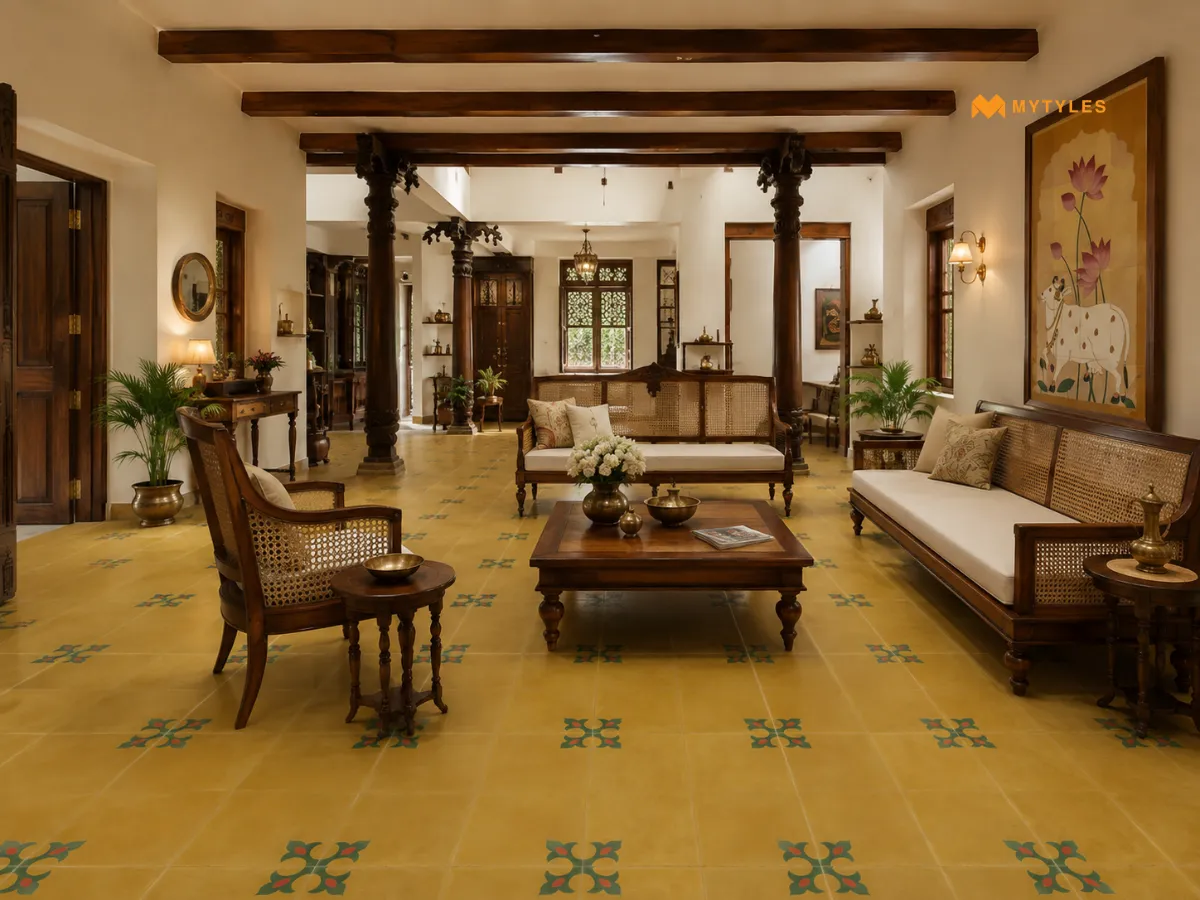
The central hall was the heart of a Chettinad mansion, the room where families gathered and where the patterned floor was often at its boldest. It was designed to hold attention, the kind of room that set the tone for the rest of the house.
A modern living room can take on that same role. Athangudi tiles for hall and living spaces can be laid with a patterned motif at the centre of the floor and a plain or contrasting border around it. This is similar to how old Chettinad halls used one bold pattern in the middle and let the surrounding floor stay neutral. Chettinad floor tiles in warm reds, indigo or mustard work well in a larger living room, while a patterned border around a quieter centre can suit a smaller one. The result is a floor that gives the room a natural focal point without making the whole space feel busy.
Design tip: Keep furniture placement loose around the patterned centre, so the floor stays visible rather than getting boxed in.
Crafted Staircase with Athangudi Risers
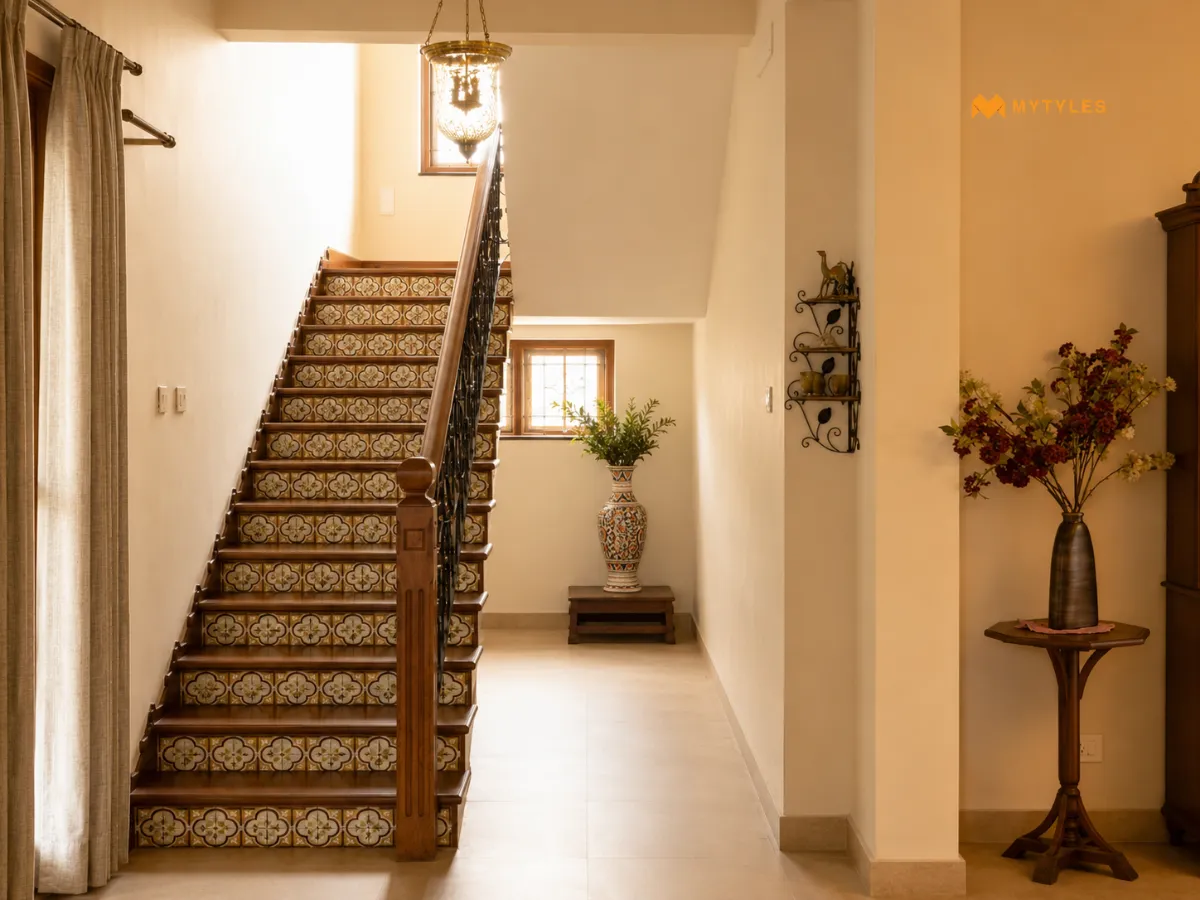
Chettinad mansions were known for their staircases, often made from solid teak, with detailing that added personality even to a simple climb.
A modern staircase can bring in that same detail through tiles instead of timber. Athangudi tile patterns work well on the risers, the vertical face of each step, while the tread stays plain. This keeps the pattern away from regular foot traffic while still letting it catch the eye on the way up. A single motif repeated across each riser also creates a continuous pattern along the staircase, rather than making every step feel different.
Design tip: Use the same Athangudi design across every riser, letting one pattern run through the staircase.
Quiet Patterned Passage with Athangudi Flooring
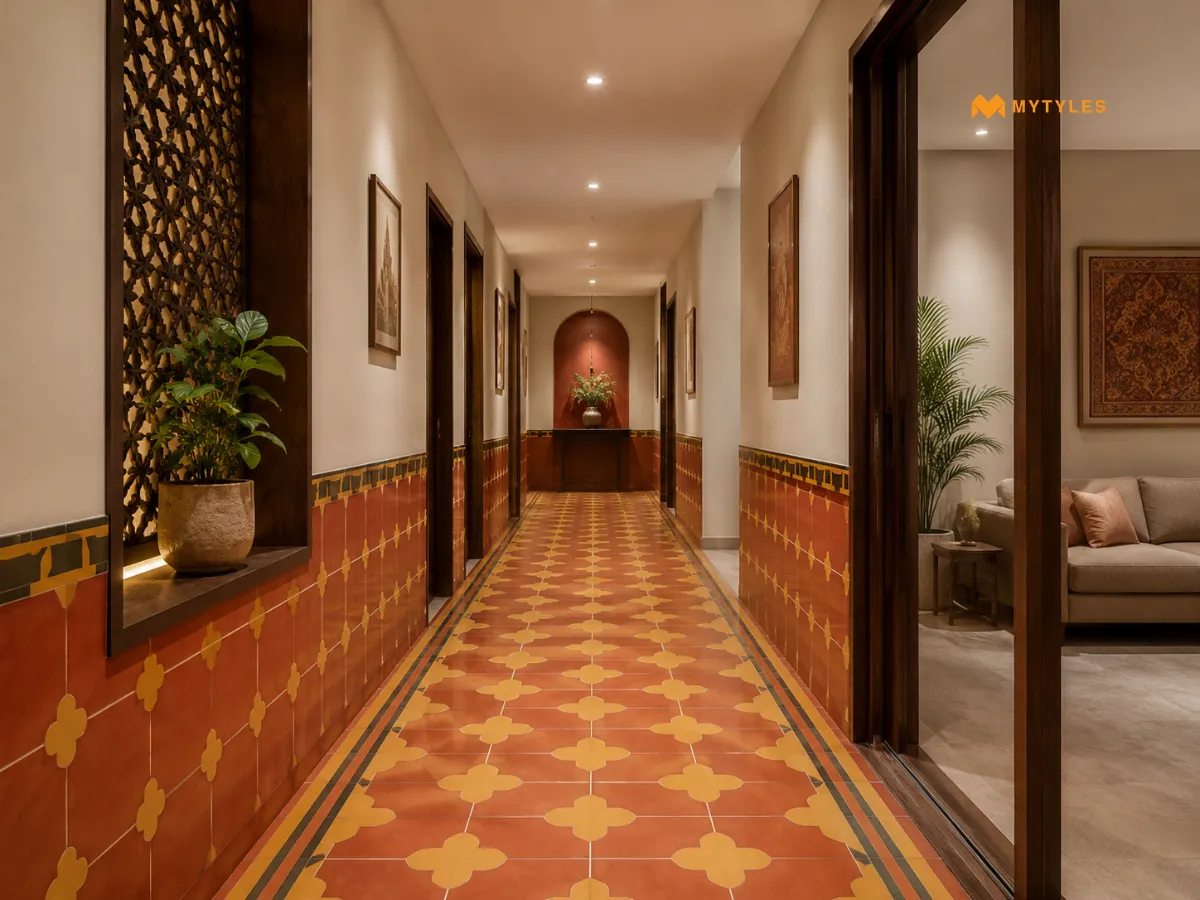
Chettinad homes were built as a sequence of rooms, connected by long internal passages that carried you from one part of the house to another. These passages were not just a way to get from one room to the next. Patterns, borders and tiled walls gave them their own character.
A modern passage can bring in that same detail. Athangudi flooring can run across the corridor, with a border along the edges to frame the walkway. In many Chettinad homes, the tiling didn't stop at the floor. Athangudi tile patterns also ran partway up the walls, and the same idea can work in a modern passage, adding detail to a narrow space without making the entire wall busy.
Design tip: Match the Athangudi pattern on the floor with the wall tiles to carry the design through the passage.
Warm Chettinad Touch in the Kitchen
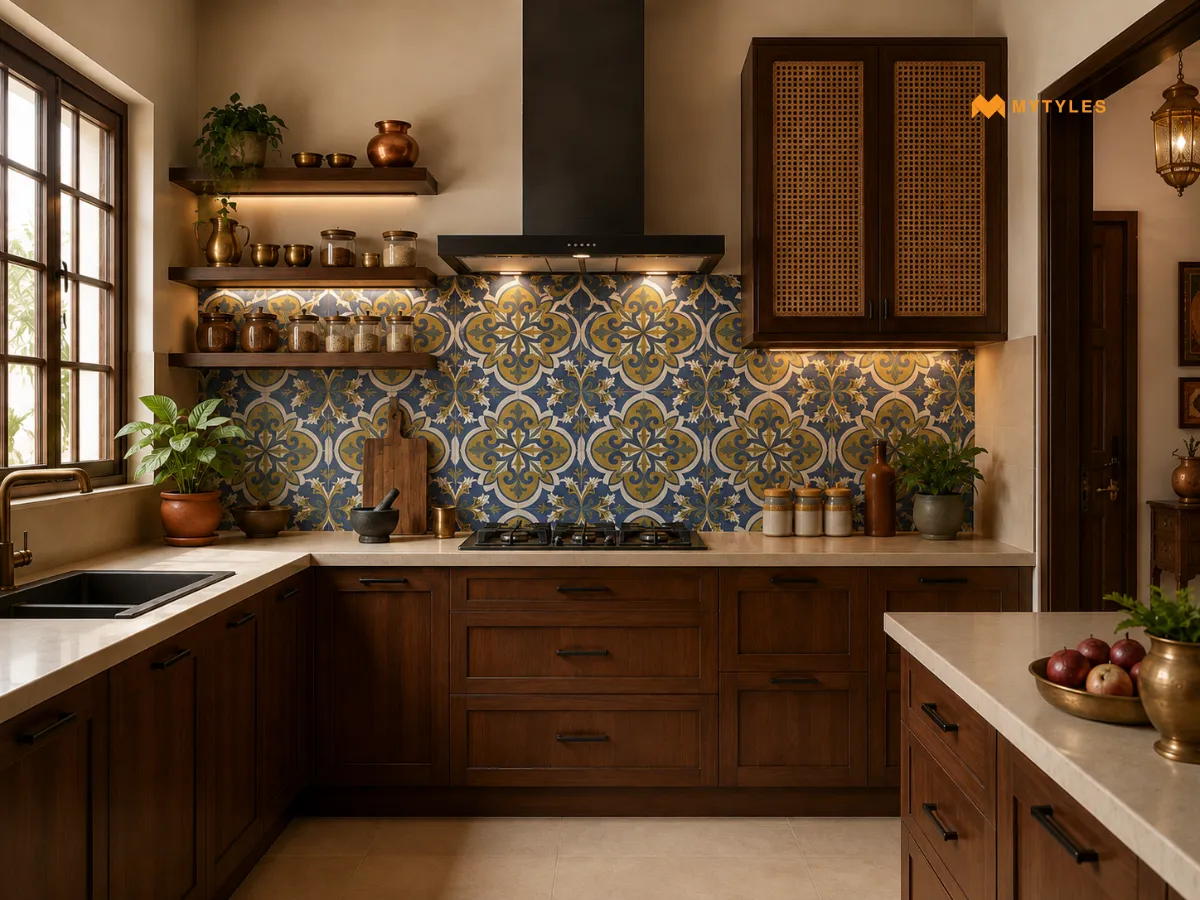
Chettinad kitchens were practical, but they were not plain. Colour, pattern and tiled details brought warmth into the space, even though it was used for everyday cooking. It still carried the character that ran through the rest of the house.
A modern kitchen can bring in that same idea with Athangudi tiles. Athangudi tiles for kitchen spaces can be used as a backsplash behind the counter or stove, bringing a touch of Chettinad pattern into the room. Warm shades such as terracotta, mustard and red can add colour, while a simpler Athangudi tile pattern can keep the look more restrained.
Design tip: Choose an Athangudi pattern that picks up a colour already used in the kitchen for a more connected look.
An Earthy Athangudi Sit-Out for the Balcony
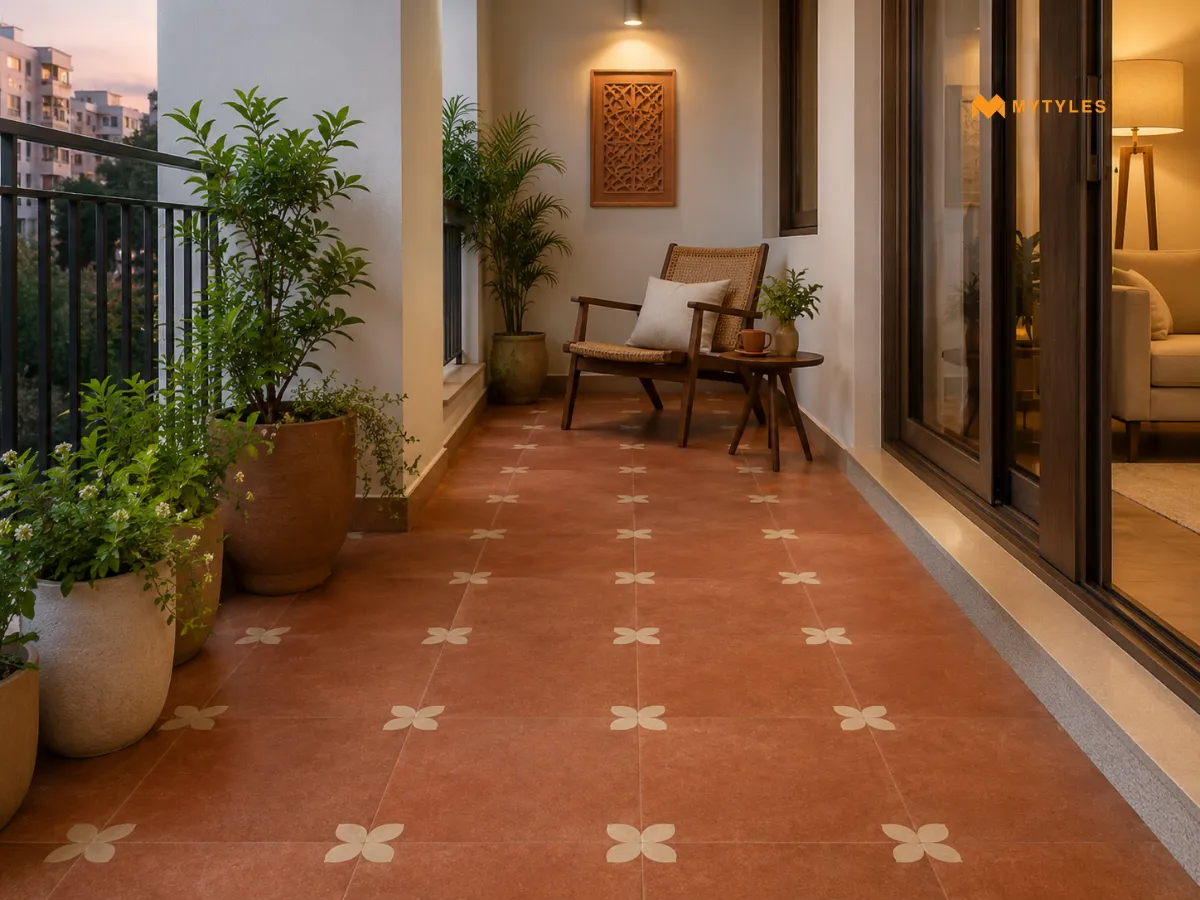
Chettinad houses always kept a connection to the outdoors, whether through an open courtyard at the centre of the home or a verandah at the entrance. These weren't extra spaces. They were where the household actually spent its evenings, catching the breeze, watching the rain, or sitting with family.
A balcony or sit-out can bring that same feeling into modern homes. Athangudi tiles for home in earthy shades like terracotta and warm brown can give the space a warm, rooted feel. Used alongside simple furniture and a few plants, these heritage tiles for modern homes can bring a little of the Chettinad feel into a smaller outdoor space.
Design tip: Choose a muted Athangudi pattern for a smaller balcony, and let the rest of the space stay simple.
Bringing the Chettinad Revival Home
Athangudi tiles bring more than colour and pattern to a space. They carry a sense of place, craft and history that is still recognisable even when the setting around them is completely modern. Used as a floor, a border, or a smaller detail, they can bring some of the character of old Chettinad houses into spaces that look and feel very different today.
At MyTyles, you can explore traditional Athangudi tiles and heritage floor tiles in different patterns, colours and sizes to find what works for your space. Browse the collection online, or visit the nearest MyTyles experience centre to see the tiles in person before you decide.

What Are Athangudi Tiles?

Athangudi tiles are handmade cement tiles traditionally associated with the Chettinad region of Tamil Nadu. They are known for their patterned surfaces, earthy colours, and distinctive handcrafted look. Each tile is made using a traditional process, giving the finished surface slight variations that add to its character. Today, they are used in both traditional and contemporary interiors.
Are Chettinad Athangudi Tiles Suitable for Modern Homes?
Chettinad Athangudi tiles can bring traditional patterns and handcrafted character into contemporary spaces without making them feel overly traditional. Use them selectively on floors, stair risers, kitchen backsplashes, or smaller decorative areas. Pairing Chettinad Athangudi tile designs with simple furniture, neutral walls, and natural materials helps balance the detailed patterns while keeping the overall space modern and comfortable.
Where Can Athangudi Tiles Be Used?
Athangudi tiles flooring can be used in living rooms, foyers, passages, and other suitable areas, depending on the tile specifications. They can also be used as smaller wall details or decorative sections. For Athangudi tiles laying, the surface should be properly prepared and level, while the layout should be planned beforehand to keep patterns and borders aligned.
Are Plain Athangudi Tiles Suitable For Modern Interiors?
Plain Athangudi tiles work well when you want the character of the material without a strong pattern taking over the space. Their simpler surface can create a quieter base for contemporary interiors. They can also be paired with patterned Athangudi tiles in smaller sections, giving the room a traditional touch without making the entire floor feel heavily decorated.
What Should You Know About Athangudi Tiles Price And Cost?
Athangudi tiles price can vary depending on factors such as size, pattern, material and finish. Athangudi tiles cost may also differ between traditional handmade options and tiles inspired by the Athangudi style. When planning a project, consider the number of tiles required, installation costs and additional materials rather than looking at the per-tile price alone.
How Are Athangudi Tiles Laid?
Athangudi tiles laying requires a properly prepared and level surface, with the installation method suited to the specific tile and application. Pattern placement should be planned before fixing, particularly when using repeating motifs or borders. This helps keep the design aligned across the floor. Following the manufacturer's installation guidance is also important for the finished result.
What Are Athangudi Palace Tiles Used For?
Athangudi palace tiles are associated with the elaborate patterned floors found in grand Chettinad residences. Their detailed designs can still work in contemporary spaces when used selectively. A central motif, border or smaller tiled section can bring this character into modern Chettinad interiors without recreating an entire traditional floor. This approach keeps the Chettinad flooring design more restrained.

ABOUT THE AUTHOR
Sragvi Senthil Kumar
With a background in Psychology and Journalism, my interest in writing began with newspapers and magazines, where I developed a passion to turn facts into engaging stories. Along with a keen interest in writing, I've had a creative eye for style, art and design. Over time this interest grew into exploring lifestyle, architecture, interiors and tiles for more than just their aesthetics. Now I bring together research and creativity to create clear, engaging content for homeowners, architects and interior designers.
Latest Blogs By MyTyles