Inspiration Gallery
Blog
Tile Calculator
08065423741



.svg)


Bathroom Wall Tiles: Should You Tile to the Ceiling or Stop Halfway?
ByHeena Dhiman

Tue , Sep 15 , 2026

Read Time: 5 Min


 Copied!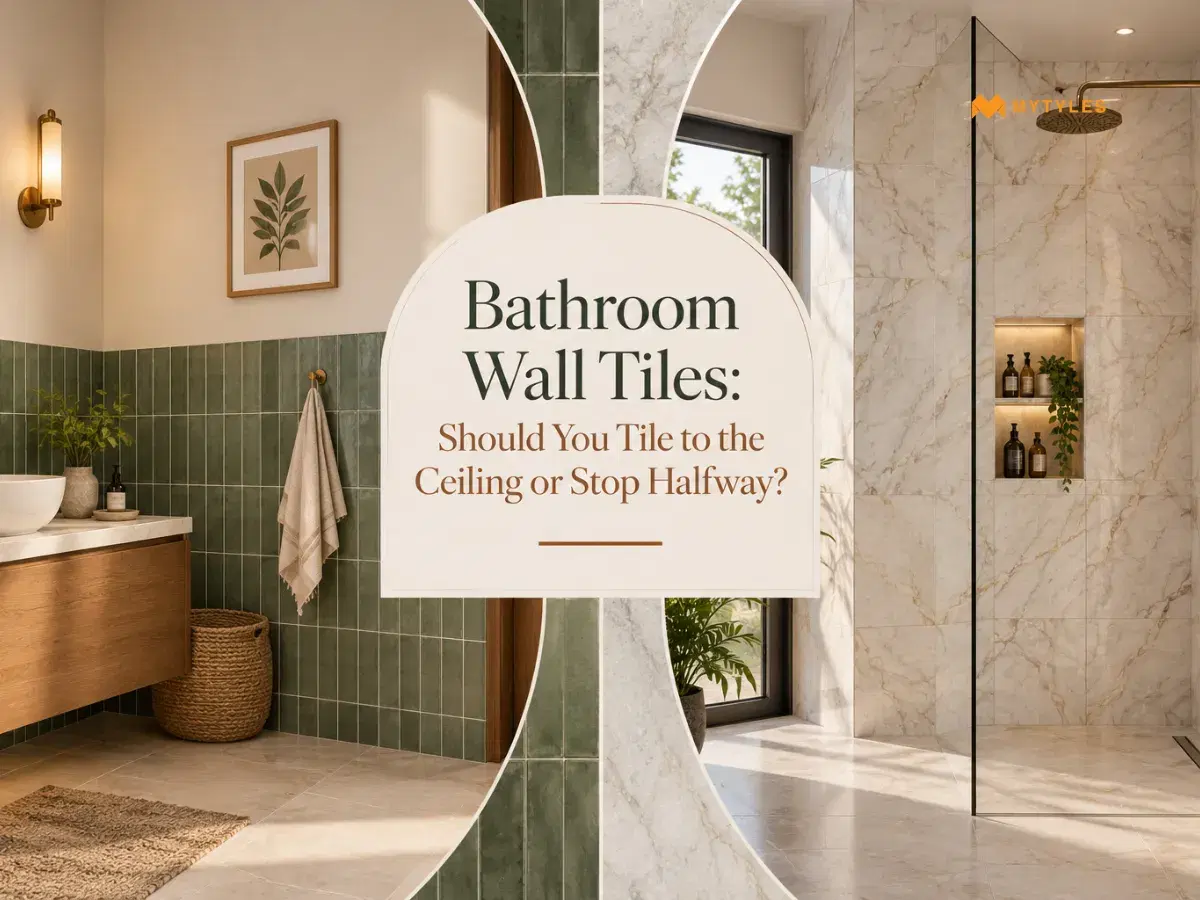
You have picked the tiles. You know the colour, the size, the finish. And then, somewhere between the showroom and the actual installation, the question shows up: How high do the tiles actually go?
It sounds simple. Yet, it is not. The decision to take your bathroom wall tiles all the way to the ceiling or stop at a midpoint changes how the room looks, how it feels to be in, and how easy it is to maintain over time. However, the suitable height depends on your bathroom, the tile you choose, and how the space is used.
This blog walks you through both options, the practical side and the design side, so you can make an informed call for your space.
The Case for Tiling All the Way to the Ceiling
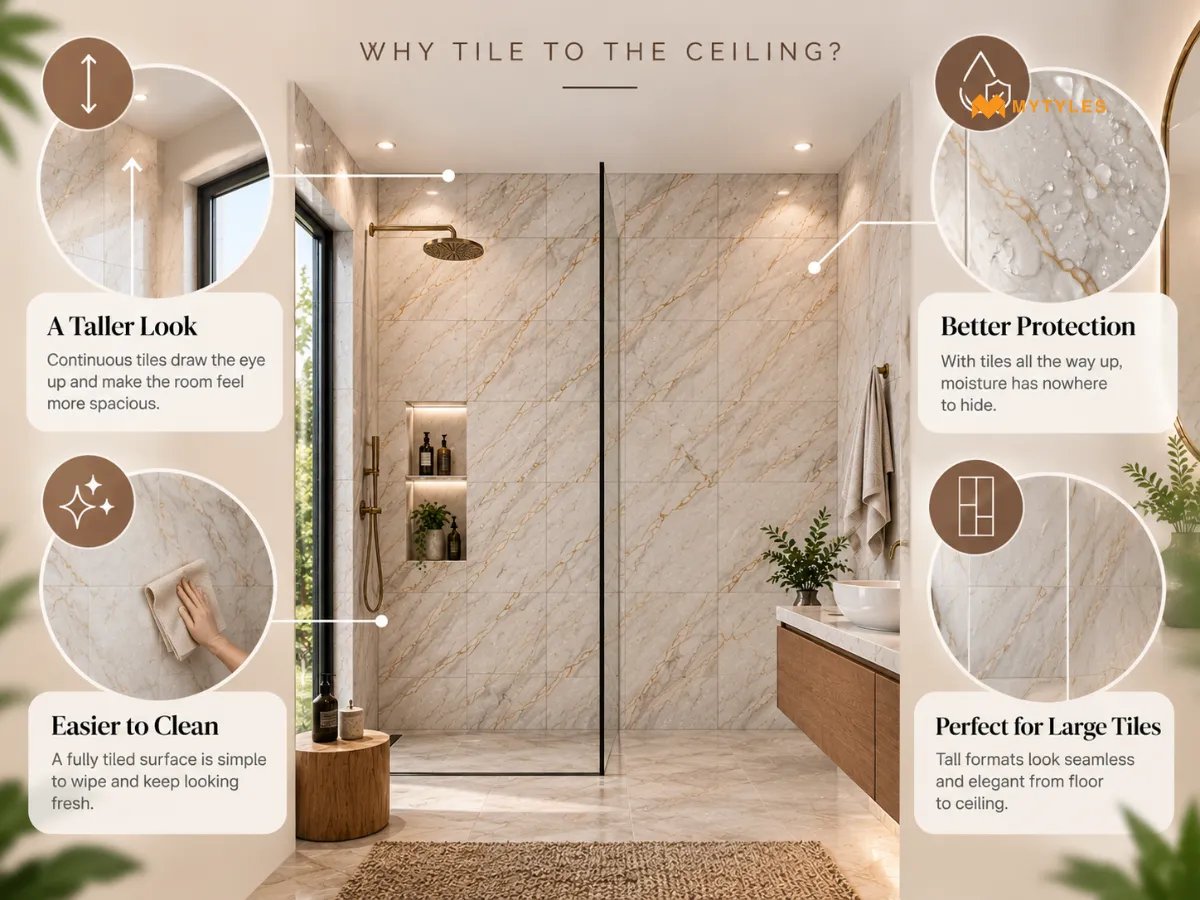
Taking your bathroom wall tiles to ceiling height is the more committed choice, and it comes with some genuinely strong reasons to go for it.
It Makes the Room Feel Taller
Vertical surfaces without interruption draw the eye upward. When fully tiled bathroom walls run from floor to ceiling, the room gets a visual
stretch that is hard to achieve any other way. In bathrooms where the ceiling is already high, this approach feels naturally grand. In compact spaces, it removes the visual break that cuts a room in half, making it feel more spacious than it actually is.
It Reduces the Amount of Exposed Painted Wall
Steam and humidity can affect different bathroom surfaces, especially where ventilation is limited. Painted walls may require suitable bathroom paint and regular care depending on the level of moisture and condensation in the space.
With floor-to-ceiling bathroom tiles, less painted wall is exposed to these conditions. Also, in shower areas, shower tiles to ceiling height can help reduce the amount of painted surface exposed to regular splashes and moisture. However, tiles and grout alone do not waterproof the
wall. Proper waterproofing, ventilation, and installation are also important.
Cleaning Can Be Easier to Manage
A fully tiled bathroom has less painted wall to maintain. Tile surfaces can usually be wiped down, but cleaning needs can vary depending on the tile finish, surface texture, grout joints, water quality, and residue. The cleaning method and products used can also affect how the surface is maintained.
It Works Well With Tall Formats
Large-format tiles can suit full-height bathroom walls, but the final look depends on the wall height, tile size, cuts, orientation, pattern, fixtures, and grout joints. When planning your bathroom wall tile design, also check that the selected tile is suitable for the wall and consider how it will fit across the available space.
The Case for Stopping Halfway
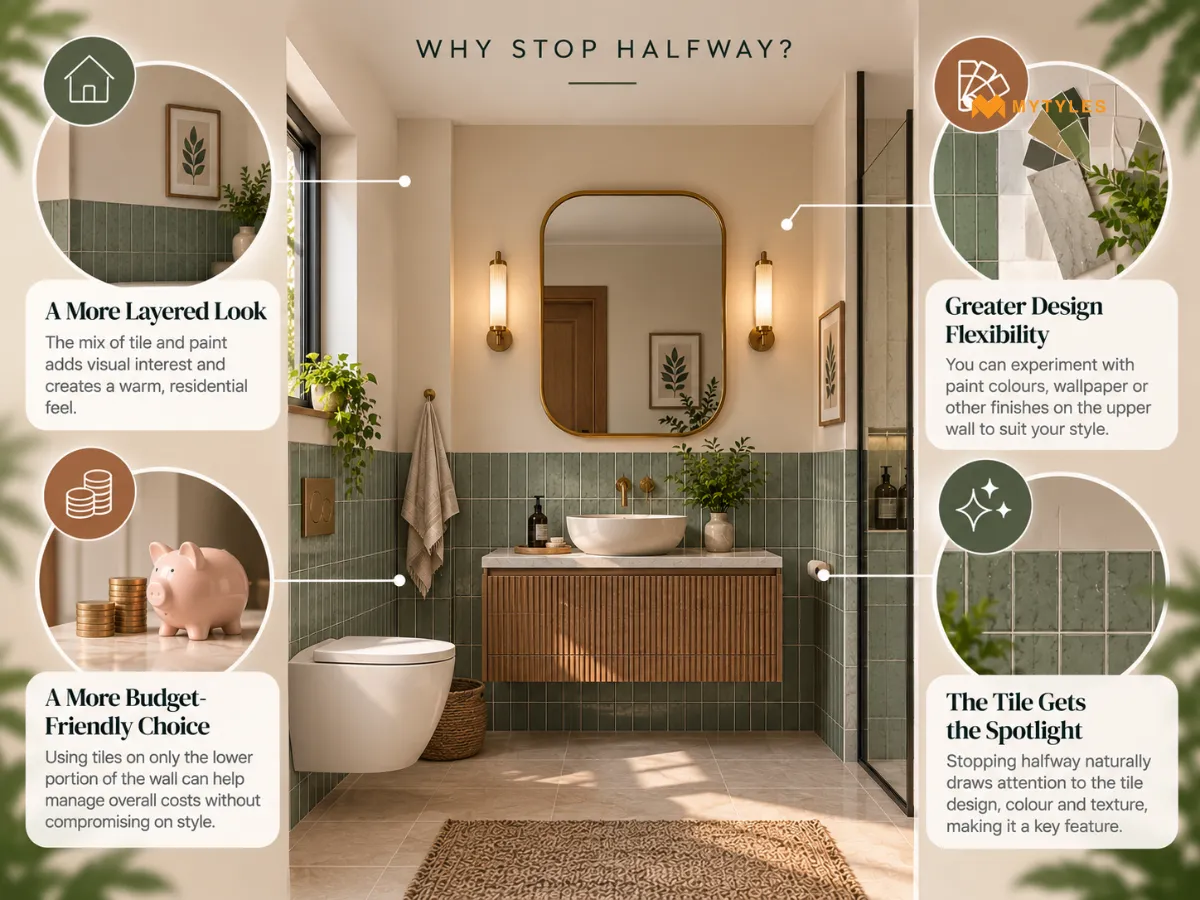
The halfway approach, where half-wall bathroom tiles cover the lower portion of the wall and the upper section is left as painted plaster or some other finish, is not a compromise. Done properly, it is a design choice with its own clear advantages.
It Can Feel More Layered and Residential
Fully tiled bathrooms create one continuous wall finish, while stopping the tiles halfway allows you to combine tile and paint in the same space. This can add contrast between the upper and lower parts of the wall. You can also match the painted wall above the bathroom tiles to the tile colour, or use a different shade, depending on the look you prefer.
The Budget Difference Is Real
Covering less wall area means fewer tiles, less adhesive, and a shorter installation time. Depending on the bathroom tile height you choose for the tiled section, and the size and cost of the tile itself, stopping at the halfway mark can reduce material costs noticeably. If budget is a factor, this matters. You can invest in a more premium tile for the lower section and use a simple painted finish above without the total cost running too high.
It Gives You More Design Flexibility
Tiles are relatively permanent. Paint is not. When you stop the tile at a midpoint, the area above becomes something you can refresh over time without touching the tile work. You can change the colour of the upper wall in an afternoon. Changing the tiles for washroom wall areas is a much bigger undertaking. For people who like to update their interiors periodically, this flexibility is genuinely valuable.
It Draws Attention to the Tile Itself
When half-tiled bathroom walls are done well, the tile zone becomes a visual anchor in the room. The eye is directed to the tiling rather than being distributed across the entire wall. If you have chosen a tile with an interesting colour, pattern, or texture, stopping it at a deliberate height can actually give it more presence than tiling the full wall would.
How High Should Bathroom Wall Tiles Actually Go?
If you are opting for the halfway approach, how high should bathroom wall tiles go? There is no fixed height. Around 1.2 metres and 1.5 metres from the floor can be used as design reference points. A lower height of around 90 cm to 1 metre is another option, depending on the bathroom layout and the look you want.
At the same time, there is no single standard bathroom wall tile height for a halfway treatment. The tile line can be planned around features such as a mirror, window, or other horizontal elements in the room. Thinking through your bathroom wall tile layout before installation can help you decide where the tile line should sit in relation to these features and other fixtures.
In a shower enclosure, the required tile height depends on the shower position, areas exposed to water, wall construction, and waterproofing system. When choosing wall tiles for a washroom, consider these factors before deciding how high the tiles should go. Tiles and grout alone do not waterproof the shower area, so proper waterproofing and installation are also required.
Factors That Should Influence Your Decision
Before settling on an approach, it helps to think through a few factors that shape your bathroom wall tiling ideas and ultimately decide which height works best for your space.
The Size of Your Bathroom
In a compact bathroom, tile halfway up the bathroom wall height can feel proportionate and considered. But if that halfway line falls in an awkward position, the room can end up feeling shorter. In small spaces, tiling higher, even if not all the way to the ceiling, tends to work better than stopping too low.
The Tile You Have Chosen
Some tiles look better in a contained section. Small format geometric or patterned tiles, for example, can feel overwhelming if they cover every surface from floor to ceiling. Large, quiet tiles in a neutral finish often benefit from the full wall height. Consider whether your bathroom wall tiles' pattern or finish calls for a contained display or an expansive one.
How the Bathroom Is Used
A bathroom that functions primarily as a shower room or a heavily used family bathroom has different needs from a powder room that sees limited water exposure. In high-moisture spaces, the practical argument for bathroom tiles up to ceiling height is much harder to ignore.
So, Which One Is Right for You?
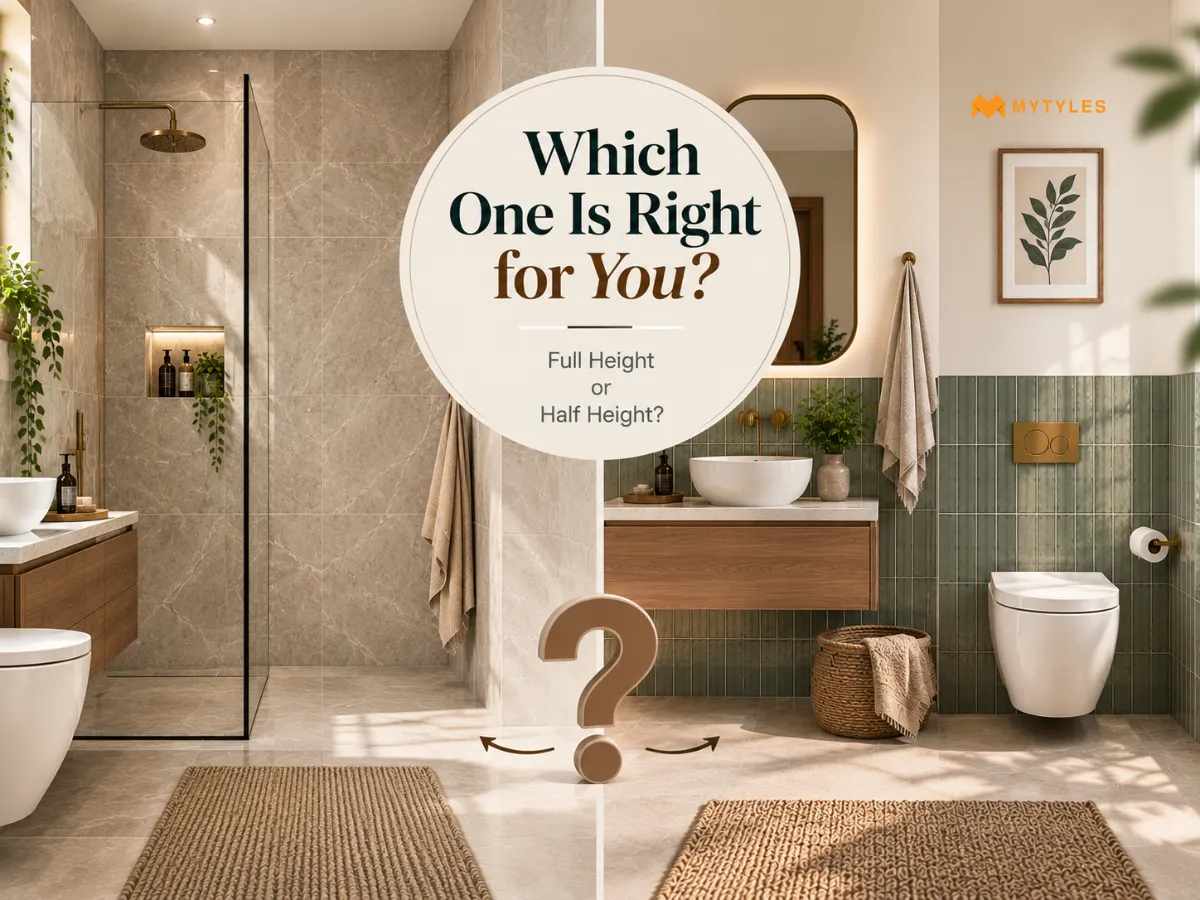
There is no universal answer. Both full wall tiles versus half wall tiles approaches can look and perform well when they are applied thoughtfully. Full height bathroom tiles can work well in shower-heavy bathrooms, modern interiors, and spaces where more of the wall is regularly exposed to water or moisture. Half-height bathroom tiles, on the other hand, suit spaces where warmth, budget flexibility, or a layered design feel take precedence.
What matters most is that the decision matches your space, your tile, and the way you actually use the room. Think about the moisture levels, the ceiling height, the scale of your tile, and how much the upper wall will read once the lower portion is covered. When those pieces align, the right height becomes obvious.
Find the Right Tiles at MyTyles
Once you have settled on your tiling approach, the next step is finding a tile worth committing to. At MyTyles, the range of bathroom wall tiles covers everything from sleek large-format options for full-height tiling to distinctive patterned tiles that deserve a dedicated feature zone. Whether you are planning to tile bathroom walls to the ceiling or create a beautifully considered halfway look, there is a tile in the collection that suits the brief. Visit the MyTyles experience centre or explore the range online to start narrowing it down.

How High Should Bathroom Wall Tiles Go?

There is no single rule for bathroom wall tile height. A partial-height treatment may extend around 1.2 to 1.5 metres from the floor, depending on the layout and areas exposed to water. In shower areas, the required tile height depends on the shower position, wall construction, waterproofing system, and overall bathroom design.
Is It Better to Tile to the Ceiling in a Bathroom?
Tiling to the ceiling can give the walls a more continuous finish and reduce the amount of painted surface in the bathroom. It can be useful in areas regularly exposed to water or steam. Partial-height tiling is another option for areas with less direct water exposure. The choice depends on the bathroom layout, wall conditions, and preferred design.
What Is the Standard Bathroom Wall Tile Height?
There is no universal standard. For a halfway treatment, 1.2 to 1.5 metres is a commonly considered range, while full-height tiling extends to the ceiling. The right choice depends on how the bathroom is used, areas exposed to water, tile size, room proportions, and the look you want to achieve.
Can I Leave the Wall Above the Tiles Painted?
Yes. The wall above the tile line can be painted where the surface and location are suitable for it. Choose a paint intended for bathroom conditions and follow the manufacturer's application guidance. The paint colour can coordinate with the tiles or provide contrast, depending on the look you want. It also allows the painted section to be updated later without changing the tiles.
Should Shower Tiles Always Go to the Ceiling?
Not necessarily. Shower tile height depends on the bathroom design, shower position, and areas exposed to water. Tiles may extend above the shower head or continue to the ceiling for a more continuous look. Remember that tiles and grout alone do not waterproof a shower area. A suitable waterproofing system and correct installation are also required.
Does Tiling to the Ceiling Make a Small Bathroom Look Bigger?
It can make a small bathroom appear taller or more continuous by reducing the visual break between the tiled wall and ceiling. Tile colour, size, pattern, grout lines, lighting, and the overall layout can also affect how spacious the room feels. Full-height tiling is therefore one design option rather than a guaranteed way to make a bathroom look bigger.
What Tile Size Works Best for Full-Height Bathroom Walls?
There is no single tile size that works best for every full-height bathroom wall. Large-format tiles, such as 600x1200 mm, can create fewer grout joints than smaller formats. Smaller tiles can also be used for patterned or detailed surfaces. Check the tile's wall suitability, dimensions, substrate requirements, installation method, and manufacturer guidance before selection.

ABOUT THE AUTHOR
Heena Dhiman
With a background in fashion design and over 5 years of writing experience, I bring a creative and detail-oriented eye to home and design content. My journey began with aesthetics, colours, and visual storytelling, which gradually led me to writing across lifestyle, finance, home improvement, and resource management. Over time, I discovered a strong interest in tiles and interiors, where my design background helps me understand how small choices can shape the feeling of a home. Through my content, I aim to make home design decisions easier, clearer, and more enjoyable for readers, helping them feel confident while creating spaces that reflect their style and everyday needs.
Latest Blogs By MyTyles