Inspiration Gallery
Blog
Tile Calculator
08065423741



.svg)


10 KitKat Tile Designs for Stylish Kitchen and Bathroom Walls
ByNandana Priya

Tue , Aug 11 , 2026

Read Time: 5 Min


 Copied!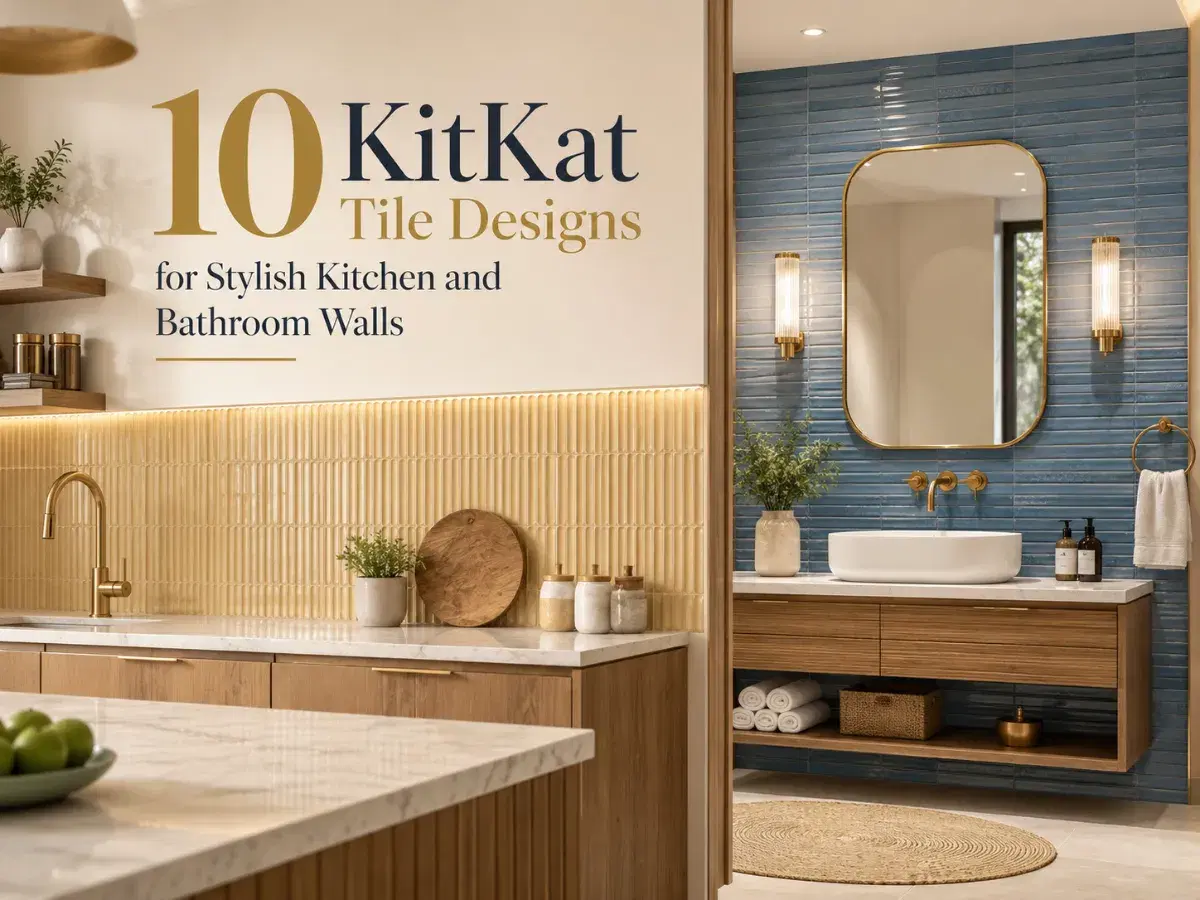
Most of you would have guessed it right: yes, the name of KitKat tiles comes from a chocolate bar, and once you see it, the resemblance is hard to miss. Long, narrow strips lined up in neat rows, the same rhythm that made the chocolate recognisable from a glance. Kitkat tiles borrow that shape and bring it to a kitchen or bathroom wall, turning a surface people usually overlook into one with some actual character.
When they are chosen right, the tiles work quietly in the background of daily life too, taking on splashes near the stove, steam from long showers, and the wear that builds up without anyone noticing.
This blog walks through KitKat tile designs that suit kitchen and bathroom walls, along with a few things worth knowing before you pick one for your own space.
Why KitKat Tiles Work Well in Kitchens and Bathrooms
There is a reason KitKat tiles show up so often in kitchens and bathrooms; their slim shape adds detail to a wall. They work just as well tucked into a small section as they do covering a larger feature wall, depending on how the space is laid out.
Part of what makes the format adaptable is that it was never built around one fixed look. The narrow strip format brings a bit of visual rhythm to a wall, something a kitchen backsplash behind a hob or a bathroom wall near a shower can both use.
The 10 KitKat tile designs that you can consider for your bathrooms and kitchens are as follows.
Classic White KitKat Tiles for a Bright Kitchen Wall
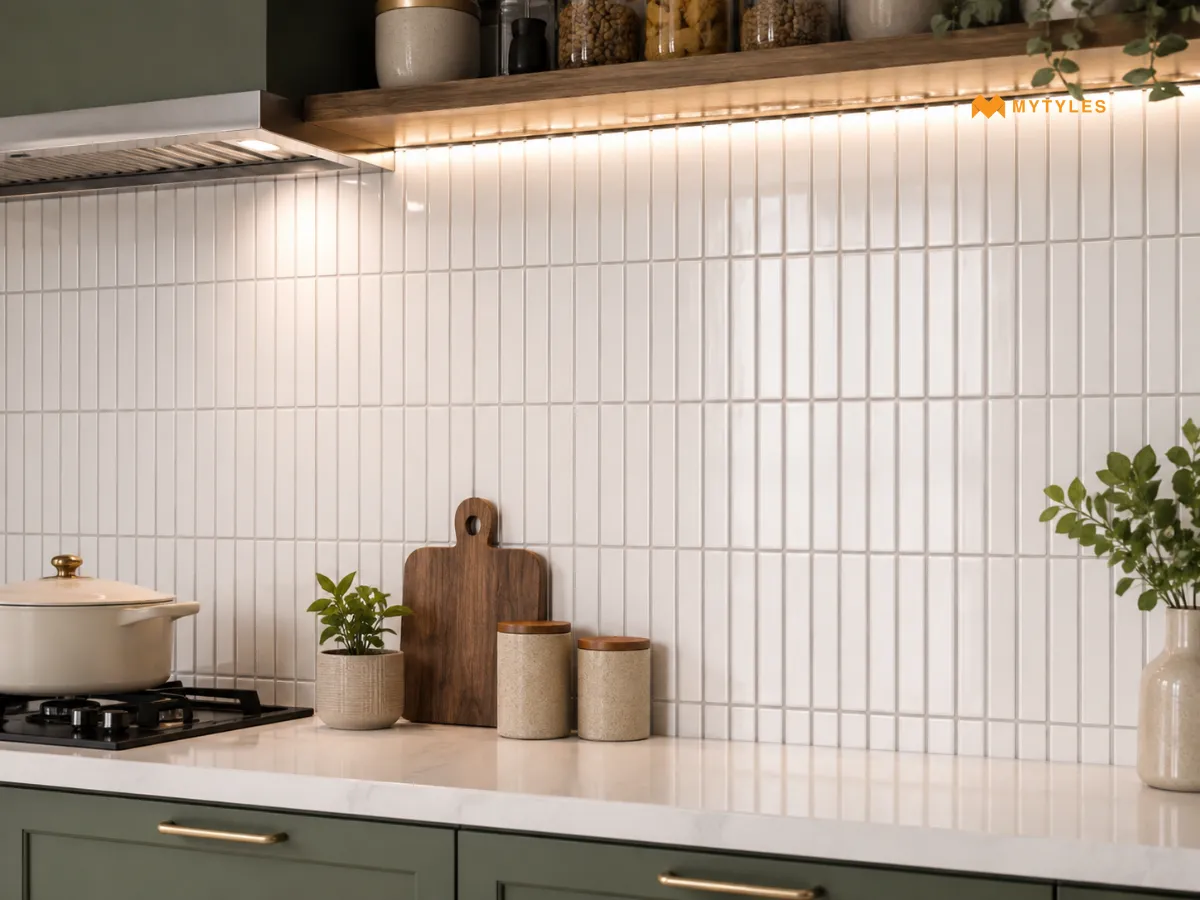
There's a reason white kitchen tiles keep showing up as the go-to choice; it lets the tile's shape do the talking. A glossy wall tile adds to that, catching the light and making each thin strip stand out clearly against the plain background, giving the wall a quiet bit of texture instead of just looking flat. As kitchen walls see regular use, using a suitable tile matters here.
A Bold Two-Tone KitKat Tile Design for Bathroom Feature Walls
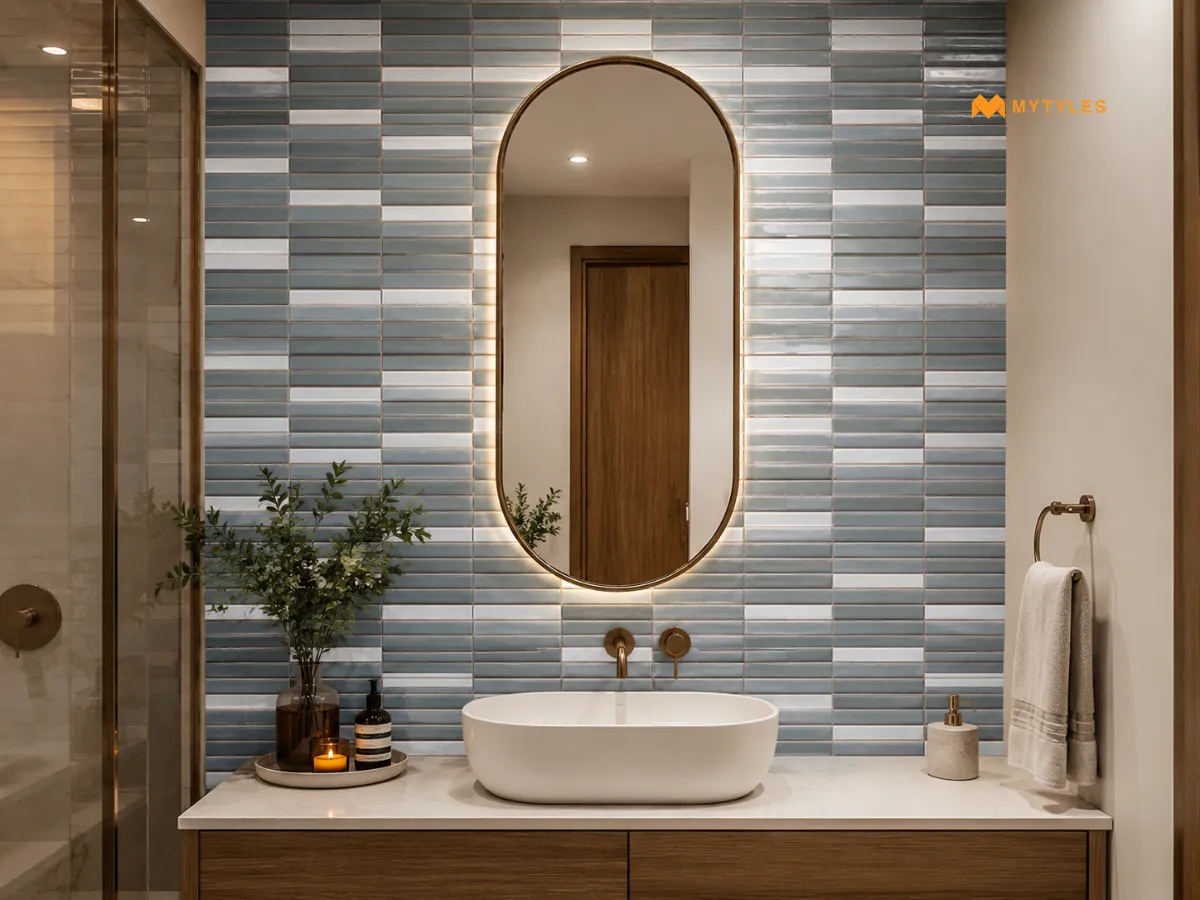
Sometimes you want a wall that grabs attention the moment someone walks in, and two-tone does exactly that. Mix two related colors across separate sections, alternate the rows, or ease from one shade into the other; any of these can turn a plain bathroom wall into one of the more eye-catching feature walls. White and blue, and cream and brown KitKat tiles for bathrooms can work by creating a clean appearance.
Sage Green KitKat Tiles for a Fresh Bathroom Accent
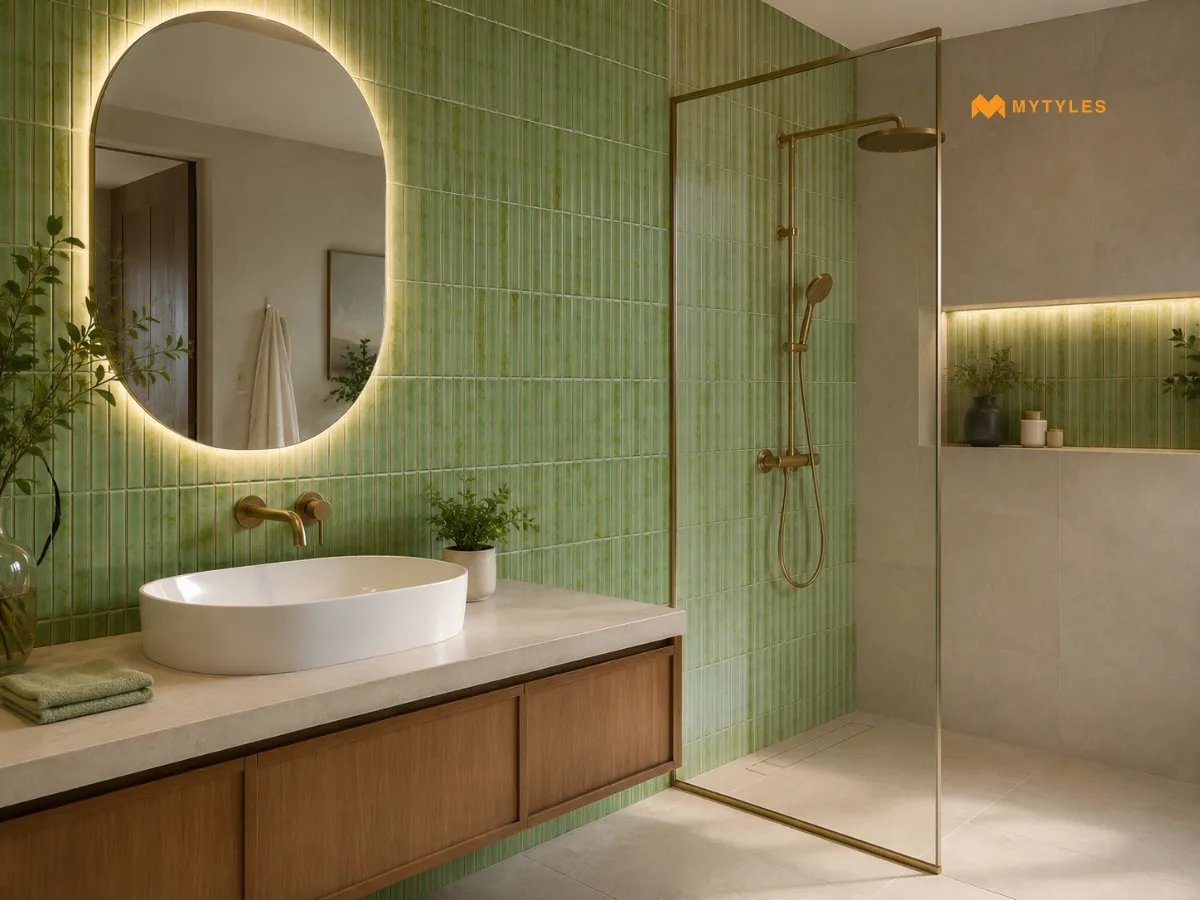
Sage green sits in that comfortable space between a plain white wall and a bold statement color, present enough to notice and calm enough to live with every day. With a matt finish, they tend to create a soft look. The green bathroom tiles can pair easily next to wooden cabinets, beige counters, white fittings, and brass hardware.
Deep Blue KitKat Tiles for a Striking Vanity Wall
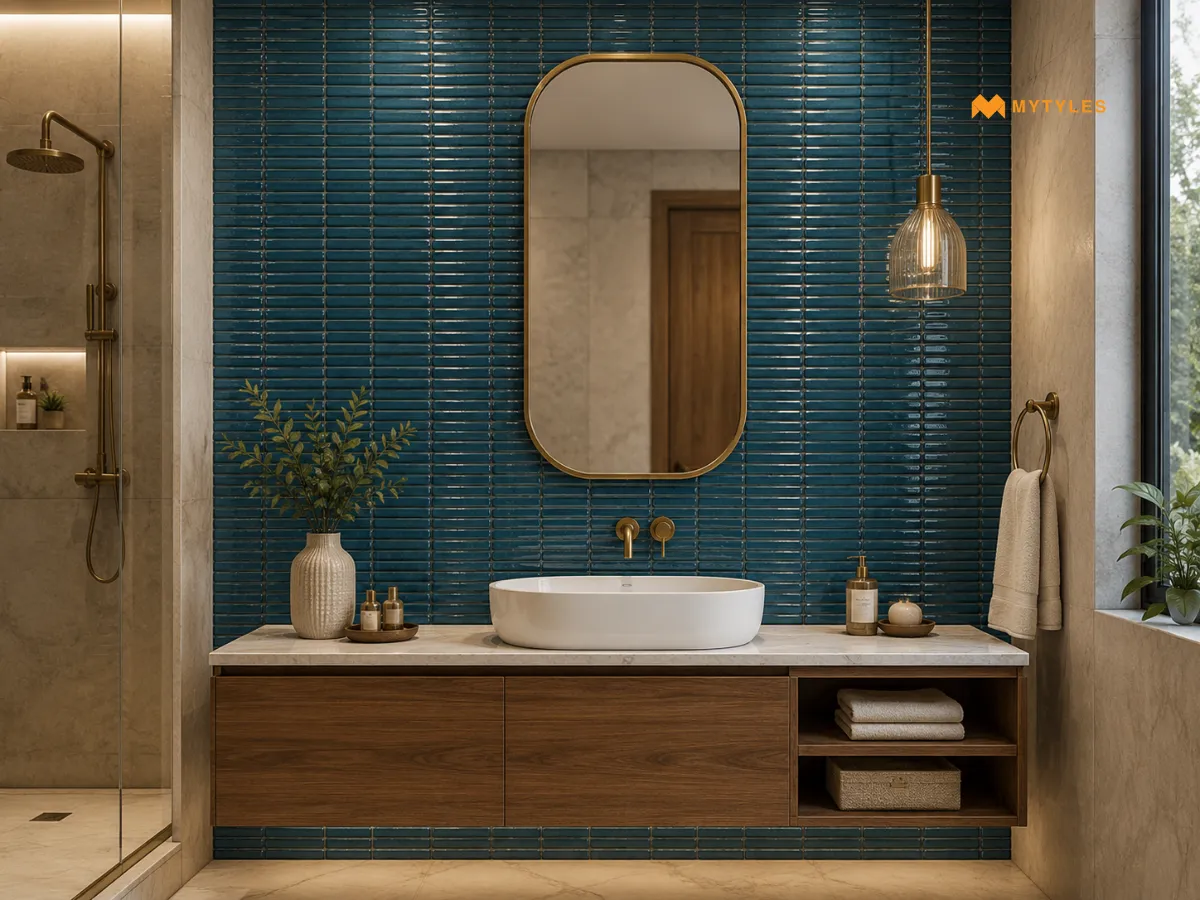
Not every wall needs to fade into the background, and a hob, sink, or vanity is often exactly where a little contrast pays off. Deep blue finger tiles do that job well, adding a defined accent without needing to take over the whole wall. It also works nicely in a shower niche or a bathroom vanity wall, standing out beside lighter cabinets and fittings.
Terracotta KitKat Tiles for a Warm Bathroom Wall
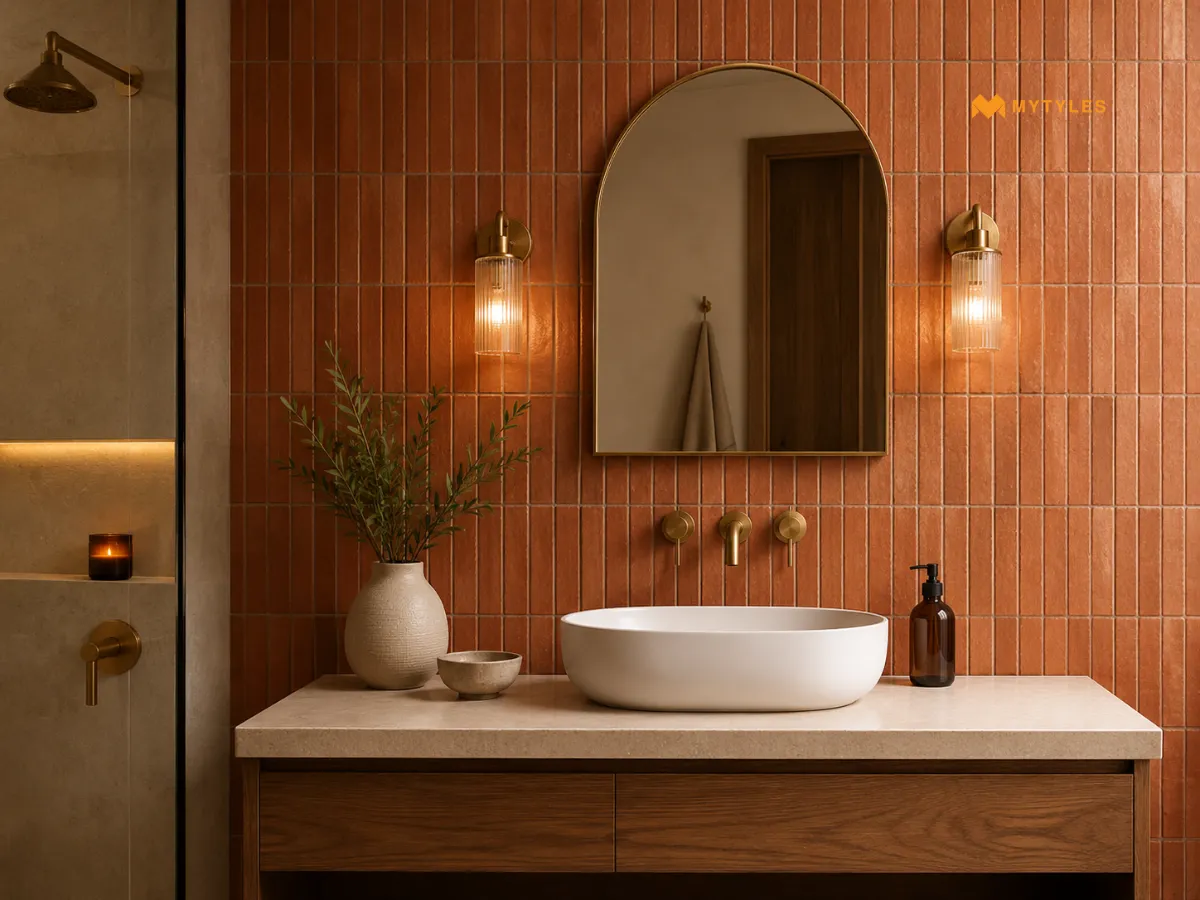
A bathroom feels warmer when the surroundings do the work, not just the fixtures. Terracotta fits right into spaces with wood finishes, cream surfaces, or stone-look counters, bringing in an earthy tone that sits comfortably against those materials. Terracotta KitKat tiles are one of the more grounded bathroom wall tile choices for covering a full accent wall or just the area behind a basin.
Vertical and Horizontal KitKat Tile Layouts for Taller or Wider Walls
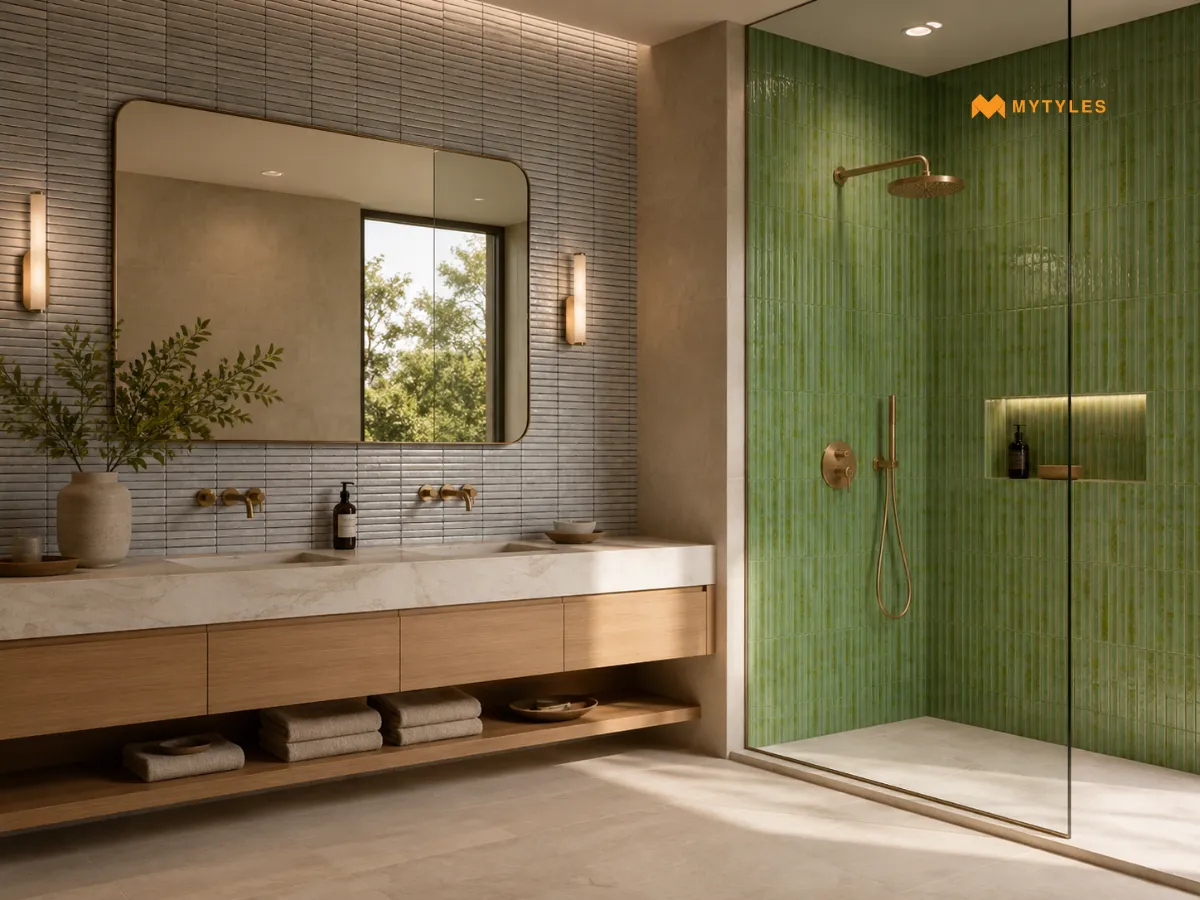
You can't really change a room's ceiling height, but you can change how tall the wall feels. Choose vertical KitKat tiles, and the eye gets pulled upward, quite useful if your ceilings are on the lower side. Flip the vertical wall tiles horizontal instead, and the wall reads wider, which suits longer stretches like the space behind a counter.
Offset KitKat Tile Pattern for Kitchen and Bathroom Walls
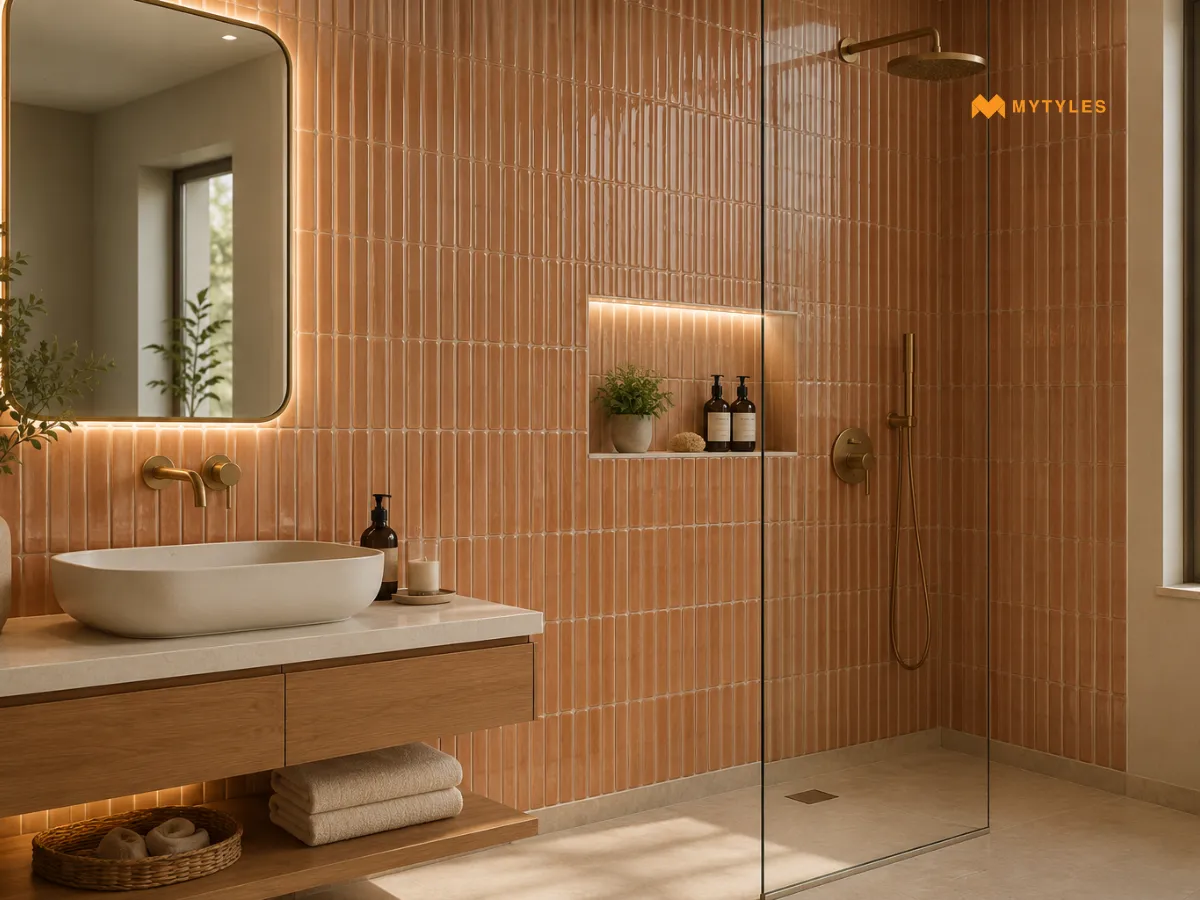
A backsplash gets looked at constantly, so even a small change in layout makes a real difference. Offsetting the rows, also called brick-bond, shifts each one slightly against the one below it, adding movement that a straight grid just doesn't have. It's a good pick for KitKat tile backsplashes and shower walls that would otherwise feel a bit too uniform.
Stacked KitKat Tile Grid for a Minimal Wall
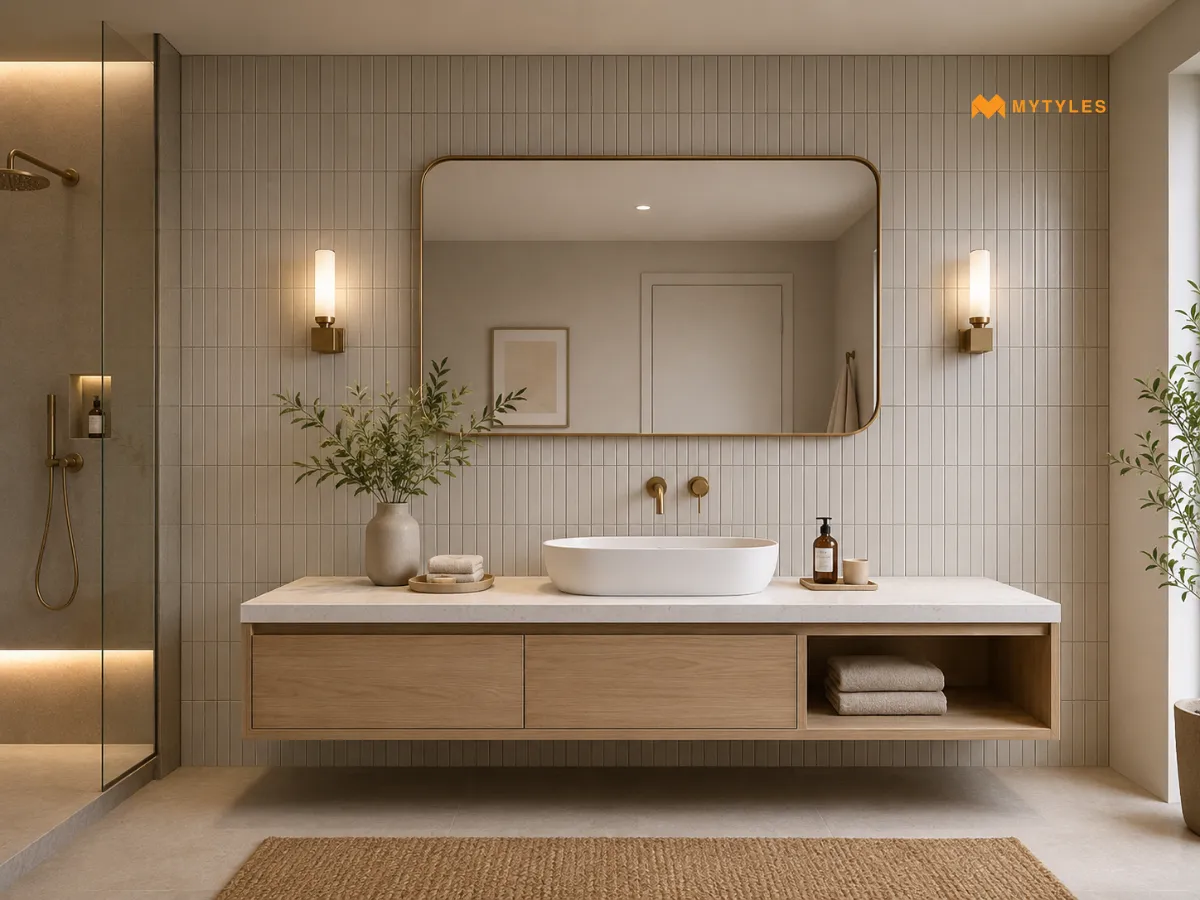
If an offset KitKat tile pattern is not what your walls want, then go for a stacked layout. This keeps every tile lined up neatly with the one above it, no extra movement, just a clean, structured grid, though the evenness of the joints becomes more noticeable in this layout, so consistent spacing matters more here. It works well when you want your bathroom or kitchen walls to be simple, modern, and orderly.
KitKat Tile Border and Niche Design for Shower Walls
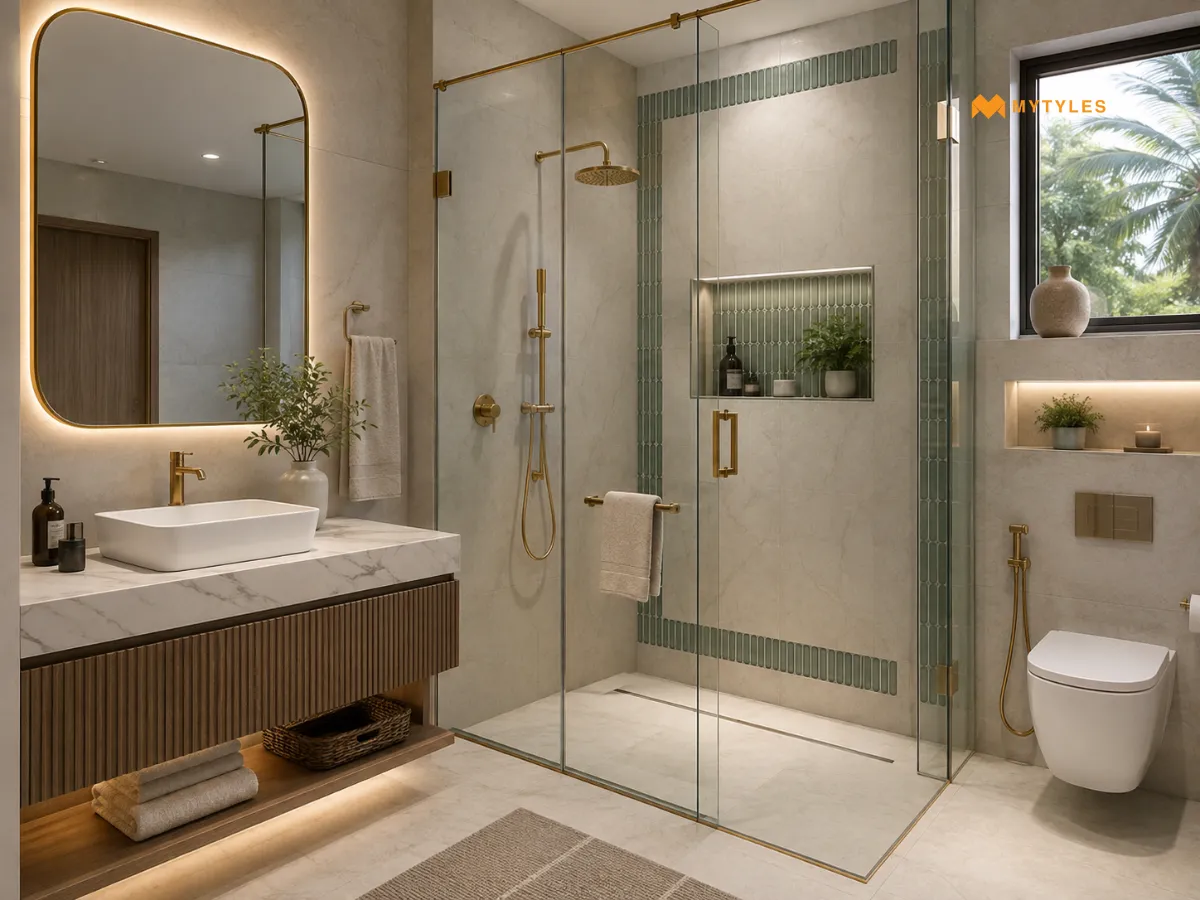
You don't always need to cover the whole wall to make a statement; sometimes a smaller, framed detail says just as much. Use modern KitKat tiles to line a shower niche or border a section of a larger wall, and the detail lands exactly where it's noticed most. It's a nice way to bring in KitKat tiles for a shower wall without going all-in on a full tiled surface.
Small-Format KitKat Mosaic Tiles for Compact Kitchen Corners
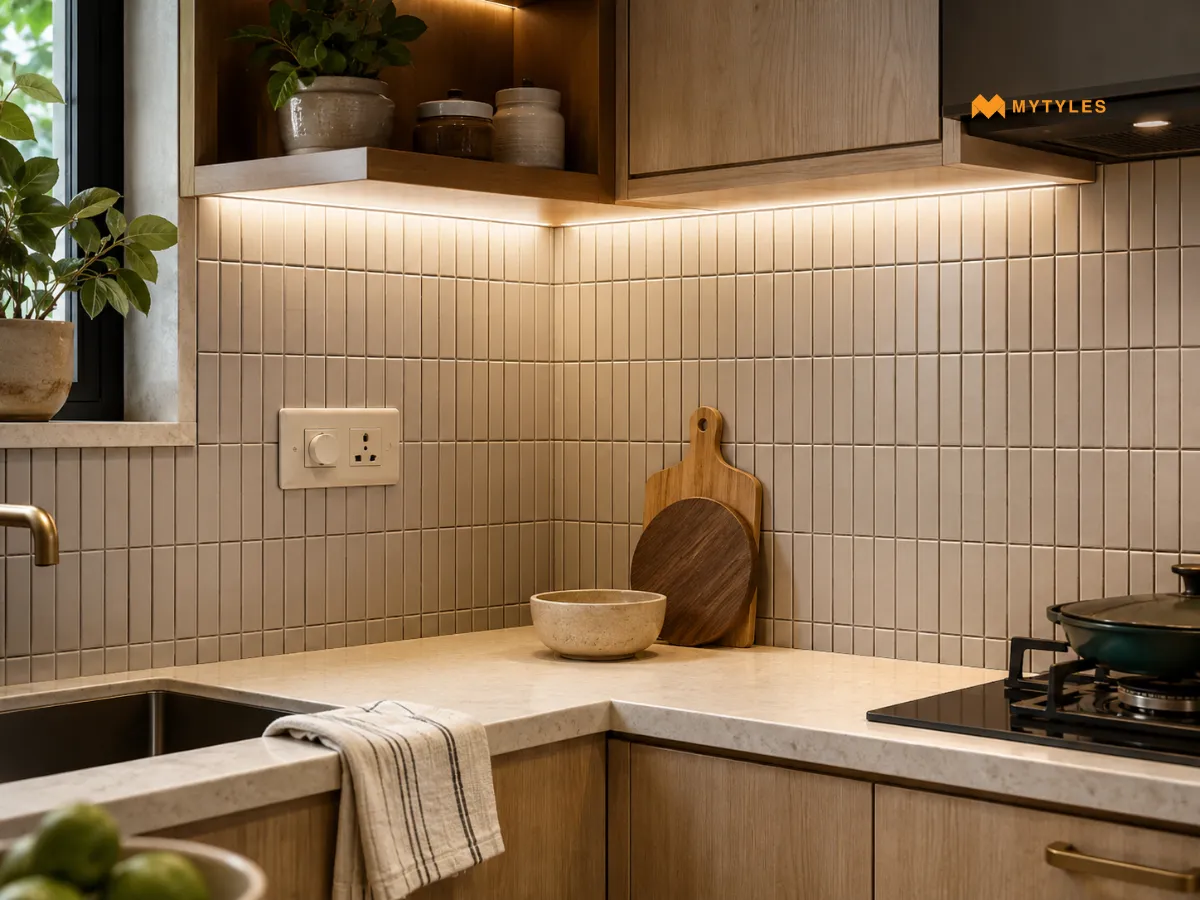
Small kitchens always seem to have that one awkward corner where large tiles need constant cutting to fit. Finger mosaic tiles solve that problem. These small-format wall tiles just adapt to tight spaces without much fuss. Mesh-mounted sheets can make the installation even easier here too. This helps keep the spacing even around pipework, switches, and other corners.
A Few Things to Keep in Mind Before You Choose KitKat Tile
Picking the design is the fun part; getting the installation details right is what makes KitKat wall tiles hold up over time. A few practical points worth going through before you finalise the tile:
- Grout lines come up more often with KitKat tiles than with larger formats, so it's better to look at grout color along with your tile shade. Matching grout keeps the wall understated, while a contrasting shade brings the linear pattern forward. Also, for wet zones like kitchen backsplashes and shower walls, use the grout recommended for that specific space.
- The tile adhesive matters more than it might seem. Since the format has a lot of joints, using the one recommended for the wall surface and tile type is important.
- During installation, keeping the joints even matters more with these KitKat wall tiles than with larger tiles, since a repeating strip pattern makes any unevenness easier to notice. Using tile spacers helps keep that consistent across the wall.
- If the wall has corners, niches, or smaller sections to work around, mesh-backed mosaic wall tile sheets tend to make that part of the installation a little easier. However, it is still important to check the tile suitability before installing.
Find the Right KitKat Tile for Your Space
A KitKat tile for the kitchen and bathroom is not just a design decision; it is something you will look at every day, whether the tile is behind the stove or above the basin. Getting the layout, color, and grout right at the start makes the overall appearance and use a lot more worthwhile. At MyTyles, the range of KitKat tiles covers different colors, layouts, materials, and finishes suited to Indian kitchens and bathrooms. Head to MyTyles to find the design that fits your space or browse the tiles online on the website.

What Are KitKat Tiles?

KitKat tiles are long, narrow rectangular tiles arranged in closely spaced vertical or horizontal strips. Their shape resembles a KitKat chocolate bar, which is where the name comes from. They are commonly used on kitchen backsplashes, bathroom walls, shower niches, vanity areas, and other feature walls where a textured, linear pattern is preferred.
Do KitKat Tiles Make A Small Kitchen Or Bathroom Feel Cluttered?
KitKat tiles do not always make a compact room feel cluttered. The final appearance may vary based on the tile color, finish, grout shade, layout, and the amount of wall being covered. Lighter tiles with similar grout shades may give the surface a more connected look, while darker colors or contrasting grout can make the individual strips more noticeable.
How Do You Choose The Right Color For KitKat Tiles?
Start by looking at the amount of natural light and the colors already present in the room. White, cream, and light grey KitKat tile colors can help brighten smaller spaces, while green, blue, black, or earthy tones may create a stronger focal point. It also helps to consider the cabinetry, countertops, sanitary ware, and flooring so the tile color fits naturally with the rest of the interior.
Are KitKat Tiles Suitable For Kitchen Backsplashes?
KitKat tiles for kitchen walls are commonly used for backsplashes because their slim format can work well behind countertops, sinks, and cooking areas. Glossy finishes reflect more light, while matt finishes create a softer look. Before installation, confirm that the selected tile is recommended for kitchen wall applications and use grout suitable for the location.
Where Can KitKat Tiles Be Used In A Bathroom?
KitKat tiles may be used on bathroom walls, vanity backsplashes, shower walls, niches, half walls, and selected feature sections. They can cover a larger wall area or be limited to smaller zones, depending on the intended design. Before installation, check whether the selected tile, finish, adhesive, and grout are suitable for the particular bathroom location and level of moisture exposure.
Which Grout Color Works Best With KitKat Tiles?
There is no single grout color that works for every KitKat tile design. A grout shade close to the tile color may give the surface a more unified appearance, while contrasting grout can make the narrow strips and joints more visible. The result may also vary with the tile shade, joint width, lighting, and installation quality, so testing a small section can be helpful.
Can KitKat Tiles Be Installed Vertically And Horizontally?
KitKat tiles can generally be arranged vertically or horizontally, provided the product and installation plan allow it. Vertical layouts may draw attention upward, while horizontal layouts may place more emphasis on the width of the tiled area. Stacked and offset arrangements may also be considered. Dry-laying a few sheets first can help you assess the pattern, cuts, and alignment.

ABOUT THE AUTHOR
Nandana Priya
With a strong interest in design, creativity, and emerging tile trends, I enjoy turning ideas from the world of tiles and interiors into engaging, meaningful reads. My writing focuses on creating well-researched content that helps readers understand design choices with more clarity and confidence. I bring together research, design awareness, and digital marketing insights to craft content that is relevant, easy to follow, and thoughtfully written for todays homeowners and design-conscious readers.
Latest Blogs By MyTyles