Inspiration Gallery
Blog
Tile Calculator
08065423741



.svg)


Beyond Squares and Rectangles: 5 Tile Shapes Explained
By Sragvi Senthil Kumar

Thu , Oct 15 , 2026

Read Time: 5 Min


 Copied!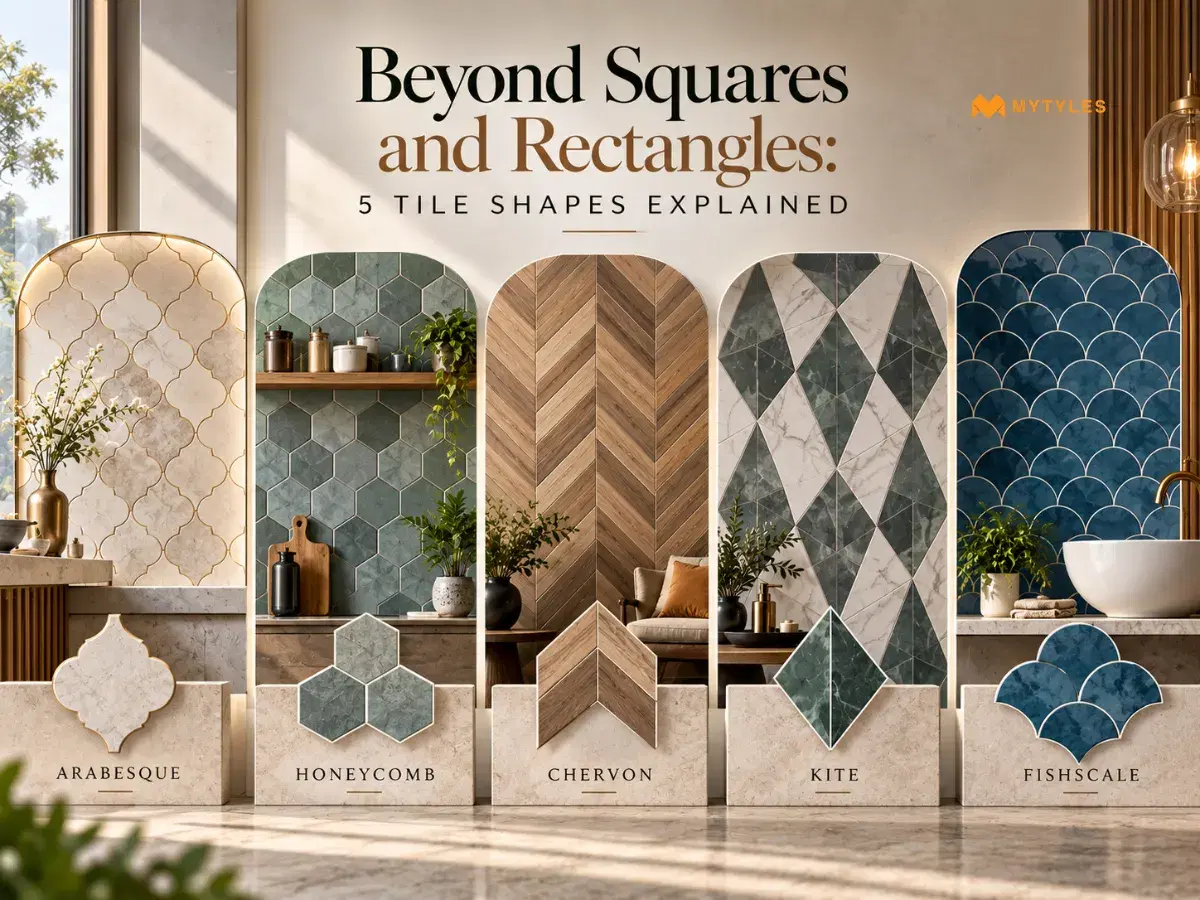
A tiled floor may not always make you stop and look, but some do. Walk into a bathroom lined with hexagons, a kitchen backsplash with curved arabesque tiles, or a hallway with a chevron pattern running along the centre. Often, the tile shape catches your attention rather than the colour or material. Here, that shape refers to the actual form of the tile or mosaic piece itself, not a pattern printed on the surface.
An interior does not have to cover every surface in pattern. A wall, floor, or feature area can be enough to bring different tile shapes into the design. Moving beyond the square or rectangle introduces forms that change the way the tiles come together. Chevron tiles, for example, create a clear V-shaped pattern, while curved shapes create a different rhythm across the surface. The way each tile shape is positioned can change the pattern it creates.
Here are five tile shapes explained, with what gives each one its form and how the pieces come together in a space.
The Chevron Tile
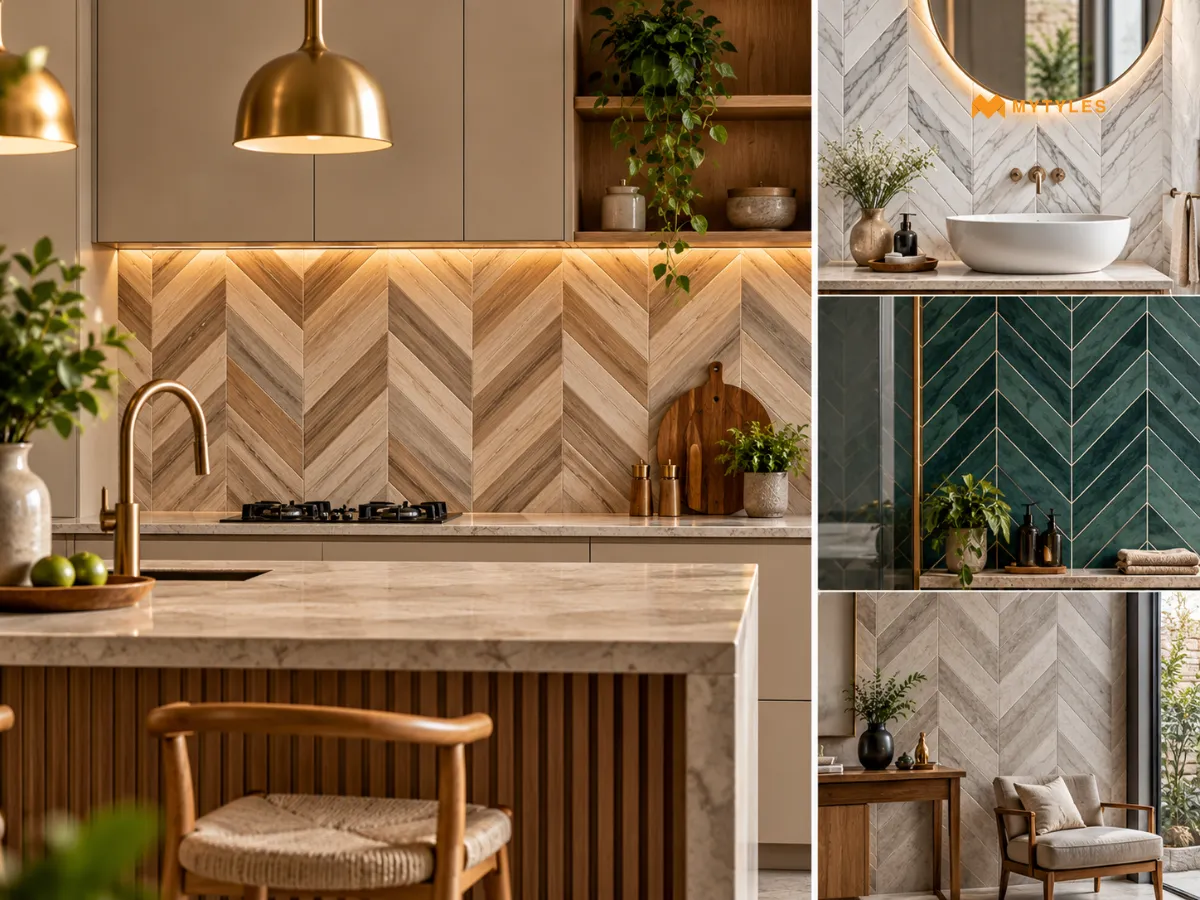
A chevron tile has ends cut at an angle, usually at a 45-degree angle, so two tiles meet at a point to form the familiar V pattern. Unlike straight-cut tiles arranged in a zigzag, the angled ends create the V directly. Chevron tiles can be laid with the V pointing up or down, changing the direction of the pattern across the surface.
The pattern can add a strong geometric detail to a kitchen backsplash or bathroom wall, while the selected product determines where it can be used. It can also be found in different surface looks, from chevron marble tile to chevron wood effect tiles, without changing the angled layout. A chevron mosaic tile uses smaller pieces arranged to create the same V-shaped pattern across the surface.
Design tip: Keep the V shapes pointing in the same direction so the pattern follows the same direction across the surface.
The Arabesque Tile
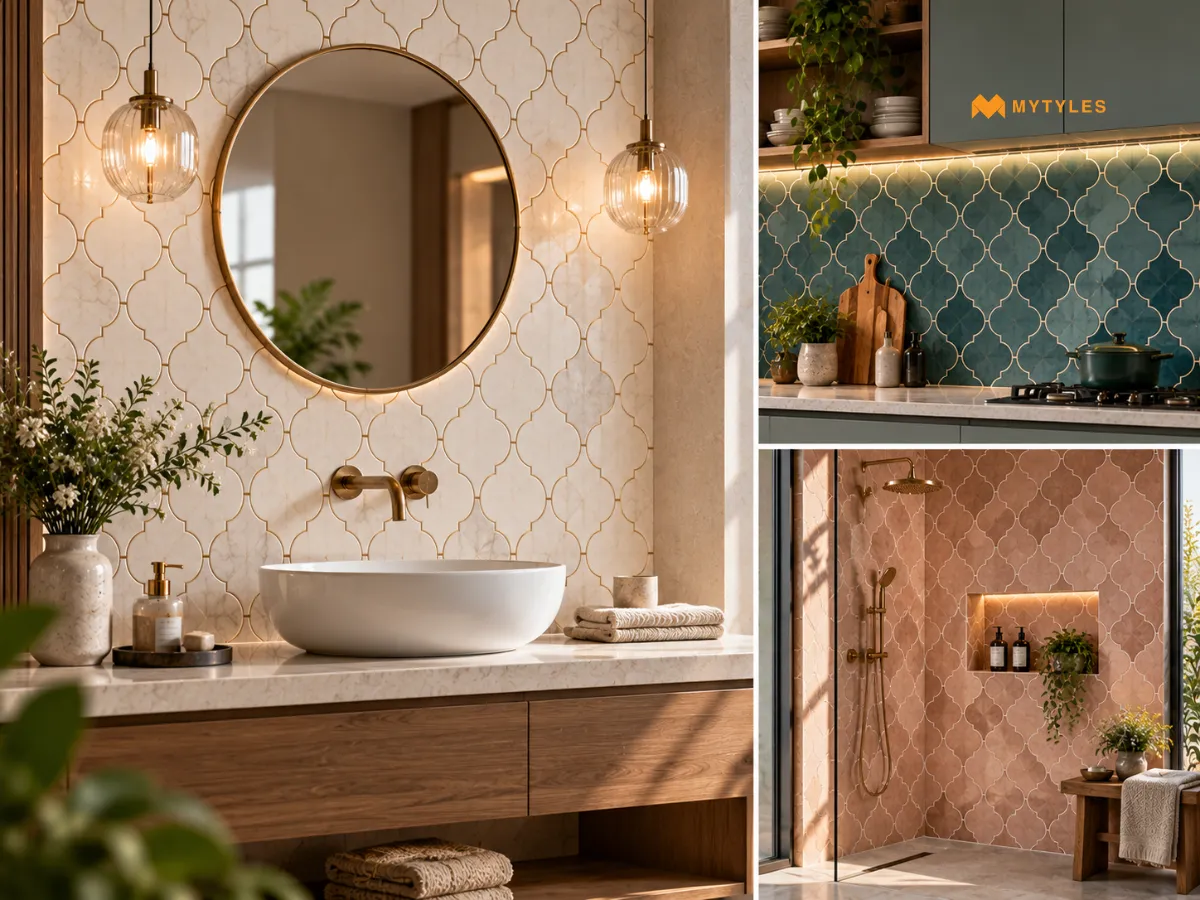
An arabesque tile has a curved outline that comes to a point at each end. Placing the tiles together creates a repeating pattern as the curves and points meet. An elongated arabesque tile uses a taller, narrower version of this form, changing the proportions of the pattern while keeping the curved outline.
An arabesque mosaic tile places several smaller pieces together on a sheet, allowing the curved edges to repeat across a larger area. An arabesque tile backsplash can bring the curved pattern to a kitchen wall. Similar wall applications can be used in bathrooms when the selected product is suitable for wall use. The way the tiles are arranged affects how closely the curves and points appear across the surface. Size, colour, and finish can then change how the overall pattern comes across without changing the shape itself.
Design tip: Keep the other walls and surfaces fairly simple so the arabesque pattern doesn't compete with too many other details.
The Fish Scale Tile
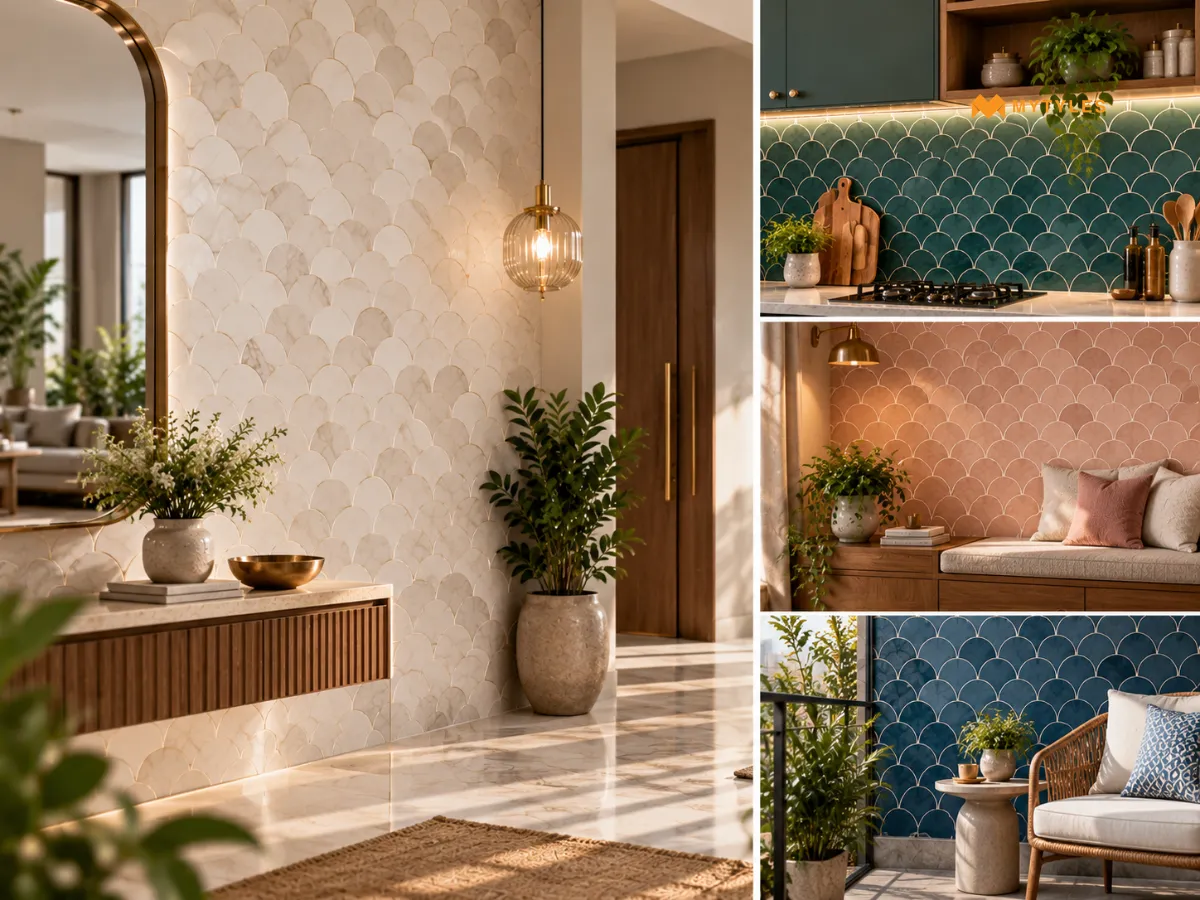
Fish scale tiles have a rounded edge that narrows into a point, giving them the shape of a fish scale. They are also known as a fan-shaped tile because of their curved outline. The tiles can be laid with the pointed end facing either up or down, changing the direction of the pattern across the surface.
Fish tiles for bathroom walls can bring this curved shape into the space when the selected product is suitable for wall use. Fish tiles can also be used on kitchen backsplashes, shower walls, entryways, and other feature areas, depending on the product specifications. They can be used across a larger surface or kept to a smaller area, making the shape part of the overall design without covering the entire space.
Design tip: Try to keep the tiles facing the same way when laying them so the curves and points fall into place.
The Honeycomb Tile
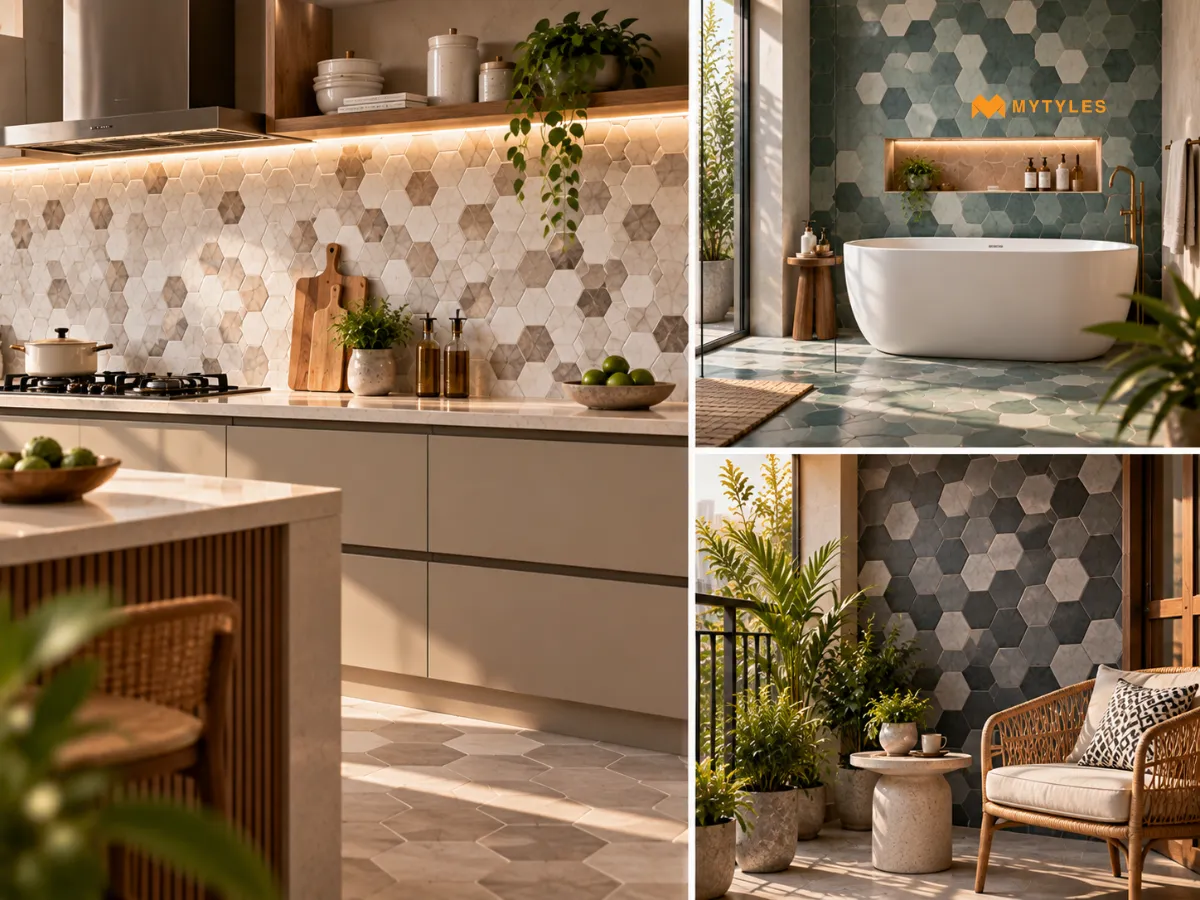
A honeycomb tile is a hexagon with six sides. When the tiles are placed together, their edges connect to create a repeating pattern. Hexagonal tiles can be kept in one colour or combined in different shades, which changes the look of the pattern without changing the shape itself.
Honeycomb floor tiles can also look different depending on their size. Smaller hexagons make the pattern more closely spaced, while larger ones make each individual shape easier to see. A honeycomb tile for bathroom floors can be available in different sizes, depending on the selected product and where it is being used. A honeycomb backsplash can bring the hexagonal pattern to a kitchen wall, including through smaller mosaic sheets.
Design tip: If you mix colours, keep the arrangement simple so the hexagon pattern stays easy to follow.
The Kite Tile
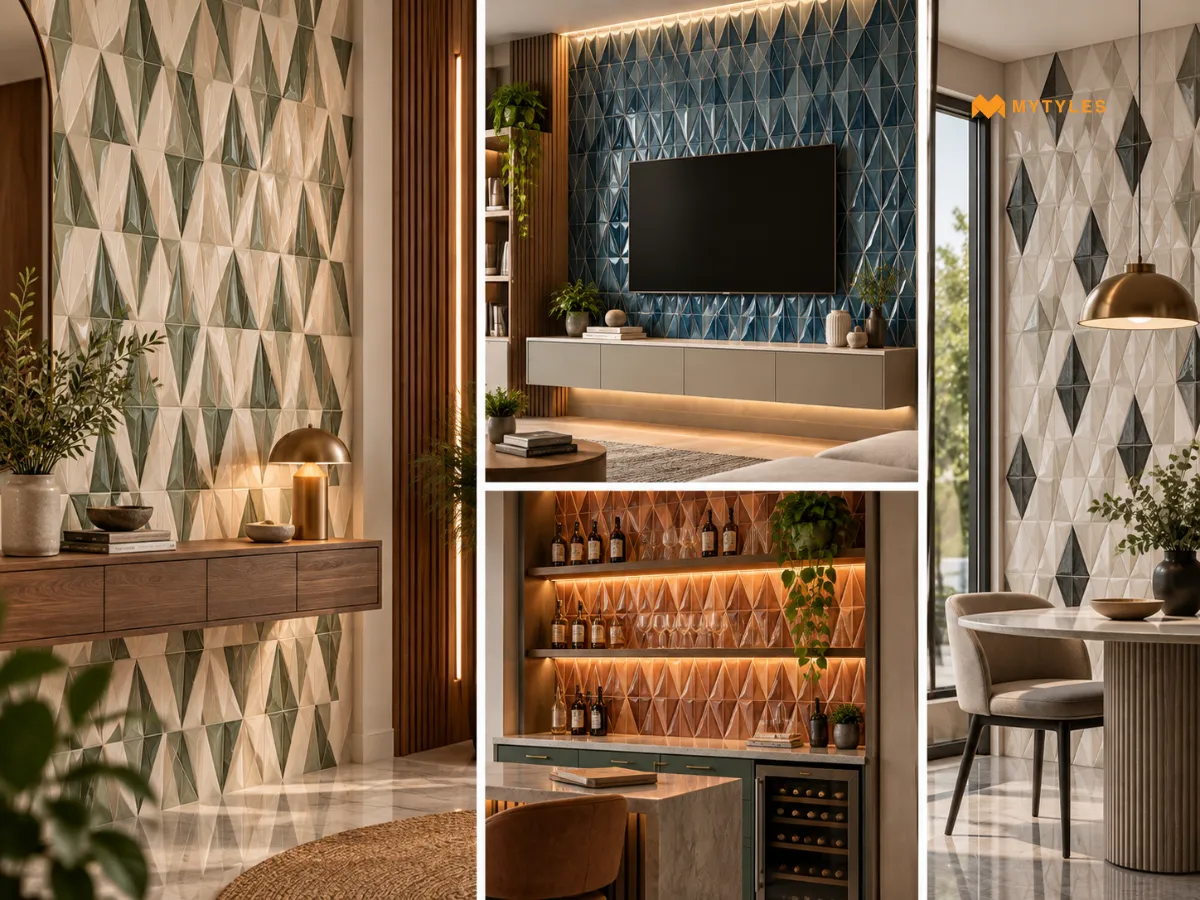
A kite tile has four angled sides that meet to form its pointed ends. The pattern can look different depending on how the tiles are positioned, particularly where the pointed ends meet. Kite-shaped tiles can also be turned in different directions to form different geometric layouts.
The angled outline can also be used to break up a larger tiled area or highlight a smaller section within it. Different colours can be used within the layout to add variation without changing the shape of the tile. Since the edges meet at angles, the pattern also needs to be considered where the tiles reach the edges of the space.
Design tip: Plan the layout from the centre outward so the pattern sits neatly along the edges.
Choosing a Tile Shape for Your Space
The shape you choose can change how a tiled surface looks once the pieces are laid together. Think about the area you are working with and how much pattern you want to bring into it. The size of the space, the direction of the pattern, and the tile’s colour and finish can all change how the final layout comes across.
- Pattern: Geometric shape tiles can change the feel of a pattern through their edges and angles. Some create a more noticeable arrangement, while simpler shapes let the surface stay quieter. What stands out depends on the shape and how the tiles meet.
- Where to use it: Mosaic tile shapes can add that detail to a smaller part of the room, such as a backsplash or feature wall. You don't need the shape across every surface for it to become part of the design.
- How it is laid: Chevron tiles create a clear V-shaped pattern as they are placed together. Hexagonal tiles repeat differently, with their six sides meeting from one tile to the next. Change the direction of a shape, and the pattern can look different again.
Finding the Right Shape for Your Space
Tile shapes give you more ways to build a pattern than the familiar square or rectangle. The difference can come from the way edges meet, how a shape is repeated, or simply how the tiles are positioned across a surface. Looking at these details alongside the size, colour, and finish can help you understand how a particular shape will work with the rest of the design.
If you’re still deciding on a shape, seeing the options side by side can make the differences much easier to notice. You can browse the collection online or visit the MyTyles Experience Centre to see the available tile designs in person.

What Are the Different Types of Tile Shapes?

Tile shapes include hexagons, chevrons, arabesques, fish scales, and kites, among other geometric forms. These shaped tiles change the way individual tiles meet and create a different repeated pattern. The final appearance also depends on tile size, orientation, colour, and layout, so the same shape can be used in several design styles.
Are Chevron Tiles and Herringbone Tiles the Same?
Chevron and herringbone tiles create similar zigzag patterns, but the tile layouts are different. Chevron tiles have angled ends that meet point to point to form a continuous V. Herringbone uses rectangular tiles placed at angles to create a staggered zigzag. The difference comes from how the tile edges meet within the pattern.
How Are Fish Scale Tiles Laid?
Fish tiles are usually laid with their rounded edges and pointed ends facing in a chosen direction. Turning the tiles upward or downward changes how the curves and points repeat. They can be arranged over a larger area or used in smaller sections, depending on the selected tile and the intended application.
Where Can Arabesque Tiles Be Used?
Arabesque tiles are commonly used on walls and backsplashes, provided the selected product is suitable for the intended application. Their curved edges and pointed ends create a repeating pattern when the tiles are placed together. They are available in different sizes and materials, so the product specifications should be checked before selecting them for a particular area.
Are Honeycomb Tiles Suitable for Floors and Walls?
Honeycomb floor tiles can be used on floors and walls when the selected product is rated for the intended application. Smaller hexagons create a more closely spaced pattern, while larger ones make each shape more noticeable. They can also be used in bathrooms, kitchens, or feature areas, depending on the product specifications and layout.
Can Tile Shapes Be Mixed in the Same Space?
Different tile shapes and patterns can be combined, but the way they are arranged matters. Using several strong patterns together can make the surface feel visually crowded, while a simpler shape can provide a quieter contrast. Consider how the shapes, sizes, colours, and directions relate to one another before combining them in the same area.
How Does Tile Size Affect a Shaped Tile Pattern?
Tile size can change how clearly a shaped pattern is seen. Smaller tiles create more repeated shapes within a given area, while larger tiles make each individual form more noticeable. The size can also affect how the pattern fits the space, particularly when working around edges, corners, or smaller sections such as backsplashes.

ABOUT THE AUTHOR
Sragvi Senthil Kumar
With a background in Psychology and Journalism, my interest in writing began with newspapers and magazines, where I developed a passion to turn facts into engaging stories. Along with a keen interest in writing, I've had a creative eye for style, art and design. Over time this interest grew into exploring lifestyle, architecture, interiors and tiles for more than just their aesthetics. Now I bring together research and creativity to create clear, engaging content for homeowners, architects and interior designers.
Latest Blogs By MyTyles