.svg)


Granite Flooring vs. Vitrified Tiles: Which is Better for Indian Floors?
ByAditi Bardhan

Thu , May 21 , 2026

Read Time: 5 Min


 Copied!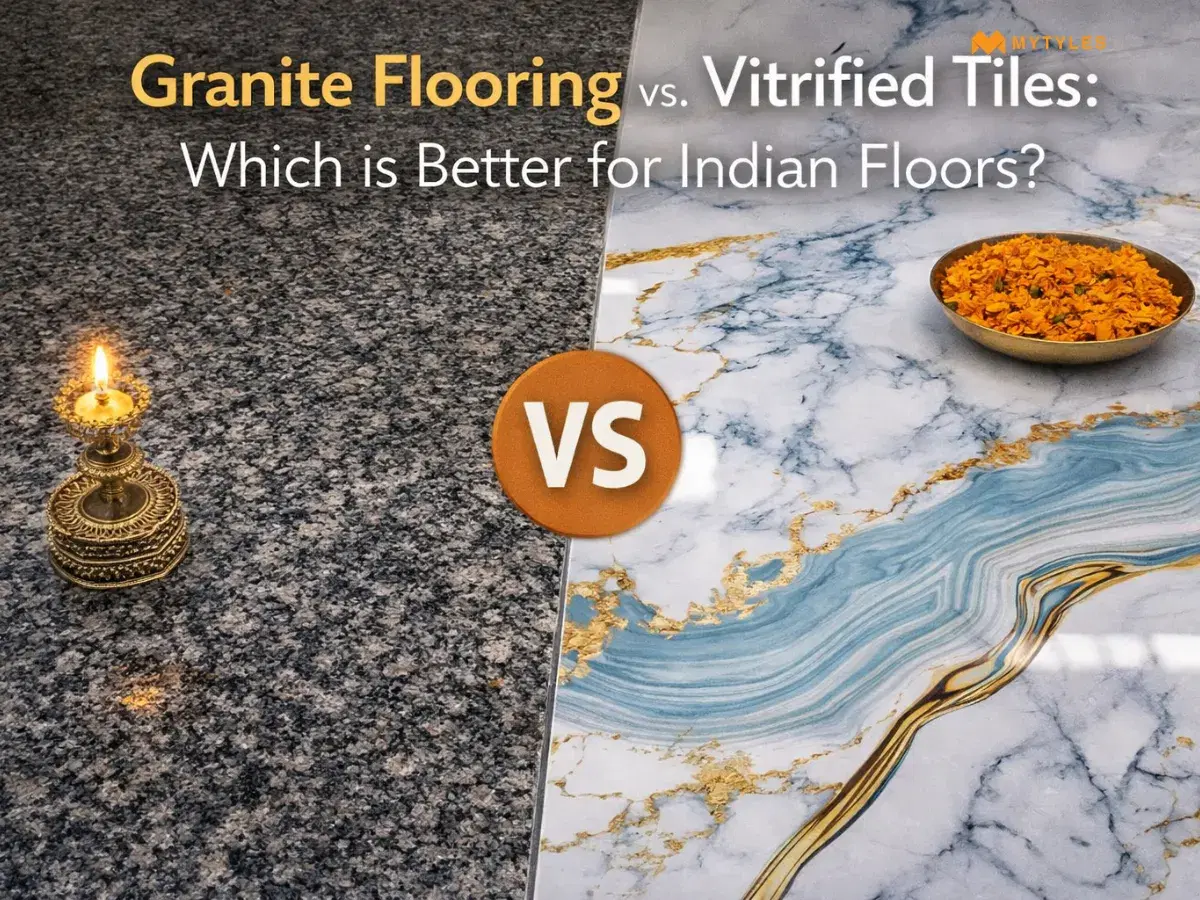
When it comes to home renovations, choosing the perfect flooring for your home can be a daunting task, especially when there are so many options. If you are refreshing your living area or redesigning your kitchen, the right floor can completely modify your space. In India, two materials generally top the list: granite vs. vitrified tiles. In this blog, we will help you compare the two popular options, granite and vitrified, and break down the benefits of each.
Granite Flooring vs. Vitrified Tiles: Which is Better for Your Home?
 (1).webp)
When deciding between granite flooring vs vitrified tiles, it is important to consider what is most important for your house; is it the appearance, the price tag, simplicity of maintenance, or durability? Both options have their advantages and disadvantages. Therefore, it is important to understand these aspects based on your preferences.
Feature | Granite Flooring | Vitrified Tiles |
| Material Type | Natural stone quarried and polished for a luxurious, unique look | Man-made material made from clay, silica, and feldspar, fired at high temperatures |
| Appearance | Each slab has a unique natural pattern with elegant, timeless appeal | Available in a wide range of colors, textures, and finishes including matte, glossy, and anti-slip |
| Durability | Extremely strong and long-lasting; resistant to scratches and heat | Highly durable but slightly less hard than granite; suitable for high-traffic areas |
| Maintenance | Requires periodic sealing to prevent stains and maintain shine | Very low maintenance; stain and moisture resistant without the need for sealing |
| Cost | Higher initial cost due to quarrying and polishing | More affordable; offers a premium look at a lower price point |
| Installation | Heavy and labor-intensive to install | Easier and quicker installation process |
| Water Resistance | Naturally porous; needs sealing to prevent water absorption | Non-porous surface; ideal for wet areas like bathrooms and kitchens |
| Design Variety | Limited to nature’s patterns and colors | Available in endless designs, colors, and patterns including marble and granite look-alikes |
| Eco-Friendliness | Natural and long-lasting but requires quarrying | Manufactured, but many brands now use eco-friendly processes |
| Best Suited For | Luxury homes, living rooms, and areas requiring a premium, natural finish | Modern homes, kitchens, bathrooms, and spaces needing easy upkeep |
Aesthetic Appeal: Granite vs Vitrified Tiles Design
 (1).webp)
The aesthetic appeal of vitrified tiles vs granite flooring is a crucial factor in choosing the right tile option for your home. Granite brings a sense of timeless grace to any space. The natural variations in color and texture give a sophisticated, high-quality look. These floorings are perfect for areas like your living room, entrances, and staircase.
In contrast, vitrified tiles offer a more modern and versatile design. These are available in an endless variety of colors, textures, and finishes and can mimic materials such as wood, marble, and stone. If you want a glossy matte or textured finish, these tiles can complement any interior design of your space.
Durability: Which Lasts Longer?
When it comes to long-term durability, in vitrified tiles or granite which is better? both tiles perform impressively, but in different ways. Granite is a natural stone celebrated for its exceptional strength and resistance to scratches and heavy wear. It can last for decades, maintaining its structure and elegance, especially in high-traffic areas like living rooms or staircases. However, it requires periodic sealing to protect against stains and moisture.
Vitrified tiles, on the other hand, offer excellent durability with minimal upkeep. Their nonporous surface resists water, stains, and scratches, making them ideal for kitchens, bathrooms, and corridors. With proper care, vitrified tiles remain intact and polished for years without extensive maintenance.
Maintenance: Granite vs Vitrified Tiles
Granite, though elegant and durable, is a porous natural stone that needs regular care to maintain its appearance. It requires periodic sealing to prevent moisture absorption and staining, along with polishing to preserve its shine. Spills, especially from acidic substances, must be cleaned immediately to avoid permanent marks, making granite a high-maintenance option.
In contrast, vitrified tiles are nonporous and extremely easy to maintain. They don’t require sealing or polishing, simple sweeping and mopping are enough to keep them spotless. Their durability and resistance to stains and scratches make vitrified tiles ideal for high-traffic, low-maintenance modern homes.
Heat Resistance and Comfort: Granite vs Vitrified Tiles
When considering heat resistance, which is better vitrified tiles or granite? But both granite and vitrified tiles offer unique benefits. Granite, being a natural stone formed from cooled molten rock, is exceptionally dense and inherently heat-resistant. It stays cool even in hot climates, making it ideal for kitchens, patios, and outdoor areas.
Vitrified tiles, made from a mix of clay and silica fired at around 1200°C, also resist heat effectively and don’t retain warmth. Their smooth, non-absorbent surface helps keep interiors comfortably cool year-round. For overall comfort and temperature consistency, vitrified tiles are a smart, low-maintenance choice, while granite excels in natural heat endurance and timeless appeal.
Environmental Impact: Granite vs Vitrified Tiles
When it comes to environmental impact, the difference between granite and vitrified tiles differs significantly in how they are sourced and produced. Granite is a natural stone mined from quarries, a process that disturbs large land areas and consumes considerable energy during extraction and transportation, leading to higher carbon emissions.
In contrast, vitrified tiles are manufactured using materials like clay, silica, and quartz, with many producers adopting eco-friendly practices such as recycling waste, conserving water, and reducing emissions. Their long lifespan, low maintenance, and recyclability make vitrified tiles a more sustainable and environmentally conscious choice for modern homes.
Price Comparison: Granite Flooring vs Vitrified Tiles
When comparing vitrified tiles vs granite prices, granite is a luxurious, high-end material known for its natural beauty and long-lasting durability. However, it requires professional installation, periodic polishing, and sealing, making it a more expensive option overall.
Vitrified tiles, on the other hand, are more budget-friendly and easier to install. They come in a wide range of colors, designs, and finishes, offering versatility without the need for extra upkeep. With lower installation costs and minimal maintenance requirements, vitrified tiles provide a stylish, practical, and affordable flooring option for contemporary homes.
Granite vs Vitrified Tiles: The Best Choice for High-Traffic Areas
 (1).webp)
When considering the vitrified tiles and granite comparison for high-traffic areas, both granite flooring and vitrified tiles have their unique advantages. Granite is extremely durable and scratch-resistant, making it ideal for areas exposed to heavy footfall. However, it requires periodic sealing to prevent stains and maintain its polished finish.
Vitrified tiles, on the other hand, offer a more practical solution with their nonporous, stain-resistant surface and anti-slip options. They’re easy to install, simple to clean, and perfect for kitchens, bathrooms, corridors, and living spaces. For those seeking long-lasting style with minimal upkeep, vitrified tiles are the smarter, low-maintenance choice.
Step into Style with the Right Tiles!
Choosing which is better vitrified tiles or granite, ultimately depends on your specific needs and priorities. Granite is a wonderful choice for those who want richness and long-term durability. It brings a sense of elegance and timeless beauty to any space, but at the same time, it requires more attention in terms of maintenance and comes at a higher price. But vitrified tiles are best suited for high-traffic areas. Vitrified tiles are easy to maintain, inexpensive, and available in numerous designs, making them wonderful choices for bathroom spaces, living rooms, and offices. You don't necessarily need to pick only one. Most homeowners mix granite for its ability to add a luxurious flooring feel while utilizing tiles in areas where functionality is a priority. At MyTyles, we offer a variety of materials to choose from, allowing you to find the best fit for your home with the added convenience of doorstep delivery.
Expert Reviewed by Biren Agrawalla
Biren Agrawalla, the Founder of MyTyles with over 10 years of experience across tile, retail, and home decor. Driven by a passion for tiles and a deep understanding of customer behaviour, he has spent his career transforming how people discover and buy tiles online. Biren combines practical retail insight with modern digital solutions to make tile shopping smarter, more intuitive, and design focused. At MyTyles, he champions a customer first approach, ensuring every experience from browsing to buying is reliable, seamless, and inspiring.

What is the key difference between granite and vitrified tiles?

Granite is a natural stone that offers luxury, strength, and a unique look, whereas vitrified tiles are man-made, highly durable, nonporous, and easy to maintain.
Which is better for high-traffic areas, granite or vitrified tiles?
This depends on your needs. For high-traffic areas, vitrified tiles are generally better because they are scratch-resistant, non-porous, and easier to maintain. Granite offers durability and can be fitted where luxury is a priority.
Are vitrified tiles more affordable than granite?
Yes, vitrified tiles are typically more affordable than granite. They offer cost-effective solutions without compromising on durability or design options, making them ideal for budget-conscious homeowners.
Are vitrified tiles resistant to stains?
Yes, vitrified tiles are stain-resistant because of their non-porous surface. They are highly durable and resistant to moisture, making them a great choice for areas prone to spills, like kitchens and bathrooms.
Can vitrified tiles mimic the look of marble or wood?
Yes, vitrified tiles come in a wide range of designs that can mimic the appearance of marble, wood, and even stone. This versatility gives homeowners the flexibility to enjoy the look of these materials while benefiting from the durability and low maintenance of vitrified tiles.

ABOUT THE AUTHOR
Aditi Bardhan
I'm Aditi Bardhan, a professional content writer with over five years of experience creating SEO-driven, research-backed content across multiple industries. I specialise deeply in the tile and surface materials industry, crafting high-converting content for homeowners, architects, interior designers, and trade professionals. My work is grounded in technical research, design understanding, and consumer behaviour insights, enabling me to simplify complex concepts, highlight material benefits, and help brands build authority in the tile and construction space.
Latest Blogs By MyTyles