Inspiration Gallery
Blog
Tile Calculator
08065423741



.svg)


Choosing Slip-Resistance Outdoor Floor Tiles for Pool area and Patio
ByAditi Bardhan

Tue , May 26 , 2026

Read Time: 5 Min


 Copied!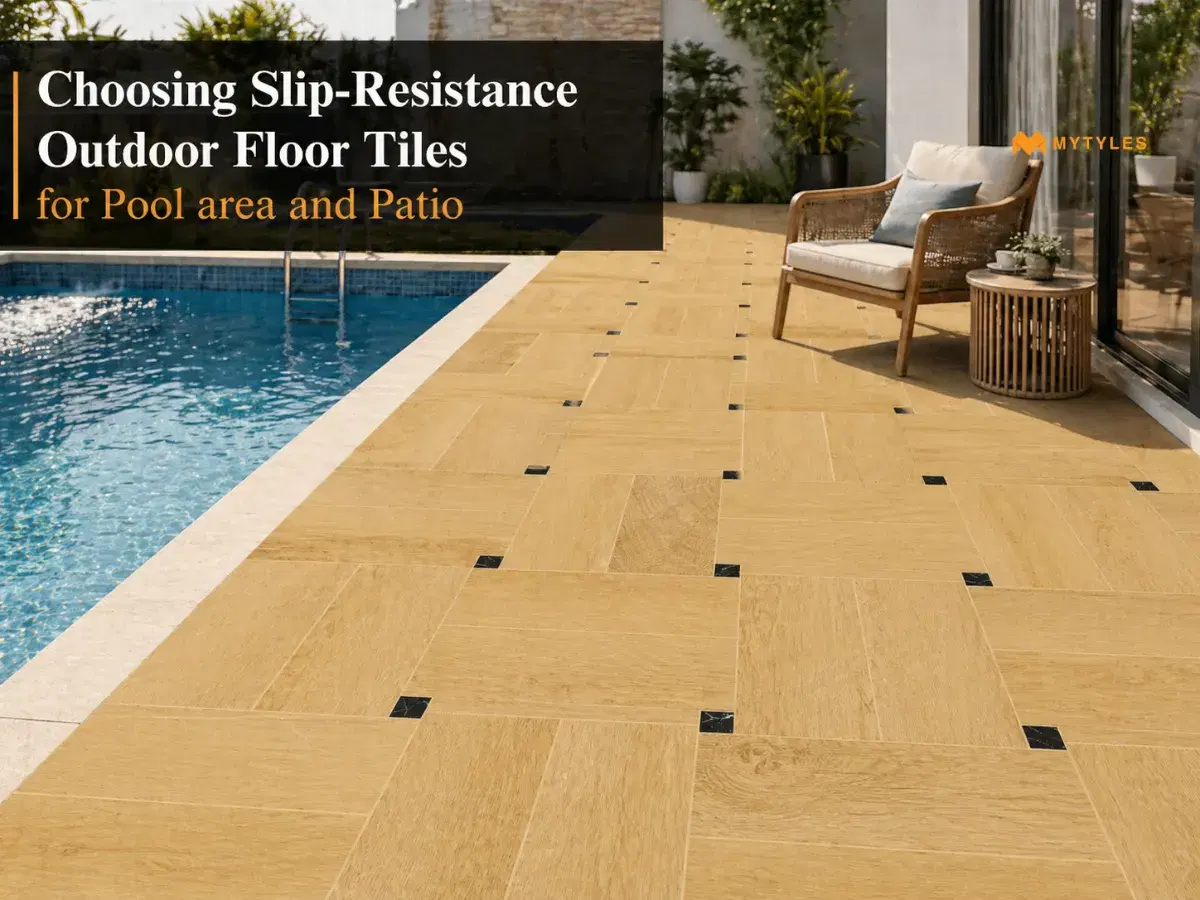
Have you ever walked on a patio during heavy rains and wondered what’s the secret behind your stable feet on such a wet floor? Or have you ever walked beside a swimming pool and noticed the rough tiles around it that ensure you don’t slip? What do you believe to be the secret behind this? The answer is, you guessed it, slip-resistance tiles. Thorough this knowledge would help you make smart choices and decisions when you buy tiles for your pool area and patio.
What are Slip-Resistance Tiles?
.webp)
Slip-resistant tiles are specially designed with textured or matte surfaces that enhance traction, reducing the risk of slipping, especially in wet or high-traffic areas. They are commonly used in outdoor spaces, bathrooms, and pool surrounds for safety. Whenever you’re buying swimming pool tiles or patio tiles, one key aspect that must be kept in mind is the high dynamic coefficient of friction (DCOF).
Tiles with a DCOF of ≥ 0.60 are considered safe for pool decks, walkways, and patio areas. Similarly, the Ramp Test (R-value) also measures the effectiveness of tiles to prevent accidental slips. The R-value of the tile must be more than 10. Familiarise yourself with these ratings to make sure you make well-informed decisions while buying slip-resistant tiles.
Importance of Slip-Resistance
Understanding the importance of slip resistance in tiles helps you make informed decisions that prioritise safety, longevity, and style for any space.
- Prevents slips and falls in wet areas like bathrooms, patios, and pool decks, ensuring safety for all ages.
- Tiles with proper DCOF or R-value ratings comply with safety regulations in homes and commercial spaces.
- Maintains grip and traction even in humid or rainy conditions, ideal for outdoor use.
- Adds both safety and aesthetic appeal, increasing overall property worth.
- Built to withstand wear and tear, reducing replacement and maintenance expenses.
Understanding Pool & Patio Area Dynamics
Pools and patios face constant exposure to sunlight, water, and foot traffic. Selecting the right tiles ensures safety, durability, and visual harmony. The table below highlights key factors for both areas.
Feature | Pool Area Requirements | Patio Area Requirements | Recommended Tile Options |
| Slip Resistance | Must offer a strong grip to prevent slips in wet conditions (R10+ or high DCOF). | Important during rains or near gardens; should provide stable footing. | Textured porcelain, anti-slip vitrified, or matte-finish tiles |
| Thermal Comfort | Should stay cool under direct sunlight for barefoot comfort. | Light-colored tiles help reduce heat absorption in open patios. | Light porcelain, sandstone, or natural stone tiles |
| Durability | Must withstand chlorinated water, UV exposure, and temperature changes. | Should resist cracking, fading, and weather damage from heat or rain. | Vitrified or dense porcelain tiles |
| Water Drainage | Slightly textured surface and gentle slope help prevent puddles. | Proper drainage prevents water pooling during monsoons. | Matte or flamed tiles with gradient layout |
| Edge Safety / Load Strength | Rounded or bullnose edges ensure safety around pool borders. | Tiles must handle furniture weight and foot traffic without damage. | Bullnose porcelain, thick vitrified, or heavy-duty outdoor tiles |
| Aesthetic Appeal | Neutral tones or stone textures blend naturally with the landscape. | Designs should complement home exteriors and outdoor furniture. | Stone-finish, wood-look, or earthy-toned tiles |
| Maintenance | Non-porous, stain-resistant tiles reduce cleaning effort near chlorinated water. | Easy-to-clean, low-maintenance surfaces keep patios fresh. | Glazed vitrified or sealed stone tiles |
| Chemical / Weather Resistance | Tiles near the waterline must resist chlorine discoloration and fading. | Must tolerate sunlight, moisture, and temperature fluctuations. | Porcelain or weather-resistant vitrified tiles |
Best Tile Designs for Pool area
.webp)
Choosing the right tiles for your pool area is essential to ensuring safety, durability, and style. Below are some top tile options that combine aesthetics with practicality, perfect for enhancing your pool area.
- Pebble-Look Tiles: These tiles mimic the texture and appearance of natural pebbles, providing excellent slip resistance while enhancing the pool's aesthetic with a spa-like vibe. Ideal for creating a calming, natural look around the pool area.
- Textured Slate Tiles: Durable and non-slip, textured slate tiles are ideal for pool decks. Their rustic and earthy tones blend seamlessly with natural surroundings, offering both style and functionality.
- Concrete-Finish Tiles: For a modern and minimalist look, concrete-finish tiles are an excellent choice. They offer a sleek, industrial style while being highly durable and slip-resistant, perfect for poolside areas.
- Sandstone-Look Tiles: Sandstone-inspired tiles bring soft textures and neutral colors to pool decks, creating a serene and cohesive outdoor environment. Their natural finish enhances the overall landscape design.
- Stone-Look Porcelain Tiles: Faithfully replicate natural stones like limestone or slate, combining bold textures with durability for a timeless look, perfect for both indoor and outdoor use.
- Wood-Look Porcelain Tiles: Recreate the warmth and charm of natural wood with realistic grains and knots, offering enhanced durability and weather resistance for outdoor spaces.
Best Tile Designs for Patio
.webp)
When it comes to designing a patio, the choice of tiles can significantly influence both the functionality and aesthetic appeal of the space. Below, we explore some of the best tile designs to help you create a patio that’s both practical and visually stunning.
- Geometric Pattern Tiles: Geometric tiles like hexagons, chevrons, or herringbones bring structure and rhythm to patios. They make spaces look clean, modern, and well-organized while adding subtle visual depth.
- Floral Tiles: Floral tiles create a soft, decorative feel outdoors. Their nature-inspired designs pair beautifully with plants, giving patios a fresh and pleasant look that feels welcoming and relaxed.
- Rustic Stone Designs: Rustic stone-look tiles capture the charm of natural stone. Their rough texture and earthy tones blend easily with outdoor surroundings, giving patios a natural, grounded finish.
- Brick-Pattern Tiles: Brick-pattern tiles add warmth and a timeless look to patios. Arranged in herringbone or basket-weave styles, they suit both classic and casual outdoor settings beautifully.
- Wood-Effect Tiles: Wood-look tiles give the appearance of timber without the upkeep. They bring natural warmth and texture to patios and stay durable through all weather conditions.
- Moroccan Tiles: Moroccan tiles feature detailed patterns and rich colors. They brighten up patios and create a lively outdoor setting that looks elegant yet is easy to maintain.
Modular Design Tiles: Modular tiles let you mix different shapes and sizes. They work well for creative layouts, giving patios a balanced, well-arranged look that feels cohesive and clean.
Things to Keep in Mind
.webp)
When purchasing slip-resistant tiles for your pool and patio, keep a few things in mind at all times. These range from texture and slip resistance to weather conditions and light exposure. Creating a comprehensive checklist and ensuring your tiles pass through each point is essential for a fruitful designing experience.
- Strength: Pools and patios face constant use and weather exposure. Choose pool tiles that are durable, strong, and easy to maintain over time.
- Budget: Outdoor areas cover large spaces, so pick tiles that balance quality and cost. Luxury options can quickly raise overall expenses.
- Style: Match your pool or patio tiles with your home’s architecture and landscape for a cohesive, natural look.
- Texture & Slip Resistance: Outdoor tiles must prevent slipping. Avoid glossy surfaces and pick non-slip textures for safer use around water.
- Weather Conditions: Select tiles that can handle temperature changes. Vitrified tiles with low water absorption work better than porous materials like sandstone.
- Light Exposure: Consider how much sunlight the space gets. Dark tiles suit bright areas, while lighter shades enhance dim or shaded spaces.
Choosing the Perfect Slip-Resistant Tiles
Now you know the features and importance of slip resistance tiles and how to pick out the most suitable ones for pool areas and patios. Keep in mind the important pointers and common mistakes listed in the blog, and you'll be sorted. We wish you the best in your tiling journey! At MyTyles, we offer the best slip resistance tiles that perfectly balance the practical applications with absolutely stunning patterns and designs. We’d love to help you out on the task and streamline this process. Get on our website and connect with us. See you on the other side!
Expert Reviewed by Biren Agrawalla
Biren Agrawalla, the Founder of MyTyles with over 10 years of experience across tile, retail, and home decor. Driven by a passion for tiles and a deep understanding of customer behaviour, he has spent his career transforming how people discover and buy tiles online. Biren combines practical retail insight with modern digital solutions to make tile shopping smarter, more intuitive, and design focused. At MyTyles, he champions a customer first approach, ensuring every experience from browsing to buying is reliable, seamless, and inspiring.

Which tiles are best for outdoor patios?

Vitrified tiles are best suited for outdoor patios due to their high durability and resistance to hard wear and tear.
Which tile is most slip-resistant?
Matte-finish vitrified tiles are highly slip-resistant.
Which outdoor tiles are not slippery?
Anti-skid tiles with rough or textured surfaces, such as unglazed natural stone, are ideal for non-slippery outdoor use.
What type of tiles are best for a swimming pool?
Vitrified tiles are best suited for swimming pools since they are waterproof and also resistant to chemicals like chlorine.
What is the best tile to put around a pool?
Slip-resistant vitrified tiles or natural stone tiles like travertine are best for pool surrounds due to their durability and safety.

ABOUT THE AUTHOR
Aditi Bardhan
I'm Aditi Bardhan, a professional content writer with over five years of experience creating SEO-driven, research-backed content across multiple industries. I specialise deeply in the tile and surface materials industry, crafting high-converting content for homeowners, architects, interior designers, and trade professionals. My work is grounded in technical research, design understanding, and consumer behaviour insights, enabling me to simplify complex concepts, highlight material benefits, and help brands build authority in the tile and construction space.
Latest Blogs By MyTyles