Inspiration Gallery
Blog
Tile Calculator
08065423741



.svg)


9 Tips to Remove Paint from Tiles Floor & Wall
ByAditi Bardhan

Mon , May 25 , 2026

Read Time: 3 Min


 Copied!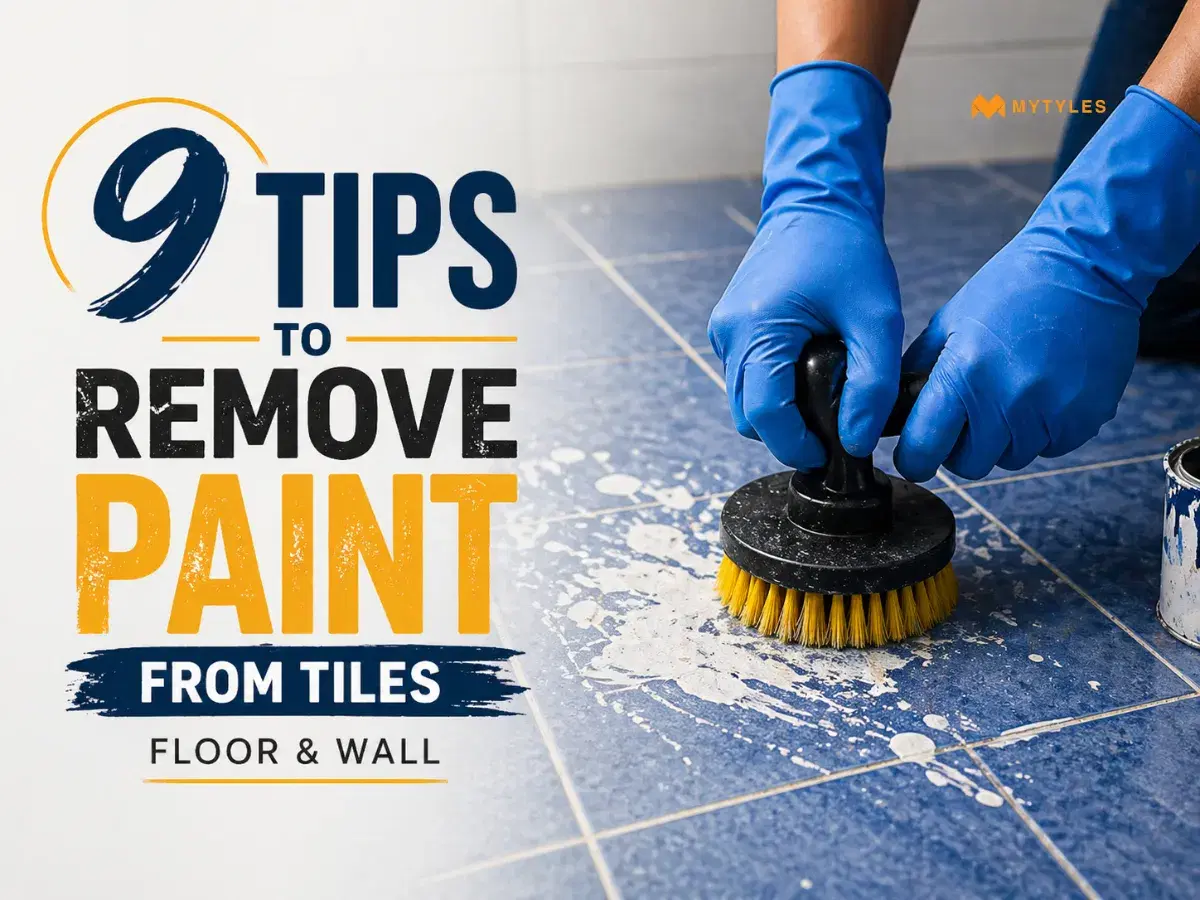
You are wrapping up your DIY home painting project only to notice there are paints splattered all over your beautiful floor tiles and stains on your wall tiles. It can be a few accidental drips from the paintbrush or a full-on spill that dried up before you could clean it. Normally fresh paint is easier to clean with just a wipe, whereas dried paint bonds with the tile surface in such a way that it becomes difficult to remove.
The different types of paints, be they water-based, oil-based, or even spray paint, react differently when they come into contact with tiles. The surface type of the tiles also plays a role. Fortunately, there are a variety of methods that can help restore your tiles to their original condition.
Understanding Paint Types & How They Adhere to Tiles
Not all paint stains are the same. Some you can wipe away effortlessly, and some can cling stubbornly to tiles. In order to understand how to get paint off tile, these two aspects, that is, the type of paint and the tile surface it has bonded to, can really help.
Types of Paint & Their Impact on Tiles
The types of paints and their effects on tiles are discussed below.
- Water-Based Paint: Easier to clean and less adhesive. Fresh stains lift with warm water and detergent, while dried ones soften using household remedies like vinegar or baking soda.
- Oil-Based Paint: More stubborn and long-lasting. These paints resist moisture and usually need strong solvents like rubbing alcohol or commercial removers for effective tile-safe paint removal.
- Spray Paint & Acrylic Paint: Quick-drying and tricky to remove. Their fine mist settles into grout lines, but alcohol-based cleaners or acetone effectively lift stains without harming the tile surface.
Tips on How to Remove Paint From Tiles
.webp)
Removing paint from tiles requires the right techniques to lift the stains without damaging the surface. Here are some of the effective methods to help restore your tiles to their original condition.
Scraping Method
The scraping method is one of the simplest ways for how to remove dry paint effectively. Use a plastic scraper or a utility knife held at a low angle to lift off paint without scratching the tile. For stubborn spots, soften the paint first using warm water or vinegar, then wipe clean carefully.
Heat & Scrape Method
This method is ideal for stubborn, dried paint layers on tiles. Use a hairdryer or heat gun on low heat to soften the paint before scraping gently with a plastic tool. Move the heat source evenly to avoid overheating. This process safely removes thick paint layers without harming your tile’s surface.
Vinegar Solution
Vinegar is among the most effective how to remove paint from tiles home remedies available. Heat white vinegar, soak a cloth in it, and place it over the paint for 10–15 minutes. Gently scrub the area with a sponge or soft brush, then rinse thoroughly with clean water to restore your tile’s shine.
Baking Soda Paste
A baking soda paste offers a gentle cleaning method for delicate tile surfaces. Mix equal parts baking soda and water to form a thick paste, apply it to the paint, and let it sit for 10 minutes. Scrub gently with a sponge or brush, rinse with clean water, and wipe dry.
Rubbing Alcohol
Rubbing alcohol provides an easy solution for how to remove paint from floor tiles without causing damage. Soak a soft cloth in isopropyl alcohol and rub the paint gently in circular motions. As the paint dissolves, wipe the area clean with a damp cloth and dry thoroughly to maintain a polished look.
Acetone or Nail Polish Remover
Acetone works well for removing small, stubborn paint stains on ceramic or vitrified tiles. Apply acetone or an acetone-based nail polish remover to a cloth and rub gently in circles. Avoid excessive pressure, then rinse with water and dry. Skip this method on natural stone tiles to prevent finish damage.
Commercial Paint Removers
For thick, dried, or stubborn paint stains, commercial paint removers work best. Choose a remover labeled safe for tiles and test it on a small area first. Apply it evenly, let it sit for 10–20 minutes, and then scrape or wipe off softened paint. Rinse thoroughly with clean water afterward.
Hydrogen Peroxide
Hydrogen peroxide is a gentle yet effective cleaner for how to remove dried paint from floor grout and textured tiles. Apply 3% hydrogen peroxide directly on the paint, leave for 10 minutes, and scrub gently with a toothbrush. Rinse the area thoroughly with warm water and wipe dry to remove residue completely.
Pressure Washing
For large outdoor areas, pressure washing helps remove thick paint from patios, driveways, and stone tiles. Use low pressure to avoid damage, holding the nozzle at an angle to lift off paint effectively. Rinse thoroughly to wash away residue, then inspect for remaining spots and repeat where necessary for perfect results.
Safety Tips to Protect Yourself
.webp)
Removing paint from tiles can require caution, especially when using chemical removers, heat guns, or scrapers. To protect yourself and your tiles, here are a few safety tips:
- Wear gloves and safety goggles to prevent skin or eye irritation from chemicals.
- Check for proper ventilation when using solvents like acetone or commercial paint removers.
- Use plastic scrapers instead of metal to avoid scratching tiles.
- Test any removal method on a small area first to check for tile damage.
- Avoid excessive heat on delicate tiles when using a heat gun to soften paint.
- Dispose of used chemicals properly and keep them away from children and pets.
Avoid Paint Stains and Keep Your Tiles Shining
Paint stains on tiles can be frustrating, but with the right approach, they are often manageable. The type of paint, tile surface, and stain location all influence the best removal method. Nevertheless, preventing stains is always easier than removing them. You can always try using painter’s tape, drop cloths, and sealing grout to protect tiles. If DIY methods fail and you need professional cleaning solutions, Mytyles provides additional options for high-quality tiles and maintenance advice.

How to remove paint from tiles?

The best method depends on the paint and tile type. Wipe fresh paint immediately with a damp cloth. For dried paint, use a scraper, vinegar, or rubbing alcohol. Always test first.
How do I remove paint from grout lines without damaging them?
Grout easily absorbs paint, making stains tough to remove. Apply baking soda paste or hydrogen peroxide and scrub gently with a soft brush. Avoid harsh chemicals; sealing grout beforehand prevents stains.
How to remove paint from bathroom tiles?
A bathroom’s constant exposure to moisture and humidity makes paint removal a challenging task, particularly on grout. For glossy tiles, wiping with vinegar or rubbing alcohol usually works. If paint has settled into grout, a baking soda paste or hydrogen peroxide can help lift it.
How to remove dried paint from floor tiles?
Paint on floor tiles can get embedded in grout or spread due to foot traffic. For removing dried paint, it can be resolved through scraping, vinegar, or rubbing alcohol.
Are commercial paint removers safe for all tiles?
Not all paint removers suit every tile. Glazed ceramic and porcelain tiles handle most removers, but natural stone tiles like marble or limestone may get damaged. Always test first.

ABOUT THE AUTHOR
Aditi Bardhan
I'm Aditi Bardhan, a professional content writer with over five years of experience creating SEO-driven, research-backed content across multiple industries. I specialise deeply in the tile and surface materials industry, crafting high-converting content for homeowners, architects, interior designers, and trade professionals. My work is grounded in technical research, design understanding, and consumer behaviour insights, enabling me to simplify complex concepts, highlight material benefits, and help brands build authority in the tile and construction space.
Latest Blogs By MyTyles