Inspiration Gallery
Blog
Tile Calculator
08065423741



.svg)


How Indian Handmade Tiles Are Reviving Traditional Craft
ByNabiya Naqvi

Wed , Oct 14 , 2026

Read Time: 5 Min


 Copied!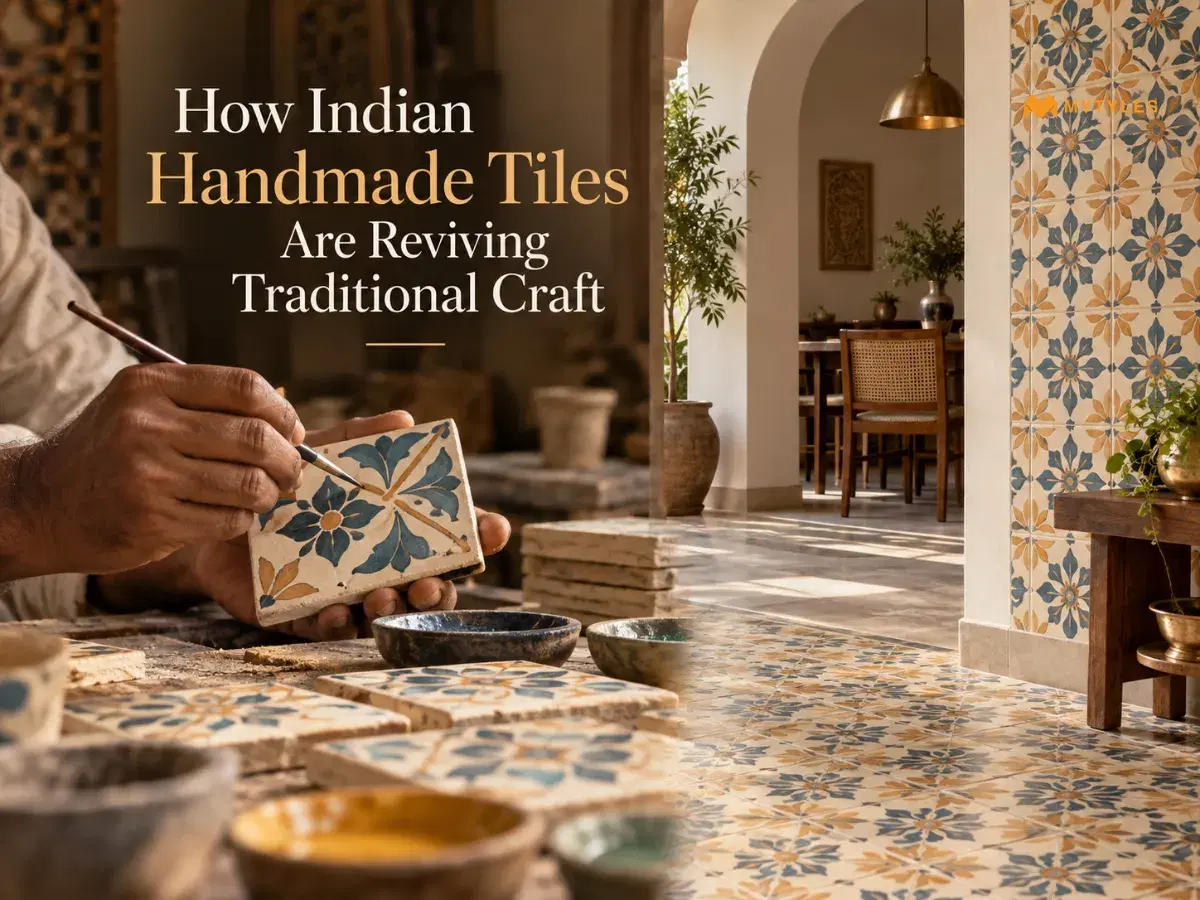
Every Indian region has its vernacular art forms, which have found their way into modern Indian homes as tiles. Traditional Indian tile designs connect your home to ancient roots. Some of these traditions found their way into the floors and walls of Indian homes long before the modern tile industry existed. Athangudi tiles, Jaipur blue pottery tiles, Kota floor tiles, and terracotta tiles in India are among the more recognised examples of a much wider tradition of indigenous tile craftsmanship.
What has changed recently is the audience. Contemporary Indian homeowners, architects, and interior designers are actively looking for handcrafted tiles to bring the cultural references into their space. That demand is creating new conditions for old crafts to continue, though not always in their original form.
Traditional Indian Tile Crafts and Their Regional Roots
The handcrafted tiles reveal their regional roots by their designs, motifs, materials, and colour combinations. Over time, the handcrafted tiles, such as Athangudi, Jaipuri blue pottery, or terracotta tiles, have evolved within the local context and production methods of their own.
Let’s get to know these colourful tiles better.
Athangudi Tiles
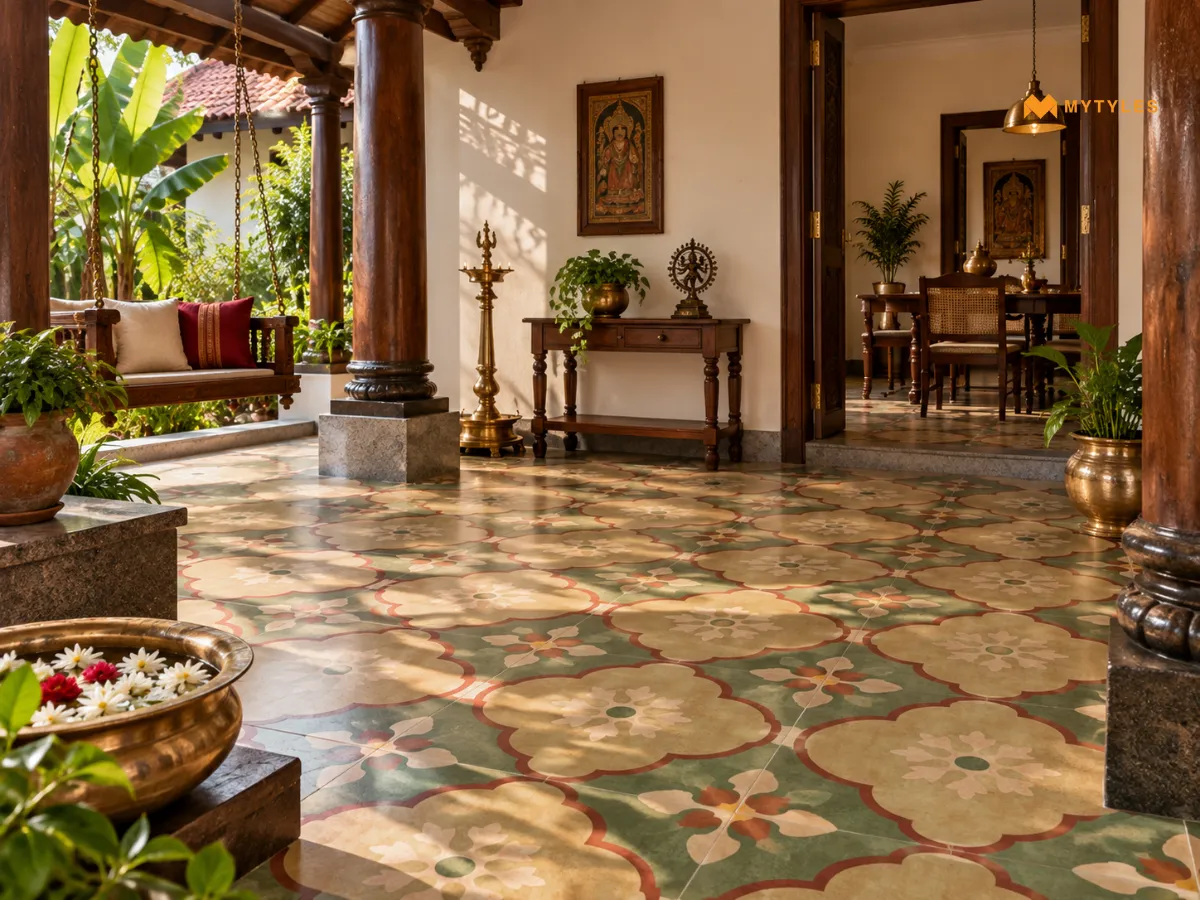
Athangudi tiles come from the Chettinad region of Tamil Nadu. The process uses a wet cement base poured into a metal mould, with coloured cement pressed over it before curing. No kiln firing is involved.
The geometric, floral, and Indian motif tile pattern comes from layering coloured cement rather than from a print applied to the surface. Each tile is made individually, which means slight variation is the design intent. Today, Athangudi tiles are used on floors, courtyard surfaces, and occasional wall applications, though suitability for specific locations depends on the individual product's specifications.
Jaipur Blue Pottery Tiles
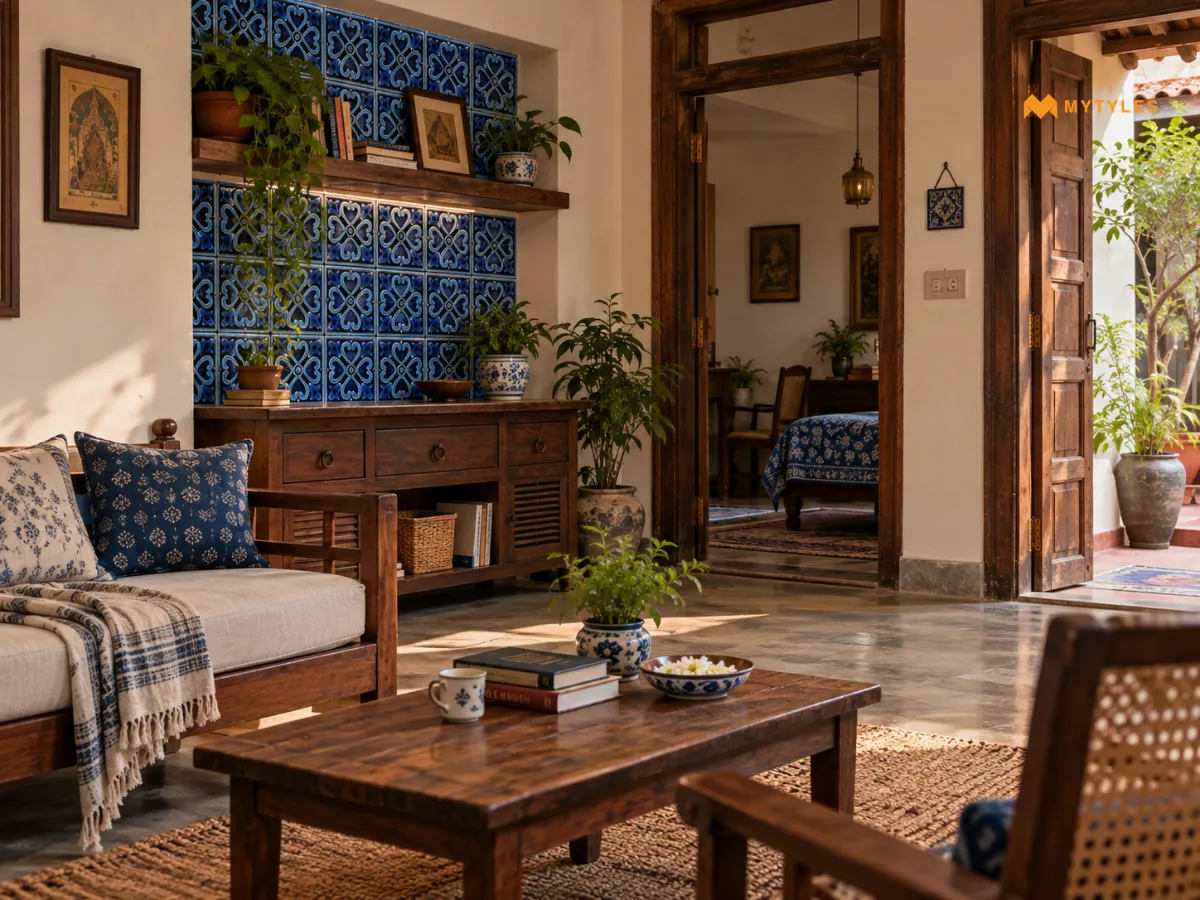
Jaipur blue pottery tiles are made from a distinctive non-clay body of quartz, glass, and other materials. The characteristic blue and white palette, with occasional green and yellow accents, references Persian and Central Asian influences. The designs are hand-painted before a glaze is applied, giving each tile a slightly different quality in the finished pattern.
Because the material body is different from standard ceramic or vitrified tiles, the performance characteristics are also different. These tiles are generally used for decorative wall applications, accent sections, and ornamental purposes. The product suitability must be confirmed for the specific application.
Terracotta and Clay Tile Traditions
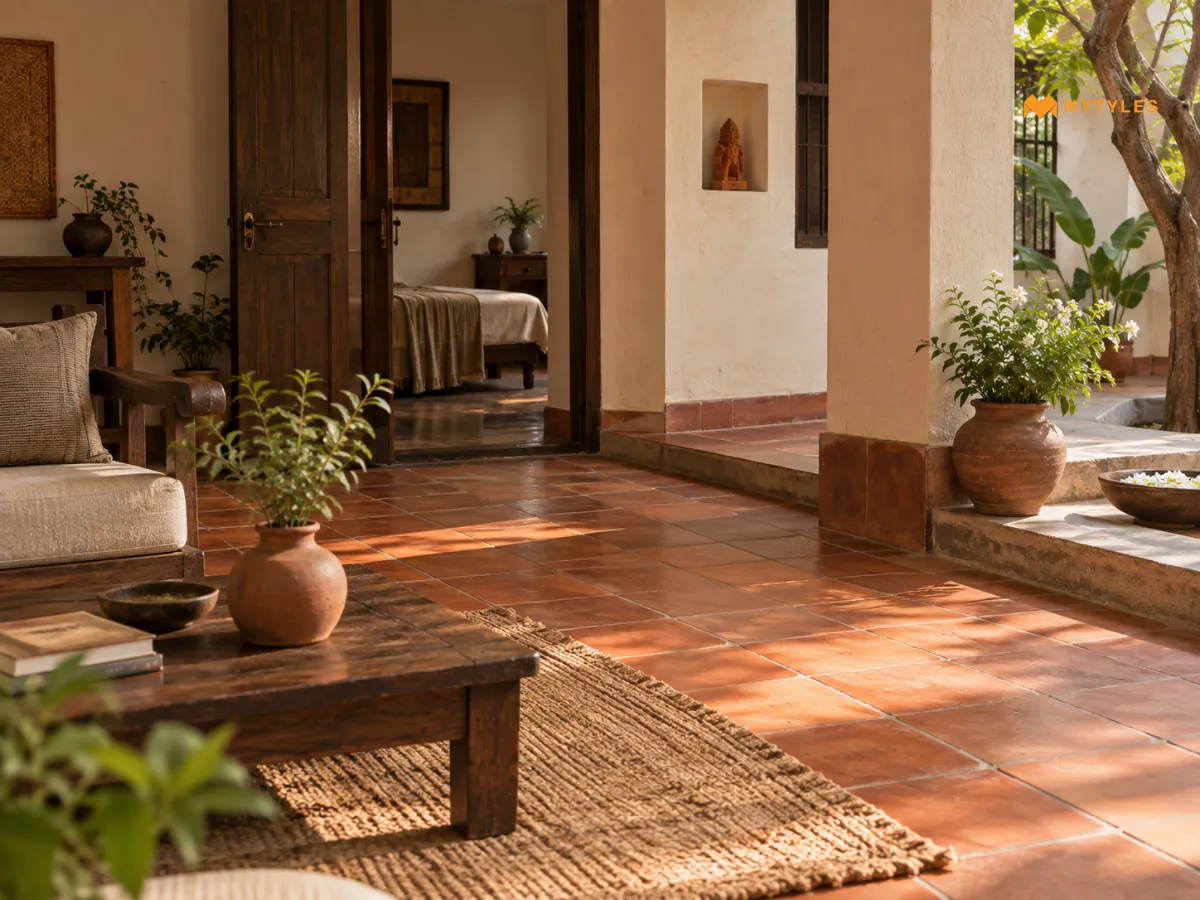
Terracotta tiles in India span several regional traditions. Mangalore roof tiles, flat terracotta floor tiles from rural Bengal and Gujarat, and moulded decorative panels from various craft centres across the country all fall within this broad category. The material is unglazed fired clay, which means it is porous and requires sealing before use on floors or in wet areas.
Some tile manufacturers are adapting terracotta formats and finishes for modern interior applications in the form of machine-made tiles that mimic the terracotta tile's appearance.
Kota Floor Tiles
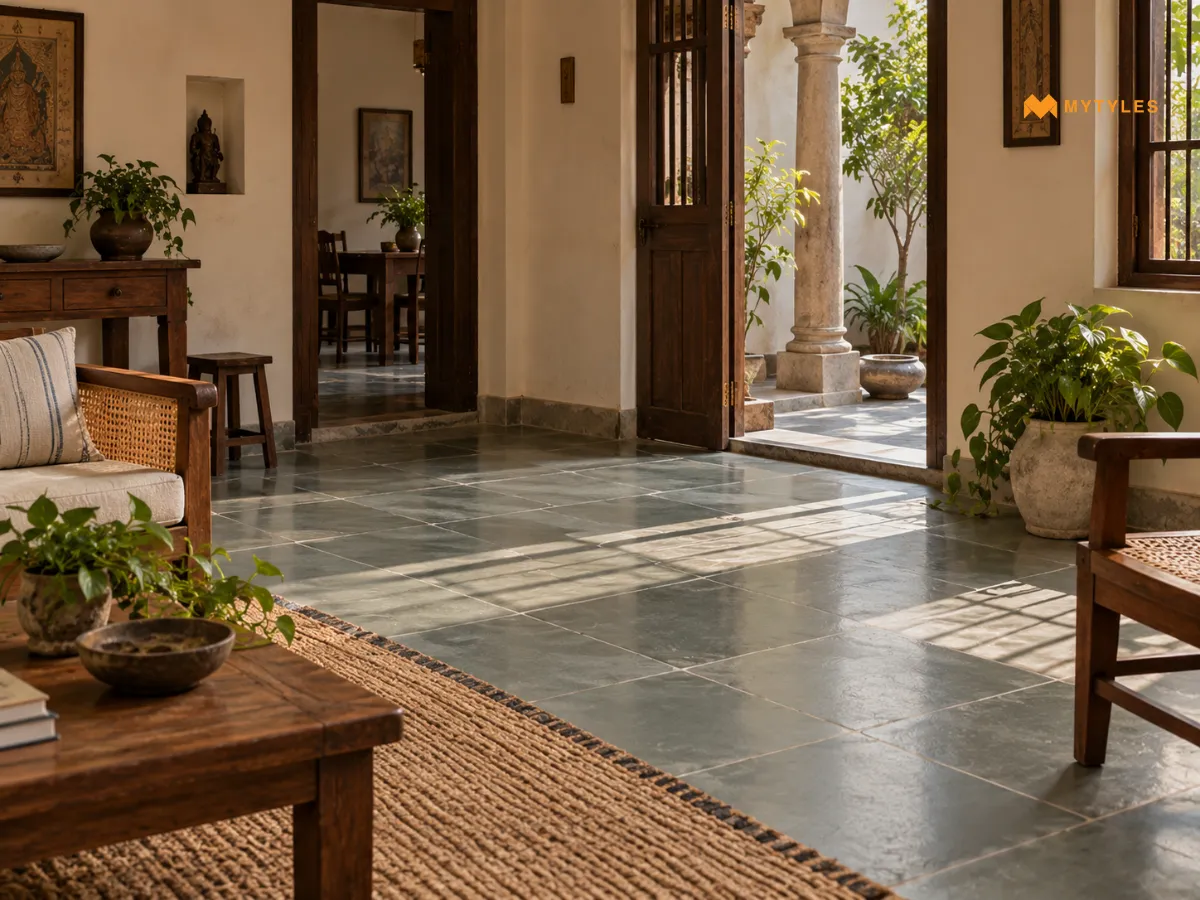
Kota floor tiles come from Kota in Rajasthan, where a naturally occurring fine-grained limestone is quarried and cut into floor tile formats. Kota stone is a natural stone product rather than a handmade tile, but it belongs within the broader conversation about traditional floor tiles with regional Indian origins.
The stone's blue-grey and green-grey tones made it a standard flooring choice in institutional and residential buildings across India for decades. It is still in use and is experiencing renewed interest in contemporary interiors. The Kota tiles are manufactured with machines in the current times in vitrified, porcelain, or ceramic materials. The colours and textures are inspired by the natural Kota tiles.
Where Handmade Tiles Are Being Used Today
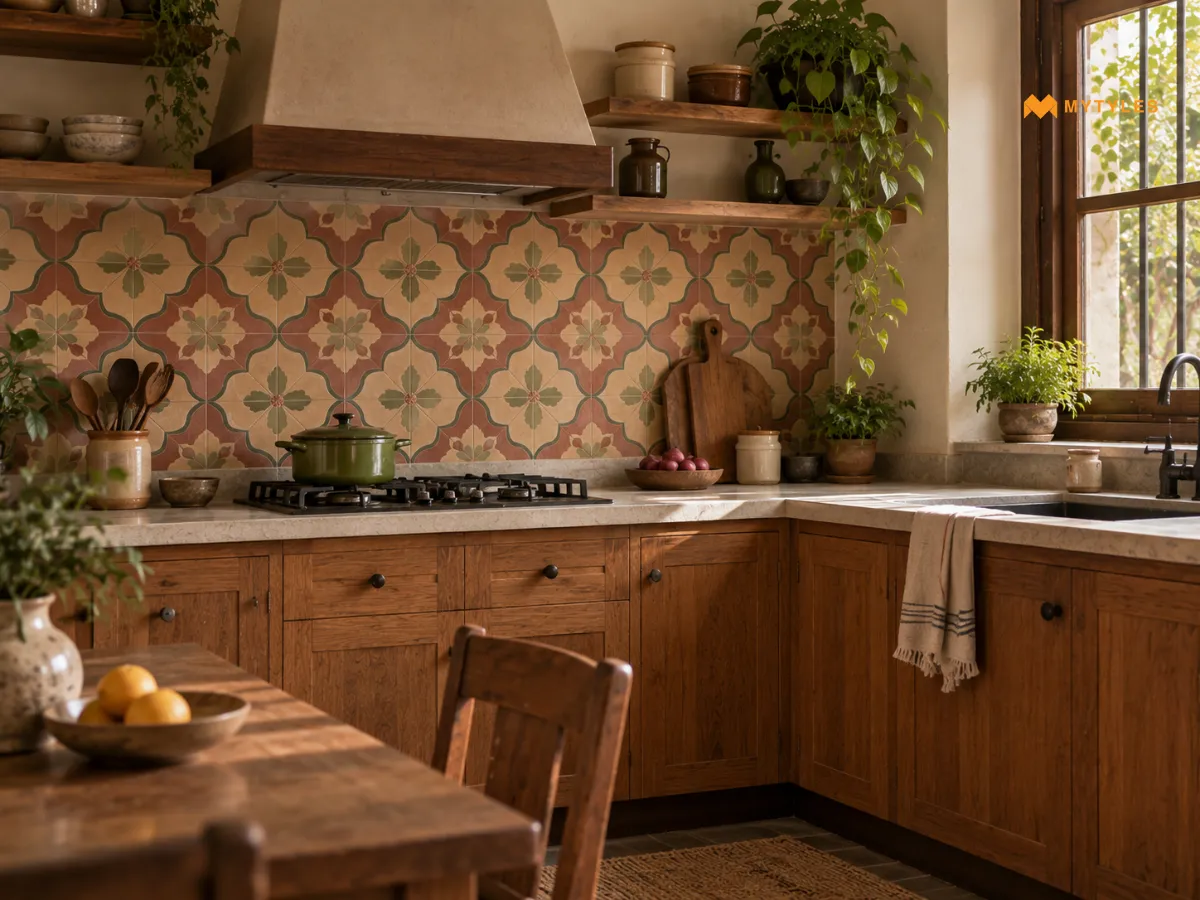
Artistic tiles bring pattern, colour and character into modern interiors. This direction also reflects a wider shift towards more personal spaces. Houzz’s 2026 Fall Design Trends Report notes growing interest in handcrafted and high-variation tiles, along with unusual tile patterns. Homeowners are also moving towards design choices that give their spaces more individual character.
Kitchen Backsplashes
Patterned focal sections, decorative borders, and Indian-patterned tiles in craft-inspired formats can be used on kitchen backsplashes. These areas are often visible at eye level, allowing the tile pattern to form part of the overall kitchen design. Confirm surface preparation requirements and grout selection with the product or supplier before installation. Sometimes, textured finishes are more demanding in terms of cleaning.
Bathroom Walls
Vanity backsplashes, niches, and feature sections are among the more common bathroom wall applications for hand-painted tiles and Indian heritage tiles. Wet area suitability, including waterproofing, substrate preparation, and appropriate grout, must be confirmed for each specific product before installation. The tile does not replace a waterproofing system.
Living Room Feature Walls
Decorative panels and framed tile compositions can incorporate Indian folk-art tiles and handcrafted tiles in India. On living room feature
walls, these tiles can function as decorative elements rather than covering the entire wall surface. The Kota floor tiles, terracotta floor tiles, and Athangudi tiles can be considered for floors, depending on the stated floor suitability.
Entrances and Courtyards
Traditional-pattern applications in entrance areas and courtyards are among the oldest uses of traditional tile designs in domestic architecture. Where the specific tile is rated for outdoor or high-traffic floor use, confirm this with the product or supplier before installation.
Comparing Handmade and Machine-Made Tiles
Indian artisan tiles have old-world charm and a touch of human creativity. Their imperfections are part of their design. Today, the manufacturing of tiles is more consistent, with a wide variety of materials, finishes, and artisan designs, such as those inspired by Indian craft traditions. A handy comparison chart of the two types of tiles:
Factor | Handmade Tiles | Machine-Made Tiles |
Production | Made or decorated using manual processes that can vary by craft and maker | Produced using controlled manufacturing processes and machinery |
Pattern Variation | Small differences in colour, motif, texture, or detailing may occur between pieces | Patterns and dimensions are generally more consistent across a production batch |
Design Character | Individual variations form part of the handcrafted appearance | Can reproduce traditional and artisan-inspired motifs with greater visual consistency |
Availability | Production volumes and lead times may depend on the artisan or workshop | Generally suited to larger production volumes and wider commercial availability |
Installation Planning | Variations between pieces may need consideration during layout | More consistent sizing can simplify pattern and layout planning |
Best For | Projects where handcrafted character and traditional production are priorities | Projects seeking artisan-inspired patterns with consistent production and broader availability |
Indian Handmade Tiles in a Modern Tile Market
Traditional craftsmanship does not necessarily survive by remaining unchanged. The Athangudi and Jaipur blue pottery techniques reaching contemporary interiors carry their basic methods forward while adapting to new markets and applications. That Indian craft revival now extends further, with hand-painted motifs and artisan patterns reinterpreted through machine-made tile production, making these designs more accessible without claiming to replace the original craft. Some urban homeowners and designers are incorporating this artistic, pattern-led tiling, whether handcrafted or machine-made.
MyTyles has an exclusive collection of terracotta-inspired tiles, Athangudi tiles, Kota tiles, and other traditional craft-patterned tiles in various materials, colours, finishes, and patterns. You can compare the textures and patterns in person at MyTyles Experience Centre.

What Is the Difference Between Handmade and Machine-Made Tiles?

Handmade ceramic tiles and other artisan-made tiles involve manual forming, decorating, glazing, or similar craft processes. This indigenous tile craftsmanship can create natural variations between pieces. Machine-made tiles use controlled production methods for greater consistency and can reinterpret Indian heritage tile designs for contemporary interiors. Neither method alone determines quality or suitability.
Are Handmade Tiles Better Than Machine-Made Tiles?
Neither is automatically better. Handmade tiles, including some Athangudi tiles and Jaipur blue pottery tiles, may suit projects where traditional craftsmanship and individual variation are priorities. Machine-made options can offer greater consistency while incorporating Indian motif tiles or block-print-inspired tiles into contemporary Indian tile design. Selection should depend on specifications and application.
Why Do Handmade Tiles Have Variations in Colour, Size, and Pattern?
Variations can occur because artisan-made tiles are shaped, decorated, glazed, or finished through manual processes. Depending on the craft, differences in dimensions, edges, colours, textures, and motifs may occur. Such variation can be part of the character of traditional floor tiles and traditional wall tiles and should be considered during layout planning.
Are Machine-Made Artisan-Inspired Tiles the Same as Handmade Tiles?
No. Machine-made tiles can reinterpret Indian folk-art tiles, Indian inlay tiles, traditional motifs, colours, or textures, but they should not be described as handmade unless the relevant manual process is actually involved. Such reinterpretations can contribute to the revival of Indian crafts in contemporary design without claiming to replace original craft traditions.
Can Handmade and Machine-Made Tiles Be Used in Bathrooms and Kitchens?
Potentially, but the production method alone does not determine suitability. Whether considering handmade ceramic tiles or machine-made terracotta tiles in India, check the individual product's specified application, material, finish, and relevant performance information. For floors where slip performance matters, verify the manufacturer's stated slip-resistance information before selection.
Are Handmade Tiles More Difficult to Install Than Machine-Made Tiles?
Handmade tiles can require additional layout planning when pieces vary in dimensions, edges, thickness, or pattern alignment. This may apply to certain handcrafted products. Machine-made tiles generally provide more consistent dimensions. Installation requirements ultimately depend on the product, substrate, pattern, grout joints, application, and manufacturer recommendations.
Do Handmade Tiles Require More Maintenance Than Machine-Made Tiles?
Not necessarily. Maintenance depends more on material, glaze or surface treatment, porosity, grout, application, and manufacturer instructions than on production method. Jaipur blue pottery tiles, terracotta tiles in India, handmade products, and machine-made traditional wall tiles can have different care requirements. Follow the cleaning, sealing, and maintenance guidance specified for the individual product.

ABOUT THE AUTHOR
Nabiya Naqvi
Nabiya Naqvi is a content writer with a postgraduate background in chemical sciences and a strong passion for creative expression. Her journey into writing began with a love for storytelling and gradually grew into a professional path focused on interiors, home decor, and design-led content. With a keen interest in beautiful living spaces, Nabiya enjoys simplifying design ideas and making them relatable for everyday readers. Through her writing, she blends creativity, research, and an eye for detail to help homeowners understand how tiles, textures, and thoughtful material choices can transform a space.
Latest Blogs By MyTyles