Inspiration Gallery
Blog
Tile Calculator
08065423741



.svg)


How to Choose Bathroom Tiles for Homes With Hard Water
ByAditi Bardhan

Tue , Sep 01 , 2026

Read Time: 5 Min


 Copied!
A bathroom can look patchy even when it is cleaned often. The shower wall gets chalky marks. The floor near the drain turns dull. The grout below the tap starts looking stained. In many homes, this is not only a cleaning issue. It is also a hard water, tile finish, grout and drainage issue.
Water hardness is measured in mg/L as calcium carbonate. USGS classifies 0–60 mg/L as soft, 61–120 mg/L as moderately hard, 121–180 mg/L as hard, and more than 180 mg/L as very hard.
This is why bathroom tiles for hard water should be chosen with numerous parameters and not only design. You should check water absorption, surface finish, tile size, grout type, slip suitability, slope, waterproofing, joint width and wet-area fixing before installation.
How Hard Water Affects Bathroom Tiles
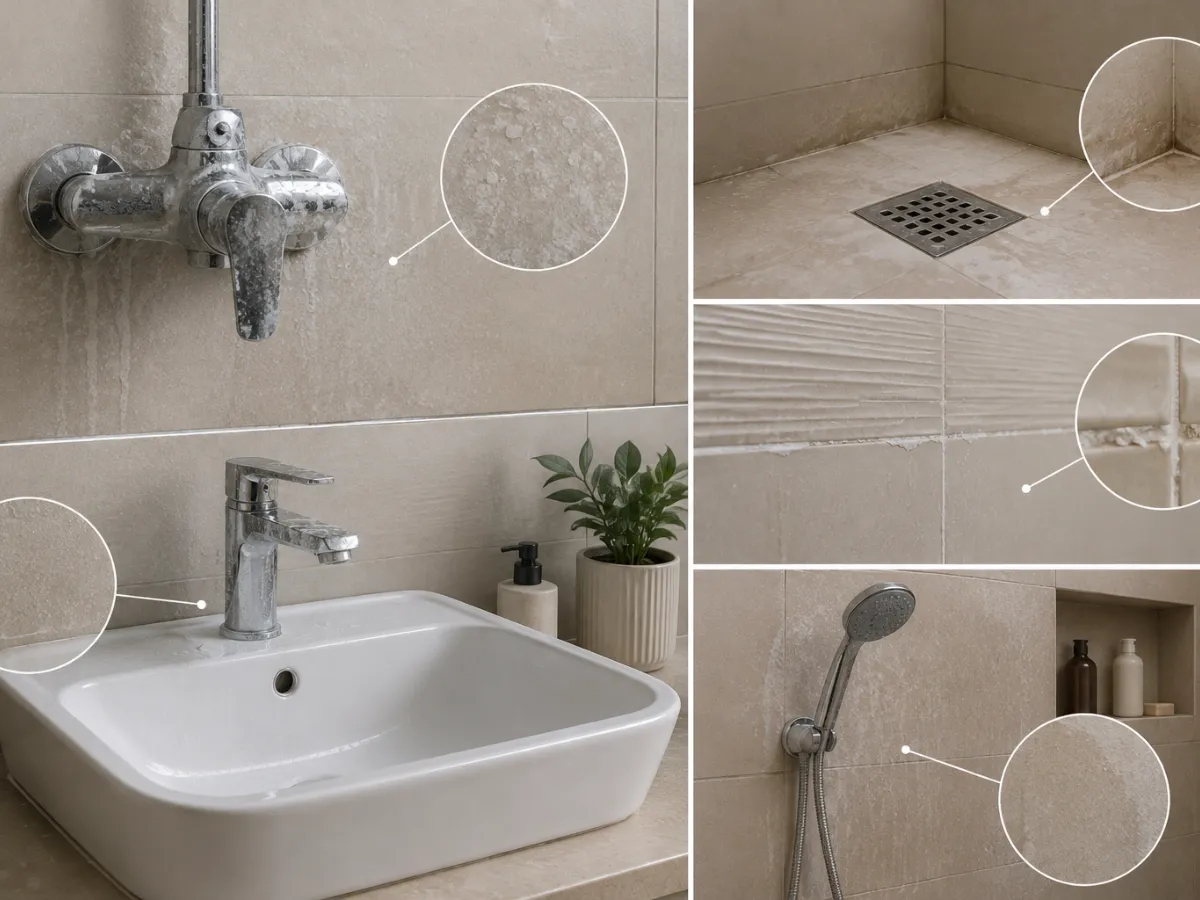
Hard water has minerals like calcium and magnesium dissolved in it. When water dries on a tile, those minerals may stay back as visible deposits. USGS also describes hardness as the water property that causes soap residue and scale when water evaporates.
Mineral Deposits and White Marks
Mineral deposits on bathroom tiles usually show up below taps, near shower mixers, around drain corners and on splash zones. They can look like white powder, chalky spots or dull patches. White marks on bathroom tiles become more visible when water sits on the surface and dries there. Poor floor slope and wide grout joints can make the issue worse.
Soap Scum and Surface Dullness
Hard water does not lather well with soap. It can mix with soap, shampoo and body-wash residue and leave a film on tiles. This is where easy-to-clean bathroom tiles help. A smooth glazed wall tile is usually easier to wipe than a deep-groove or rough-textured wall tile.
Staining Around Grout and Tile Joints
Grout joints often stain before the tile surface does. Water, soap residue and minerals collect in the joint line. For grout for hard water bathrooms, ask about epoxy grout or polymer-modified grout based on the site, tile and budget. Epoxy grout can be useful in wet zones, but it needs skilled application.
Build-Up in Frequently Wet Areas
Hard-water build-up is different in each bathroom zone. Shower floors need suitable grip, slope and drainage. Shower walls and basin backsplashes need surfaces that are easy to wipe. Dry walls can handle more texture or design detail. So, tiles for hard water bathrooms should be selected zone by zone. A finish that works on a wall may not be right for a shower floor.
What to Look for in Bathroom Tiles for Hard Water
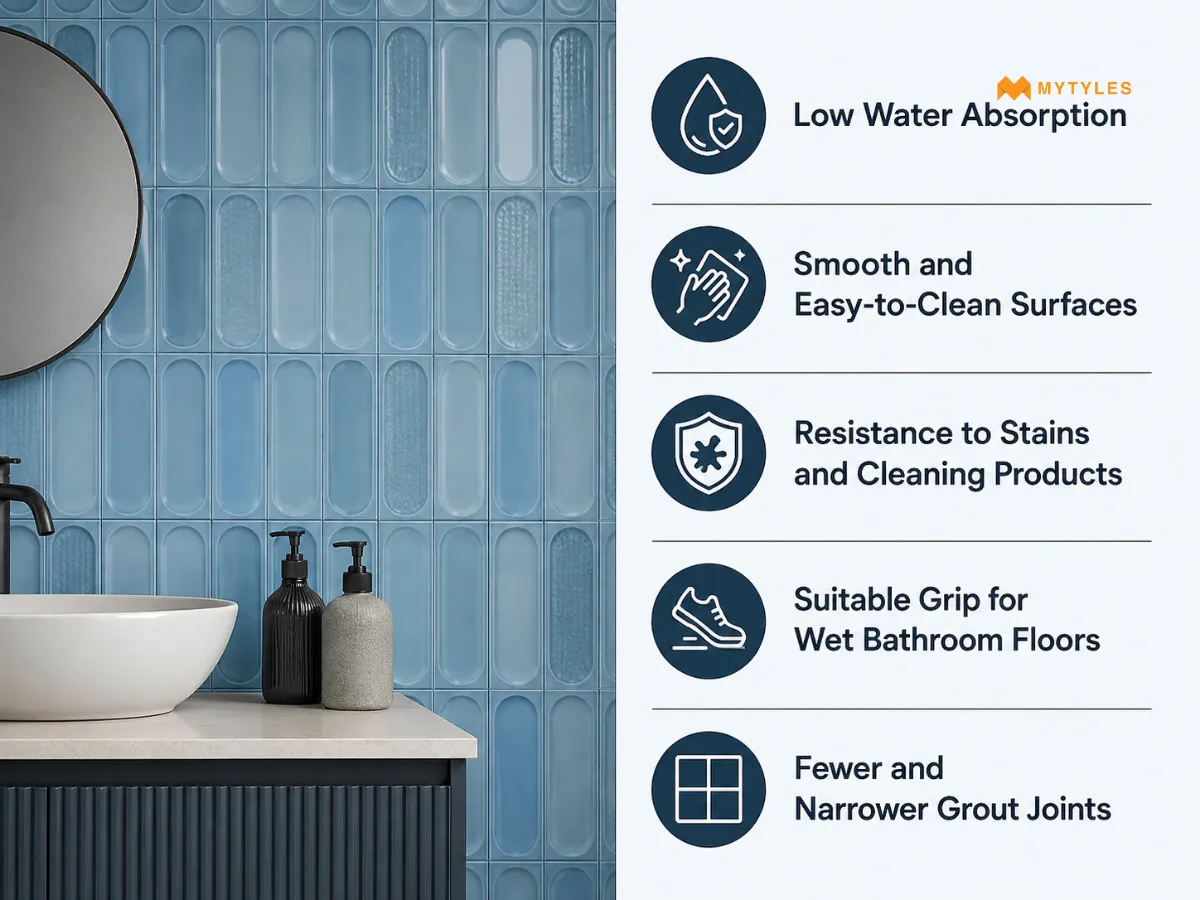
Tiles for bathrooms with mineral deposits should be selected by more than just design. Check water absorption, surface texture, stain resistance, grip and grout joint planning. These details decide how easy the bathroom will be to clean after daily use.
Low Water Absorption
Tiles with lower water absorption are usually preferred in wet spaces. According to ANSI standards, porcelain tiles are generally characterised as having water absorption of 0.5% or less. Low absorption helps the tile body handle wet use better, but hard-water residue can still dry on the surface. So, hard water resistant bathroom tiles should also have a cleanable finish and clear product specifications.
Smooth and Easy-to-Clean Surfaces
For walls near taps and showers, smooth surfaces are easier to maintain. Deep textures may hold residue. Bathroom wall tiles for hard water should be checked by touch, not only by photo. A surface that looks premium online may be harder to clean if it has sharp grooves.
Resistance to Stains and Cleaning Products
Hard-water bathrooms need regular cleaning. The tile should suit mild tile cleaners and routine wiping. Bathroom tiles for hard water stains should have clear care instructions. Avoid using acidic cleaners unless the product care guide allows it.
Suitable Grip for Wet Bathroom Floors
Bathroom floors need grip. ANSI A137.1 requires tile flooring recommended for level interior wet walking areas to have a wet DCOF of 0.42 or greater, but DCOF is still only one comparison measure and does not guarantee that slips cannot happen. Bathroom floor tiles for hard water should be checked for wet use, grip and cleaning together.
Fewer and Narrower Grout Joints
Tile size affects how many grout lines appear on the wall or floor. Larger tiles usually create fewer joints, so there are fewer visible lines where soap residue and mineral deposits can show. Do not reduce the grout width only for easier cleaning. The correct joint width depends on the tile size, edge type, surface level and installation method. Low-maintenance bathroom tiles work better when the layout, grout choice and fixing quality are planned together.
Best Tile Materials for Hard-Water Bathrooms
No tile can stop hard water deposits fully. However, tile material is important because every surface handles water, stains and cleaning differently. Porcelain, glazed vitrified and glazed ceramic tiles are commonly used in bathrooms, but the final choice should depend on the wall or floor area, finish and product suitability.
Porcelain Tiles
Porcelain is dense and often used in wet areas because of its low water absorption. It can work for walls and selected floors when the finish is suitable. Porcelain tiles for bathroom walls are useful near showers and basins when you want a cleaner surface with fewer maintenance problems.
Glazed Vitrified Tiles
Glazed vitrified tiles offer many marble-look, stone-look and plain designs. They can be practical for Indian bathrooms if the surface and grip are chosen correctly. Vitrified bathroom floor tiles should be checked for slip rating before use in wet zones.
Glazed Ceramic Wall Tiles
Glazed ceramic tiles are commonly used on bathroom walls because the surface is easy to wipe in daily use. Ceramic bathroom wall tiles can work behind basins, on drywalls and on selected shower walls if the product is suitable for bathroom application. Check the tile size, surface finish, grout requirement and wall suitability before finalising, especially for areas that get regular water splashes.
Natural Stone Tiles
Natural stone can look rich, but it is not the easiest choice in hard-water bathrooms. Many stones need sealing and careful cleaning. Use natural stone only after checking porosity, sealing schedule and cleaner compatibility.
Bathroom Tiles to Avoid in Homes With Hard Water
Some tiles look good in photos but become difficult to maintain in hard-water bathrooms. The problem is usually not the design itself, but the surface texture, porosity, grout lines or slip risk in wet zones.
Highly Porous and Unsealed Tiles
Porous tiles can absorb moisture and stains more easily. Avoid them in wet areas unless they are sealed and maintained properly. Wet-area tile suitability should be checked before using any tile in a shower or floor zone.
Deeply Grooved Wall Tiles
Deep grooves can trap water and soap. They may look good on a sample board, but daily cleaning can become difficult. Keep heavily textured tiles away from direct shower spray if maintenance is a concern.
Very Dark Glossy Tiles
Dark glossy tiles show dried water drops quickly. Black, navy and dark brown can look rich, but they need regular wiping. Use glossy bathroom wall tiles in controlled areas where water marks can be cleaned easily.
Small Mosaics Across Large Wall Areas
Small mosaics create many grout lines. In hard-water bathrooms, this means more joint cleaning. Use mosaics in niches or borders, not across the full shower wall.
Polished Tiles on Wet Bathroom Floors
Polished floors can become risky when wet. They may suit walls and dry zones better than shower floors. Matt bathroom floor tiles may be a safer starting point for wet floors, but always check product grip.
Installation Checks That Protect Bathroom Tiles
Even the right tile can fail if the bathroom is not installed properly. Waterproofing, adhesive, slope, sealing and grout spacing all affect how water moves, dries and settles on the surface.
- Complete the Waterproofing Before Tiling: Tiles are not the waterproofing layer. Finish the waterproofing before the tiles go on. Pay extra attention to shower walls, bathroom floors, corners and pipe openings, because these areas get wet often.
- Use Adhesive Suitable for Wet Areas: Wet zones need the right adhesive. Wall tile adhesive and floor tile adhesive may not always be the same. The installer should match adhesive to tile size, substrate and water exposure.
- Plan the Correct Floor Slope: A bathroom floor should not hold puddles. Standing water leaves more deposits and can stain grout faster. You should also check the slope before tiling, especially near the shower, faucet and floor drain.
- Maintain Consistent Grout Joints: Uneven grout joints collect dirt unevenly. They also make the floor or wall look poorly finished. Use spacers, check alignment and avoid random joint width changes.
Build a Better Bathroom for Hard-Water Conditions
A bathroom with hard water is easier to plan when the tiles, grout and slope are checked together. For bathroom tiles for hard water, look at the surface finish, water absorption, grip and where the tile will be used. Smooth walls, neat grout joints and proper drainage can help reduce visible white marks and dull patches.
You can compare the best bathroom tiles for hard water on MyTyles by finish, material and application. For site-level decisions, visit the MyTyles Experience Centre with bathroom measurements or photos so the tiles can be checked for shower floors, vanity walls and wet areas before finalising them.

Which Bathroom Tiles Are Best for Hard Water?

The best tiles for hard-water bathrooms are usually smooth, low-absorption tiles that are easy to wipe. Porcelain, glazed vitrified and glazed ceramic wall tiles can work well when used correctly. For floors, check grip and slope. For walls, avoid deep grooves near taps, shower mixers and basin splash zones.
Are Matt or Glossy Tiles Better for Hard Water?
Glossy tiles are often easier to wipe on bathroom walls, especially around basins and dry areas. Matt tiles may show fewer reflections and can suit floors when grip is needed. The better choice depends on wall or floor use, water exposure, cleaning routine, tile texture and product suitability.
What Color Bathroom Tiles Hide Hard-Water Stains?
Mid-tone beige, grey, stone-look and softly patterned tiles can hide hard-water marks better than very dark or flat glossy tiles. White tiles with subtle veining also work on walls. Avoid strong tile and grout contrast if you want mineral deposits, joint stains and water marks to look less visible.
Does Hard Water Damage Bathroom Tiles?
Hard water usually leaves mineral deposits on the surface rather than damaging the tile immediately. The visible issue is repeated build-up, dullness and stained grout lines. If water dries in the same place every day, marks become harder to remove. Regular wiping, good slope and suitable cleaners can help.
Which Grout Is Best for a Hard-Water Bathroom?
Epoxy grout is often used in wet bathrooms because it absorbs less water than regular cement grout and can be easier to clean. The final choice should depend on tile type, joint width and installer skill. In hard-water bathrooms, narrow and even joints usually reduce visible residue build-up.
How Can You Prevent Hard-Water Stains on Bathroom Tiles?
You can reduce hard-water stains by wiping wet areas after use, keeping the bathroom ventilated and avoiding standing water. A proper floor slope also helps. Use mild cleaners that suit the tile surface. Smooth wall tiles, fewer grout joints and mid-tone colors can make maintenance easier.
How Do You Remove Hard-Water Stains From Bathroom Tiles?
Start with a mild tile cleaner and a soft sponge or cloth. Let the cleaner sit briefly, then wipe and rinse well. Avoid harsh acids unless the product care guide allows them. For stubborn marks, follow the tile brand’s instructions or test the cleaner on a small hidden area first.

ABOUT THE AUTHOR
Aditi Bardhan
Aditi Bardhan is a professional content writer with over five years of experience creating SEO-focused, research-backed content across diverse industries. She specialises in the tile and surface materials space, writing for homeowners, architects, interior designers, and trade professionals. Her work combines technical research, design awareness, and a strong understanding of customer needs, helping readers make clearer and more confident choices. Through her content, Aditi simplifies complex material concepts, highlights practical design benefits, and helps brands build trust and authority in the tile and construction industry.
Latest Blogs By MyTyles