Inspiration Gallery
Blog
Tile Calculator
08065423741



.svg)


12 Picket Tile Feature-Wall Ideas for Bathroom Vanities and Shower Areas
ByAditi Bardhan

Tue , Aug 04 , 2026

Read Time: 5 Min


 Copied!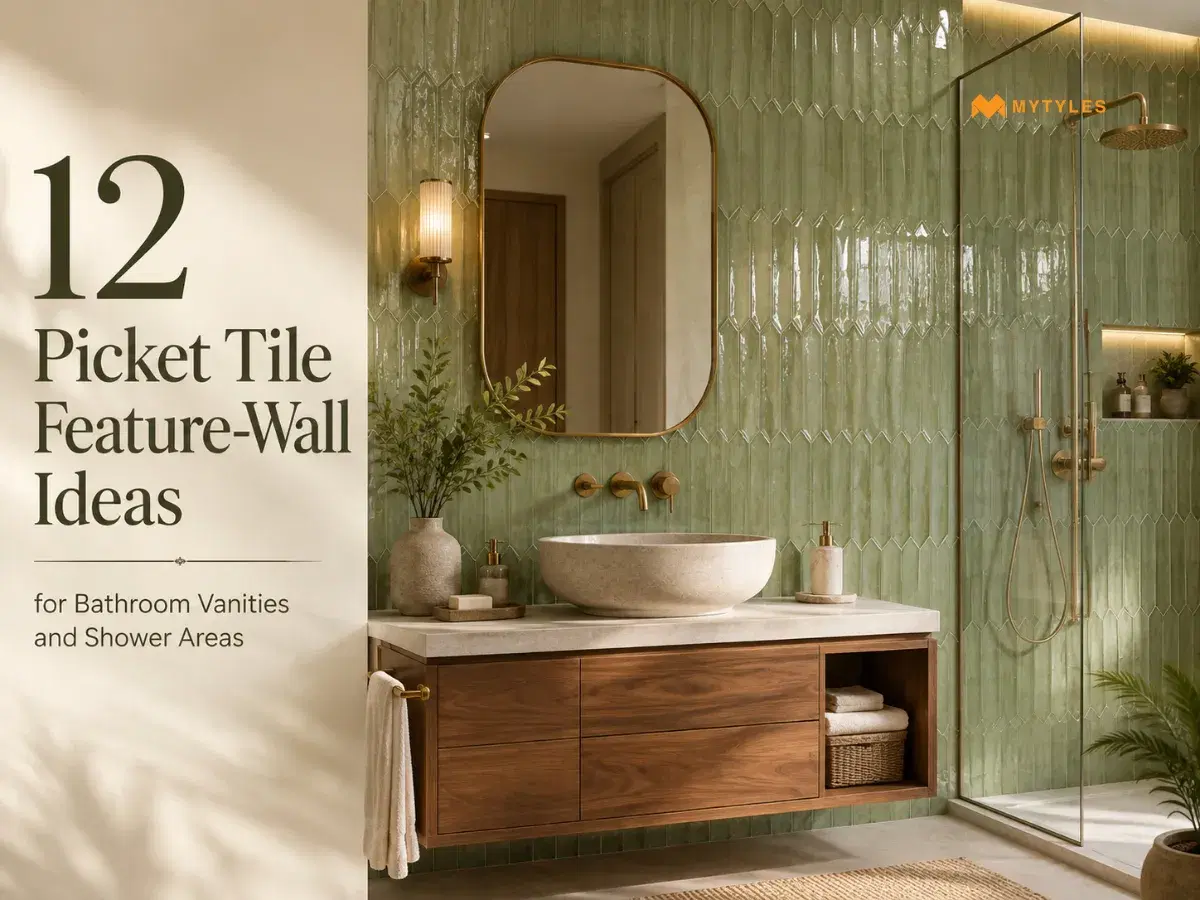
A bathroom does not always need expensive fittings to look well-designed. Sometimes, one wall behind the vanity or shower can change the full look of the space. That is where picket tile ideas work well. The shape feels fresh, but not too loud. It gives the wall some movement without making the bathroom look crowded. For better Indian bathroom tile design, you also need to think about water marks, lighting, grout lines and daily cleaning. Picket tiles work in both compact bathrooms and larger master bathrooms. They can look bright in white, soft in beige, fresh in green and bold in darker shades.
What Are Picket Tiles?
A picket tile design has a slim shape with pointed ends. It looks like a long hexagon, but it feels more directional on the wall. This shape is the reason picket tiles look different from regular subway tiles. A picket tile wall design can be laid vertically, horizontally or in a repeated pattern. Vertical layouts make the wall look taller. Horizontal layouts make the wall feel wider. These tiles are mostly used behind mirrors, wash basins, shower walls and small bathroom highlights. The design can stay simple or become more decorative, depending on the color and grout.
Why Picket Tiles Work Well on Bathroom Feature Walls
A picket tile feature wall works well because the tile shape already adds detail. You do not need a very loud pattern to make the wall stand out. Good bathroom feature wall tiles should make one area look special without disturbing the whole bathroom. Picket tiles do this nicely because the shape is stylish but still clean.
They also suit modern bathroom wall tiles because the layout looks sharp and fresh. The wall feels designed, not flat. Many designer bathroom wall tiles can look too heavy in small bathrooms. Picket tiles are a safer choice when you want something interesting but still easy to live with.
6 Picket Tile Feature-Wall Ideas for Bathroom Vanities
The vanity wall is the most visible part of the bathroom. It is where the mirror, basin, light and counter all come together. A good tile choice here can make even a simple vanity look more finished. When choosing bathroom vanity wall tiles, check the mirror shape, counter color, tap finish and lighting first. The wall should support all these elements, not fight with them.
Glossy White Picket Tile Vanity Wall
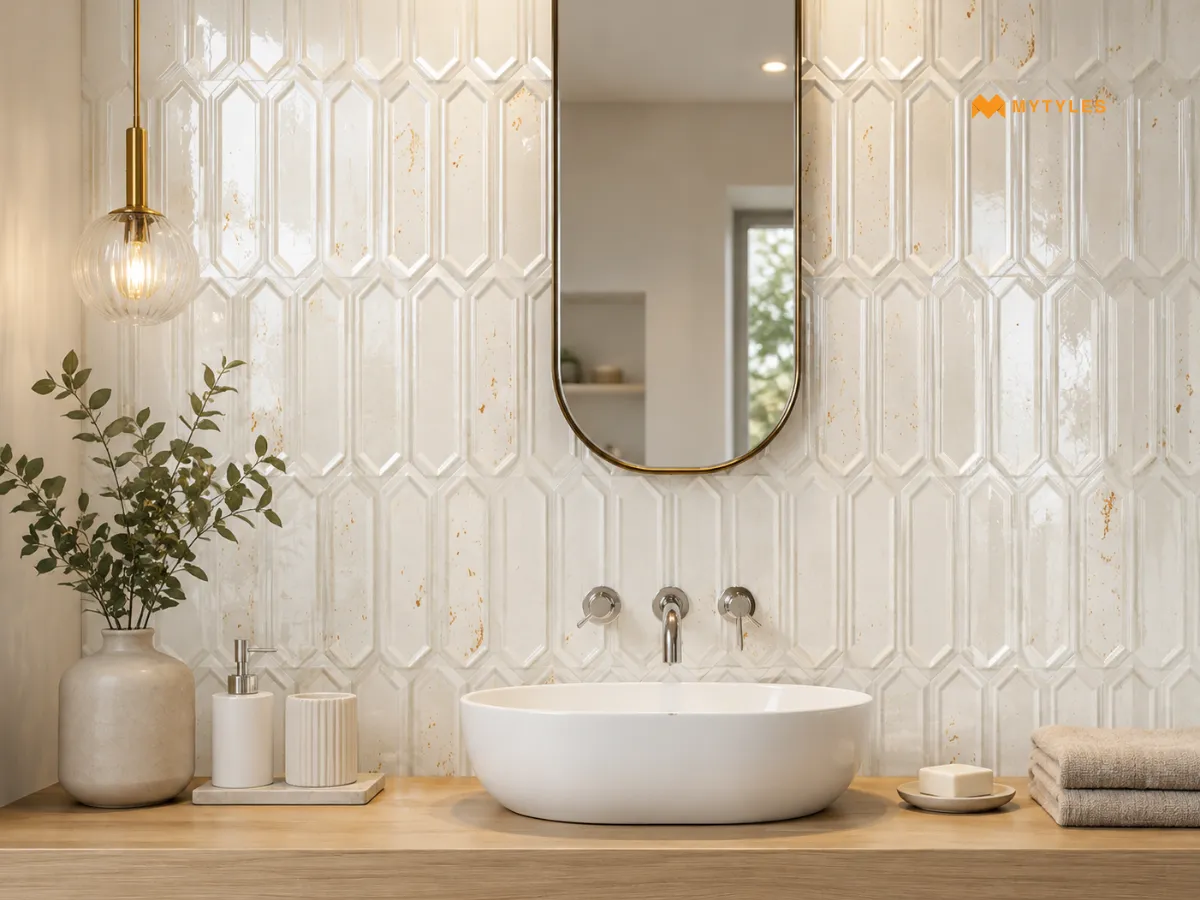
Glossy picket tiles work well behind a vanity because they reflect light and make the area look brighter. This helps in bathrooms that do not get much natural light. Use picket tile for a vanity wall with a simple mirror, chrome fittings or a light wooden counter. Keep the grout neat so the wall looks clean around the basin.
Sage Green Picket Tiles with a Wooden Vanity
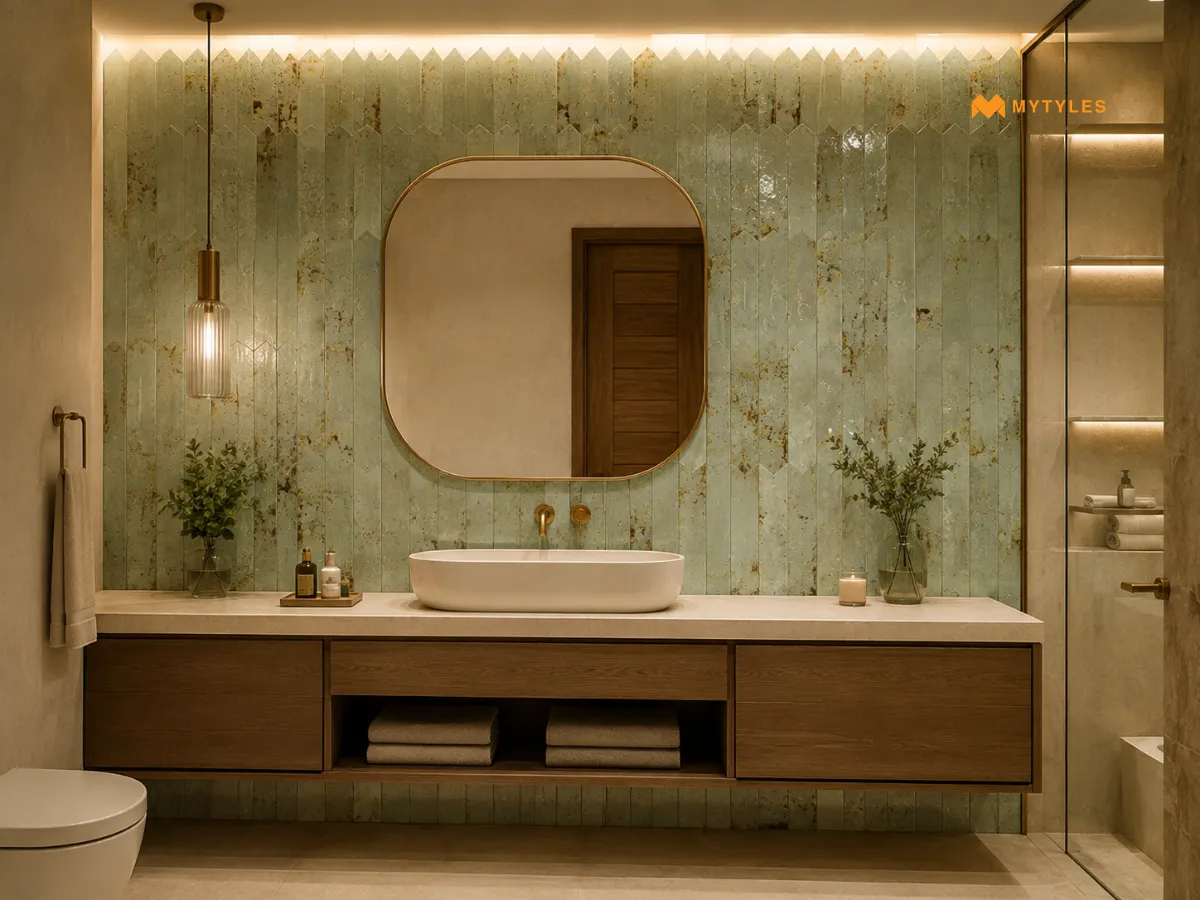
Sage green picket tiles are a good choice when you want the bathroom to feel soft and fresh. It pairs beautifully with a wooden vanity, beige floor tiles and warm lights. This idea works well in homes where the bathroom should feel calm but not plain. Avoid very bright green if the space is small.
Vertical Picket Tiles Behind the Wash Basin
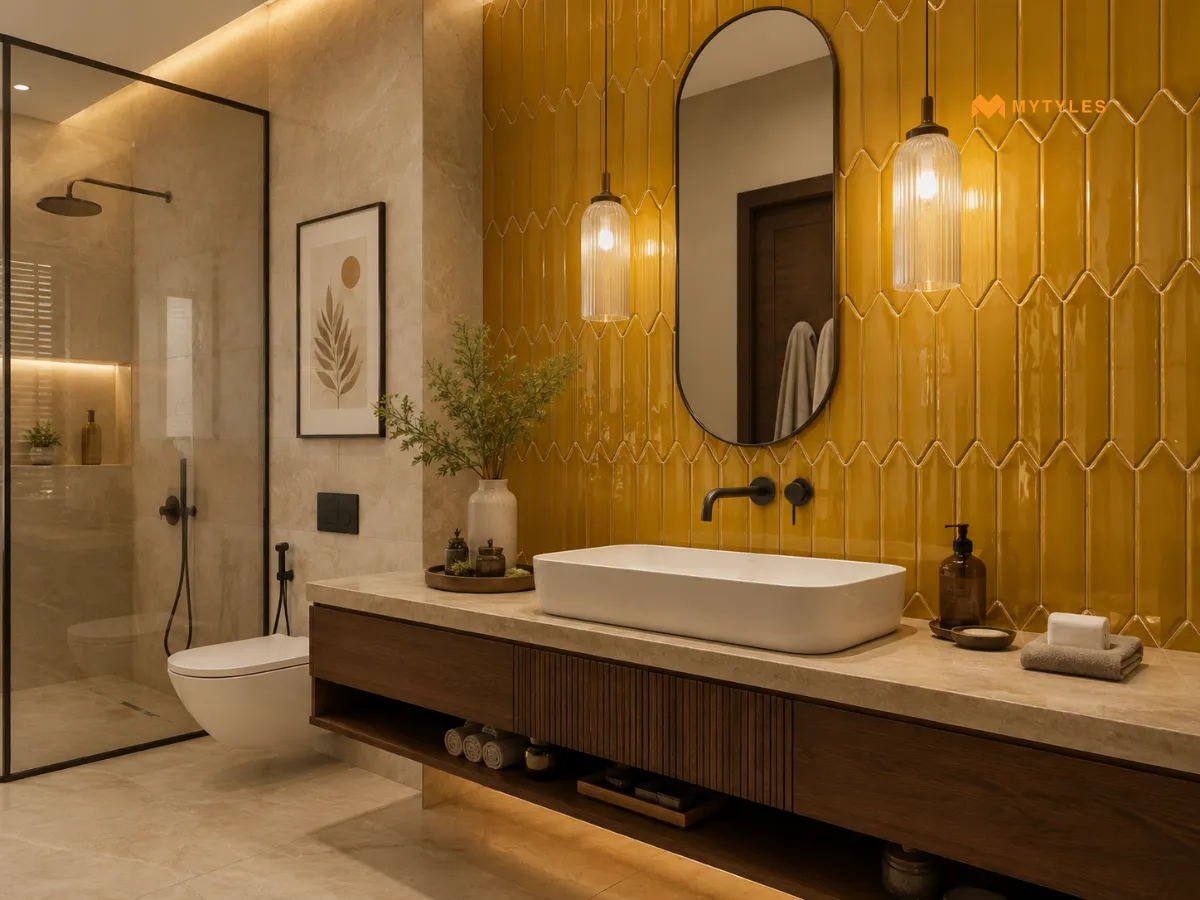
Vertical picket tiles behind the basin make the wall look taller. This is useful in small bathrooms or narrow vanity areas. Wash basin wall tiles should also be easy to wipe because this area gets water drops every day. Keep the tap, mirror and light placement in mind before deciding the tile height.
Horizontal Picket Tiles Behind a Double Vanity
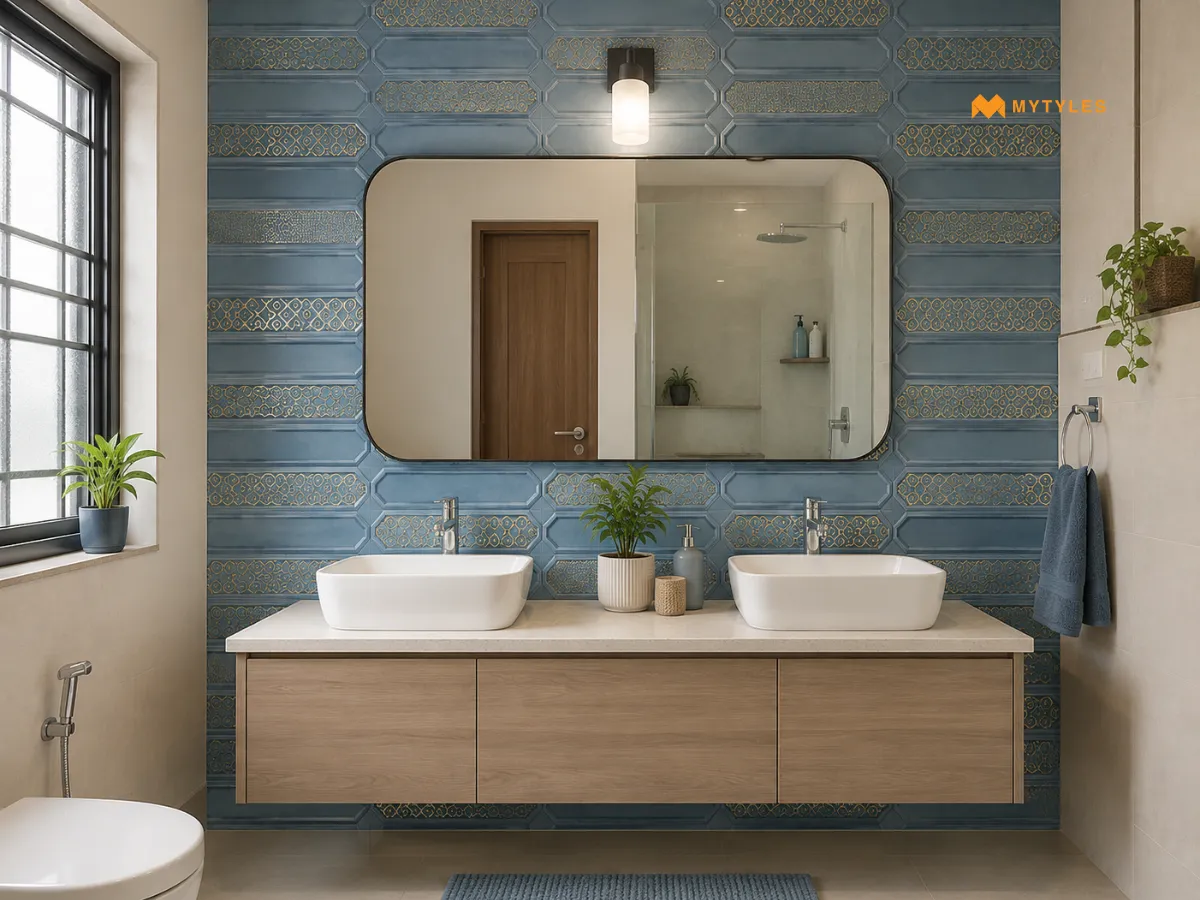
Horizontal layouts suit wider vanity walls. They make the space feel stretched and balanced, especially behind double basins. Choose vanity backsplash tiles in a soft shade if the counter is already large or dark. This keeps the wall from feeling too heavy. A long mirror can make the whole setup look cleaner.
Matt Beige Picket Tiles for a Minimal Bathroom
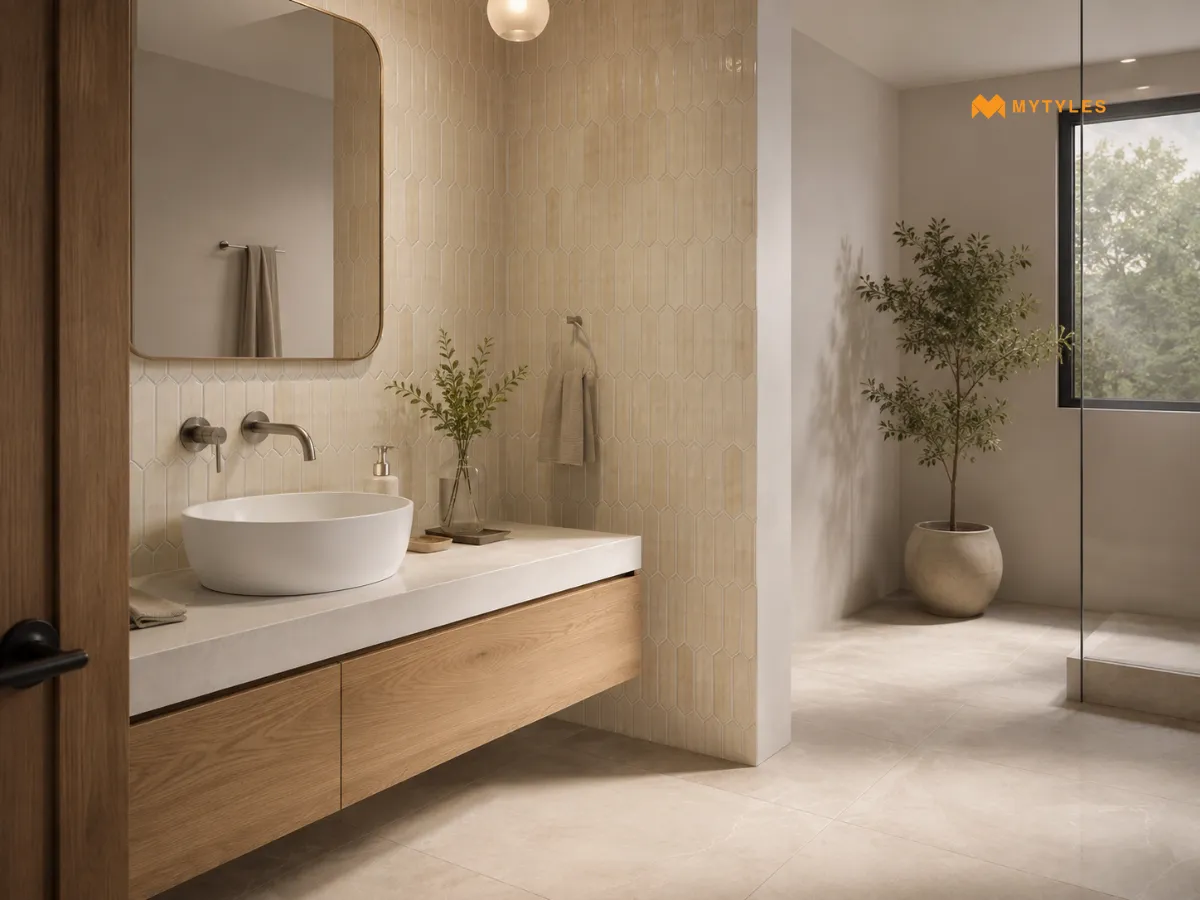
Beige picket tiles are good when you want a calm bathroom. They give the wall detail without making it look busy. This idea suits minimalist bathroom tiles because the color stays soft while the shape adds interest. Pair it with a white basin, light wood, brushed metal fittings or a plain mirror.
Dark Picket Tiles for a Luxury Vanity Wall
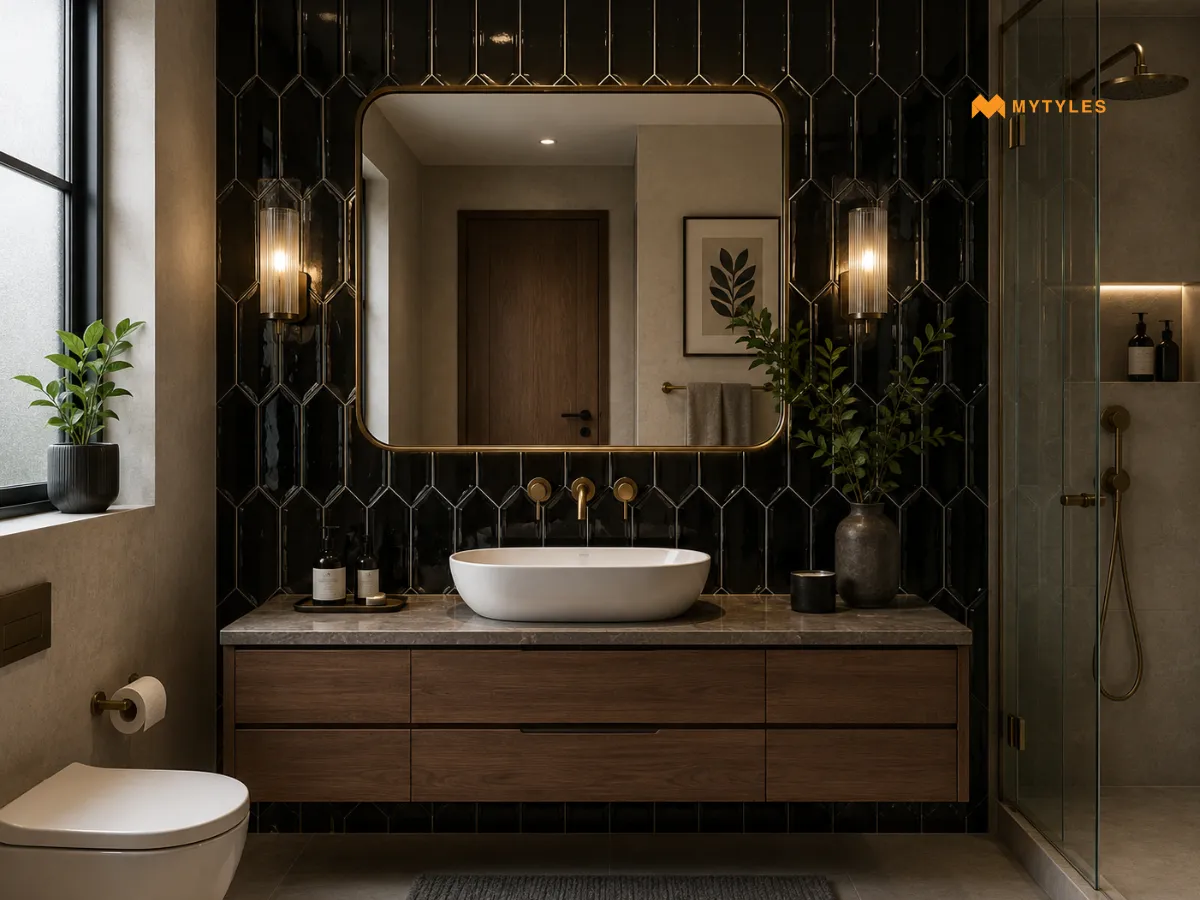
Dark picket tiles can make a vanity wall look rich, especially with warm lighting. Charcoal, deep green, navy and black can all work well. Use luxury bathroom wall tiles only when the space has enough light. In a small bathroom, keep the dark tile limited to one wall so the room does not feel closed.
Picket Tile Feature-Wall Ideas for Shower Areas
The shower wall needs more planning than a dry wall. It faces water, soap marks and regular cleaning. So the tile should look good, but it should also be practical for daily use. Shower feature wall tiles should not be chosen only by color. Check the surface, grout, slope, fixing and cleaning needs before installation. A beautiful shower wall can fail if the base work is weak.
Floor-to-Ceiling Vertical Picket Tile Shower Wall
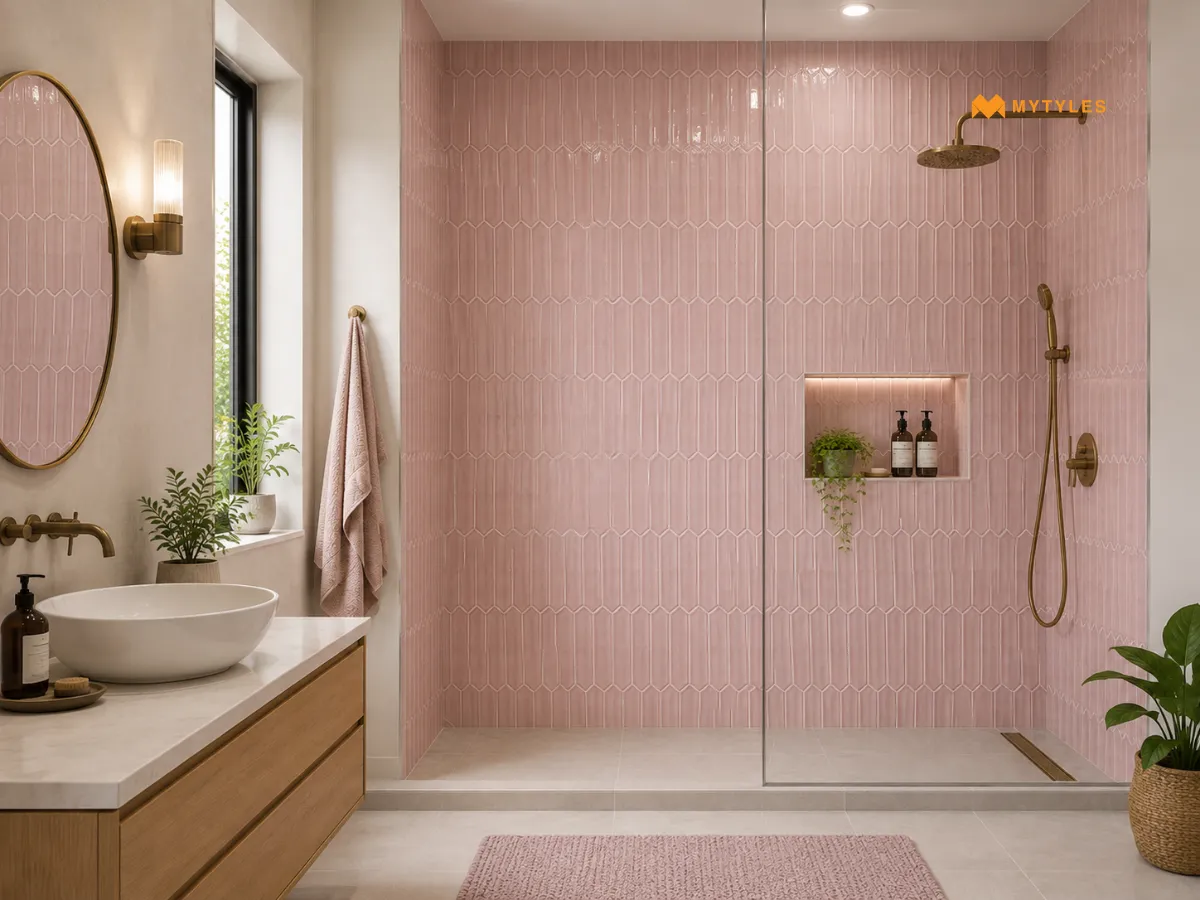
A floor-to-ceiling picket tile shower wall layout gives the shower area a clean and tall look. It also makes the wall feel more planned than a short tiled patch. For a neat shower wall design, use vertical placement with simple fittings. Avoid mixing too many borders, shelves or patterns on the same wall.
Green Picket Tiles for a Spa-Style Shower
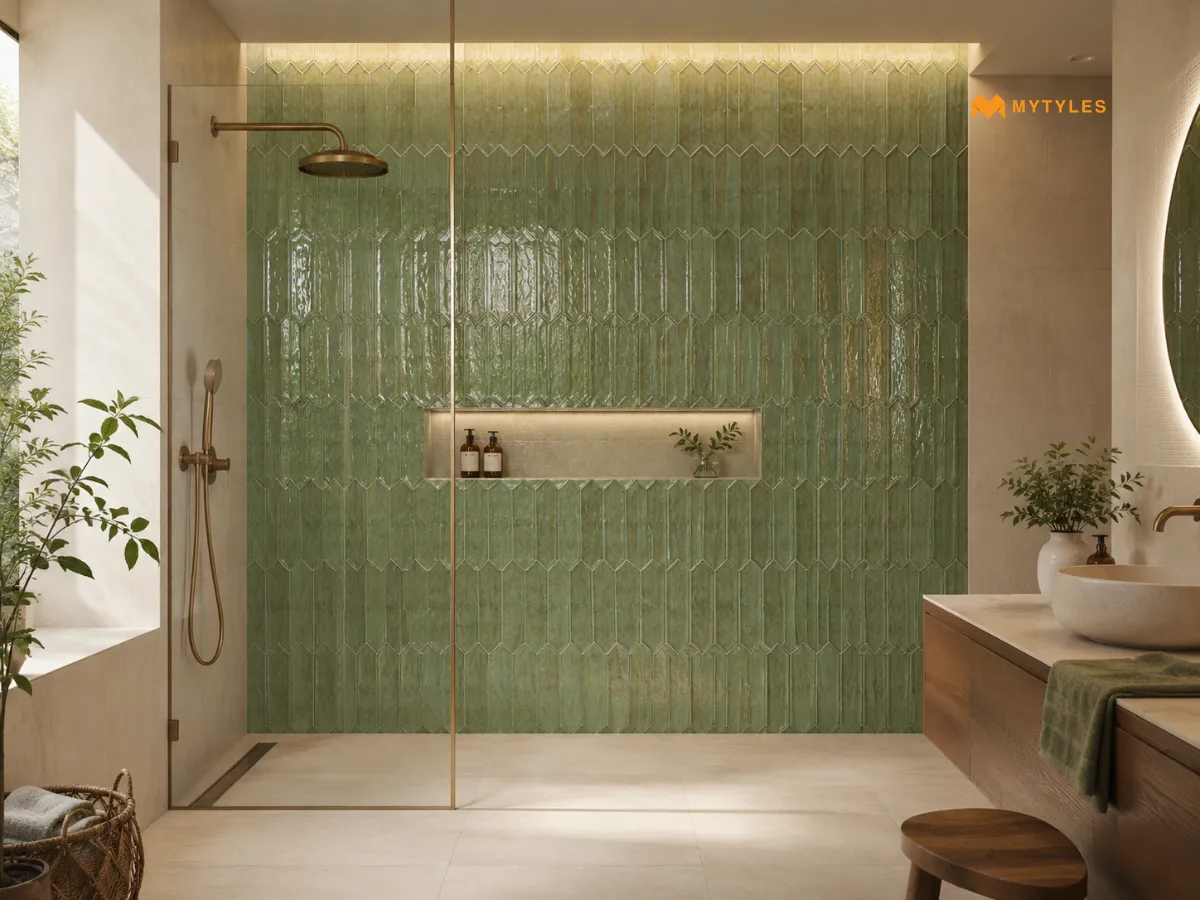
Soft green picket tiles can make the shower area feel relaxed. Sage, olive and muted green shades work better than very bright tones. These spa-style bathroom tiles look best with glass partitions, light floors and warm lights. Keep the rest of the bathroom simple so the green wall becomes the main focus.
White Picket Tiles with Contrasting Grout
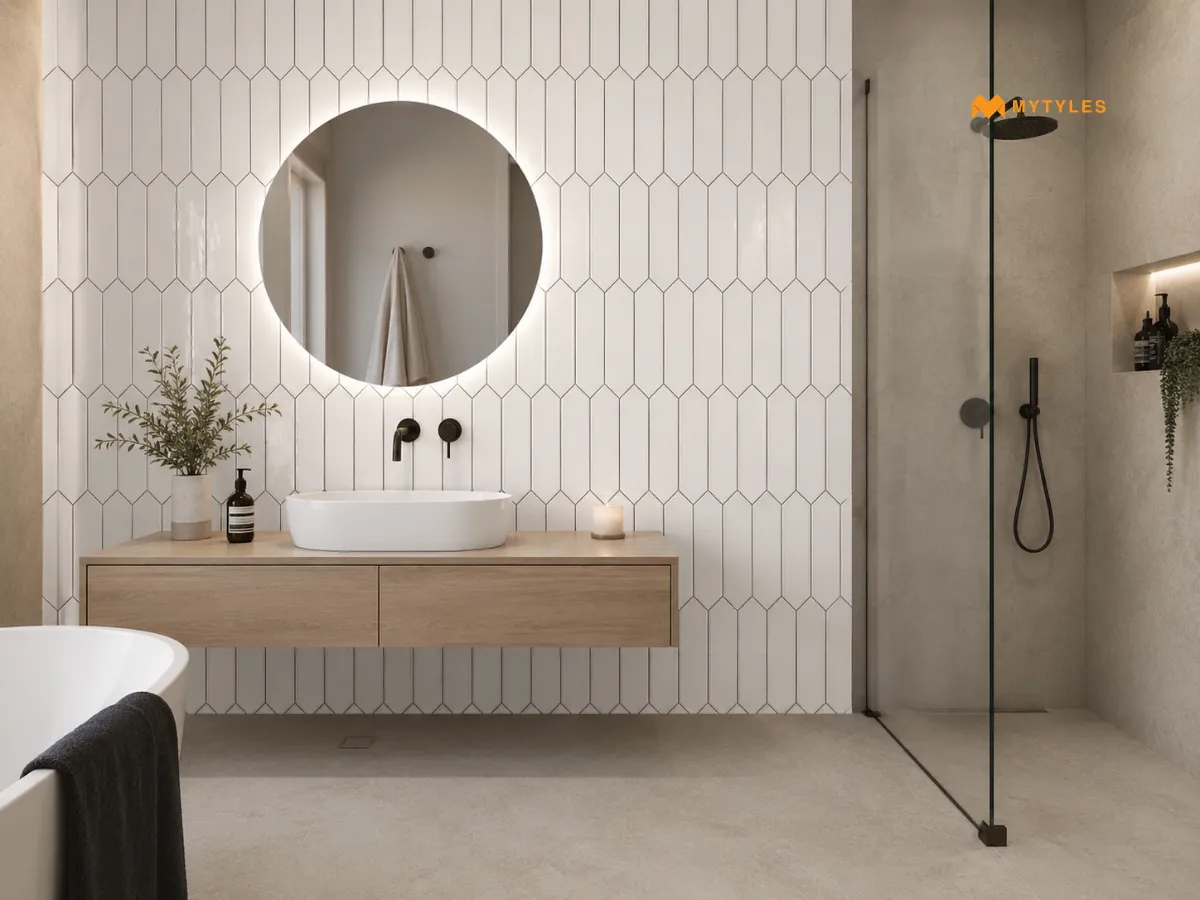
White picket tiles with grey or dark grout can show the picket shape clearly. This works well when the bathroom has simple fittings and plain flooring. Do a grout sample before finalising. A strong grout shade can look nice in pictures, but it may feel too busy in a small bathroom.
Picket Tiles Inside the Shower Niche
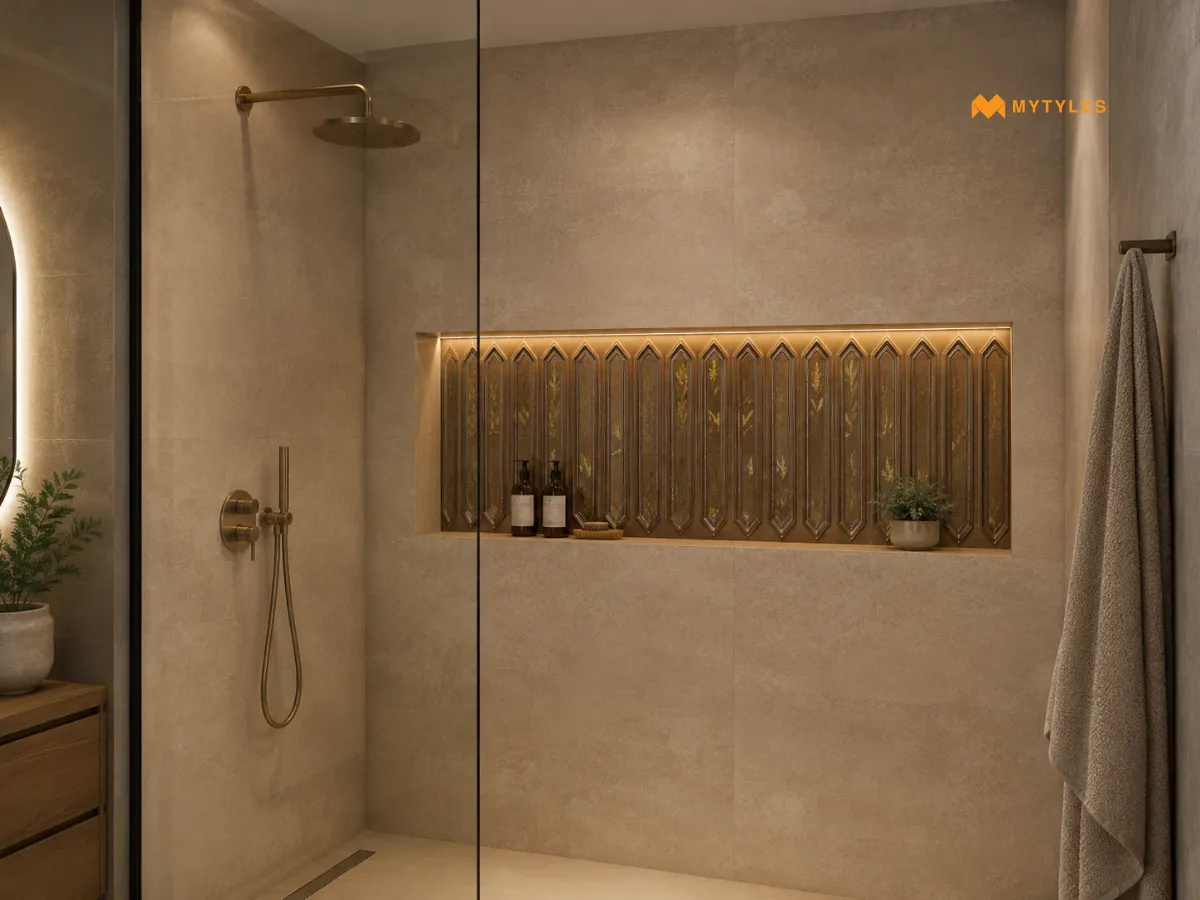
A shower niche is a small area, so it can handle a little detail. Picket tiles inside the niche can make the space look more finished. Use the same tile color as the main shower wall for a clean look. Choose contrast only when the rest of the bathroom is very simple.
Charcoal Picket Tiles Behind a Rain Shower
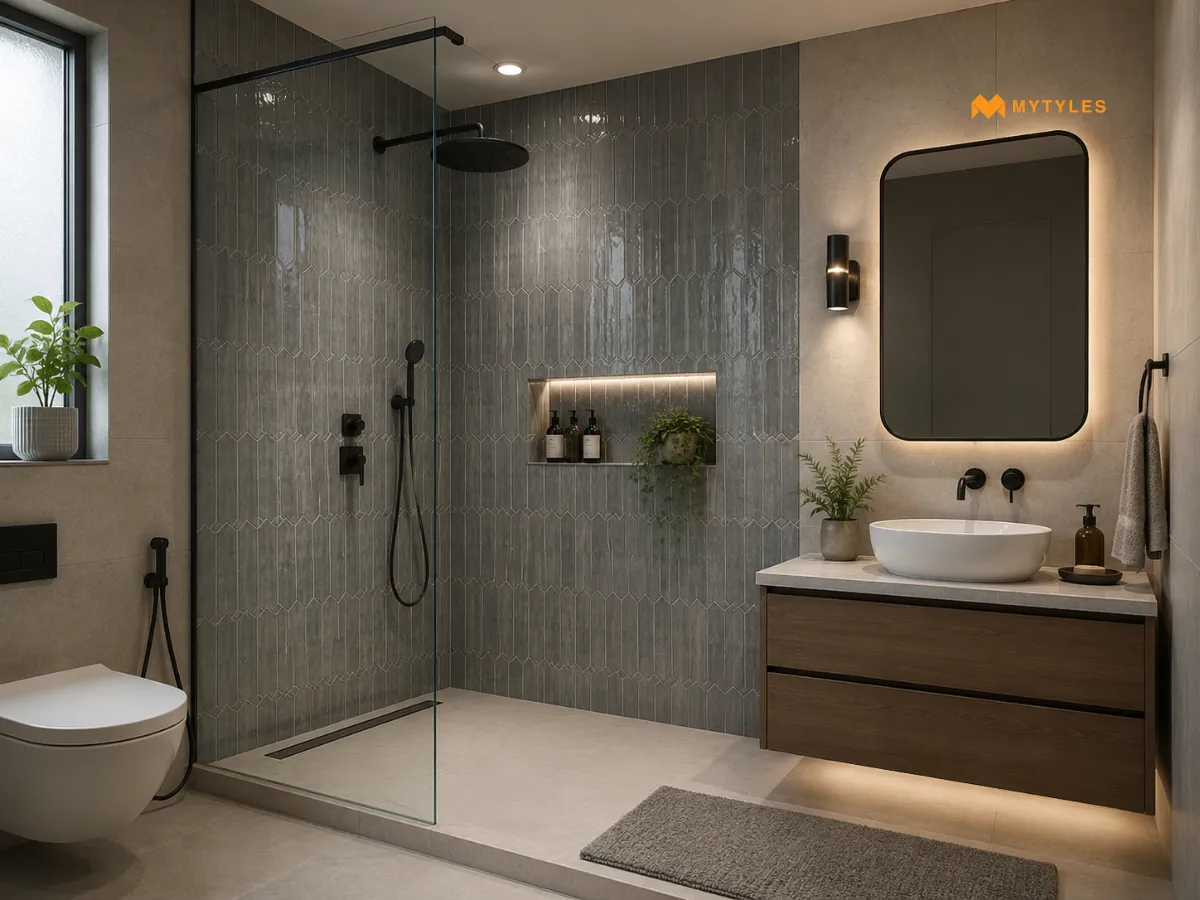
Charcoal picket tiles look sharp behind a rain shower. They also work well with black fittings, glass partitions and warm ceiling lights. Use this idea in bathrooms with good lighting. If the space is too dark, charcoal can make the shower area feel smaller than it is.
Matching Picket Tiles Across the Vanity and Shower
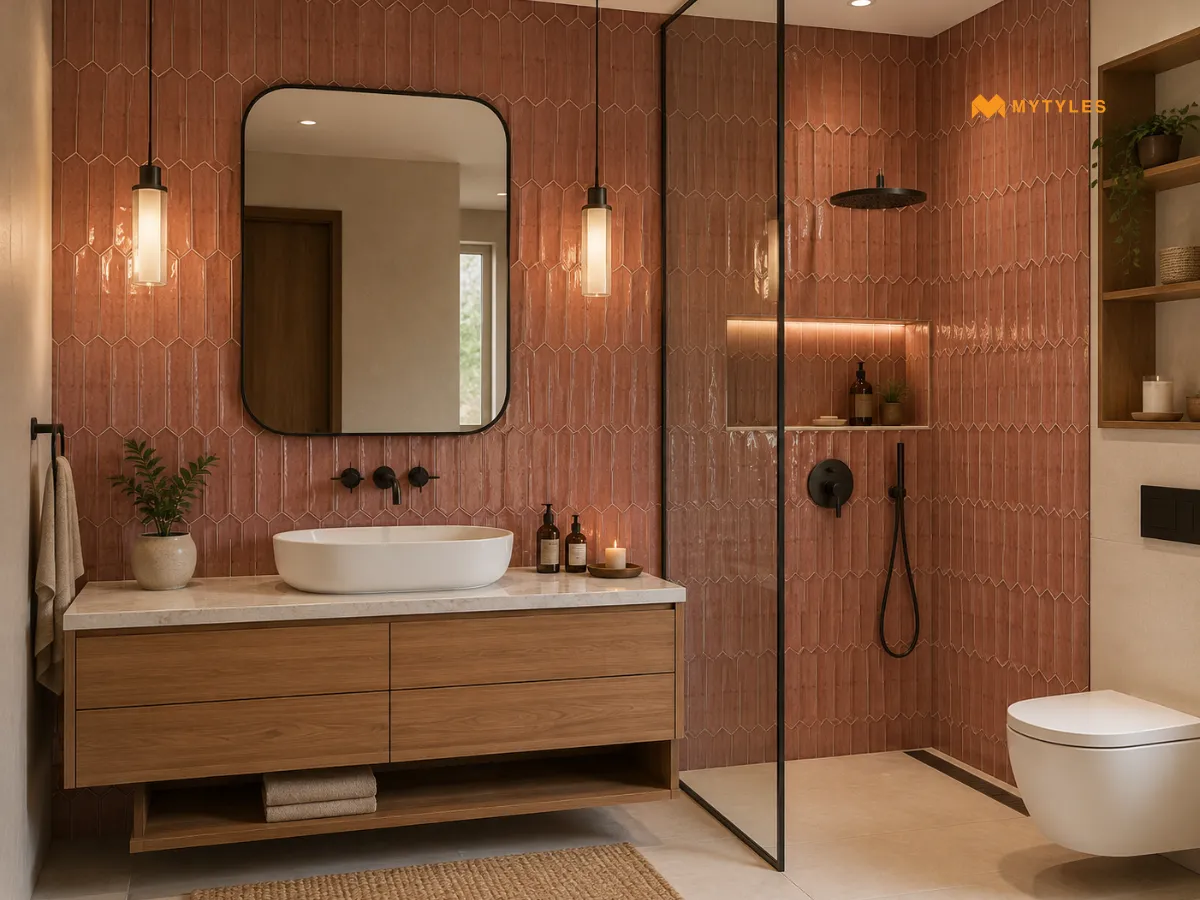
Matching the vanity and shower wall can make the bathroom look more connected. This works well in compact bathrooms where too many tile changes can look messy. Match the new wall with the existing bathroom tiles before ordering. The floor, dado, counter and fittings should all sit well together.
Common Picket Tile Feature-Wall Mistakes to Avoid
Picket tiles look simple, but the layout needs careful planning. The shape has pointed ends, so bad cuts, poor alignment or random stopping points become easy to notice. Many bathroom picket tile ideas look good in samples, but the final wall can feel different after installation.
Avoid these mistakes:
- Do not stop the tile at a random height behind the vanity.
- Check bathroom wall tile ideas with your actual bathroom light.
- Avoid using geometric wall tiles on every wall.
- Compared with hexagon wall tiles, picket tiles need more direction planning.
- Keep the floor simple if you are creating a bathroom accent wall.
- Use softer colors for powder room wall tiles if the space has weak lighting.
- Do not mix too many tile shapes in one bathroom.
- Check the sample with the mirror, tap and counter before ordering.
- Keep the wall easy to clean near the basin and shower.
Add Style to Vanity and Shower Walls with Picket Tiles
Picket tiles can make a bathroom wall look special without making the room feel overdone. The best design is not always the boldest one. It should suit the wall size, lighting, fittings and daily use. You can use feature wall tiles behind the vanity, inside the shower, around the niche or across both areas for a connected look.
Explore picket tiles online at MyTyles to compare colors, finishes, sizes and patterns. You can also visit the MyTyles Experience Centre to see the actual surface, shine, edge detail and layout before finalising your bathroom wall.

Are Picket Tiles Good for Bathroom Walls?

Yes, picket tiles work well as bathroom wall tiles because they add shape without making the space too loud. They are good behind mirrors, basins and selected highlight walls. Choose a surface that can handle wiping and moisture. For busy bathrooms, simple colors and neat grout lines are easier to maintain.
Can Picket Tiles Be Used on Shower Walls?
Yes, picket tiles can be used as shower wall tiles if the surface is suitable for wet areas. Bathroom waterproofing should be done properly before tiling. Use the correct tile adhesive so the wall holds well. Also choose grout carefully because the shower area faces water, soap and cleaning every day.
Should Picket Tiles Be Laid Vertically or Horizontally?
Vertical placement makes the bathroom look taller, so it works well for small bathroom tile ideas. Horizontal placement makes the wall look wider, especially behind long vanities. The right direction depends on the wall size, mirror shape, shower fitting and final look you want. Always dry-lay a few pieces first.
Which Grout Color Works Best with White Picket Tiles?
For white picket tiles, light grey grout gives a soft outline and shows the shape neatly. White grout gives a cleaner blended look, but it may need more care. Keep grout color ideas simple in small bathrooms. Epoxy grout is a better choice for wet zones because it handles moisture well.
Are Glossy or Matt Picket Tiles Better for Bathrooms?
Glossy tiles are better when the bathroom needs more brightness or reflection. Matt picket tiles work better when you want a softer and calmer wall. For vanity areas, both can work well. For shower zones, also check cleaning needs, water exposure and the finish of nearby floor tiles before choosing.
Do Picket Tiles Make a Small Bathroom Look Bigger?
Picket tiles can make a small bathroom feel taller or cleaner if they are used carefully. Choose light colors, vertical layouts and simple grout lines. Avoid covering too many walls with strong shades. A single highlighted wall usually works better than using the same patterned tile everywhere in a compact bathroom.
How High Should a Picket Tile Vanity Backsplash Be?
A picket tile backsplash for a bathroom layout should protect the wall from basin splashes and still look balanced. You can tile up to the mirror base, half wall or full vanity height. If the bathroom already has bathroom dado tiles, align the picket section properly so the wall does not look broken.

ABOUT THE AUTHOR
Aditi Bardhan
Aditi Bardhan is a professional content writer with over five years of experience creating SEO-focused, research-backed content across diverse industries. She specialises in the tile and surface materials space, writing for homeowners, architects, interior designers, and trade professionals. Her work combines technical research, design awareness, and a strong understanding of customer needs, helping readers make clearer and more confident choices. Through her content, Aditi simplifies complex material concepts, highlights practical design benefits, and helps brands build trust and authority in the tile and construction industry.