Inspiration Gallery
Blog
Tile Calculator
08065423741



.svg)


How to Use Geometric Tiles Without Making a Room Look Too Busy
ByNabiya Naqvi

Mon , Oct 19 , 2026

Read Time: 5 Min


 Copied!

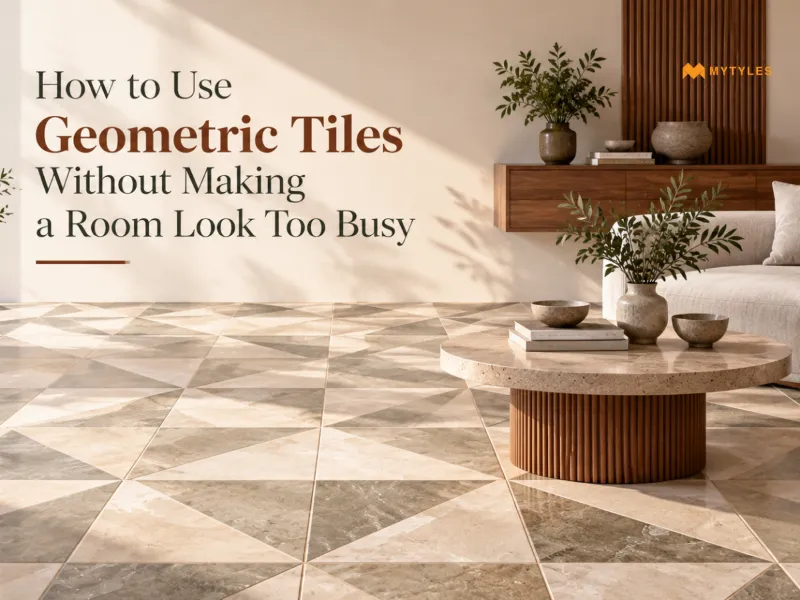
Geometric tiles are often thought to make a space look busy, but that assumption isn't always true. Too many patterns and contrasts can feel like chaos; however, the busiest designs can still create harmony and cohesion depending on placement, scale, contrast, and surrounding finishes. It’s important to proportionally balance the scale of patterns and the colour with the surrounding elements to create a timeless space that holds history, story and substance.
In this blog, you will understand why sometimes geometric patterns look busy and why sometimes they are not. Also, we'll explore what can make geometric tiles feel visually busy, how to use them in different rooms, and the common design mistakes worth considering before choosing a pattern.
Why Geometric Tiles Start to Look Busy
Geometric pattern tiles can enhance the space with their intricate design. But when a room has too many patterns and bold colour combinations, they start to compete for attention. That’s one reason the same tile pattern you loved in the showroom can feel overwhelming in a finished room. Here are the main factors to consider:
- Scale: Small-scale tiles have a repeated pattern, and if you cover all the walls with the same tile, it pulls the eye in too many directions.
- Coverage: Strong geometric tile patterns can look chaotic and busy if you cover entire wall surfaces. Moderate coverage on a backsplash or as a feature wall gives balance to the busy geometric design.
- Competition: The space may look busy if the patterned tiles are surrounded by strong contrasts, bold colours and heavy furniture. So, they start competing for attention.
Ideas That Keep the Pattern Under Control
.webp)
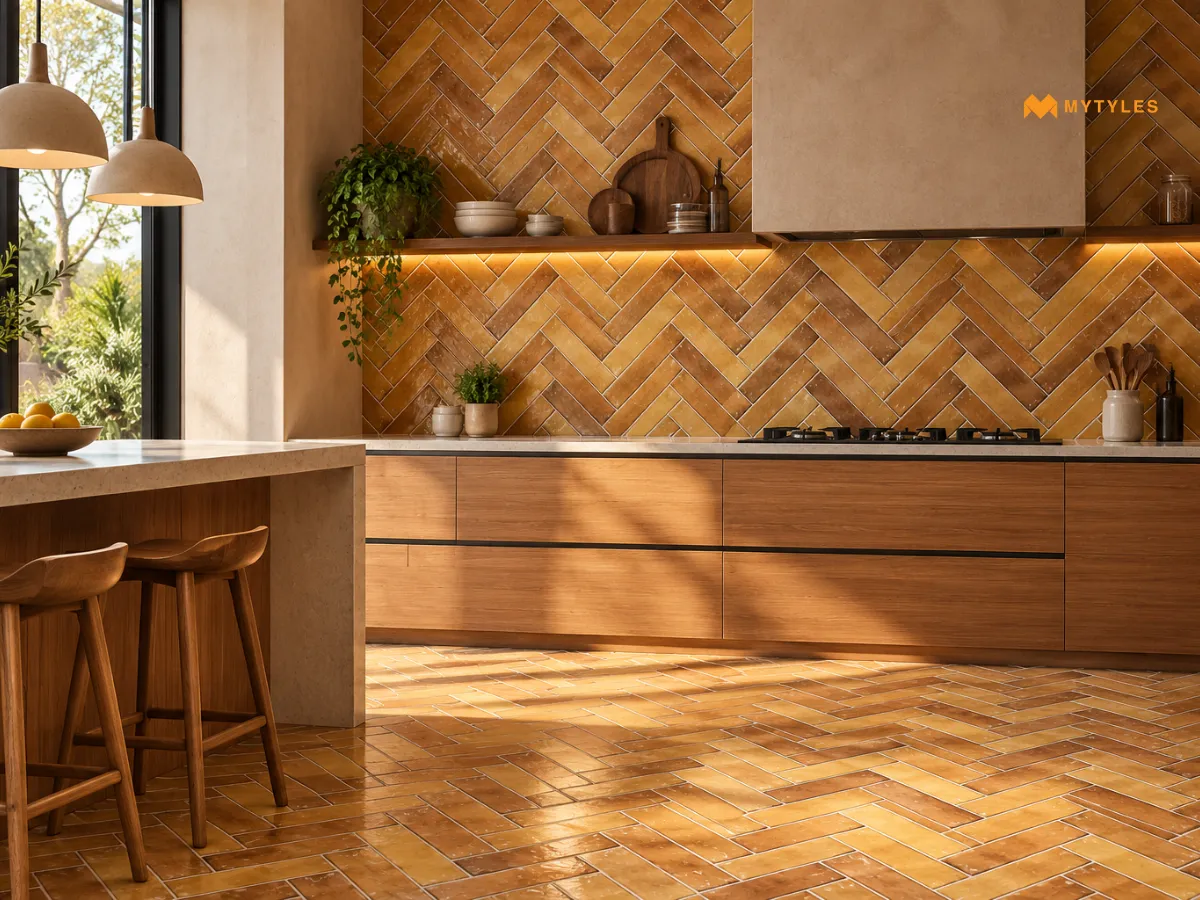
Decorating a space with geometric tile designs is about finding the common ground. All elements of the space should be in harmony. Inviting interiors balance light, patterns, colours, and room layout to create a cohesive space.
- Give the pattern one surface only: A common mistake is using geometric tiles on the floor, a wall, and the kitchen backsplash in the same room. Each surface looks fine alone. Together, the eye has nowhere left to rest. Pick one surface to carry the pattern and let the rest of the room stay plain.
- Choose a low-contrast pattern: Neutral shades create a low contrast. A white geometric tile with a faint grey line, or a grey geometric tile design with barely a shade of difference between the two colours, holds its shape up close but may look less prominent from a distance. High-contrast geometric tile designs, in black on white or navy on cream, do the opposite.
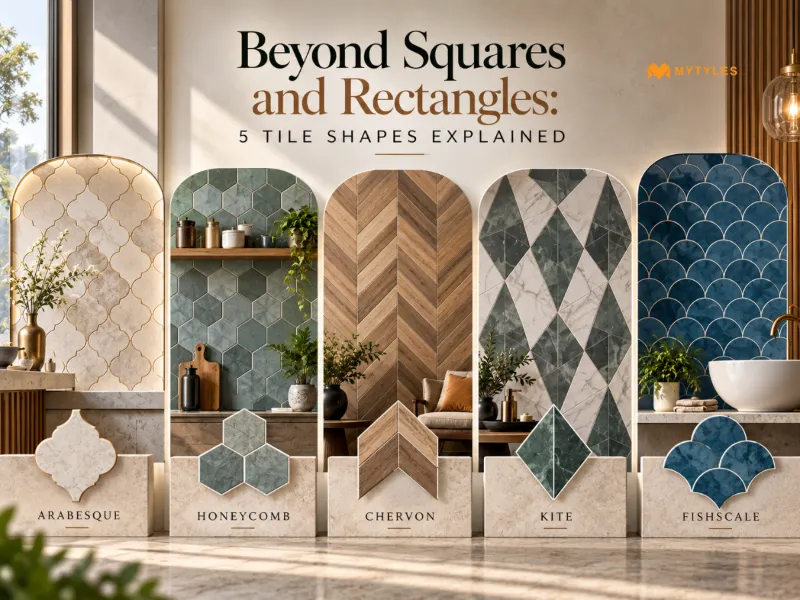
- Consider the scale of the room: Based on the layout of the space, you need to balance the scale of patterns and colours proportionally. Smaller geometric tiles can create a more detailed pattern, while larger formats may produce a broader visual effect. Consider the room's dimensions, the number of complete motifs visible and the overall pattern arrangement before choosing.
- Contain it in a zone: A pattern doesn't have to cover an entire surface to earn its place. A rectangle of geometric pattern tiles set into a plain floor, framed with a solid-colour border, works like a rug and gives a dining table somewhere to sit without the pattern spreading to the wall.
- Pair It With The Plain Tile: Look at the smallest colour in the design rather than the dominant one. If a pattern is mostly white with a thin line of blue geometric tiles running through it, that blue can reappear as a plain tile on an adjoining wall or a skirting. A green geometric tile design with a narrow terracotta accent can be paired the same way.
Tip: What to avoid: a near match that is not quite the same shade. A plain tile that is almost, but not exactly, the blue in a pink geometric tile pattern will look like a mistake rather than a deliberate pairing. Match it closely or choose a colour that is clearly different instead.
- Use grout as a volume control: Beyond filling joints, grout also shapes how the pattern in geometric tiles reads. When kept close to the background colour of geometric floor tiles, grout allows the pattern to run continuously and softens a busy design. Contrasting grout draws a grid around each tile in a geometric mosaic layout, which can sharpen a simple pattern.
- Keep the surroundings quiet: Geometric wall and floor tiles are attention-grabbing. Picture the space with the pattern in place, and ask what the eye lands on first when entering. If a patterned floor faces a patterned shower screen or a bold-coloured vanity, the patterns compete rather than lead. Plain walls, simple cabinetry and furniture in solid colours give a strong design.
Room by Room: Where Restraint Matters Most
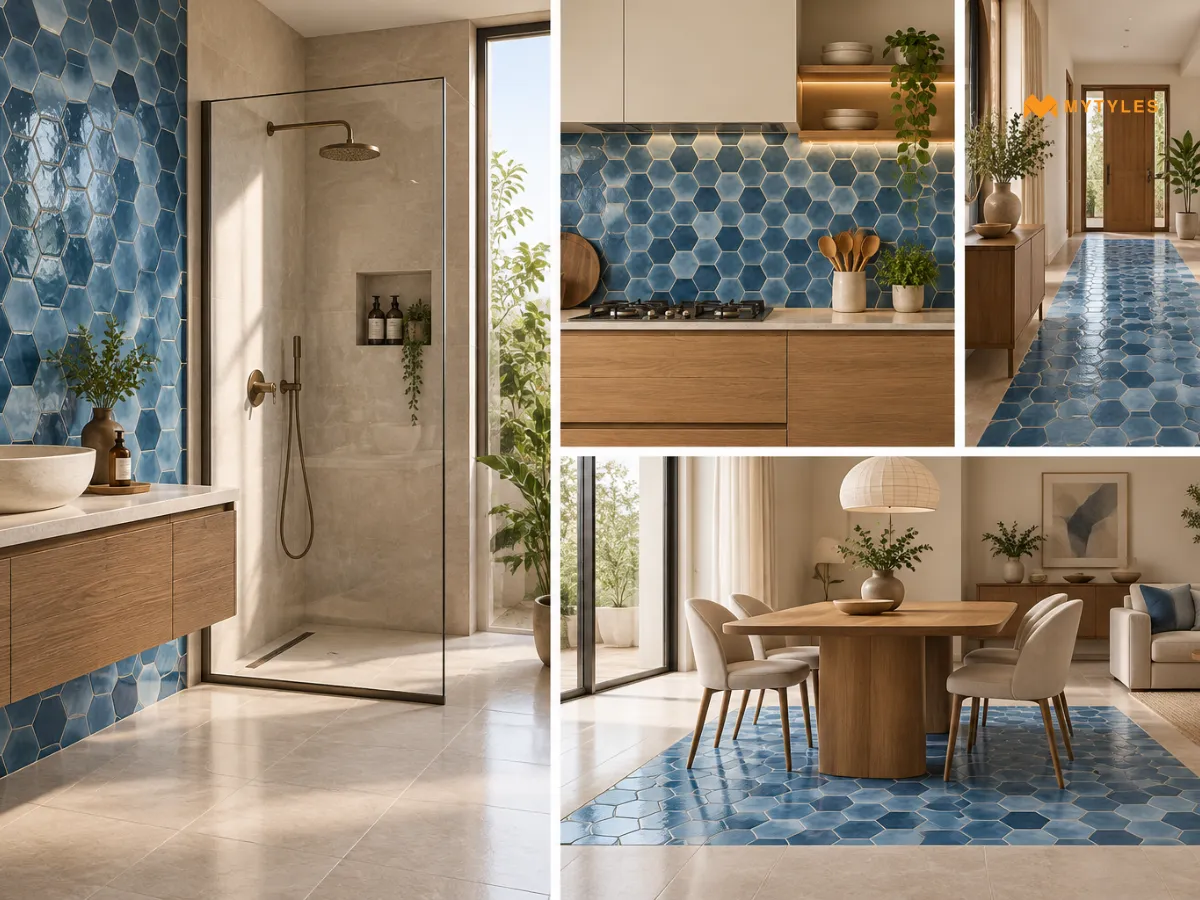
The same geometric pattern can feel very different from one room to another. The amount of visible surface, furniture, fixtures, lighting, and other finishes all change how the pattern is perceived. Here’s how to balance geometric tiles across different areas of the home.
- Small bathroom: In small spaces, consider geometric tiles on either walls or floors. If you use them on both, the space may look a bit busy. Let’s take an example: a geometric bathroom tile design on a small floor, paired with plain walls, reads much better than a pattern on every surface in a confined space.
- Kitchen: You can see a lot of kitchen backsplashes with geometric tiles because they offer a lot of versatility. They add interest without adding many elements. Plain cabinets and a plain worktop on either side keep it as the feature rather than one of several.
- Hallway or entrance: Pattern travels well here because it is seen in a single sweep. Let it run to a natural stop, such as a threshold or a doorway, rather than fading out partway across the floor.
- Living or dining area: The theme of the living areas needs to be continuous. A zoned patch of pattern, under a table or framed as a hearth surround, tends to work better than covering the whole floor. Large geometric floor tiles used edge to edge across an open-plan space can start to compete with the furniture within it.
Mistakes That Make Geometric Tiles Feel Busy
Though a lot of ideas are discussed above, there are still some insights from the designers' perspective that will help you avoid the mistakes that can make the space look busy with geometric tiles.
- Putting patterns on the floor, walls and a feature surface all in the same room, with no plain area anywhere.
- Leaving no plain surface for the eye to rest between one patterned area and the next.
- Ignoring how the repeat behaves. Some geometric tile shapes only form their full motif where four tiles meet, and skipping this check changes how the finished floor reads.
- Choosing a pattern from a single small sample rather than several tiles laid together, which hides how loud a design becomes at scale.
- Assuming a striking windmill geometric tile or geometric Victorian tile design needs no supporting decisions elsewhere in the room, when in fact the rest of the space still has to stay deliberately plain.
Creating Balance With Geometric Tile Patterns
When laying geometric tiles, make sure the tile's colours and patterns have a similar movement. A simple recipe for a room that looks less busy with geometric pattern tiles is to start with one surface and one design, rather than trying to solve the whole room at once. Choose the pattern you are drawn to, test it under the room’s actual lighting conditions, and you can keep everything else plain until that one surface has proved it works.
Once you have a surface and a scale in mind, browse the geometric tiles range at MyTyles and compare pattern size and contrast side by side before you order. You can also visit the MyTyles Experience Centre to see the exclusive collection of geometrical tiles in various designs, textures and colours.

Can I Use Geometric Tiles On Both Floor And Wall?

Geometric tiles can be considered for floors and walls, but suitability depends on the individual product rather than the pattern alone. Geometric Victorian tiles, for example, may be available in different materials and formats. Check whether the selected product is specifically stated for the intended floor or wall application before deciding where to install it.
What Grout Colour Works Best With Geometric Tiles?
There is no single grout colour that works best with every geometric design. A grout colour close to the tile can make joints less visually prominent, while contrasting grout can emphasise individual geometric tile shapes. Consider the tile colours, pattern, joint appearance and overall interior, alongside any grout recommendations provided for the selected tile and installation.
Do Geometric Tiles Suit Small Rooms?
Geometric tiles can be used in small rooms, but consider how the pattern appears across the available surface rather than judging one tile alone. Pink geometric tiles or other coloured designs may appear subtle or prominent depending on pattern scale, contrast, grout and surrounding finishes. Previewing several tiles together can provide a better sense of the finished composition.
Can I Mix Two Geometric Patterns?
Two geometric patterns can be used within the same interior, but their relationship needs consideration. For example, combining blue geometric tiles with another patterned surface introduces differences in shape, scale, colour and repetition. Comparing samples together can help determine whether the patterns feel visually connected or whether one should remain the more prominent element within the room.
How Do I Tell If A Geometric Pattern Is Too Large For My Room?
Look at how much of the complete pattern will be visible once furniture, cabinetry and fixtures are in place. Larger motifs, including some windmill geometric tiles, may need several tiles to reveal the intended repeat. Preview multiple tiles across an area similar to the planned surface rather than deciding from a single tile or product image alone.
Are Geometric Tiles Harder To Lay Than Plain Tiles?
Installation requirements depend on the individual tile, layout and pattern rather than whether a tile is simply geometric or plain. With designs such as grey geometric tiles, alignment, pattern direction and visible cuts may require additional planning where motifs continue between tiles. Review the proposed layout and installation requirements with the installer before fixing the tiles.
Can Geometric Tiles Be Used Outdoors?
Selected geometric tiles may be suitable for outdoor areas, but the geometric design itself does not determine exterior suitability. Colour choices such as blue geometric tiles or grey geometric tiles are primarily visual considerations. Check the individual product’s stated application and available performance information, along with the requirements of the intended outdoor installation, before making a selection.

ABOUT THE AUTHOR
Nabiya Naqvi
Nabiya Naqvi is a content writer with a postgraduate background in chemical sciences and a strong passion for creative expression. Her journey into writing began with a love for storytelling and gradually grew into a professional path focused on interiors, home decor, and design-led content. With a keen interest in beautiful living spaces, Nabiya enjoys simplifying design ideas and making them relatable for everyday readers. Through her writing, she blends creativity, research, and an eye for detail to help homeowners understand how tiles, textures, and thoughtful material choices can transform a space.
Latest Blogs By MyTyles