Inspiration Gallery
Blog
Tile Calculator
08065423741



.svg)


KitKat Tiles for Pooja Room Walls: Modern Design Inspiration
ByNandana Priya

Sun , Oct 18 , 2026

Read Time: 5 Min


 Copied!

The wall behind a home mandir may cover a small area, but it remains visible during daily use. It does not always need a large motif or an elaborate pattern to stand apart from the surrounding wall. Kit Kat tiles use repeated narrow forms, so the lines themselves become part of the design. Some come as individual narrow mosaics or finger tiles, often supplied in sheets, while others have the KitKat pattern on a larger tile body.
KitKat tiles for pooja room walls can quietly change the mood of the corner. They can form a backdrop behind the mandir, frame a smaller section, or continue through a recessed niche. The same format can therefore take on a different look depending on how the KitKat wall tiles are arranged. Here are six ways to work this tile format into a modern pooja room.
Create a KitKat Feature Wall Behind the Mandir
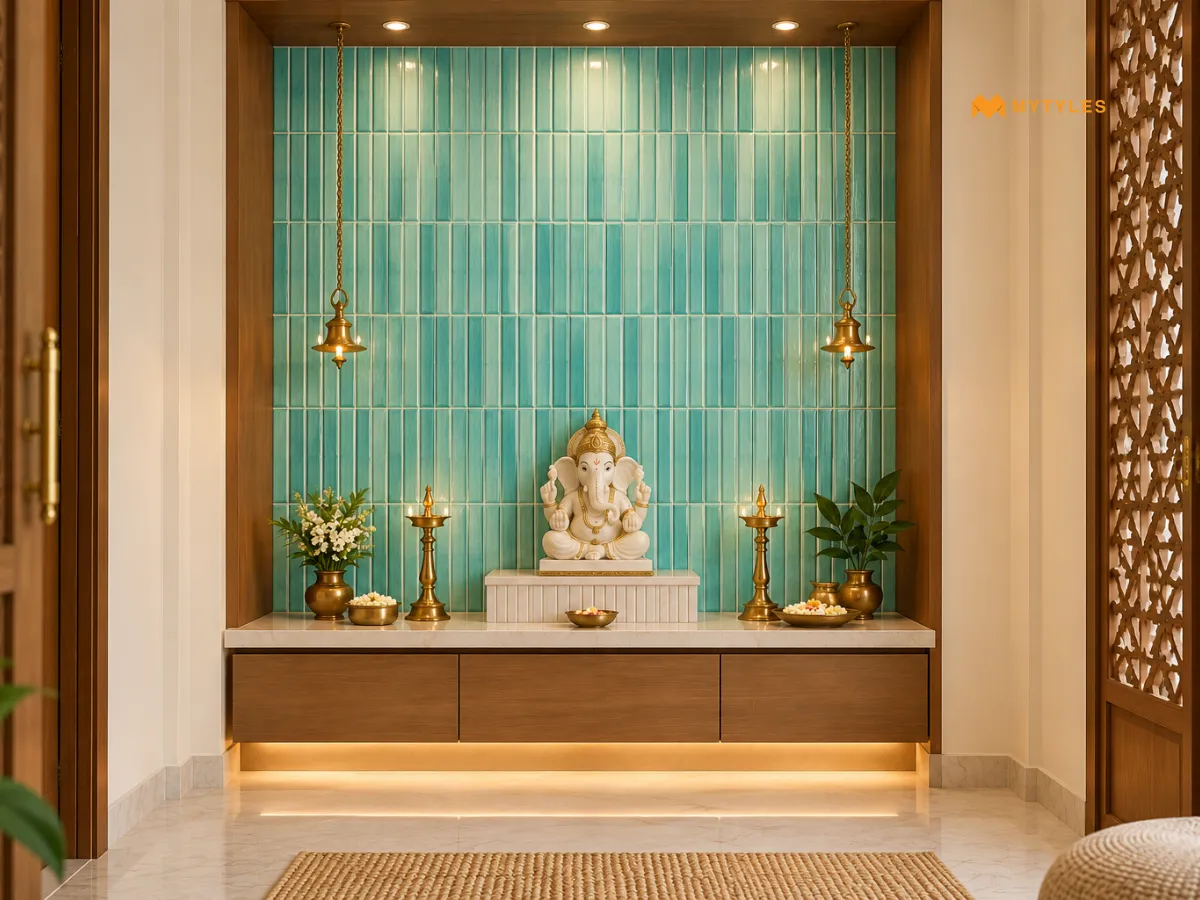
A KitKat feature wall works well when it covers the entire pooja room backdrop, running from the base of the mandir unit right up to the ceiling or false ceiling line, so the pattern reads as one continuous surface. This pooja room wall tile layout suits homes where the pooja space occupies its own dedicated wall, since the tiled surface becomes the visual centre of that corner rather than one element among many.
Picking a mandir wall tile shade that sits close to the pooja room colour keeps the space feeling balanced. The mandir stays the focal point, while the tiles behind it add a quiet layer of texture without pulling attention away.
Frame the Mandir with KitKat Tiles
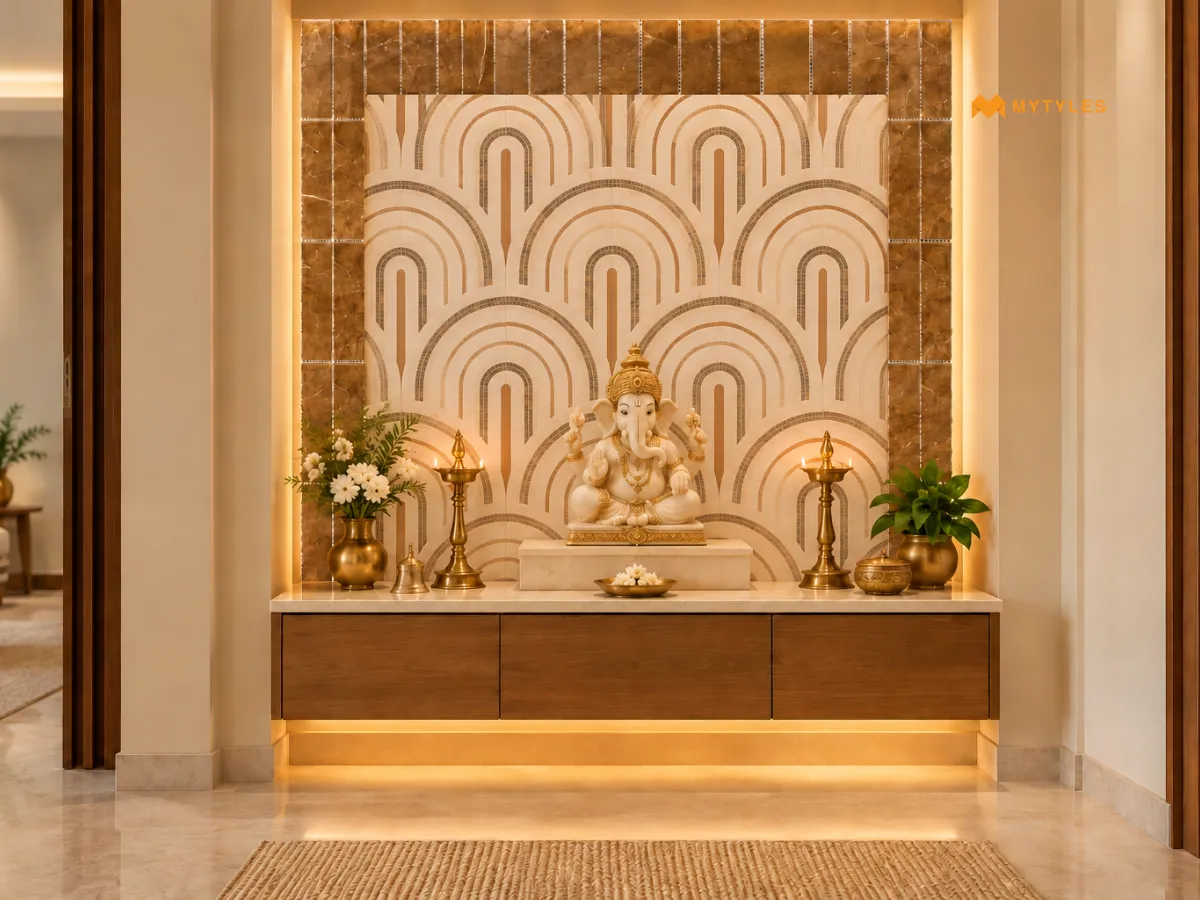
Full-wall coverage is not the only way to use KitKat tiles for pooja room walls. These tiles can be used to outline just the area around the mandir, forming a border a few tiles wide on either side and above the unit. This keeps the rest of the wall untouched, which works well where a pooja unit is situated in shared spaces like a living room corner or a hallway niche.
The framed section of the mandir wall tile design draws the eye to where the idols are placed without extending the pattern across the entire wall.
Use KitKat Tiles Inside a Pooja Room Niche
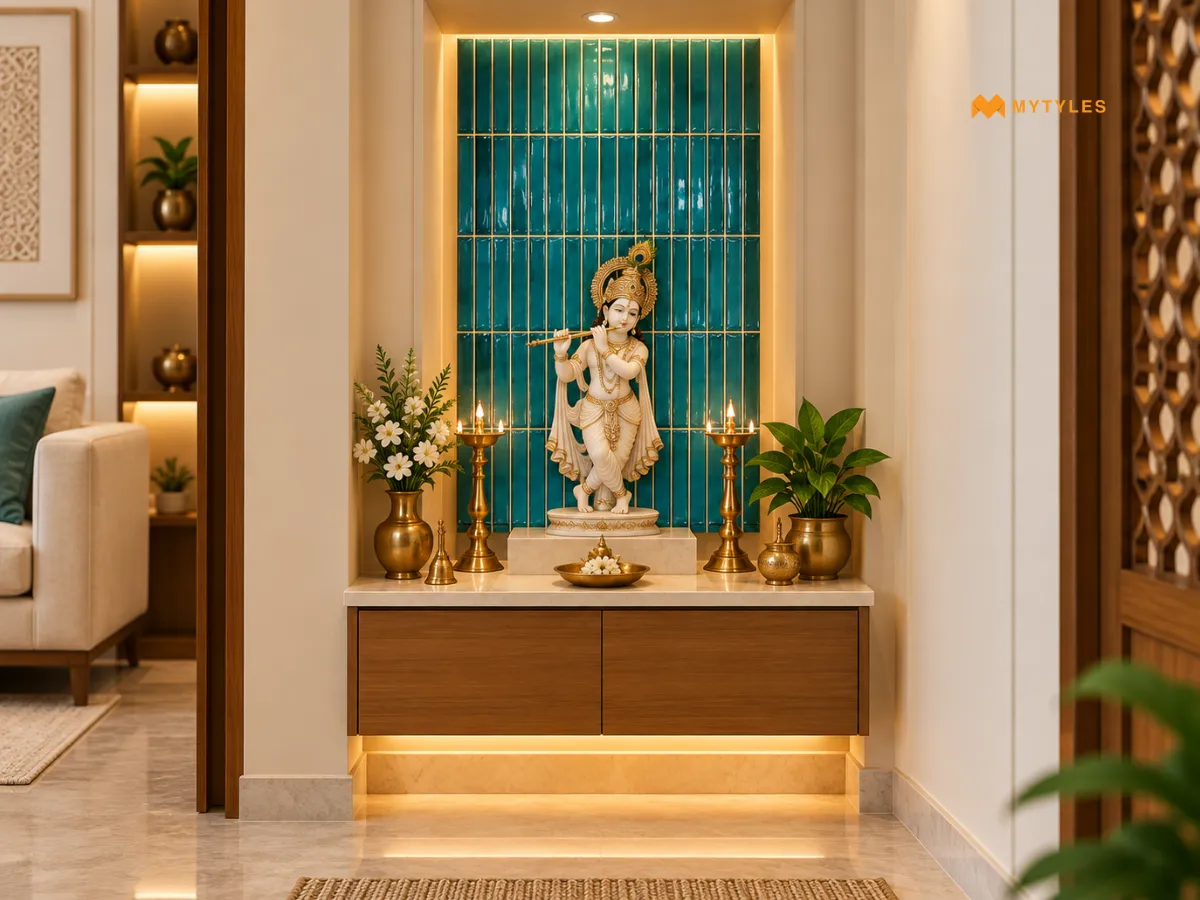
A recessed niche can work with KitKat tiles. Lining the inside of the niche with tiles gives the recess a defined edge, separating it from the surrounding wall colour or finish. Because the niche is usually smaller in scale, the repeated pattern stays contained and does not need to extend beyond the recess itself. This keeps the overall look of the pooja room tidy even in a tight corner of the house.
Tiling the pooja room niche can work in apartments and smaller homes, where a dedicated pooja room isn't always an option, and the mandir sits within a wall unit instead.
Create a Half-Wall KitKat Tile Backdrop
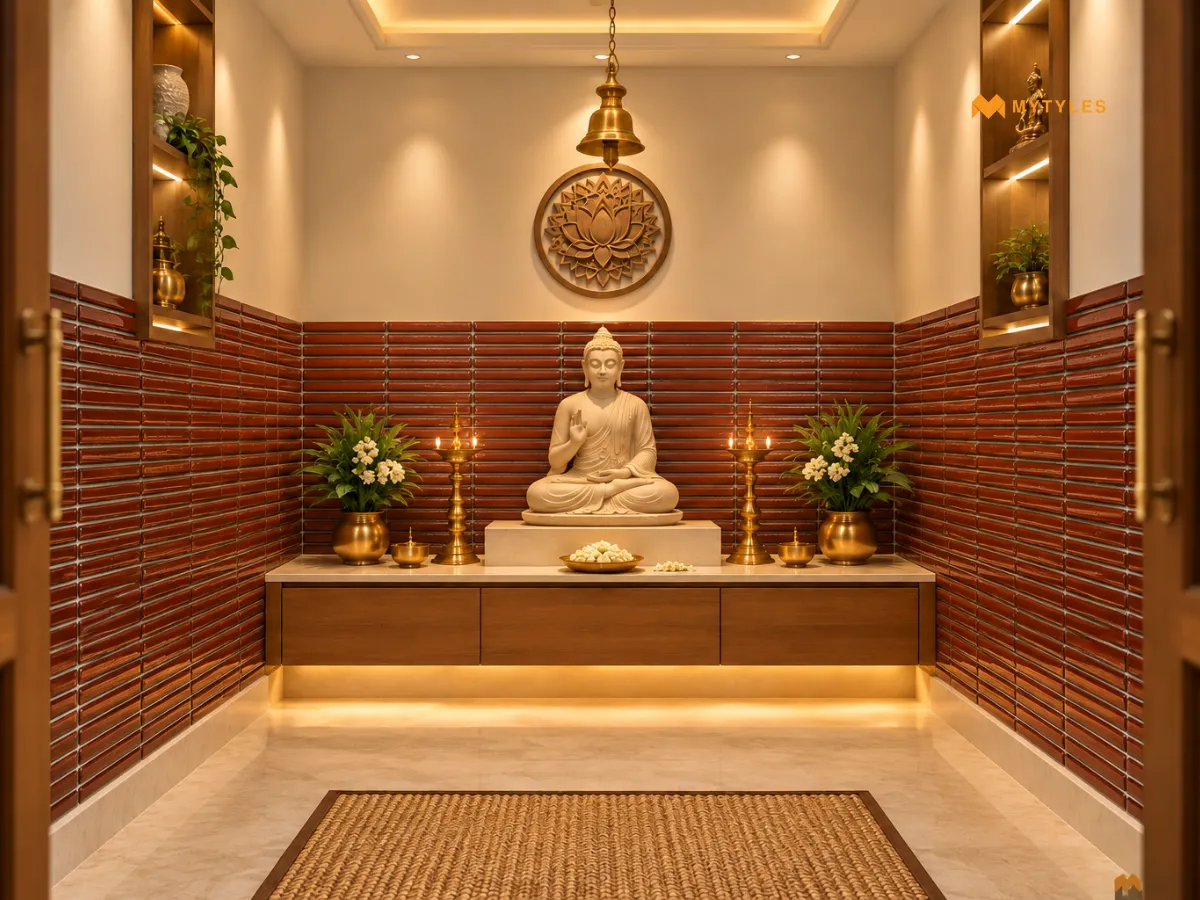
Only the lower portion of the wall gets tiled here, usually up to where the mandir and any shelving sit. The upper section stays in plain paint or a lighter finish.
Before fixing the KitKat tile designs, decide where this horizontal line should fall. Check whether it runs into a window, cupboard, switchboard, or another feature on the same wall. If it does, the tile height may need to be adjusted so the layout accounts for these fixed elements.
Highlight the Pooja Room Entrance With KitKat Tiles
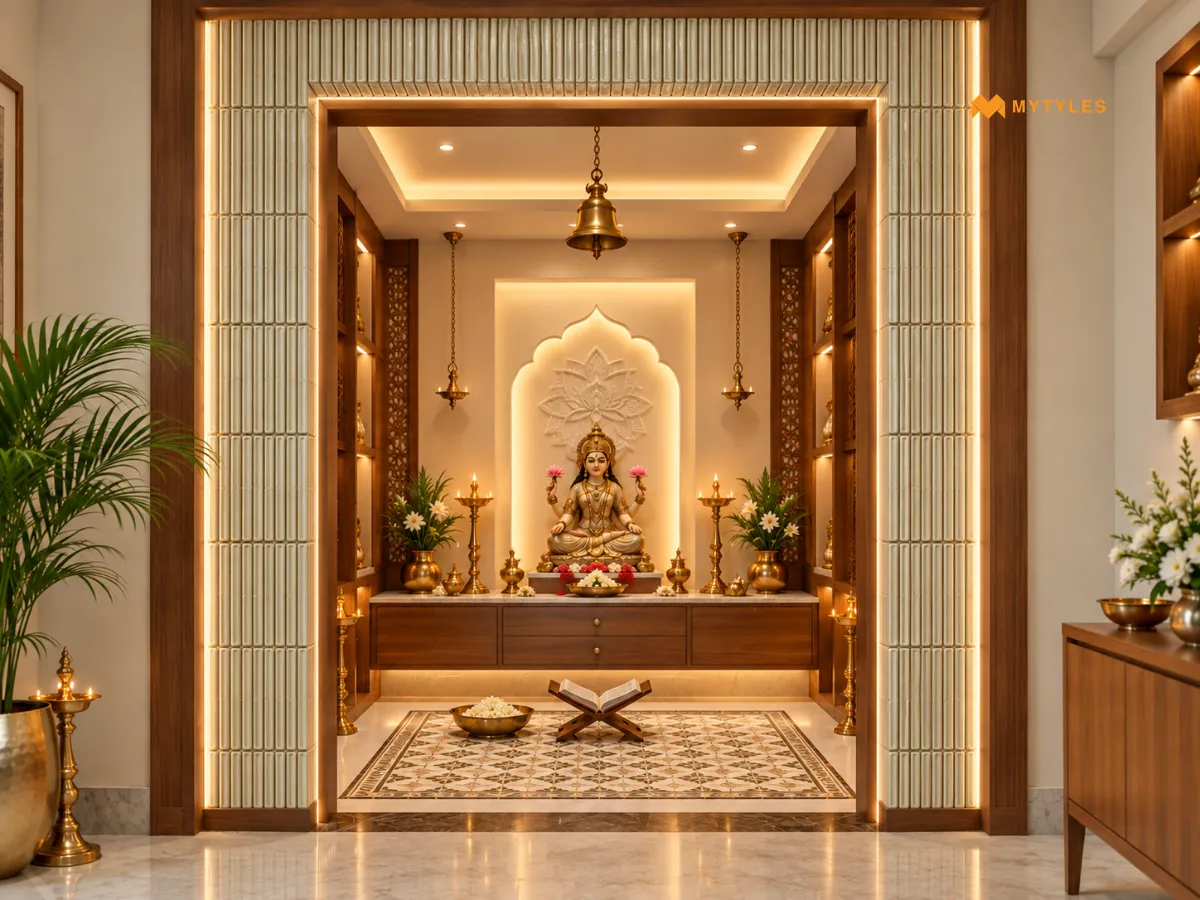
Even before anyone steps inside, the doorway sets the tone. Framing it with KitKat tiles gives the entrance a defined edge, a small but clear marker of the transition into the pooja space.
A narrow border along the frame does the job well. There's no real need to tile the full width of the wall around the door. Homes with a dedicated pooja room tend to suit this approach best, where the doorway becomes a small design detail rather than a plain opening.
Tile the Pillars Beside the Entrance
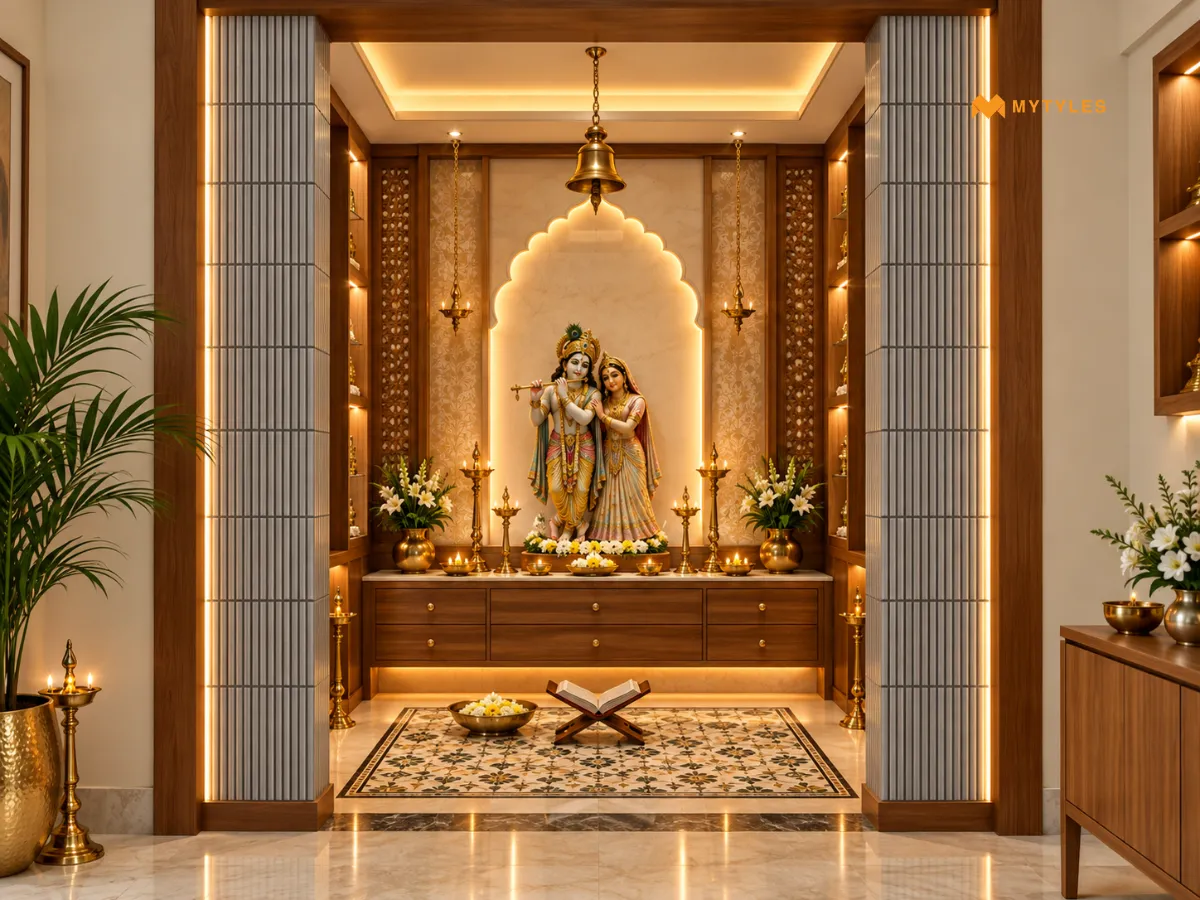
Some pooja room entrances include pillars or narrow vertical sections on either side, and these can carry KitKat tiles as well, provided the chosen product is suitable for wall application. Since pillars are usually tall and narrow, a vertical layout can follow their shape. How much cutting is needed usually comes down to the pillar dimensions and the tile format chosen for the space.
You can also limit the KitKat tiles to the pillars while leaving the wall between them in its existing finish. Look for unevenness, curves, or raised areas in the pillar. These factors can affect how well the tiles align once fixed in place.
Choosing a Colour for the Mandir Wall
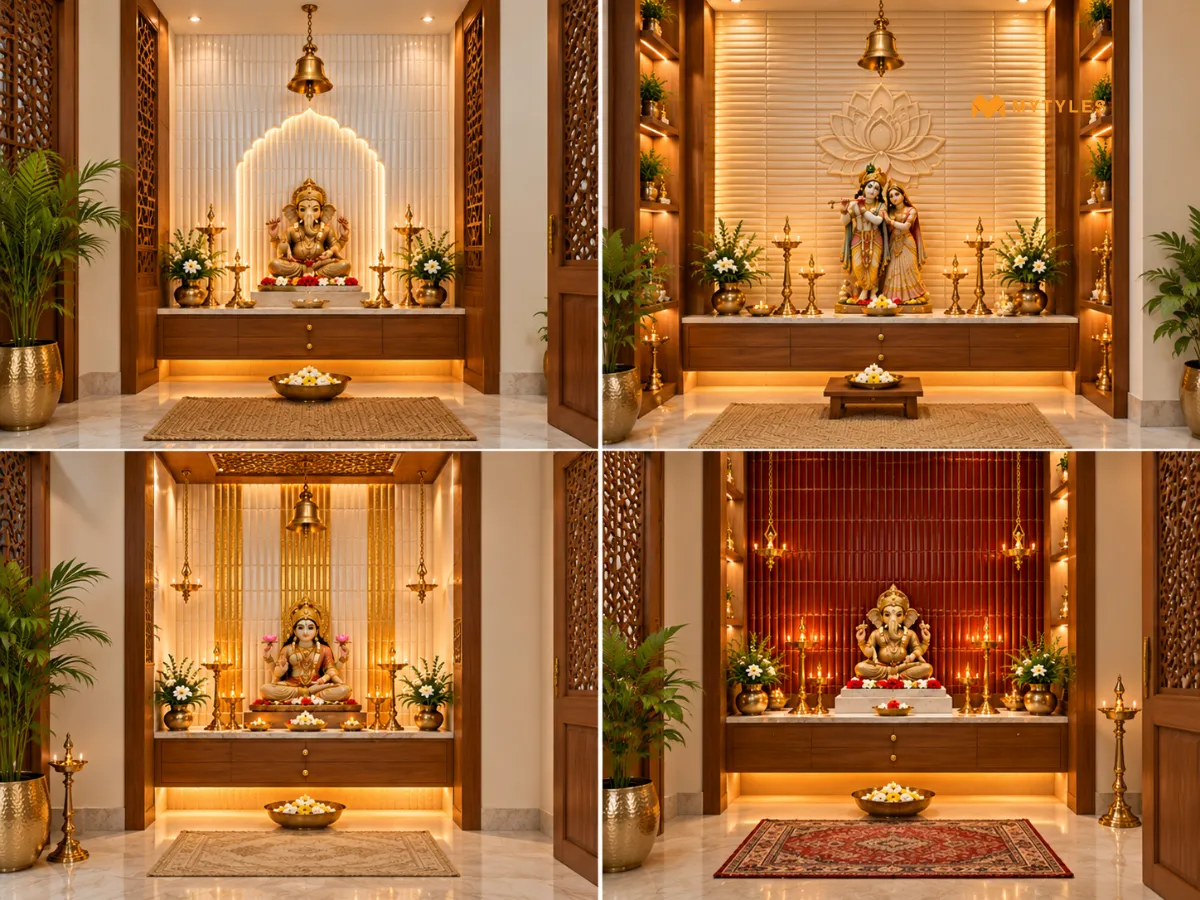
Colour for a mandir wall can be compared with what already surrounds it, the wall's existing shade, the mandir's own finish, and how much light the corner gets through the day.
White KitKat Tiles for a Light-Coloured Mandir Backdrop
A light shade like white KitKat tile keeps the wall looking balanced. White tiles for pooja rooms give the wall a lighter appearance. How much light the surface reflects will depend on the tile finish, design, and lighting around the mandir.
Ivory KitKat Tiles for a Softer, Warmer Tone
Ivory KitKat tiles carry a soft, warm undertone. Lighting plays a role in how this shade comes across, so the same tile can appear a little different depending on whether the room uses warm or cool artificial light.
Gold Accent Tiles for Pooja Room Walls as a Small Highlight
Used in moderation, gold accent tiles for the pooja room can bring in a festive touch without becoming the main focus of the wall. A few accent pieces placed within a larger white or ivory layout tend to work better than covering a large section with gold.
Other Colours Commonly Seen in Pooja Rooms
Beyond white, ivory, and gold, several other shades show up in mandir wall tile designs depending on the overall style of the home. Blue introduces a cooler-looking shade, while soft yellow gives the wall a warmer appearance. Red and maroon create deeper colour accents and may be used within borders or selected decorative sections.
Bring the Mandir Wall Together With KitKat Tiles
The pooja room walls do not need a single fixed approach. Whether it is a full wall, a framed section, a niche, or a half-wall backdrop, the right layout usually depends on the room's size and how the space is used day to day. Before choosing, measure the section you intend to tile and consider where cuts may fall around shelves, corners, switches, or other fixed elements. Also check that the selected KitKat tile is suitable for the intended wall application. For those exploring options, MyTyles offers a range of KitKat tiles. The tile collection can be viewed online or can be seen at the experience centre.

How Can I Create a Modern Mandir Tile Design with KitKat Tiles?

A modern mandir tile design can use KitKat tiles across the full backdrop or only around a selected section. A framed arrangement, half-wall layout, tiled niche, or narrow entrance detail can keep the repeated lines limited to a defined area. Consider the mandir dimensions, surrounding wall space, corners, and other fixed elements when planning the layout.
Can KitKat Tiles Be Used as Mandir Backdrop Tiles?
Yes, mandir backdrop tiles can include KitKat tiles when the selected product is suitable for wall application. They can cover the complete wall behind the mandir or a smaller section immediately around it. Before deciding the coverage, measure the available wall area and account for shelves, niches, corners, electrical points, and other interruptions in the layout.
Can Vertical KitKat Tiles Be Used Behind a Home Mandir?
Vertical KitKat tiles can be considered for a home mandir wall design when the selected tile is intended for wall use. The repeated lines can run along the height of a backdrop, niche, or narrow wall section. Check the dimensions of the tiled area beforehand, as edges, corners, shelves, and other elements may affect where cuts are required.
Can KitKat Tiles Be Used Inside a Pooja Room Niche?
Yes, suitable KitKat tiles can be used as pooja room niche tiles when the individual product is intended for wall application. The tiles can remain within the recessed section rather than continuing onto the surrounding wall. Measure the niche height, width, and depth before planning the arrangement, particularly where cut pieces may be required around its edges and corners.
What Is the Difference Between Finger Tiles and Regular Wall Tiles for a Mandir?
Finger tiles usually refer to narrow, elongated tile pieces, which may be supplied individually or on mosaic sheets. Some larger wall tiles also carry a similar linear pattern on their surface. Regular mandir wall tiles are available in other formats and designs too. The actual material, dimensions, and intended application depend on the selected product.
How Can Linear Wall Tiles Be Used Around a Pooja Room Entrance?
Linear wall tiles can be placed on selected sections around an entrance, such as a narrow border or vertical pillars, when the chosen product is suitable for wall application. Instead of covering the entire surrounding wall, the tiled area can follow specific architectural sections. Measure the doorway or pillars first so the tile arrangement and required cuts can be planned.
How Do I Choose a KitKat Tile Colour for a Pooja Room?
Choose the colour by looking at the mandir finish, surrounding wall shade, nearby materials, and lighting in the space. White, ivory, and other available colours can be compared based on the wall area you plan to tile. Their appearance may change under different lighting conditions. Also, confirm that the selected product is suitable for wall application before finalising it.

ABOUT THE AUTHOR
Nandana Priya
With a strong interest in design, creativity, and emerging tile trends, I enjoy turning ideas from the world of tiles and interiors into engaging, meaningful reads. My writing focuses on creating well-researched content that helps readers understand design choices with more clarity and confidence. I bring together research, design awareness, and digital marketing insights to craft content that is relevant, easy to follow, and thoughtfully written for todays homeowners and design-conscious readers.
Latest Blogs By MyTyles