Inspiration Gallery
Blog
Tile Calculator
08065423741



.svg)


Tile Problems in Humid Weather: Causes, Fixes and the Best Tiles to Choose
ByHeena Dhiman

Tue , Nov 17 , 2026

Read Time: 5 Min


 Copied!
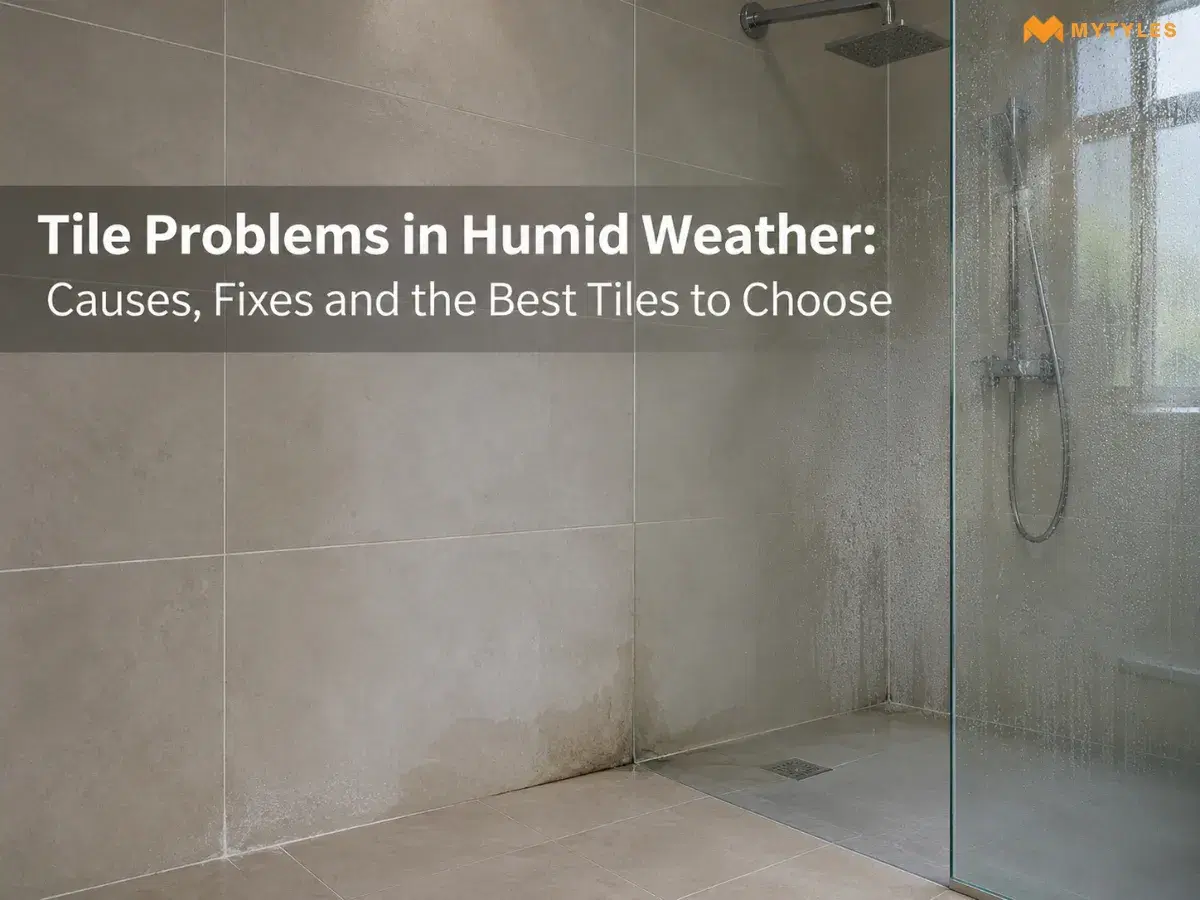
A tiled floor can look perfectly fine one day and start showing signs of trouble the next: dark grout lines, a musty smell, white marks near the edges or a tile that sounds hollow when you tap it. In humid and coastal regions, these changes can be worrying because moisture may come from more than one place. It could be condensation in a poorly ventilated bathroom, water entering through a damaged joint, a plumbing leak or a problem with the original installation.
The important thing is not to assume that the weather is the only cause. Tiles are made to suit different rooms and conditions, but even well chosen tiles for humid climate homes are only one part of a floor. The surface underneath, waterproofing, adhesive, grout, drainage and ventilation all affect how well the finished floor performs.
If you are choosing new tiles or trying to understand an existing problem, this guide explains what humid conditions can mean for tiled floors, which signs to look out for, how common issues are addressed and what to check before selecting tiles for wet areas.
How Humid and Coastal Conditions Affect Tiled Floors
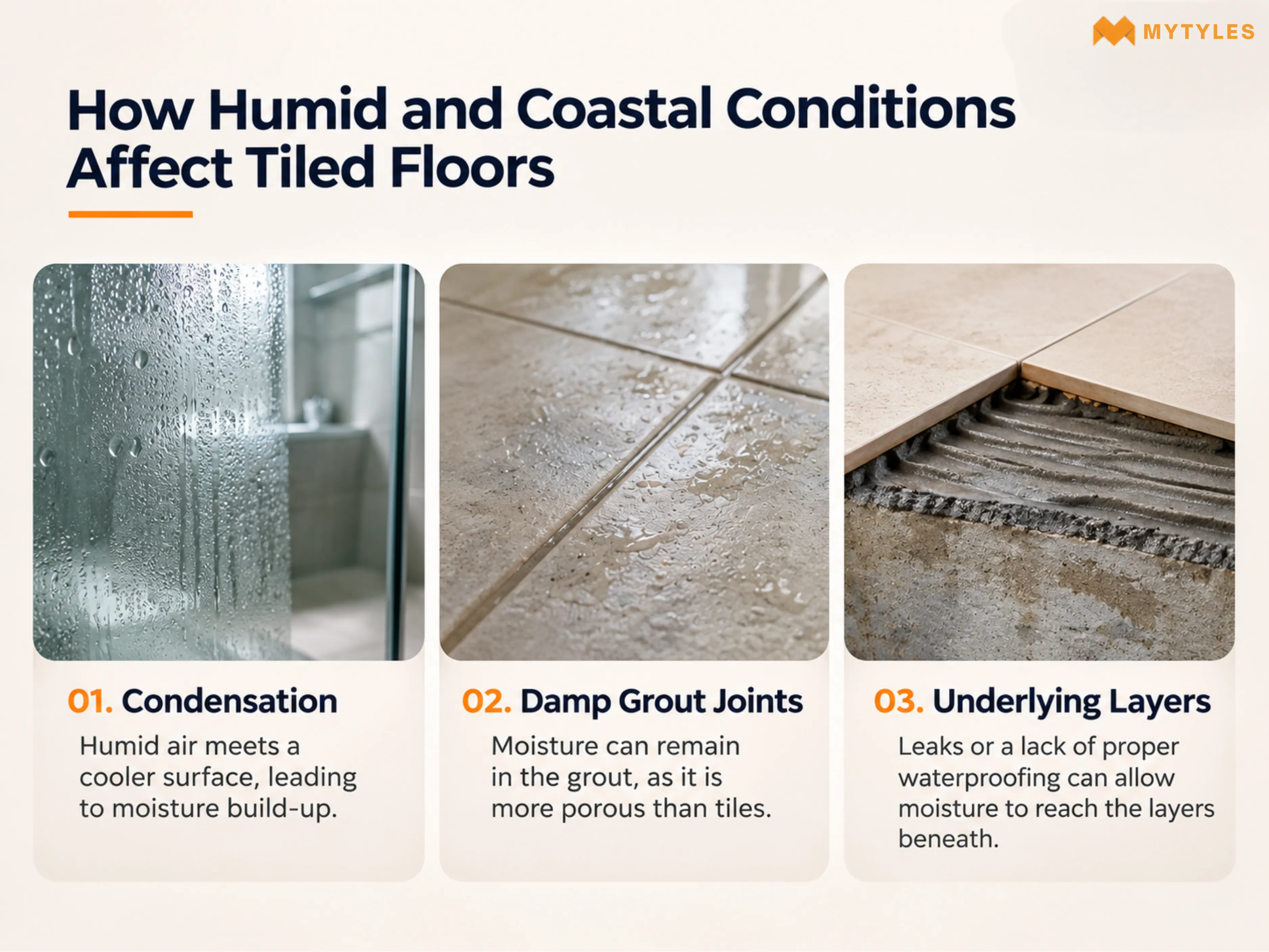
Humid air carries water vapour, and that vapour settles on cooler surfaces such as floors and walls. In a bathroom, steam from a hot shower adds to it, and if the room cannot air out, the surface stays damp for hours.
The tile face usually copes well, since glazed and dense tiles take in very little water. The weaker points are the grout lines, which are porous, and the cement based adhesive and base layer beneath. Once moisture reaches those layers, it can spread sideways and upwards, which is how dampness in floor tiles begins even when the surface looks dry.
Coastal homes tend to see more of this because the air stays damp for longer stretches. The same tile can therefore behave very differently in a dry home and in a flat near the sea, and tiles for humid climate conditions need a little more planning.
Common Tile Problems in Humid Weather
Most bathroom tile problems start small, so it helps to know what each one looks like before it spreads.
Mould on tiles and grout
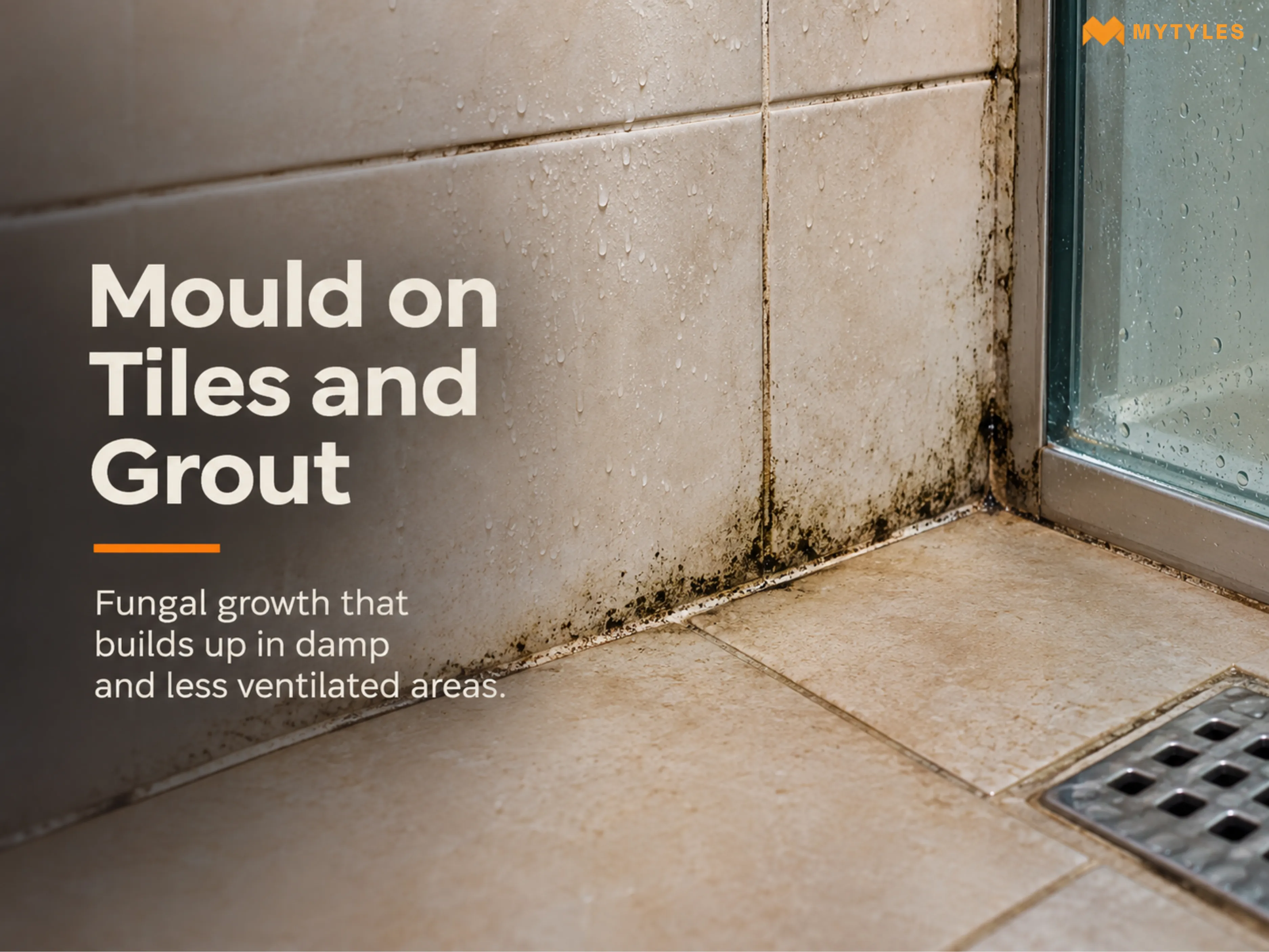
Black or green patches usually appear in the grout first, because grout is porous and stays wet longer than the tile face. Mould on bathroom tiles also gathers in corners, along the bottom row and near the shower, where air hardly moves. Mould between tiles is harder to remove, as it sits inside the joint. If it returns in the same spot every few weeks, look for a slow leak or a gap in the joint instead of simply scrubbing harder.
Damp patches or water marks
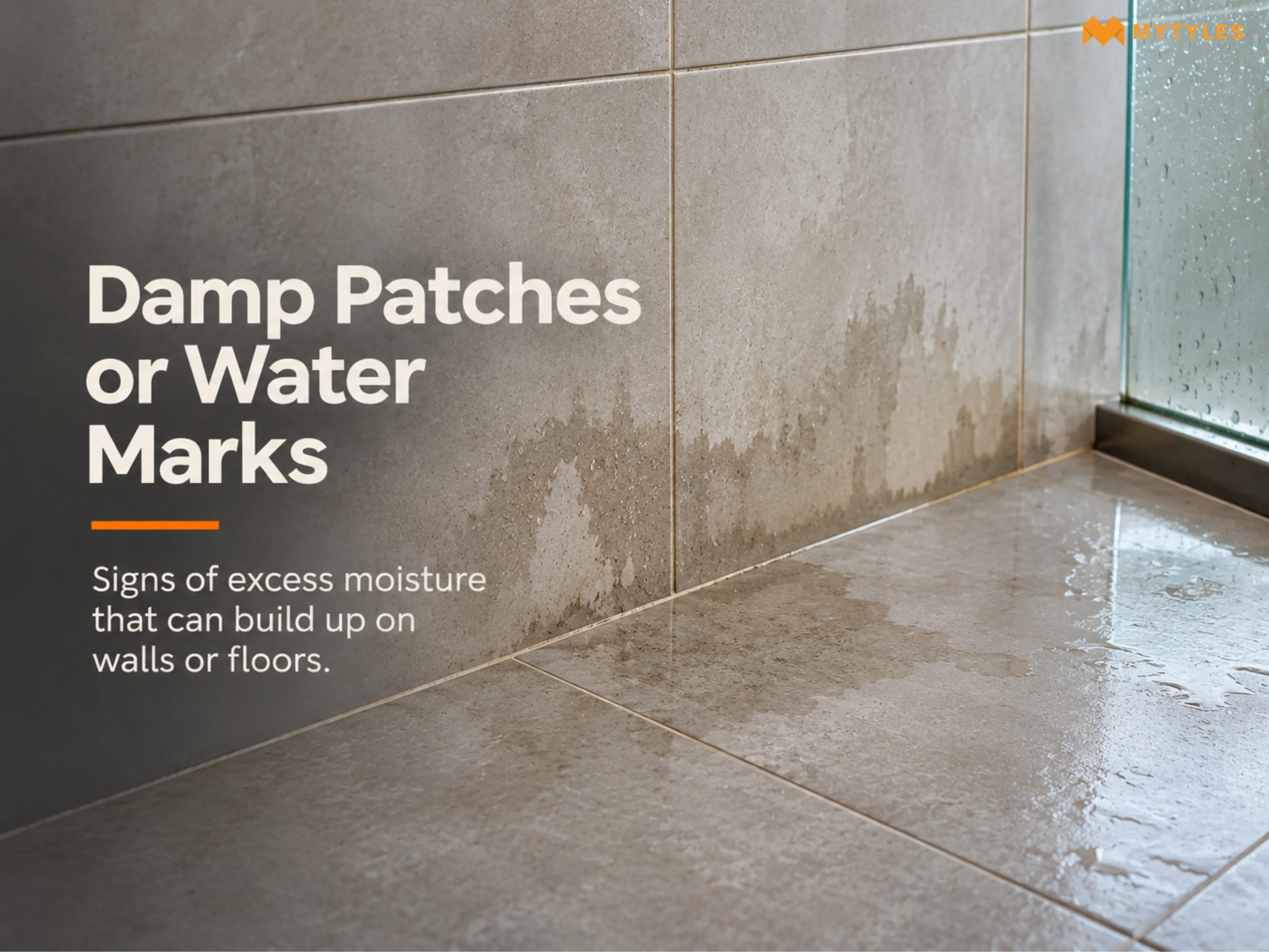
A dark patch on a floor tile, or a stain creeping up a wall tile, suggests water is getting in from behind or below. A plumbing leak, weak waterproofing or open joints can all be responsible. Watch whether the mark grows after showers or after rain, because that pattern points towards the source.
Loose, lifted or hollow sounding tiles
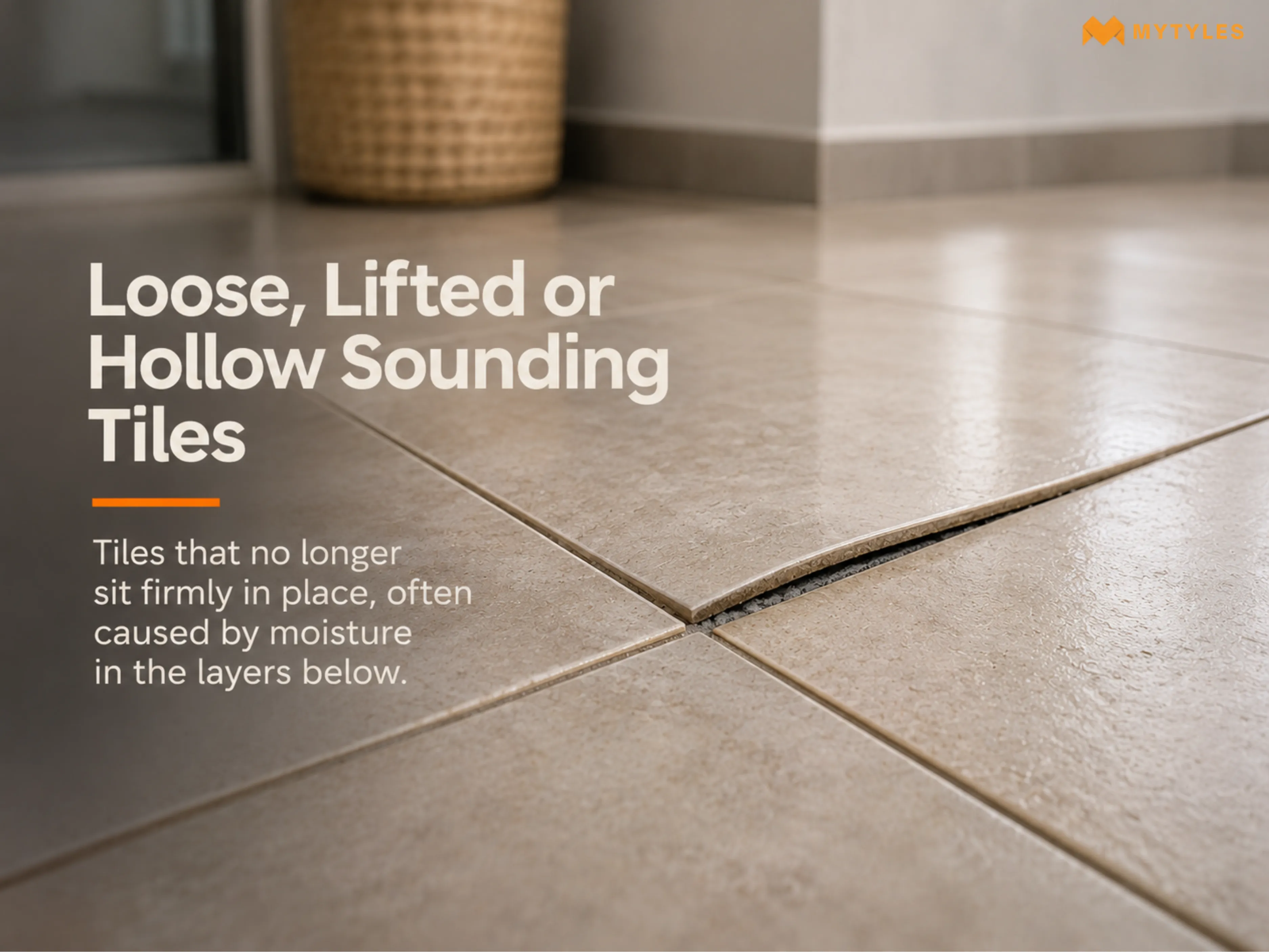
Tap a tile gently with a coin. A hollow sound often means the adhesive has not bonded fully underneath. Moisture makes that worse over time, and the tile may start to rock, crack or lift at the edge. New grout will not fix it, because the bond below has already weakened.
Discoloured or deteriorating grout
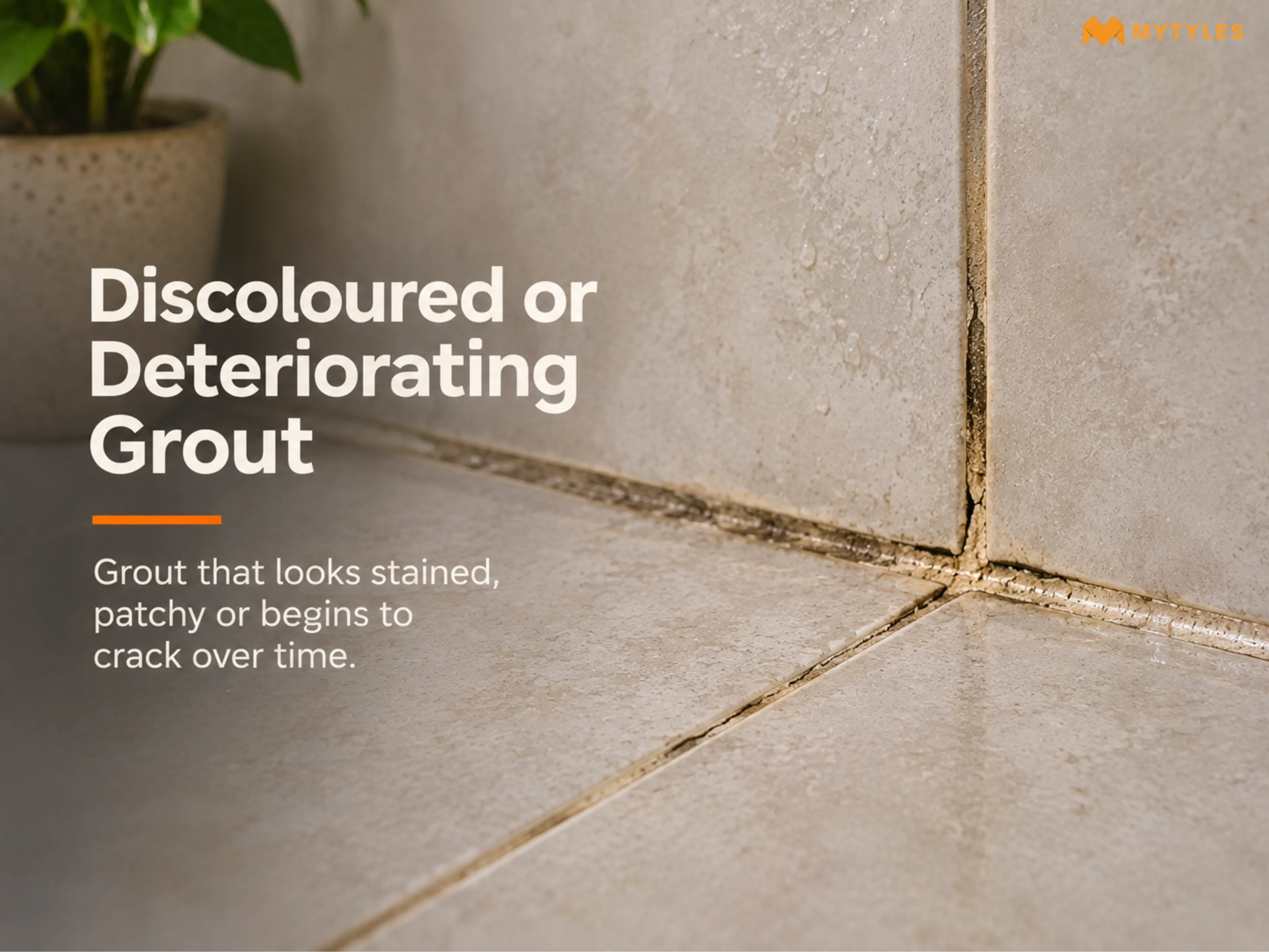
Cement grout can darken, turn powdery or crack after repeated wetting and drying. Once it crumbles, water finds an easier path into the layers below, so cracked lines near the floor drain deserve a quick look.
White deposits on tile surfaces
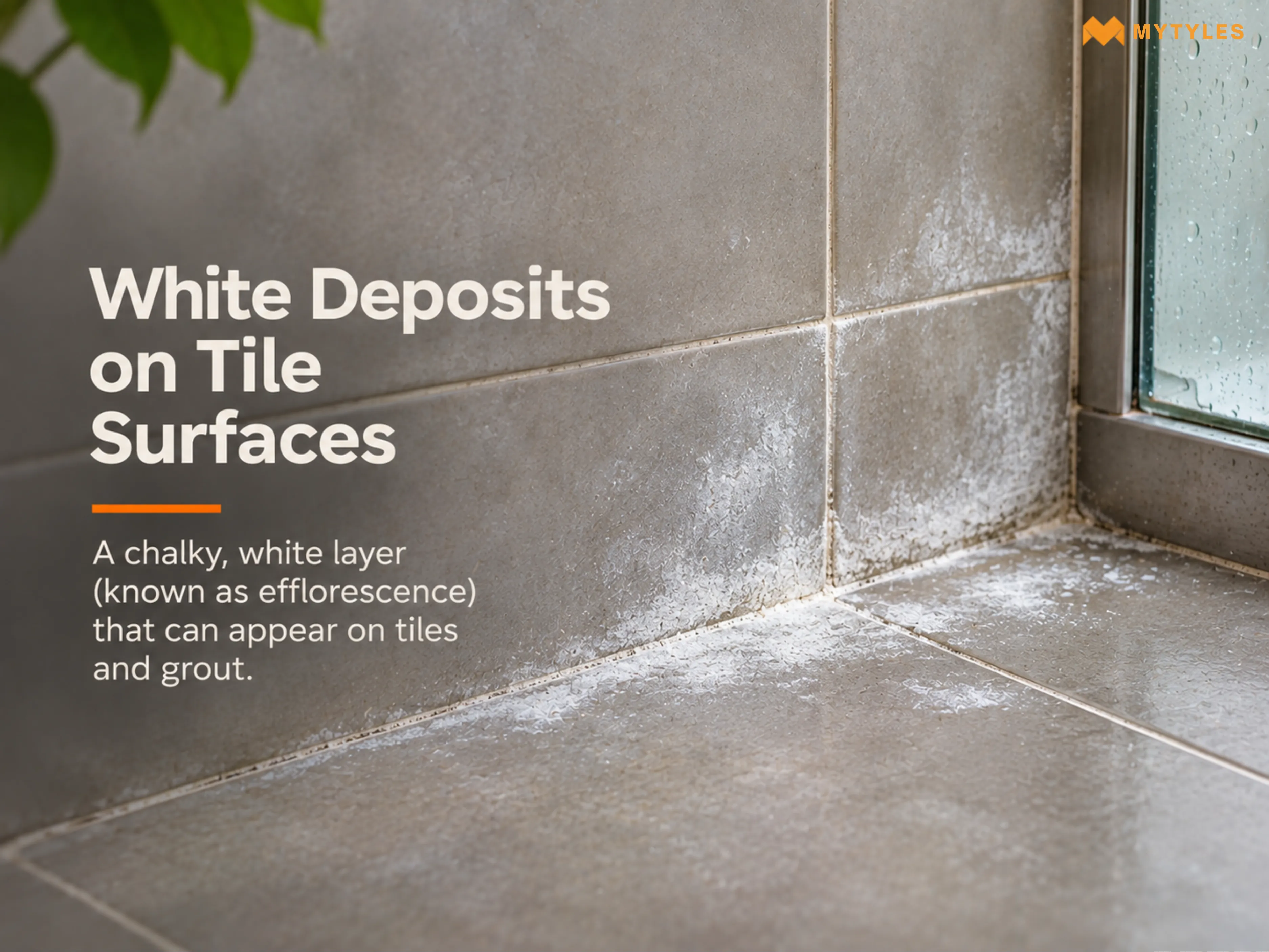
A chalky white film along the grout lines is often efflorescence. Moisture carries salts out of the adhesive, grout or base layer, and they stay behind on the surface as it dries. It shows up often in new installations and does not always harm the tile. Even so, it signals that moisture is moving through, so the source deserves attention. Avoid strong acid cleaners unless the label says they suit your tile and grout.
Which Tiles Are Ideal for Humid and Coastal Climates?
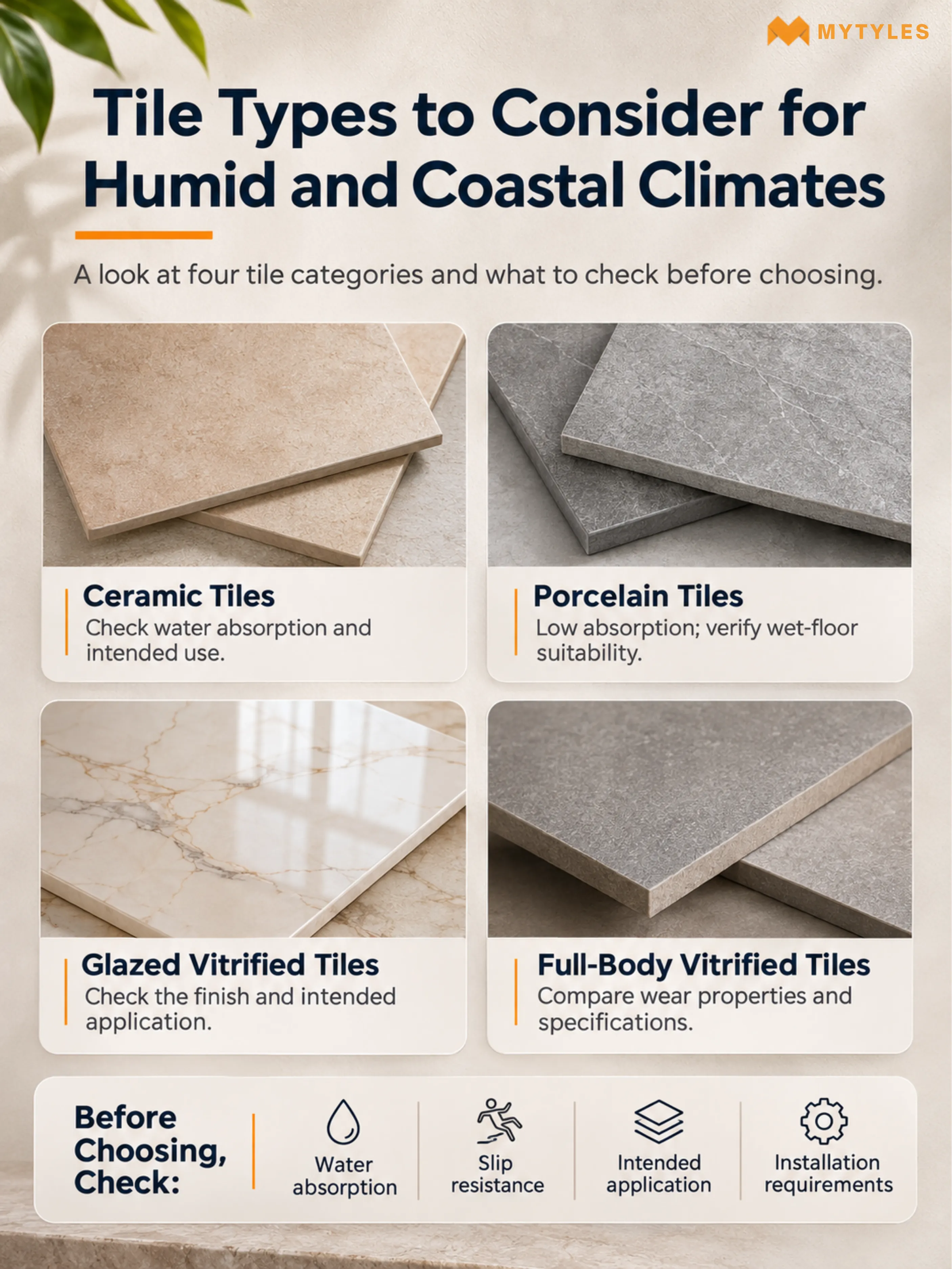
When choosing tiles for humid climate conditions, look beyond the name on the box. Check the declared water absorption, intended application, surface finish, slip-resistance information, durability and the manufacturer’s installation instructions. A tile that works well on a dry bedroom floor may not be the right choice for a shower floor or an exposed balcony. Additionally, the best tiles for bathrooms differ by placement, because a wall and a floor ask different things of a tile.
Ceramic Tiles
Ceramic is a broad category of fired-clay tiles. Some ceramic tiles are suitable for walls and selected floor applications, while others are intended for lighter-duty use. Their properties vary, so when shortlisting tiles for humid climate rooms, check the product’s water-absorption classification and whether the manufacturer approves it for the room where you plan to install it. Do not assume every ceramic tile is suitable for a shower floor.
Porcelain Tiles
Porcelain is a type of ceramic tile with a low water-absorption rate. Under ISO 13006, porcelain tiles are classified with water absorption of 0.5% or less. This makes porcelain a common option to consider for bathrooms, kitchens and other areas where moisture is present. However, low absorption does not automatically make a tile slip-resistant or make the whole floor waterproof. Choose a finish and product rating suitable for the exact application, especially if you are looking at anti-skid floor tiles.
Glazed Vitrified Tiles (GVT)
GVT has a vitrified body with a decorative glaze on the surface. They are available in many colours, patterns and stone- or wood-inspired designs. Their suitability as tiles for humid climate spaces depends on the product’s technical specifications and finish. For bathroom floor tiles, check the manufacturer’s wet-area recommendation and slip-resistance data rather than choosing by appearance alone.
Full-Body Vitrified Tiles
In a full-body vitrified tile, the colour and material pattern run through the tile's thickness rather than appearing only as a surface glaze. This can be useful in areas where surface wear is a consideration. It does not automatically mean that a full-body tile is more water-resistant or safer underfoot than every GVT product. Compare the actual technical data and intended-use guidance.
How to Prevent Tile Problems in Humid Weather
Even the right tiles for wet areas fail if the work beneath them is rushed, so these steps matter as much as the tile itself.
Waterproof the base first. The phrase waterproof bathroom tiles is used often, but a tile alone does not make a floor waterproof. That job
belongs to a waterproofing layer under the tiles and to well filled joints. In practice, moisture-resistant flooring is a system made of the base, the membrane, the adhesive, the tile and the grout, and each layer should follow the maker’s instructions.
Choose the right adhesive. Tile adhesive for wet areas is usually polymer modified and cement based. Plain cement mortar is not designed for this, and dense vitrified tiles can bond poorly with it. Tiles for humid climate kitchens and bathrooms are only as secure as the adhesive holding them. Let it cure fully before grouting, since grouting too early can encourage white deposits.
Pick grout for damp conditions. Epoxy grout is resin based and less porous than cement grout, so it tends to cope better in constantly wet corners. It takes longer to set, so plan for that. Cement grout with mould protection is another option, and a grout sealer may help, depending on the product. Grout matters just as much when fitting tiles for humid climate bathrooms as the tile does.
Let the room dry out. Run the exhaust fan or open a window during and after a shower, and wipe or squeegee the floor when you can.
Keep up with cleaning. Regular tile grout cleaning with a soft brush and a cleaner made for tiles stops mould from settling in. If the grout is already crumbling, or the same patch keeps returning, ask a tiler to check for a leak or a failed joint before it turns into a larger repair.
Choose the Right Tiles for a Drier, Longer Lasting Home
A humid home does not need special tricks, only a few sensible decisions made before the first tile goes down. Look for a dense body with low water absorption, an adhesive made for wet places, grout that can handle dampness, and a base that is waterproofed properly. Writing those four points down before you meet your installer keeps tiles for humid climate rooms from being chosen on looks alone.
When you are ready to compare, the MyTyles' online store lets you browse tiles and their listed product details, so you can effectively shortlist moisture-resistant and water-resistant floor tiles before you decide. The MyTyles Experience Centre is a useful next stop too. Seeing a matt and a polished surface side by side, and asking about slip ratings in person, makes it easier to settle on tiles for humid climate homes.

Which tiles are best for a humid climate?

Porcelain tiles are often a strong option because they have low water absorption, but the best choice depends on the room and the product's specifications. For wet floors, check the intended-use guidance and slip-resistance data as well as water absorption.
Can humidity cause tiles to become loose?
High humidity alone does not automatically loosen tiles. Loose tiles can be linked to poor adhesive coverage, substrate movement, moisture intrusion, inadequate surface preparation or missing movement joints. The cause should be checked before replacing them.
Why does mould grow between bathroom tiles?
Mould can develop in damp grout joints where soap residue and dirt collect and ventilation is limited. Improve airflow, clean the joints with a suitable product and investigate the area if mould keeps returning.
How do you remove dampness from under floor tiles?
First identify whether the moisture is coming from a leak, seepage, condensation or a waterproofing problem. Stop the source and have the affected area assessed before removing or replacing tiles. Simply regrouting or covering the floor may not solve it.
Are porcelain tiles better than ceramic tiles for bathrooms?
Porcelain has a lower water-absorption classification than many other ceramic tiles, but porcelain is itself a type of ceramic tile. A suitable bathroom tile should also have an appropriate finish, slip performance and manufacturer approval for the intended use.
Do bathroom tiles need waterproofing?
Tiles and grout are not a substitute for a waterproofing system. Wet areas such as showers generally need suitable waterproofing beneath the tile finish, installed as part of a compatible system and in line with applicable requirements.
Which tile adhesive is suitable for wet areas?
Use an adhesive that the manufacturer approves for the tile type, substrate and wet-area application. Check the technical data sheet rather than choosing by a generic product name, and follow the specified preparation, coverage and curing instructions.

ABOUT THE AUTHOR
Heena Dhiman
With a background in fashion design and over 5 years of writing experience, I bring a creative and detail-oriented eye to home and design content. My journey began with aesthetics, colours, and visual storytelling, which gradually led me to writing across lifestyle, finance, home improvement, and resource management. Over time, I discovered a strong interest in tiles and interiors, where my design background helps me understand how small choices can shape the feeling of a home. Through my content, I aim to make home design decisions easier, clearer, and more enjoyable for readers, helping them feel confident while creating spaces that reflect their style and everyday needs.