Inspiration Gallery
Blog
Tile Calculator
08065423741



.svg)


5 Wall and Floor Tile Matching Ideas for Seamless Interiors
ByHeena Dhiman

Sun , Jul 12 , 2026

Read Time: 5 Min


 Copied!
You have found the perfect sofa. The paint colour is just right. But the moment you look at the floor and then at the wall, something feels a little off. The tiles do not quite speak to each other. It is a problem many homeowners run into, and it is more common than you think. Getting wall tile and floor tile combinations right is actually one of the most impactful decisions you can make for a room. When the two surfaces work together, the whole space feels intentional, calm, and put together. When they clash, no amount of furniture or decor can fix it.
So how do you get it right? It is not about matching perfectly. It is about pairing smartly. Here are five tile matching ideas for home that actually work, covering everything from finish and colour to texture, layout, and grout.
1. Coordinate by Tone for a Balanced Look
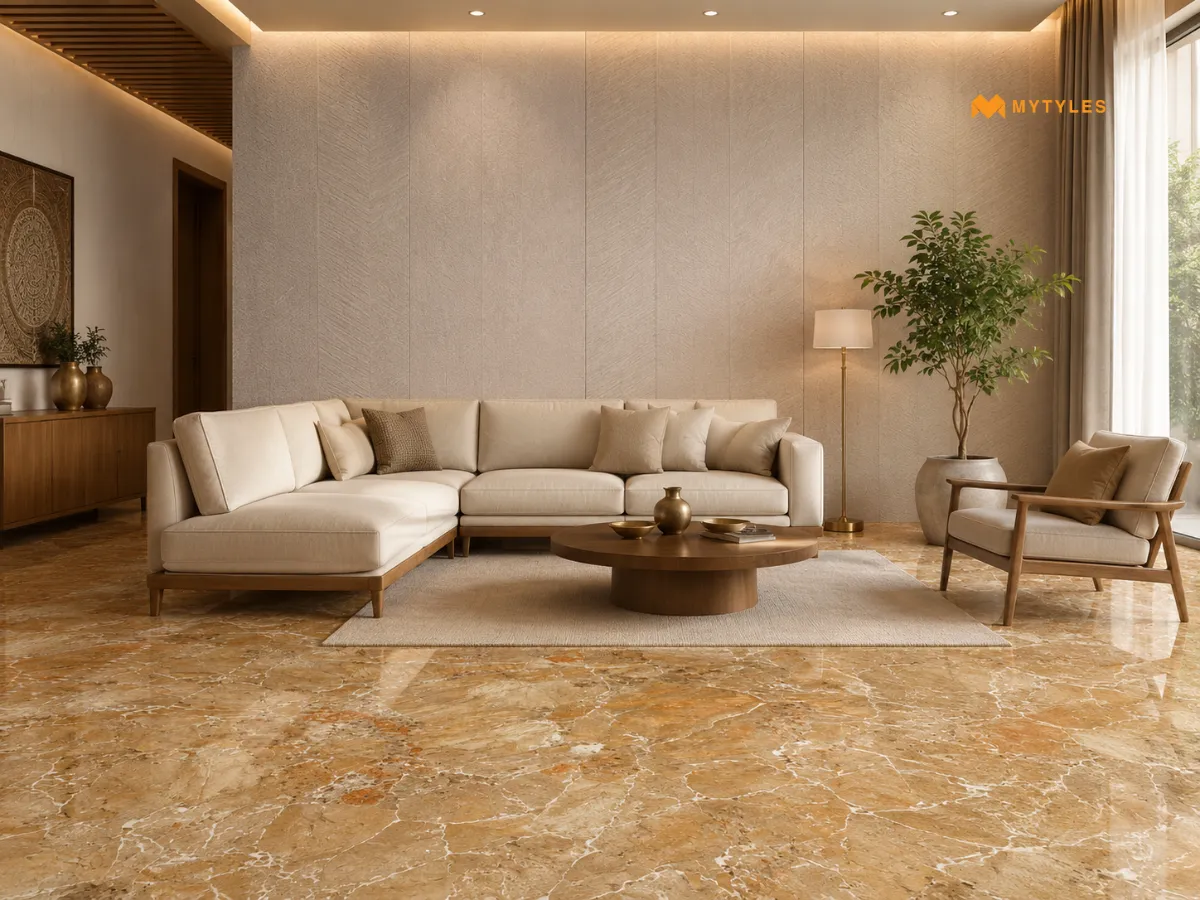
This is one of the most beginner-friendly wall and floor tile design principles. Instead of hunting for tiles in the exact same colour, try matching by tone. If your floor is warm, your wall tile should be warm too. If the floor is cool, the wall follows.
For example, neutral wall and floor tiles in the same tonal family, say, a warm beige floor tile paired with an off-white or warm grey wall tile, create a visual harmony that feels natural rather than forced. The result is a space where the floor and wall feel like one continuous surface, not two separate decisions.
Living rooms benefit from this the most. When the tone stays consistent across the floor and walls, the space automatically feels bigger and more settled. Similarly, in the bedroom, cool-toned floor tiles paired with a slightly lighter cool wall tile can give the space a clean, restful quality.
Quick tip: Hold the two tile samples next to each other in your actual room, not in the store. Natural light at home can shift how colours look, and that is the truest test of a good tonal match.
2. Play with Finish Contrast: Matt Floors, Glossy Walls
One of the most popular wall and floor tile combinations in modern Indian home interiors is pairing matt floor tiles with glossy wall tiles. And there is a very practical reason this works so well.
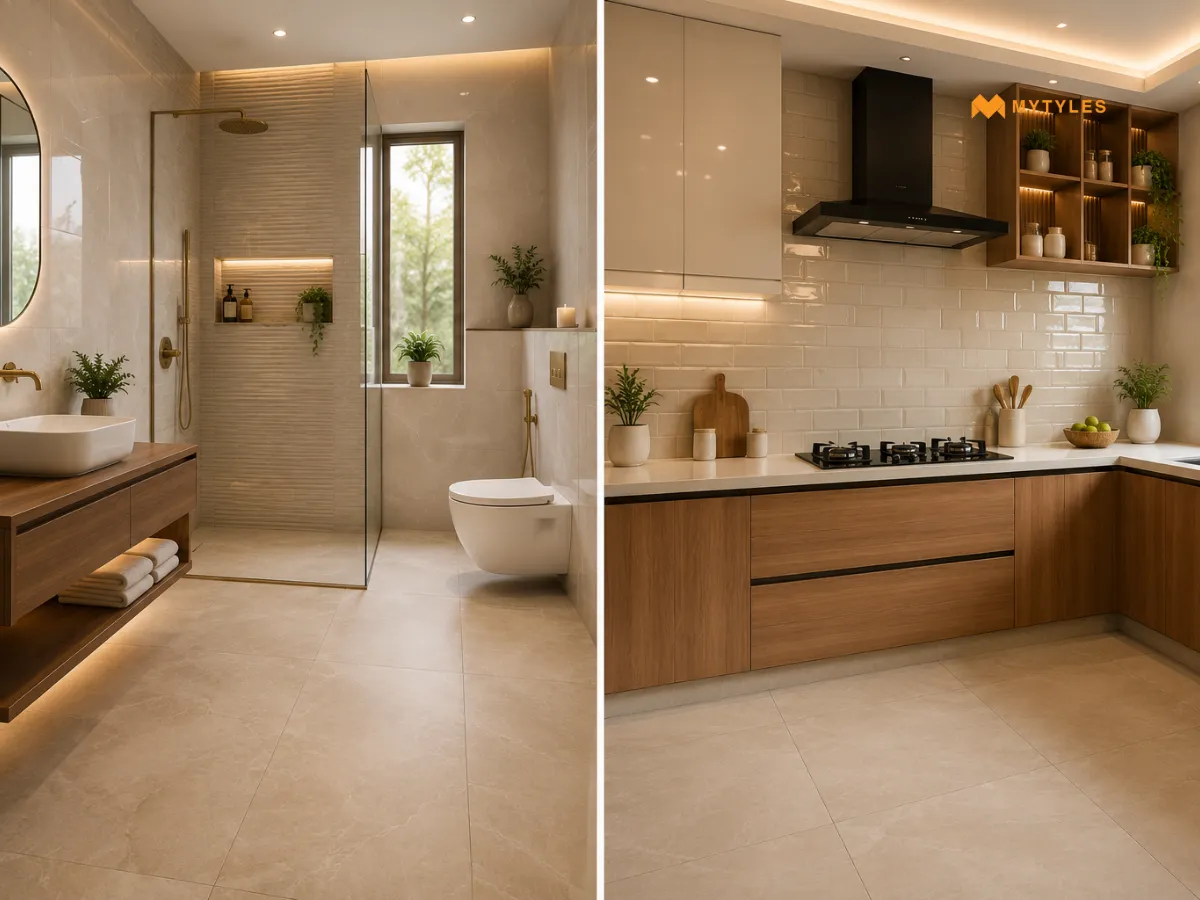
Matt tiles on the floor reduce slip risk and hide footprints better. Glossy wall tiles reflect light, making the room feel brighter and more spacious. When you keep the colour palette similar, a matt beige floor tile with a glossy version of the same beige on the walls creates a subtle depth that looks intentional and premium.
This finish contrast idea works beautifully in bathroom wall and floor tiles. A matt stone-look floor with a glossy white metro tile wall is a classic pairing for a reason. It is clean, timeless, and requires very little styling effort to look polished.
In kitchens, the same logic applies. Kitchen wall and floor tile combinations that use matt on the floor and gloss on the wall also make grease and splatter easier to spot and clean, which is a practical bonus in an Indian cooking environment.
3. Use the Same Tile on Both Surfaces for a Continuous Look
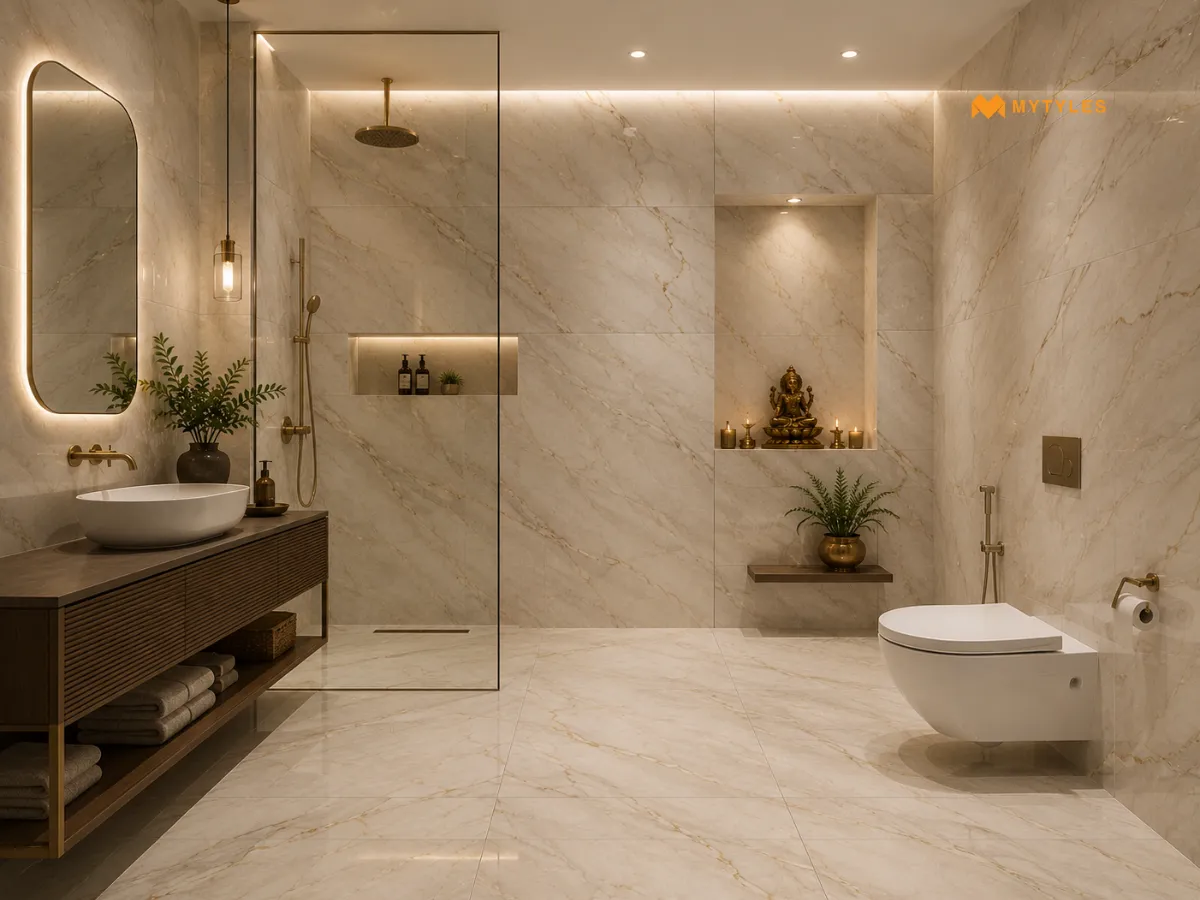
If you want the most effortless floor and wall tile combination, just use the same tile on both surfaces. This is not a shortcut. It is actually a deliberate design move that gives a space a very modern, almost architectural quality.
Using the same wall and floor tiles works especially well with large format tiles. Think of a bathroom where the walls and floor carry the same marble-look tiles in a big slab format. The grout lines align, the pattern flows, and the room feels like one continuous surface. It is the kind of look that photographs beautifully and feels even better in person.
For large-format tiles, this approach is even more impactful. Fewer grout lines mean a cleaner visual flow. The space reads as one surface rather than two separate planes. This is what gives luxury bathrooms and premium hotel spaces that sense of expansiveness, even when the room itself is not that large.
One thing to keep in mind: the tile must be rated for both wall and floor use. Floor tiles handle weight and foot traffic, so check the slip-resistance rating before you run a wall tile onto the floor. Always ask about this when choosing your wall and floor tiles for home use.
4. Bring in a Feature Wall to Break the Monotony
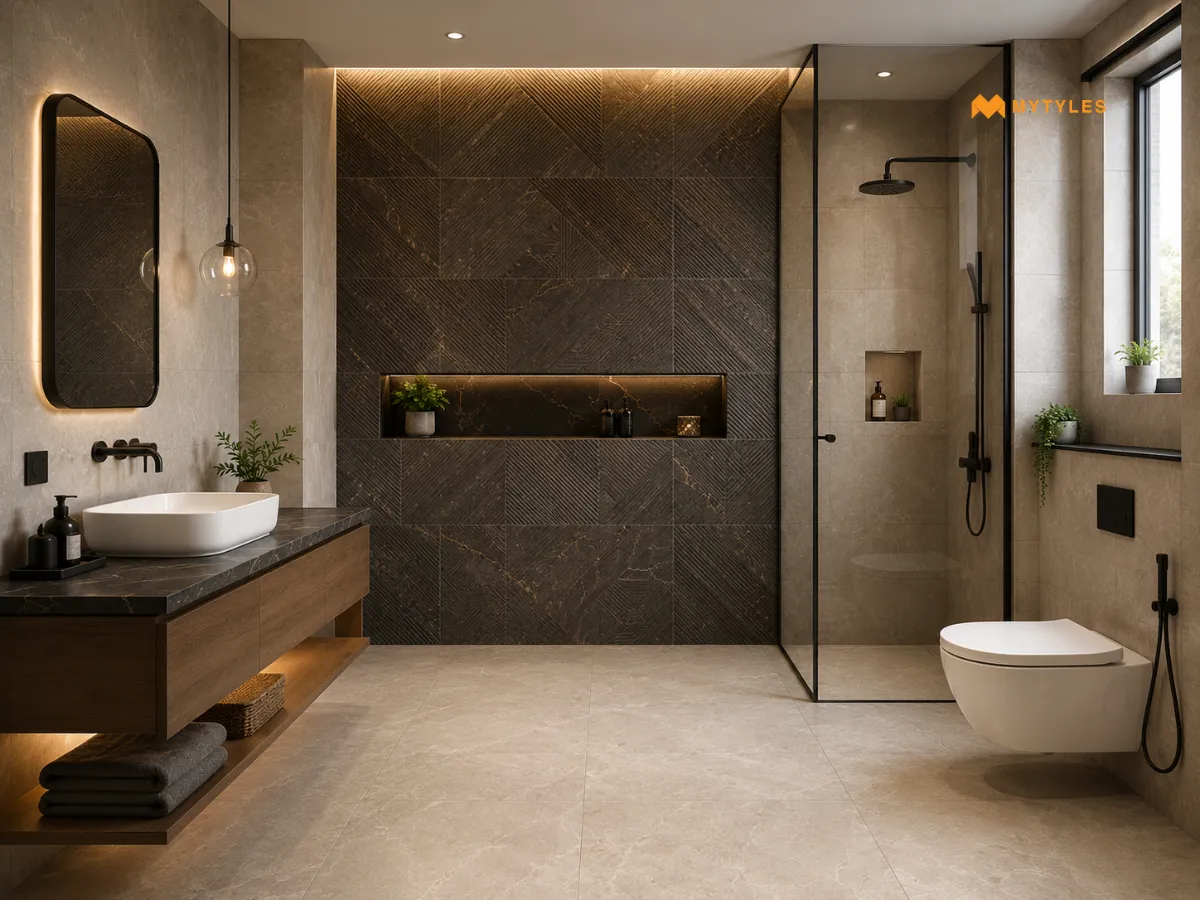
Not every wall needs to match the floor. In fact, one of the best wall and floor tiles design ideas for modern homes is to let one wall do something different entirely. This is what designers call a feature wall tile approach.
Here is how it works. You keep the floor neutral. Three walls follow the floor in tone or texture. The fourth wall, the one that faces you as you walk in, carries a different tile altogether. It could be a bolder colour, a different texture, or a larger pattern. The feature wall tiles become the focal point of the room, and everything else supports them.
In a bathroom, for instance, stone-look wall and floor tiles on three walls and the floor, with a single accent wall in a deep charcoal or patterned tile, creates a striking balance. The room does not feel overdone because the dominant surfaces remain neutral. The feature wall does the talking.
This is also a smart way to add personality without committing to bold tile everywhere. If you are renovating a bedroom or a living area in a modern Indian home, one strong feature wall tile paired with simple matching wall and floor tiles elsewhere can completely change the energy of the space.
5. Let Grout Do the Heavy Lifting
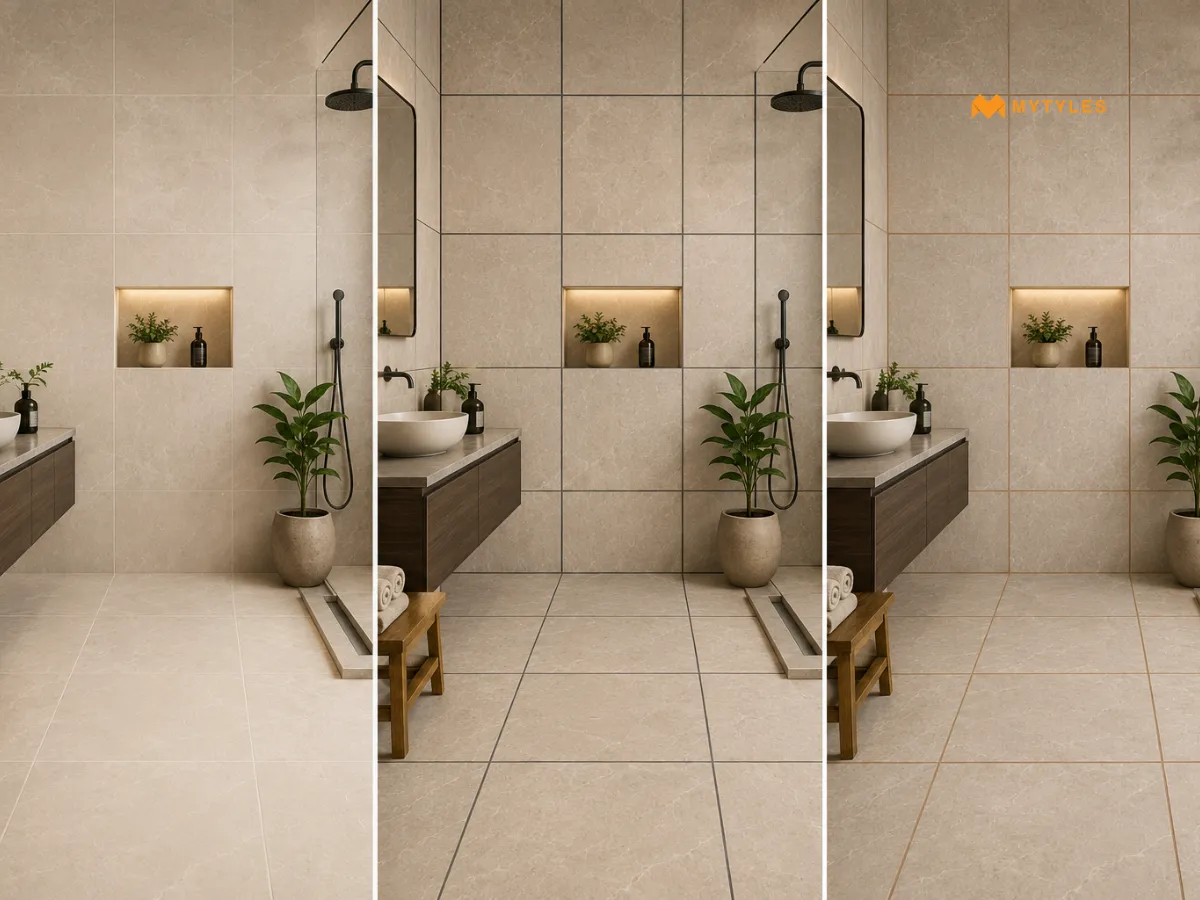
Most people choose tiles carefully and then pick grout as an afterthought. But grout colour for tiles is one of the easiest ways to make or break a tile matching scheme.
Here is the thing. The same tile can look completely different depending on the grout you put around it. Light grout with light tiles makes the surface feel seamless. Dark grout with light tiles makes every tile pop individually. And matching grout to the tile colour is what creates that continuous, uninterrupted look in a wall-to-floor tile design.
For matching tiles for walls and floors, one useful approach is to keep the same grout colour on both surfaces. If your floor and wall tiles are in the same beige family, a matching beige grout throughout ties the whole look together. The transitions between floor and wall feel soft rather than sharp.
On the other hand, if you want to add definition, use a contrasting grout on the floor and a matching one on the wall. This draws the eye down and creates a subtle differentiation between the two surfaces without needing different tile colours. It is a small detail that makes a big difference in how wall and floor tile design reads in a finished room.
Tip: In wet areas like bathrooms, choose an epoxy grout. It resists staining, stays cleaner longer, and is far easier to maintain than regular cement-based grout.
A Few More Things Worth Knowing Before You Start
Getting matching wall and floor tiles right is more than just aesthetics. Here are a couple of practical pointers that can save you from common mistakes:
- Buy extra tiles. Always buy 10 to 15 percent more than your calculated requirement. Tile batches vary slightly in shade, and you will need matching pieces for repairs later.
- Consider the room size. Large-format tiles make small rooms feel larger, but they need a very flat base. Smaller tiles can handle slight floor unevenness better and offer more grout line patterning options.
- Do not skip the transition detail. Where the floor tile meets the wall tile, a slim trim or pencil bead tile adds a neat, finished edge. It is a small cost that makes the floor and wall tile combination look professionally installed.
- Think about wooden-look floor tiles for living rooms. They bring warmth without the maintenance of actual wood. Pair them with soft grey or white wall tiles, and you get a look that is both homely and modern.
Ready to Find Your Perfect Tile Match?
A well-matched wall and floor tile combination is one of those design decisions you keep noticing long after the home is done. Every time you walk into the room, it just feels right. That feeling is worth putting thought into.
At MyTyles, you will find a wide range of wall and floor tiles for home use, from marble-look to wood-look, from glossy whites to rich, textured neutrals, all carefully curated for modern Indian spaces. Browse the collection online or visit a MyTyles experience centre near you to see the tiles in person, compare them side by side, and make a choice you will love for years.
Expert Reviewed by Biren Agrawalla
Biren Agrawalla, the Founder of MyTyles with over 10 years of experience across tile, retail, and home decor. Driven by a passion for tiles and a deep understanding of customer behaviour, he has spent his career transforming how people discover and buy tiles online. Biren combines practical retail insight with modern digital solutions to make tile shopping smarter, more intuitive, and design focused. At MyTyles, he champions a customer first approach, ensuring every experience from browsing to buying is reliable, seamless, and inspiring.

How Do I Match Wall and Floor Tiles?

Match by tone rather than exact colour. A warm floor tile pairs well with a warm wall tile even if the shades differ. You can also match by finish, texture, or use the same tile on both surfaces for a seamless, continuous look throughout the room.
Can I Use the Same Tile on Walls and Floors?
Yes, but ensure the tile is rated for floor use. It must have the right slip resistance and load-bearing capacity. Using the same tile on both surfaces, especially in large formats, creates a sleek, uninterrupted visual flow across the room.
What Grout Colour Should I Use for Wall and Floor Tiles?
For a seamless look, match the grout to the tile colour. For definition, use a contrasting grout. In wet areas, epoxy grout is recommended as it resists staining and stays cleaner longer than regular cement-based grout options.
Should Floor Tiles Be Darker Than Wall Tiles?
Not necessarily. It is a popular convention, but it is not a rule. Lighter floors with slightly warmer or cooler walls can work equally well. What matters more is tonal harmony between the two surfaces, not which one is lighter or darker.
What Are Good Wall and Floor Tile Combinations for Small Bathrooms?
Light neutral tiles on both surfaces make small bathrooms feel larger. A glossy white wall tile with a matt stone-look floor tile is a proven combination. Using large-format tiles with minimal grout lines also helps the space feel more open and less cluttered.
Are Matt or Glossy Tiles Better for Floors?
Matt tiles are generally better for floors as they have higher slip resistance and hide dust and footprints more effectively. Glossy tiles work well on walls where they reflect light and brighten the space without any underfoot safety concerns.
What Are the Latest Wall and Floor Tile Design Trends for Indian Homes?
Popular trends include large-format tiles used across both surfaces, marble-look and stone-look tile combinations, wooden-look floor tiles paired with neutral wall tiles, and single feature walls in bold textures or patterns against simple matching backgrounds.

ABOUT THE AUTHOR
Heena Dhiman
With a background in fashion design and over 5 years of writing experience, I bring a creative and detail-oriented eye to home and design content. My journey began with aesthetics, colours, and visual storytelling, which gradually led me to writing across lifestyle, finance, home improvement, and resource management. Over time, I discovered a strong interest in tiles and interiors, where my design background helps me understand how small choices can shape the feeling of a home. Through my content, I aim to make home design decisions easier, clearer, and more enjoyable for readers, helping them feel confident while creating spaces that reflect their style and everyday needs.
Latest Blogs By MyTyles