Inspiration Gallery
Blog
Tile Calculator
08065423741



.svg)


7 Granite-Look Tile Flooring Ideas for Premium Indian Homes
ByNandana Priya

Sun , Aug 30 , 2026

Read Time: 6 Min


 Copied!
You walk into a home, and before you even take in the furniture, the floor tells you something. A polished grey surface with flecks catching the light. A warm charcoal underfoot in the passage. That is what granite has long done in Indian homes, quietly setting the tone for everything above it. Granite-look floor tiles, available in materials such as vitrified and porcelain, can create a similar stone-inspired effect in the space.
Natural granite is quarried and cut, which means its patterns and variations differ from one slab to another. Sourcing, cutting, and finishing natural granite can also add to project time and cost, depending on the stone and application. Granite-look tiles use surface printing and finishing techniques to create granite-inspired patterns and tonal variation, offering a stone-like appearance in a manufactured tile format.
This blog lists 7 granite-look tile flooring ideas, each built around a room and the look that tends to suit it best.
Large-Format Grey Granite-Look Tiles for the Living Room
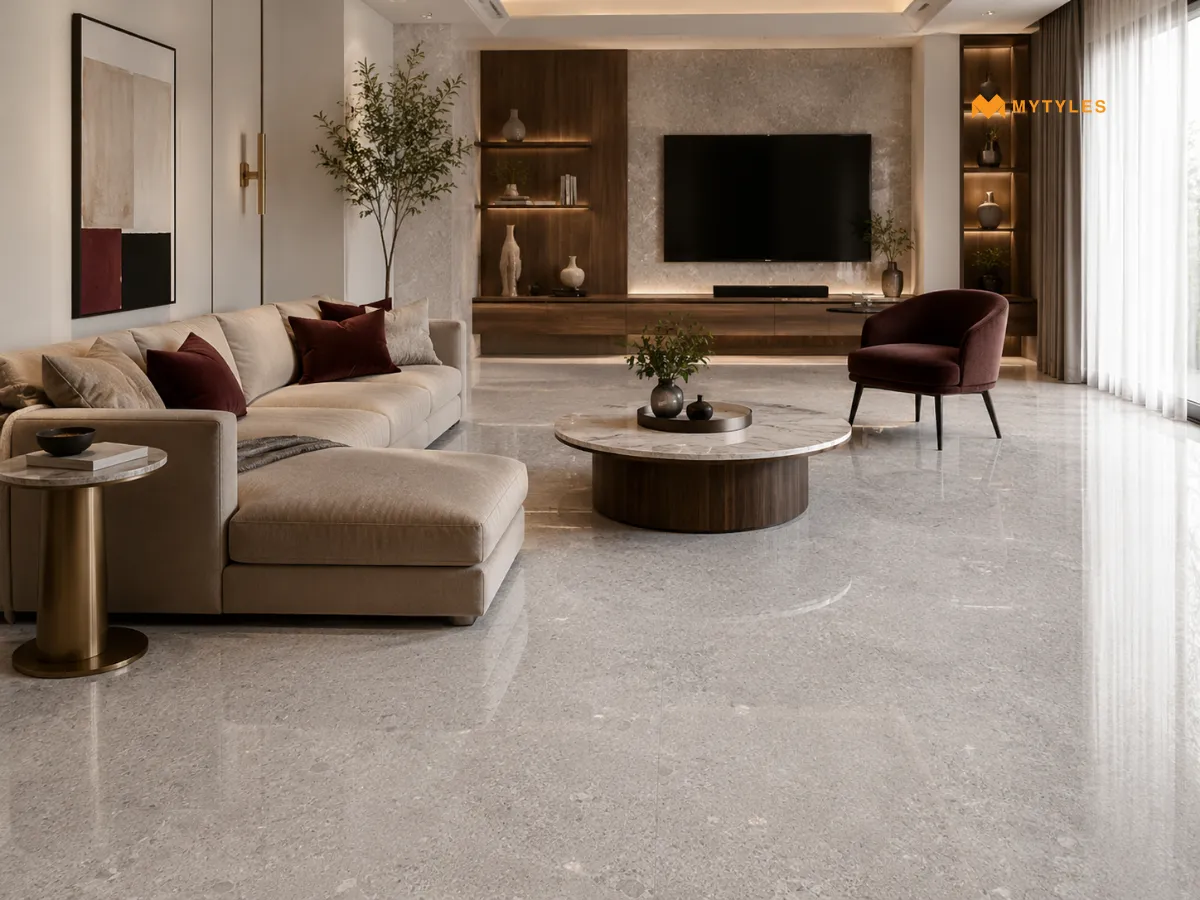
Grey granite-look floor tiles, particularly ones with fine speckling or subtle movement through the surface, bring a settled, put-together look to a living room. Choosing a large format cuts down on visible grout lines, letting the floor read as one continuous stretch rather than a grid of individual tiles.
Getting the large-format tile right depends on the installation as much as the tile itself. The base needs to be levelled before laying, since these tiles show even minor dips or uneven edges more easily than smaller ones. The tiles themselves should also be checked for flatness, as warped pieces can affect the finished surface. Full adhesive coverage, careful handling during installation, and lippage-control clips can also help keep the tile edges aligned. All of this helps the floor hold up to that continuous look.
Polished Granite-Look Tiles for Formal Dining Areas
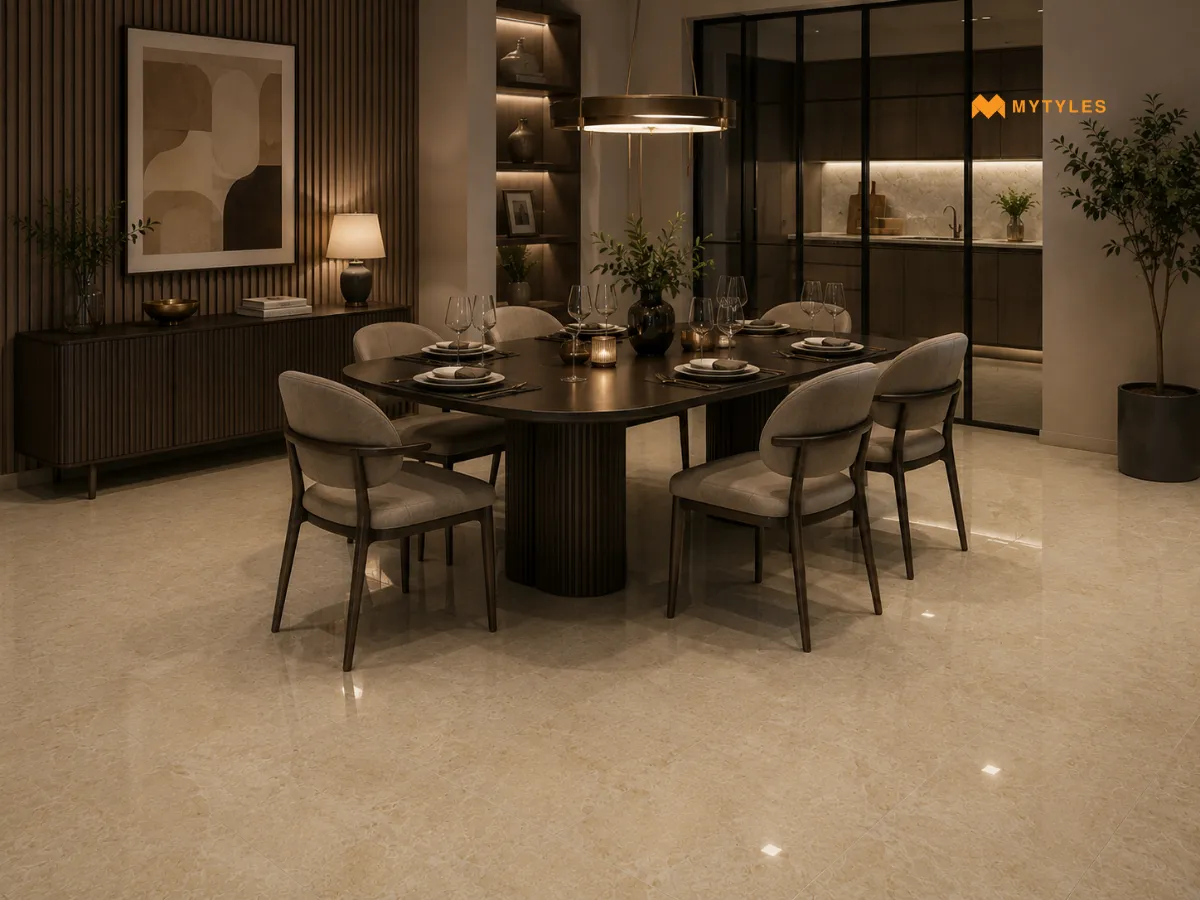
A formal dining area often takes on a different character once the table is set and the overhead lights come on. A polished granite-look floor tile suits that shift naturally. Its reflective surface catches the light around the room, allowing charcoal and deep brown tones to appear richer, while cream and grey shades can look brighter beneath pendant lights or a chandelier.
A glass-top table or metal-framed chairs can sit particularly well here, and cutlery, glassware, and metallic accents may pick up subtle reflections across the floor, depending on the lighting and tile finish. Since dining areas see regular spills, and polished surfaces show footprints, dust, and water marks more easily, check the tile's slip resistance and recommended application before selecting it for this space.
Warm Beige Granite-Look Flooring for the Bedroom
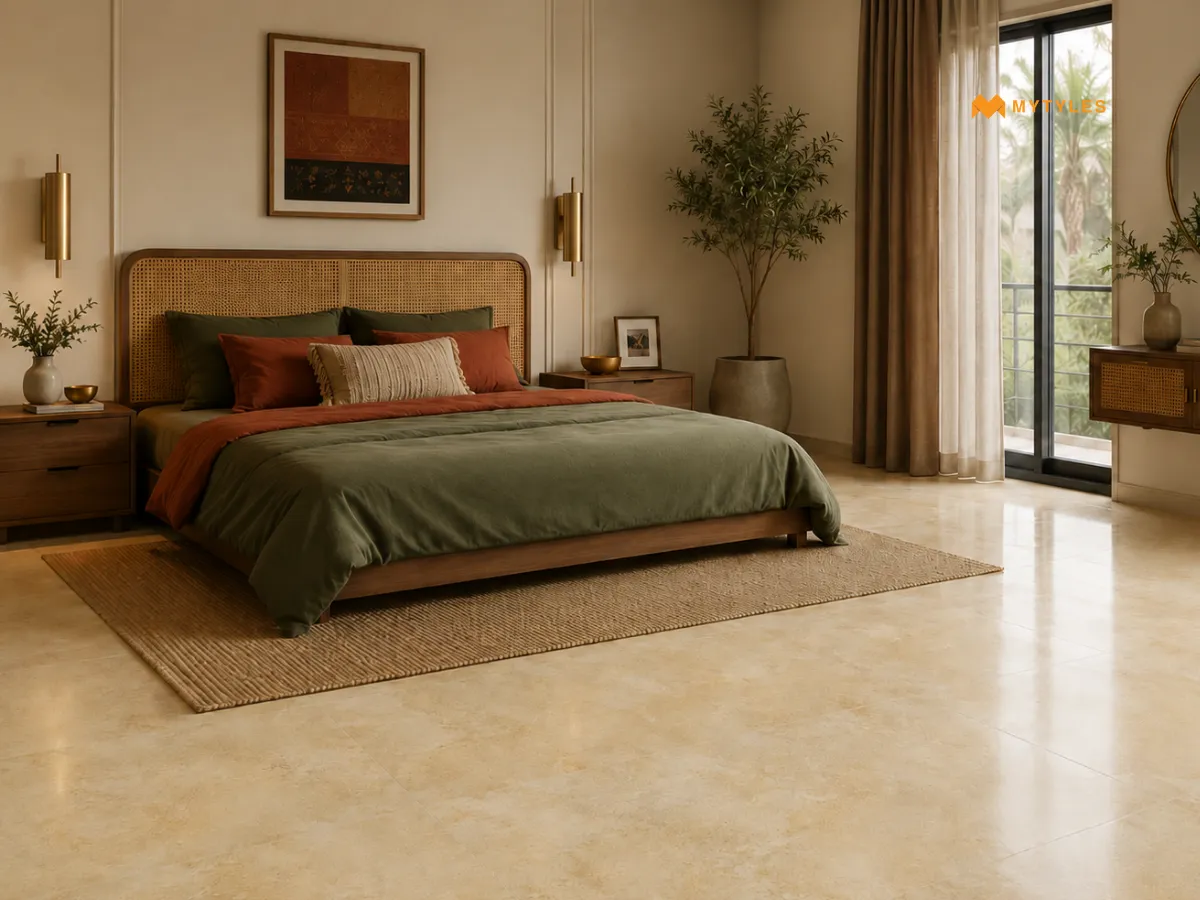
Beige in a granite-look tile flooring design rarely stays plain. Look closely, and there is sand, a touch of ivory, sometimes a thread of gold running through the fleck pattern, the kind of color that looks different in the morning than it does in the evening. That shift is part of the appeal in a room meant to be lived in at every hour of the day.
Pair granite-look tiles for the bedroom with a rattan headboard, and it looks like they were chosen together. Add terracotta or forest green bedding; even brass drawer handles or a woven jute rug can match well with the beige base. When picking the tile, look at surface texture and pattern variation across a few different pieces. It's also worth thinking about size in relation to the room. Before finalising, check the manufacturer's recommended application to make sure the tile is actually suited for bedroom flooring.
Speckled Granite-Look Tiles for the Kitchen Floor
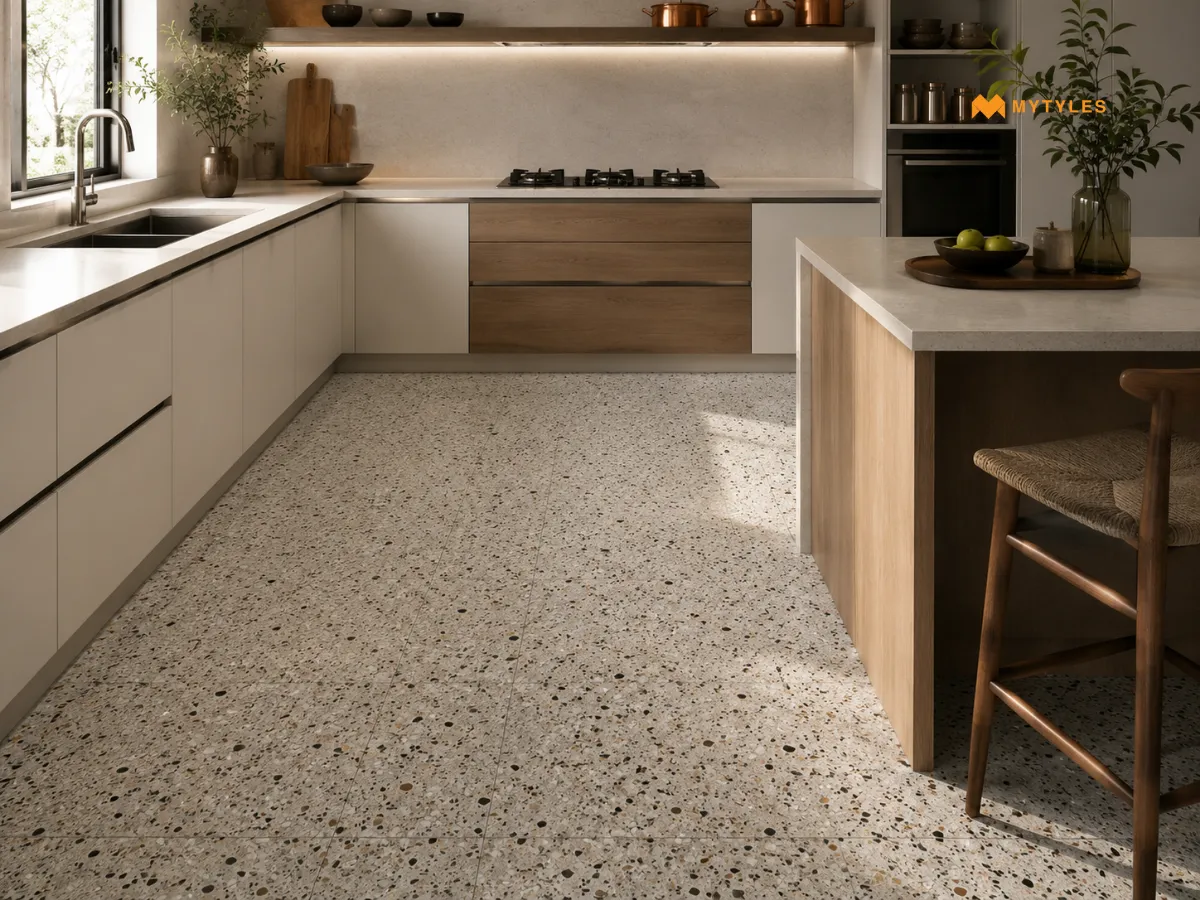
The speckled design brings tiny flecks of grey, brown, or charcoal scattered across the surface, close to how natural granite looks up close. It is a pattern that rewards a second look rather than simply fading into the background.
Keep the cabinetry simple in white, wood, or matt steel, and let the floor be the one detailed element in the room. Make sure the selected granite-look tiles for the kitchen floor have a suitable finish and slip rating. It is also worth checking how easily the surface can be cleaned, especially in areas exposed to cooking spills, oil, and regular foot traffic. A speckled pattern may make small marks less visually noticeable in some cases, but it does not reduce the need for routine cleaning or proper maintenance.
Full-Body Granite-Look Tiles for Foyers and Passages
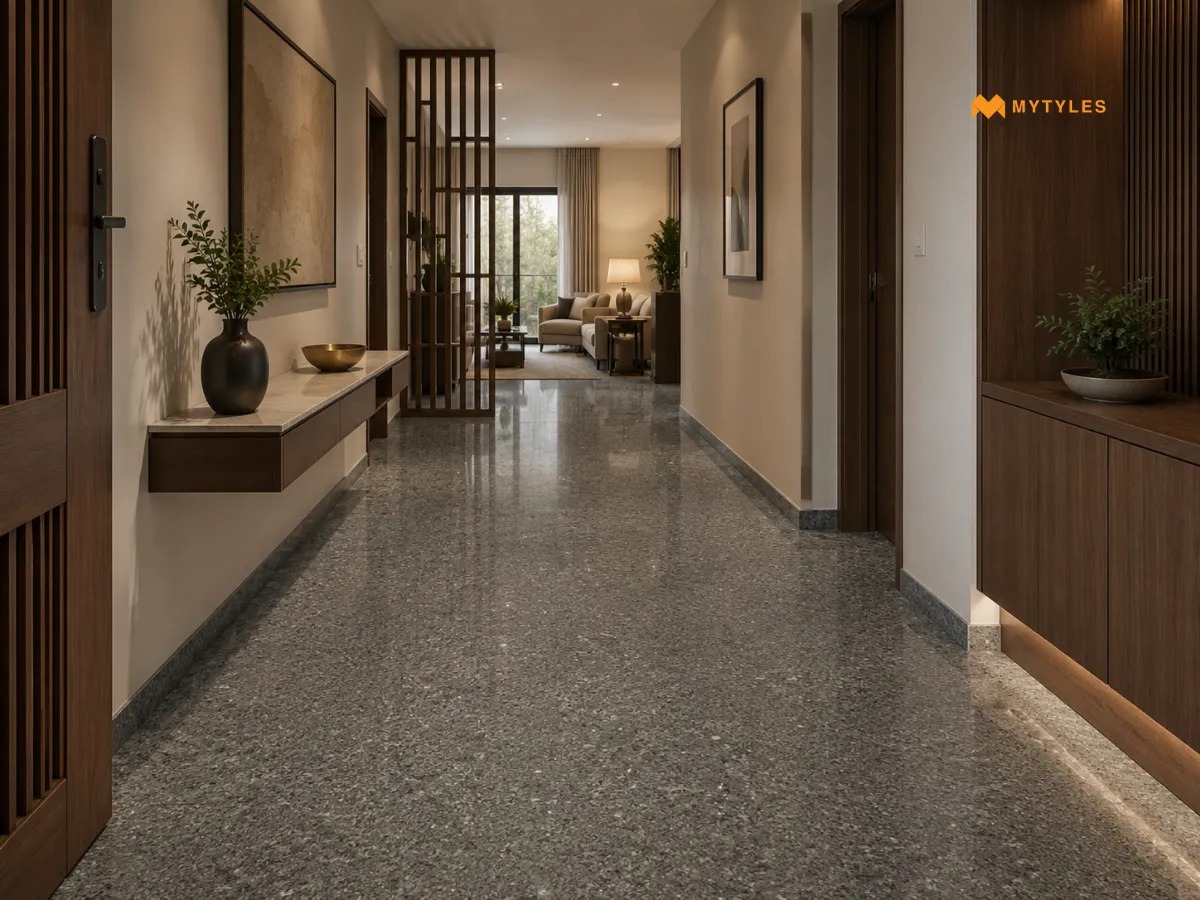
A granite-look tile for home interiors placed right at the entrance sets the tone for the whole house before anyone even reaches the living room. Full-body tiles generally carry a similar color through their thickness, which can make minor edge chips less noticeable than they might be on a tile with a contrasting inner body.
A darker tone, such as charcoal, deep grey, or a salt and pepper blend, works especially well here because it can continue into an adjoining living room and create a smoother visual connection between the two areas.
Contrasting Border Granite-Look Tiles for Living Rooms and Foyers
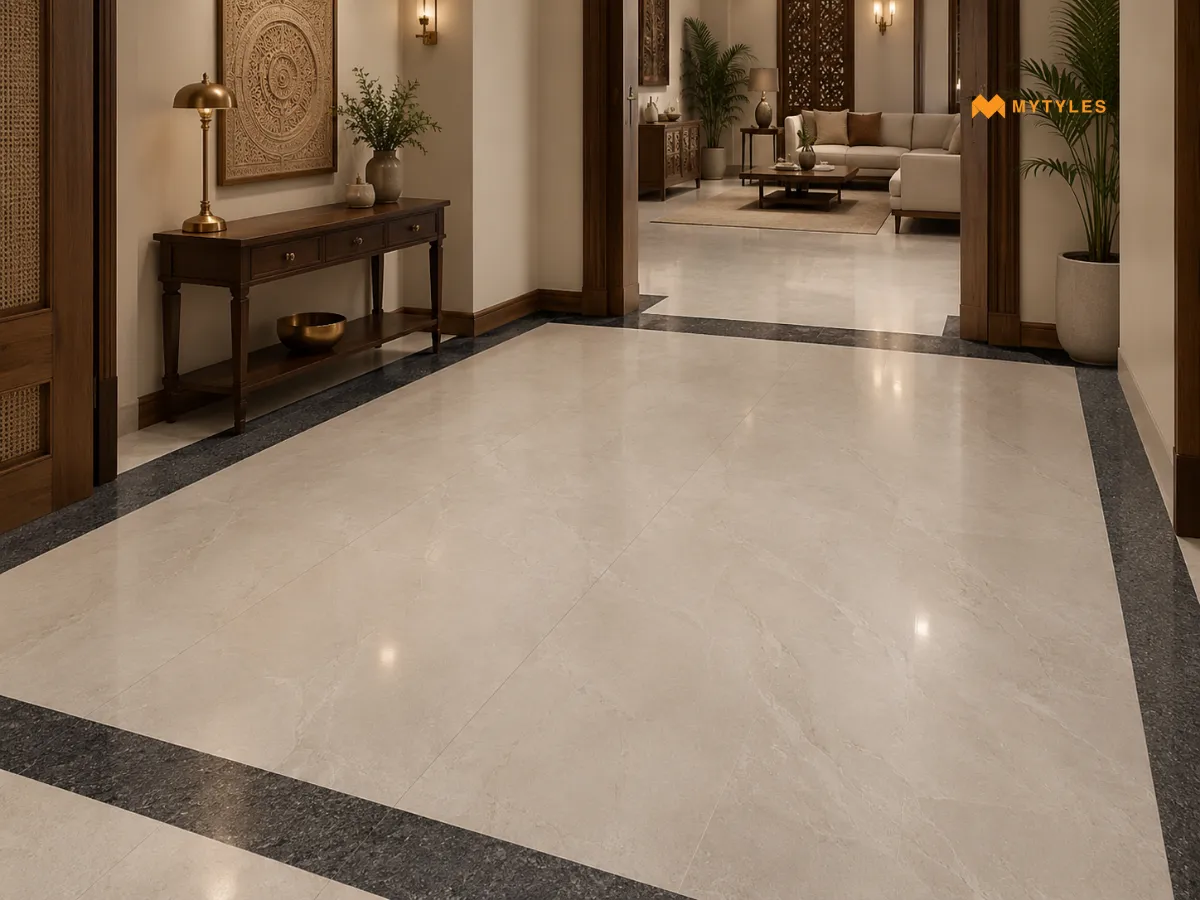
A border changes what a granite-look flooring design does in a room; it stops being just a surface and starts framing the space. A charcoal border running along the edge of a lighter grey or beige granite-look floor tile draws a clean line around a living room or formal dining area, the kind of detail that makes a floor look planned. Flip the contrast, a pale border against deep charcoal granite-look floor tiles, and the effect softens into something closer to an inlay, one that suits a foyer just as well as a passage leading into a larger room.
Living rooms and dining areas benefit most from a border that frames furniture placement, while foyers and passages use it to mark a clear transition point before the floor changes into another room.
Dark Charcoal Granite-Look Tiles for Staircases
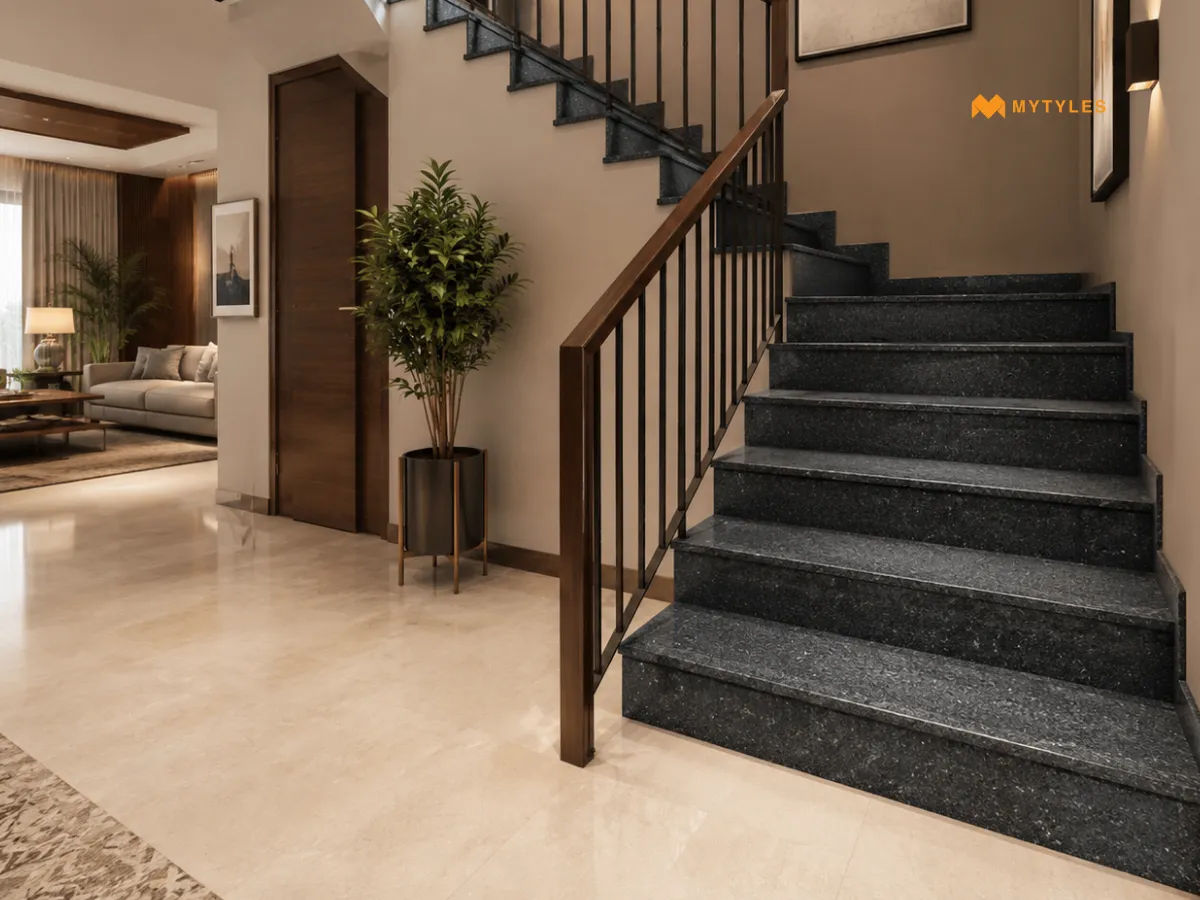
A staircase is seen from more angles than almost any other surface in a home, from above, from the side, and while moving between floors. Charcoal in a luxury granite-look floor tile design suits this setting particularly well, but checking the safety and suitability of the tile is also important.
Pair it with an iron railing or a dark stained wooden handrail, and the staircase begins to feel like a considered design feature. Before installation, check that the tile is recommended for staircase use and confirm its slip resistance, edge or nosing treatment, and suitability across both treads and risers.
Factors to Check When Buying Granite-Look Floor Tiles
A few practical checks can make it easier to narrow down the right granite-look floor tile for your space.
Check the Intended Floor Use
Start with where the tile is going and check whether it is recommended for the expected level of foot traffic. Floor rating and finish both matter here, especially in kitchens, foyers, staircases, or anywhere grip and regular movement come into play.
Know Your Material Options
Material is where the real differences hide. Granite-look vitrified tile, porcelain tile, and ceramic tiles vary in their construction, water absorption, and recommended use. Checking the specification sheet often tells you more about the product.
Think About Tile Size, Thickness and Grout
Large-format tiles cut down on visible grout lines, but installation needs careful planning. Before fixing, you need a base that is levelled. Also check the tile thickness, the recommended grout joint width, and how the finished floor will sit against adjoining spaces.
Match Shades and Sizes Across Boxes
One last check before anything is fixed permanently is to match the shade and dimensional category across every box, then dry-lay a few granite-look floor tiles first. Check the available pattern faces as well, since variation between faces can help reduce obvious repetition across the floor. Measure the floor area carefully, and order a bit extra to cover cuts and breakage.
Finding the Right Granite-Look Tile Flooring
Granite-look tile flooring offers a way to bring that stone-inspired character into a home without settling for one fixed look throughout. A large-format grey base in the living room, a charcoal staircase that catches light differently with every step, or a beige floor that shifts tone from morning to evening in the bedroom.
Room, finish, size, and color all play a part in getting the right granite-look floor tiles, and a little care at the selection stage can make a real difference to how the floor looks and performs day to day. MyTyles offers a range of granite-look tiles for Indian homes. You can browse the website to have a look at the tile collection, or you can visit our experience centre to see the modern granite-look tile design in person.

What Are Granite-Look Floor Tiles?

Granite-look floor tiles are tiles designed to recreate the appearance of natural granite using printed patterns, speckled textures, and stone-inspired finishes. They are available in vitrified, porcelain, and ceramic materials, depending on the product. While they resemble granite visually, the installation requirements and product specifications should be checked separately before making a selection.
Which Rooms Are Best Suited For Granite-Look Tile Flooring?
Granite-look tile flooring can be considered for living rooms, bedrooms, kitchens, dining areas, foyers, passages, and staircases, depending on the tile material, finish, and recommended application. For areas such as kitchens and staircases, it is especially important to check slip resistance and floor-use specifications before selecting a tile.
Are Granite-Look Tiles Suitable For Living Rooms?
Yes, granite-look tiles for living room floors can provide a neutral base that pairs well with wooden furniture, metal accents, and a wide range of wall colors. Large-format tiles with subtle speckling or stone-inspired patterns can also reduce the visual interruption created by grout lines when installed correctly.
Can Granite-Look Tiles Be Used In Bedrooms?
Yes, granite-look tiles for bedroom flooring can create a calm and understated backdrop. Beige, warm grey, and soft charcoal shades are commonly considered because they work with wood furniture, woven textures, and neutral fabrics. The final appearance depends on the tile color, finish, room lighting, and surrounding decor.
Which Finish Should You Choose For Granite-Look Kitchen Floors?
For granite-look tiles for kitchen floor applications, the finish should be chosen according to the expected level of foot traffic, cleaning, and slip resistance. Matt finishes create a softer appearance with lower reflection, while polished finishes reflect more light and can highlight the stone-inspired pattern. Always confirm that the selected tile is suitable for kitchen floor use.
Are Granite-Look Tiles Better In Large Or Small Formats?
Both formats offer different visual and installation possibilities. Large-format floor tiles can create a more continuous appearance with fewer visible grout joints, while smaller formats may suit layouts with more corners, transitions, or detailed floor areas. The right size depends on the room dimensions, layout, substrate, and installation requirements rather than appearance alone.
How Do You Choose The Right Granite-Look Tile For Your Home?
When selecting granite-look tiles for home interiors, begin with the room where the tile will be installed. Then compare the material, finish, slip resistance, tile size, and overall pattern. It is also useful to dry-lay a few tiles before installation to check the shade variation, pattern distribution, and how the design looks under the room's natural and artificial lighting.

ABOUT THE AUTHOR
Nandana Priya
With a strong interest in design, creativity, and emerging tile trends, I enjoy turning ideas from the world of tiles and interiors into engaging, meaningful reads. My writing focuses on creating well-researched content that helps readers understand design choices with more clarity and confidence. I bring together research, design awareness, and digital marketing insights to craft content that is relevant, easy to follow, and thoughtfully written for todays homeowners and design-conscious readers.
Latest Blogs By MyTyles