Inspiration Gallery
Blog
Tile Calculator
08065423741



.svg)


7 Mosaic Tile Ideas for Curved Bathroom Walls and Arches
ByNandana Priya

Tue , Aug 25 , 2026

Read Time: 5 Min


 Copied!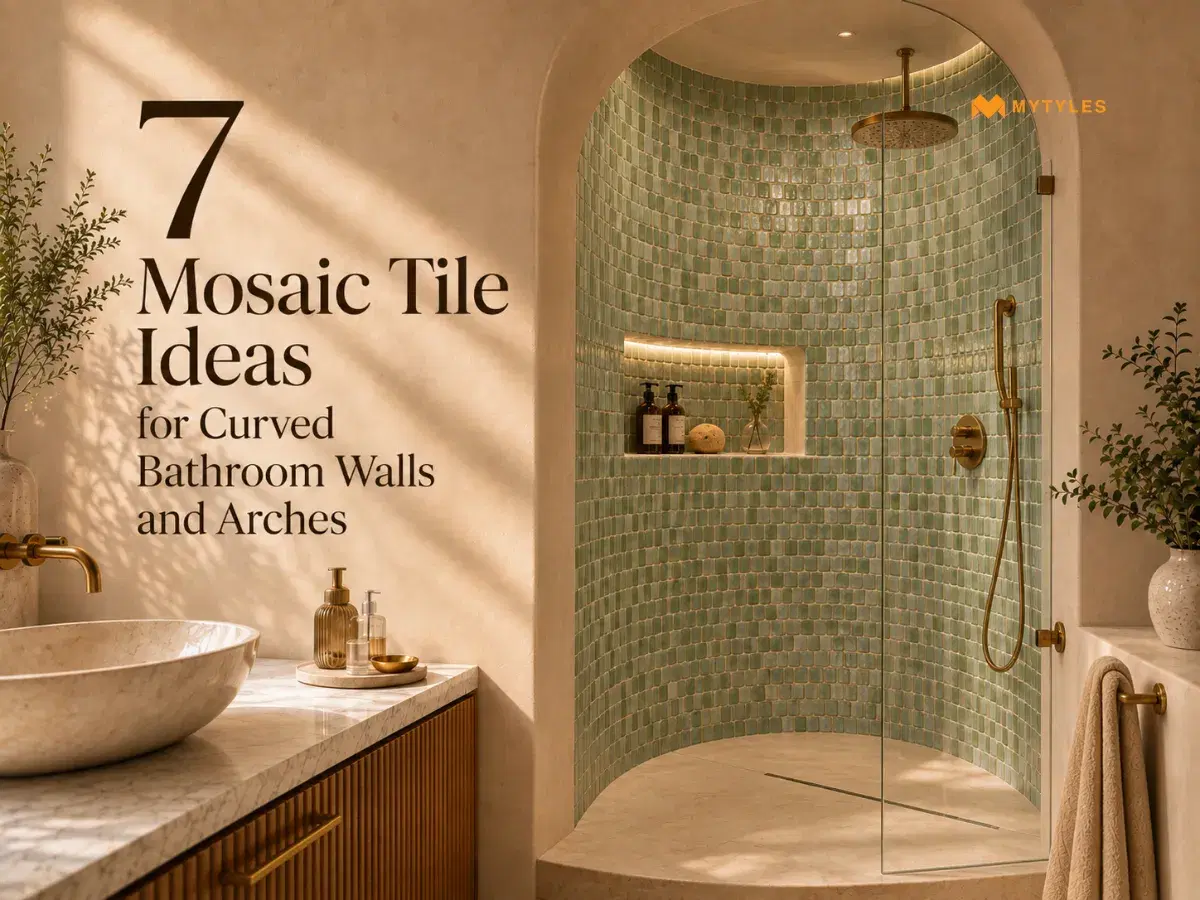
Anyone planning a rounded niche or an archway in a bathroom eventually runs into the same question: what tile actually works on a curve? Large tiles stop being the obvious choice, and the smaller ones start making more sense. Mosaic sheets are built from many small pieces on a flexible mesh; the whole sheet can bend a little at each joint. Wrapped around a curved wall or an arch, the mosaic wall tiles catch light at slightly different angles as the surface bends. It gives the tile a bit more depth than it would have on a straight wall.
This blog covers 7 mosaic tile ideas for curved bathroom walls and arches, along with some points worth checking before choosing one.
Penny Round Mosaics for Curved Shower Walls
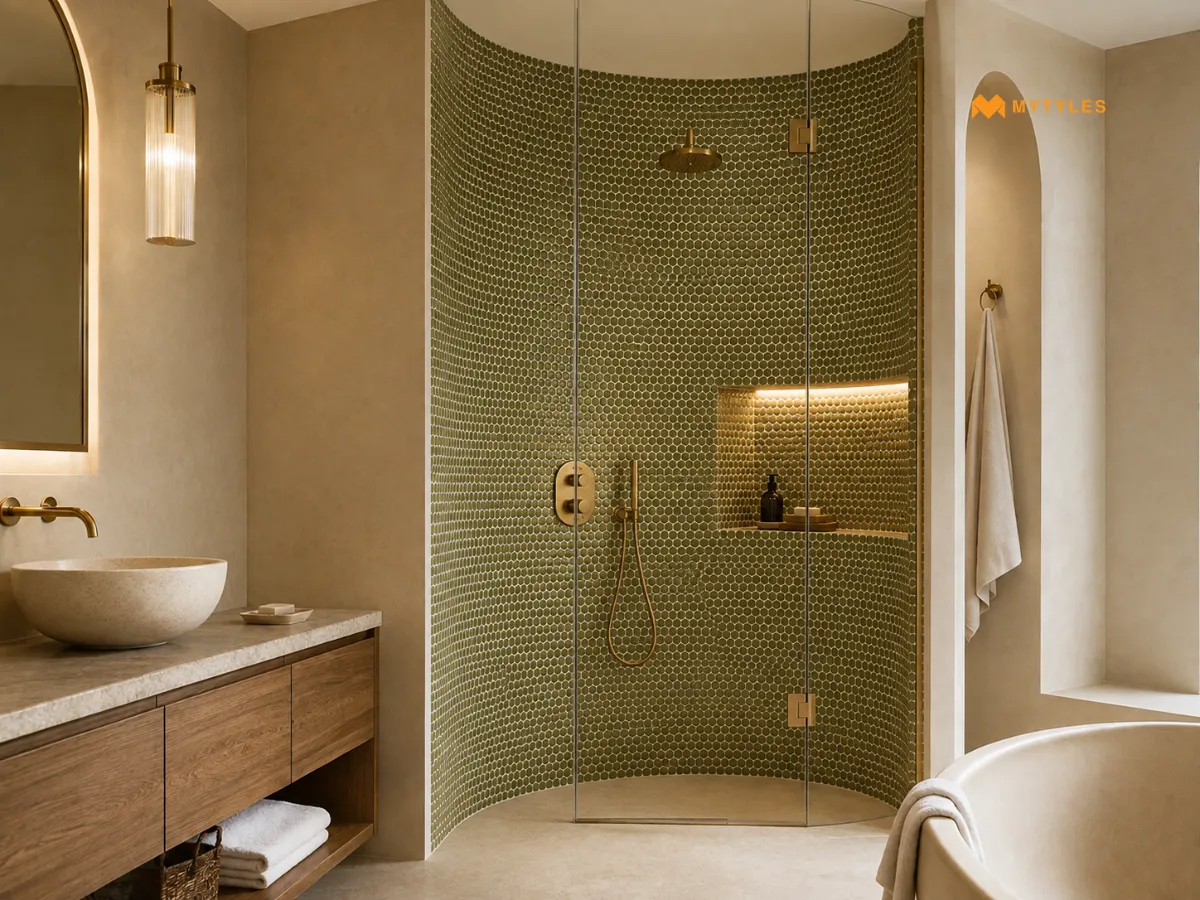
There's something almost obvious about penny round mosaics working well on a curve. They're small, round, and packed close together on a mesh sheet, with joints running in every direction instead of straight lines. These joints give the sheet more points of adjustment, so it bends more comfortably around the wall.
A curved wall in penny round mosaics is also one of those spots where you can go a little bolder. A deep blue, a moss green, or a glass finish with some shine can turn a curved section into a small design moment on its own. For curved wall tile, it's worth spending extra time on the grout. Similar shades make the design appear continuous, while the contrasting grout shades can be used to make the penny round mosaics look more prominent.
Fish Scale Mosaics for Statement Archways
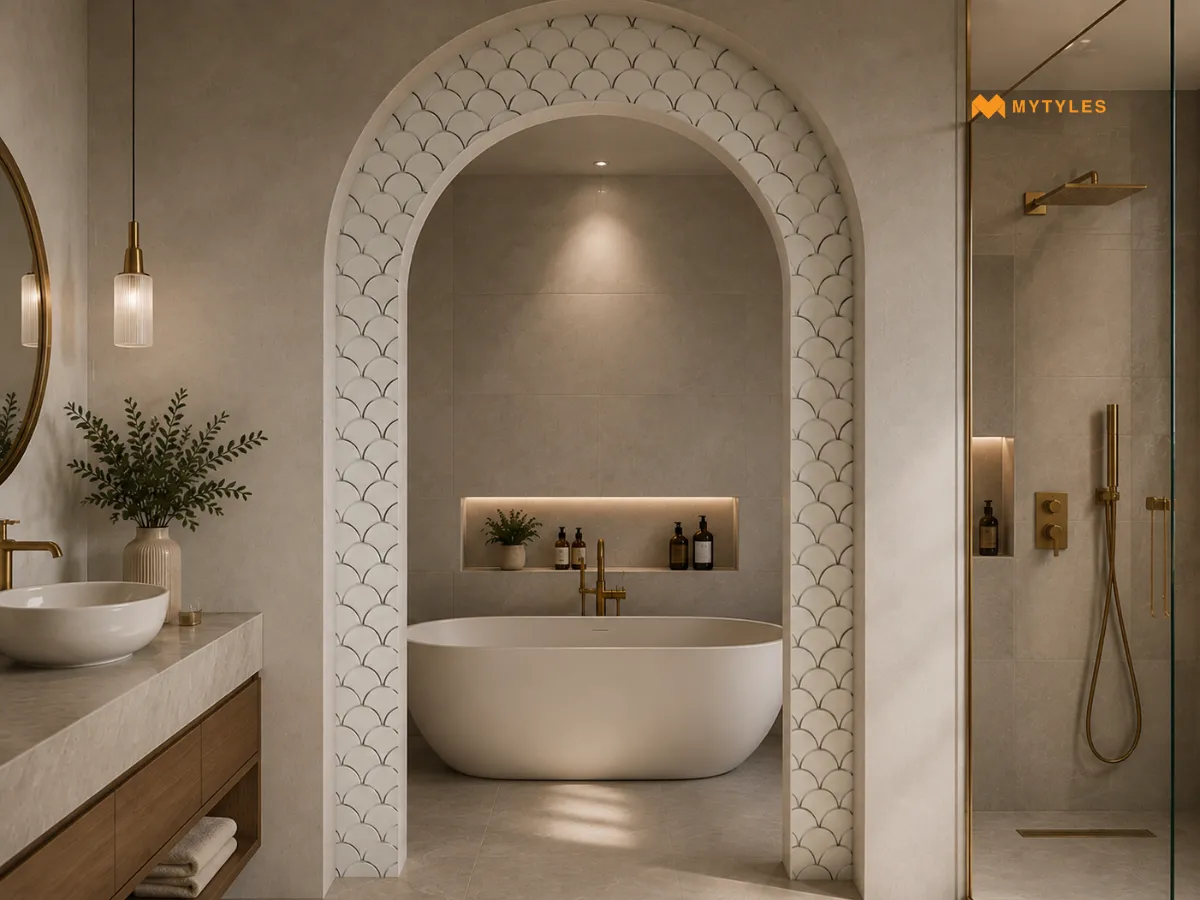
Fish scale mosaics have a rhythm to them that pulls the eye along the line of an arch rather than letting it sit flat. They are made of small, overlapping, scalloped pieces that curve naturally along the shape of an arch. This is one reason why this shape of mosaic wall tiles for bathrooms gets picked for archways that are meant to be noticed.
Keeping arch wall tiles to one shade gives a calmer result, while a two-tone or gradient arrangement adds more visual interest. Because the scallops build on each other, mapping out the rows ahead of time can help the pattern land evenly where the arch transitions into a flat wall.
Glass Mosaic Strips for Archway Borders
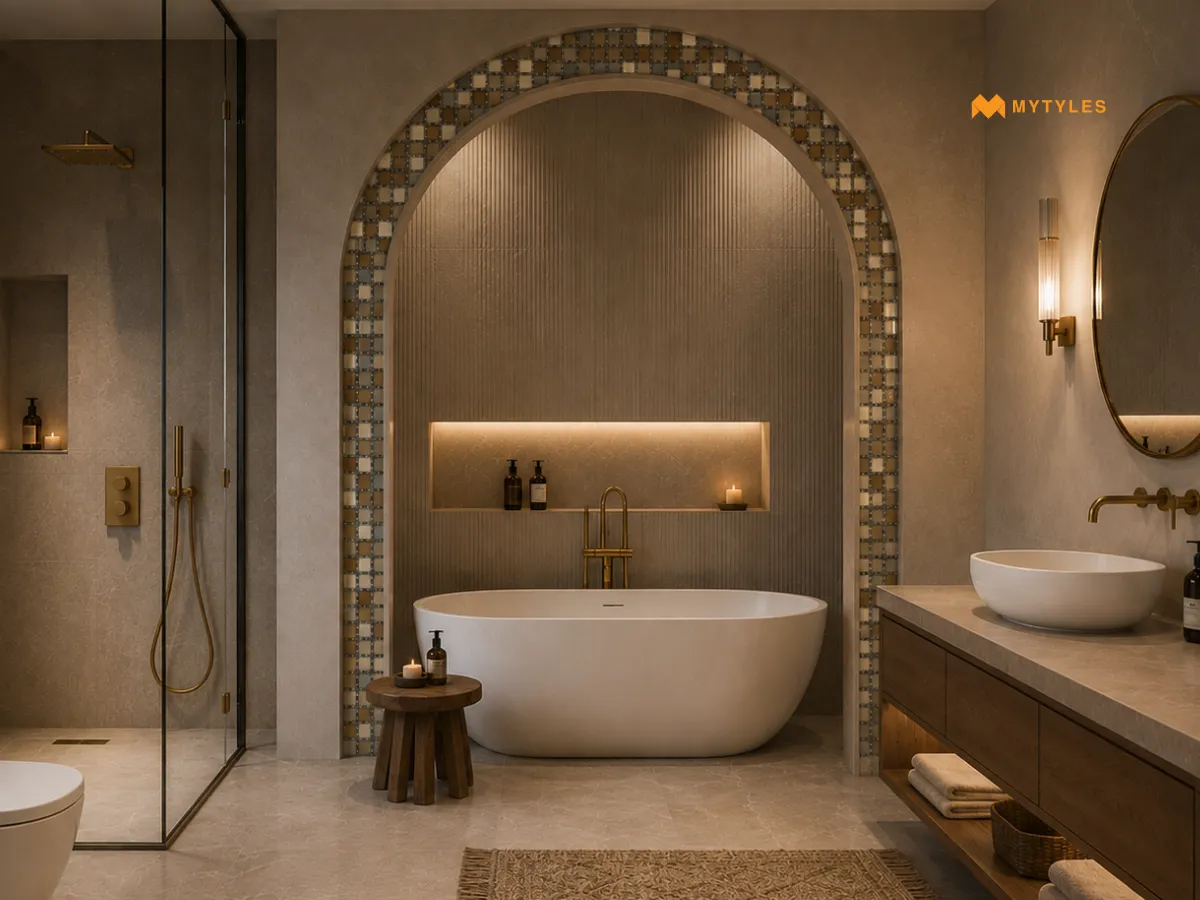
You don't always need to cover the whole arch to make it look complete. Sometimes a border is enough, and that's where narrow glass mosaic strips work well.
These strips are also useful where the arch meets the plain wall. They can be used to soften the transition. Solid colors are the common choice, though metallic or iridescent bathroom tiles can be used in small amounts to highlight the border.
Hexagon Micro Mosaics for Gently Curved Accent Walls
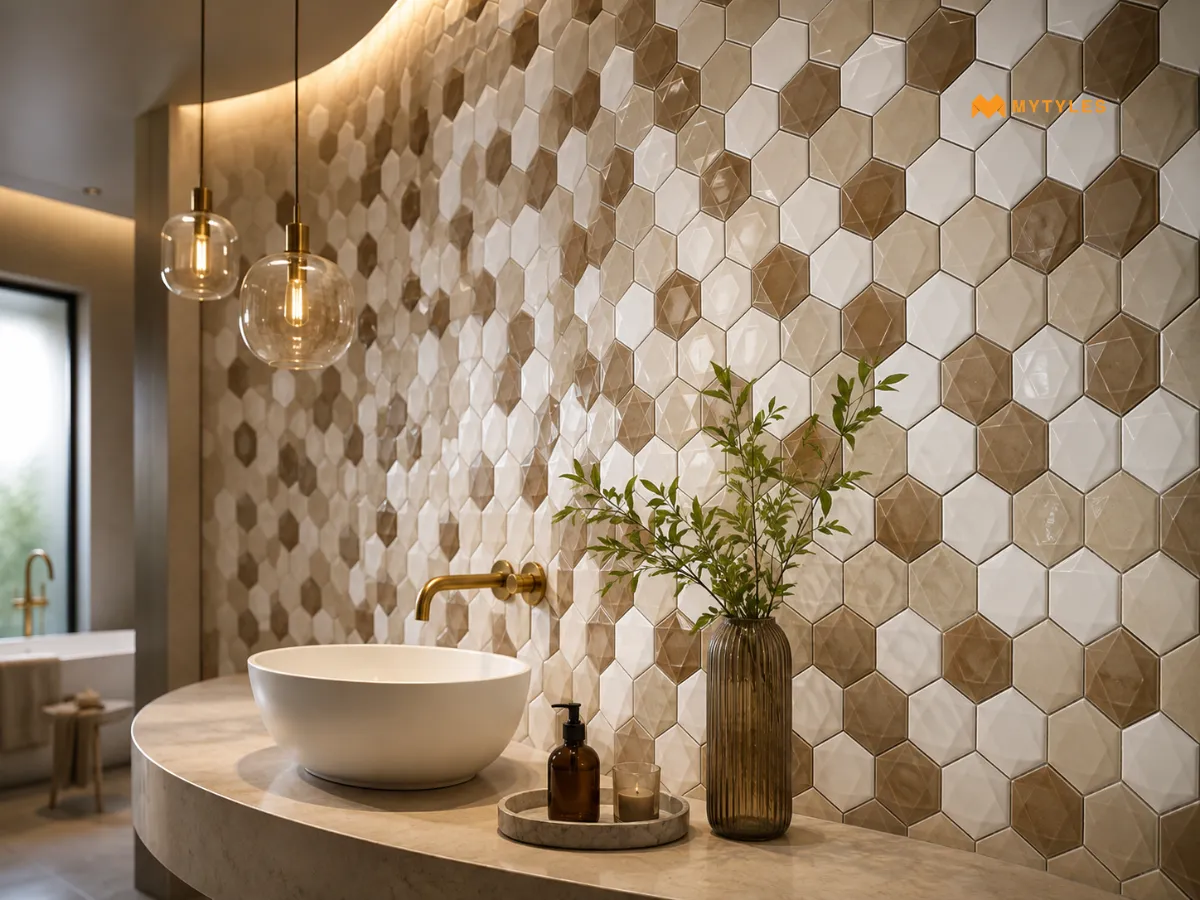
Regular hexagon tiles don't bend well around tight curves. Micro hexagons are easier to install here. Since each piece is so small, the installer can tilt each one very slightly against the next as they go, and with so many tiles doing this together, the whole sheet follows a gentle curve smoothly, without visible gaps.
As a small-format tile, micro-hexagons can be used across a full accent wall or just near a vanity mirror. It's a simple way to bring a bathroom feature wall tile design into the space without needing a dramatic curve. Used in one color, the hexagon grid looks more like a subtle texture than a pattern, which suits a bathroom where the curved wall is meant to be the main highlight.
Mini Square Mosaics for Wrapped Columns
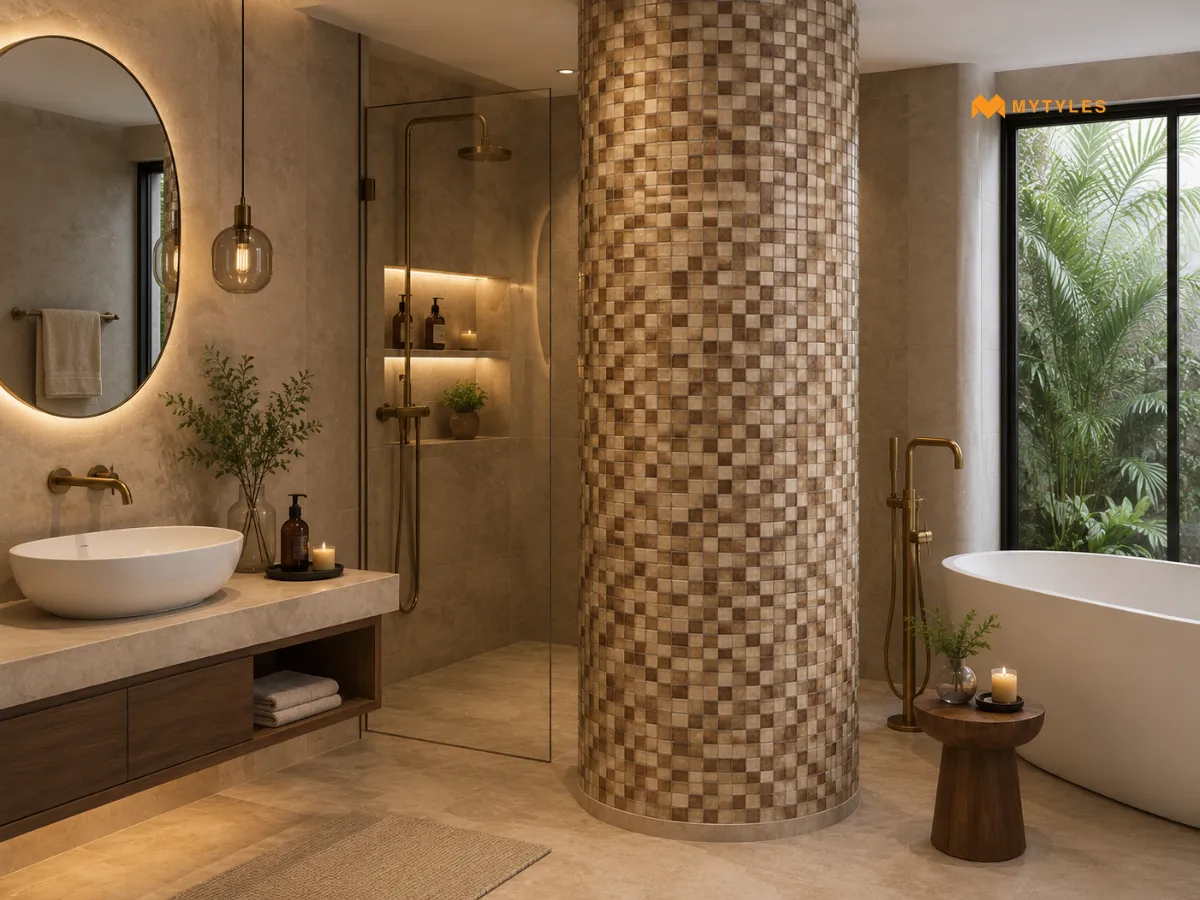
Wrapping a column gets easier with small, even tiles. Mini square mosaics fit that job well. They follow the curve of a column or partition wall without much trouble, even when the surface bends in more than one direction.
As one of the simpler mosaic tiles for curved walls, the uniform grid keeps the pattern looking neat. A single neutral tone gives a quiet, understated look. A two-tone chequer layout makes the column stand out more.
Mixed Material Mosaic Blends for Arch Surrounds
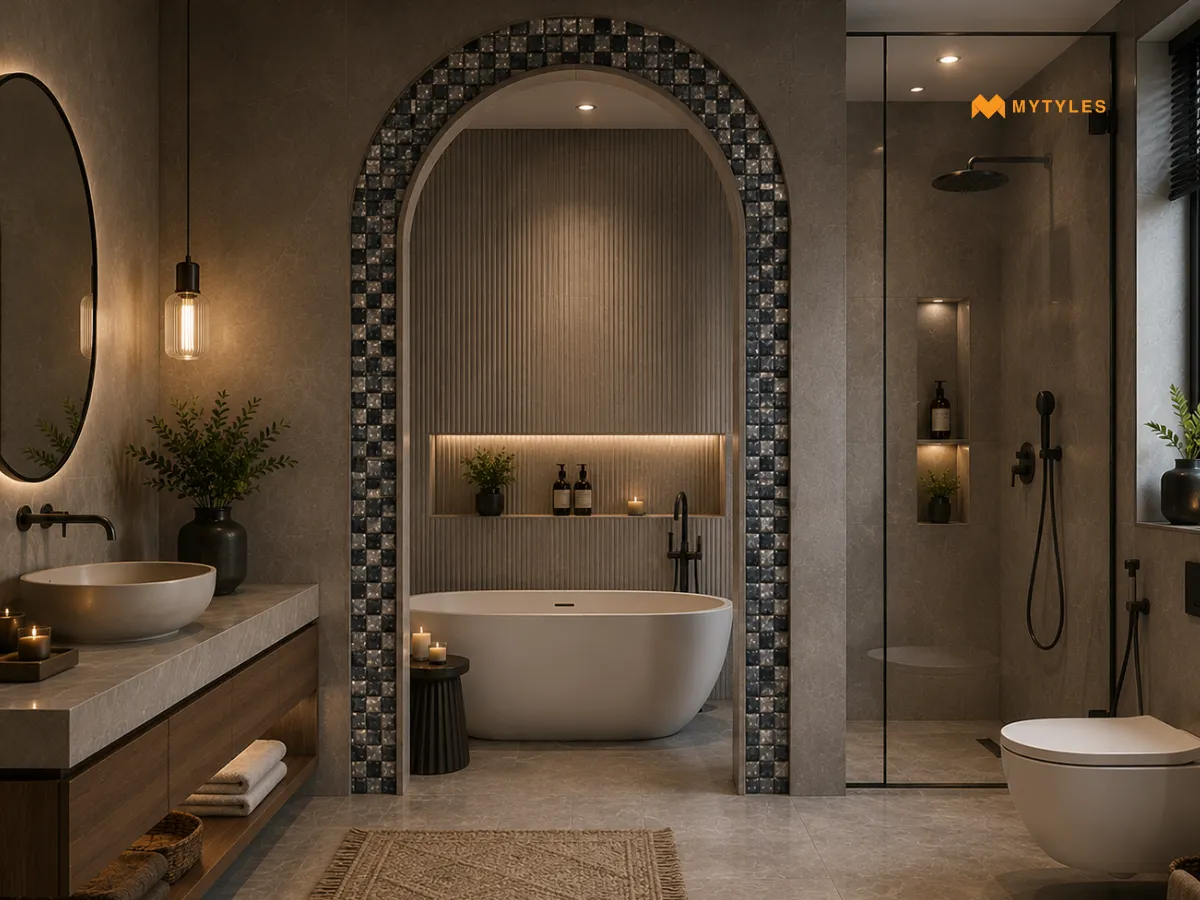
Until now, we've talked about how one particular design or material changes the appearance of the bathroom. What if we combine materials like glass, stone, and ceramic chips in one sheet instead? The arch surround ends up looking layered rather than flat. Light catches each piece a little differently, glass one way and stone another, so the surface looks more varied across the curve.
These blends tend to work best around the arch itself. The bathroom arch tile ideas in this list, this one suits an arch meant to stand out as the main feature of the wall.
Iridescent Glass Mosaics for Curved Feature Walls
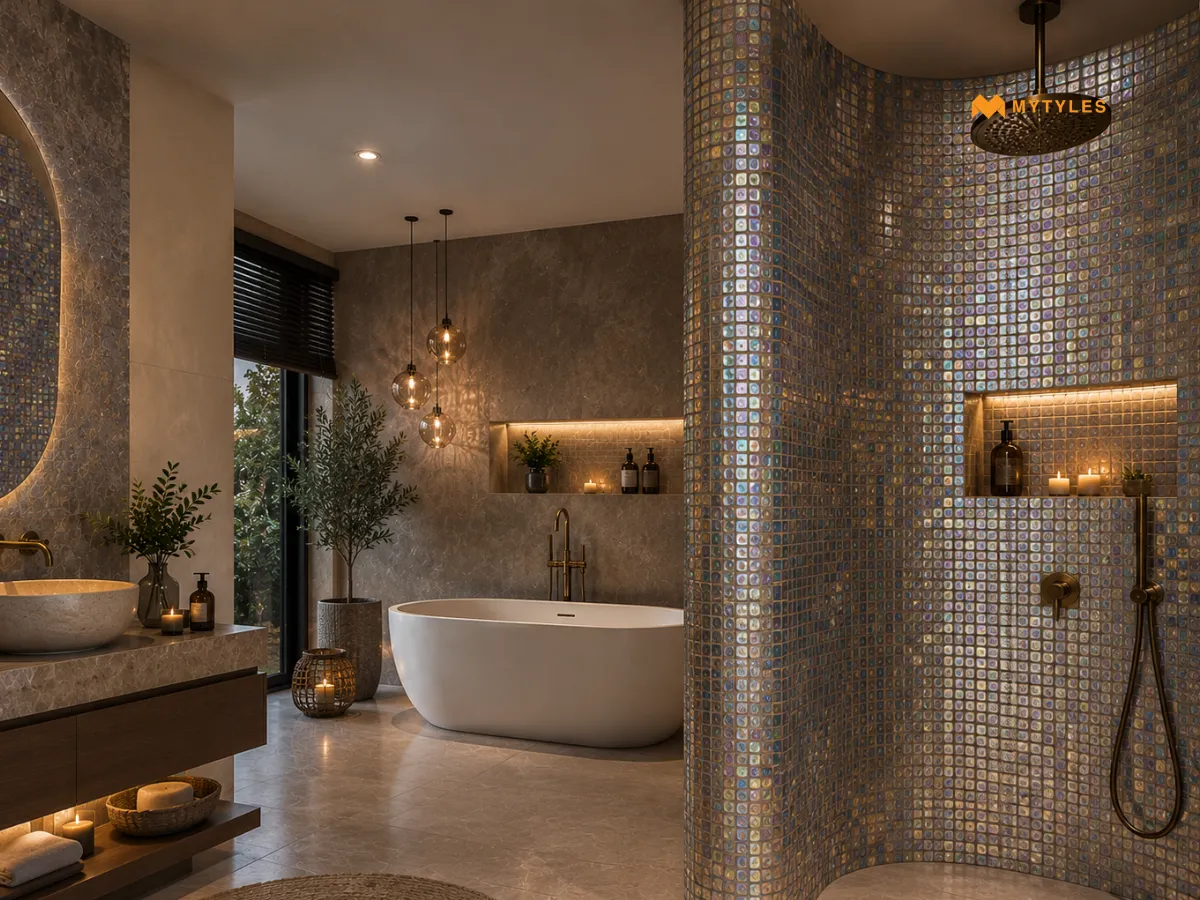
Move past an iridescent glass mosaic wall, and the color shifts a little with you. That change in tone as the light hits is what gives a curved feature wall a sense of movement that a flat finish usually can't match.
These bathroom wall tiles tend to work best when kept to one wall rather than spread across the bathroom, since the effect reads best as a focal point. Among mosaic bathroom tiles, these iridescent glass mosaics pair well with softer, indirect lighting that lets the color shift come through clearly.
Things to Consider Before Tiling Curved Walls and Arches
Here are a few things that are worth checking before you settle on mosaic bathroom wall tiles.
- Start with the curve itself. A tight bend, like a sharp archway, needs a smaller tile piece to sit properly without gaps or excess cutting. A gentler curve gives you more room to work with, so it's worth measuring the radius before choosing a particular mosaic size.
- Grout deserves more attention than it usually gets. Curved surfaces have more joints packed into the same space, so grout colors are worth sorting out early. A grout color that is a close match to the curved bathroom wall tiles keeps things understated, while a contrasting shade makes every joint and every curve more visible.
- Adhesive and waterproofing are easy to overlook until something goes wrong. Check that the adhesive suits both the tile material and the wall surface. Tiles and grout do not replace waterproofing. Before tiling starts, check the substrate is properly prepared, get the grout right for the joint width and exposure, and apply bathroom waterproofing underneath to areas that see regular water contact.
- It also helps to plan the layout before any tile goes up. A dry run of a few sheets, or even a rough sketch, can catch an awkward pattern early, especially at the point where a curve meets a flat wall. That's usually where mismatched cuts stand out the most.
- If the wall involves a full archway or a more complex bend, getting a professional in for the installation is generally the safer call, since keeping the alignment clean on a curve takes a bit more skill than a flat wall does.
Finding the Right Mosaic for Curved Bathroom Wall and Arches
The shape of a wall shouldn't limit the design on it, and mosaic wall tile tends to be the format that adapts most easily when a surface curves. Penny rounds suit a curved wall while iridescent glass suits a feature wall, and there's a fair bit of room between those two ends.
MyTyles offers a range of mosaic bathroom tile options worth exploring for curved bathroom walls and archway designs, depending on the shape and finish that fits the space. You can take a look at our website to see all the available tile options or visit the MyTyles experience centre to see the tiles in person.

Can Mosaic Tiles Be Installed On Curved Bathroom Walls?

Yes, mosaic tiles for curved walls are often considered because each sheet contains many small pieces joined on a flexible mesh. The joints allow the sheet to follow a bend more easily than a large tile. However, the curve, tile size, mesh flexibility, adhesive, and wall preparation should all be reviewed before installation.
What Mosaic Tile Size Works Better For Tight Curves?
Smaller pieces usually follow a tight bend more comfortably because each joint provides a little movement. Penny rounds, mini squares, and micro mosaics are commonly considered for sharper arches and rounded niches. When planning curved bathroom wall tiles, measure the curve first, as a format that suits a gentle bend may not sit evenly on a tighter one.
Are Glass Mosaics Suitable For Bathroom Arches?
Glass mosaics may be used as mosaic tiles for bathroom arches, particularly as narrow borders or decorative arch surrounds. Their reflective surface can make the curve more noticeable under light. Before choosing them, confirm that the product, backing mesh, adhesive, and grout are recommended for the intended bathroom location, especially where regular water exposure is expected.
Do Curved Mosaic Walls Need More Grout?
A curved surface does not always require wider grout lines, but mosaics naturally contain more joints than large tiles. This makes grout selection an important part of bathroom mosaic tile ideas. A matching shade creates a more continuous appearance, while contrasting grout highlights each piece. The joint width should follow the tile manufacturer’s installation guidance.
What Tile Sheet Size Works Well Around Bathroom Arches?
The size of the individual mosaic pieces usually matters more than the overall sheet dimensions. Standard sheets may need to be cut into narrow strips so they can follow the arch without bunching. For arch wall tiles, dry laying the sheets first helps identify where cuts are needed and how the pattern will meet the adjoining flat wall.
Is Professional Installation Needed For Curved Mosaic Walls?
Simple, gently curved sections may be manageable for an experienced installer, but full arches and tight bends require careful alignment and cutting. A professional familiar with curved wall tiles can also review the substrate, waterproofing, adhesive coverage, sheet placement, and grout joints. This becomes especially important where the tiled surface is regularly exposed to water.
How Should Mosaic Tiles On Curved Bathroom Walls Be Maintained?
Regular cleaning usually involves wiping the tile surface and paying attention to the grout joints, where residue may collect. The cleaning product should suit both the mosaic material and grout type. For mosaic wall tiles for bathroom areas, check sealant and grout condition periodically, particularly around shower walls, niches, and other frequently wet sections.

ABOUT THE AUTHOR
Nandana Priya
With a strong interest in design, creativity, and emerging tile trends, I enjoy turning ideas from the world of tiles and interiors into engaging, meaningful reads. My writing focuses on creating well-researched content that helps readers understand design choices with more clarity and confidence. I bring together research, design awareness, and digital marketing insights to craft content that is relevant, easy to follow, and thoughtfully written for todays homeowners and design-conscious readers.