Inspiration Gallery
Blog
Tile Calculator
08065423741



.svg)


The Ultimate Guide to Selecting the Right Bathroom Floor Tiles for Your Home
ByBiren Agrawalla

Thu , Aug 06 , 2026

Read Time: 5 Min


 Copied!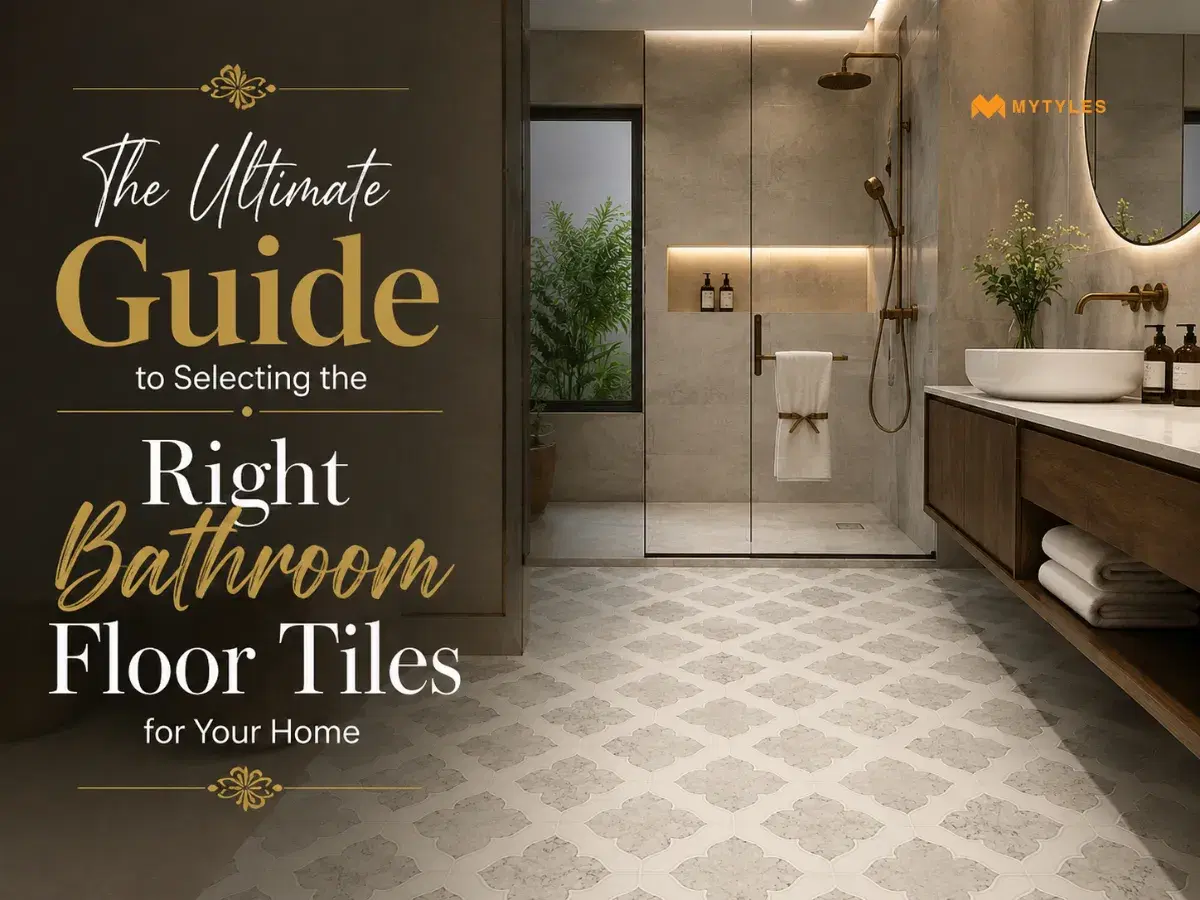
Designing a bathroom goes beyond selecting colors or fixtures, it’s about building comfort, safety, and style into every corner. The floor plays a defining role in this balance. The right bathroom floor tiles can influence light, create a sense of space, and handle daily wear with ease. Every choice, including texture, finish, and pattern, impacts how the room feels and performs. With so many options available, picking the ideal tile can be tricky. This guide brings clarity to that decision. It explains materials, finishes, and layouts that help you achieve a floor that’s both practical and visually appealing. Step into a space that feels modern, easy to maintain, and designed to last.
Types of Bathroom Floor Tiles
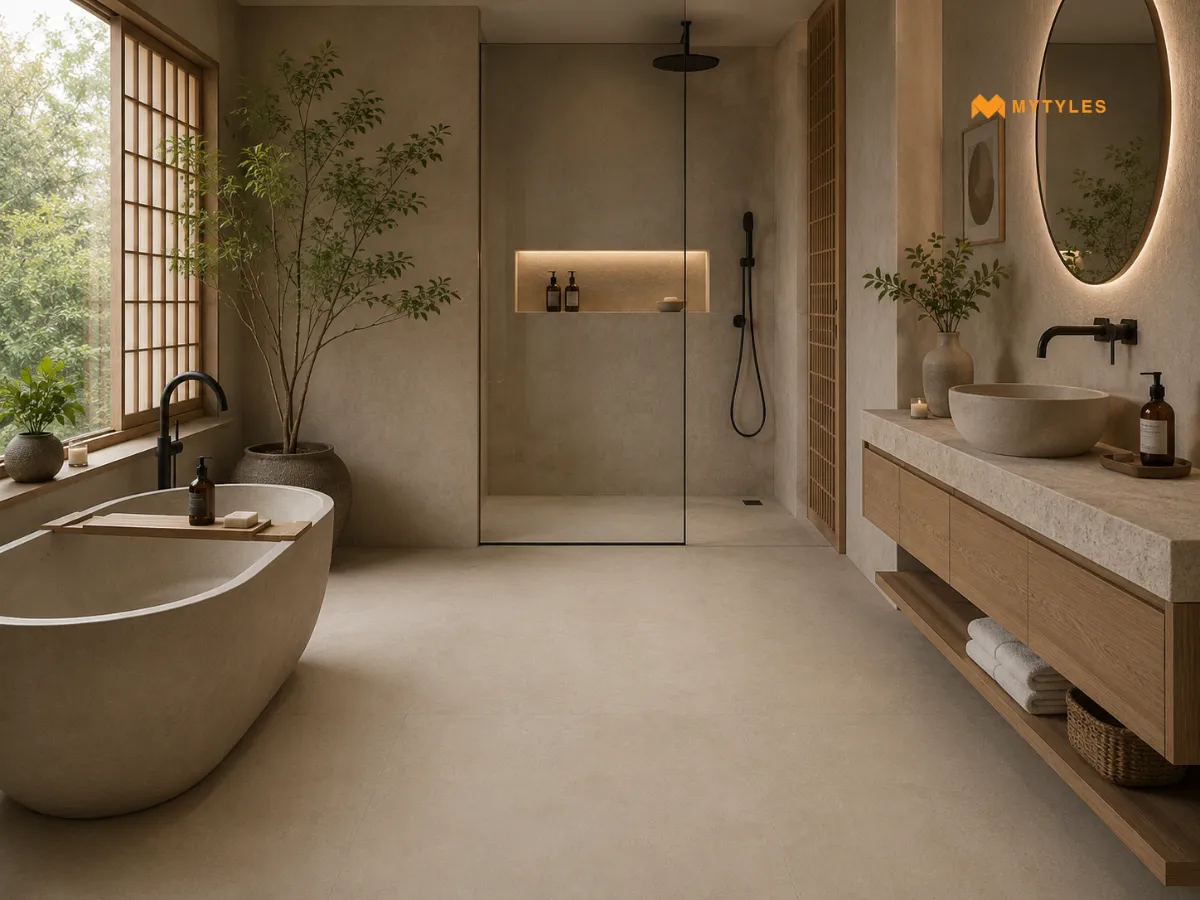
Tiles set the foundation for both function and style in a bathroom. Each material brings its own texture, durability, and visual appeal. Understanding the different types of bathroom floor tiles helps you choose a surface that not only complements your design vision but also stands strong against daily moisture and wear.
Ceramic Bathroom Tiles
Ceramic tiles are practical, affordable, and easy to clean, making them a timeless flooring option for bathrooms. Available in endless patterns and finishes, they resist water and stains effectively. Their glazed surface adds shine and durability, making them ideal for both classic and modern interiors.
Wooden Finish Bathroom Tiles
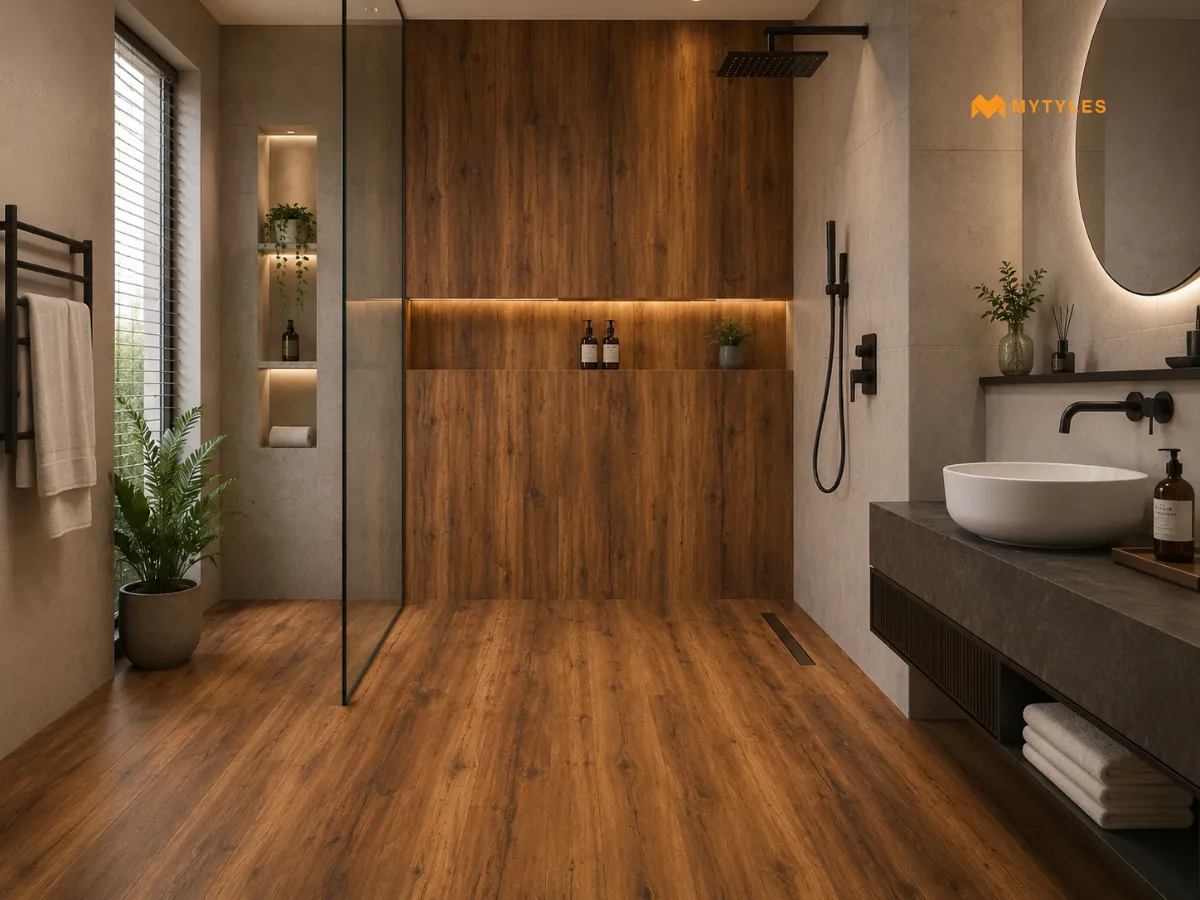
Wooden finish tiles replicate the warmth of real timber while offering the durability of porcelain. They’re resistant to moisture, stains, and daily wear, making them great for bathrooms. Their natural wood-like texture brings coziness and sophistication without worrying about warping or water damage.
Porcelain Bathroom Tiles
Porcelain tiles combine elegance with long-lasting strength. Known for their dense structure and low water absorption, they perform well in wet bathroom areas. Their luxurious designs mimic marble or wood beautifully, offering durability, sophistication, and an easy-to-maintain surface that stays stylish for years.
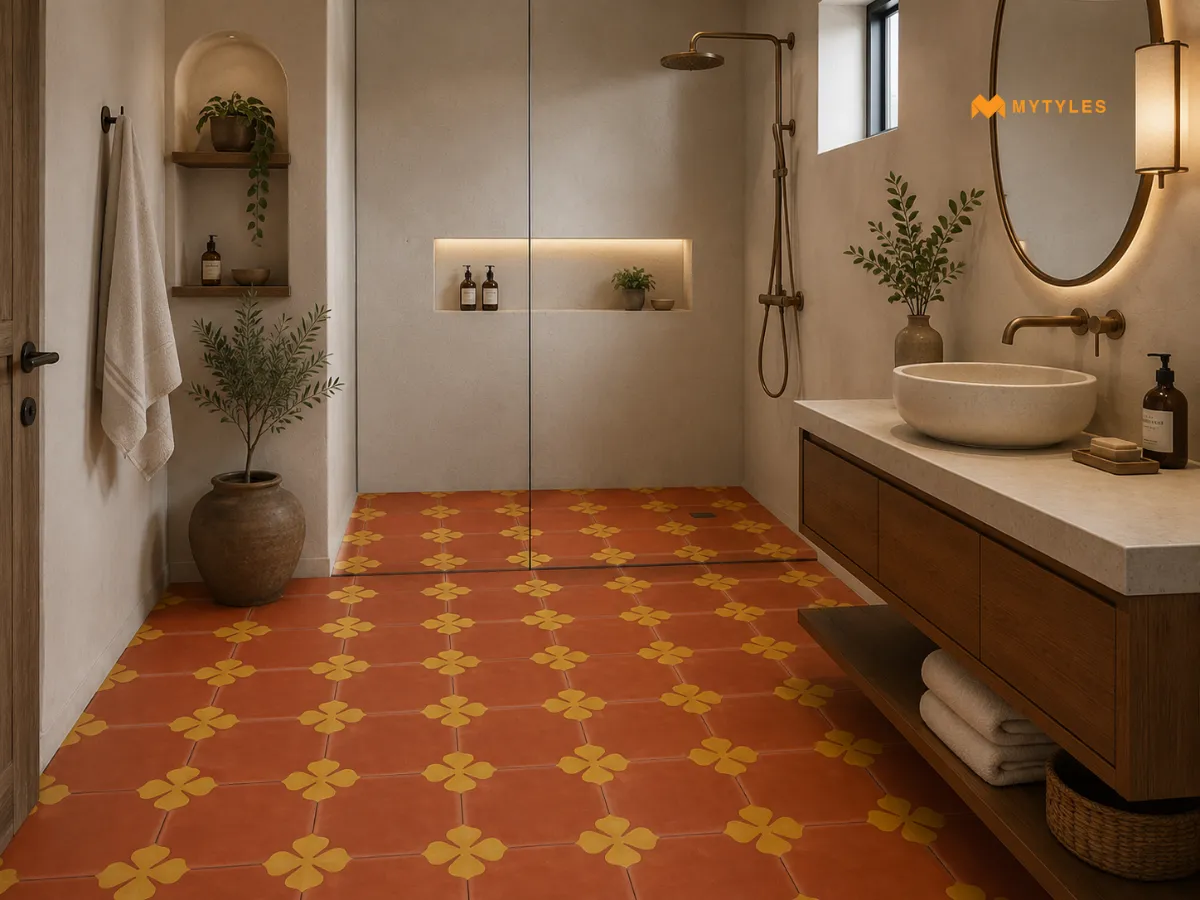
Cement Bathroom Tiles
Cement tiles, also called encaustic tiles, are known for their handmade look and matte texture. They feature bold geometric or floral patterns that transform plain bathrooms into artistic spaces. When sealed properly, these tiles become durable, non-slippery, and perfect for vintage or bohemian interiors.
Natural Stone Bathroom Tiles
Natural stone tiles like marble, granite, and slate add warmth and luxury to bathroom floors. Each tile carries unique patterns that bring a natural charm to interiors. Though they need sealing for moisture resistance, their timeless beauty and durability make them worth the effort.
Terrazzo Bathroom Tiles
Terrazzo tiles feature a mix of marble, granite, and glass fragments that form unique, speckled patterns. Stylish and incredibly strong, they add a modern, upscale vibe to bathrooms. Their smooth surface and long lifespan make them a practical yet visually appealing flooring choice.
Mosaic Bathroom Tiles
Mosaic tiles create stunning designs using small glass, ceramic, or stone pieces. They add grip and visual depth to bathroom floors, making small areas appear more lively. With endless color and pattern choices, mosaic tiles bring creativity and character to your bathroom décor.
How to Choose the Best Bathroom Tiles?
The right floor tiles can make all the difference between a bathroom that looks good and one that feels effortlessly functional every day. If you’re unsure where to start, here are a few simple yet important things to keep in mind while choosing bathroom floor tiles.
Water Resistance and Porosity
Bathroom floors demand non-porous or low-porosity tiles. Water absorption is measured by the Water Absorption Rate (WAR):
- < 0.5%: Ideal (porcelain)
- 0.5%–3%: Good (ceramic, glazed)
- > 3%: Avoid (unglazed natural stone unless sealed)
Porcelain tiles lead with 0.1%–0.5% absorption, making them virtually waterproof.
Choose Durable and Water-Resistant Materials
Bathrooms demand tiles that can handle constant exposure to moisture. Porcelain and vitrified tiles are the best picks, they’re dense, durable, and water-resistant. Unlike natural stone or wooden flooring, they won’t swell or crack over time, making them perfect for long-term use.
Keep Maintenance Effort Low
Nobody wants to scrub tiles every other day. Choose tiles that are easy to clean and stain-resistant. Porcelain and ceramic tiles are great because they resist soap scum and are easy to wipe down, keeping your bathroom looking fresh with minimal effort.
Pick the Right Size and Layout
Tile size can change how your bathroom feels. Large tiles create a seamless, spacious look with fewer grout lines, while smaller tiles, like mosaics or 300x300 mm formats, offer better grip and flexibility around drains and slopes. Choose based on your bathroom’s layout and size.
Think About Color and Mood
Color can influence how open or cosy your bathroom feels. Light tones like beige, off-white, or light grey make smaller bathrooms look brighter and airier. If you prefer a more dramatic touch, deeper hues like charcoal or stone grey can add depth and sophistication.
Coordinate with Wall Tiles and Fixtures
Your floor tiles should complement, not compete with, the rest of your design. If your wall tiles have bold patterns or colors, go for neutral or solid-colored floor tiles for balance. Similarly, pair plain walls with patterned or textured flooring to add visual interest.
Balance Style with Practicality
It’s easy to fall in love with a design, but function always comes first in bathrooms. Look for tiles that not only match your aesthetic but also offer comfort, durability, and safety. The best bathroom floors are those that stay beautiful and reliable year after year.
Design That Lasts Beyond Trends
Choosing the right bathroom floor tiles isn’t just a design choice, it’s a long-term investment in comfort, safety, and everyday convenience. The best tiles combine beauty with practicality, creating a surface that feels secure underfoot and stays stunning for years. Focus on durability, texture, and finish that suit your lifestyle. When selected thoughtfully, your bathroom floor becomes more than a backdrop, it turns into a lasting reflection of your taste and attention to detail. Explore MyTyles to discover an exclusive range of durable, stylish floor tiles crafted for today’s homes.

Which Tile Materials Are Best for Bathroom Floors?

Porcelain and vitrified tiles are popular bathroom flooring choices because they offer durability, low water absorption, and easy maintenance. Ceramic floor tiles may also work when specifically rated for wet areas. Natural stone provides a premium appearance but can require sealing and additional care. Always confirm that the selected tile is approved for bathroom floor installation.
How Important Is Slip Resistance in Bathroom Floor Tiles?
Slip resistance is essential because soap, water, and moisture can make bathroom floors hazardous. Choose tiles with a suitable wet-area slip rating and a textured matt surface that provides grip without feeling excessively rough. Anti-skid tiles still require proper drainage, correct floor slope, clean grout joints, and prompt removal of soap residue to maintain safer footing.
What Tile Size Works Best for a Small Bathroom?
Medium or large-format tiles can make a small bathroom look calmer by reducing visible grout lines, provided the layout avoids awkward cuts. Smaller tiles are useful in shower areas because they follow floor slopes more easily. Review the complete placement plan with your installer, considering drains, corners, sanitaryware, door movement, and the bathroom’s actual dimensions.
Which Bathroom Floor Tile Colors Are Most Practical?
Light beige, ivory, soft grey, and stone-inspired colors can make compact bathrooms feel brighter and more spacious. Mid-tone patterns often conceal dust, water marks, and minor stains better than very dark or plain white surfaces. Consider wall tiles, sanitaryware, vanity finishes, and natural lighting together, then test samples when dry and wet before finalizing the color.
Should Bathroom Floor Tiles Have Matt or Glossy Finishes?
Matt and textured finishes are generally better for bathroom floors because they provide more grip and show fewer water marks. Highly glossy tiles may become slippery when wet and are usually more suitable for walls. Select a finish that balances slip resistance with cleaning ease, since deeply textured surfaces can trap soap, dirt, and hard-water deposits.
How Can Bathroom Floor Tiles Be Kept Clean?
Sweep or rinse away loose dirt regularly, then clean the floor using warm water and a mild tile-safe cleaner. Remove soap residue, hair, and standing water promptly to reduce slipperiness and staining. Avoid harsh acids or abrasive brushes unless the manufacturer approves them. Clean grout lines carefully and repair damaged joints before moisture reaches the base.
What Should Homeowners Check Before Buying Bathroom Floor Tiles?
Check the tile material, dimensions, thickness, water absorption, wet slip rating, stain resistance, surface texture, shade variation, and cleaning requirements. View several samples together under bathroom lighting and feel the surface when damp if possible. Measure carefully, purchase extra tiles for cuts and repairs, verify the batch number, and choose an experienced wet-area tile installer.

ABOUT THE AUTHOR
Biren Agrawalla
Biren Agrawalla is the Founder of MyTyles, driven by a passion for making tile buying simpler, smarter, and more customer-friendly. With a background in technology and a strong interest in how homes are designed, he built MyTyles to bridge the gap between traditional tile retail and modern customer needs. Biren focuses on understanding what people truly look for when creating their spaces, from practical choices to design inspiration. His work is centred on building thoughtful online solutions that help homeowners discover the right tiles with more confidence, convenience, and clarity.
Latest Blogs By MyTyles