Inspiration Gallery
Blog
Tile Calculator
08065423741



.svg)


Why Designers Still Choose Ceramic Tiles for Modern Indian Interiors
BySragvi Senthil Kumar

Sun , Sep 20 , 2026

Read Time: 5 Min


 Copied!
Ceramic tiles have been a familiar part of Indian homes for years, appearing across different types of spaces and interiors. The material is common enough that its design possibilities can sometimes be overlooked. What may seem like a straightforward tile choice can offer different ways to bring colour, pattern, texture, and finish into a home, depending on the space and the product selected.
Part of why ceramic tiles are so widespread traces back to Morbi in Gujarat, once known for Naliya, plain clay roof tiles. As tile manufacturing grew in Morbi, ceramic tiles became more widely used in Indian homes. That shift still shapes renovations today. For designers, that range is part of what keeps ceramic relevant, giving them room to work with colour, pattern, texture, and finish.
Using Ceramic Tiles in the Living Room
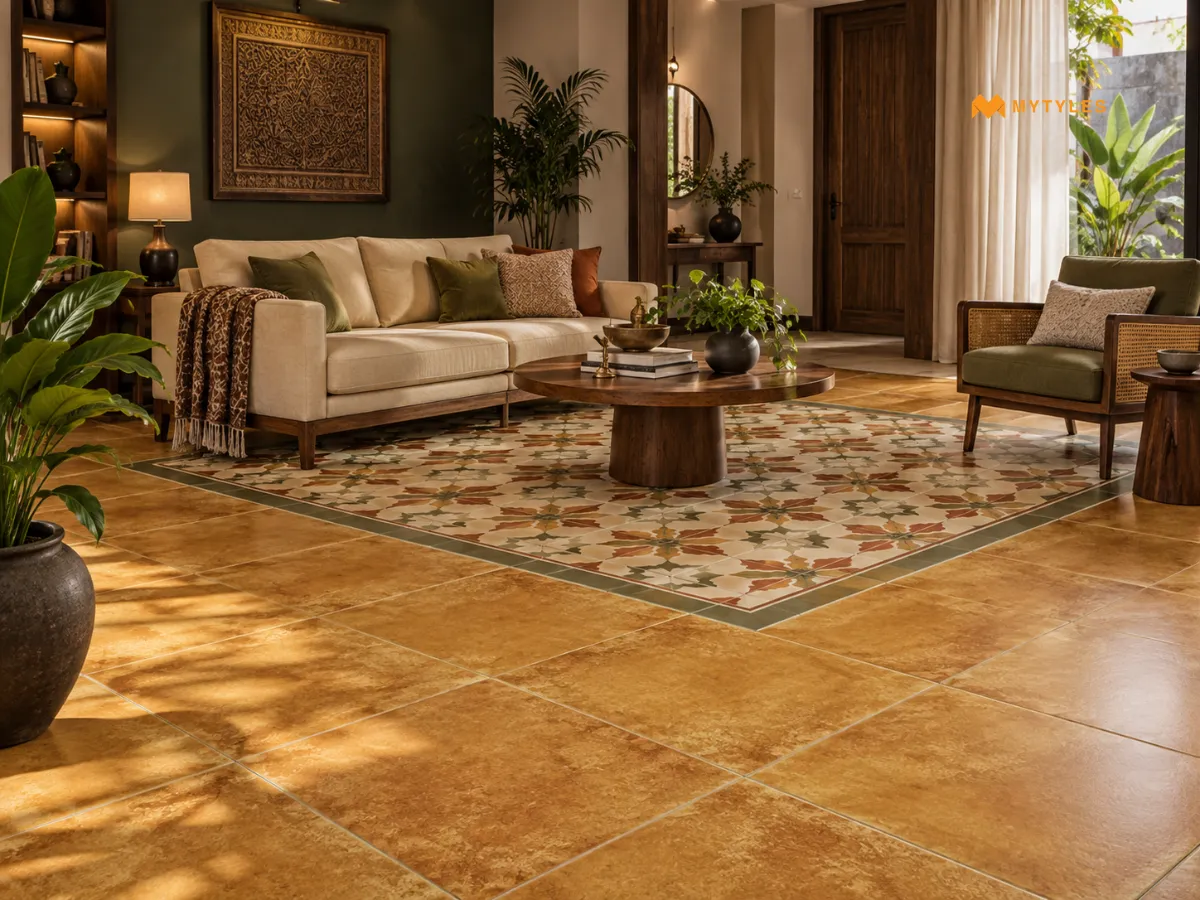
A living room gives designers plenty of scope to work with ceramic tiles, but the choice still depends on factors such as foot traffic, the surface being tiled, and whether the product is suitable for floor application. That also leaves room to play with scale. Across an open floor plan, fewer joints can give the floor a more continuous visual appearance when large-format ceramic tiles are used. A smaller tile, laid in a herringbone or basket-weave pattern instead, can do the opposite on purpose, drawing the eye to a specific zone such as a reading corner or the space behind a sofa.
Colour and pattern can be used with the same intent. A patterned ceramic tile for a living room, confined to the seating area rather than repeated across the whole floor, can help define the space without relying on a separate rug.
Design tip: If a pattern is used only in one part of the room, keep the surrounding tiles in a single solid colour so the eye reads one deliberate boundary rather than several competing ones.
Ceramic Tiles in Kitchens for Everyday Design
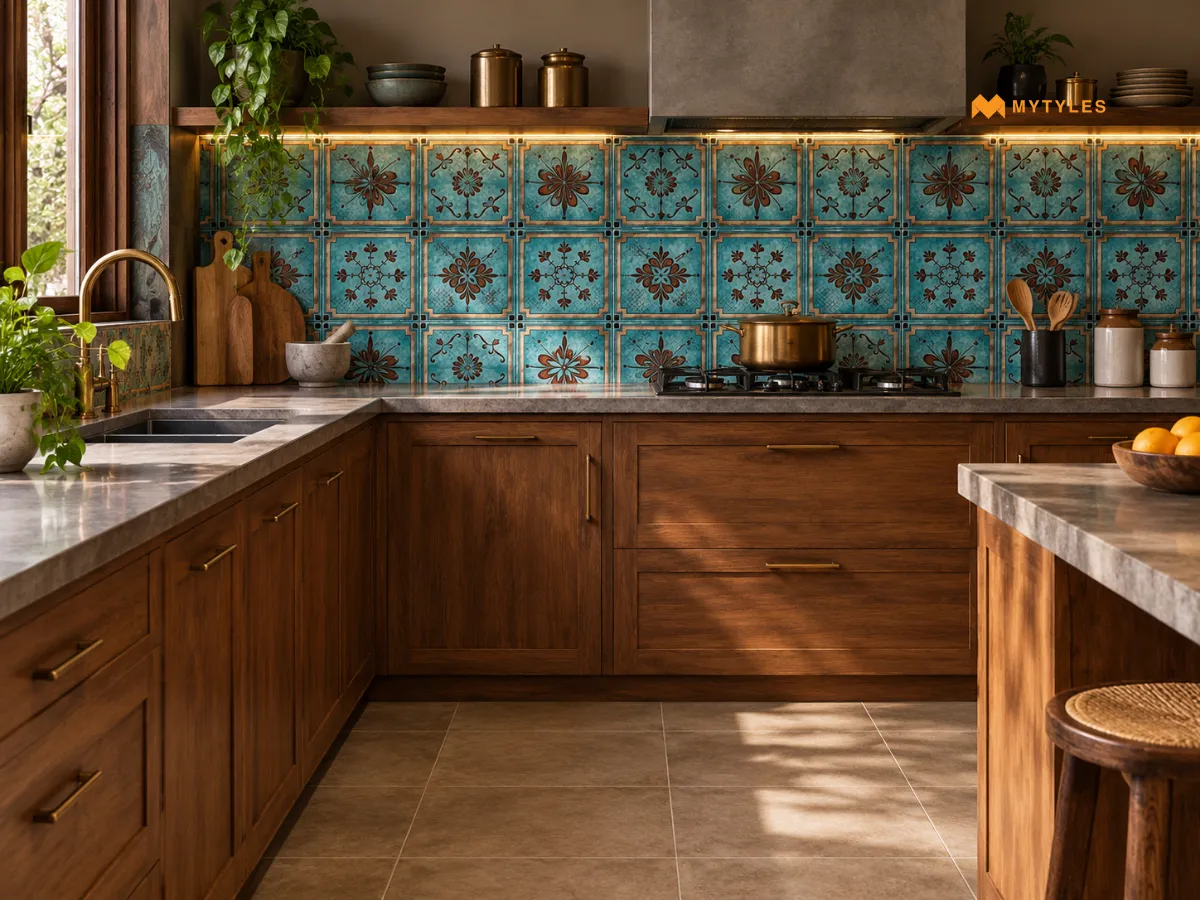
Kitchens have their own considerations around water, heat, grease, and frequent cleaning, so designers choose tiles based on where they will be used. Ceramic tiles for kitchen spaces can be considered for different areas, depending on the product and its intended application.
For the floor, the selected tile should be suitable for floor application. Ceramic floor tiles can create a quiet base for cabinetry and counters, while a ceramic wall tile can bring more character to the backsplash. Different sizes, colours, patterns and finishes can change the look of each area. A patterned tile can mark the area behind the counter, while a simpler floor keeps the rest of the kitchen visually balanced. Check the substrate, adhesive, grout, and product-specific care requirements before installation.
Design tip: If you choose a decorative ceramic tile for the backsplash, let the floor stay relatively simple. This gives the pattern room to stand out without making the kitchen feel visually crowded.
Texture and Detail in Bathrooms Through Ceramic Tiles
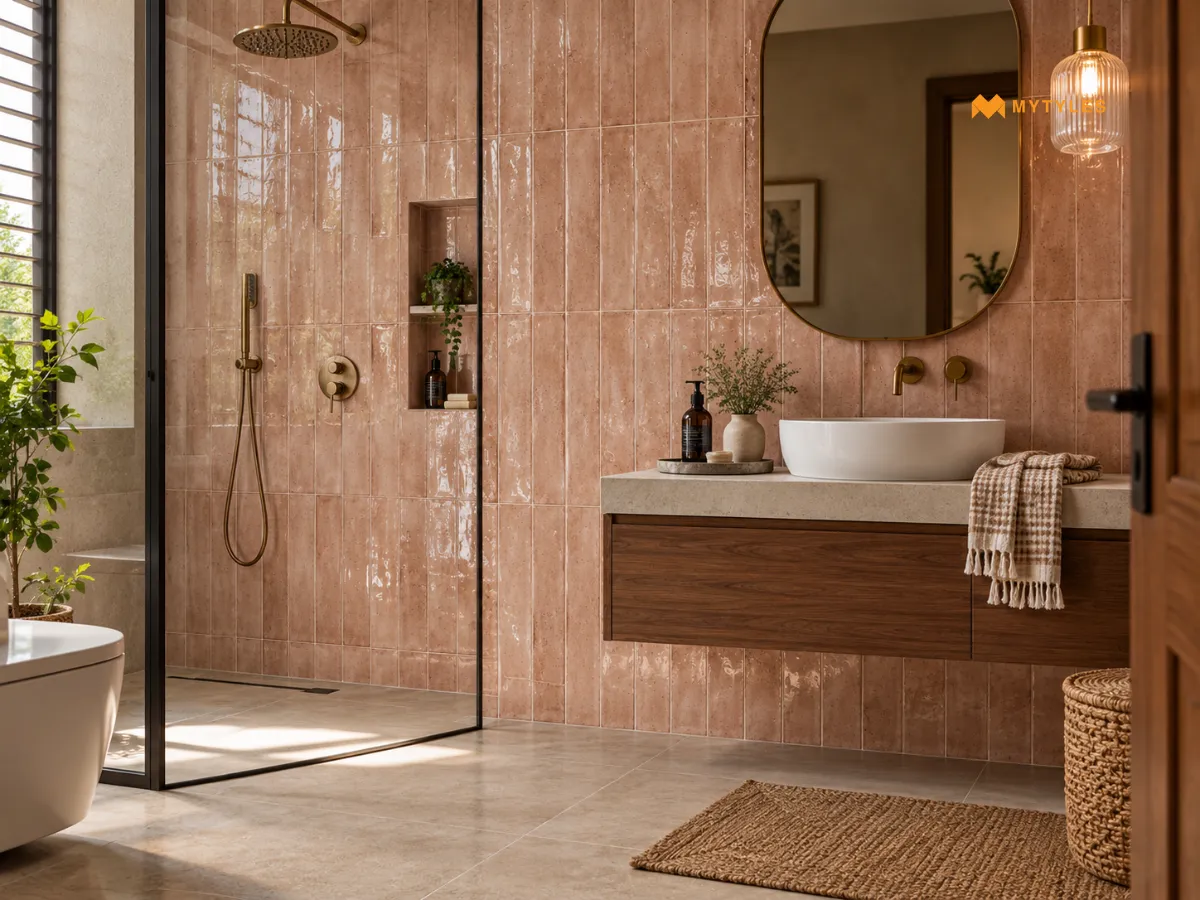
Bathrooms are often where a small change in tile can alter the whole feel of the space. A simple ceramic wall tile can keep the room quiet, while narrow formats such as KitKat tiles can add rhythm around a vanity or shower wall. Ceramic tiles for bathrooms give designers plenty of scope to bring colour, pattern, and finish into a space that is otherwise made up of a few fixed elements.
Ceramic can also move onto the bathroom floor, as long as the tile is suitable for floor application and wet areas. Matt surfaces can add a softer look underfoot, but the finish alone doesn't determine slip resistance, so checking the tile's intended use and rating is still important. On walls, glazed or decorative ceramic wall tiles can create a more defined backdrop without taking over the entire room.
Design tip: Use a textured or patterned tile on one wall and keep the remaining surfaces simpler. It gives the bathroom a focal point while letting the tile detail do the work.
Ceramic Tiles for Bedroom Spaces
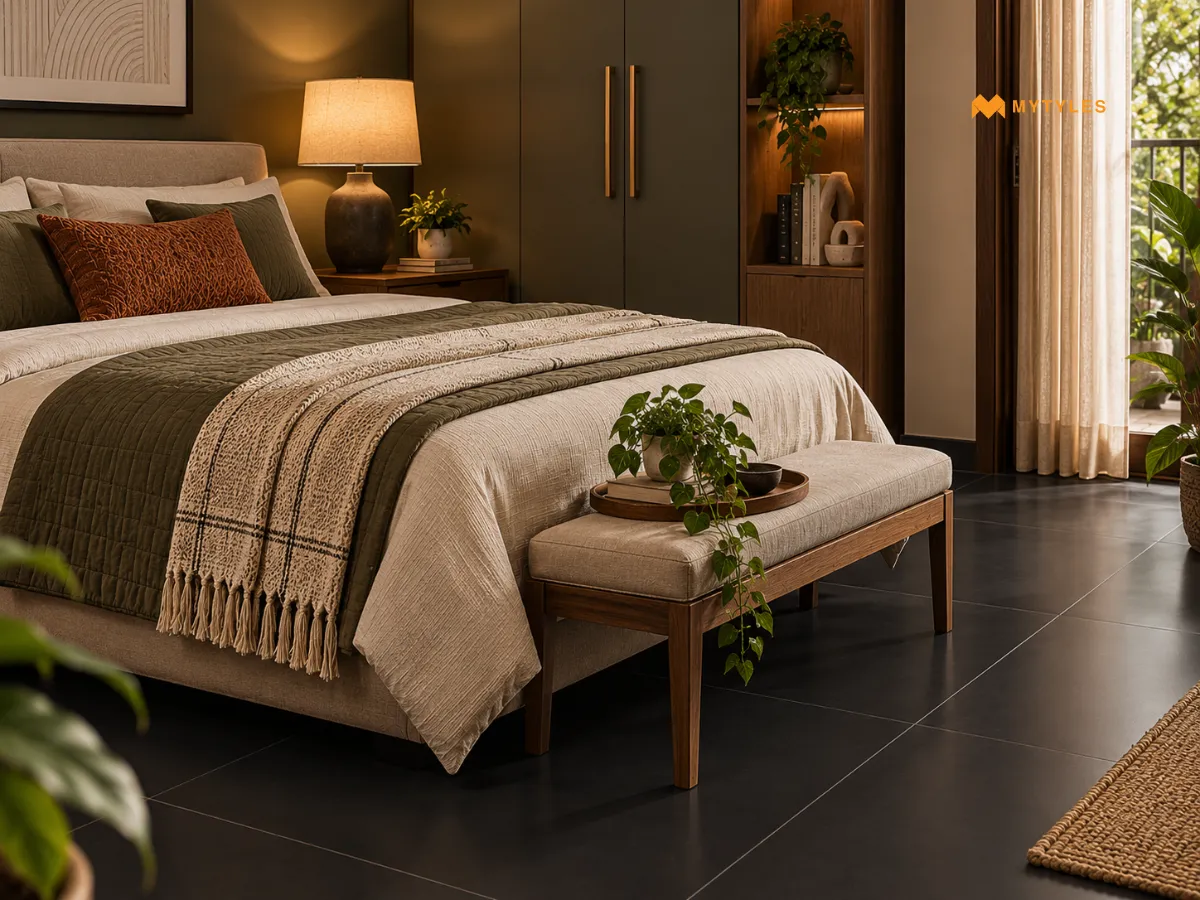
Bedrooms tend to have more going on visually than they first appear to. There is the bed, curtains, wardrobes, and bedside furniture, so the choice of ceramic tile can affect how its colour and pattern relate to the surrounding finishes. A ceramic floor tile in a muted colour can complement the furniture and other elements in the room, while a patterned tile can create contrast when the rest of the space is kept simple.
The same approach can work on a feature wall. A textured or patterned ceramic tile behind the bed can bring colour and detail to one area, while decorative ceramic tiles can be used around a dressing space or other small feature.
Design tip: Let the tile pick up a colour already used in the room for a more cohesive look.
Ceramic Tiles in Balconies and Utility Areas
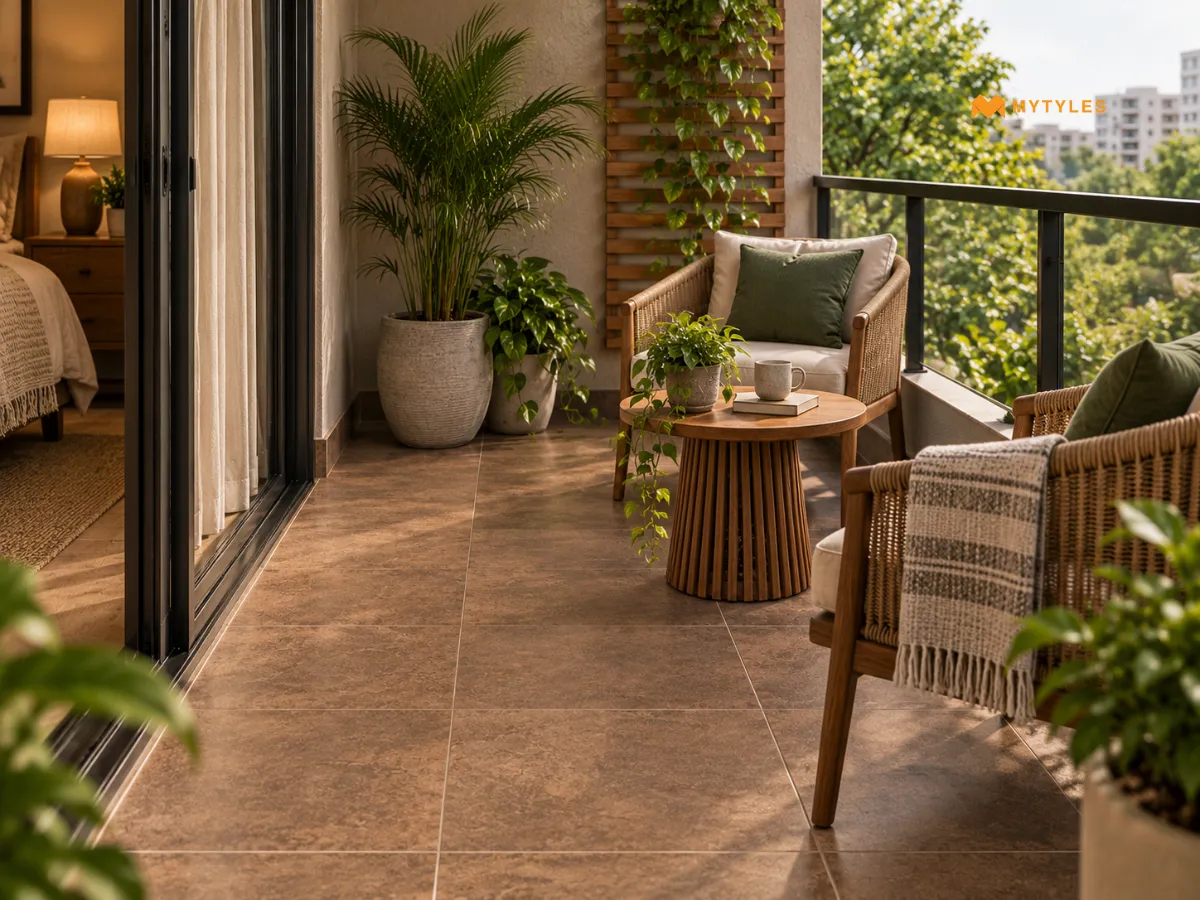
Balconies and utility areas can easily feel separate from the rest of the home, especially when their finishes are chosen as an afterthought. Ceramic tiles can bring colour, pattern, or texture to these spaces, while the selected product should match the requirements of the area where it will be installed.
Ceramic floor tiles can be considered for a balcony when the selected product is suitable for balcony use, while ceramic wall tiles can bring pattern or texture to a utility area. For balconies exposed to the weather, the tile should be selected according to its intended application and the conditions it will face.
Design tip: Consider a tile colour that relates to the adjoining room while checking that the product is suitable for the balcony.
When Ceramic Fits Best
Choosing between ceramic tiles and vitrified tiles is usually about the requirements of the space rather than which material is better overall. Designers choose a material based on the surface being tiled and how the space will be used while also considering the product’s application suitability and the overall look they want. Both ceramic and vitrified tiles can be considered for walls or floors, depending on the product and its intended application.
Ceramic tiles don't need to work everywhere to remain relevant. Their value lies in finding the right application, whether that is a wall, a suitable floor, or a smaller area where their design works particularly well. After being part of Indian homes for decades, ceramic continues to give designers another material to work with, with the selection coming down to the requirements of the space and the product.
Why Ceramic Still Works for Modern Interiors
Ceramic tiles remain relevant because they give designers room to make choices. The material can move from a quiet floor in a bedroom to a patterned backsplash in a kitchen, a textured bathroom wall, or a more defined area in the living room. That flexibility makes ceramic tiles for home interiors more than a default choice. Designers can use modern ceramic tiles in ways that suit each room, whether that means keeping the floor understated or using a pattern to draw attention to one area. The result doesn’t have to look the same throughout the home.
Ceramic floor tiles and wall tiles can be used in different parts of a home, depending on the product and the space. After decades in Indian homes, ceramic remains a familiar material that still fits into changing interiors, from a single room update to a complete home renovation.

What Are Ceramic Tiles?

Ceramic tiles are made mainly from clay and other natural materials that are shaped and fired at high temperatures. They come in different sizes, colours, patterns, and finishes for different spaces. As a ceramic flooring material, they can be used on floors when the selected product is suitable, while other ceramic products are made for walls.
What is the Difference Between Ceramic and Vitrified Tiles?
The main difference between ceramic tiles and vitrified tiles lies in their composition and manufacturing process. Ceramic tiles are primarily clay-based, while vitrified tiles are made using a mix of materials that undergoes vitrification during firing. Both can be used as modern interior tiles, but the product details and intended application should be checked before selection.
How Do I Choose the Right Ceramic Tile for My Space?
Consider the room, surface, and intended use before choosing a ceramic tile. Check that the product is suitable for the application, then look at its size, finish, colour, and pattern. You can also consider how these choices work with the furniture, walls, and other finishes in the room when planning your overall interior tile designs.
Can Ceramic Tiles Be Used for Designer Flooring?
Yes, ceramic tiles can be used for designer flooring when the selected product is suitable for floor application. The overall effect can come from the tile pattern, the arrangement, or a combination of different formats. Borders, contrasting layouts, and repeated motifs can add visual interest without requiring a decorative pattern across the entire floor area.
What Ceramic Tile Colours Work Well in Modern Interiors?
The right ceramic tile colours depend on the room and the elements already present. Soft neutrals can complement understated spaces, while earthy or deeper shades can add more definition. Consider the lighting, furniture, cabinetry, and wall colours before deciding so the tile works naturally with the rest of the modern house interior decor in the room.
How Should Ceramic Tiles Be Maintained?
Ceramic tiles can be maintained with regular cleaning and care. Remove loose dust and dirt before wiping the surface with water and a suitable tile cleaner. Pay attention to the grout joints as well, since they can collect dirt over time. Avoid abrasive tools or harsh cleaning products unless they are recommended for the specific tile.
Can Ceramic Tiles Be Used for Walls as Well as Floors?
Yes, ceramic tiles can be made for both wall and floor applications, although individual products may have different recommendations. Wall tiles can add colour, texture, or pattern to backsplashes and feature areas, while suitable floor tiles can be selected for flooring. Check the product details before choosing a tile for any part of your modern house interior decor.

ABOUT THE AUTHOR
Sragvi Senthil Kumar
With a background in Psychology and Journalism, my interest in writing began with newspapers and magazines, where I developed a passion to turn facts into engaging stories. Along with a keen interest in writing, I've had a creative eye for style, art and design. Over time this interest grew into exploring lifestyle, architecture, interiors and tiles for more than just their aesthetics. Now I bring together research and creativity to create clear, engaging content for homeowners, architects and interior designers.
Latest Blogs By MyTyles