Inspiration Gallery
Blog
Tile Calculator
08065423741



.svg)


6 Fluted Tile and Marble Tile Combinations for Premium Indian Interiors
ByNandana Priya

Tue , Aug 11 , 2026

Read Time: 5 Min


 Copied!
Fluted tiles and marble tiles rarely show up in the same design conversation, but once they are used in the same room, the combination feels surprisingly harmonious. One brings a grooved texture to the wall; the other carries the veined look, and when put next to each other, the contrast in appearance does a lot of work on its own.
This blog looks at how fluted tiles and marble-look tiles can come together in one space. If you're weighing a fluted feature wall against a marble-look countertop or floor, or just curious to know if this combination really works, the ideas ahead should give you a better understanding.
Beige Fluted Tile with White Marble-Look Tile
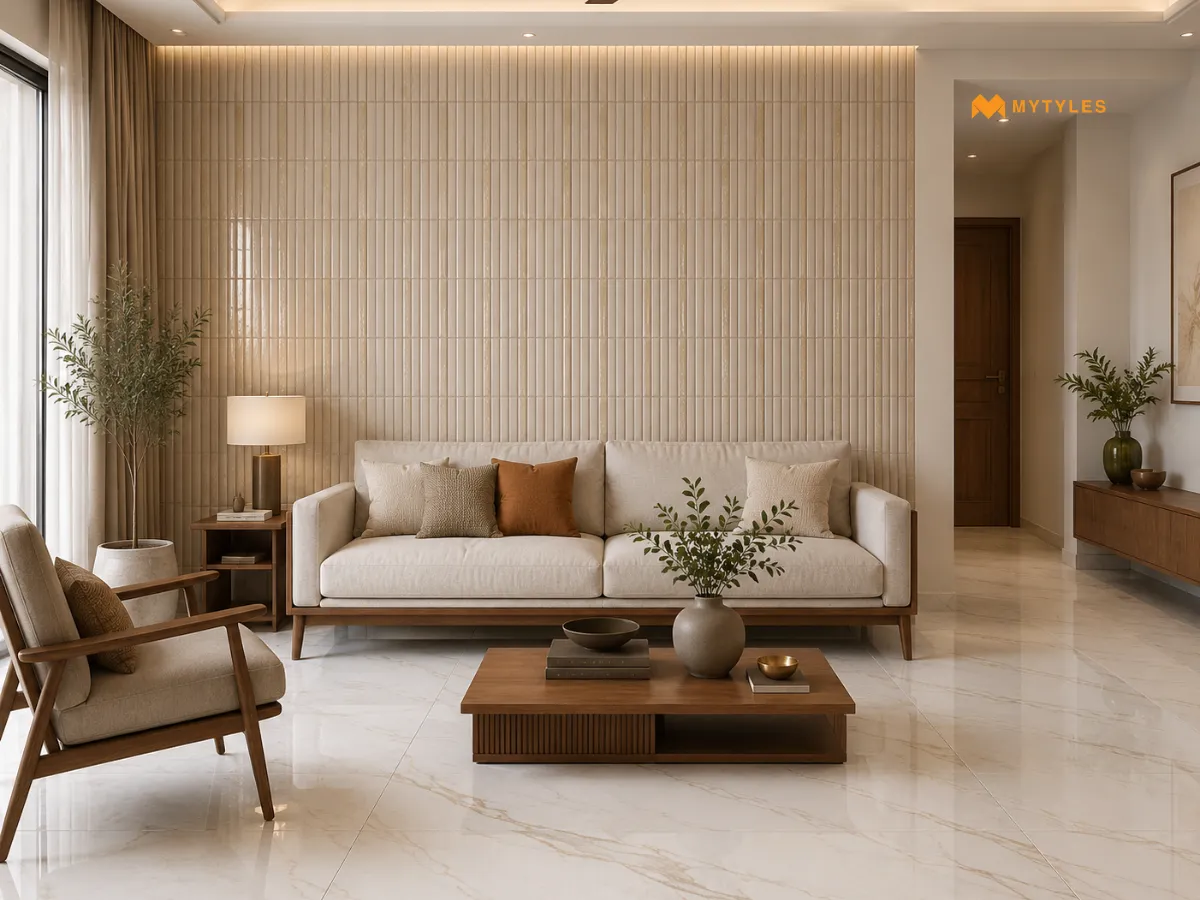
If you're not sure where to start with this pairing, beige and white is usually the easiest entry point. The beige fluted wall tile brings warmth and catches light differently as the grooves shift with the day, while the white marble-look tile keeps things calm and open.
Use the fluted tile behind the sofa as a single accent wall, and carry the marble-look tile down to the floor for a consistent, open feel. Most of the layered look comes from the white marble and beige fluted tile combination itself, as one surface is grooved and the other has a veined appearance, and that contrast is enough to keep the room from feeling flat.
Grey Marble-Look Tile with Off-White Fluted Tile
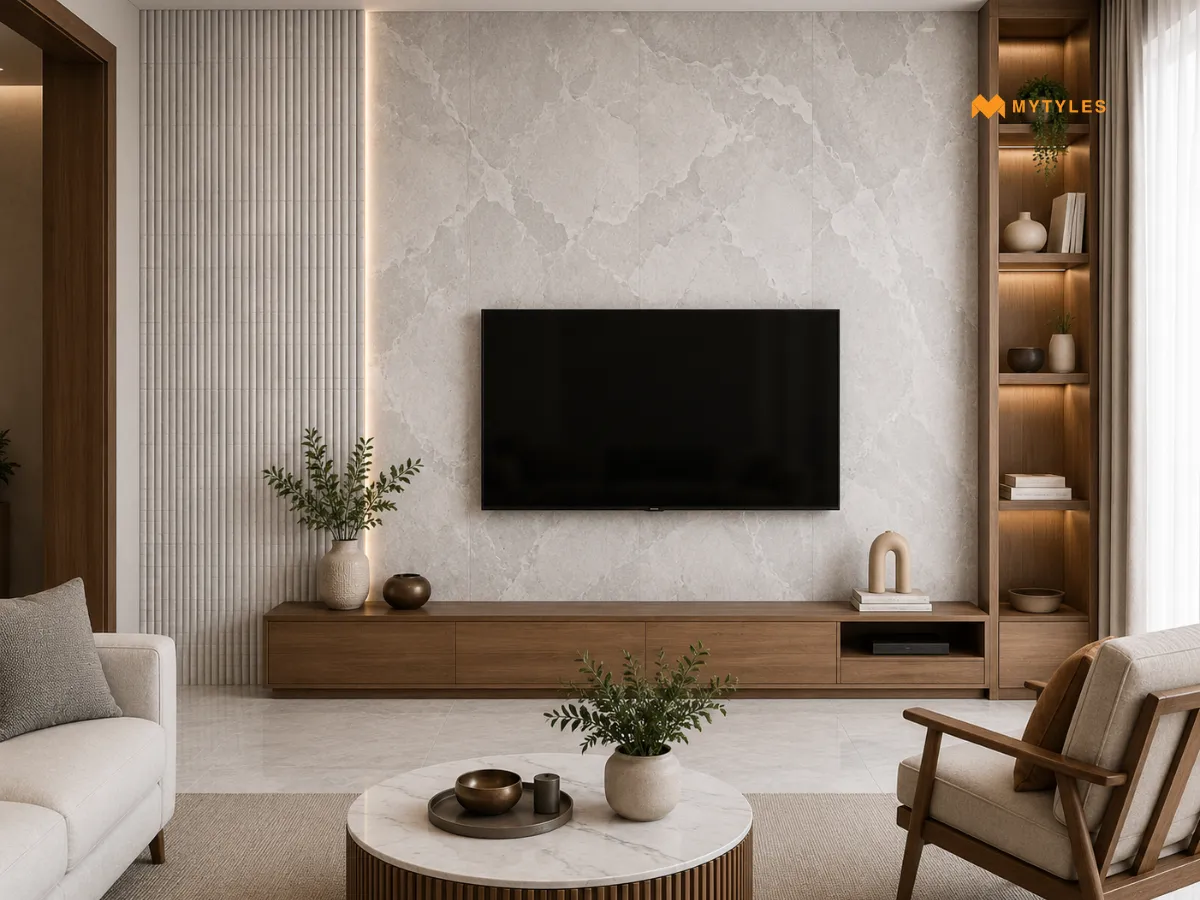
Grey marble-look tile makes a solid base for the wall behind the television. Adding a fluted tile as a narrow vertical strip alongside it gives the wall a bit of texture. The fluted tiles for the TV unit, running the full height of the wall, work best and let the grey marble-look tile fill the rest of the wall. It's a simple way to add texture to a wall behind the TV. Before installation, coordinate the tile layout with the television bracket, electrical points, concealed wiring, and console placement so that mounting and future access can be planned properly.
Flip the proportions and the mood changes. Let the vertical textured wall tiles cover most of the wall. Then bring in the grey marble-look wall tile as an inset framing the television itself. This tends to suit larger living rooms.
Terracotta Fluted Tile with Gold-Vein Marble-Look Tile
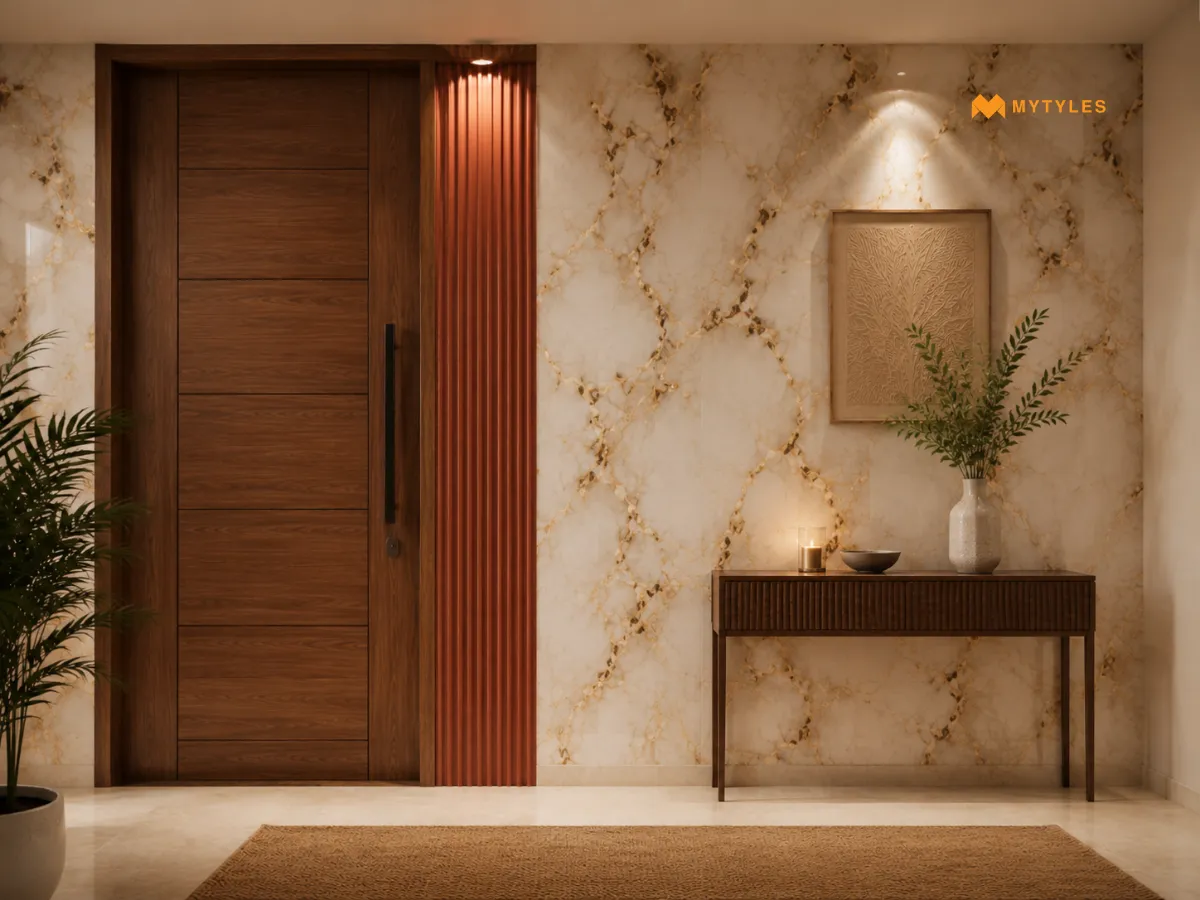
A narrow terracotta fluted strip framing the entryway door brings in warmth right from the entrance. Keep the strip vertical and narrow and let gold-vein marble-look tiles cover the rest of the entryway wall around it.
The gold veining catches the light near the entrance and adds a bit of shine, which suits a space that's meant to make a better first impression. Together, the two fluted tiles and marble tiles balance each other out; the terracotta fluted tile brings texture and warmth in a small amount, while the marble-look wall tiles keep the rest of the wall feeling open and premium.
Sage Fluted Tile with White Marble-Look Tile
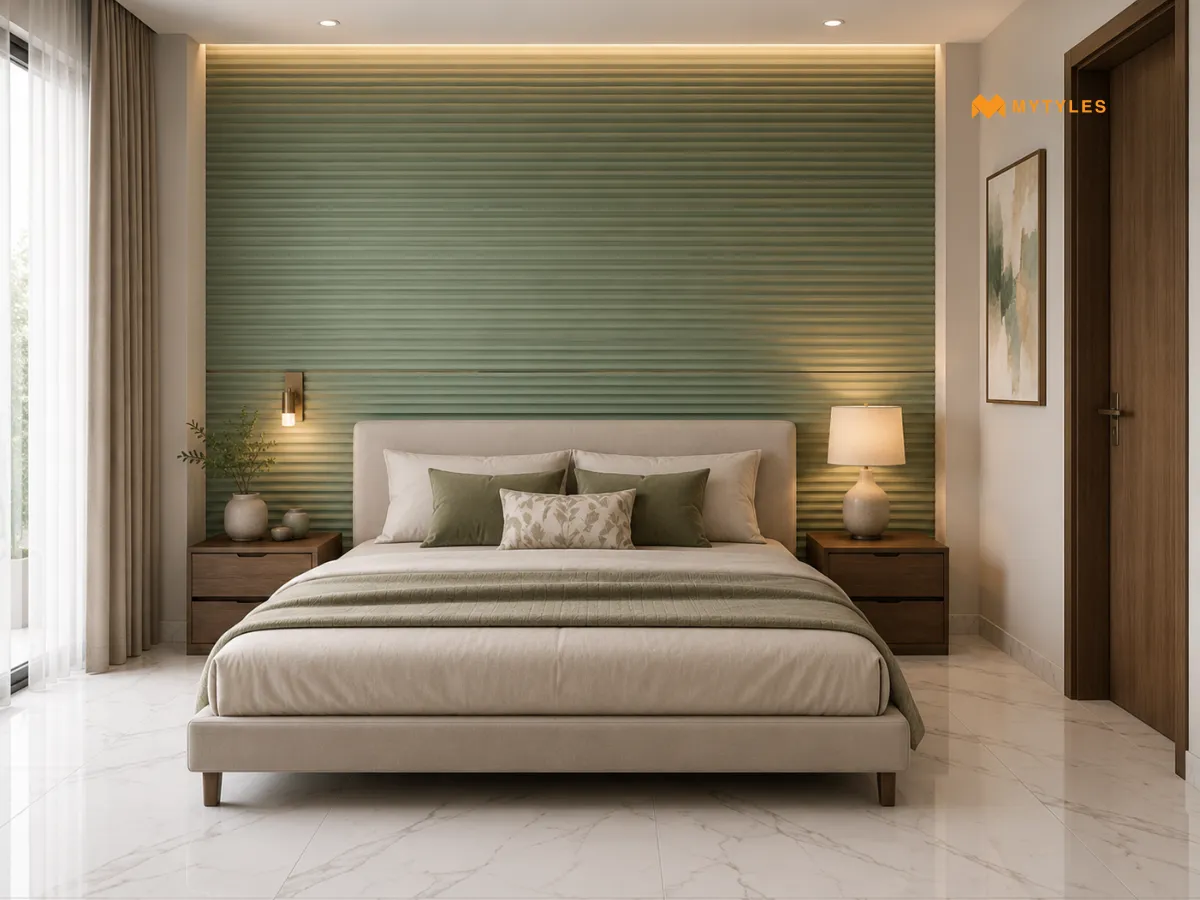
A sage fluted wall tile behind the headboard brings a quiet touch of color into the bedroom without making the wall look cluttered. Its muted, earthy tone works well for a room that's meant to stay calm. In daylight, the grooves stay soft and barely noticeable, and once a bedside lamp is on in the evening, they pick up gentle shadows that give the wall a slightly different look at night.
Keep the fluted tile on the headboard wall alone, and let a white marble-look tile take over the flooring. The white keeps the room feeling open and bright, and together the two tiles add a bit of color and depth.
Charcoal Fluted Tile with Beige Marble-Look Tile
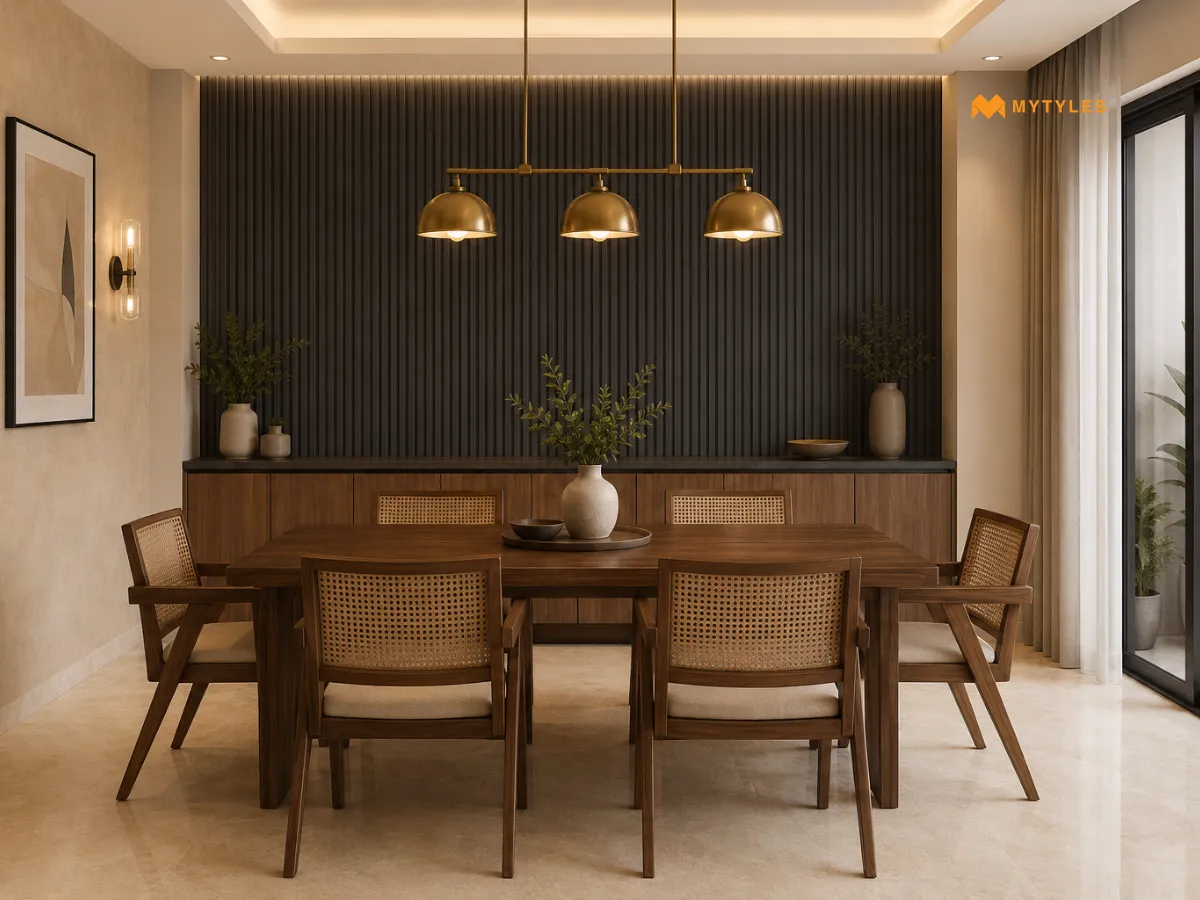
A charcoal fluted tile panel behind a crockery unit or along one dining wall gives the space a bit of a focal point without overwhelming the room; its dark grooves stand out nicely against a warm beige marble-look tile on the adjoining wall or on the floor.
This pairing works particularly well in dining areas that already lean toward wood tones, like a wooden table, cane chairs, and brass light fixtures, since the charcoal grooved wall tile designs add contrast. Keep the charcoal fluted tile on a single wall or a defined panel. Then let the beige marble-look tile fill the rest of the space.
Brown Fluted Tile with Cream Marble-Look Countertop
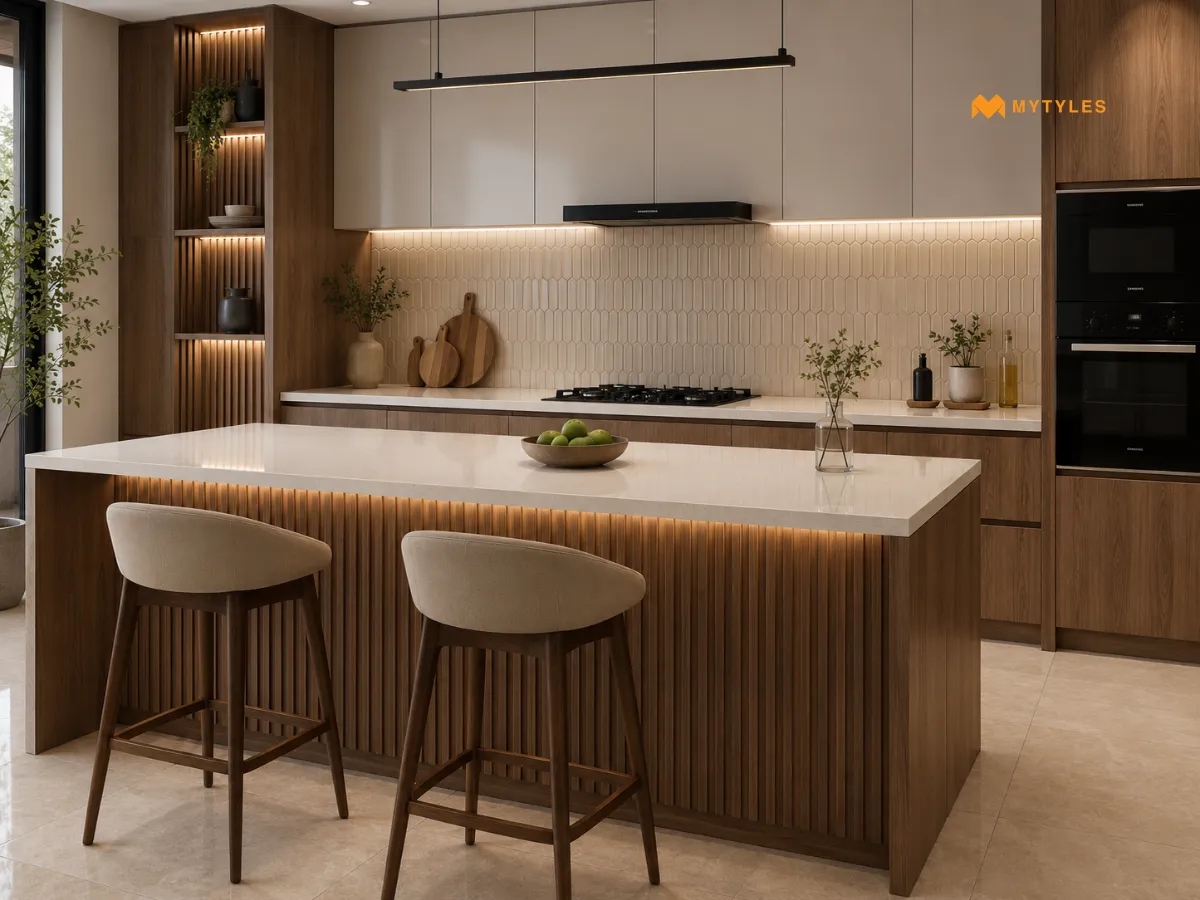
A kitchen with light cabinets and neutral counters can feel a bit flat, and that's where brown fluted tiles come in. Rather than running it across the main backsplash, the fluted wall tile works better placed along the side of a breakfast counter, around a tall pantry unit, or on a wall that sits away from the hob. One brown fluted section is usually enough.
Cream marble-look tile can be used on the countertop, provided the selected product is rated for countertop use and can handle heat, stains, moisture, and regular cleaning. The cream tone creates a soft contrast against the brown fluted tile and keeps the kitchen feeling balanced.
Tips for Selecting Fluted and Marble-Look Tile Combinations
Picking the premium tile combinations for home usually comes down to a few practical factors. These points can help narrow things down before you finalise your fluted and marble-look tile combinations.
- Decide Which Tile Should Lead: One tile usually works best as the main surface, with the other used in smaller sections, an accent wall, a border, or a countertop, rather than splitting a room evenly between the two.
- Factor In How Much Natural Light The Room Gets: Darker fluted wall tiles can make a low-light room appear closed in, so lighter marble-look tiles are often used to balance that out in spaces without much daylight.
- Check Where Each Tile Will Go: Water, oil, heat, and regular cleaning affect tiles differently over time, so kitchen backsplashes, countertops, walls, and floors generally need products made for that kind of exposure. Also, plan how exposed edges will be covered and what grout or sealant may be needed and how the surface should be protected from direct heat.
- Think About Maintenance: Grooved or textured tile tends to take a bit more effort to clean, depending on how deep the pattern runs and where it sits. In areas that see regular use, it is often better to check the maintenance requirements of both tiles before buying.
Bringing Fluted and Marble-Look Tiles Together
Fluted tile and marble tile can work well together when one is used as the main surface and the other as a defined accent, whether that's a wall, a countertop, or a smaller section like an entryway border. The right combination usually depends on the room's existing tone, how much light it gets, and how much upkeep each surface can realistically handle.
That's really what these marble and fluted tile combinations offer. Not a dramatic makeover, but a considered pairing that gives a space a bit more depth. MyTyles has both fluted tile and marble-look tile across a range of tones, from warm beige to cooler grey and blue. You can visit our experience centre or browse the full tile collection online to find the right combination for your space.

Can Fluted Tiles And Marble-Look Tiles Be Used Together?

Yes, fluted tile and marble tiles can be combined within the same room because their surfaces create a clear contrast. Fluted tiles add grooves and shadow, while marble-look tiles provide a smoother veined surface. The pairing usually looks more balanced when one tile covers the main area and the other is limited to a panel, border, or feature section.
Where Can Fluted And Marble-Look Tile Combinations Be Used?
Fluted tiles with marble-look tiles can be used in living rooms, bedrooms, dining areas, entrances, and selected kitchen sections. In living rooms, they can frame a TV unit or feature wall, while bedrooms can use the pairing behind the headboard. Dining walls and entrance panels also provide enough open space for both surfaces to remain visible. In kitchens, place fluted tiles away from frequent splashes and use marble-look tiles only where the product is suitable for the intended wall, floor, or countertop application.
Do Fluted And Marble-Look Tiles Suit Living Room Walls?
Yes, a fluted tile design for living room walls can be paired with marble-look surfaces behind a television, sofa, or display unit. A fluted strip can frame the main section, while marble-look tiles cover the broader wall. Keeping the furniture and surrounding decor relatively simple allows both textures to remain visible without making the room feel overly detailed.
Can Fluted Tiles Be Used Around A TV Unit?
Fluted tiles for TV unit walls can be installed as a narrow side panel, a vertical frame, or across the larger feature wall. They can be paired with grey, white, beige, or gold-vein marble-look tiles. Before planning the layout, account for the television size, electrical points, console, lighting, and the amount of uninterrupted wall space available.
Which Colors Work Well In Fluted And Marble-Look Tile Combinations?
Neutral and earthy colors are commonly used in these pairings. Beige fluted tiles work with white marble-look tiles, while charcoal can be balanced with cream or beige. Sage and white create a softer combination, and terracotta can be paired with warmer veining. The right pairings depend on the room’s lighting and furniture.
Are Fluted And Marble-Look Tiles Suitable For Kitchens?
Yes, fluted and marble-look tiles may be combined in kitchens, but the placement requires some thought. Fluted tiles are generally easier to manage on a pantry wall, breakfast counter side, or area away from frequent oil splashes. Marble-look tile may be used on a backsplash or countertop only when the selected product is rated for that application.
How Do You Maintain Fluted And Marble-Look Wall Tiles?
Smooth marble-look surfaces can generally be wiped with a soft cloth and a suitable mild cleaner. Fluted wall tiles may need more attention because dust and residue can settle within the grooves. Cleaning requirements depend on the texture depth, finish, and placement, so it is useful to review the product guidance before finalising fluted and marble-look wall designs.

ABOUT THE AUTHOR
Nandana Priya
With a strong interest in design, creativity, and emerging tile trends, I enjoy turning ideas from the world of tiles and interiors into engaging, meaningful reads. My writing focuses on creating well-researched content that helps readers understand design choices with more clarity and confidence. I bring together research, design awareness, and digital marketing insights to craft content that is relevant, easy to follow, and thoughtfully written for todays homeowners and design-conscious readers.
Latest Blogs By MyTyles