Inspiration Gallery
Blog
Tile Calculator
08065423741



.svg)


Carpet Tile Designs for Living Rooms: 9 Ideas for Indian Homes
ByHeena Dhiman

Tue , Sep 29 , 2026

Read Time: 5 Min


 Copied!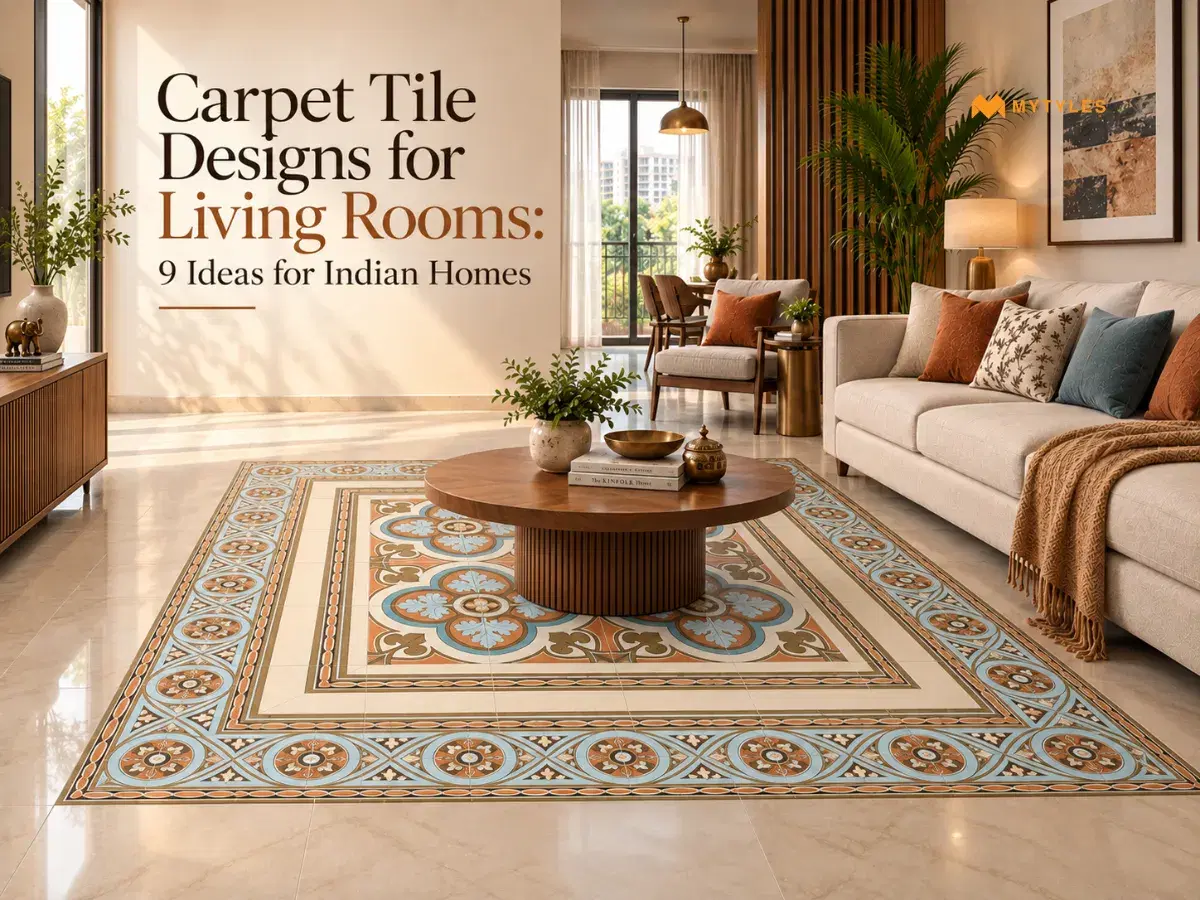
A living room floor does not need a separate rug to have a defined centre. Carpet tiles for living room floors can use decorative motifs within the tiled layout itself. In Indian homes, decorative hard surface carpet tiles can form a central panel, follow the edge of a seating zone, or bring rangoli- and kolam-inspired details into the room. However, the placement matters. A detailed pattern across the whole floor may feel busy, while a planned centre or border gives it a clearer focus.
Carpet tile designs also range from traditional motifs to cleaner geometric compositions, so the idea is not limited to one interior style. Here are 9 ways to plan the look, along with practical details that can help each one sit more naturally in your living room.
Carpet Tile Ideas Using Patterns and Floor Layouts
The way the tiles are arranged can shape the complete carpet style design. Borders, centre patterns, and placement can be planned differently depending on the floor area you want to define.
Build a Carpet Style Panel Under the Main Seating Area
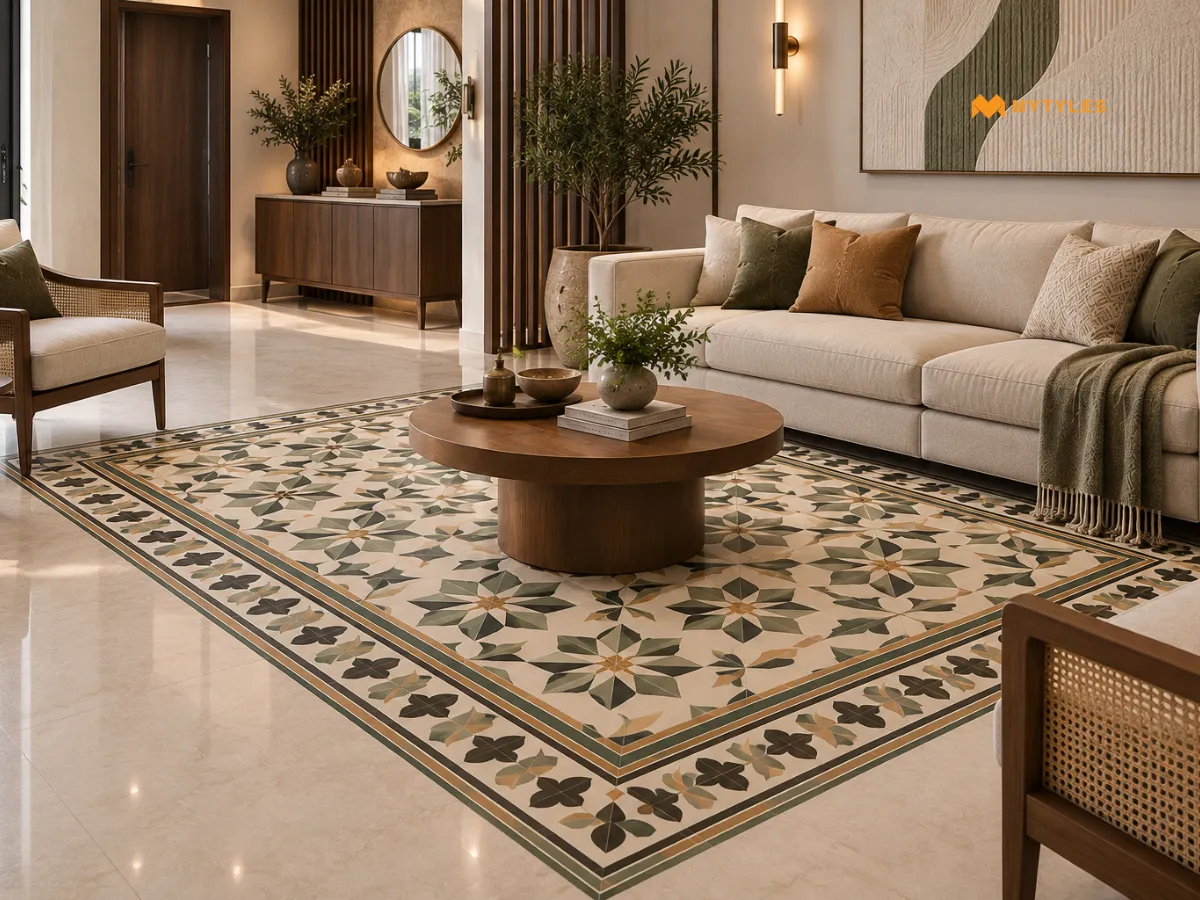
Place the decorative tile panel beneath the centre table and extend it towards the sofa and chairs. This keeps the pattern within the main seating area instead of taking it across the entire floor. Carpet tiles for living room spaces can be planned this way when you want the design concentrated in one section. For a living room floor carpet design, leave some plain flooring visible around the outer edge of the panel.
Tip: Measure the sofa and centre table arrangement before deciding the panel size. This gives you a clearer idea of how much of the pattern will remain visible once the furniture is in place.
Use Centre, Border, and Corner Tiles as One Composition
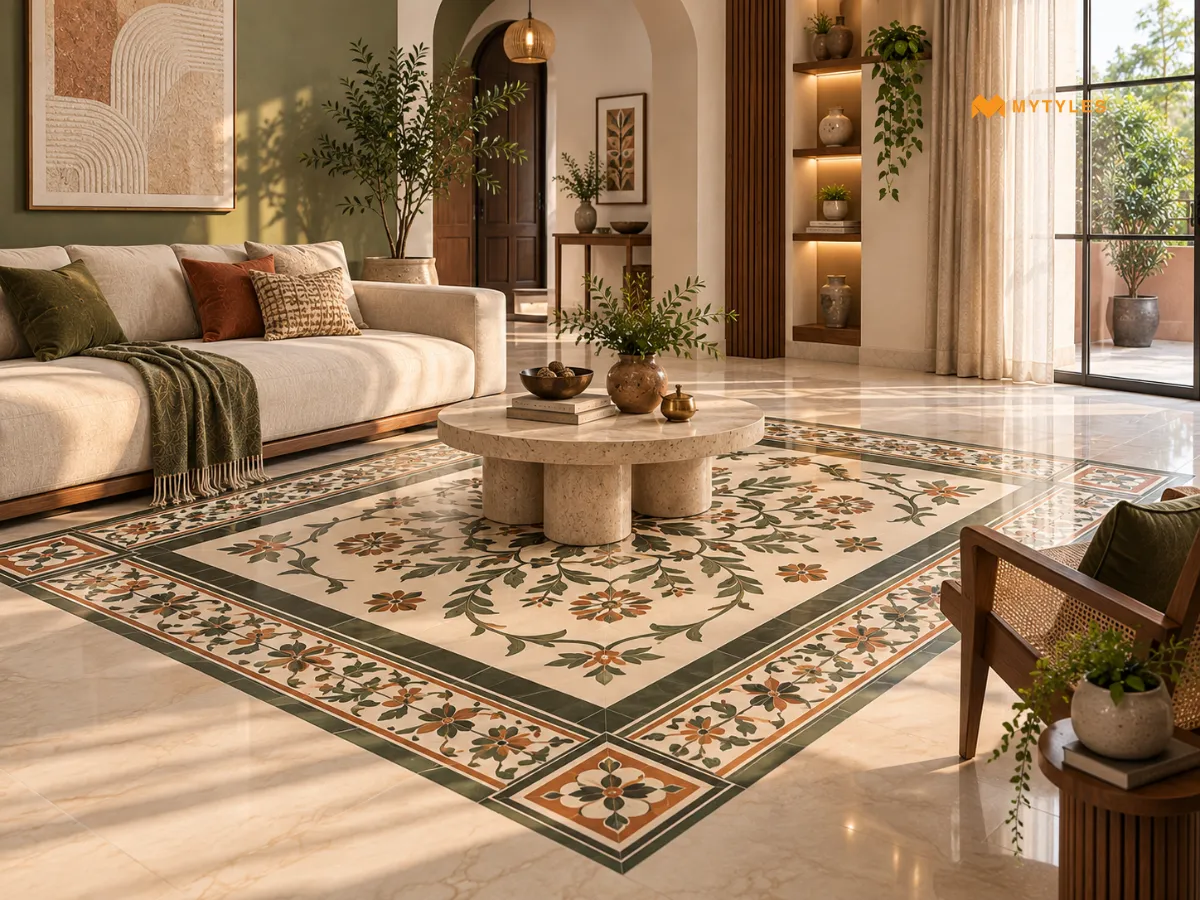
Some decorative sets are designed as a complete floor composition, with centre pieces, border pieces, and matching corners. MyTyles concept sets show this approach using coordinated tile sizes to frame the main field. A centre border corner tile design is useful when you want the floor to read as one finished rectangle rather than a group of unrelated motifs.
Design note: Plan the complete outline first. If the room is irregular, centre the framed area on the furniture layout rather than automatically following every wall.
Keep Geometric Patterns Crisp in a Modern Living Room
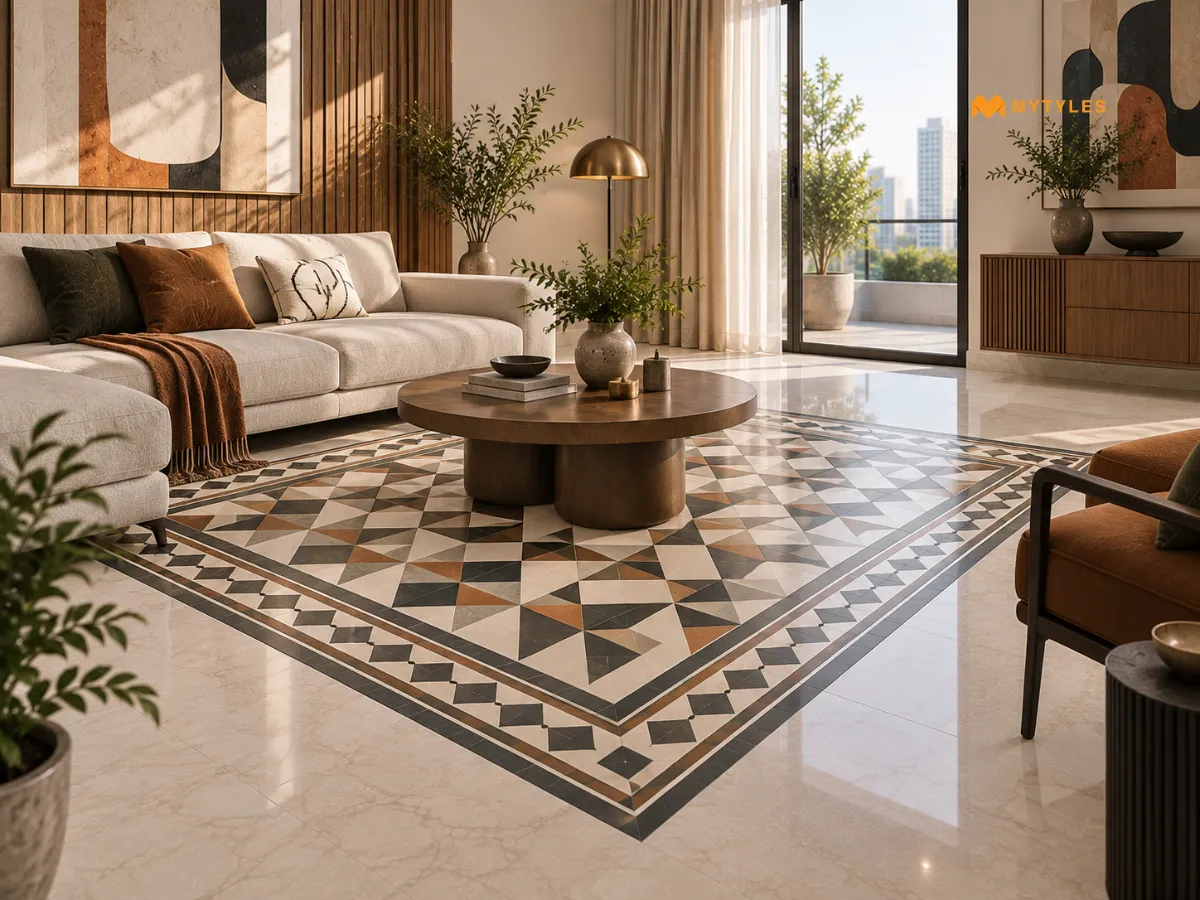
Not every carpet-inspired floor needs floral or traditional detailing. Geometric carpet floor tiles can use repeated cubes, diamonds, lines, or angular forms to create a sharper look. For modern carpet tile designs for home interiors, the pattern itself can provide the detail while the
rest of the room stays comparatively restrained.
Try this: Pick one colour from the floor and repeat it once or twice in cushions, artwork, or a chair. There is no need to match every shade in the tile.
Use Rug Style Floor Tiles to Define the Seating Area
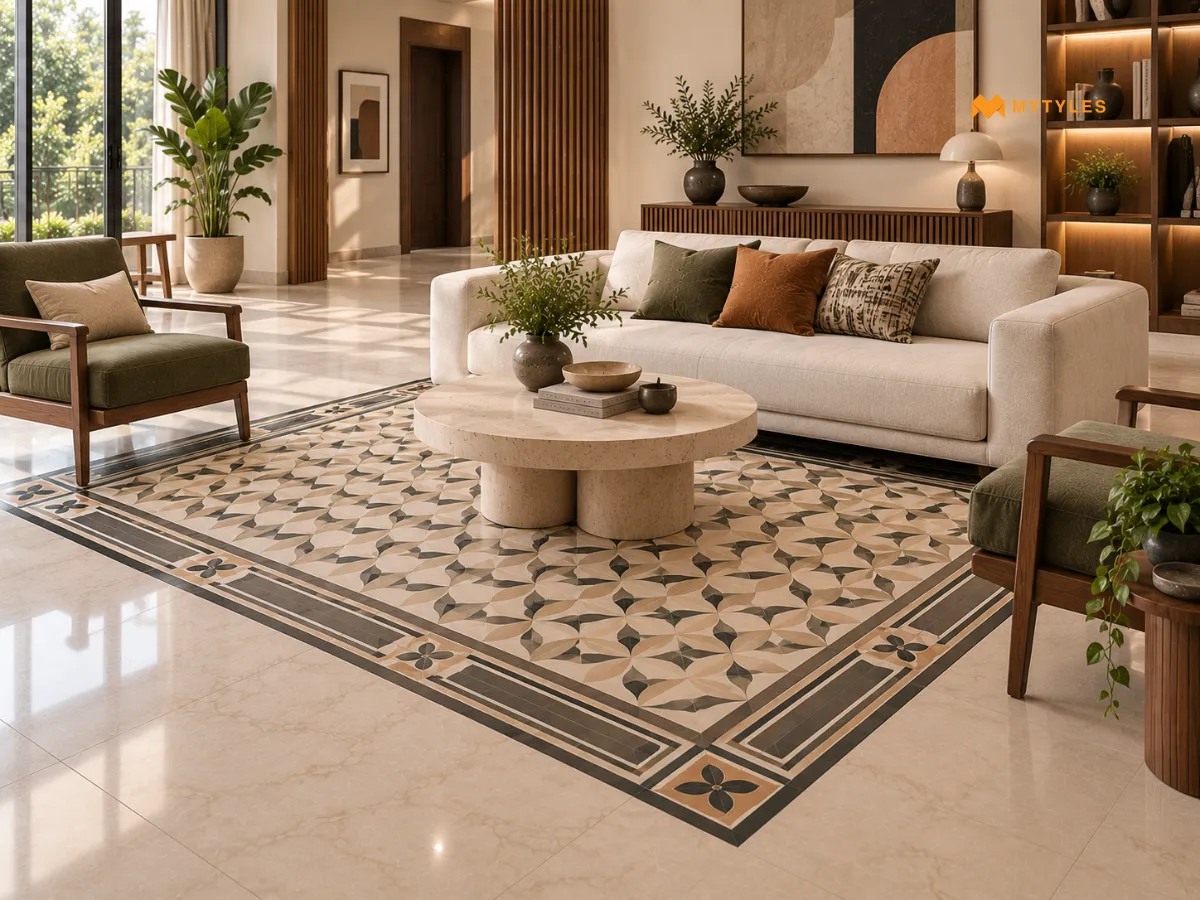
If you like the outline of an area rug, carpet-style floor tiles can bring that shape directly into the flooring. Place a decorative centre below the coffee table and use a contrasting tile around its edge. Carpet-look floor tiles with this type of layout keep the pattern within the seating area rather than spreading it from wall to wall.
The furniture can help determine the size. With carpet-like tiles, leave enough of the design visible around the coffee table so its border does not disappear underneath the sofa and chairs. A tile-like carpet works especially well as a layout idea when the centre and outer edge can both remain visible.
Keep in mind: Decide the final panel size from the room and furniture, not from the rug size you used previously. Tile modules need to align cleanly, so a small adjustment to the dimensions may give a neater border.
Bring Rangoli Inspired Detail Into the Centre
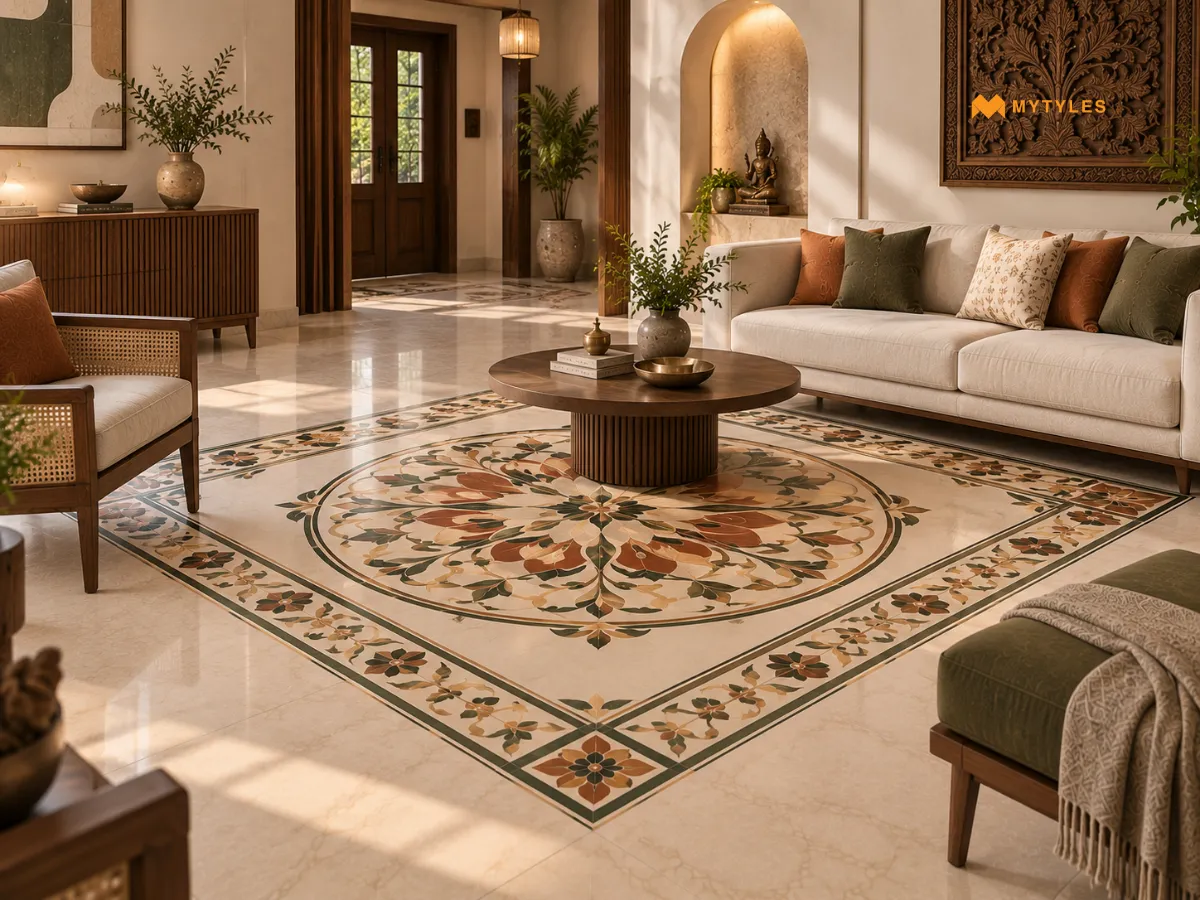
A rangoli-inspired floor can give a living room a distinctly Indian focal point without covering the entire room in pattern. Rangoli tiles for living room floors work well as a central medallion or a defined square near the main seating area. A rangoli floor tile design can be colourful and detailed, so the surrounding tiles can stay simpler to give the motif enough space.
Practical tip: Check the full assembled motif before installation. With directional designs, one rotated piece can interrupt the pattern once the floor is fixed.
Use Kolam-Inspired Tiles Near the Living Room Entrance
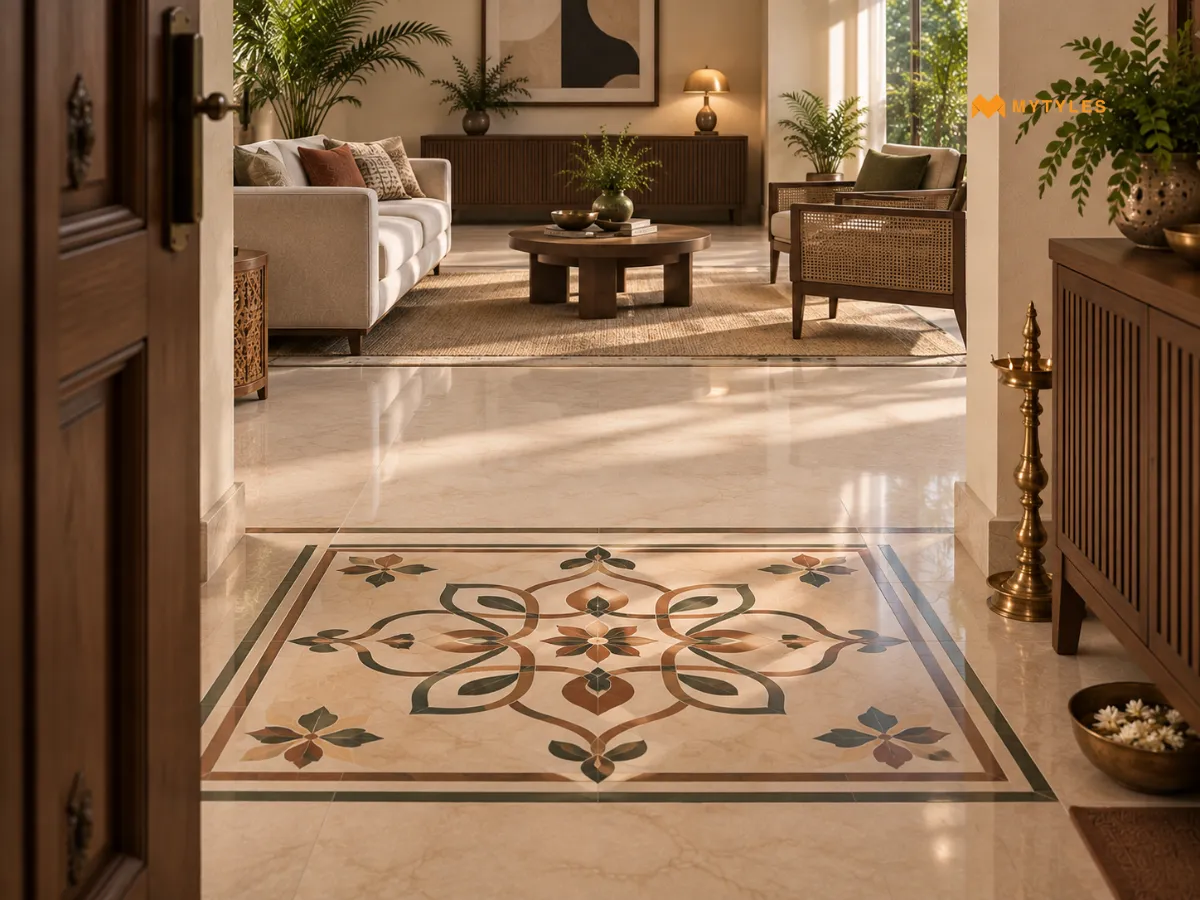
Kolam patterns are closely associated with threshold and floor decoration in South Indian homes. That makes kolam tiles for living room entrances an interesting way to mark the transition into the main gathering space. Instead of treating the motif as an all-over floor, place it where the eye naturally lands on entering the room. It gives traditional floor tile patterns a defined location beside a simpler surrounding floor.
A simpler approach: Leave some plain flooring between the motif and nearby furniture. This keeps chair or table legs from cutting across the main part of the design, especially when another pattern is already present nearby.
Carpet Tile Ideas Using Colour and Room Layout
Pattern is only one part of the floor design. Colour choices and the way the tiled area sits within the room can also change how the overall layout looks.
Try Terracotta, Brown, and Ivory for a Warmer Traditional Look
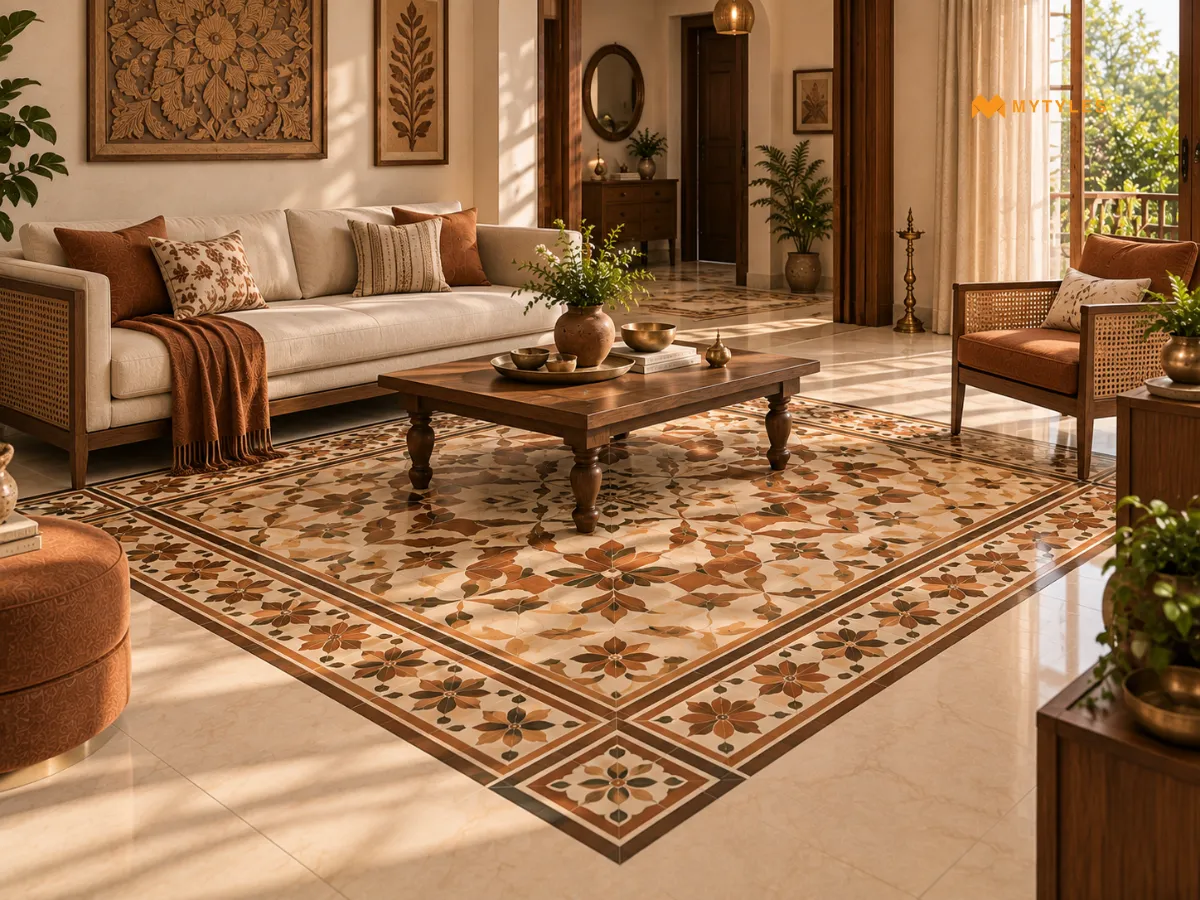
Shades such as terracotta, brown, cream, and ivory can be considered alongside wood furniture, cane details, brass accents, and earthy fabrics. If the floor already has a detailed motif, keeping the number of colours limited can make the individual lines and borders easier to notice. Decorative carpet tiles for home spaces can still carry an ornate pattern with a limited palette. This direction is especially useful when the carpet pattern floor tiles already contain several lines, borders, or repeated motifs.
Design note: Take the tile sample over to the sofa, wooden furniture, or fabric you plan to keep in the room. Terracotta and brown can appear different once they are seen beside these existing colours and under the room’s lighting. Looking at the actual tile here can help before you settle on the shade.
Use Black and White When the Pattern Needs More Definition
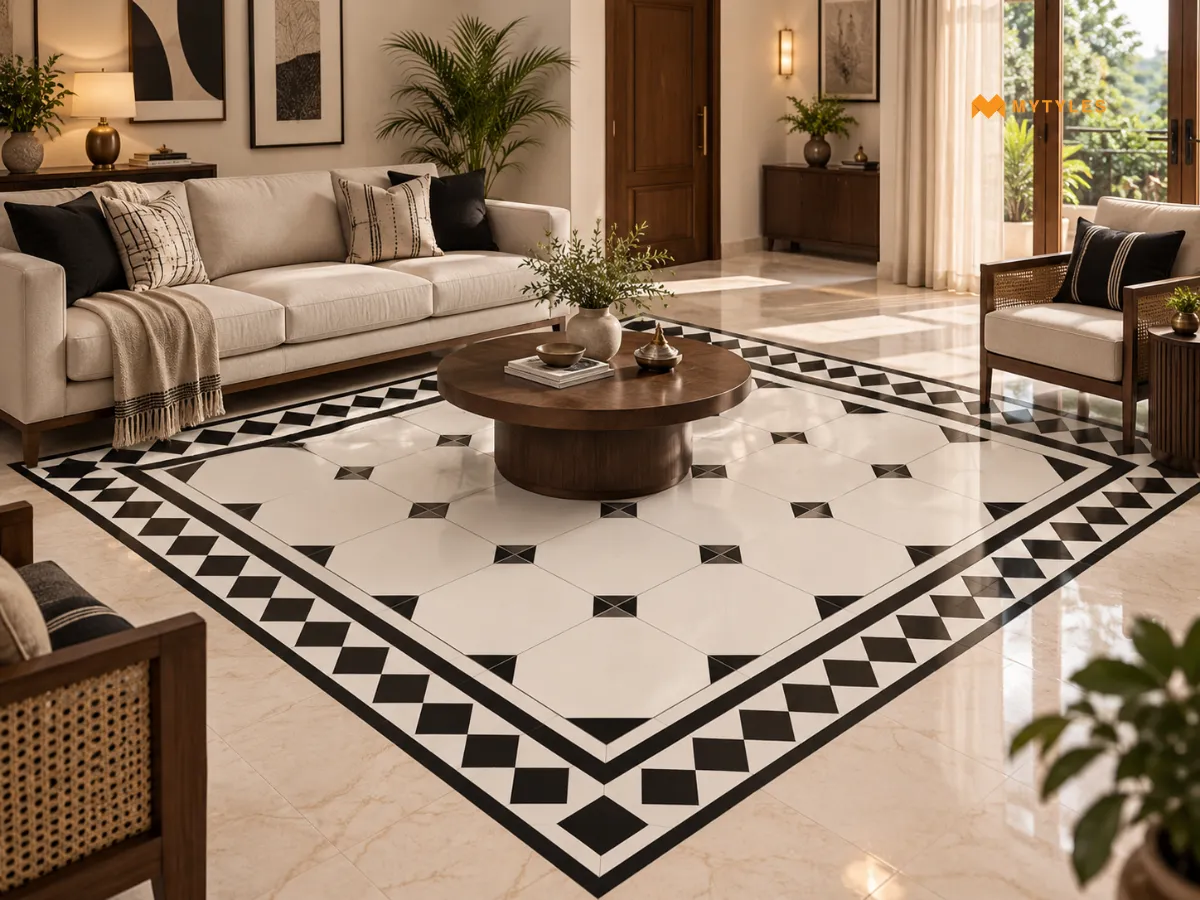
With black-and-white tiles, the darker parts of a motif are easy to distinguish from the lighter background. This is useful for geometric grids, repeated borders, or a centre design placed below the coffee table. A living room carpet tile design in these colours can feel graphic without relying on a large number of shades. This can work as statement floor tiles for living room spaces where the floor carries more of the visual detail.
Practical tip: If the floor pattern is strong, keep nearby upholstery patterns smaller or fewer. This is not a fixed rule, but it can make the different surfaces easier to read together.
Define an Open Living Area Without Building a Divider
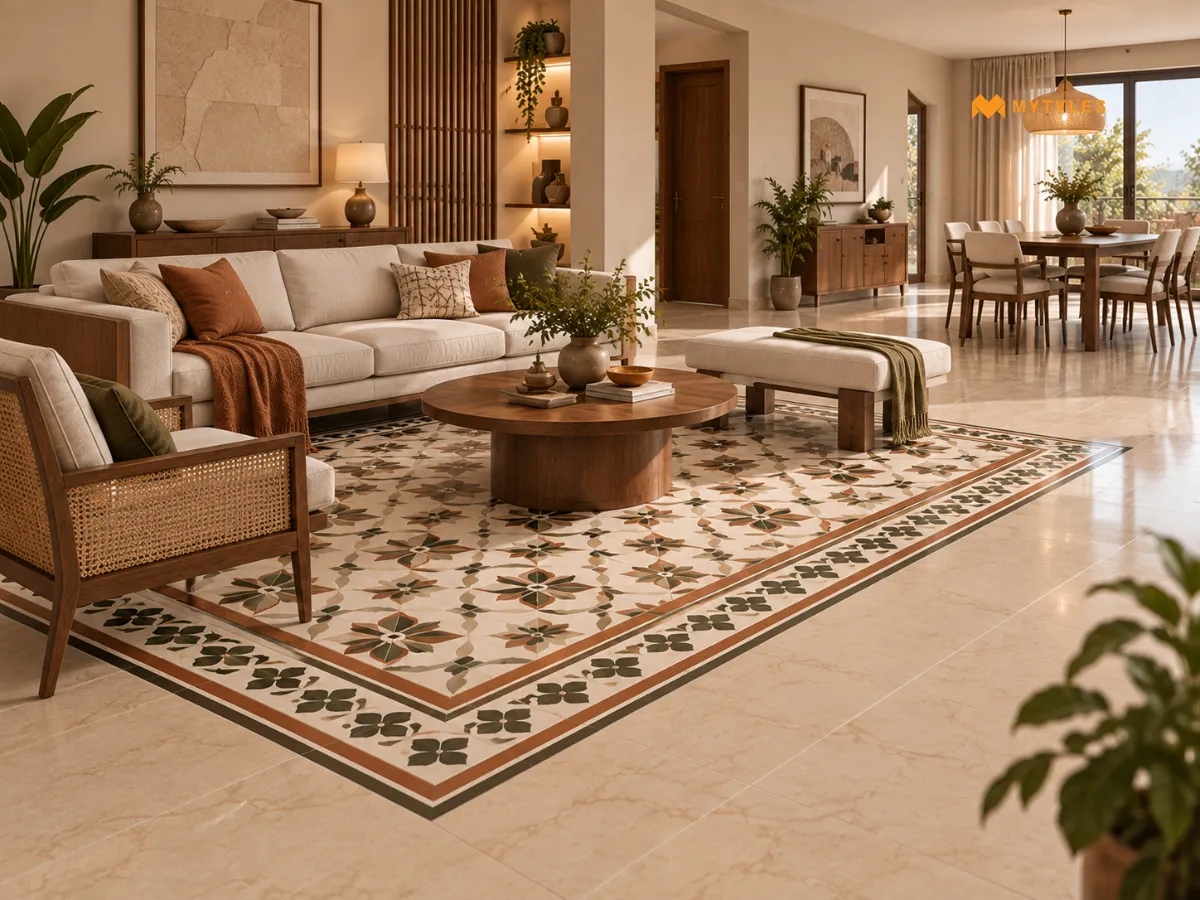
In an open plan home, the floor can help show where the living area begins. Decorative floor tiles for living room seating can form a rectangle beneath the furniture while the same plain base tile continues into the dining or passage area. Patterned floor tiles for living room zones make that change visual rather than structural.
A carpet tiles design for home can follow the position of the sofa and chairs instead of covering the entire open floor. This also gives the living room floor tile design a visible stopping point before the dining or passage area begins.
How to Make Carpet Tile Designs Work With the Rest of the Room
The most convincing Indian living room tile design usually has a relationship with something else in the room. That could be the colour of the sofa, the geometry of a wooden screen, a brass detail, or the shape of the seating layout. A tile carpet for home interiors should not feel like a decorative rectangle dropped onto an unrelated floor. For carpet floor tiles for living room settings, decide what the floor should connect with before choosing the pattern.
Final check: Lay out several pieces before fixing them. Looking at one tile is useful for colour, but the repeat, border, and overall balance only become clear when you see a larger section together.
Choose a Carpet Tile Layout That Belongs in the Room
A carpet-inspired tile floor can be quiet, colourful, traditional, or sharply geometric. Give the pattern a clear role in the room. Frame the seating area, mark an entrance, build a rangoli-inspired centre, or contain the design within a border. If you are comparing carpet tile designs for your living room, MyTyles has decorative carpet and rangoli tile options that can help you see how these ideas translate into an actual floor. View the available designs and check the product details before planning your layout.

What Are Carpet Tiles for Living Rooms?

In the MyTyles context, carpet tiles are hard surface ceramic or vitrified tiles with designs inspired by carpets, rangoli, or kolam patterns. They can be arranged as decorative floor compositions. They are different from soft modular textile carpet squares, so always check the product material before comparing options.
Can Carpet Look Tiles Replace a Rug?
They can create the visual effect of a framed rug, but they do not provide the softness or feel of textile carpet. Here, the rug-like appearance comes from the decorative tile layout itself. Choose the size and placement around your furniture so the tiled composition remains visible.
Where Should a Carpet Tile Design Sit in a Living Room?
A carpet style tile panel can sit beneath the main seating arrangement, in the centre of the room, or near an entrance. The right position depends on furniture placement and room shape. Mark the proposed outline before installation to check how much of the pattern will remain visible around the furniture.
Are Rangoli Tiles Suitable for Living Room Floors?
Rangoli inspired tiles can be used on living room floors when the selected product is listed for floor application. They may form a central motif, a framed panel, or a smaller feature near an entrance. Check the individual tile specifications and planned layout before installation.
How Do I Choose Colours for a Carpet Tile Floor?
Start with colours already present in the room, such as the sofa, wood finish, curtains, or wall paint. The floor does not need to match them exactly. You could repeat one or two of these shades in the tile pattern while allowing the other colours in the design to remain different.
Do Carpet Tile Patterns Make a Small Living Room Look Busy?
A detailed pattern can feel crowded when it covers most of a compact floor, especially if the room already has patterned furniture or fabrics. A smaller central panel, simpler border, or limited colour palette can keep the decorative idea while leaving more plain floor visible around it.
What Should I Check Before Installing a Carpet Tile Layout?
Confirm the tile application, dimensions, finish, and the direction of the pattern. Measure the full composition rather than only one tile. For centre, border, and corner sets, dry lay the arrangement first so the repeat, corners, furniture position, and edge cuts can be checked before fixing.

ABOUT THE AUTHOR
Heena Dhiman
With a background in fashion design and over 5 years of writing experience, I bring a creative and detail-oriented eye to home and design content. My journey began with aesthetics, colours, and visual storytelling, which gradually led me to writing across lifestyle, finance, home improvement, and resource management. Over time, I discovered a strong interest in tiles and interiors, where my design background helps me understand how small choices can shape the feeling of a home. Through my content, I aim to make home design decisions easier, clearer, and more enjoyable for readers, helping them feel confident while creating spaces that reflect their style and everyday needs.
Latest Blogs By MyTyles