Inspiration Gallery
Blog
Tile Calculator
08065423741



.svg)


8 Best Kitchen Countertop Edge Types for Modern Indian Kitchens
BySragvi Senthil Kumar

Sun , Oct 11 , 2026

Read Time: 5 Min


 Copied!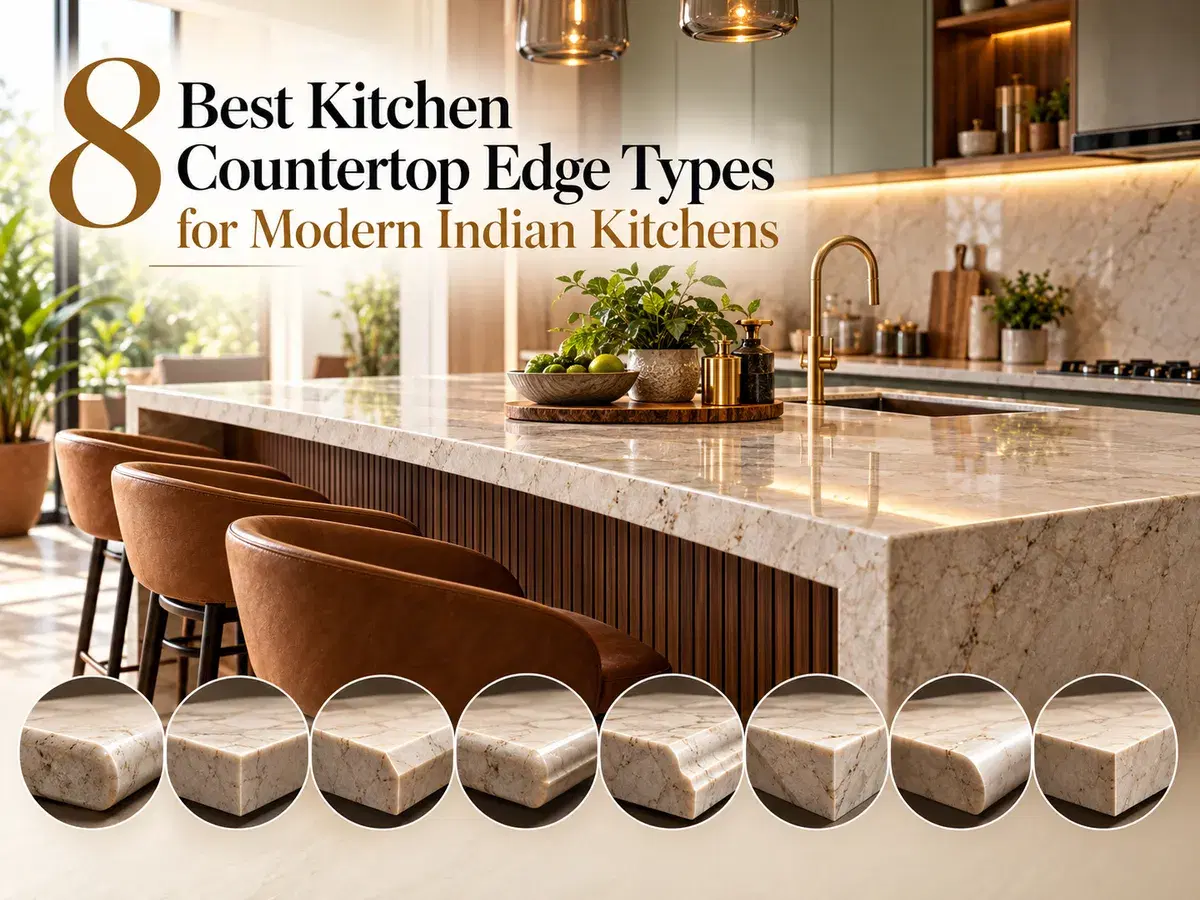
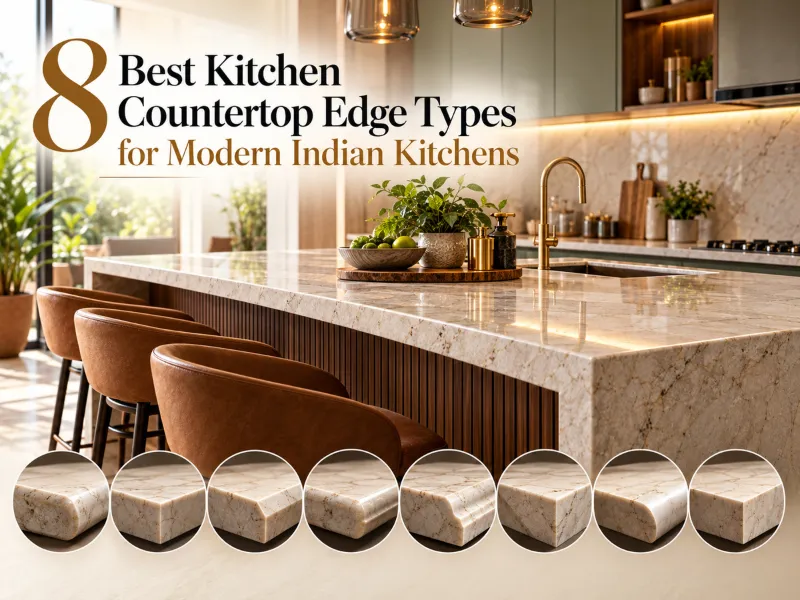
When choosing a kitchen countertop, the material, colour, and pattern usually get most of the attention. But one important detail to decide before the slab is cut and installed is the edge. This is the exposed part you see along the front of the counter, around an island and on any open sides. It can be kept straight, softly rounded, cut at an angle, or shaped into a more detailed profile.
The choice is not only about how the edge looks. Some kitchen countertop edge types may work differently depending on the material, slab thickness, and how the edge needs to be made. Knowing the basic profiles gives you a better idea of what to look for when choosing your kitchen countertops.
Here are 8 countertop edge profiles to know before choosing one for your kitchen.
Straight Edge for a Simple, Square Profile
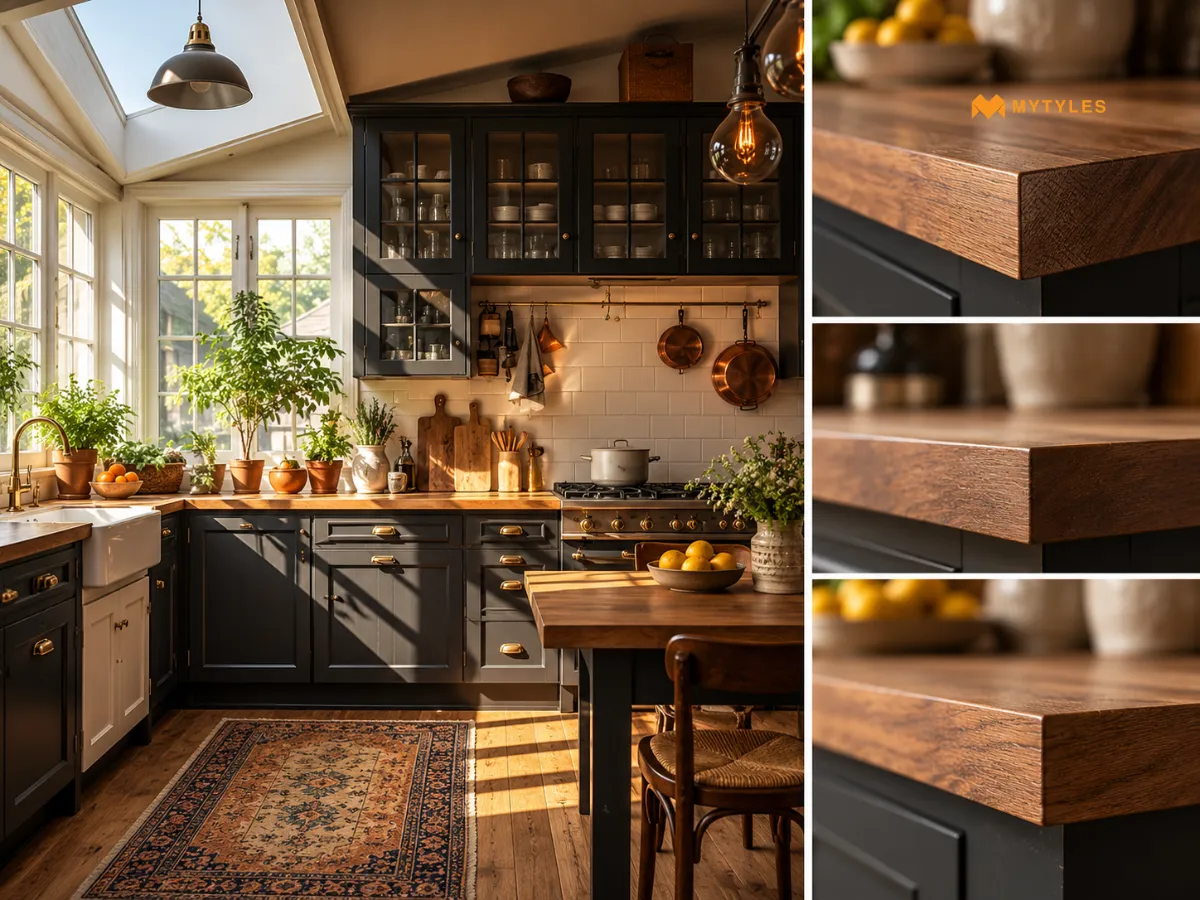
A straight edge countertop has a flat front face with little visible shaping along the edge. From the front, the profile looks mostly square, rather than rounded or angled like a bullnose or bevelled edge. Depending on the material and the edge option, the top and bottom corners may still have slight softening instead of being left completely sharp.
The simple outline makes this profile easy to tell apart from more detailed edges such as ogee or shark's nose. If you are considering a straight edge, check the actual profile drawing or sample, as the amount of corner softening can vary between materials and suppliers.
Bullnose Edge for a Fully Rounded Profile
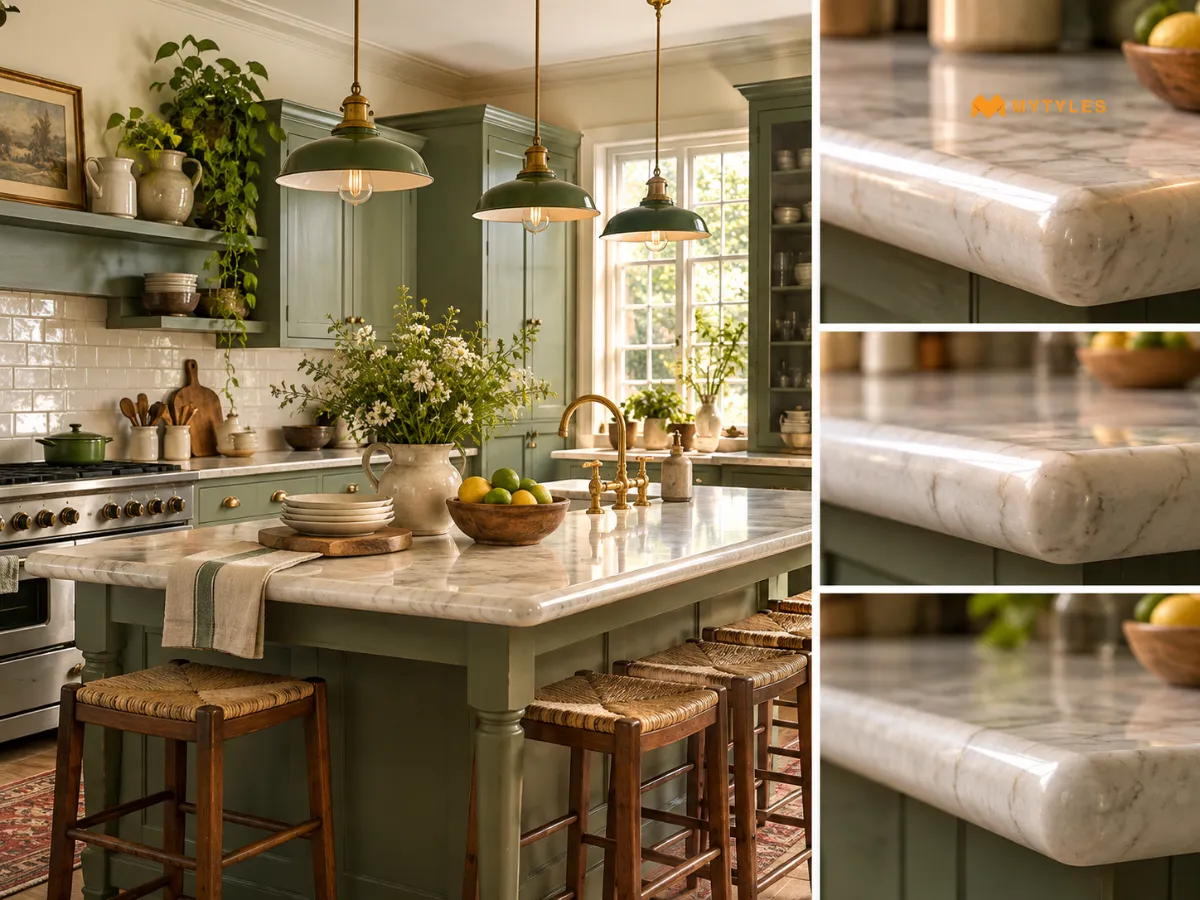
A bullnose countertop edge replaces the square corners of the slab with a continuous curve around the top and bottom of the exposed edge. Viewed from the front, this gives the edge a rounded profile rather than the straighter outline of an eased or bevelled edge. A full bullnose is one example of a rounded countertop edge.
The half bullnose edge is a variation within the bullnose family. Instead of curving around the full exposed edge, the curve runs mainly across the upper part, while the lower section stays flatter. This gives it a different outline from a full bullnose, while still keeping the rounded character of the same edge family.
Eased Edge for a Simple, Straight Profile
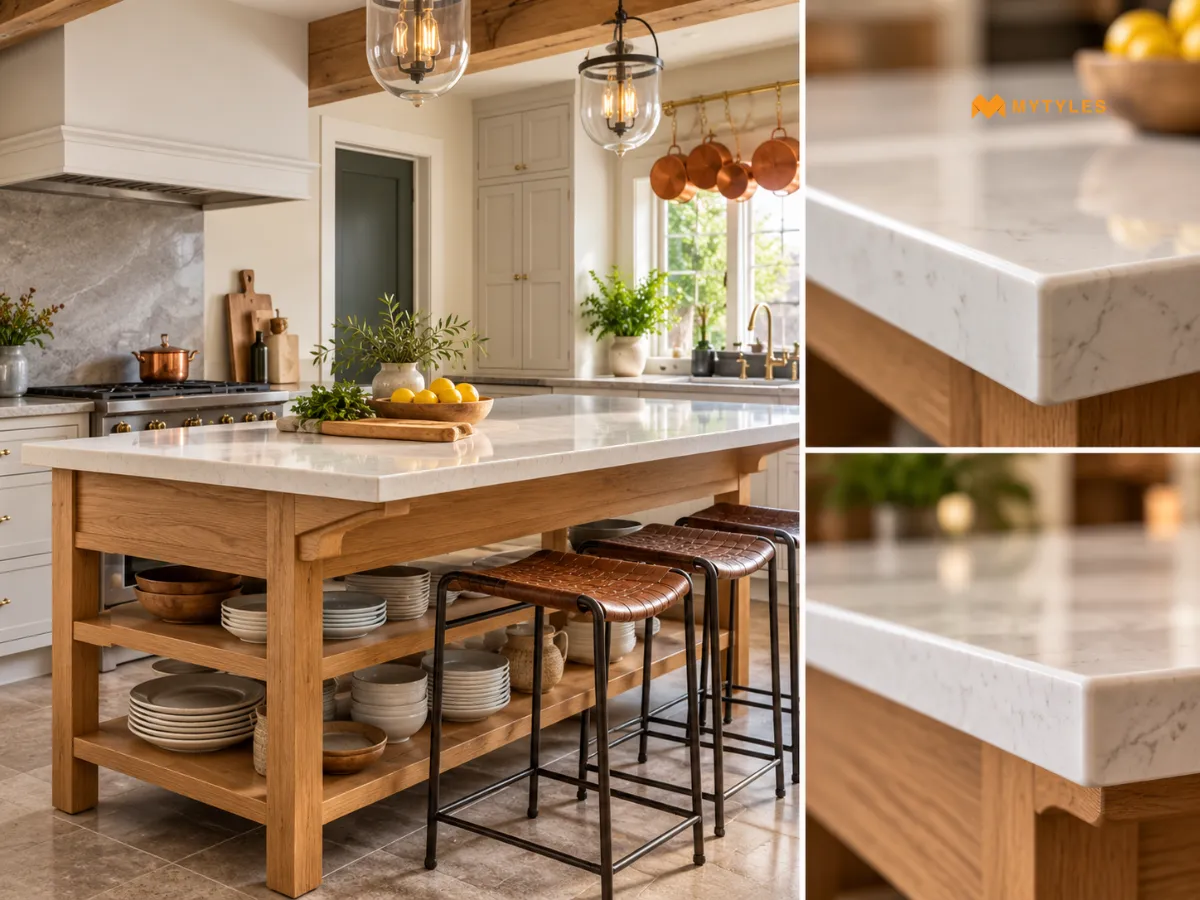
An eased edge countertop looks mostly straight when viewed from the front, but its corners are not left at a sharp 90-degree angle. Instead, the top and bottom corners of the exposed edge are slightly rounded. The curve is small, so the overall shape of the slab remains fairly square rather than noticeably rounded.
This small detail is also what separates an eased edge from profiles such as bullnose. A bullnose has a much more visible curve around the edge, while an eased edge keeps the rounding close to the corners. If you prefer a countertop with a straightforward edge and very little shaping, an eased profile is one option to consider.
Bevelled Edge for a Defined Angled Detail
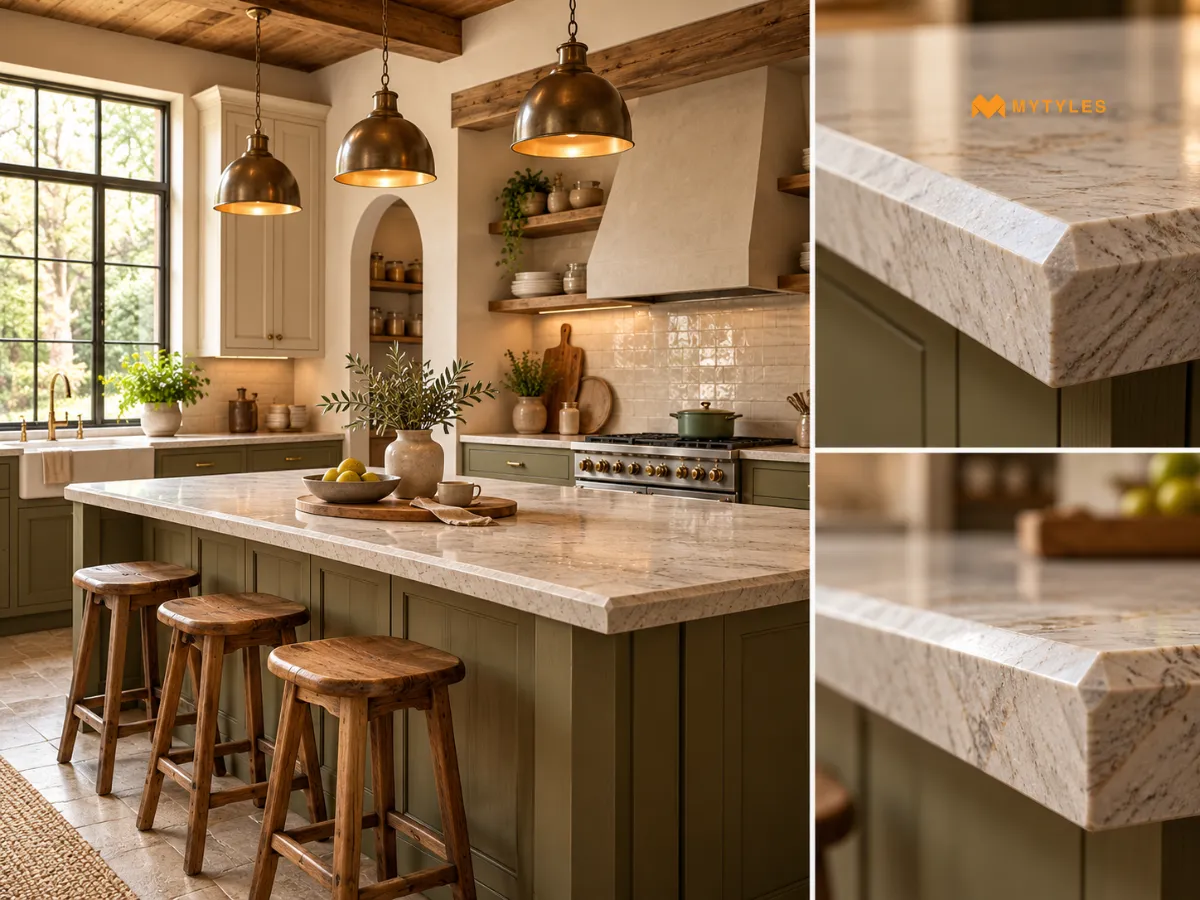
A bevelled countertop edge has a section of the exposed edge cut at an angle instead of keeping the corner square or rounding it. A common version uses an angled cut along the top corner, leaving the lower part of the edge straight. The width and angle of this cut can vary depending on the edge profile being made.
This makes a bevel easy to tell apart from an eased edge. Rather than a small rounded corner, you can see a flat, angled surface running along the countertop edge. If you want some visible shaping while still keeping mostly straight lines, a bevelled edge is one profile you can consider.
Pencil Edge for a Small Rounded Detail
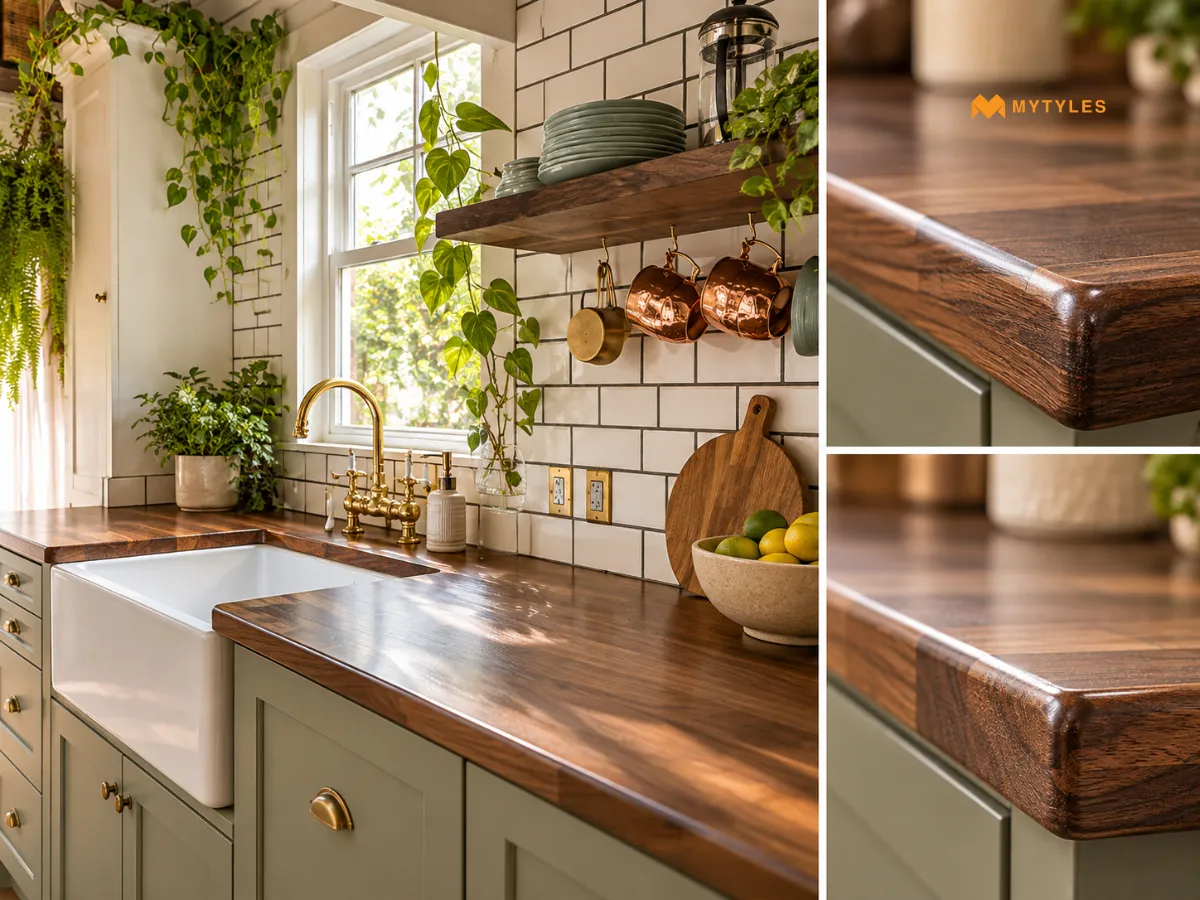
A pencil edge countertop has a small rounded section along the edge of the slab. Unlike a bullnose, the curve does not continue around the full exposed edge. The front remains mostly straight, with the rounding limited to the corner.
The exact shape can vary. Some pencil profiles round the upper corner, while others include rounding at both the top and bottom. This is why two countertops described as having a pencil edge may not have exactly the same profile. If you are considering this edge, looking at the actual profile drawing or sample can help you see how much of the corner will be rounded.
Ogee Edge With an S-Shaped Profile
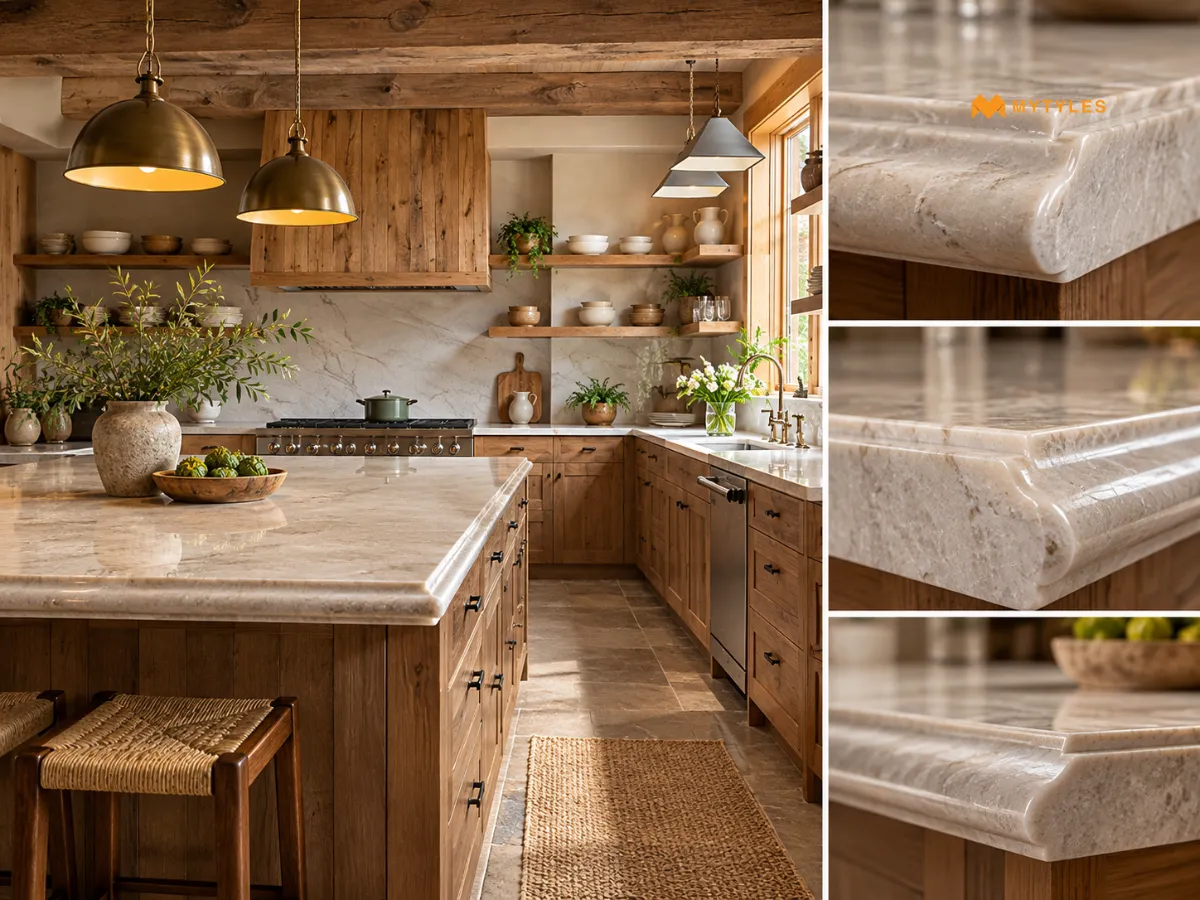
An ogee countertop edge is easy to recognise by its curved profile. Instead of one rounded corner, it combines a concave curve with a convex curve, creating an S-shaped outline along the exposed edge. This makes it more detailed than the eased, bevelled, or pencil profiles covered above.
There can also be variations of the ogee profile. For example, countertop edge ranges may include a classic ogee, double ogee, or profiles that combine an ogee with another curved edge. If you are considering this design, check the actual edge sample or profile drawing, as the shape and number of curves can differ between options.
Mitred Edge for a Deeper Countertop Edge
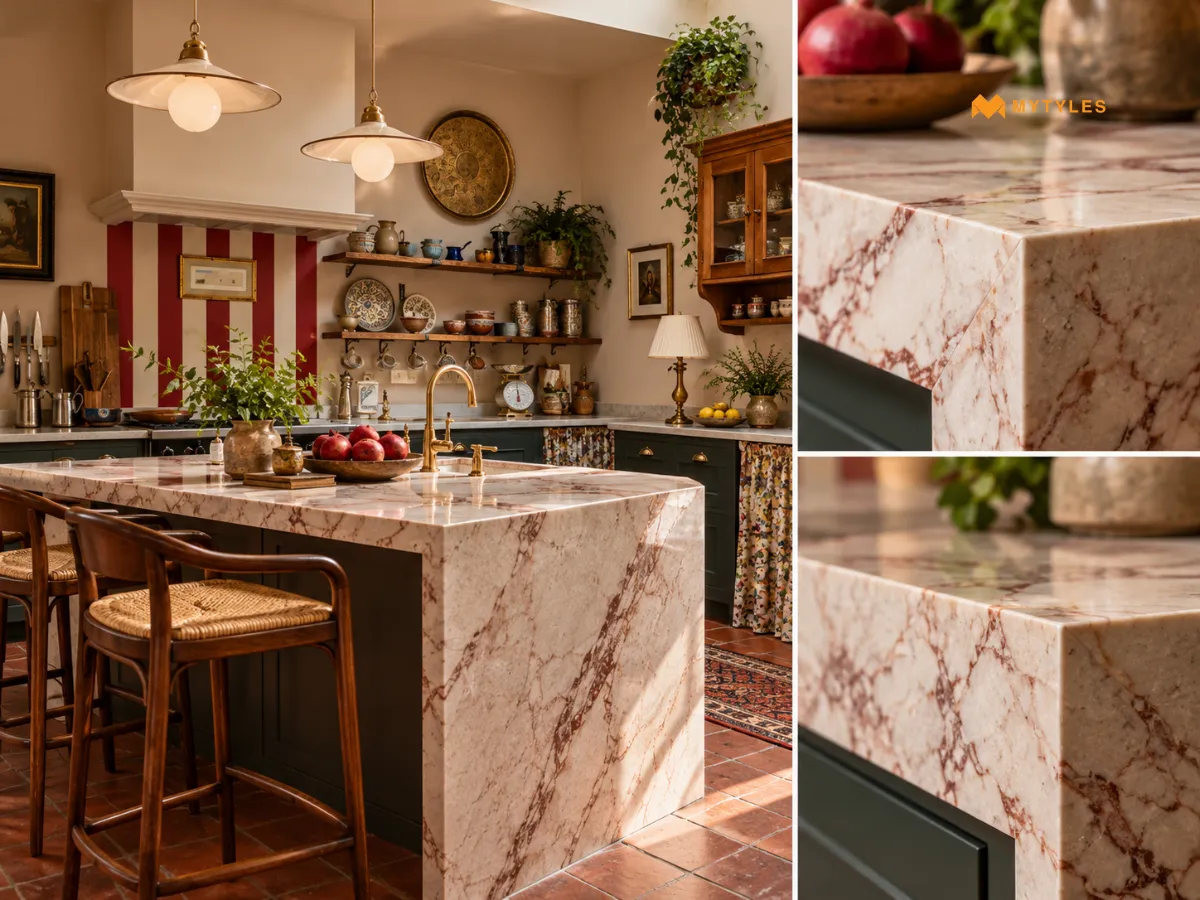
A mitred countertop edge is made by joining the countertop surface to another piece of the same material at an angled joint, commonly 45 degrees. Once joined, the two pieces form a 90-degree corner at the front, with the added piece extending below the main slab to create a deeper visible edge.
Mitred edges can be made at different depths. The countertop slab thickness refers to the main slab, which may be different from the depth seen along the front edge. The final dimensions can vary depending on the material and countertop design.
Shark Nose Edge With a Tapered Underside
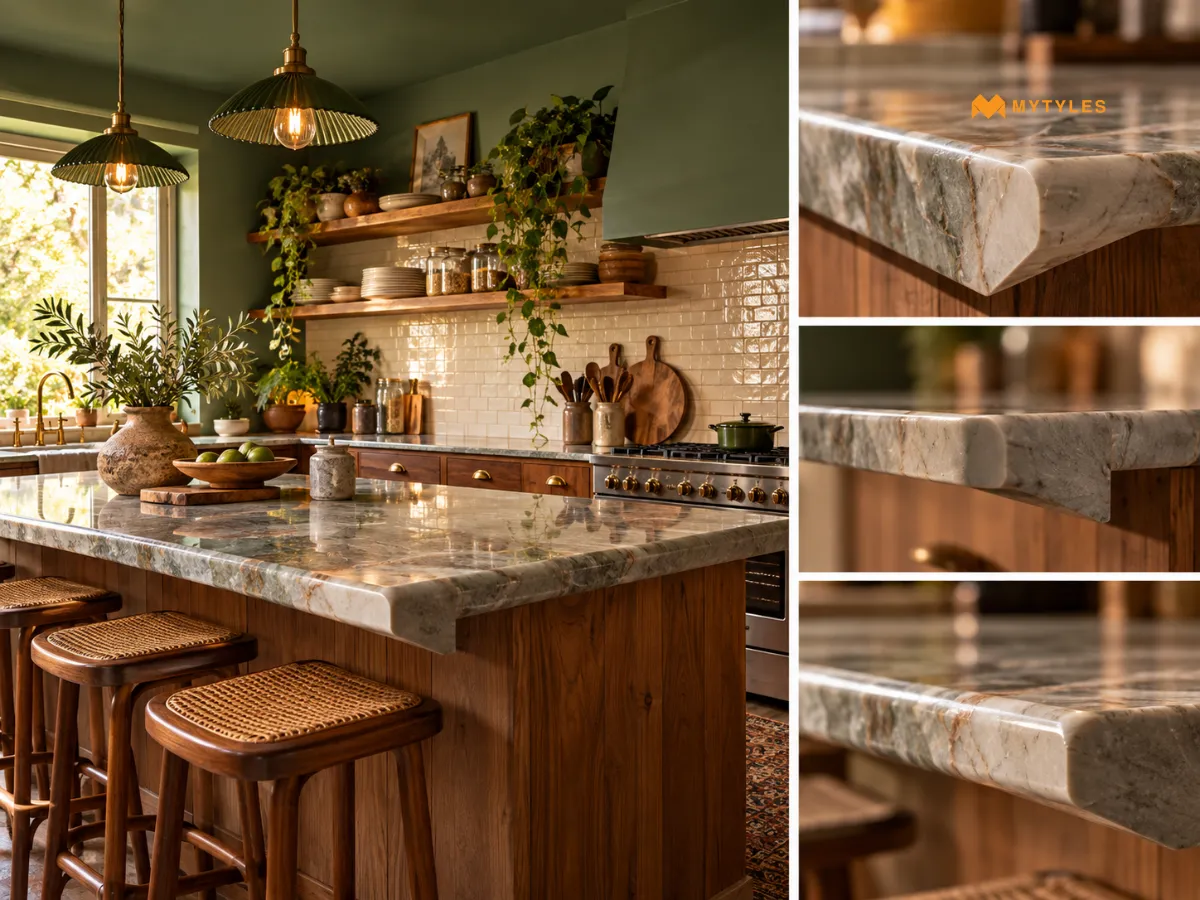
A shark nose edge has a tapered profile underneath the countertop. Instead of the exposed edge continuing straight down, the underside slopes back towards the base of the slab. From the front, this means you see less of the full slab thickness.
The taper itself can look different from one profile to another. You may come across a sharper angled underside or one with a gentler curve. Looking at the edge sample or profile drawing will show you exactly what you are choosing, especially since the options can vary depending on the countertop material and slab thickness.
How to Choose a Countertop Edge for Your Kitchen
There are several countertop edge types to compare, but the edge should not be considered separately from the surface itself. Before choosing one, check these details.
What to Check | What It Means |
| Countertop material | Different materials may have different edge options. When comparing granite countertop edge types, check which profiles can be made with the particular granite you have selected. The same applies when considering quartz countertop edge types. |
| Slab thickness | Check the countertop slab thickness before deciding how deep you want the exposed edge to be. With some edge constructions, the visible edge depth may be different from the thickness of the main slab. |
| Edge shape | Look at an actual sample or drawing of the countertop edge design before making a decision. Edge names and details can vary between suppliers, so the profile itself gives you a clearer reference. |
| Overall counter details | Consider the edge while finalising the kitchen countertop design. Check how it will continue along the front, corners, island and any other exposed sides. |
| Cleaning and maintenance | More detailed profiles may have curves or grooves where dust, spills, or residue can collect, depending on the material and usage. |
Find the Right Countertop Edge for Your Space
The edge is one detail to consider when choosing a countertop, but it needs to work with the slab itself. Before deciding, compare the shape of the profile, check the slab thickness, and confirm which edge options are available for the material you have selected.
You can explore kitchen countertops online or visit the MyTyles Experience Centre to see the available surfaces in person. Comparing the colours, patterns, sizes and finishes can help you find the countertop and the edge you want for your kitchen.

Do All Countertop Materials Allow the Same Edge Profiles?

No. The available countertop edge profiles can vary depending on the countertop material, slab thickness, and product. An edge offered for one surface may not be available for another. Before choosing a profile, check the options listed for the specific countertop you are considering rather than assuming every edge can be made with every material.
Can I Choose Any Edge for a Thin Countertop Slab?
Not always. The thickness of the slab can affect which edge profiles are available, and some profiles may be offered only with certain thicknesses. When choosing between countertop slabs, check the thickness along with the available edge options. This helps confirm whether the profile you want is available for the particular surface you select.
Are Countertop Edge Names the Same Across All Brands?
Not necessarily. Edge names can vary between manufacturers and suppliers, even when the profiles are similar. When comparing countertop edge types, look at the actual profile drawing or a physical sample rather than relying only on the name. This gives you a clearer idea of the curves, angles, and other details of the edge.
Can I See a Countertop Edge Before Choosing It?
Yes. A physical sample or profile drawing can give you a clearer idea of the actual countertop edge design before the slab is cut. This is especially useful for profiles with curves, angles, or tapered sections, where the exact shape may be difficult to judge from the name alone. Check the available profile details before deciding.
Does the Visible Edge Show the Actual Thickness of the Countertop?
Not in every case. Some edge constructions can create a deeper visible front than the main slab itself. A mitred edge is one example. For this reason, the depth seen along the front should not automatically be treated as the actual countertop slab thickness when you are comparing countertop options or checking their dimensions.
Can Granite and Quartz Have the Same Countertop Edge?
Some profile types can be available for both materials, but the exact options depend on the product, thickness, and supplier. When comparing granite countertop edge types with quartz countertop edge types, check the profiles offered for the surface you have selected rather than assuming the same edge options are available for both materials.
Is a Waterfall Countertop the Same as a Countertop Edge Profile?
Not always. A waterfall countertop usually refers to a design where the countertop material continues down the side of an island, peninsula, or cabinet. However, some manufacturers also use “waterfall edge” as the name of a specific edge profile. Check the profile drawing or product description to see how the term is being used.

ABOUT THE AUTHOR
Sragvi Senthil Kumar
With a background in Psychology and Journalism, my interest in writing began with newspapers and magazines, where I developed a passion to turn facts into engaging stories. Along with a keen interest in writing, I've had a creative eye for style, art and design. Over time this interest grew into exploring lifestyle, architecture, interiors and tiles for more than just their aesthetics. Now I bring together research and creativity to create clear, engaging content for homeowners, architects and interior designers.
Latest Blogs By MyTyles