Inspiration Gallery
Blog
Tile Calculator
08065423741



.svg)


8 Onyx Look Tile Ideas For Hotel Style Bathrooms At Home
ByNabiya Naqvi

Wed , Sep 02 , 2026

Read Time: 5 Min


 Copied!
Walk into a well-designed hotel bathroom, and something about it feels immediately different from most home bathrooms. The surfaces are cohesive, the lighting works with the materials, and the whole room feels like a deliberate design decision rather than a collection of separate choices. Onyx is one of the materials that shows up consistently in those spaces. The natural onyx tiles have a dark base and dramatic veining, and the light moves across the surface at different times of day, creating a striking visual effect. But the manufactured onyx-look tiles are different from natural onyx; though they bring the same quality to homes, the light doesn’t move across the tile surface.
What Makes Hotel Bathrooms Feel So Luxurious?
Hotel bathrooms that feel genuinely luxurious rarely achieve that through a single dramatic element. The tile choice is usually where it starts, and a few decisions around it are what carry the rest of the space.
- One Tile Across Multiple Surfaces: You can use the same tile on the wall, shower surround, and bathroom floor, making the space read as a single, cohesive surface rather than as separate finishes placed next to each other.
- Lighting That Works With The Tile: A well-positioned light on an onyx-look bathroom wall can make the veining prominent in a way flat overhead lighting alone cannot achieve.
- Fixtures In The Same Tone As The Tile: Choose fixtures that complement the brushed gold against a dark-veined onyx-look tile, which reads as a deliberate pairing. A mismatched fixture finish pulls attention away from the tile rather than letting it sit as the focal point.
- Restraint On Every Other Surface: Onyx-look tiles carry enough visual presence on their own. So using them on the feature wall with plain tiles on the remaining bathroom surfaces is often all the space needed to read as genuinely premium.
8 Onyx Look Tile Ideas For Hotel Style Bathrooms
Onyx-look tiles are often considered for creating hotel-style bathroom designs. The veining structure and how it responds to light make it a visually distinct element. You can also use these onyx-look tiles as accents in the bathroom behind the vanity or shower areas. Here are some premium bathroom tile ideas from vanity walls and shower surrounds to large-format layouts and fixture pairings.
Create A Statement Vanity Wall
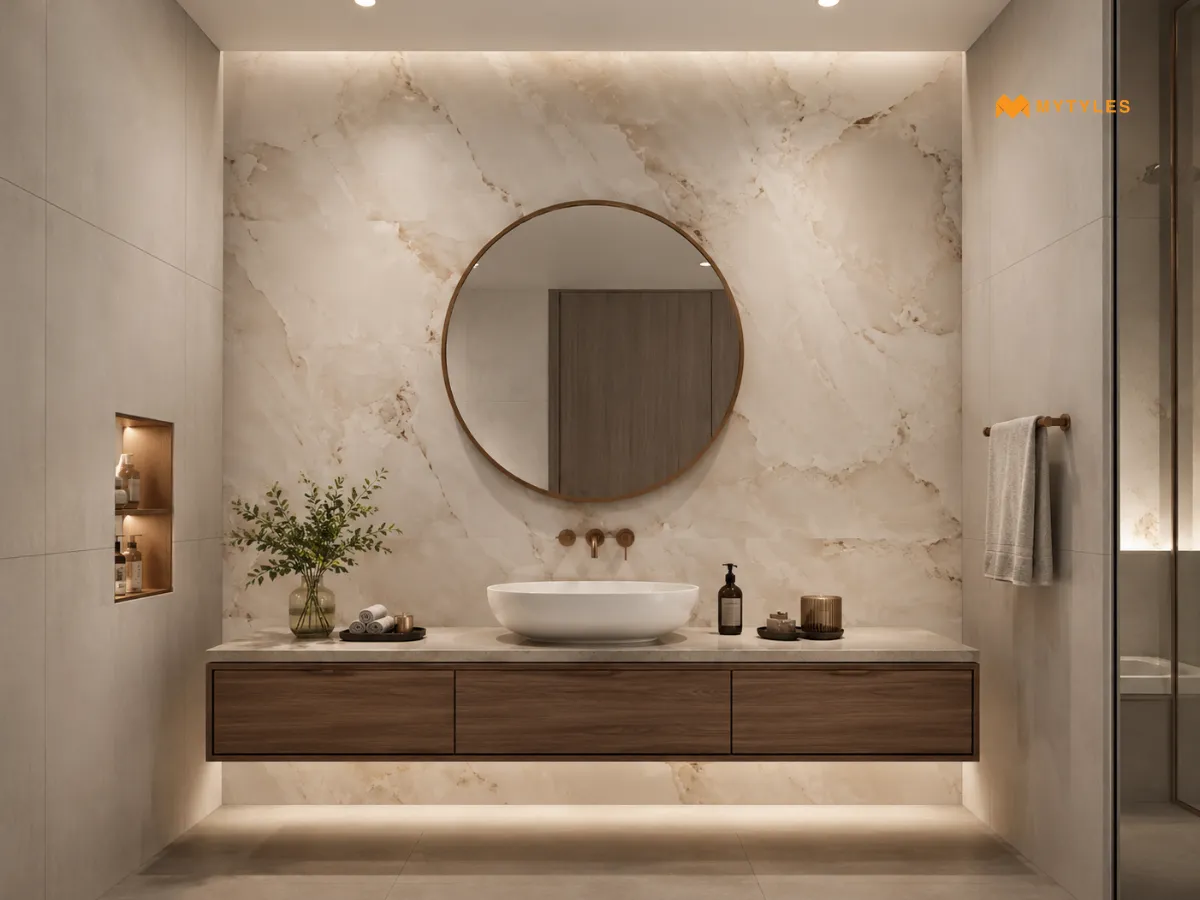
The wall behind the vanity mirror is where the eye naturally lands first and where the design makes its strongest impression. Onyx-look vanity wall tiles combined with plain tiles on the other three walls give the bathroom a focal point that reads 'premium' without overwhelming the space.
You can consider dark-veined onyx-look tiles in a matt or satin finish to create a grounded look that complements the mirror without competing with its reflection. The other good thing is it keeps the vanity unit simple and lets the wall carry the room.
Choose Large Format Onyx Look Tiles
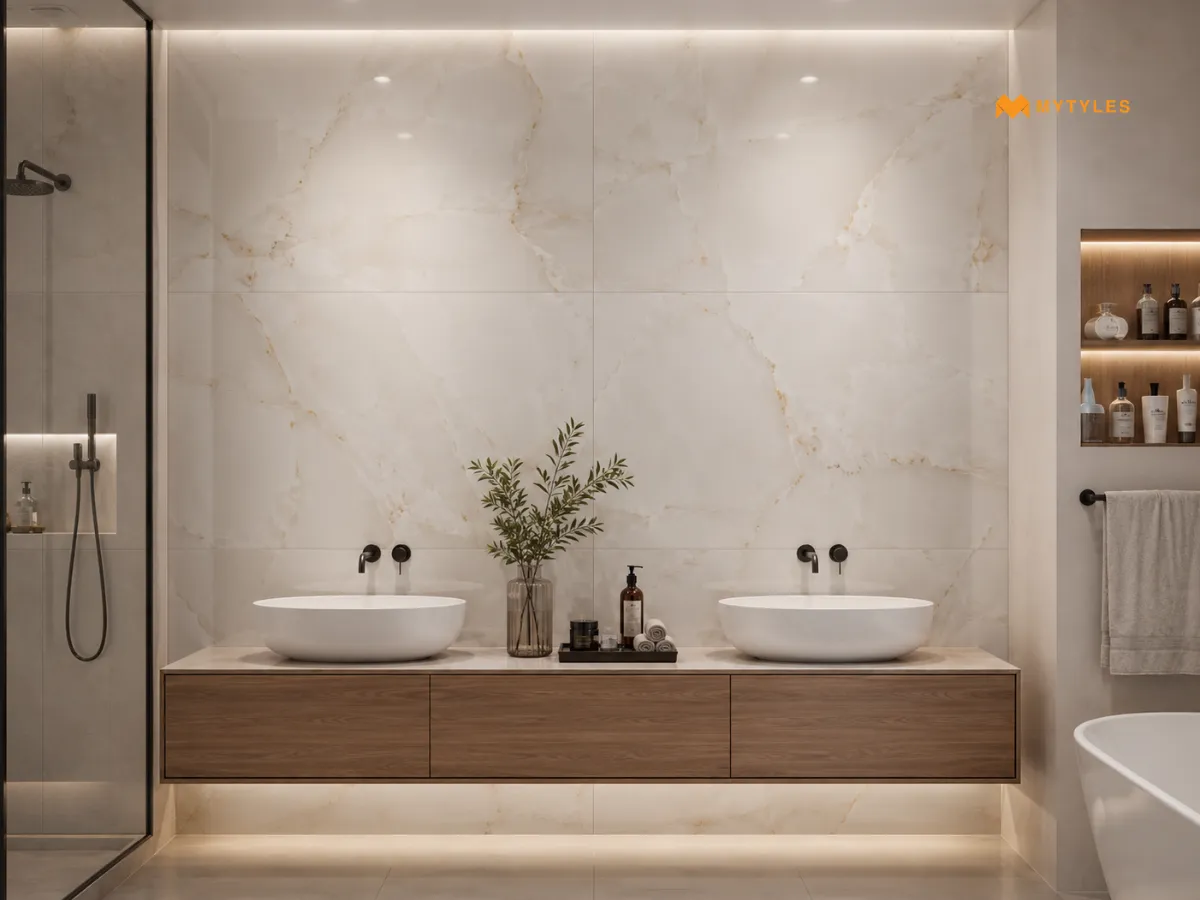
Larger formats, like 600 × 1200 mm and up, create fewer visual breaks and make the pattern resemble large onyx-look slab tiles. The other benefit of large-format tiles is that there are fewer grout lines, making routine bathroom cleaning easier. Rectified edges can contribute to clean and consistent joints but do not need to be extremely narrow just to achieve a seamless slab joint with grout.
The width of the joint should be in accordance with the manufacturer's recommendations for the type of tile used and the applicable installation standards, taking into consideration the dimensional variation of the tile. These joints are required for installation but may not be as noticeable when a grout colour is similar to the tile colour.
Continue The Same Tiles On Wall And Floor
.webp)
Using the same onyx look tile on both the wall and floor creates a continuous surface that makes the bathroom feel larger and more cohesive than it actually is. This approach, sometimes called tile drenching, works particularly well in compact bathrooms. A single material running through the entire space removes the visual breaks that make a small room feel fragmented.
The floor tile in this case needs to be floor rated with an appropriate slip resistance rating for wet areas. Check the product page before specifying the same wall tile for the floor. Not every onyx-look tile is suitable for both applications.
Design A Spa-Inspired Walk-In Shower
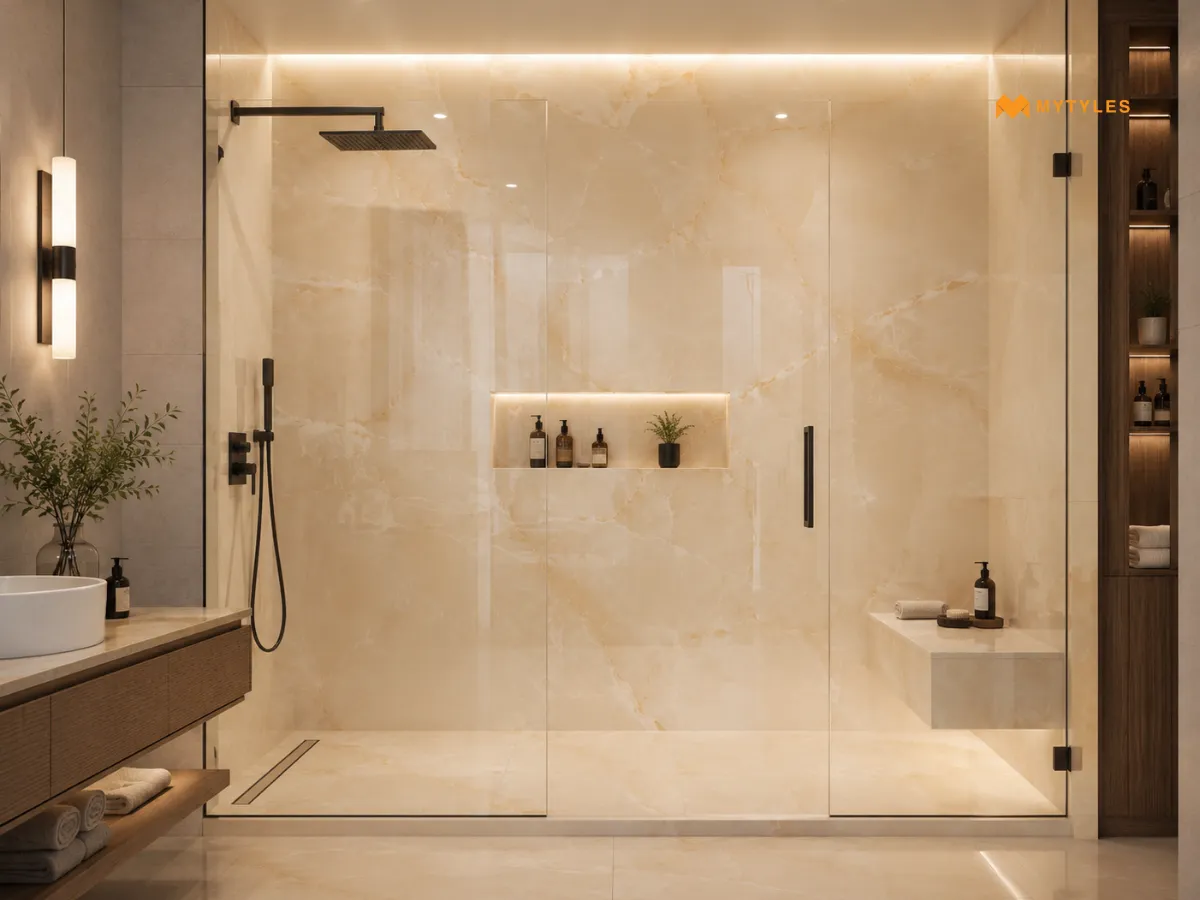
Onyx-look shower wall tiles create a contained, immersive space that feels separated from the rest of the bathroom. The key here is consistency. The same tile on shower walls, shower floors (if the product is floor-rated), and back panels keeps the eye from jumping between surfaces.
For shower applications, waterproofing behind the tile, appropriate grout selection, and slope and drainage planning all matter as much as the tile choice itself. Large format tiles used on shower floors make it difficult to create a slope towards drainage, especially if there is a pointed drain. So, in such a situation, you can consider small-format tiles that prevent tile wastage. It is advised to check the floor tile suitability and slip resistance rating before specifying any onyx-look tile for the bathroom.
Pair Warm White Onyx With Soft Lighting
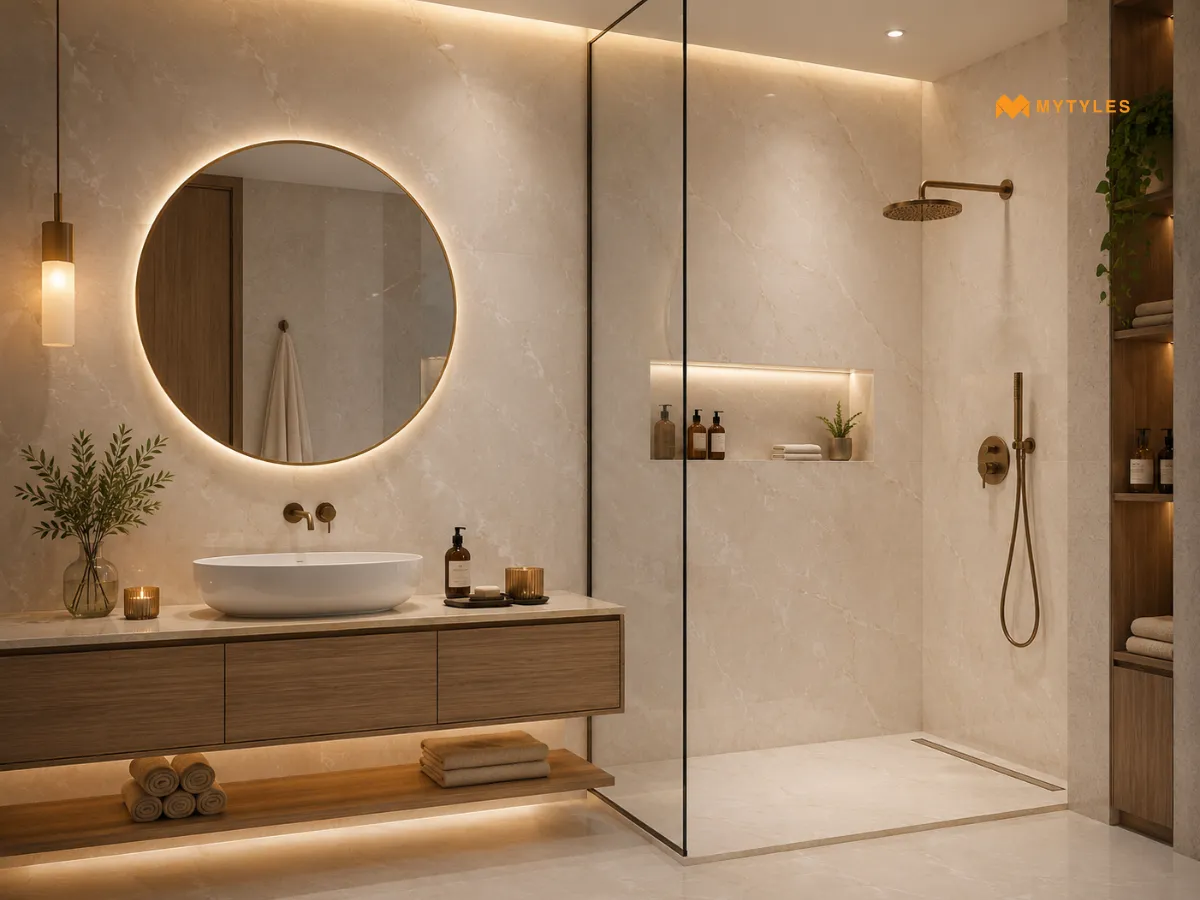
Not all onyx-look tiles carry the same base tone. Some lean cool with grey or black bases; others lean warm with cream or beige undertones. Warm white onyx-look tiles respond particularly well to warm artificial lighting. The veining picks up the warmth, and the surface reads richer than it does under cool white light.
Before finalising these tiles for a bathroom, check them under the actual lighting the bathroom will use rather than under showroom or natural light alone. These luxury bathroom tiles can look very different depending on the colour temperature of the light hitting them.
Glossy Onyx Look Tiles For Hotel Style Bathrooms
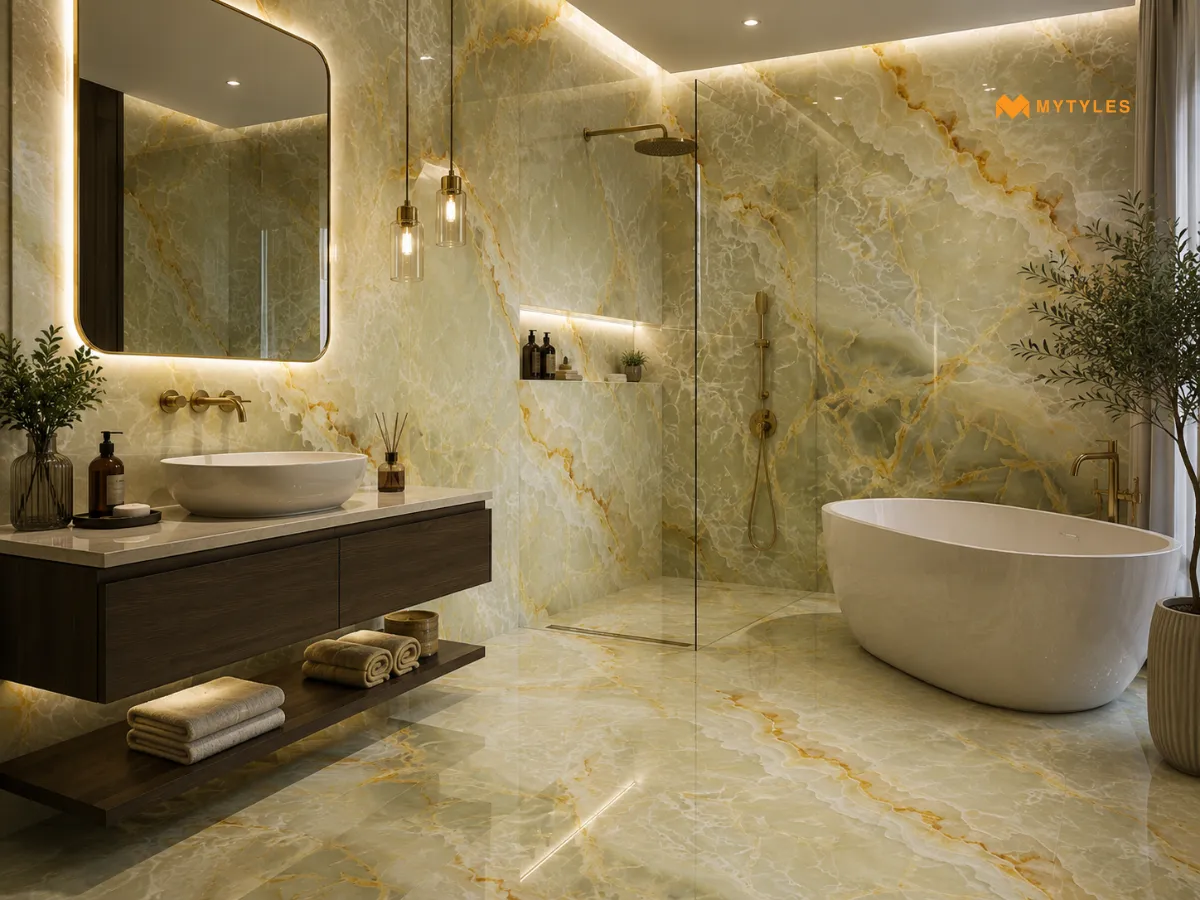
A glossy finish makes the veins of onyx-look tiles more prominent. The reflective surface amplifies the depth of the pattern and responds to artificial lighting in a way that changes through the day as the light shifts across the wall.
Location matters more with glossy than with any other finish. It can be used on feature walls, vanity backdrops, and shower surrounds. But the floor situation is different. Glossy onyx-look tiles on a bathroom floor need a floor- rated product with a confirmed slip resistance rating on the product page before they go down. That check is not optional in a wet area.
Mix Onyx Tiles With Wood Finishes
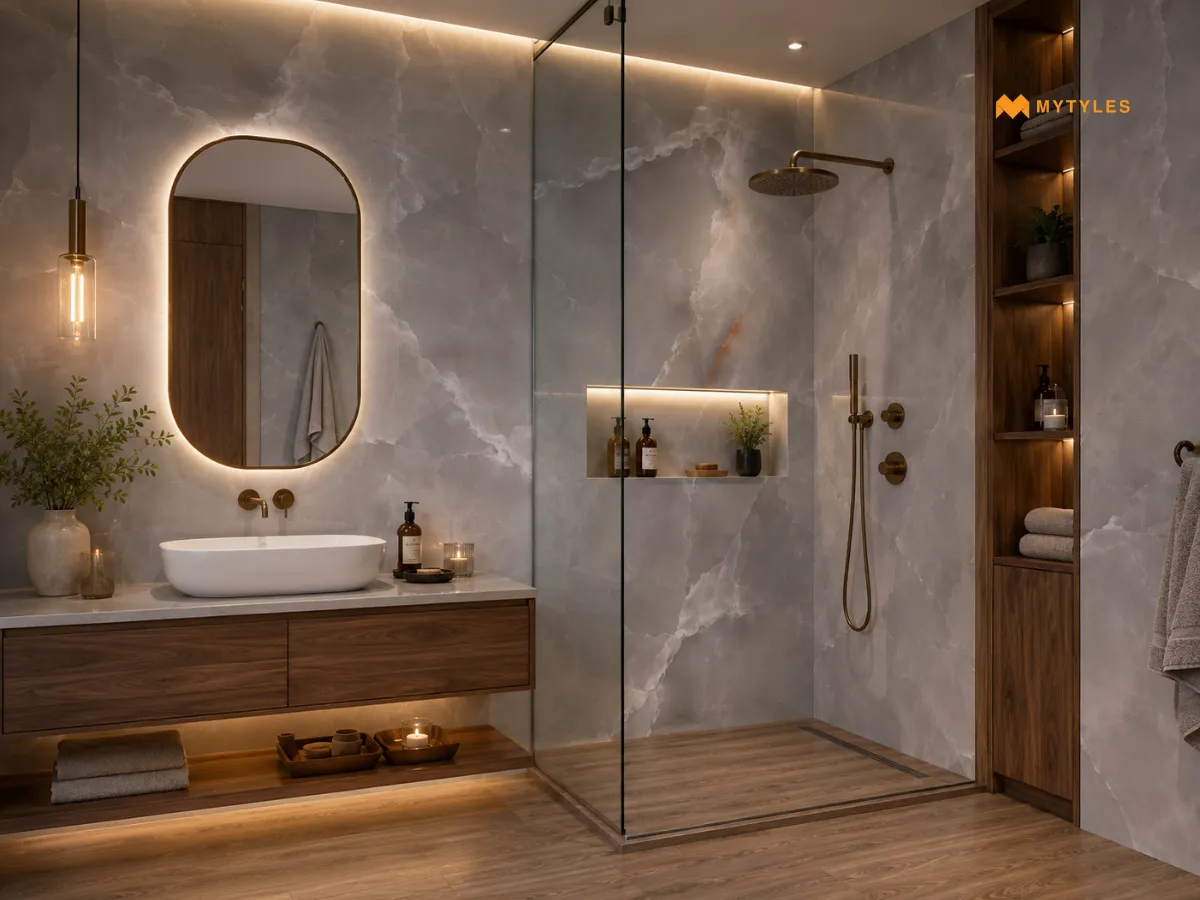
Onyx-look bathroom tiles sit well with warm wood finishes. A dark-veined onyx wall against a timber vanity unit, wooden accessories, or wood-look floor tiles creates a contrast that feels grounded rather than cold. The wood brings warmth into a space that onyx alone can make feel slightly formal.
This combination works best when the wood tone is warm rather than grey or bleached. Oak and walnut tones in particular complement the warm undertones in most onyx-look tiles without the two materials pulling in opposite directions.
Use Onyx Tiles In Shower Niches
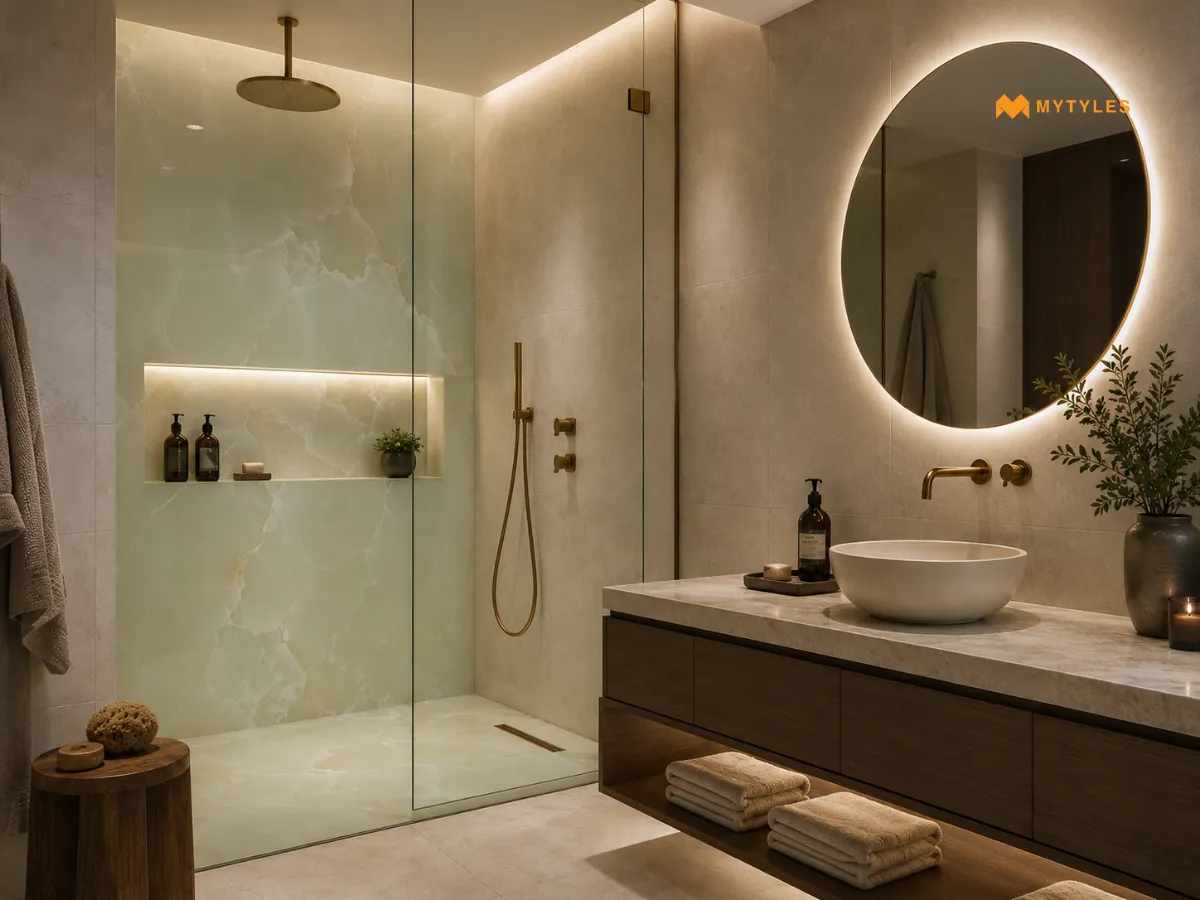
A recessed shower niche tiled in an onyx look against plain surrounding tiles creates a detail that draws the eye without needing any additional decoration. The contrast between the plain shower wall and the onyx niche interior gives a similar layout to hotel-style bathroom designs.
The niche size matters here. A wide, shallow niche carries the veining pattern better than a narrow one where the tile has to be cut too small to show the pattern properly. However, niche dimensions also account for waterproofing, tile layout, and adequate drainage systems. The shower niche should be properly waterproofed, with the bottom surface sloped slightly towards the shower so that water does not collect inside. Plan the niche dimensions around the tile size before the installation starts rather than cutting the tile to fit whatever space is left.
Tips To Choose The Right Onyx Tiles For Your Bathroom
You have a design and the layout in mind. But a few factors can amp up the overall appearance of the bathroom. Here are some short tips that will help you create a hotel-style bathroom in your home.
- Check the Base Tone Against the Lighting: Onyx-look tiles vary between cool grey bases and warm cream or beige bases. The base tone changes significantly under different lighting. Check a sample in the actual bathroom space before finalising.
- Confirm Floor vs Wall Suitability: Not every onyx-look tile is rated for floor use. For floor applications in wet areas, the slip resistance rating on the product page needs confirming before ordering.
- Consider the Grout colour Carefully: A grout colour that closely matches the tile keeps the focus on veining and surface. Grout colour ideas that contrast too sharply draw attention to the joints and reduce the continuous stone effect that makes onyx-look tiles work in a bathroom.
- Match the Fixture Finish to the Tile Tone: Warm-based, onyx-look bathroom tiles pair better with brushed gold and warm metallic finishes. Cool-based tiles sit better with chrome and brushed nickel.
Onyx Look Tile Ideas For A Luxurious Bathroom
Hotel bathrooms that feel genuinely luxurious are not the result of expensive materials alone. They come from a few considered decisions made consistently across the space. A premium bathroom design has one strong surface, the right lighting, fixtures that sit in the same tone, and enough restraint to let the material do the work. Onyx-look tiles give the same foundation to the home bathroom.
MyTyles carries a range of onyx-look tiles across finishes and formats suited for bathroom walls and selected floor applications. Browse the collection in various colours and different veinings. It is important to check product suitability for the specific application and find the tile that fits the bathroom. You can physically compare the tile colour and finish at the MyTyles experience centre.

Are Onyx-Look Tiles Suitable For Indian Homes?

Yes. Onyx-look tiles for Indian homes are available in vitrified and porcelain options that can be considered for a range of residential applications. They offer the visual character of natural onyx, while maintenance requirements depend on the specific tile, finish, and installation. They can be used in bathrooms, kitchens, and living spaces, provided the selected tile is rated for the intended wall or floor application.
Can Onyx-Look Tiles Be Used As Wash Basin Wall Tiles?
Yes. Wash basin wall tiles with an onyx-look finish can be used to create a distinctive surface behind the vanity. They can be coordinated with mirrors, lighting, and fixture finishes to define the vanity area. Always select tiles recommended for wall installation and follow the manufacturer’s installation guidelines.
Do Onyx-Look Tiles Work Well For A Bathroom Accent Wall?
A bathroom accent wall finished with onyx-look tiles can introduce colour, veining, and visual interest without using the same design across every surface. Possible locations include shower walls, vanity backsplashes, and recessed niches. Neutral or understated tiles on the remaining surfaces can be considered when a more balanced overall scheme is preferred.
How Do Onyx-Look Tiles Compare With Stone-Look Tiles?
Both stone-look tiles and onyx-look tiles are designed to reproduce characteristics associated with natural materials, but their appearance can vary considerably by product. Onyx-look designs commonly feature flowing or translucent-looking veining, while stone-look tiles may reproduce textures and patterns associated with materials such as limestone, travertine, slate, or other stones. The choice depends on the desired aesthetic, finish, application, and performance requirements.
Are Onyx-Look Tiles Waterproof For Bathrooms?
The water absorption and suitability of onyx-look tiles depend on the tile body and its technical specifications. More importantly, tiles alone should not be treated as the bathroom’s waterproofing system. Wet areas typically require an appropriate waterproofing system behind or beneath the tiled surface, along with suitable adhesives, grout, correctly detailed joints, and penetrations. Follow the tile and waterproofing-system manufacturers’ specifications for the intended application.
Which Bathroom Tiles Pair Best With Onyx-Look Tiles?
Neutral bathroom tiles in white, beige, grey, or understated stone-look finishes are among the options that can be paired with onyx-look tiles. Using onyx-look tiles on a feature surface and simpler designs elsewhere can help keep the veining visually prominent. Grout colour and fixture finishes can also be coordinated according to the overall bathroom design.
What Size Onyx-Look Tiles Are Best For Hotel-Style Bathrooms?
Large-format bathroom tiles can create a more continuous appearance because they generally introduce fewer grout joints across a given surface. Larger onyx-look formats can also provide more uninterrupted space for the veining to be displayed. However, there is no single best size for every bathroom. Tile dimensions should be selected according to the room and surface dimensions, tile layout, substrate requirements, drainage and slope requirements for wet floors, manufacturer specifications, and installation feasibility.

ABOUT THE AUTHOR
Nabiya Naqvi
Nabiya Naqvi is a content writer with a postgraduate background in chemical sciences and a strong passion for creative expression. Her journey into writing began with a love for storytelling and gradually grew into a professional path focused on interiors, home decor, and design-led content. With a keen interest in beautiful living spaces, Nabiya enjoys simplifying design ideas and making them relatable for everyday readers. Through her writing, she blends creativity, research, and an eye for detail to help homeowners understand how tiles, textures, and thoughtful material choices can transform a space.
Latest Blogs By MyTyles