.svg)


Pooja Room Tile Ideas: 9 Beautiful Picks for Small Indian Homes
ByHeena Dhiman

Thu , Jul 09 , 2026

Read Time: 5 Min


 Copied!
There is something about a pooja room that no other space in an Indian home carries. It holds silence in the middle of a busy day. It is the one corner where everything slows down. But in most urban homes today, this space is small, tucked into a wall niche, a compact cabinet, or a modest alcove. And often, it does not get the design attention it deserves.
Here is the thing: the size of the space does not limit the feeling it can create. The right pooja room wall tiles can completely change how the corner looks and feels. They can make a small wall feel like a proper backdrop. They can add texture, depth, and a quiet sense of reverence that paint alone rarely achieves.
This blog walks you through 9 pooja room tile ideas that work beautifully in compact Indian homes. Whether you have a wall niche, a corner unit, or a small dedicated room, there is something here for every kind of space and every kind of sensibility.
Marble-Look Tiles for a Clean, Sacred Finish
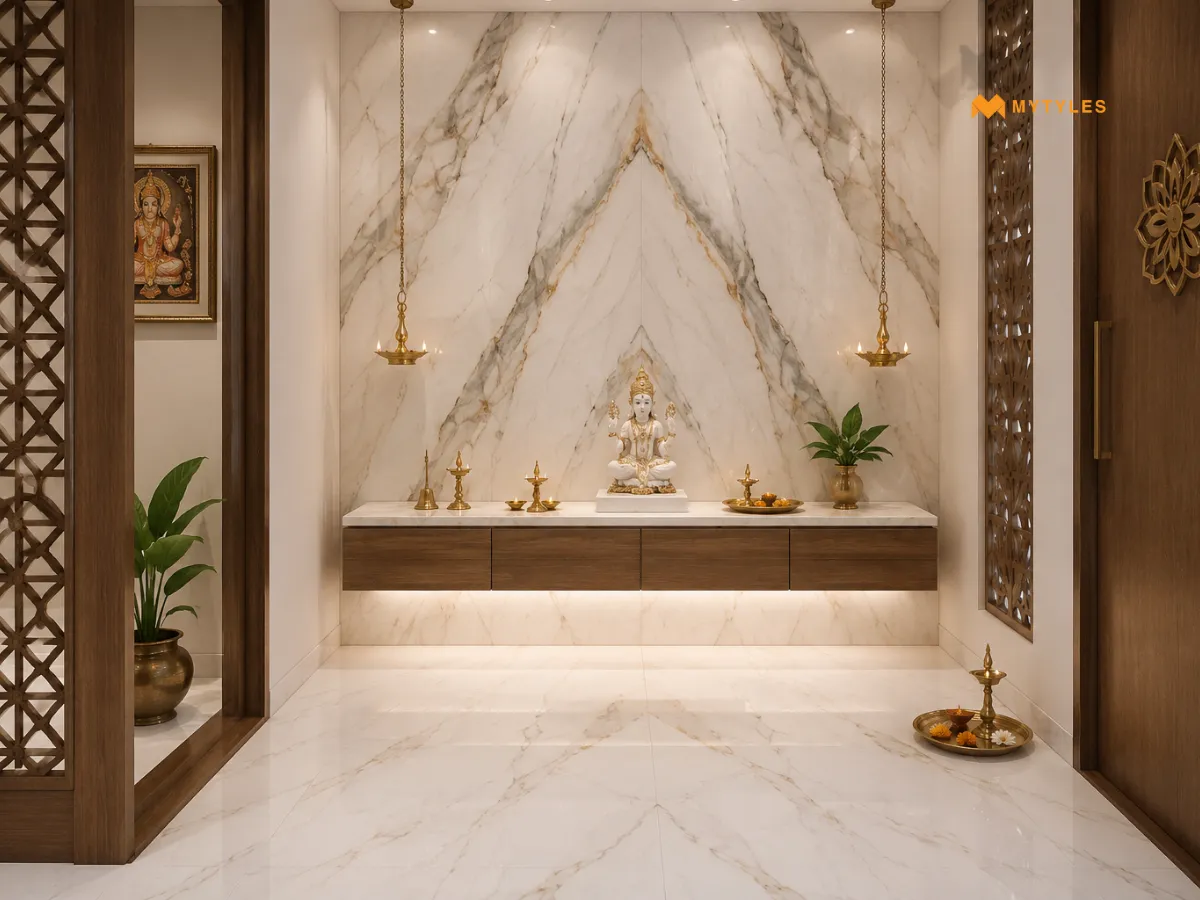
White marble has always had a place in Indian temples and sacred spaces. But in a compact home, the practicalities of real marble, such as cost, upkeep, and weight, can become difficult to manage. However, marble-look pooja tiles in ceramic or vitrified formats deliver the same elegance with far fewer complications.
The fine veining patterns on these tiles add elegance to any small pooja room tile design without making the space feel crowded. White and ivory tones also reflect light well, which helps a small corner feel more open and airy. Pair them with brass or gold-finish fixtures, and the result is genuinely beautiful.
Floral Tiles for a Soft, Traditional Look
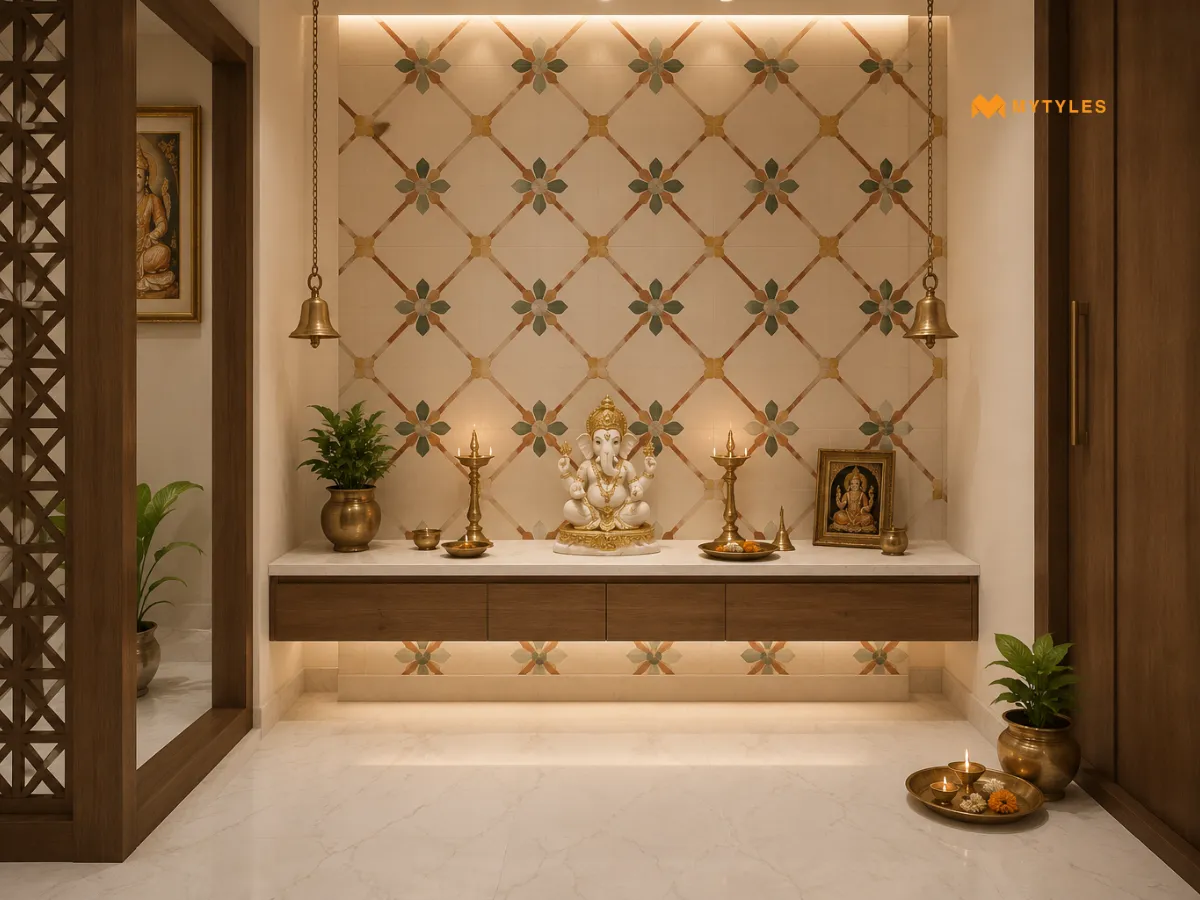
Flowers have always held a place in devotional spaces across India. Floral pooja wall tiles bring that same association to the wall in a way that feels considered rather than decorative. These tiles come with printed or embossed floral motifs, such as jasmine, marigold, lotus, sometimes softer abstract blooms, each adding a quiet texture to the surface.
They work especially well as a pooja backdrop tile choice behind the deity shelf. In a traditional Indian pooja corner, floral tiles add warmth without being loud. Choose soft cream, blush, or gold-tinted tiles for the most harmonious result.
Lotus Design Tiles for a Devotional Touch
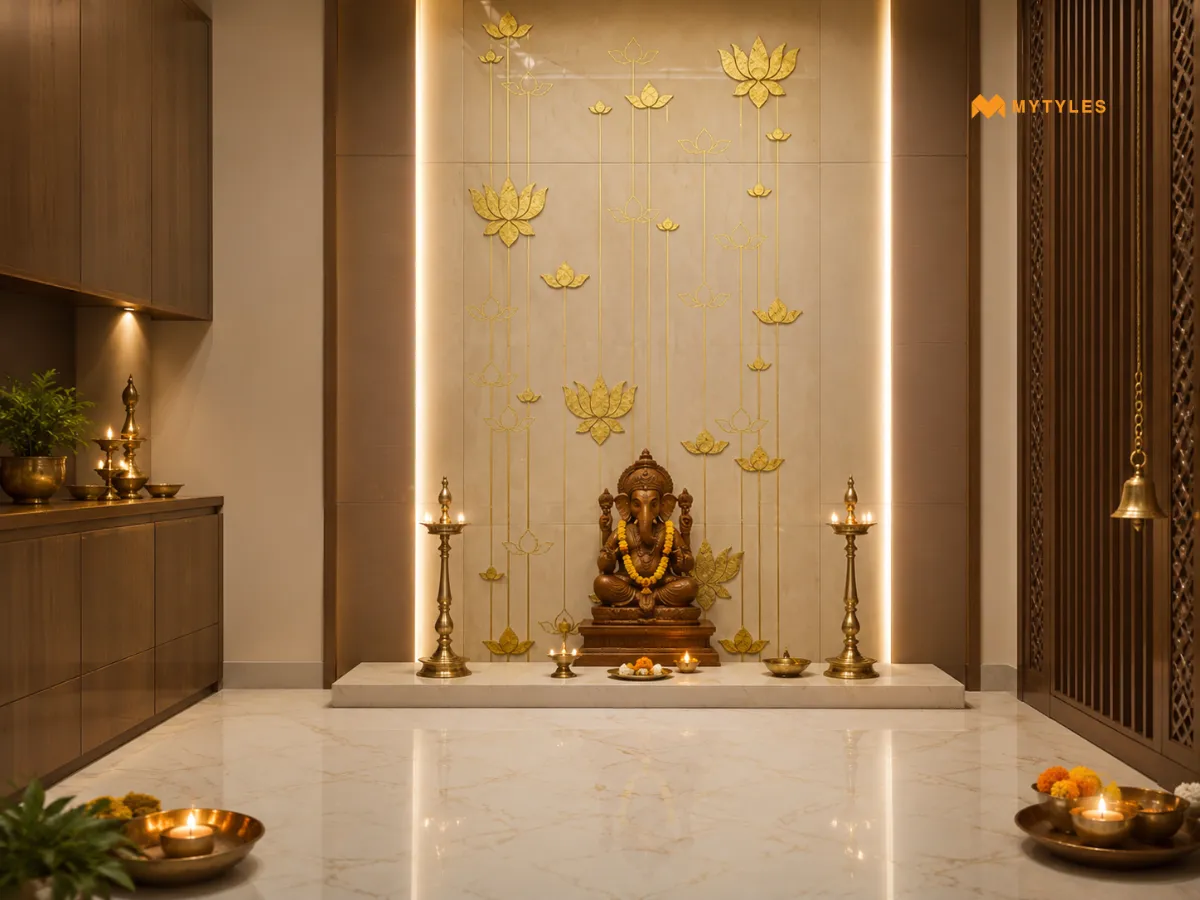
The lotus appears in Indian devotional art more than almost any other motif. It stands for purity, and that meaning translates naturally to a pooja wall. Lotus design tiles for pooja room walls carry that symbolism without needing to announce it.
These tiles come in relief and printed versions. The relief format adds a slightly raised, three-dimensional surface that catches light differently depending on the time of day. Place one as a centrepiece on the backdrop wall, with simpler tiles around it, and the pattern gets the space it needs to actually register in your compact pooja space design.
Stone-Look Tiles for an Earthy, Grounded Atmosphere
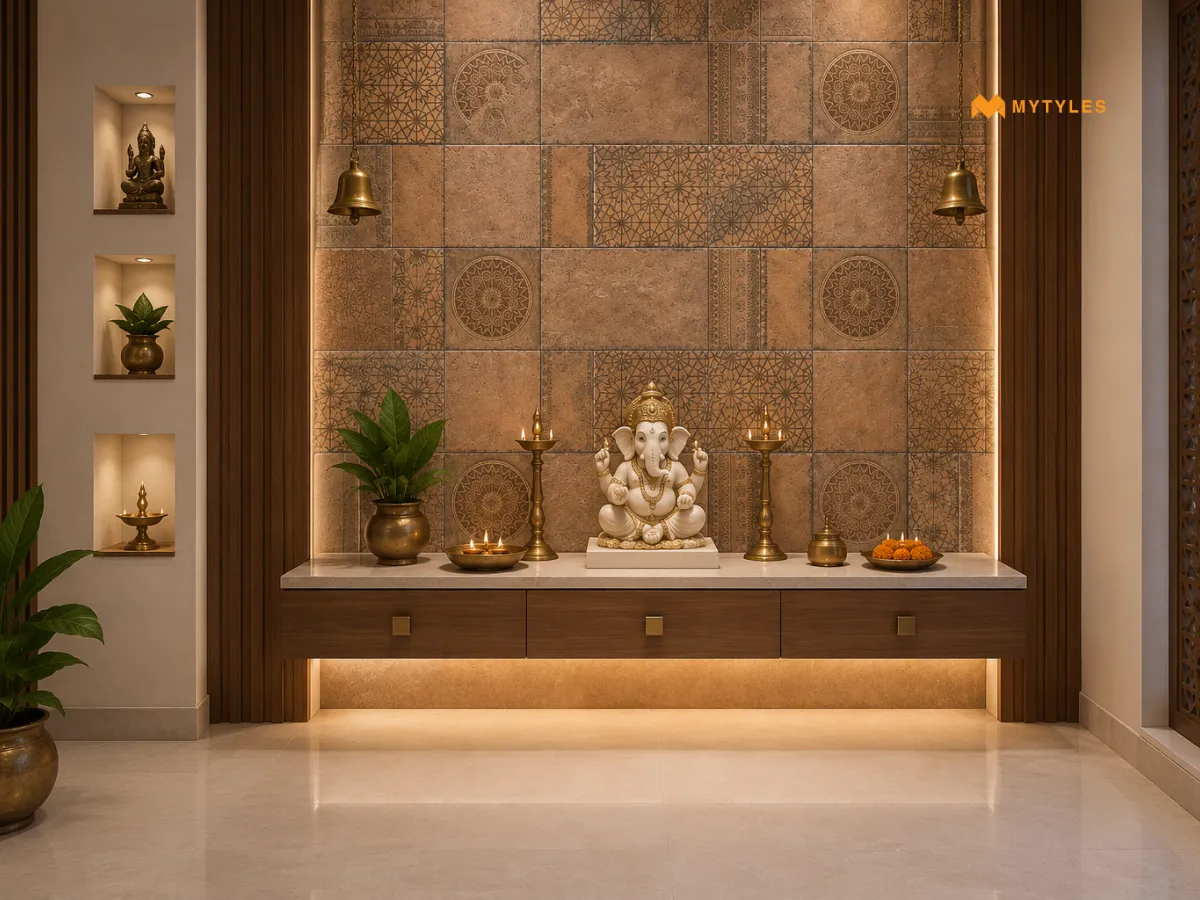
Temple architecture across India has relied on stone for centuries. Not just for structure, but for the atmosphere it creates. Stone-look pooja wall tiles bring that same quality into a home setting without the structural demands of actual stone.
Sandstone, slate, and granite textures are the most common. Lighter tones in grey or beige keep the pooja room tile design quiet and grounded. If you prefer something with more weight, charcoal and deep brown versions create a serious, settled quality that suits a minimal aesthetic. Either way, the wall ends up looking considered rather than decorated.
Moroccan Pattern Tiles for a Bold, Artistic Backdrop
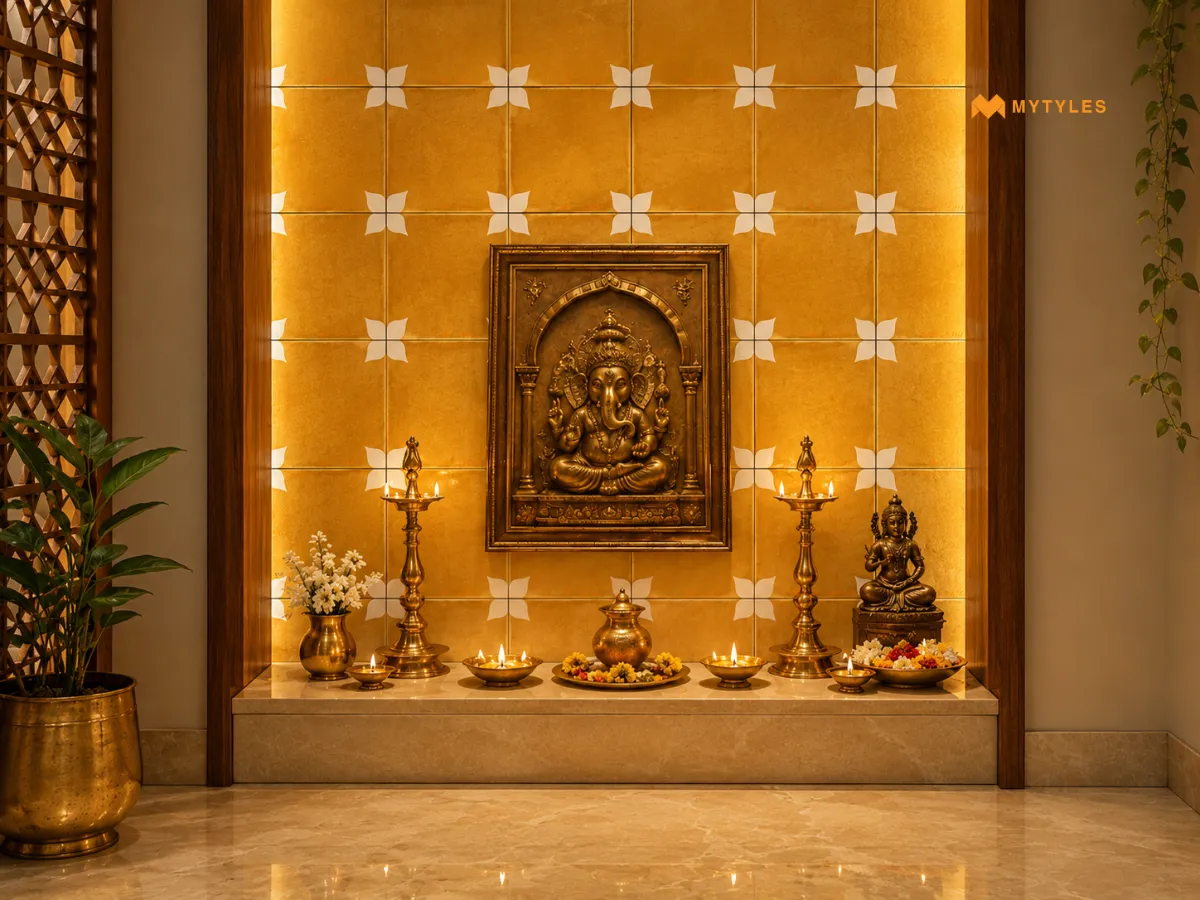
Geometric patterns have appeared in sacred spaces across cultures for a long time, and Moroccan tiles for pooja corner walls bring that same quality to a modern Indian home. The interlocking star and diamond patterns create a sense of visual rhythm that draws the eye without being distracting.
For a pooja corner design for small homes, use Moroccan tiles in cooler tones like deep blue, white, or turquoise. These colours carry a certain stillness with them. A single wall or the back of a niche tiled in this pattern becomes a true pooja room feature wall, one that holds its own without needing much else around it.
Gold and Cream Tiles for a Warm, Luminous Feel
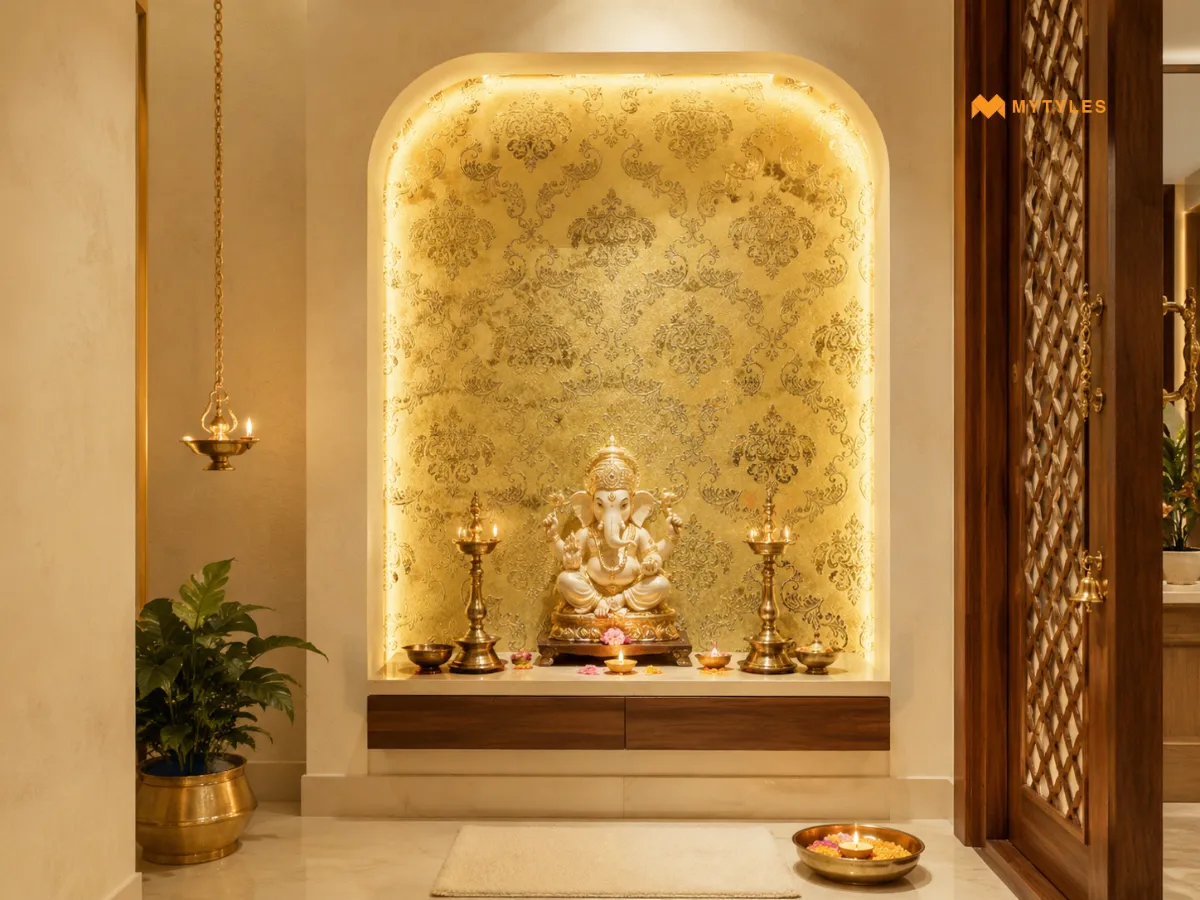
Gold is a colour that shows up consistently in Indian temple art. It suggests auspiciousness, warmth, and richness. Pooja tiles for home in gold and cream tones capture this quality in a way that works well in residential spaces.
These tiles are often available in soft metallic finishes or with gilded printed patterns. They catch the light beautifully when combined with diyas or LED backlit shelves. In a small Indian home pooja corner, this kind of tile can make even the most compact niche feel like a properly designed sacred space. The warmth they add to the pooja room wall tile design is genuinely hard to replicate with paint alone.
Textured Relief Tiles for Depth and Character
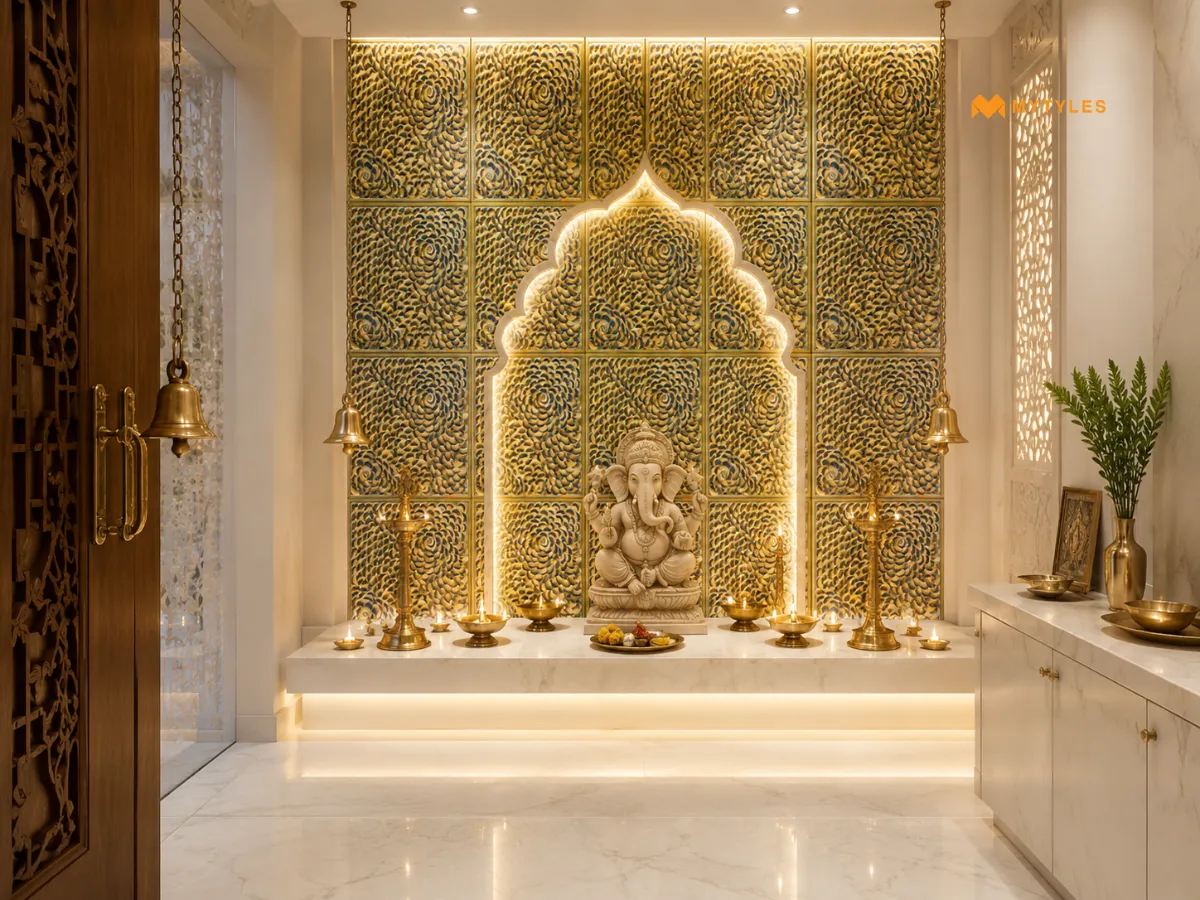
Sometimes the most impactful pooja room tiles design is not about colour at all. It is about texture. Textured relief tiles have raised patterns pressed into the surface, geometric lattice, floral borders, abstract weaves, that create shadow and depth even in a flat wall.
In a peaceful pooja corner ideas context, these tiles work well in white or off-white because the texture does the talking. The surface changes with light throughout the day, morning light picks up the ridges differently from evening lamp glow. The effect is subtle but consistently beautiful. They make an excellent pooja mandir tiles design choice when you want something timeless rather than trend-driven.
Mandala Tiles and Kolam Border Tiles for a Culturally Rooted Finish
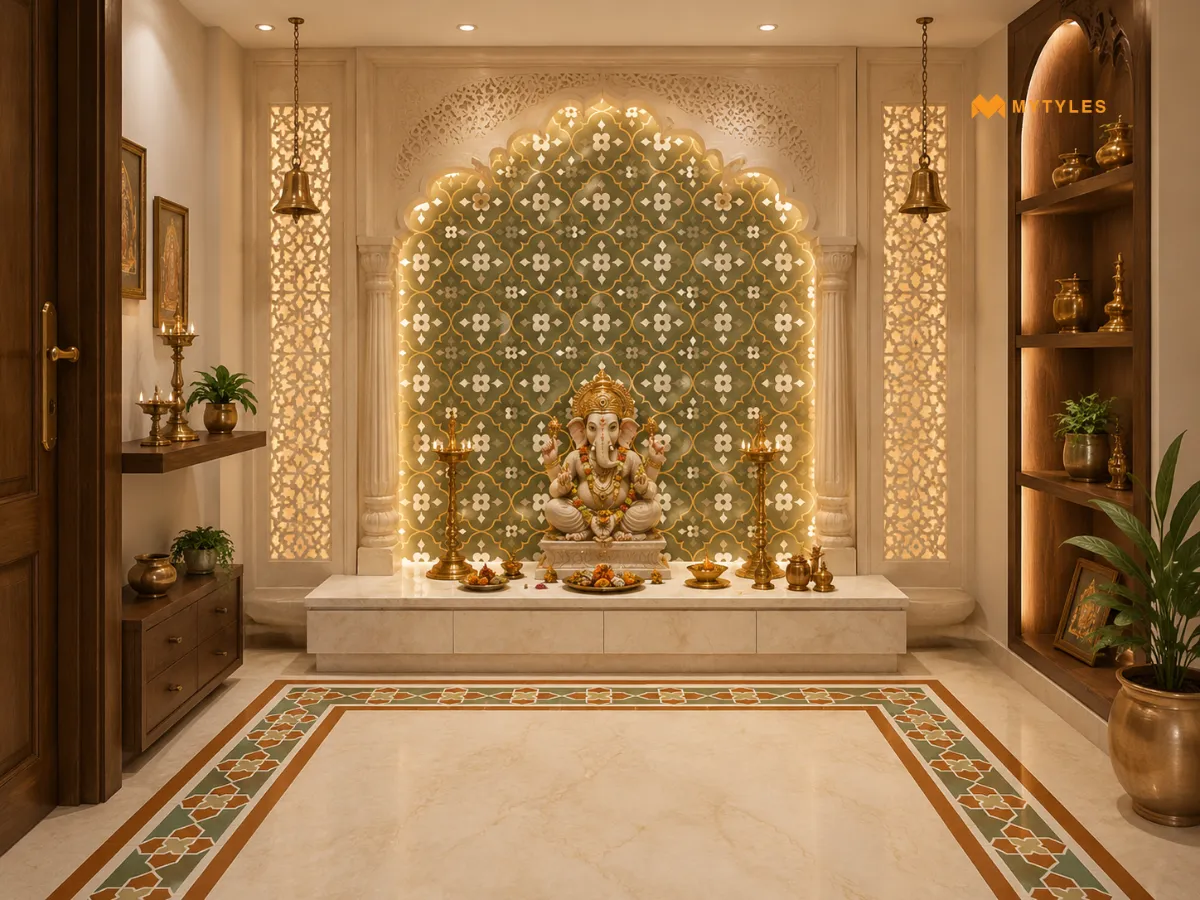
Some patterns carry meaning before you even register them consciously. Mandala tiles and kolam designs have been part of Indian devotional culture for centuries, drawn at thresholds, painted on temple floors, traced in rice flour at the start of every auspicious day. Bringing them onto a pooja room wall feels less like a design decision and more like a continuation of something already familiar.
Mandala tiles work especially well as a centrepiece behind the deity shelf. The circular, radiating pattern naturally draws the eye inward and creates a quiet focal point. In a compact pooja corner, one well-placed mandala tile can do more than an entire tiled wall.
Two-Tone Tile Combinations for a Structured Layout
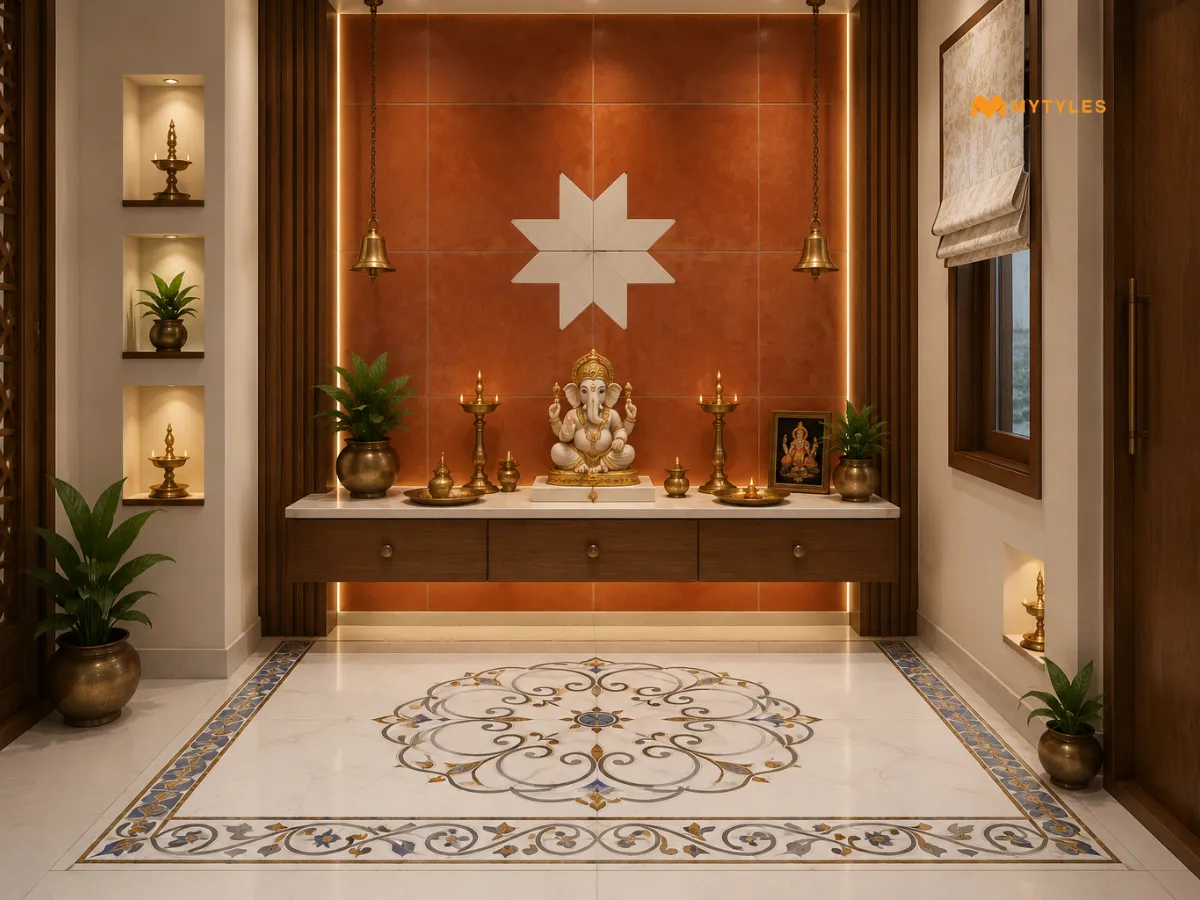
Not every pooja wall design with tiles needs a single statement tile. A two-tone layout, one tile for the base and a contrasting option as a border or accent strip, gives the wall a more structured, composed look.
A soft white base paired with a narrow gold or terracotta border around the deity niche is one of the cleaner ways to do this. It suits modern pooja room design where proportion and restraint matter more than ornamentation.
There is also a practical side to this approach. Simpler tiles can cover the larger wall area while a more detailed tile is reserved for the accent strip, which keeps the overall cost of tiles for the pooja room wall manageable without cutting corners on appearance.
A Few Things to Keep in Mind Before You Tile
Picking the tile is one part. Using it well is another. Here are a few practical things that make a real difference when planning your pooja room interior ideas:
- Go easy on the size: Smaller format tiles or mosaic arrangements tend to suit compact spaces better than large-format tiles, which can feel overwhelming in a tight corner.
- Consider the lighting: Glossy tiles reflect diyas and lamps beautifully. Matt tiles give a softer, more understated finish. Both have their place depending on the mood you are going for.
- Keep it focused: In a small space, one well-tiled wall, usually the back wall behind the deity shelf, is more effective than tiling every surface. Let the main wall carry the design and keep the rest simple.
- Think about the upkeep: Devotional spaces see a fair amount of incense smoke, ghee, and residue from daily rituals. Glazed tiles hold up to this much better than porous or matt surfaces. The area closest to the diyas and agarbatti holder especially benefits from a finish that wipes clean without much effort.
Find the Right Tile for Your Sacred Space
A pooja corner is not just a design element. It is a space that carries meaning every single day. The tile you choose for that wall becomes a part of how that space feels, every morning, every evening, every time someone pauses there. So it is worth choosing thoughtfully.
At MyTyles, the range of pooja room tiles covers a wide spread of aesthetics, from marble-look and floral designs to stone textures and Moroccan patterns. Every option in the collection is suited to Indian homes and the way these spaces are actually used. So, head to MyTyles to find the tile that feels right for your pooja corner.
Expert Reviewed by Biren Agrawalla
Biren Agrawalla, the Founder of MyTyles with over 10 years of experience across tile, retail, and home decor. Driven by a passion for tiles and a deep understanding of customer behaviour, he has spent his career transforming how people discover and buy tiles online. Biren combines practical retail insight with modern digital solutions to make tile shopping smarter, more intuitive, and design focused. At MyTyles, he champions a customer first approach, ensuring every experience from browsing to buying is reliable, seamless, and inspiring.

Which Tiles Are Best for a Pooja Room Wall?

Marble-look, floral, and stone-look tiles are popular choices for pooja room wall tile design. Glazed options are easier to clean and work well near diyas. The best choice depends on the overall look you want, traditional, modern, or minimal.
Can I Use Tiles in a Small Pooja Room?
Yes. Small pooja room tile design works best when focused on one wall, usually the backdrop behind the deity shelf. Lighter tones and smaller tile formats keep the space feeling open rather than busy.
What Color Is Good for a Pooja Room Tile?
White, ivory, gold, and warm beige tones are common for pooja tiles for home because they create a clean, luminous backdrop. Cooler tones like blue or grey work well in modern settings. Avoid very dark tiles in small spaces as they can make the corner feel heavy.
What Size Tiles Should I Use for a Pooja Room??
Smaller format tiles, typically 30x30 cm or mosaic sizes, suit compact pooja corners better. They allow for more pattern variety and are easier to work with in a limited wall area. Larger tiles can be used on open feature walls with caution.
Are Glazed or Matt Tiles Better for a Pooja Room?
Glazed tiles are easier to clean and reflect light from diyas and lamps well, which suits most devotional wall tile design needs. Matt tiles give a softer, more restrained look but require more upkeep, especially near agarbatti and ghee lamps.
Can I Mix Two Tile Types in a Pooja Room?
Yes, mixing tiles works well in pooja room tile ideas. A common approach is using a plain base tile for most of the wall and a patterned or contrasting tile as an accent border around the deity niche. This adds structure without making the space feel cluttered.
What Is a Good Tile for a Pooja Room in an Apartment?
For apartment pooja corners, lightweight ceramic tiles in marble-look or floral designs are ideal. They are easy to install, do not require structural support, and still deliver a well-designed pooja corner design for small homes that feels intentional and composed.

ABOUT THE AUTHOR
Heena Dhiman
Heena Dhiman: With a background in fashion design and over 5 years of writing experience, I bring a creative and detail-oriented eye to home and design content. My journey began with aesthetics, colours, and visual storytelling, which gradually led me to writing across lifestyle, finance, home improvement, and resource management. Over time, I discovered a strong interest in tiles and interiors, where my design background helps me understand how small choices can shape the feeling of a home. Through my content, I aim to make home design decisions easier, clearer, and more enjoyable for readers, helping them feel confident while creating spaces that reflect their style and everyday needs.