Inspiration Gallery
Blog
Tile Calculator
08065423741



.svg)


10 Modern Pooja Room Tile Designs for a Peaceful Home Mandir
ByHeena Dhiman

Thu , Aug 06 , 2026

Read Time: 5 Min


 Copied!
A pooja room is not just a corner of the house. It is the one space that is supposed to feel calm the moment you step into it. That’s where tiles play a critical role in sustaining that feeling. Choosing the right pooja room tiles can make even a compact home mandir feel like it was designed with intention and care.
Today, modern pooja room tile designs have moved far beyond plain white walls and basic borders. Warmth, elegance, a quiet sense of the sacred: all of this is achievable without making the space feel overdone. So whether you have a full dedicated room or just a small alcove, these ten ideas should give you a solid starting point.
Marble-Look Tiles for a Timeless, Clean Finish
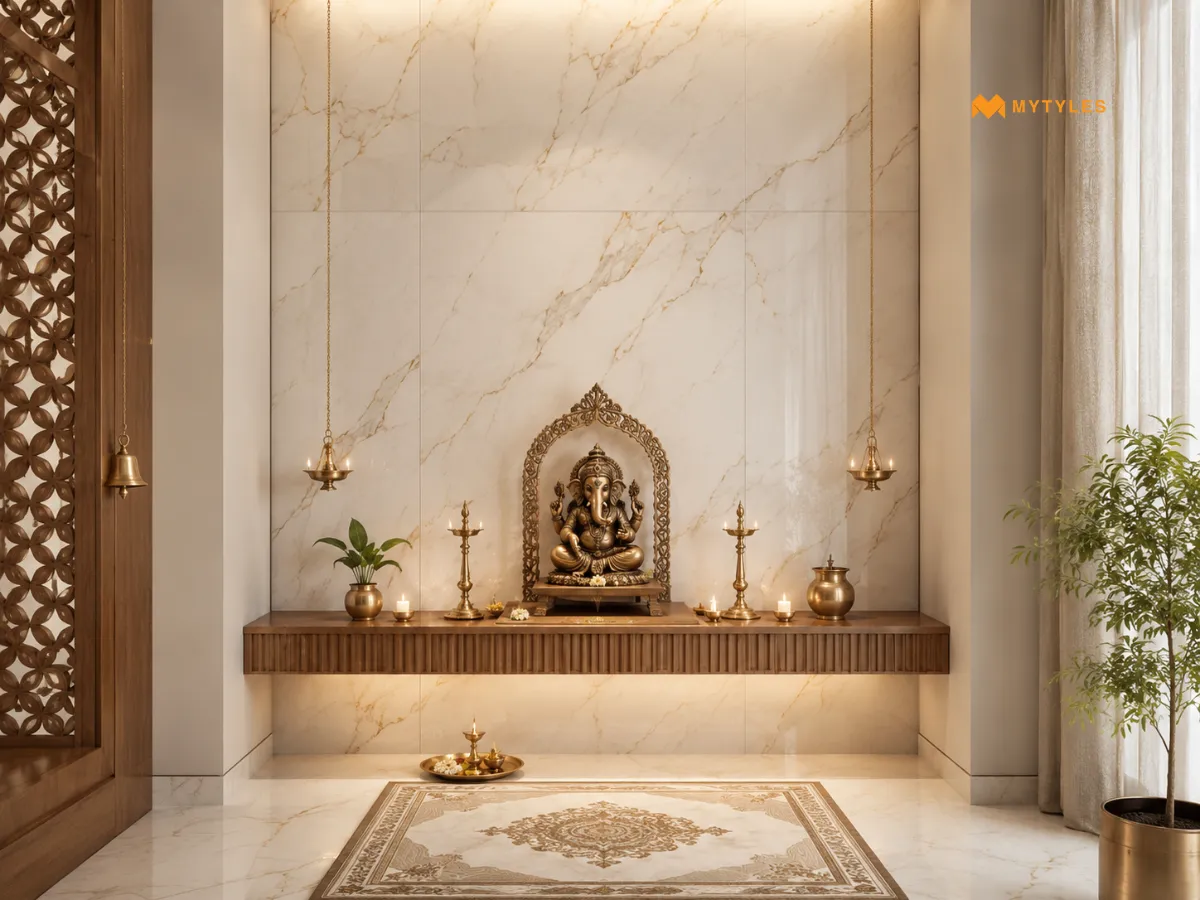
White marble has always had a place in temples and sacred spaces across India. Marble-look tiles for pooja room walls bring that same feeling home, without the cost or the upkeep that real stone demands. The large slab formats open the space up, and the soft veining gives the wall some character without pulling too much attention.
Tip: Add warm, focused lighting close to the wall. It picks up the veining beautifully and gives the whole space a much calmer feel.
White and Gold Tiles for a Regal Touch
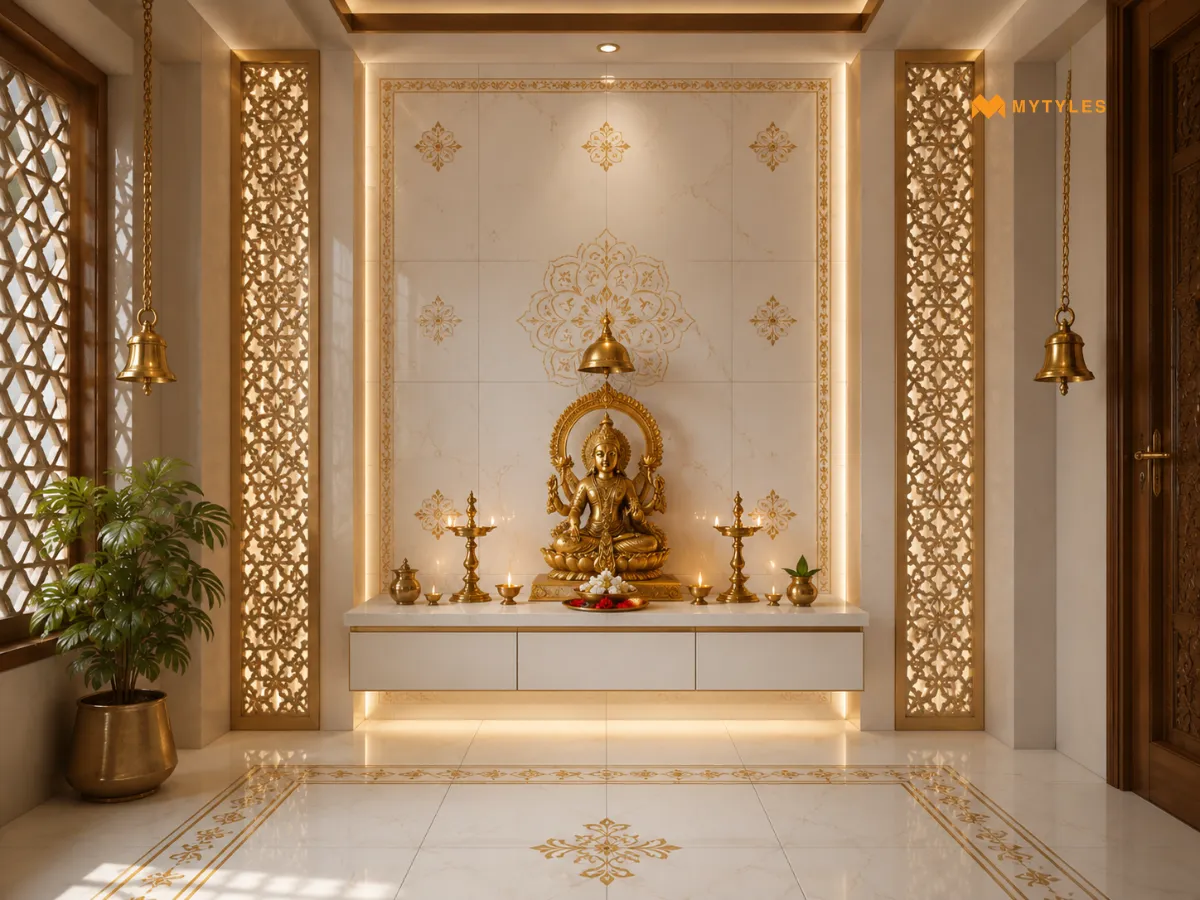
White and gold pooja room tiles have been a top pick for a while now, and the reason is pretty obvious once you see them. Gold detailing, whether it runs along a border or sits woven into the tile pattern itself, lifts the entire look of home mandir tile designs. It feels celebratory without tipping into excess.
Tip: Use these on the feature wall directly behind the idol. Keep the surrounding walls in plain white or off-white to let the gold stand out.
Lotus Motif Tiles for Symbolic Beauty
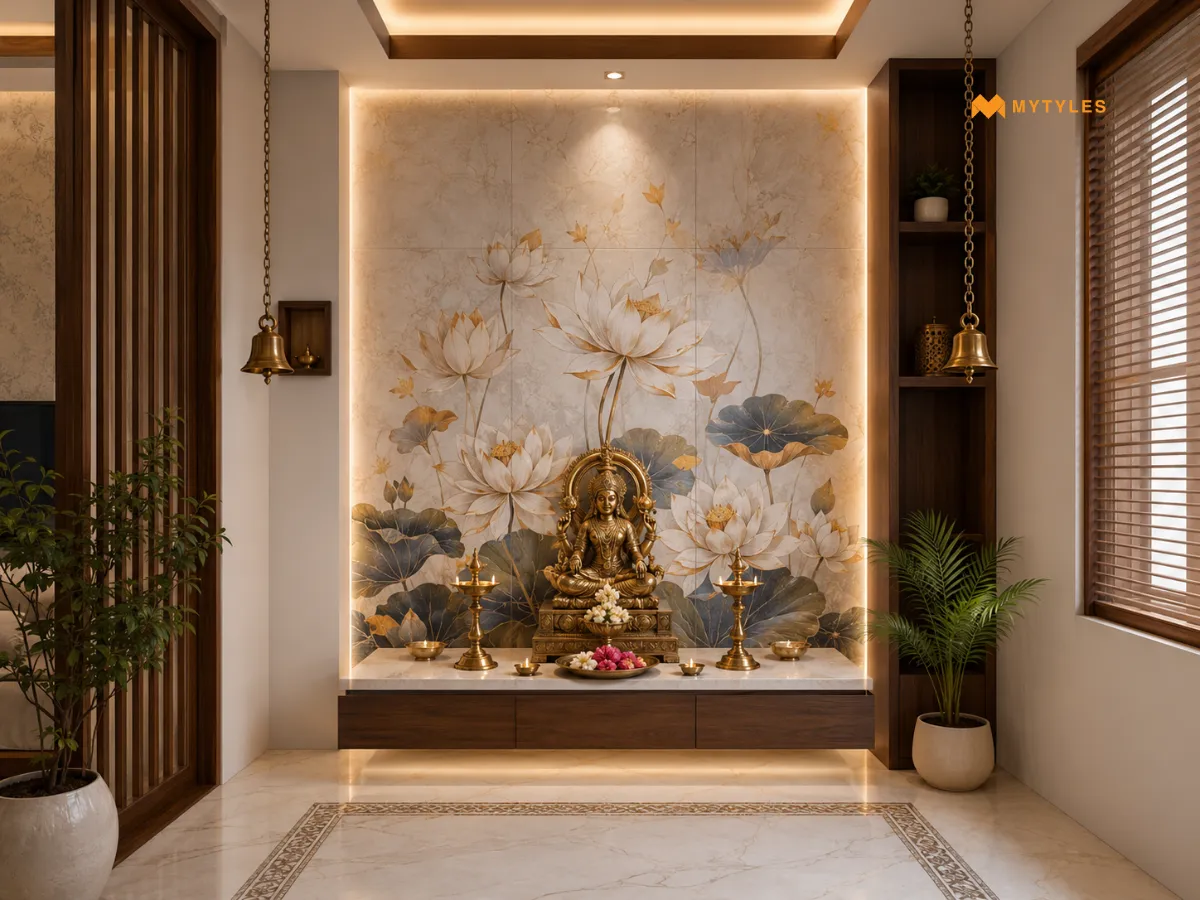
Few symbols carry as much weight in Indian culture as the lotus. Lotus design tiles for pooja room walls quietly bring that significance into the space without making it feel like a statement. These decorative tiles for the pooja room are available in ceramic as well as vitrified formats. The lotus itself can appear as a raised relief, a flat print, or a delicate etched outline.
Tip: Try placing one lotus motif tile at the centre of the wall with plain tiles all around it. That single piece becomes the focal point, and the restraint is what makes it work.
Stone-Look Tiles for an Earthy, Grounded Feel
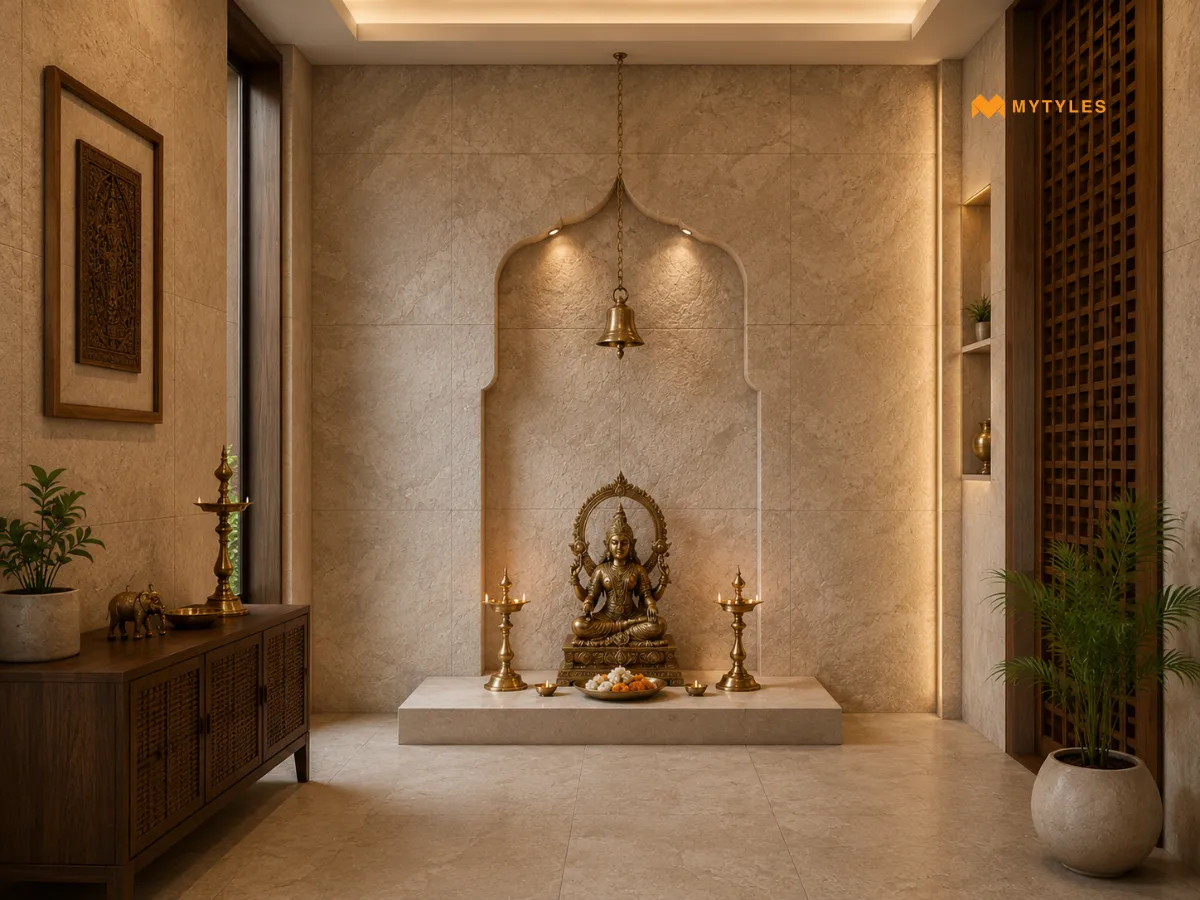
If shine is not what you are after, stone-look tiles for pooja room spaces are worth a serious look. They read like natural stone but skip all the maintenance. The matt, slightly rough surface drinks in light rather than reflecting it, which keeps the mood quiet and grounded. For anyone leaning toward traditional mandir wall designs, these fit in very naturally.
Tip: Darker stone-look tiles work beautifully in a pooja room with natural wood shelving or a carved wooden mandir frame. The contrast between the two materials feels intentional and rich.
Floral Pattern Tiles for Softness and Grace
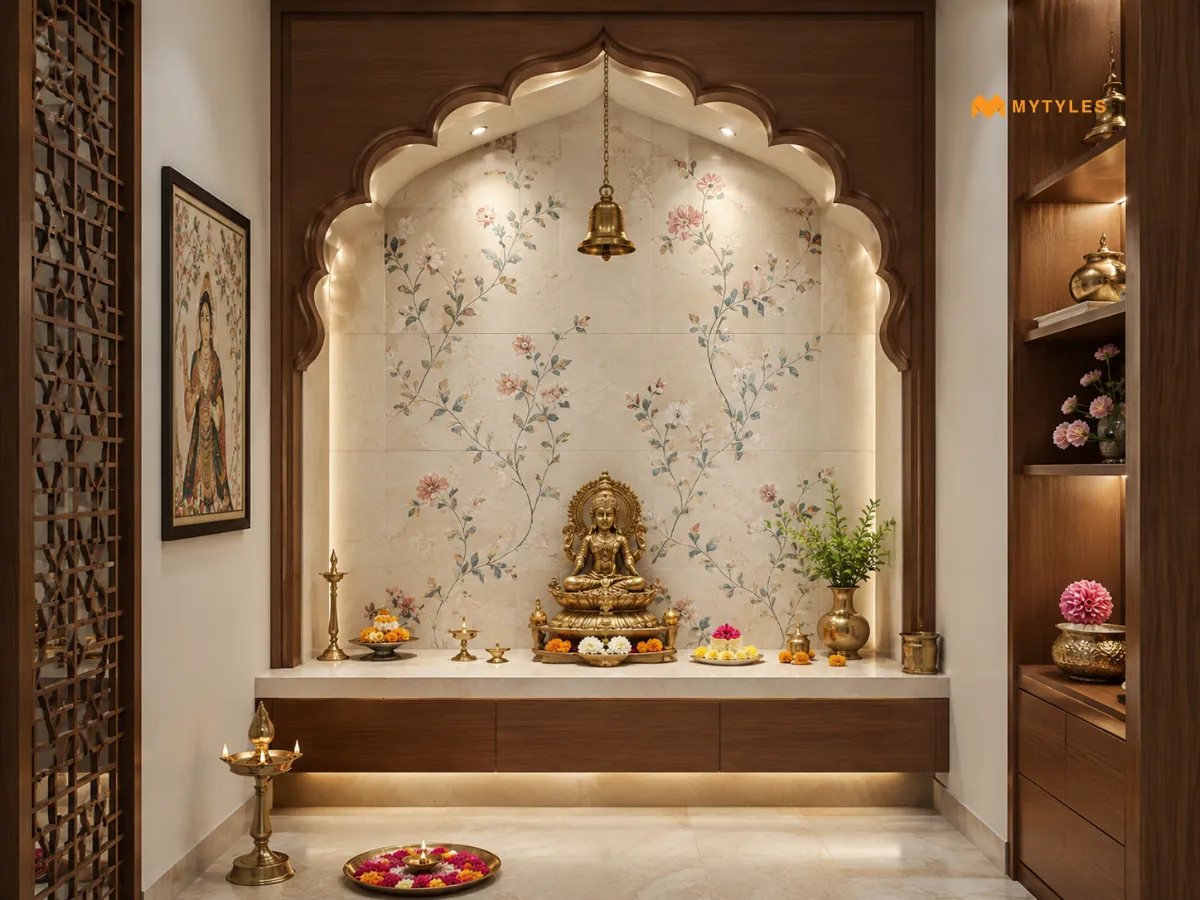
There is a gentleness to floral tiles for home mandir walls that just works for a space built around stillness. Indian pooja room tile ideas have always pulled from nature, and colors such as muted pinks, soft greens, and dusty blues carry that tradition without feeling old-fashioned. For small pooja room tile designs especially, a restrained floral is far better than an all-over pattern, which can quickly make a tight space feel noisy.
Tip: Choose a floral tile with a restrained colour palette. Two or three tones work better than a multi-colour design, which can feel busy in a compact space.
Geometric Border Tiles for a Defined, Structured Look
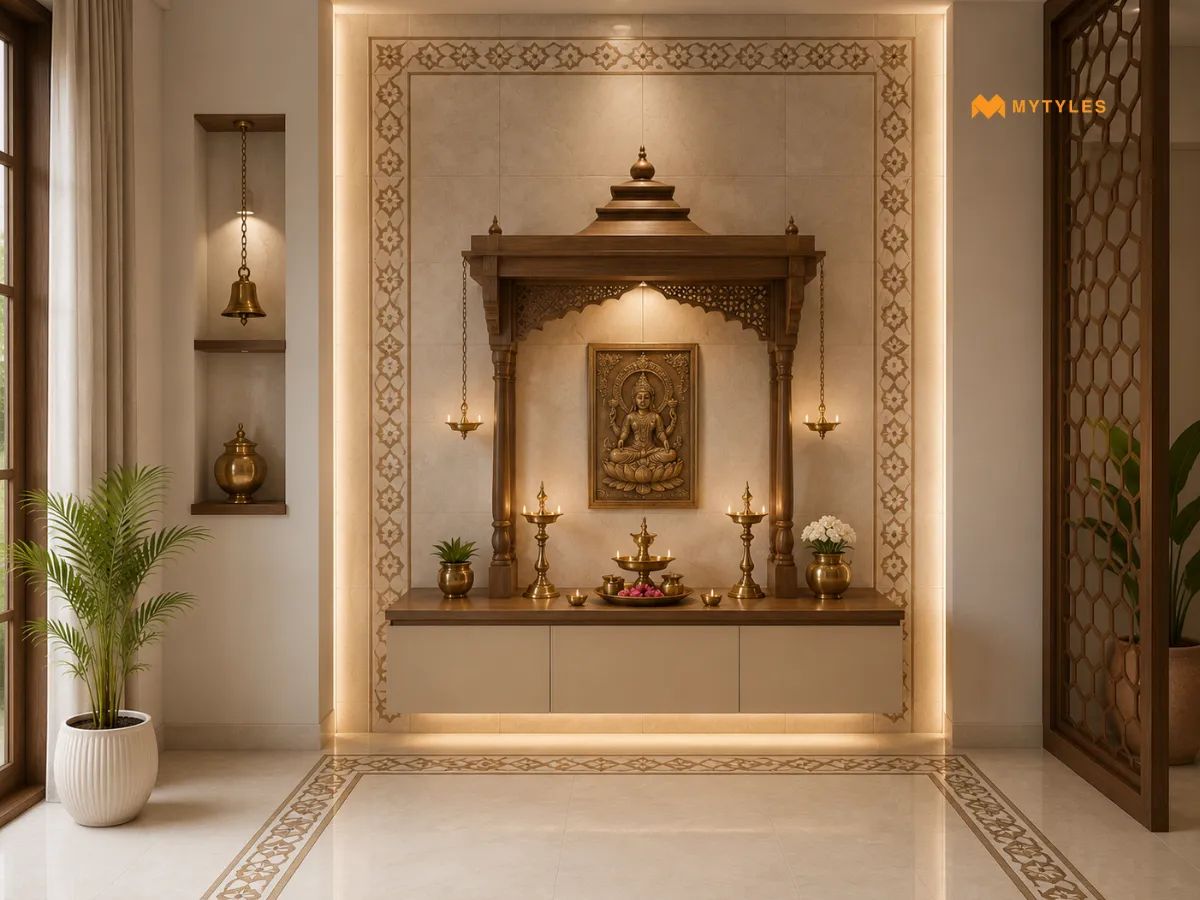
Not every design decision has to be a big one. Pooja room tile border designs are proof of that. A single well-placed border does more than most people expect. It gives the wall structure, frames the mandir, and adds detail without taking over. Indian motif wall tiles work particularly well here, especially patterns that echo kolam or geometric jali work.
Tip: Run two borders instead of one: a thinner one and a slightly wider one beside it. Keep them in the same colour family, and the result feels considered, not cluttered.
Minimalist Subway Tiles with a Spiritual Accent
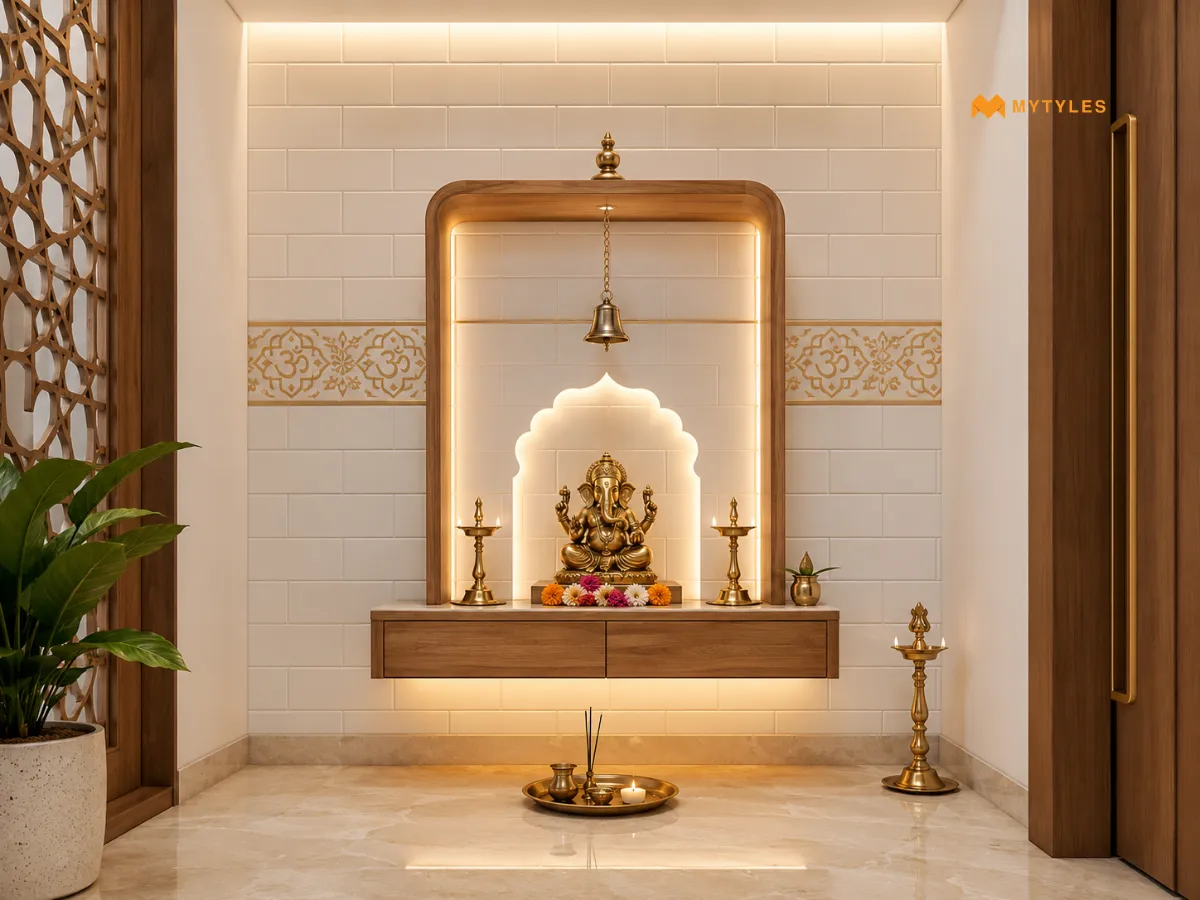
Minimalist pooja room tiles have found a real following among city homeowners who want the space to feel clean and uncluttered. Plain subway tiles in white or soft cream do exactly that. They stay out of the way. The trick is adding one row of spiritual wall tile designs somewhere in the layout, like an om motif or a rangoli print, something with meaning, so the space does not end up feeling like just another tiled wall.
Tip: This works especially well in alcove mandirs. The plainer everything else is, the more that one decorative row stands out.
Temple-Inspired Tile Designs for a Traditional Aesthetic
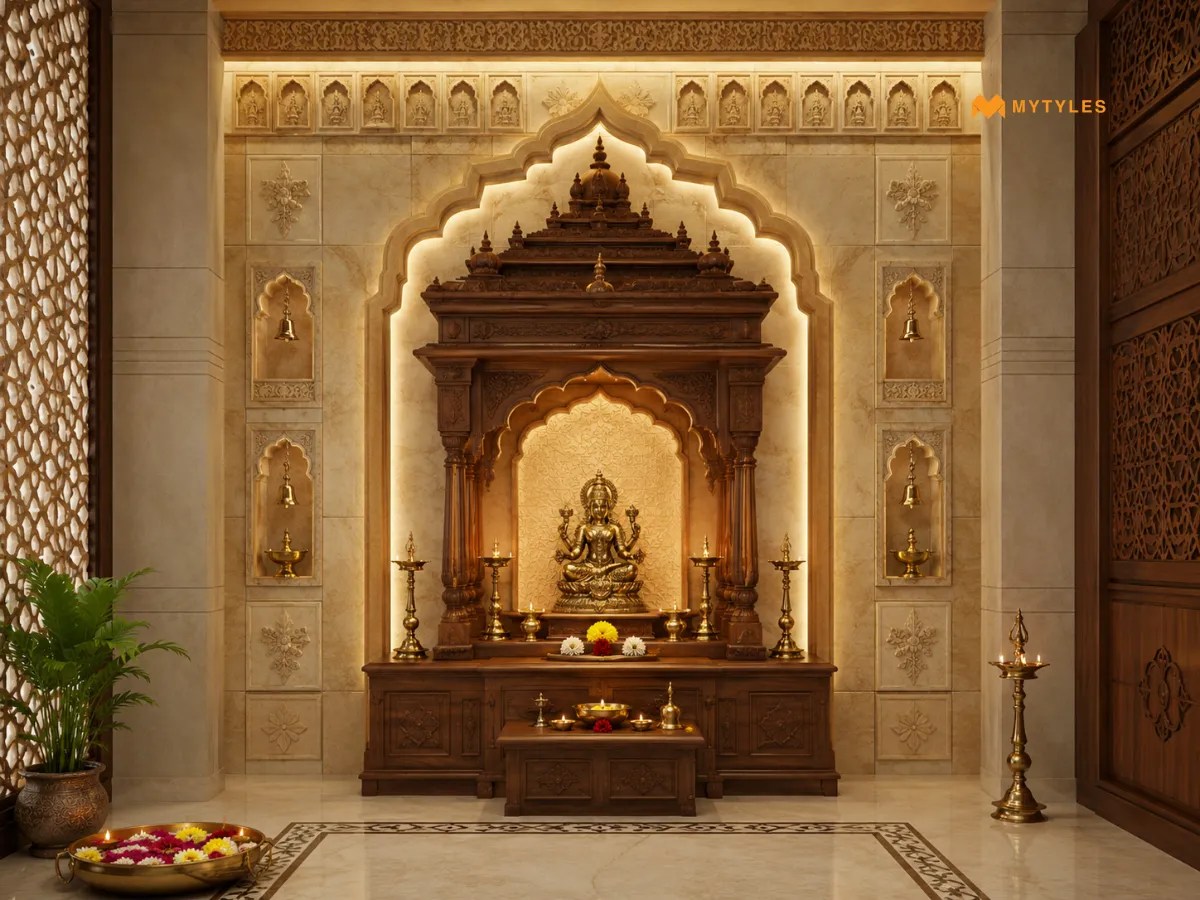
Temple-inspired tile designs pull from the visual grammar of Indian temple architecture: arched forms, tiered borders, and carved relief patterns. These modern mandir wall tiles come in classic finishes like ochre and ivory but also in sharper contemporary options like matt black with gold detailing. Either way, they bring a sense of weight and history to a peaceful home mandir design.
Tip: Use these as a full feature wall only if the mandir is in a dedicated room. In a smaller alcove, one panel or niche wall is enough.
Pooja Room Feature Wall Tiles for Drama and Depth
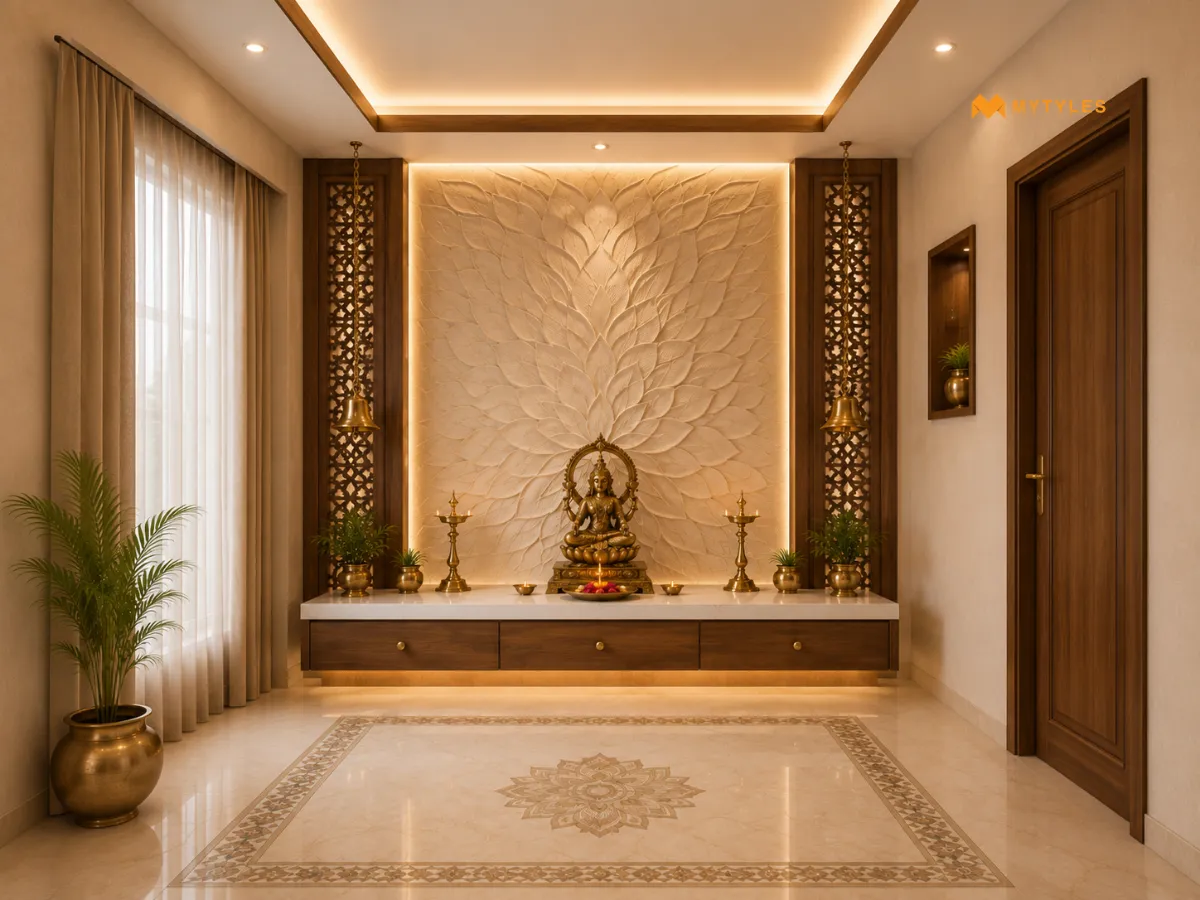
Pooja room feature wall tiles take the concept of a focal point and push it further. A heavily textured or deeply patterned tile used on just one wall, typically the one behind the idol, creates an immediate visual anchor. These premium pooja room interior choices often use large-format tiles with a dimensional design that reads almost like sculpture.
Tip: If you are investing in a feature wall tile, keep the rest of the room very simple. The feature wall should do all the talking.
Pichwai-Inspired Tiles for a Devotional Aesthetic
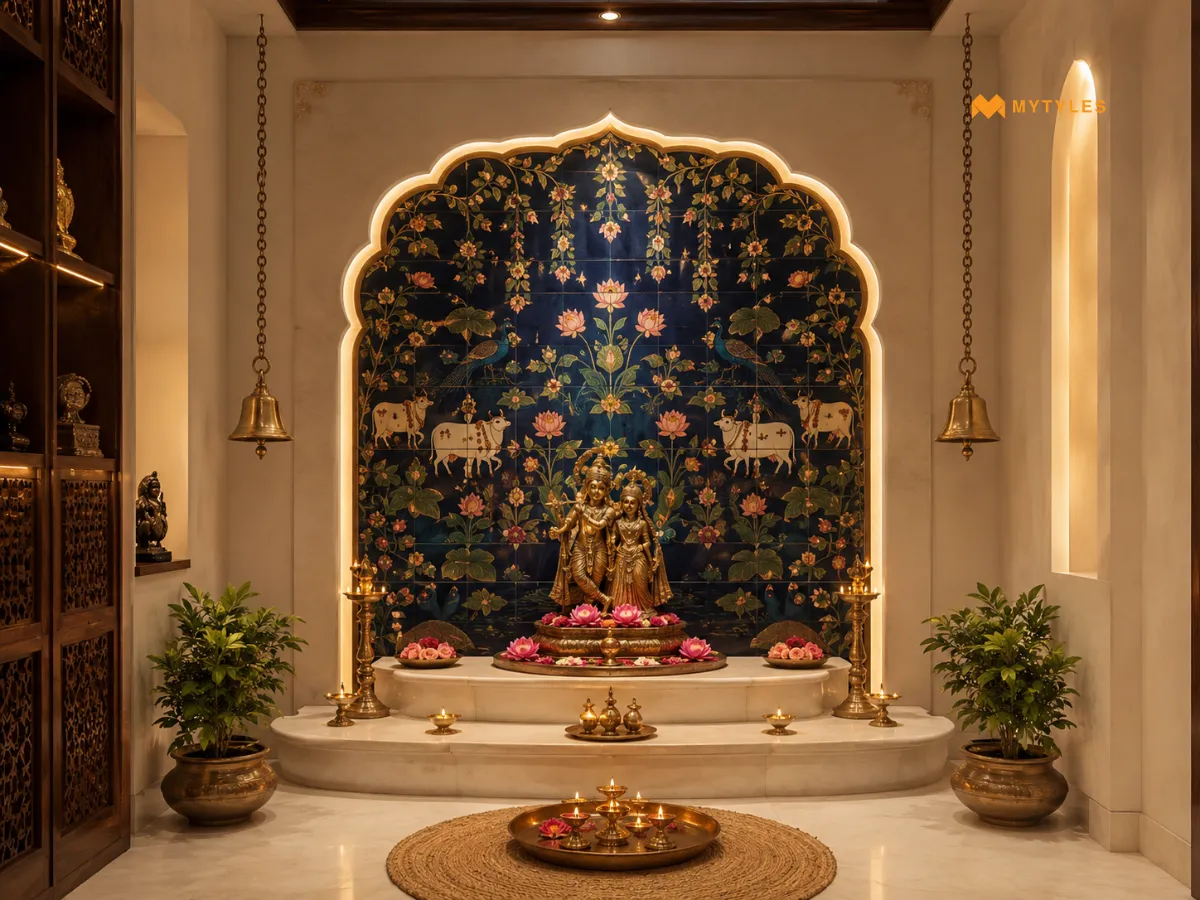
Pichwai paintings have hung behind temple idols for centuries, most famously in the shrines of Nathdwara in Rajasthan. The tradition is built around depicting Krishna surrounded by lotuses, cows, and dense floral detail, all rendered in deep, jewel-like colours. Tiles that draw from this visual language bring that same devotional richness to a home pooja room without needing an actual painting on the wall.
Tip: Look for tiles with deep indigo, ochre, or forest green as the base tone. Place them on the wall directly behind the idol, and keep everything around it neutral so the colour and detail have room to settle.
Design Your Home Mandir the Way It Deserves to Be
The right tiles can completely change how a home mandir tile design comes together. From marble-look tiles for pooja room walls to lotus design tiles for pooja room accents, each option here gives you a real starting point rather than just inspiration with nowhere to go.
At MyTyles, you will find a wide range of modern pooja room tile designs that suit every kind of home, every kind of budget, and every kind of aesthetic. Whether you want something deeply traditional or cleanly contemporary, there is a tile that fits the way you picture your space.
Explore our full collection of pooja room and home decor tiles on our official website. Visit the MyTyles experience centre near you or browse online to find exactly what your mandir deserves.
Expert Reviewed by Biren Agrawalla
Biren Agrawalla, the Founder of MyTyles with over 10 years of experience across tile, retail, and home decor. Driven by a passion for tiles and a deep understanding of customer behaviour, he has spent his career transforming how people discover and buy tiles online. Biren combines practical retail insight with modern digital solutions to make tile shopping smarter, more intuitive, and design focused. At MyTyles, he champions a customer first approach, ensuring every experience from browsing to buying is reliable, seamless, and inspiring.

Which Tiles Are Suitable for a Pooja Room?

Ceramic, porcelain, and vitrified tiles can be considered for a pooja room, depending on the intended wall or floor application. Within these material options, you can choose marble-look, stone-look, wood-look, floral, or spiritual designs. Check the individual product specifications for application suitability, finish, water absorption, and cleaning instructions before selecting.
What Are the New Tile Designs for Pooja Rooms?
Modern pooja room tile designs now include lotus motifs, temple-inspired relief patterns, white and gold combinations, and minimalist subway tiles with decorative accents. Stone-look and wood-finish tiles are also gaining popularity for homeowners who want a warmer, more grounded feel.The final choice should suit the size, lighting, and overall design of the pooja room.
Can Textured Tiles Be Used in Pooja Rooms?
Absolutely. Textured tiles add depth and a handcrafted quality to pooja room walls. Relief patterns, stone-look finishes, and 3D surface tiles all work well, especially on the feature wall. For floors, check whether the product is rated for flooring, as deeply textured surfaces may require more detailed cleaning after regular rituals.
What Colors of Tiles Are Best for Pooja Rooms?
White, cream, soft gold, and light pastels are the most popular. These shades keep the space feeling calm and open. If you want something richer, ivory with gold detailing or muted ochre tones give the mandir a more traditional, festive character without feeling heavy. Also, consider the room’s lighting, mandir material, and surrounding wall colors before finalising the tile combination.
Can Designer Tiles Be Used for Pooja Room Walls?
Yes, and they work really well. Designer tiles with lotus prints, geometric borders, or temple-inspired patterns instantly elevate the look of a pooja room wall. The key is using them on one focused surface, usually the wall behind the idol, and keeping the rest of the space simple.
How Do You Keep Pooja Room Tiles Clean?
Remove flower petals, incense ash, oil, and other ritual residue soon after use. Wipe the tile surface with a soft cloth and a mild cleaner recommended for the selected product. Cleaning requirements may vary by finish and texture, so follow the manufacturer’s care instructions and avoid harsh chemicals or abrasive cleaning tools.
Can the Same Tiles Be Used on Pooja Room Walls and Floors?
Not every tile is suitable for both applications. Wall tiles may not have the strength, surface finish, or slip resistance required for flooring. Before installation, check the product specifications for wall or floor suitability, water absorption, finish, and slip resistance, particularly if the pooja room floor is cleaned frequently with water.

ABOUT THE AUTHOR
Heena Dhiman
With a background in fashion design and over 5 years of writing experience, I bring a creative and detail-oriented eye to home and design content. My journey began with aesthetics, colours, and visual storytelling, which gradually led me to writing across lifestyle, finance, home improvement, and resource management. Over time, I discovered a strong interest in tiles and interiors, where my design background helps me understand how small choices can shape the feeling of a home. Through my content, I aim to make home design decisions easier, clearer, and more enjoyable for readers, helping them feel confident while creating spaces that reflect their style and everyday needs.
Latest Blogs By MyTyles