Inspiration Gallery
Blog
Tile Calculator
08065423741



.svg)


Border Tiles Are Back: 12 Ways to Frame Floors and Walls Beautifully
ByAditi Bardhan

Sun , Aug 09 , 2026

Read Time: 5 Min


 Copied!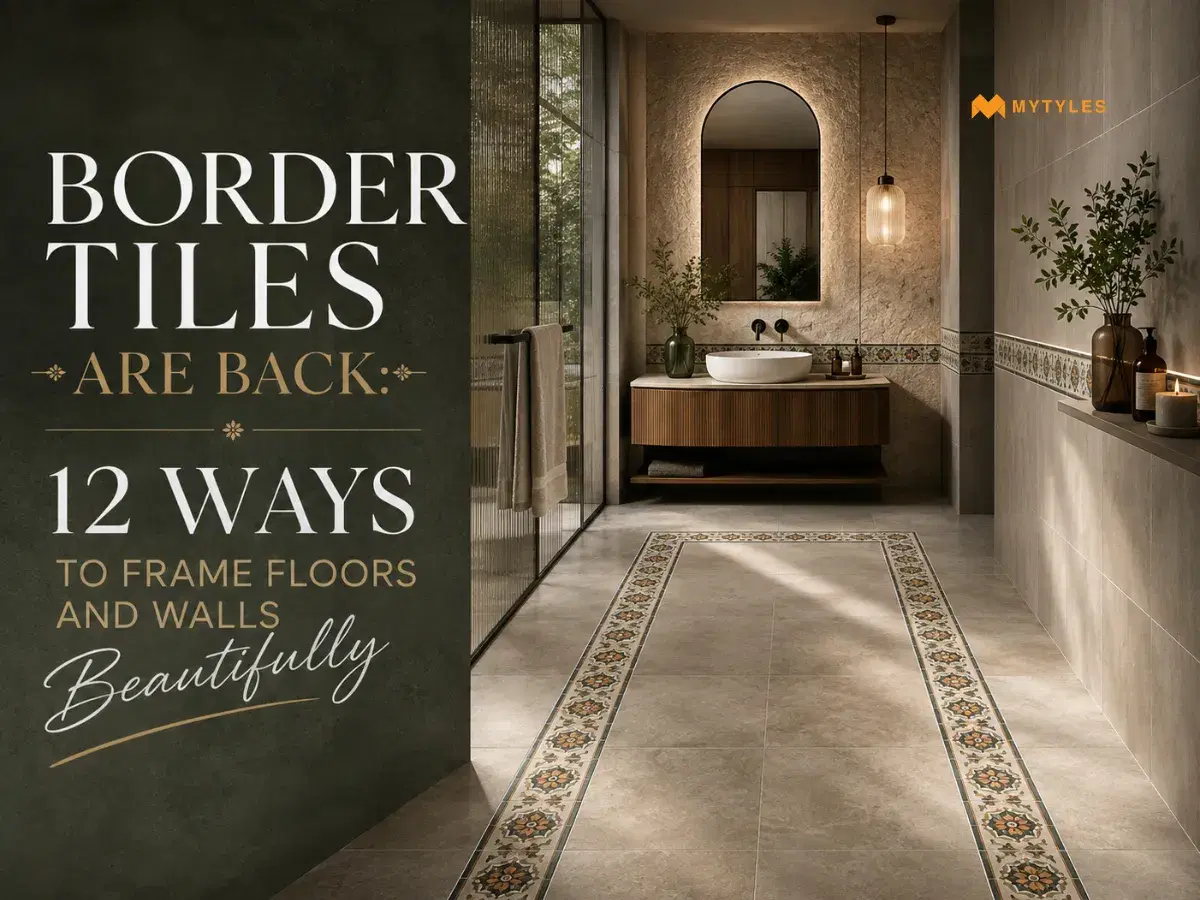
A border can make a tiled surface look more finished. It works like a frame around a floor, a wall, a niche, or a selected feature area. Earlier, borders were mostly seen in older bathrooms and traditional floors. Now they are being used in cleaner ways. A slim line around a living room floor, a floral frame in a pooja room, or a patterned strip above a bathroom dado can add detail without making the room look heavy.
Good tile layout ideas are not only about the main tile. The edge, frame and transition also matter. With the right planning, border tiles for Indian homes can make plain spaces look sharper, warmer and more personal.
Border Tile Ideas for Framing Floors
Floor borders work best when they look planned from the start. They can define a seating area, guide movement in a passage, or add a traditional touch near the entrance. A tile border for the floor should not feel like an afterthought. A good floor border tile design needs the right width, color and placement. It should support the main floor tiles, not fight with them.
Double-Line Border Around Living Room Floors
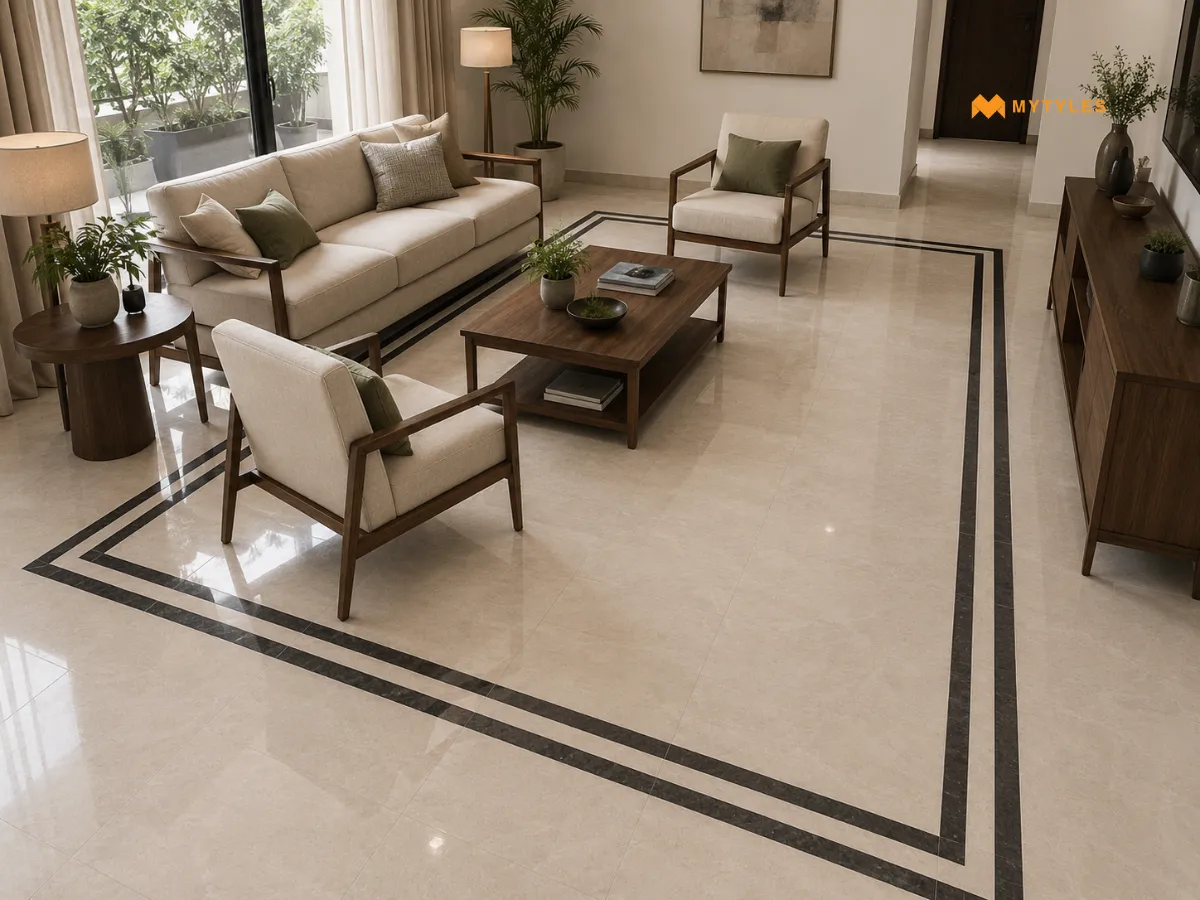
A double-line border is one of the simplest ways to make a living room floor look more finished. Living room floor border tiles can run around the sofa area, central rug zone or full room edge. Use this idea when the main tile is plain. It works especially well with beige, ivory, grey or marble-look living room floor tiles.
Contrasting Border for Marble-Look Floor Tiles
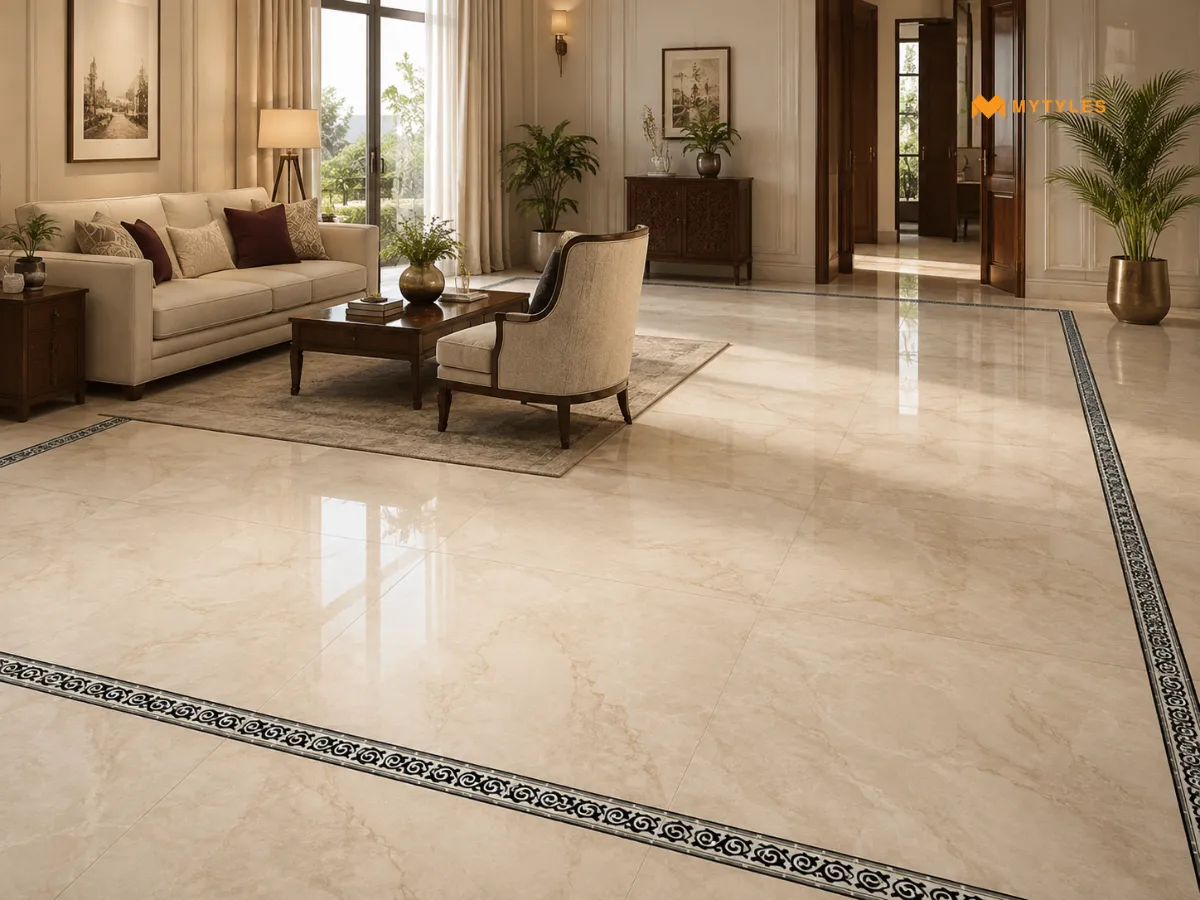
Marble-look floors often look better with a clean contrast. A black, brown, grey or gold-toned line can frame the floor neatly. Use decorative border tiles only along the edge so the marble pattern stays the main focus. This style suits larger living rooms, dining areas and foyer floors.
Geometric Border for Entrance Floors
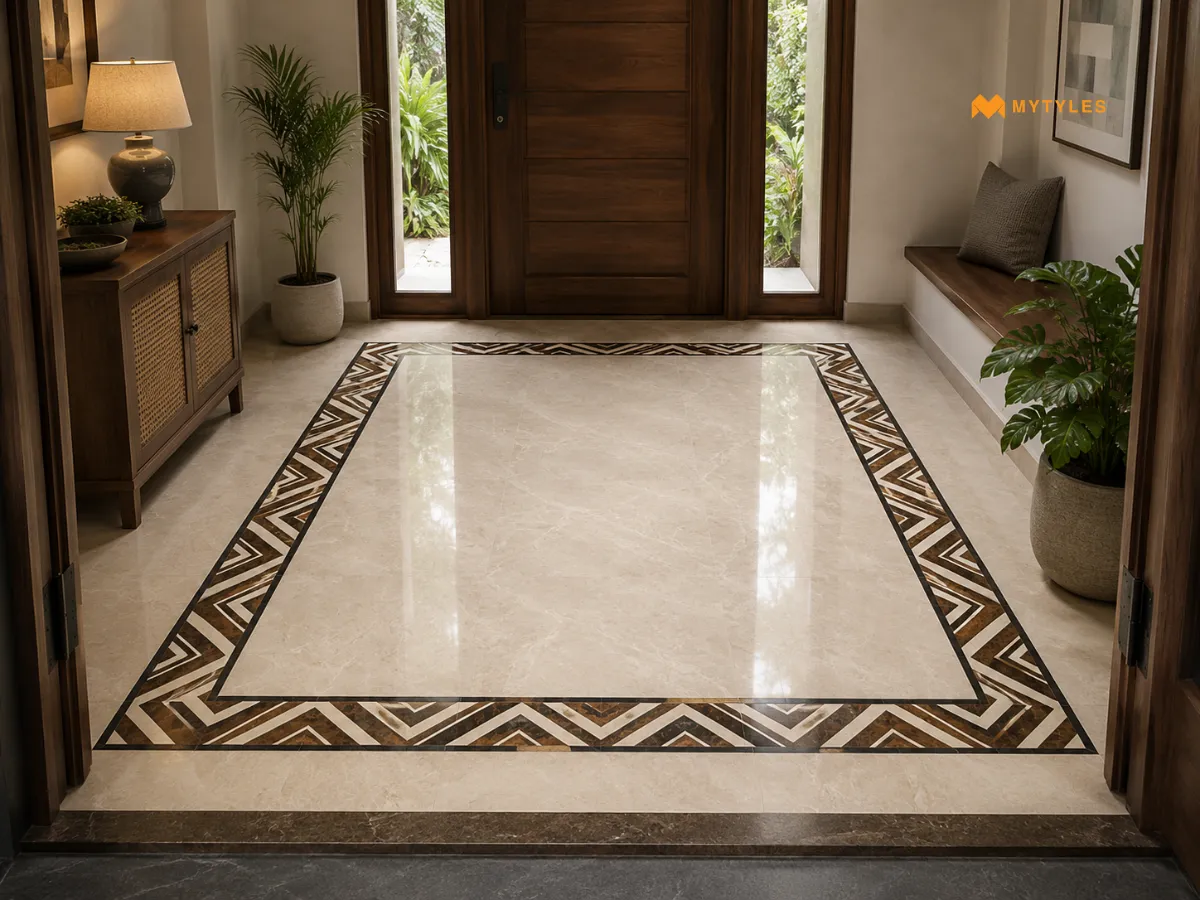
The entrance is a good place for a stronger border because it sets the mood before someone enters the main room. Use entrance floor tiles with a clean frame around the walking area. Geometric tiles can add shape and movement without needing too many colors. Keep the centre tile simple so the entry does not look crowded.
Patterned Border Along Passage Floors
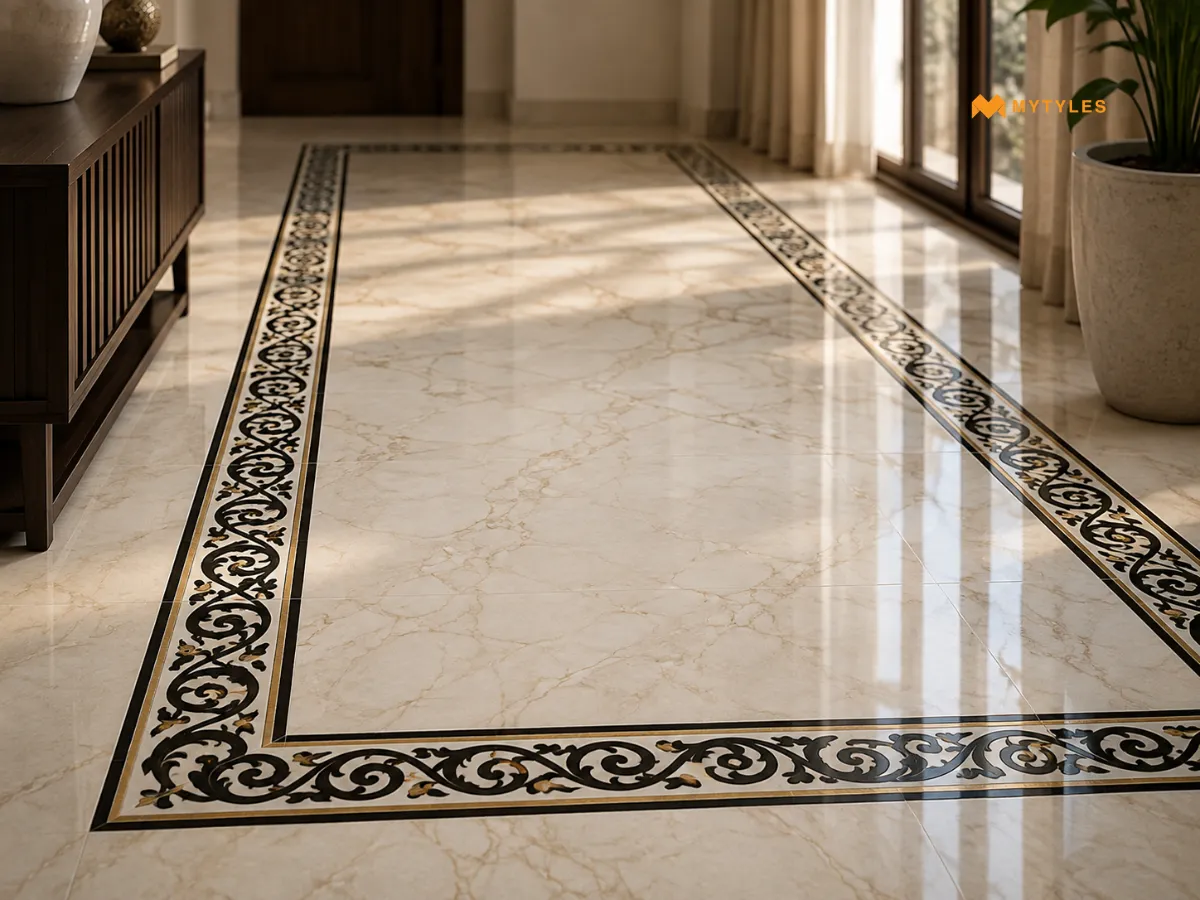
Passages often look plain because they are narrow and long. A border can make the walkway feel more designed. Passage floor border tiles work well along both sides of a corridor. Use them with plain passage floor tiles so the line stays visible. Avoid very thick borders in tight passages because they can make the floor look smaller.
Traditional Athangudi-Style Floor Border
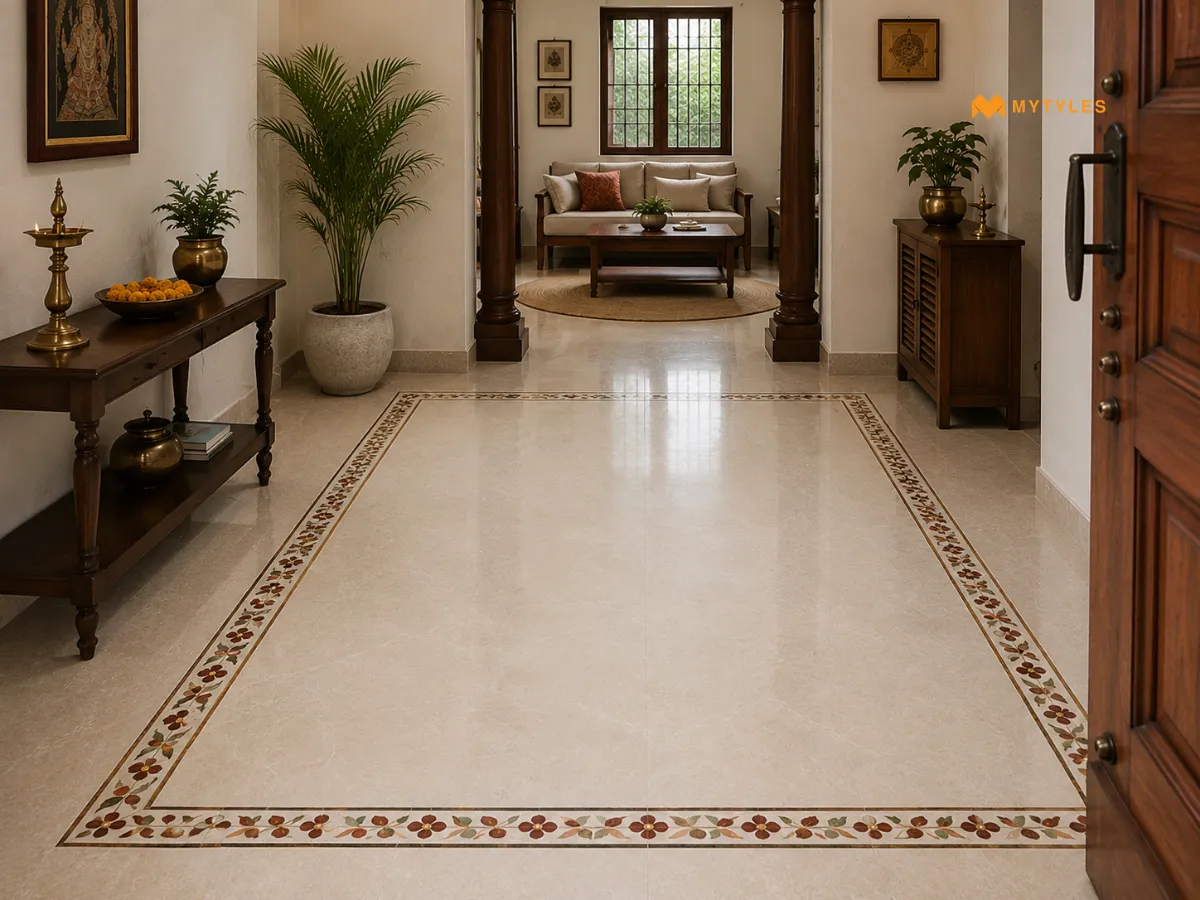
Traditional homes can use borders beautifully. Athangudi tiles are known for their handmade feel, rich colors and old Indian charm. A traditional border tile design suits courtyards, foyers, verandas and pooja-side flooring. It can also bring a heritage tile design look into newer homes. For a softer finish, choose one main color and repeat it in the border.
Moroccan Border Around Plain Floor Tiles
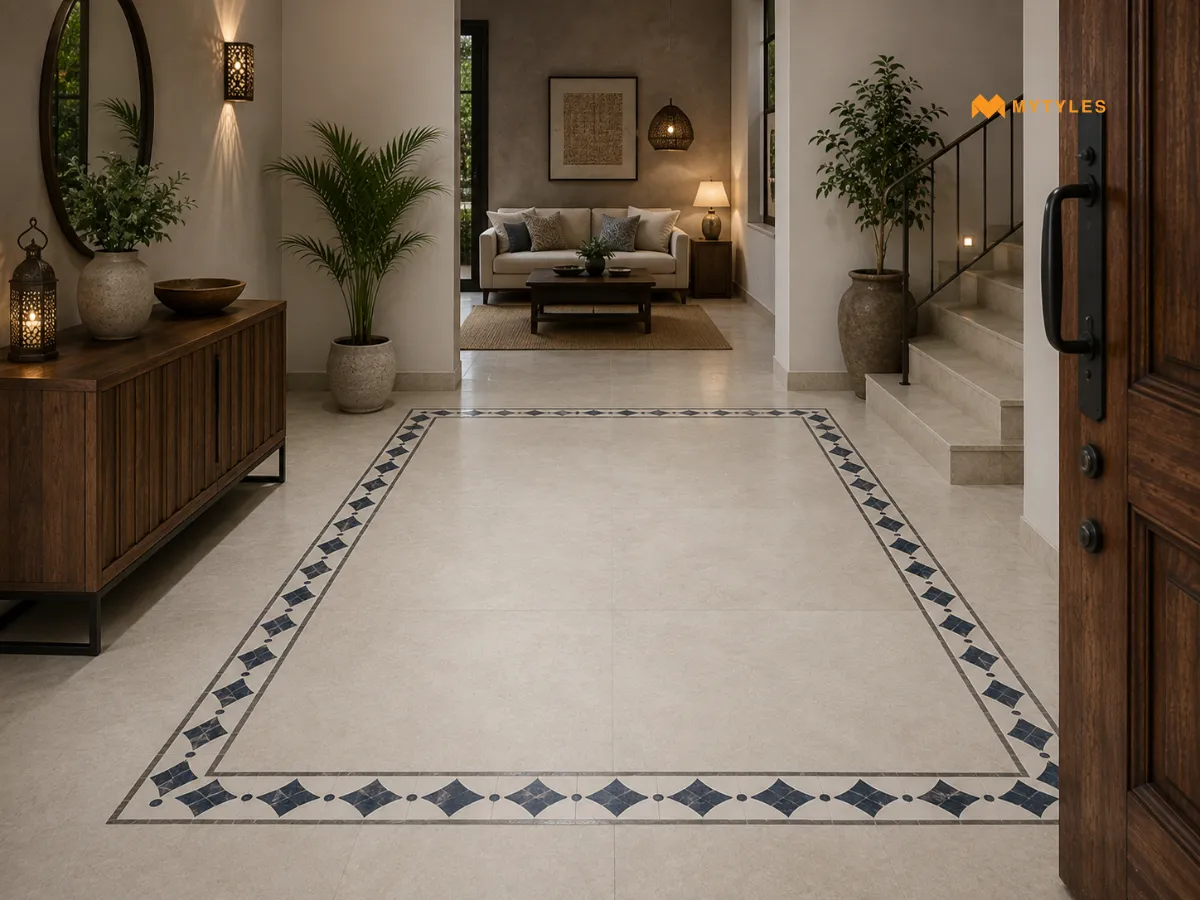
A Moroccan-style border can lift a plain floor without covering the full surface in pattern. Moroccan tiles work best when they are used in controlled areas. Use patterned border tiles around the room edge or central floor panel. This gives the space a detailed look while keeping the rest of the floor calm.
Border Tile Ideas for Framing Walls
Wall borders are useful when a full feature wall feels too much. They can highlight the top line, mirror area, niche, backsplash or pooja wall without covering every inch. A tile border for a wall should sit at a clear height. A good wall border tile design should also match the main wall tiles in finish and thickness.
Decorative Border Above Bathroom Dado Tiles
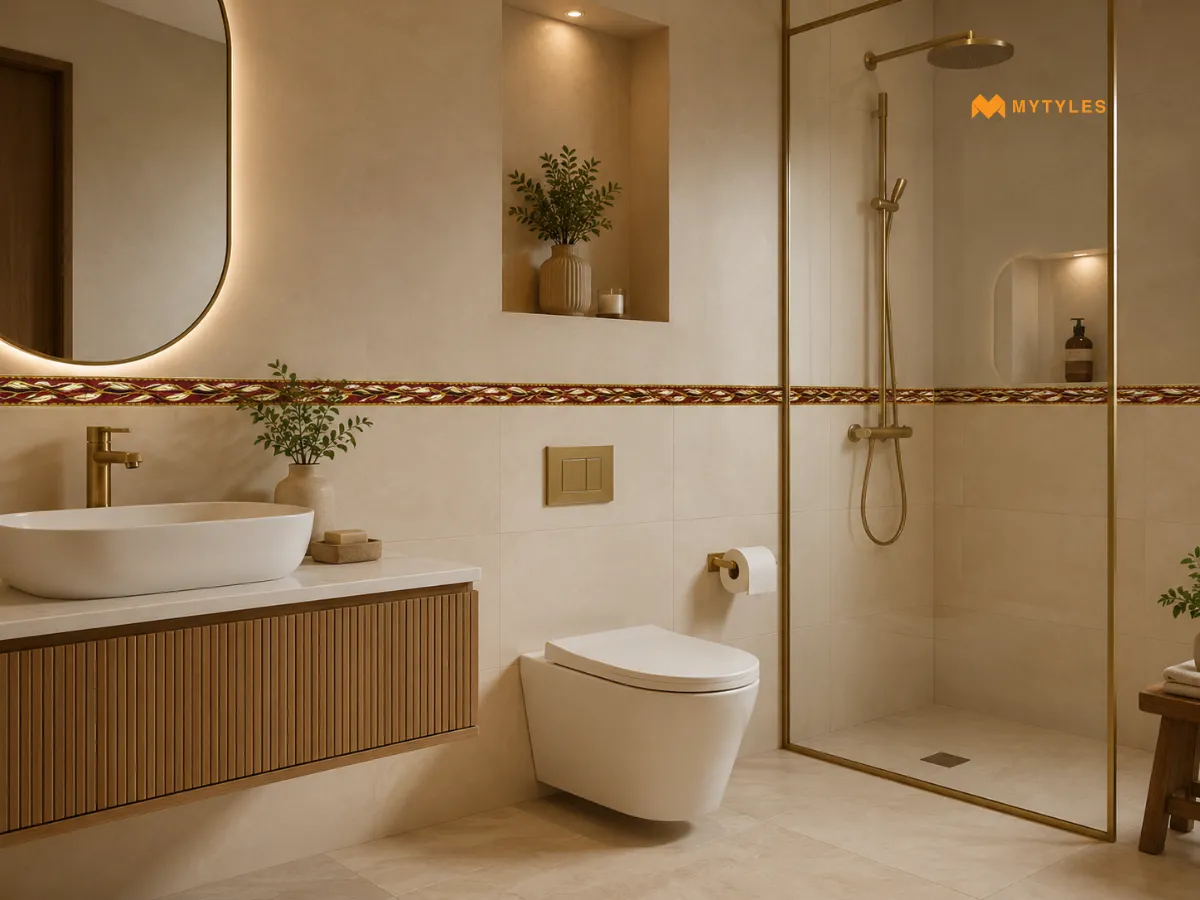
A border above bathroom dado tiles can make the wall look complete. It works well when the lower wall has plain tiles and the upper wall needs a finishing line. Bathroom border tiles can be used near mirrors, basin counters or shower partitions. They should match the tone of the main bathroom wall tiles.
Slim Border Around a Bathroom Feature Wall
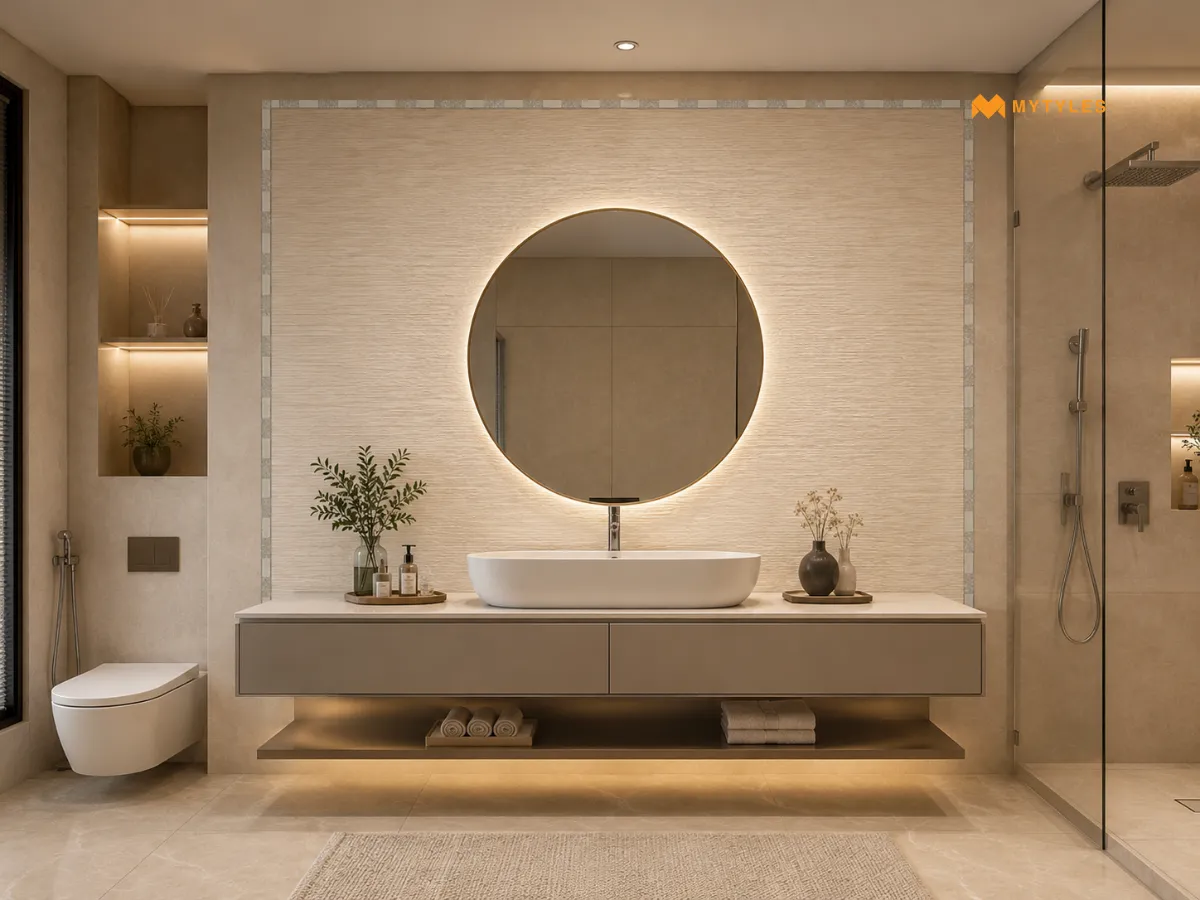
A slim frame can make a bathroom feature wall look cleaner. It works around the mirror wall, shower wall or basin backdrop. Use feature wall tiles in the centre and frame them with a narrow border. Designer border tiles should be kept simple if the centre wall already has texture or pattern.
Patterned Border for Kitchen Backsplash Tiles
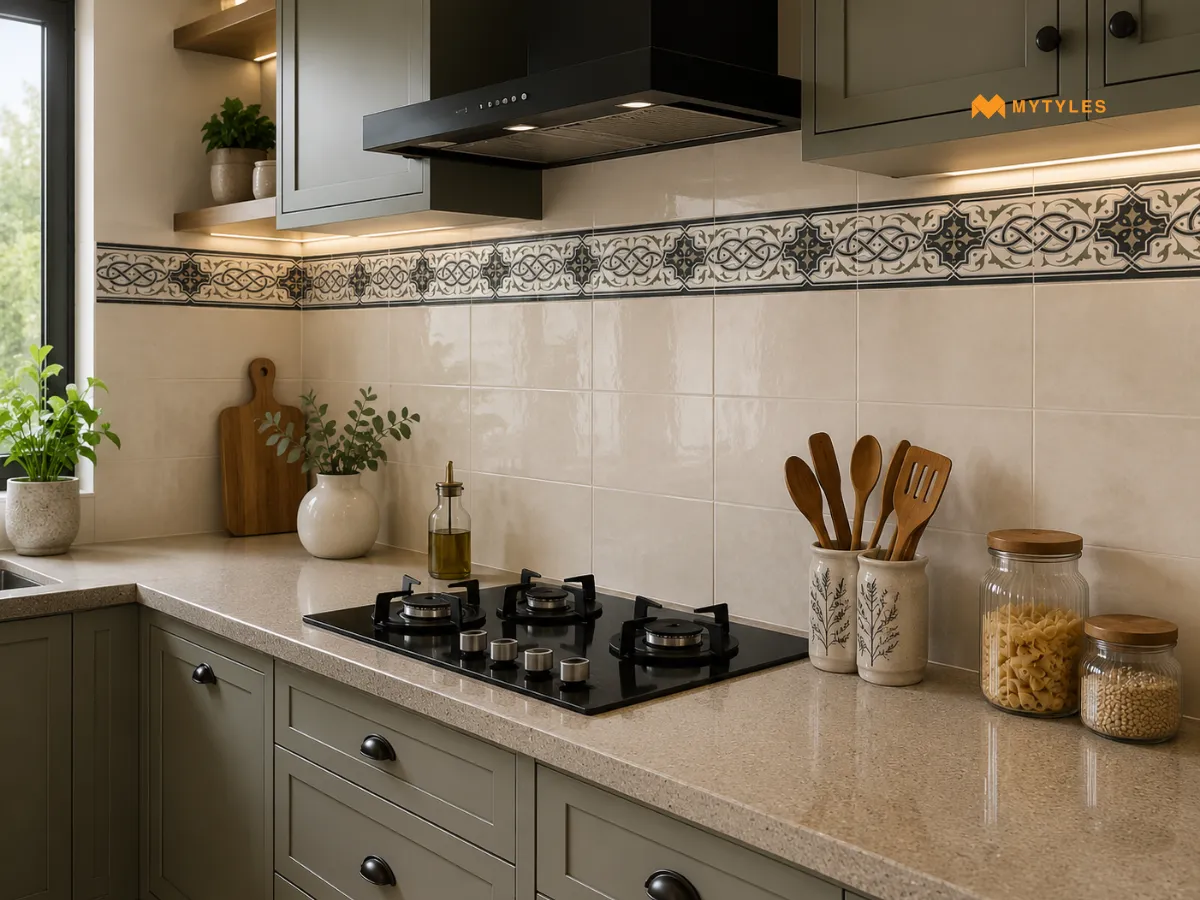
A kitchen backsplash can look more planned with a thin patterned edge. Kitchen border tiles can run above the counter or below the upper cabinets. This idea works well with plain kitchen wall tiles. If the backsplash is already bold, keep kitchen backsplash tiles simple around the frame.
Floral Border Around Pooja Room Wall Tiles
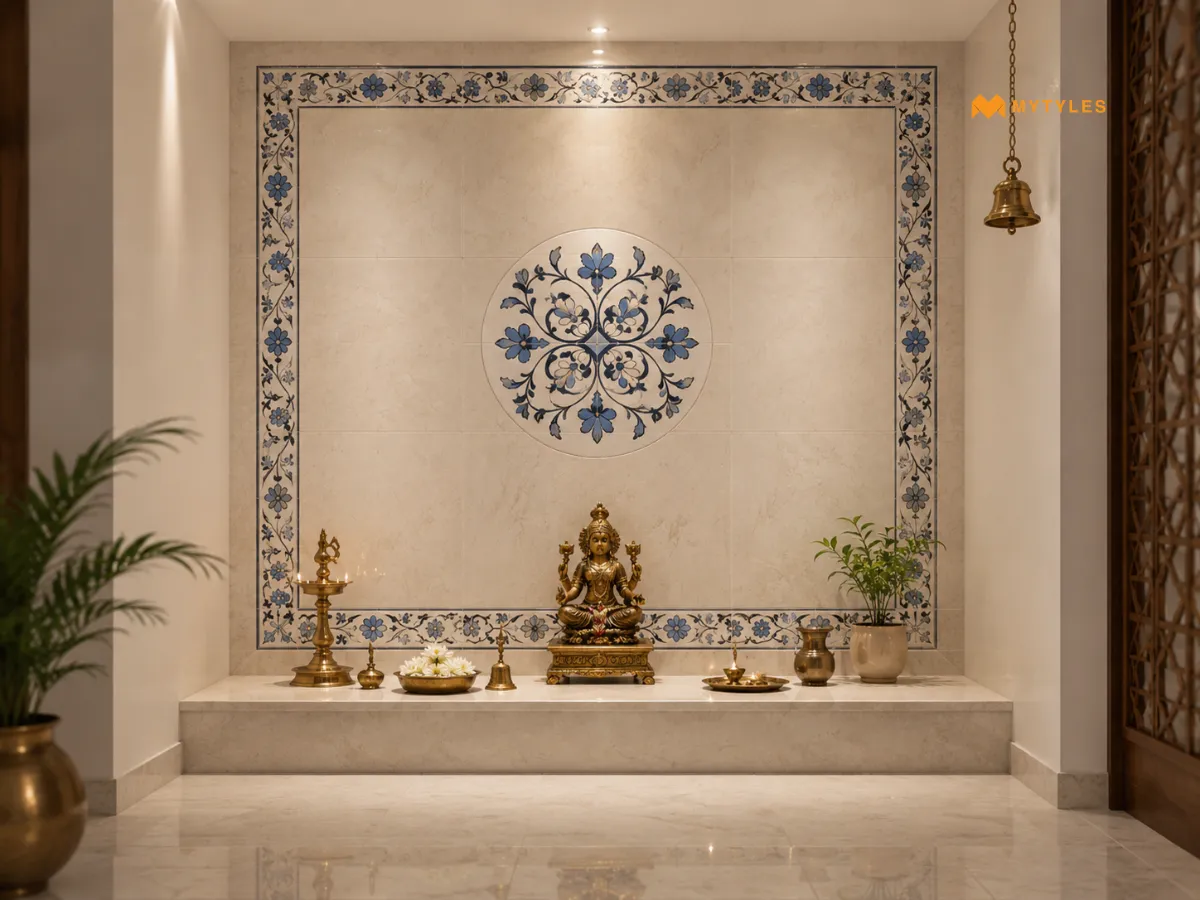
A pooja wall can handle softer detailing. Floral tiles can create a gentle frame around the idol backdrop or mandir wall. Use the border around plain pooja room tiles so the wall still feels calm. Cream, beige, white, gold and terracotta tones work well for this space.
Mosaic Border Between Two Wall Tile Designs
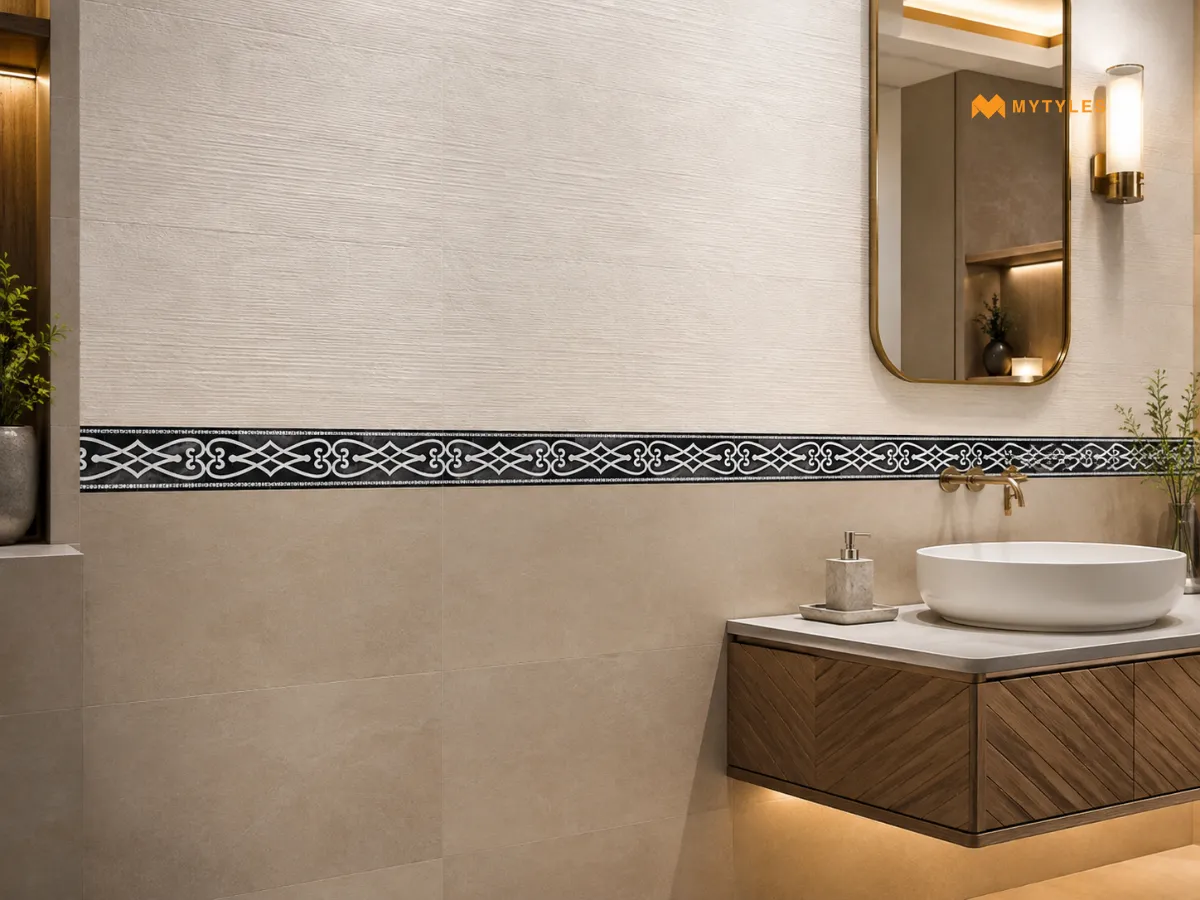
A mosaic strip can separate two wall finishes neatly. Mosaic tiles are useful between plain and textured areas because they create a clear break. Use this idea when two decorative tiles meet on the same wall. It can also soften the change between glossy and matt surfaces.
Vertical Border for Framing Wall Niches
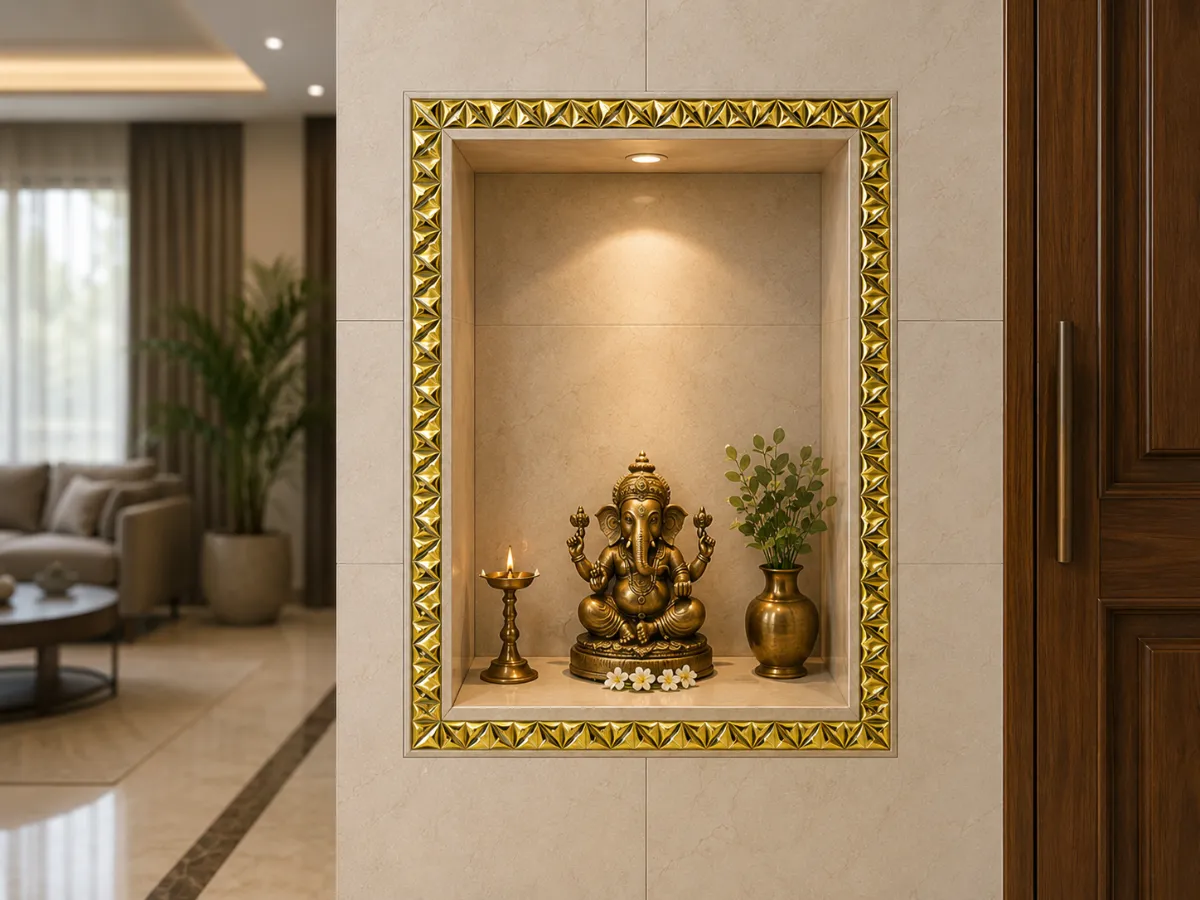
Wall niches look better when they have a proper frame. Inlay design tiles can be used around the niche edge to make it stand out. This works in bathrooms, pooja rooms, foyers and living room walls. Keep the inner niche tile plain if the border already has detail.
How to Match Border Tiles with Floor and Wall Tiles
A border should feel connected to the main tile. If the color, finish or size is wrong, even a nice design can look out of place. Use the border as a frame, not as competition. A modern border tile design usually looks best when it is neat, balanced and easy to read from a distance. Below are 8 simple ways to match them well:
- For a clean tile border design, pick one color from the main tile and repeat it in the border.
- Use warm decorative border tiles with beige, cream, brown, terracotta or gold-toned tiles.
- Choose cool shades for a floor border tile design when the main tile is white, grey, blue, black or marble-look.
- Use patterned border tiles only when the main floor or wall tile is plain.
- For a simple wall border tile design, keep the border plain if the main tile already has a strong pattern.
- Match glossy borders with glossy tiles and matt borders with matt tiles.
- Keep the border size balanced when planning a border for the floor and wall.
- Use wider borders for large floors and slimmer borders for small bathrooms, passages and compact walls.
Add a Beautiful Frame to Floors and Walls with Border Tiles
Borders are not old-fashioned when they are used with the right tile and layout. They can make a plain floor look framed, a bathroom wall look complete, or a pooja room feel more detailed. The best border is not always the loudest one. It should match the main tile, room size, lighting and daily use. Simple borders work well in modern homes, while richer patterns suit traditional and heritage-style spaces.
Planning a border for your floor or wall? Explore beautiful border tile ideas at MyTyles. Compare styles online, and visit the Experience Centre to see how different frames work with room layouts, main tiles, corners and grout lines before choosing the final one.
Expert Reviewed by Biren Agrawalla
Biren Agrawalla, the Founder of MyTyles with over 10 years of experience across tile, retail, and home decor. Driven by a passion for tiles and a deep understanding of customer behaviour, he has spent his career transforming how people discover and buy tiles online. Biren combines practical retail insight with modern digital solutions to make tile shopping smarter, more intuitive, and design focused. At MyTyles, he champions a customer first approach, ensuring every experience from browsing to buying is reliable, seamless, and inspiring.

Are Border Tiles Still in Style?

Yes, border tiles are still in style, but the use has changed. Instead of heavy strips everywhere, many homes now use one clean frame around a floor, dado, niche or feature wall. A good tile border design can make the surface look planned without making the room feel old or crowded.
Which Border Tile Design Is Best for Floors?
The best border for floors depends on the room. A double-line border works well in living rooms, while Moroccan or geometric borders suit entrances. For wet areas, check the main bathroom floor tiles before choosing the frame. The border should match the tile size, finish and daily cleaning needs.
Where Should Border Tiles Be Used on Bathroom Walls?
Bathroom borders work well above dado tiles, around mirrors, near niches and along vanity walls. In wet zones, epoxy grout can help the joints handle moisture better. Use a border only where it creates a clear frame. Random strips in the middle of the wall can look broken.
Can Border Tiles Be Used with Large-Format Tiles?
Yes, border tiles can be used with large-format tiles if the layout is planned properly. The installer should check cuts, levels and alignment before fixing. The right tile adhesive is important for strong bonding. Tile spacers should also be used carefully so the border lines remain even and clean.
How Wide Should a Floor Tile Border Be?
A floor border should match the room size. Small rooms usually need a slim border, while larger rooms can take a wider frame. For most homes, the border should be visible but not overpowering. If the room has large tiles, keep the border neat so the floor looks balanced.
Should Border Tiles Match or Contrast with the Main Tiles?
Both can work. Matching borders look softer and safer, while contrasting borders create a stronger frame. Choose contrast only when the main tile is simple. Check grout color ideas before finalising because grout can change how bold the border looks. A sample layout helps avoid mistakes.
Can Border Tiles Be Used in Small Rooms?
Yes, border tiles can be used in small rooms if the design is slim and simple. Avoid thick borders or very busy patterns because they can make the room feel smaller. Light colors, narrow lines and clean placement work better. Use borders only where they add shape or a neat finishing edge.

ABOUT THE AUTHOR
Aditi Bardhan
Aditi Bardhan is a professional content writer with over five years of experience creating SEO-focused, research-backed content across diverse industries. She specialises in the tile and surface materials space, writing for homeowners, architects, interior designers, and trade professionals. Her work combines technical research, design awareness, and a strong understanding of customer needs, helping readers make clearer and more confident choices. Through her content, Aditi simplifies complex material concepts, highlights practical design benefits, and helps brands build trust and authority in the tile and construction industry.
Latest Blogs By MyTyles